Category: World

  • Former confidant’s last exposé accuses Erdoğan and family of rampant corruption

    Former confidant’s last exposé accuses Erdoğan and family of rampant corruption


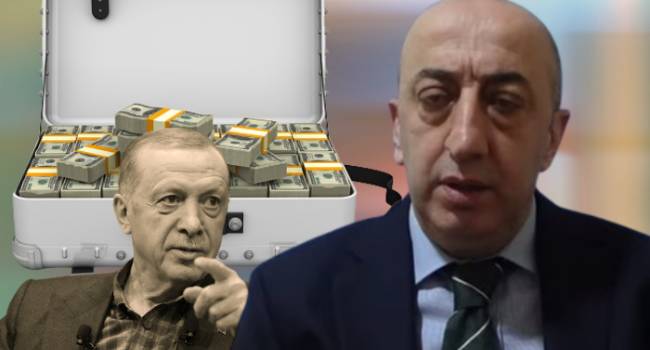
    In the video titled “Tayyip Abi ile Düello,” [Duel with Brother Tayyip] released by investigative journalist Cevheri Güven, Yeşildağ alleges that Erdoğan has orchestrated a widespread scheme of corruption that siphons off public funds for personal gain. Yeşildağ claims that Erdoğan and his son, Bilal Erdoğan, hold key stakes in businesses that receive lucrative government contracts.

    Yeşildağ further accuses Erdoğan of personal ownership of İstanbul Airport. Atatürk was the primary airport in İstanbul before the ruling Justice and Development Party (AKP) built a third airport in the city. Atatürk was closed to civilian flights on April 7, 2019, with the opening of the larger, $12 billion İstanbul Airport, though with much controversy. Later, the government decided to build a pandemic hospital at the old airport, destroying two runways in the process.

    In the video, Yeşildağ alleges that Erdoğan destroyed the Atatürk Airport runways due to pledges by opposition figures to close İstanbul Airport and reopen Atatürk. According to Yeşildağ, this is due to Erdoğan’s ownership of the facility, so he destroyed the alternative to make İstanbul Airport the only option for the public.

    Yeşildağ also criticizes the alleged misuse of public funds for projects such as the “nation’s garden” and various other building plans. He suggests that all public contracts are given to companies that can offer kickbacks to Erdoğan, alleging that the president, despite not being an economist, is very adept at exploiting the system for personal gain.

    These allegations represent the latest in a series of claims made by Yeşildağ, whose prior videos have implicated Erdoğan in corruption involving billions of dollars as well as shedding light on the president’s unconfirmed epilepsy.

    In the video Yeşildağ also takes aim at Erdoğan’s brother, Mustafa, accusing him of hypocrisy and scandalous behavior. He asserts that the Erdoğan family is out of touch with the struggles of ordinary Turkish people, contrasting their affluent lifestyle with the economic hardships faced by many in the country.

    The Yeşildağ family has a longstanding relationship with Erdoğan. The family’s Etiler Ulus Cafe is known as a popular meeting spot for the AKP government and state bureaucracy as well as the Erdoğan family.

    The video series has ignited public discourse, potentially destabilizing Erdoğan’s administration, which is already grappling with an economic crisis and high inflation. The exposés come ahead of the parliamentary and presidential elections, increasing the scrutiny on Erdoğan’s leadership.

    In the face of these damning allegations, the Turkish government has yet to issue a formal response.

    With the release of the final video, Yeşildağ’s exposé series draws to a dramatic close, leaving behind a trail of explosive allegations that have laid bare alleged corruption and misconduct in the highest echelons of Turkish politics.turkishminute
  • German TV documentary focuses on Erdoğan’s pursuit of dissident journalists in exile

    German TV documentary focuses on Erdoğan’s pursuit of dissident journalists in exile


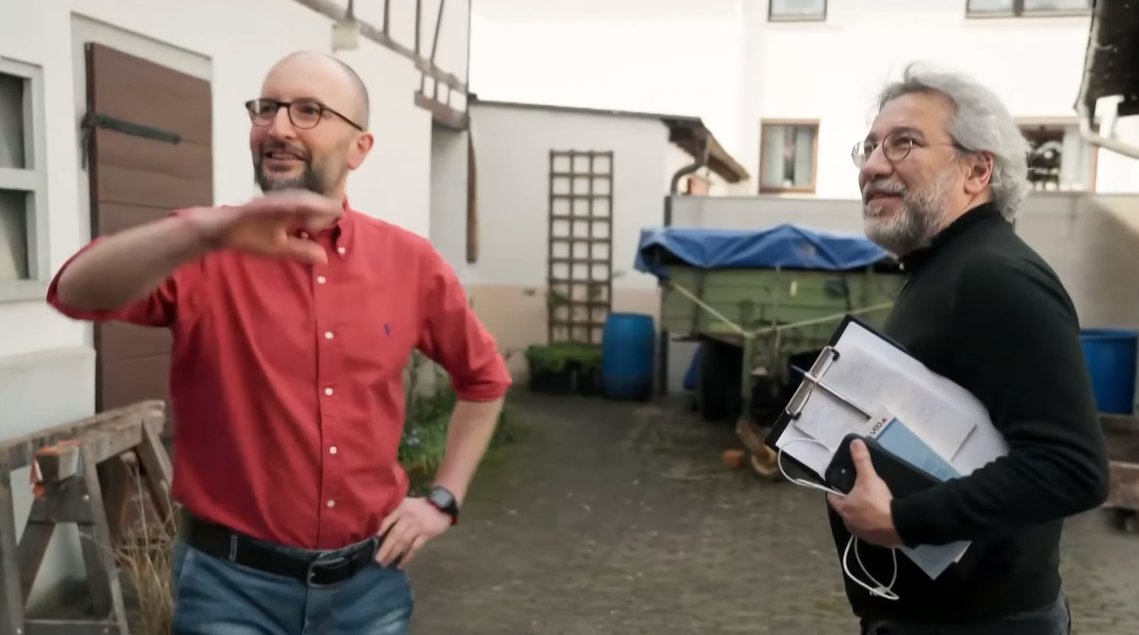
    A documentary aired on Germany’s state-run television station ZDF earlier this week tells the stories of journalists living in exile who have been added to Turkey’s “Terrorist Wanted List” by the government of President Recep Tayyip Erdoğan, mainly focusing on 61-year-old journalist and author Can Dündar.

    Prepared jointly by Dündar and Hauke Wendler, a documentary filmmaker, journalist and executive producer, the 43-minute documentary, titled “Erdoğan’s Terror List – How the Turkish Government Hunts Critics Worldwide,” was released on ZDF’s website and YouTube channel on May 9.

    According to the film, anyone who criticizes Erdoğan, like Dündar, is labeled a “terrorist” and put on the Turkish government’s wanted list.

    Dündar points out his name on Turkey’s “Terrorist Wanted List” and says, “Like in the Wild West, they put a bounty on my head.”

    The journalist stood trial in Turkey for reporting in May 2015 on National Intelligence Organization (MİT) trucks that were allegedly carrying weapons to jihadist groups in Syria and was sentenced to 27 years on various charges including espionage.

    Dündar had to leave Turkey following an attack in front of the Çağlayan Courthouse in İstanbul on May 6, 2016 and has lived in exile in Germany ever since.

    “Erdoğan instilled this hatred in people: Either you’re with me or you’re with the enemy. … Polarization in Turkey is directly mirrored in Germany,” Dündar says.

    Dündar met with Cevheri Güven, 46, a journalist and blogger also in exile in Germany whose videos on the Turkish government’s corruption and shady relations with mafia and crime groups have been watched by millions of people on YouTube in both Germany and Turkey, for an interview about his ordeal.

    It is said in the documentary that Dündar and Güven, who were in the same prison in Turkey, were “honest journalists, according to the opposition, and terrorists, according to the Erdoğan government.”

    Güven, a former editor of the now-defunct Nokta magazine, along with the magazine’s managing editor, Murat Çapan, was handed down a prison sentence of 22 years in 2017 on charges of “inciting people to armed revolt against the Turkish government.”

    The journalists were sentenced to prison due to two cover stories in Nokta that criticized Erdoğan for “capitalizing” on the death of soldiers in Turkey’s fight against terrorism.

    On Sept. 22 the pro-government Sabah daily published on its front page secretly taken photos of Güven while walking on the street and revealed his address in a German city. He was also added to the “Terrorist Wanted List” a few months ago.

    “Erdoğan has a few red lines. If anyone crosses these red lines, they get into trouble. … I have become a target for fanatics in the country. There is a great deal of pressure on us. Our lives and our children’s lives are in danger,” Güven says.

    Dündar also spoke to Ahmet Dönmez, a Turkish journalist known for his reports on mafia groups associated with Turkish government officials including Erdoğan who has been living in exile in Sweden.

    Dönmez was brutally attacked by two men in Stockholm in March 2022 in front of his 6-year-old daughter. Losing consciousness after the attack, the journalist was treated in intensive care due to an injury to his head.

    When asked why he was added to the terror list in early 2023, Dönmez said it was due to his articles critical of the ruling Justice and Development Party (AKP) and a book about corruption during the Erdoğan era.

    The documentary also mentioned the story of Nuri Gökhan Bozkır, a former military officer who was rendered from Ukraine by MİT in late January 2022 and arrested by a court the next month. He is accused by the Turkish government of the unsolved murder of academic Necip Hablemitoğlu, who was killed on Jan. 18, 2002, in front of his house in Ankara.

    It was said that more than 100 people like Bozkır have been “abducted by the Erdoğan government” from 21 countries since 2016.

  • Mother of two-and-a-half-month-old baby released from pre-trial detention

    Hilal Keser, the mother of a two-and-a-half-month-old infant, who was sent to prison earlier this week in violation of a law that requires the postponement of the execution of prison sentences for women who are pregnant or have given birth within the last year and a half, was released from detention on Thursday evening, the Kronos news website reported.

    Keser was arrested on Wednesday by a local court in the central province of Afyonkarahisar for providing financial support to inmates who were in prison due to alleged links to the Gülen movement, a faith-based group accused by the government of “terrorist” activities, or to their families.

    According to the Law on the Execution of Sentences and Security Measures, “execution of the prison sentence is delayed for women who are pregnant or have given birth within the last year and a half.”

    Journalist Sevinç Özarslan announced the woman’s release from detention on Thursday evening. She said Keser thanks everyone who raised their voices against her unlawful arrest.

    In another investigation, Keser had been sentenced to more than seven years in prison for working at a student dormitory in Afyonkarahisar that the government subsequently closed down because of alleged ties to the Gülen movement. She had been jailed for one year and released on appeal.

    Turkish President Recep Tayyip Erdoğan has been targeting followers of the Gülen movement, inspired by Turkish cleric Fethullah Gülen, since the corruption investigations of December 17-25, 2013, which implicated then-prime minister Erdoğan, his family members, and his inner circle.

    Dismissing the investigations as a Gülenist coup and conspiracy against his government, Erdoğan designated the movement as a terrorist organization and began to target its members. He intensified the crackdown on the movement following an abortive putsch on July 15, 2016 that he accused Gülen of masterminding. Gülen and the movement strongly deny involvement in the coup attempt or any terrorist activity.

    The detention and arrest of pregnant women and mothers with young children have dramatically increased in Turkey in the aftermath of the 2016 coup attempt.

    Human rights advocates have said children accompany their mothers in prison at very young ages, which are often critical periods in their mental and physical development. However, children are not provided basic needs such as crayons or toys. Some cells are not provided with a carpet for crawling babies, and inmates make makeshift rugs out of blankets. Many children do not have their own beds and share their mothers’ food.

  • Erdoğan’s rival accuses Russia of election ‘deep fakes’


    Kemal Kılıçdaroğlu’s allegations came hours after a third-party candidate dropped out of the race after being targeted by a online smear campaign.

    “Dear Russian friends,” Kılıçdaroğlu said on Twitter.

    “You are behind the montages, conspiracies, deep fakes and tapes that were exposed in this country yesterday,” he said without providing details.

    “If you want our friendship after May 15, get your hands off the Turkish state. We are still in favour of cooperation and friendship.”

    Polls show the secular opposition leader edging ahead of Erdogan in Sunday’s presidential ballot.

    The election will go to a May 28 runoff if no candidate picks up more than 50 percent of the vote.

    Kılıçdaroğlu’s comments came in the heat of an increasingly dirty campaign that saw third-party candidate Muharrem İnce pull out on Thursday.

    İnce announced his decision after being targeted by an online campaign that included doctored images of him meeting women and riding around in fancy cars.

    Polls show most of İnce’s support — measured at between two and four percent — likely going to Kılıçdaroğlu.

  • OSCE ‘disappointed’ after Turkey bars 2 election observers

    OSCE ‘disappointed’ after Turkey bars 2 election observers

    The parliamentary assembly of the world’s largest security organization, the OSCE, voiced disappointment on Monday after Turkey barred two lawmakers from a 100-strong mission to monitor the country’s May 14 elections, Agence France-Presse reported.

    Turkish authorities have denied mission accreditation to Danish MP Soren Sondergaard and Swedish MP Kadir Kasırga, said the parliamentary assembly of the 57-member Organization for Security and Cooperation in Europe.

    “We are disappointed with this step taken by the Turkish authorities, which could impact negatively on the work of the international observer mission,” the assembly said.

    It said Turkey “should not –- directly or indirectly -– influence the composition of the mission,” adding that Sondergaard and Kasirga had been refused entry because of statements made “as independent members of parliament.”

    The monitoring team is made up of lawmakers from OSCE member countries.

    Another OSCE body is sending a separate team of almost 400 people to observe Turkey’s presidential and parliamentary vote, in which President Recep Tayyip Erdoğan faces the toughest challenge of his two-decade rule.

    Sondergaard, from Denmark’s Socialist-Green Alliance, said last week that Turkey had denied him access because he had previously visited the Kurdish-led Syrian Democratic Forces (SDF).

    He told Danish public television TV2 that Ankara had accused him of “promoting a terrorist organization.”

    The SDF spearheaded the fight against the Islamic State group in Syria. Turkey regards it as an offshoot of the Kurdistan Workers’ Party (PKK), which it classifies as “terrorist.”

    In 2018, Ankara barred a German and a Swedish lawmaker from an election observer mission sent by the OSCE’s parliamentary assembly.

    Founded in 1975, the OSCE comprises 57 participating states that span the globe, encompassing three continents — North America, Europe and Asia — and more than a billion people.

  • 295 detained, 61 arrested in a month as part of crackdown on HDP

    A total of 143 people were detained as part of a Diyarbakır-based operation that was conducted in 21 provinces on April 25. The detentions, ordered by the Diyarbakır Chief Public Prosecutor’s Office, came three weeks before critical elections on May 14 that could extend Turkish President Recep Tayyip Erdoğan’s two-decade rule.

    Police on May 2 detained at least 32 people in raids in İstanbul in another operation targeting Kurds.

    Nineteen suspects were detained on April 29 as part of an investigation launched by the Ankara Chief Public Prosecutor’s Office.

    According to Özdoğan, several members of the HDP were also detained and some of them were arrested in Edirne, Muş, Eskişehir and Şanlıurfa.

    Parliamentary candidates Müslüm Koyun and Ayten Dönmez from the opposition Green Left Party (YSP) were among the people who were arrested on terrorism-related charges ahead of the presidential and parliamentary elections.

    The HDP — the second-largest opposition party in parliament — is widely seen as a kingmaker in the tight race.

    Erdoğan has often accused the HDP of links to the outlawed Kurdistan Workers’ Party (PKK), which the party denies.

    The PKK is listed as a terrorist organization by Turkey and much of the international community.

    The HDP said in March that it would not field a presidential candidate in the May 14 elections, giving tacit support to Erdoğan’s main rival, Kemal Kılıçdaroğlu, the joint presidential candidate of an opposition alliance of six parties.

    The party announced in late April that it would support Kılıçdaroğlu.

    The HDP, which faces a closure case on terrorism charges, will run in the elections under the banner of the YSP, to avoid the risks of the party’s closure before the elections.

  • Turkey marks May Day amid police interventions, detention of protestors, journalists


    Turkish riot police detained more than 35 people trying to reach İstanbul’s main Taksim Square for May Day demonstrations protesting economic hardship and the exploitation of labor.

    The ban on May Day demonstrations in Taksim has been in effect for several years due to security concerns. Police closed all roads leading to Taksim Square with barricades and increased its presence in the area on Monday.

    Taksim Square holds symbolic value for Turkey’s labor movement. During a 1977 May Day event, 34 people were killed there when shots were fired into the crowd from a nearby building. Representatives from HAK-SEN, a public servant labor union, were allowed to lay wreaths at the site.

    HAK-SEN representatives also held a symbolic funeral prayer in the area for civil servants who they said are like the living dead due to the rising cost of living in the country, skyrocketing rents and low salaries.

    Authorities indicated the Maltepe meeting area on İstanbul’s Anatolian side was the venue for celebrations where representatives from labor unions delivered speeches.

    This year’s May Day celebrations are held two weeks before critical presidential and parliamentary elections scheduled for May 14.

    Confederation of Progressive Unions of Turkey (DİSK) Chairperson Arzu Çerkezoğlu, who delivered a speech in Maltepe, said Turks will make a choice between “despotism and freedoms” on May 14.

    “We will rid ourselves of this system of evil together. Let’s make a promise together, will we eliminate the rule of the tyrants,” she told the crowd, referring to the rule of the Justice and Development Party (AKP).

    Main opposition Republican People’s Party (CHP) İstanbul provincial head Canan Kaftancıoğlu said May Day will be joyfully celebrated next year in Taksim Square under the rule of her party and its leader, Kemal Kılıçdaroğlu.

    Kılıçdaroğlu, the joint presidential candidate of an opposition alliance, poses the greatest challenge to the two-decades-long rule of President Recep Tayyip Erdoğan. Opinion surveys show Kılıçdaroğlu neck-and-neck with Erdoğan or winning against him in the presidential race.

    Many labor unions expressed hope that this will be the last May Day that Taksim Square is closed.

    In the predominantly Kurdish province of Diyarbakır, protestors also faced police intervention as they sought to march to Dağkapı Square, which was banned by the local authorities.

    Some journalists were detained and were subject to police violence during Monday’s demonstrations as they tried to cover the event.

    Journalist Zeynep Kuray, who was following the protestors trying reach Taksim Square, was forcibly detained by police although she said she was a journalist and doing her job, according to  the Media and Law Studies Association (MLSA).

    The Confederation of Progressive Unions of Turkey (DİSK) Basın-İş also announced that journalists Sultan Eylem Keleş and Gencer Keten were also violently detained by the police during the demonstrations.

    The Turkish Journalists Union (TGS) tweeted that two other journalists, Bülent Kılıç and Hazar Dost, were also subjected to police violence in the Beşiktaş and Taksim neighborhoods of İstanbul.

    The TGS called on the Turkish authorities to immediately release the detained journalists and to stop preventing them from doing their job.

    Journalists in Turkey frequently face physical attacks and legal harassment due to their journalistic activities.

    Turkey, which is among the top jailers of journalists around the world, ranked 149th among 180 countries in the Reporters Without Borders (RSF) 2022 World Press Freedom Index.

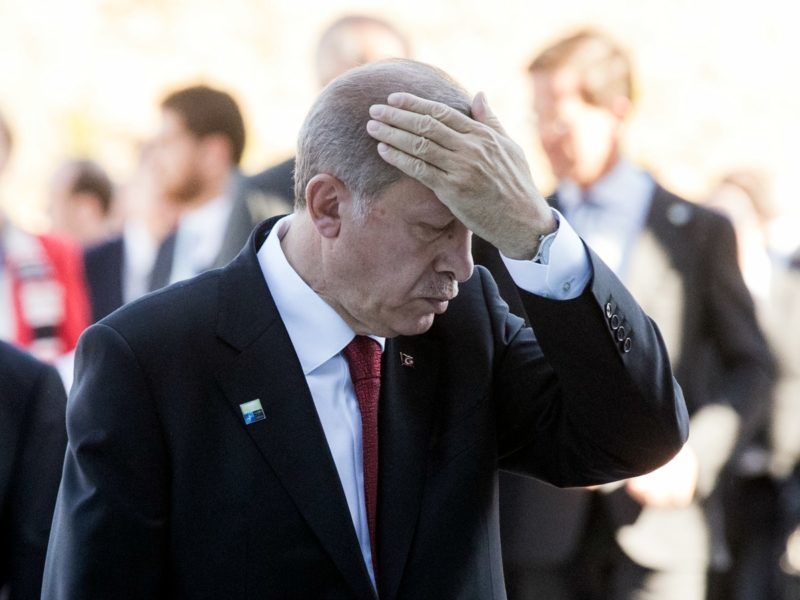
  • Ailing Erdoğan delays video speech at nuclear plant event

    Ailing Erdoğan delays video speech at nuclear plant event


    Erdoğan was set to attend an event for a nuclear plant by broadcast at 1.30 p.m. local time on Thursday. He will now appear via video at 4 p.m., according to a statement from the presidency. It gave no further details.

    Erdoğan, who is facing his toughest election race since taking power in 2003, has remained out of public view since a TV interview late Tuesday during which he was suddenly taken ill with what he described as an upset stomach.

    The Turkish president had already canceled his visit to the $20 billion Akkuyu power plant project on Thursday over health concerns. The plant is being built by Russia in Turkey’s Mediterranean province of Mersin. Russian President Vladimir Putin is scheduled to also attend by video link.

    Erdoğan’s been on the campaign trail ahead of elections where he’ll face an alliance of six opposition parties joining forces to unseat him.

    He’s expected to use the nuclear power plant ceremony to bolster support among voters who back the Turkish leader’s “strongman” image and close ties with the Kremlin ruler. He abandoned a plan to visit Mersin for the event on the advice of doctors, an official with direct knowledge said, asking not to be identified.

    Family Minister Derya Yanık told Turkish television on Thursday that Erdoğan was on the mend, according to Agence France-Presse.

    “There is nothing to worry about. He is well,” she said. “He will resume his intense program tomorrow, I think.”

    But the health scare has upturned Erdoğan’s travel schedule and complicated his path to a third decade of rule.

    Erdoğan is known for his love of campaigning and embrace of political fights.

    Polls show him running neck-and-neck or losing against opposition leader Kemal Kılıçdaroğlu in Turkey’s most momentous election in decades — if not its entire post-Ottoman history.

    His Islamic-rooted party’s control of parliament through an alliance with a far-right group is also under threat.

    Erdoğan had used his campaign speeches to launch venomous barbs at the opposition and portray himself as a man who gets the job done.

    That image has been shaken — and his office is fighting back.

    The president’s powerful media director Fahrettin Altun posted screen shots on Twitter of Chinese state media and some popular accounts speculating about Erdoğan’s condition being more serious than officially reported.

    “We categorically reject such baseless claims regarding President Erdoğan’s health,” Altun wrote.

    “No amount of disinformation can dispute the fact that the Turkish people stand with their leader and Erdoğan and his AK Party are set to win the May 14 elections.”

    Rumors about Erdoğan’s health have been swirling since he underwent two gastrointestinal surgeries in 2011 and 2012.

    The operations went well but left him with a slight hitch in his gait that appears to have fed some of the social media speculation.

    Turkey does not publicize the results of its leaders’ health evaluations and makes it illegal to “insult the president.”

    Thousands of people have been prosecuted for the offence — punishable by either a fine or a jail term of up to four years.

    Turkey’s main opposition leaders all quickly tweeted messages wishing Erdoğan a speedy quick recovery.

  • Former New Zealand prime minister Jacinda Ardern accepts fellowships at Harvard University

    Former New Zealand prime minister Jacinda Ardern accepts fellowships at Harvard University

    Ms Ardern stepped down as prime minister in January, saying she had “no more in the tank” to lead the country and she would also not seek re-election to parliament.

    She quit parliament earlier this month.

    Harvard University said in a statement she had been appointed to dual fellowships at Harvard Kennedy School and to a concurrent fellowship at the Berkman Klein Center.

    “I am incredibly humbled to be joining Harvard University as a fellow — not only will it give me the opportunity to share my experience with others, it will give me a chance to learn,” Ms Ardern said in the statement.

    She added on Instagram the fellowship at the Berkman Klein Center would not only be a chance to work collaboratively with the centre’s research community, but also to work on the challenges around the growth of generative AI tools.

  • Int’l rights groups call for release of detained Kurdish journalists, political activists in Turkey

    The statement was coordinated by Media Freedom Rapid Response (MFRR), a Europe-wide mechanism that tracks, monitors and responds to violations of press and media freedom in EU member states and candidate countries. Signatories include the European Federation of Journalists (EFJ), the International Press Institute (IPI), PEN International and the Coalition For Women In Journalism (CFWIJ).

    The groups are calling on Turkish authorities to give detained journalists, lawyers and political activists access to legal counsel, disclose full details of any charges brought and ensure their immediate release from detention.

    Coordinated dawn raids targeted homes and offices of 126 people in 21 provinces, including journalists, lawyers, rights defenders, political activists and artists. The state-run Anadolu news agency reported that the operation is related to counterterrorism investigations led by the Diyarbakır Chief Public Prosecutor’s Office.

    The journalists detained so far include Mezopotamya News Agency editor Abdurrahman Gök and reporters Ahmet Kanbal and Mehmet Şah Oruç; editor-in-chief of the Yeni Yaşam daily newspaper Osman Akın; and Kadri Esen, publisher of ​​the Xwebûn weekly, the only Kurdish print newspaper in Turkey. Among the detainees is also lawyer Resul Temur, who represented imprisoned journalists in Diyarbakır and Ankara after similar raids in June and October 2022, respectively.

    The charges against those in custody are still unknown due to a gag order on the investigation and a 24-hour restriction on access to lawyers for the detainees, according to the Diyarbakır Bar Association.

    State media TRT reported that police had detained people suspected of financing the outlawed Kurdistan Workers’ Party (PKK) or attracting new members to the group.

    Deemed a terrorist organization by Turkey and much of the international community, the PKK has been waging a decades-long war against the state for greater autonomy for the Kurdish minority.

    The operation also involved people who transferred money to the PKK from municipalities held by Turkey’s main pro-Kurdish party, the Peoples’ Democratic Party (HDP), according to TRT.

    The HDP — the second-largest opposition party in parliament — is widely seen as a kingmaker in the tight race.

    Turkish President Recep Tayyip Erdoğan has often accused the HDP of alleged links to the PKK, which the party denies.

    The HDP said last month it would not field a presidential candidate in the May 14 elections, giving tacit support to Erdoğan’s main rival, Kemal Kılıçdaroğlu.