Category: World

  • Mothers of enforced disappearance victims hold 1,000th Saturday vigil in İstanbul

    Mothers of enforced disappearance victims hold 1,000th Saturday vigil in İstanbul

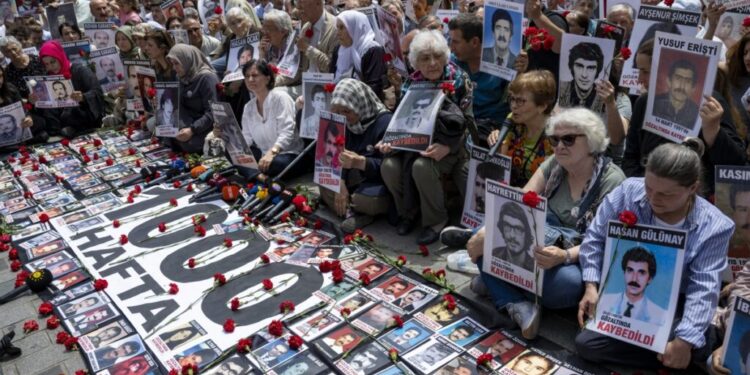
    The 1,000th vigil saw the participation of thousands of supporters, including politicians and civil society organizations.

    This milestone event occurred after police lifted a 300-week-long ban, preventing them from meeting in Galatasaray Square.

    The Saturday Mothers have been gathering every week to demand justice for their disappeared loved ones and to hold the responsible parties accountable.

    Maside Ocak, one of the Saturday Mothers, expressed a deep emotional connection to the protest site, saying, “This place holds our memories. It’s where the relatives of the disappeared meet.”

    Gülseren Yoleri, head of the İstanbul branch of the Human Rights Association, condemned the ban and reiterated the group’s commitment to seeking justice. “The ban, which lasted for 300 weeks, was unjust and illegal. Our quest for justice will continue. We want the 1,001st week to be [without a ban] as well,” Yoleri stated.

    During the 1,000th vigil, the Saturday Mothers released a statement reflecting their decades-long struggle: “Today, we gather here for the 1,000th time with the same deep pain and determination. 1,000 weeks… 7,000 days, 229 months… A lifetime spent searching. We are the Saturday Mothers and People. We are mothers, fathers, spouses, siblings, children, nieces and grandchildren. We are like you, but we have a deep wound in our hearts from not even having the graves of our loved ones.

    “For 1,000 weeks, we have asked: Where are our disappeared [relatives]? For 1,000 weeks, we have demanded: Why are those responsible for these crimes against humanity protected with impunity? We will not forget, we will never forget. We will not give up, we will never give up. Since May 27, 1995, we have gathered every week at 12:00 in Galatasaray Square. This square has been the voice of us and our disappeared.”

    The vigil also highlighted the ongoing impact of enforced disappearances on families. Many relatives have passed away without knowing the fate of their loved ones. The family of Cemil Kırbayır, who disappeared following the 1980 military coup, has been searching for answers for 44 years. His sister, Fatma Kırbayır, recently passed away without finding out what happened to him.

    The Saturday Mothers emphasized their continued commitment to their cause, saying, “We cannot touch our loved ones who were disappeared under custody, but every Saturday, we proudly carry their photos. We leave a carnation for them in Galatasaray Square. This tradition will continue from generation to generation. Every eye that looks at Galatasaray Square, every stone in that square, is a witness to the state’s great shame and the resistance of the Saturday Mothers.”

    Despite past police violence and legal obstacles, the Saturday Mothers remain resolute. They demand the government provide information on the whereabouts of their loved ones and hold those responsible accountable. The group declared, “In our 1,000th week, we come before the public with a single demand: We want our [loved ones who] disappeared. We want to place our carnations not in Galatasaray, but on the real graves of our loved ones. Until we find them, we will not give up.”

    During the 1980s and ’90s, many people “disappeared” in Turkey’s predominantly Kurdish areas. The practice had been long gone until it reappeared in the wake of an attempted coup against Turkish President Recep Tayyip Erdoğan that claimed the lives of 251 people on July 15, 2016.

    Dozens of enforced disappearances have been reported in Turkey since the abortive putsch, with more than 20 of the victims reporting, after they were found, that they were subjected to torture during the time they were “missing.”

    The victims of those enforced disappearance cases were mostly alleged followers of the Gülen movement, which is inspired by the US-based Muslim cleric Fethullah Gülen and targeted by the president since the corruption investigations of December 17-25, 2013, which implicated then-prime minister Erdoğan, his family members and his inner circle.

    Erdoğan’s Justice and Development Party (AKP) government also labels the faith-based group as a terrorist organization and accuses them of masterminding the attempted coup, despite both Gülen and his followers’ strong denial of involvement in the abortive putsch or in any terrorist activities.
  • Erdoğan’s crackdown does not spare minors: Teenagers recount trauma of police custody By Turkish Minute

    Zülal and Zümra Bayram, aged 17 and 15, were among 38 people detained on May 7, including 14 minors, as part of a wider crackdown by Turkish authorities.

    The girls described their harrowing experience in a live broadcast on Twitter with pro-Kurdish Peoples’ Equality and Democracy Party (DEM Party) deputy Ömer Faruk Gergerlioğlu. They said the police raided their home at dawn, took them to the juvenile unit at İstanbul’s Üsküdar police station, while keeping their mother and elder sister with other adult detainees.

    “They insulted our mother and threatened us,” reports Zülal. “We were held for 16 hours without explanation.”

    Both teenagers said they were denied access to legal representation and interrogated without a lawyer. They say their statements were distorted and that they were not allowed to communicate with their families. She described a particularly disturbing interaction with a female officer who told them, “You’ll see what it’s like inside, they’ll make you suffer.”

    To make matters worse, the detained siblings were forced to go hungry and thirsty for hours as the authorities initially denied them the food and water their families had brought. Zülal pointed out the psychological pressure they were subjected to, including constant insults and intimidation from the officers.

    “You are a coward, you seem stressed, you are afraid of me because you are a liar,” one officer told her.

    The raids have been criticized for their arbitrary nature and for targeting young female students. The detainees, accused of having links to the Gülen movement, included middle school, high school and university students.

    The siblings claimed that children younger than them were also mistreated while being detained at the police station. After their release, their mother, who suffers from cirrhosis of the liver as well as Parkinson’s disease, was arrested. Concerns over her health have added to the family’s distress. “My mother needs her medication and cannot be subjected to stress,” Zümra said.

    The sisters say they are currently unable to contact or send clothes to their mother and elder sister, who are currently being held in Bakırköy Women’s Prison.

    The ordeal has traumatized the sisters, who fear further police action and are worried about the welfare and future of their mother and sister. They asked human rights organizations for support and stressed the importance of protecting children’s rights.

    Gergerlioğlu has called on Interior Minister Ali Yerlikaya to address the reported abuses.

    “There have been numerous violations of law against the children at the police station,” Gergerlioğlu stated. “Their statements were distorted, they were mistreated, shouted at, and subjected to psychological violence.”

    Turkish President Recep Tayyip Erdoğan has been targeting followers of the Gülen movement, inspired by Muslim cleric Fethullah Gülen, since the corruption investigations of December 17-25, 2013, which implicated then-prime minister Erdoğan, his family members and his inner circle.

    Dismissing the investigations as a Gülenist coup and conspiracy against his government, Erdoğan designated the movement as a terrorist organization and began to target its members. He intensified the crackdown on the movement following an abortive putsch that he accused Gülen of masterminding. Gülen and the movement strongly deny involvement in the coup attempt or any terrorist activity.

    The İstanbul Public Prosecutor’s Office had issued detention warrants for the minors on allegations of “disseminating terrorist propaganda.”

    Human rights advocates have condemned the operation, citing violations of both Turkish and international law.

    Eren Keskin, co-chair of the Human Rights Association (İHD), said the treatment of the teenagers violated the UN Convention on the Rights of the Child. “The children were frightened and left hungry for hours,” Keskin said. “This is a clear human rights violation.”

    The treatment of minors in Turkish detention centers has been a longstanding issue. A report by Gülizar Biçer Karaca from the Republican People’s Party (CHP), titled “Children’s Prison,” highlighted significant concerns about the conditions in juvenile detention centers. According to the report, nearly half of the 30,000 minors convicted in 2022 were incarcerated, while 15,407 were released under judicial supervision. The report noted that 5,601 minors were still of school age and would continue their education in juvenile facilities.

    Human rights advocates have repeatedly criticized the conditions in these centers, citing instances of ill-treatment, violence and torture. The report emphasized that juvenile detention centers are not equipped to meet the psychological and physical needs of youngsters. Between 2013 and 2017, 13 minors died in juvenile detention centers, with at least six of those deaths being suicides.

    According to the Brussels-based human rights organization Solidarity with Others, the recent police operation violates several national and international laws, including the UN Convention on the Rights of the Child, the International Covenant on Civil and Political Rights, and the European Convention on Human Rights.

    The specific violations cited by Solidarity with Others, which drafted a report on the matter, include arbitrary detentions under false charges, which violate Article 19 of the Turkish Constitution and Article 5 of the European Convention on Human Rights (ECHR).

    The lack of legal grounds for accusations contravenes the right to a fair trial as enshrined in Article 6 of the ECHR and Article 40(2)(a) of the UN Convention on the Rights of the Child (UNCRC), the organization points out.

    Additionally, arbitrary surveillance and detention infringe upon the right to respect for private and family life, violating Articles 17 and 41 of the constitution and Article 8 of the ECHR.

    The detention conditions, which might have caused physical and psychological harm to the detainees, contravene the prohibition of torture and inhumane treatment under Article 3 of the ECHR and Article 37 of the UNCRC, the Brussel-based rights group underlines.

    Moreover, the disruption of children’s education breaches their right to education, protected by Article 42 of the constitution and Article 28 of the UNCRC.

    Zümra and Zülal’s ordeal highlights a wider pattern of rights abuses in Turkey, where thousands, including journalists, academics and activists, have been imprisoned on terrorism charges. Human rights organizations continue to call for international attention to the situation and for reforms to protect basic freedoms in the country.

  • Turkey marks World Press Day amid continued harassment, intimidation of journalists

    Eren Keskin, the co-chairperson of the Human Rights Association (İHD) and also a prominent lawyer, and Güllistan Yarkın, a member of an İHD commission fighting against racism and discrimination, faced charges under the controversial Article 301 of the Turkish Penal Code (TCK), which concerns insulting the Turkish nation, parliament, government or Turkishness.

    Keskin and Yarkın faced the charges, which carry a prison sentence of between six months and three years, due to a commemoration ceremony held by the İHD in 2021 in memory of the victims of the mass deportation of Armenians under Ottoman rule during World War I. Both Keskin and Yarkın recognize the killings as genocide, while the Turkish government categorically rejects the claim.

    Thursday’s hearing at an İstanbul court was observed by other human rights activists and representatives from civil society organizations who wanted to show solidarity with Keskin and Yarkın.

    Plainclothes police officers were allowed to stay in the courtroom despite requests from the defendants for their removal. Keskin said she felt pressured by their presence.

    Keskin said in her defense statement that she thinks what happened to Armenians at the hands of the Ottoman Empire before the establishment of the Turkish Republic in 1923 is tantamount to genocide. She said the ordeal of the Armenians should be discussed in Turkey and that such a discussion will help the democratization of the country and the expansion of freedoms, while adding that no laws can prevent people from expressing their views on the issue.

    “I think the 1915 [incidents] constituted a genocide. Turkey should confront with this and pay reparations for it. I do not accept the accusations against me,” said Keskin, adding that she wants to enjoy the same freedoms as those who claim the mass killings of the Armenians was not a genocide.

    The court ruled for the acquittal of both defendants on the grounds that the elements of a crime were not established.

    The Armenians — supported by historians and scholars — say 1.5 million of their people died in a genocide committed under the Ottoman Empire during World War I.

    Ankara accepts that both Armenians and Turks died in huge numbers as Ottoman forces fought czarist Russia.

    But Turkey vehemently denies a deliberate policy of genocide and notes that the term had not been legally defined at the time.

  • Turks, Kurds seeking asylum in Greece harassed, pushed back to Turkey by knife-wielding masked men


    Bünyamin Tekin

    Fifty-three asylum seekers, comprising Kurds and Turks fleeing a crackdown on non-loyalist citizens in Turkey, were attacked and forcibly returned to Turkey by unidentified, knife-wielding men along the Greek border at Evros on Thursday, relatives of the victims told Turkish Minute.On Thursday videos emerged on Twitter showing men, women and children claiming to be assaulted by the masked individuals.


  • More than 26,000 Turks have sought asylum in Europe so far in 2023: report

    More than 26,000 Turks have sought asylum in Europe so far in 2023: report

    According to ANKA, over 26,000 Turkish nationals have sought shelter in Europe in 2023 with Turkey ranking fifth in terms of asylum applications to the European Union this year, following Syria, Afghanistan, Venezuela and Colombia.

    ANKA also said that consulates of the EU and Schengen countries received more than 7.5 million short-term visa applications globally in 2022 and that 778,409 of those applications originated from Turkey. In 2021 Turks made 271,997 short-term visa applications.

    Turkey ranks first in visa applications and is followed by Russia and India in number of applications submitted, ANKA said, adding that the rejection rate for those made by Turkish citizens is 15.37 percent.

    The rejection rate for visa applications made from Turkey in 2021 was 16.9 percent, while the global average was 17.9 percent.

    In recent months news that European countries are rejecting visa applications from Turkey has been widely circulating. Many people have complained that although they meet the criteria, they were not successful in obtaining a visa. In the first six months of 2023 more than 50 percent of Schengen visa applications have reportedly resulted in declinations.

    ANKA listed “the tripling of applications within one year, erroneous applications and similar factors” as the reasons behind the difficulties encountered by Turkish nationals in the visa process.

    Speaking to journalist İsmail Saymaz from the Sözcü daily, Ambassador Nikolaus Meyer-Landrut last week said EU countries were becoming increasingly stringent in assessing visa applications from Turkey since even university students were applying for asylum after their studies ended.

    He admitted that the Turkish government’s policies and definition of terrorism was a main factor in the visa problem. The government’s definition of terrorism was very ambiguous and broad; therefore, many people who do not feel safe feel compelled to leave the country for a better life.

    “We cannot grant a visa to everyone who wants to leave the country because they don’t feel safe and free in Turkey,” he explained. “The rule of law, democracy and human rights are a huge problem, and the more people feel oppressed, the more they want to leave.”

    Thousands of people have fled Turkey due to a massive witch-hunt carried out by the Turkish government since a coup attempt in July 2016. Many have tried to flee illegally as the government had canceled the passports of thousands of people.

  • Protesters demand justice at ECtHR for victims of Turkey’s post-coup crackdown


    The demonstration aimed to draw attention to the ongoing rights abuses in Turkey and urge the ECtHR to take swift action against them.

    The top European human rights reviewing body is accused by the victims of human rights violations in Turkey that escalated after an abortive putsch in 2016, when the government launched a crackdown on non-loyalist citizens under the pretext of an anti-coup fight, of not expeditiously processing applications from the victims or of issuing rulings in favor of the Turkish government in some cases.

    The Peaceful Actions Platform, an umbrella organization consisting of 24 civil society groups, organized the protest and broadcast it live on YouTube.

    The protest echoes a similar demonstration held in June 2022 that saw the participation of hundreds of victims of Turkey’s post-coup crackdown, activists and EU parliamentarians.

    Former NBA star Enes Kanter Freedom, who has been a vocal critic of human rights abuses worldwide, was among the protesters. Kanter is on the Turkish Interior Ministry’s “Terrorist Wanted List,” which offers a reward of up to TL 10 mln for info leading to the capture of the wanted person.

    Melek Çetinkaya, who has been advocating for the release of military cadets, including her son Furkan, who she believes were unjustly imprisoned on false charges following the 2016 coup attempt in Turkey, was also among the protestors.

    The crowd marched toward the ECtHR building in Strasbourg, chanting slogans and carrying banners that said, “ECtHR, stop injustice in Turkey” and “Justice delayed is justice denied.”

    The demonstration aimed to highlight the inaction of the ECtHR and the Council of Europe (CoE) regarding Turkey’s post-coup crackdown. The Peaceful Actions Platform submitted letters to the CoE and the European court, expressing frustration with the lack of progress in addressing the human rights situation in Turkey.

    Jeremy Corbyn, former leader of the UK’s Labour Party and current member of the British parliament, delivered a passionate speech during the demonstration. Corbyn denounced the unlawful dismissal and arrest of civil servants, teachers, police officers, journalists and lawyers by the Turkish government. He emphasized the importance of standing up for the rights of ethnic minority groups, such as the Kurds and Armenians, and called for international solidarity to promote human rights and democracy.

    Andrej Konstantin Hunko, a member of Germany’s Left Party, the Bundestag and the Parliamentary Assembly of the Council of Europe (PACE), as well as Odd Anders With, a former Norwegian politician, journalist and advocate, delivered speeches in solidarity with the protestors.

    The protest also featured video messages from prominent figures including Cuban journalist Abraham Jiménez Enoa, Venezuelan opposition leader Leopoldo López, Belgian politicians Viviane Teitelbaum and Simone Susskind, Cypriot politician Costas Mavrides and Belgian Member of the European Parliament Marie Arena. These messages expressed solidarity with the protesters and highlighted the need for accountability and the protection of human rights in Turkey.

    In addition to speeches in solidarity with the victims, there were mini concerts by Turkish singers, and a rap song dedicated to the crackdown victims was performed by Grifon.

    There were also theatrical performances with props such as inflatable boats to highlight the plight of the refugees who had to flee persecution, prison bars and handcuffs to allude to those who were unjustly imprisoned.

    Following the abortive putsch, the Turkish government declared a state of emergency and carried out a massive purge of state institutions under the pretext of an anti-coup fight. More than 130,000 public servants, including 4,156 judges and prosecutors, as well as 24,706 members of the armed forces were summarily removed from their jobs for alleged membership in or relationships with “terrorist organizations” by emergency decree-laws subject to neither judicial nor parliamentary scrutiny.

    According to a statement from then-interior minister Süleyman Soylu on July 5, 2022, a total of 332,884 had been detained, while around 101,000 others had been jailed due to alleged links to the Gülen movement, a faith-based group outlawed by Ankara, since the failed coup. The minister said there were 19,252 people in Turkey’s prisons at the time who were jailed on alleged links to the movement while 24,000 others were at large.

    In addition to the thousands who were jailed, scores of other Gülen movement followers had to flee Turkey to avoid the government crackdown.

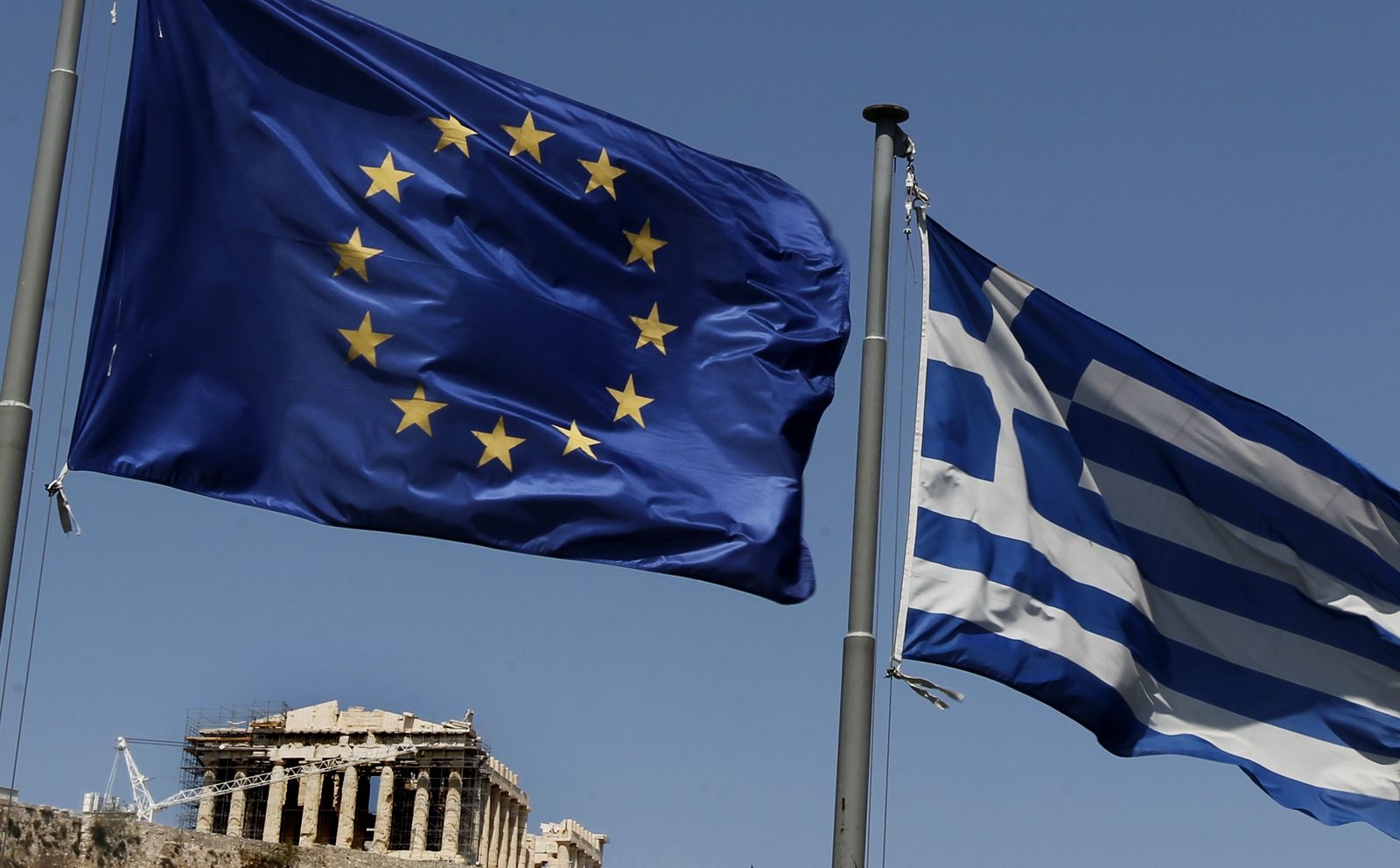
    Some of these people had to take illegal and risky journeys in boats to Greece because their passports had been revoked by the government.

  • Teacher abducted from Kyrgyzstan given 21-year prison sentence over Gülen links

    Teacher abducted from Kyrgyzstan given 21-year prison sentence over Gülen links


    İnandı was sentenced by the Ankara 23rd High Criminal Court on Friday on charges of “running an armed terrorist organization” due to his links to the Gülen movement, a faith-based group inspired by Muslim cleric Fethullah Gülen.

    The movement is labeled a terrorist organization by the Turkish government and accused of masterminding a failed coup in Turkey in July 2016. Both Gülen and his followers strongly deny any involvement in the abortive putsch or any terrorist activity.

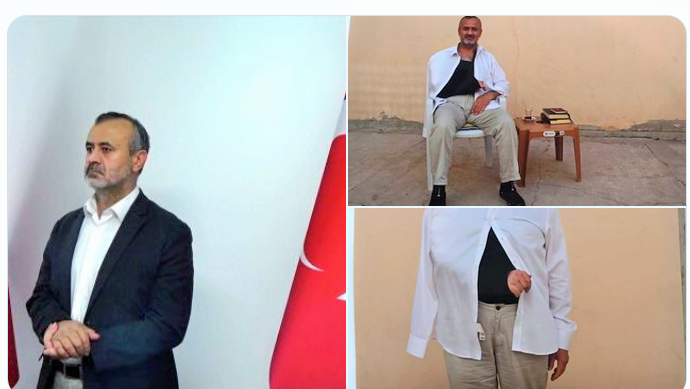
    İnandı, who was the founder and director of the prestigious Sapat school network operating in Kyrgyzstan, went missing at the end of May 2021 in Bishkek and was found in detention at the Ankara Police Department in early July. He was feared to have been abducted by Turkey’s National Intelligence Organization (MİT) due to his links to the Gülen movement as Turkey’s intelligence agency has been involved in unlawfully transferring people to Turkey from countries around the world.

    Kyrgyz lawmakers, citizens, prominent rights groups and activists around the globe held protests at the time, urging the Kyrgyz government to locate İnandı.

    Turkish President Recep Tayyip Erdoğan had acknowledged in a statement in July 2021 that İnandı was actually abducted by MİT, lauding the Turkish spies’ efforts in the rendition.

    An indictment drafted by the Ankara Chief Public Prosecutor’s Office in July 2021 charged İnandı with “managing an armed terrorist organization” and sought a prison sentence of up to 22 years.

    Photos of İnandı in handcuffs prompted allegations of torture due to İnandı’s visible weight loss and swollen right hand when he reappeared at the Ankara Police Department a month after his disappearance.

    At the first hearing of his trial in November 2021, İnandı confirmed the suspicions and said he was subjected to torture for 37 days and broke into tears as he recalled the details for an hour and a half. At the beginning of his testimony, the judges wanted to prevent him from talking about those days, but İnandı insisted.

    Human Rights Watch earlier said in a statement that the abduction, forcible disappearance and extrajudicial transfer of İnandı to Turkey by Turkish and Kyrgyz authorities amounted to egregious violations of international and domestic law.

    Since the coup attempt in July 2016 the Erdoğa government has employed extralegal methods to secure the return of its critics after its official extradition requests have been denied. The government’s campaign has mostly relied on renditions, in which the government and its intelligence agency MİT persuade the relevant states to hand over individuals without due process. The victims have been the subjects of a number of human rights violations including arbitrary arrests, house raids, torture and ill-treatment during these operations. A detailed account of the Erdoğan government’s transnational repression can be found in a report by the Stockholm Center for Freedom titled “Turkey’s Transnational Repression: Abduction, Rendition and Forcible Return of Erdoğa Critics.”

    In several of these cases the UN Working Group on Arbitrary Detention (WGAD) concluded that the arrest, detention and forced transfer to Turkey of Turkish nationals were arbitrary and in violation of international human rights norms and standards.

  • Strasbourg protestors to demand effective action from ECtHR on rights violations in Turkey


    A similar protest was held in front of the rights court in June 2022 with the attendance of hundreds of victims of a purge carried out by the Turkish government in the aftermath of a failed coup in Turkey in 2016 as well as activists and EU parliamentarians.

    The ECtHR is accused by victims of human rights violations in Turkey that increased after the coup attempt, when the government launched a crackdown on non-loyalist citizens under the pretext of an anti-coup fight, of not expeditiously processing applications from victims and in some cases of issuing rulings in favor of the Turkish government.

    The protest is being organized by the Peaceful Actions Platform, an umbrella organization comprising 24 civil society groups. The protest will be aired live by MC EU TV and the platform’s YouTube channel.

    In a press statement the Peaceful Actions Platform accused the ECtHR of remaining silent in the face of rights violations in Turkey for the past seven years.

    During the demonstration the protestors will submit a letter to the court’s president, Síofra O’Leary, in which they will ask the court to help the victims of rights violations in Turkey by swiftly concluding their applications.

    Mini concerts by Turkish singers and other activities will take place during the demonstration.

    Following the abortive putsch, the Turkish government declared a state of emergency and carried out a massive purge of state institutions under the pretext of an anti-coup fight. More than 130,000 public servants, including 4,156 judges and prosecutors, as well as 29,444 members of the armed forces were summarily removed from their jobs for alleged membership in or relationships with “terrorist organizations” by emergency decree-laws subject to neither judicial nor parliamentary scrutiny.

    According to a statement from then-Interior Minister Süleyman Soylu on July 5, 2022, a total of 332,884 have been detained, while around 101,000 others have been jailed due to alleged links to the Gülen movement since the failed coup. The minister said there were 19,252 people in Turkey’s prisons at the time who were jailed on alleged links to the movement while 24,000 others were at large.

    In addition to the thousands who were jailed, scores of other Gülen movement followers had to flee Turkey to avoid the government crackdown.

    Some of these people had to take illegal and risky journeys in boats to Greece because their passports had been revoked by the government.

  • Turkey escalates mass detentions in new wave of crackdowns on Gülen movement

    Turkey escalates mass detentions in new wave of crackdowns on Gülen movement


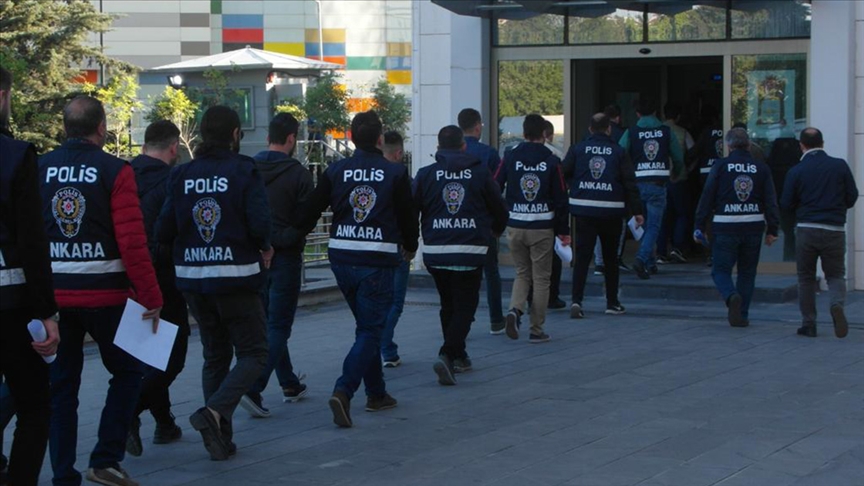
    According to the Kronos news website, the İstanbul Public Prosecutor’s Office on Thursday issued detention warrants for 34 former employees of Kaynak Holding, which was seized by the government in November 2015 due to its alleged links to the Gülen movement, a faith-based group accused by the government of “terrorist” activities. The police conducted operations across Turkey and detained 28 of the suspects.

    Turkey’s Savings Deposit Insurance Fund (TMSF) has took over major conglomerates including Kaynak Holding, Naksan Holding, Dumankaya, Boydak Holding and the Koza Ipek Group among 880 other private companies following a coup attempt on July 15, 2016.

    Twelve people including teachers, lawyers and businessmen were also detained on Wednesday in three provinces as part of investigation by the İzmir Chief Public Prosecutor’s Office that also included active duty and dismissed military officers and former military cadets.

    As part of an investigation launched by the Mersin Chief Public Prosecutor’s Office, detention warrants were issued on Thursday for 28 former military cadets. Some of them were accused of using ByLock, an encrypted messaging app used on smartphones that used to be available on Apple’s App Store and Google Play. Turkish police detained 23 of the suspects.

    The same day, six people were also detained by security forces in western Turkey as they attempted to flee to Greece.

    President Recep Tayyip Erdoğan has been targeting followers of the Gülen movement, inspired by Turkish Muslim cleric Fethullah Gülen, since the corruption investigations of December 17-25, 2013, which implicated then-prime minister Erdoğan, his family members and his inner circle.

    Dismissing the investigations as a Gülenist coup and conspiracy against his government, Erdoğan designated the movement as a terrorist organization and began to target its members. He intensified the crackdown on the movement following an abortive putsch that he accused Gülen of masterminding. Gülen and the movement strongly deny involvement in the coup attempt or any terrorist activity.

    The ByLock messaging app, once widely available online, is considered by the government to be a tool of secret communication among supporters of the movement. The UN Human Rights Council’s Working Group on Arbitrary Detention (WGAD) has repeatedly stated that arrest and conviction based on ByLock use in Turkey violated Articles 19, 21 and 22 of the International Covenant on Civil and Political Rights.

    Following the coup attempt, the Turkish government declared a state of emergency and carried out a massive purge of state institutions under the pretext of an anti-coup fight. More than 130,000 public servants, including 4,156 judges and prosecutors, as well as 24,706 members of the armed forces, were summarily removed from their jobs for alleged membership in or relationships with “terrorist organizations” by emergency decree-laws subject to neither judicial nor parliamentary scrutiny.

    In addition to the thousands who were jailed, scores of other Gülen movement followers had to flee Turkey to avoid the government crackdown.

  • Blind journalist questioned by police for refusing to recognize colleague as ‘terrorist’

    Arat, who had spent two years in jail due to alleged links to the faith-based Gülen movement following a coup attempt in Turkey in 2016, announced on Twitter on Monday that he was questioned by the police due to his remarks about the Gülen movement, journalist Bülent Keneş and President Recep Tayyip Erdoğan.


    The Gülen movement is accused of masterminding the coup attempt on July 15, 2016 and is labelled a terrorist organization by the Turkish government. The movement, inspired by the views of Turkish-Islamic scholar Fethullah Gülen, strongly denies any involvement in the failed putsch or any terrorist activity.

    Arat was asked about some of his earlier tweets during his interrogation at the Adana Police Department in southern Turkey in which he refused to recognize the Gülen movement and Keneş as terrorists.

    Last year, Turkey’s pro-government Sabah daily and state-run TRT Haber news station targeted Keneş by publishing secretly taken photos of him and broadcasting footage of his home in Stockholm.

    Keneş, an outspoken critic of the Turkish government, gained international attention after Turkey made his extradition a prerequisite for its approval of Sweden’s NATO membership.

    He is among the scores of Turkish journalists who had to flee Turkey following the coup attempt in order to avoid the government crackdown on critical journalists.