Category: World

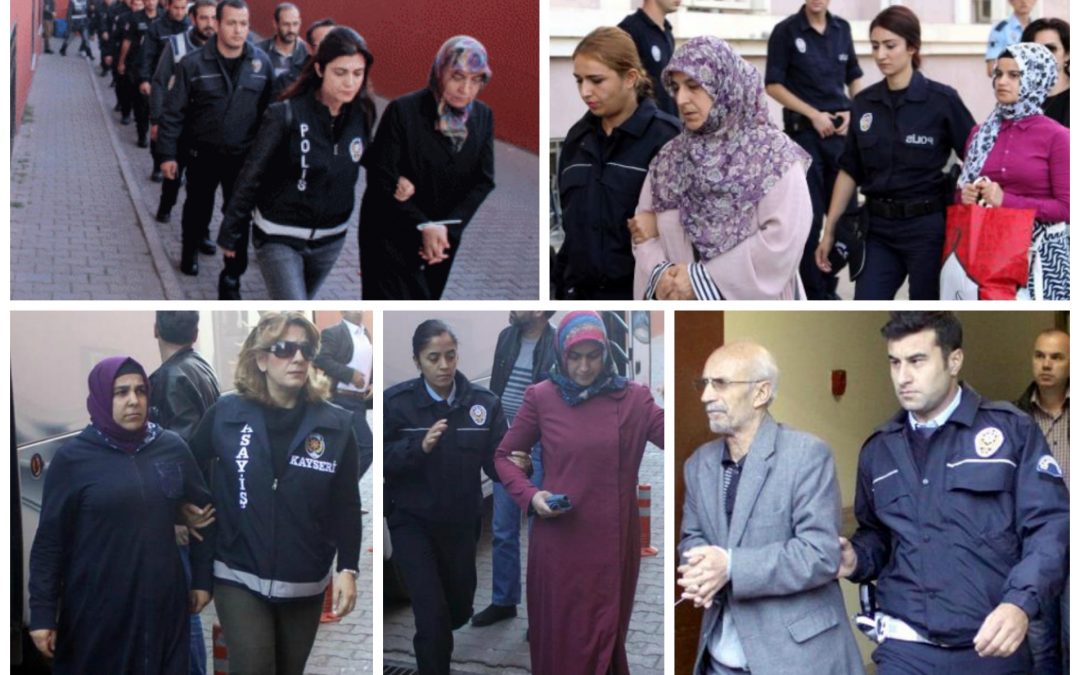
  • Students detained over Gülen links questioned about phone contacts, int’l travel history


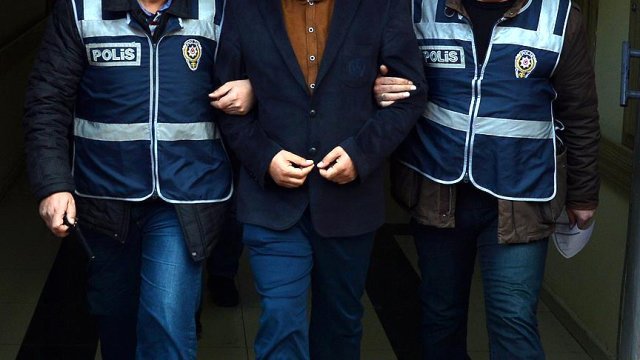
    The students were detained in İstanbul and other cities on June 9 based on the statements of a student identified by the initials B.Ç.

    According to Kronos, the police questioned the detainees regarding their possession of passports and driver’s licenses, their legal or illegal travel history abroad, the reasons behind their travels and their participation in any domestic or international trips organized by the Gülen movement.

    One of the students, identified only by the initials H.D., was reportedly asked about the identity of a person saved on her phone as “Peri.” H.D. stated that Peri was the name of a friend’s deceased cat.

    Kronos said another detainee, identified as Z.D., said she smoked in order to prove that she wasn’t a member of the Gülen movement.

    The students were released after giving statements to the police.

    Turkish authorities last week issued detention warrants for a total of 92 people due to alleged links to the movement as part of investigations launched by the chief public prosecutor’s offices in İstanbul, İzmir, Ankara and Konya provinces. The suspects included lawyers, doctors, nurses, teachers, businessmen, active duty and dismissed military officers and former military cadets.

    President Recep Tayyip Erdoğan has been targeting followers of the Gülen movement, inspired by Turkish Muslim cleric Fethullah Gülen, since the corruption investigations of December 17-25, 2013, which implicated then-prime minister Erdoğan, his family members and his inner circle.

    Dismissing the investigations as a Gülenist coup and conspiracy against his government, Erdoğan designated the movement as a terrorist organization and began to target its members. He intensified the crackdown on the movement following an abortive putsch that he accused Gülen of masterminding. Gülen and the movement strongly deny involvement in the coup attempt or any terrorist activity.

    Following the coup attempt, the Turkish government declared a state of emergency and carried out a massive purge of state institutions under the pretext of an anti-coup fight. More than 130,000 public servants, including 4,156 judges and prosecutors, as well as 24,706 members of the armed forces, were summarily removed from their jobs for alleged membership in or relationships with “terrorist organizations” by emergency decree-laws subject to neither judicial nor parliamentary scrutiny.

    In addition to the thousands who were jailed, scores of other Gülen movement followers had to flee Turkey to avoid the government crackdown.  Turkishminute.
  • Turkey issued detention warrants for 92 people over alleged Gülen links in a week


    Detention warrants for 19 people including lawyers, doctors, nurses and teachers were issued on Friday over alleged Gülen links by the İstanbul Chief Public Prosecutor’s Office in western Turkey. Turkish police detained 15 of the suspects.

    In two separate investigations, the Ankara Public Prosecutor’s Office on Tuesday issued detention warrants for 30 individuals including lawyers and former civil servants for alleged links to the Gülen movement. The police launched operations to detain the suspects.

    Nineteen people were also detained on Tuesday in nine provinces after the İzmir Chief Public Prosecutor’s Office issued detention warrants for 23 suspects including active duty and dismissed military officers and former military cadets.

    As part of an investigation launched by the Konya Chief Public Prosecutor’s Office, detention warrants were issued on Monday for 19 individuals including businessmen and active duty and former military officers. Some of them were accused of using ByLock, an encrypted messaging app used on smartphones that used to be available on Apple’s App Store and Google Play. Turkish police conducted operations in seven provinces and detained 18 of the suspects.

    President Recep Tayyip Erdoğan has been targeting followers of the Gülen movement, inspired by Turkish Muslim cleric Fethullah Gülen, since the corruption investigations of December 17-25, 2013, which implicated then-prime minister Erdoğan, his family members and his inner circle.

    Dismissing the investigations as a Gülenist coup and conspiracy against his government, Erdoğan designated the movement as a terrorist organization and began to target its members. He intensified the crackdown on the movement following an abortive putsch that he accused Gülen of masterminding. Gülen and the movement strongly deny involvement in the coup attempt or any terrorist activity.

    The ByLock messaging app, once widely available online, is considered by the government to be a tool of secret communication among supporters of the movement. The UN Human Rights Council’s Working Group on Arbitrary Detention (WGAD) has repeatedly stated that arrest and conviction based on ByLock use in Turkey violated Articles 19, 21 and 22 of the International Covenant on Civil and Political Rights.

    Following the coup attempt, the Turkish government declared a state of emergency and carried out a massive purge of state institutions under the pretext of an anti-coup fight. More than 130,000 public servants, including 4,156 judges and prosecutors, as well as 24,706 members of the armed forces, were summarily removed from their jobs for alleged membership in or relationships with “terrorist organizations” by emergency decree-laws subject to neither judicial nor parliamentary scrutiny.

    In addition to the thousands who were jailed, scores of other Gülen movement followers had to flee Turkey to avoid the government crackdown.turkishminute.

  • Authorities at Ankara’s Sincan Prison are arbitrarily revoking parole rights of political prisoners


    According to prisoners, they are being denied parole for reasons such as “reading too many books,” “consuming too much water,” “meeting with the prison imam” or “attending the open university while in prison.” Inmates’ lawyers said many political prisoners in Sincan Prison had not been released although they had been eligible for parole for several months.

    They explained there was a deliberate move to prevent political prisoners from being released from prison. “This is against the law and completely arbitrary,” said one lawyer. “Many political prisoners who have been incarcerated for a long time are deliberately prevented from being released.”

    Political prisoner Hanım Yıldırım, who was sent to prison more than seven years ago, has not been released despite being eligible for parole for 11 months. According to the prison administration, Yıldırım was not granted parole because she had not expressed regret for her alleged crimes.

    Moreover, she was told she would not be released because her brother had been arrested for alleged links to the Gülen movement, thus violating the principle of the individuality of a crime.

    The Turkish government accuses the faith-based Gülen movement of masterminding a coup attempt on July 15, 2016 and labels it a “terrorist organization,” although the movement strongly denies involvement in the coup attempt or any terrorist activity.

    According to the Turkish Penal Code, people convicted of membership in a terrorist organization are eligible for parole after serving two-thirds of their sentence.

    However, authorities have made it increasingly difficult for political prisoners to benefit from parole by requiring good behavior reports. Prisoners are also required to disclose their political beliefs and repent for their “crimes.” According to lawyers, this contravenes the Turkish Constitution.

    Former mayor of eastern Agri province Mukaddes Kubilay, who is currently incarcerated in Sincan Prison, was also not granted parole because she did not renounce her political views. She said she would never express any kind of regret for her beliefs and refused to have it used as a bargaining chip for her freedom.

    Zeynep Han Bingöl, 62, who was sentenced to seven years, six months in prison, said this practice was against good conscience and in violation of the law. She said there were several young Kurdish women in the prison who were not granted parole because of their political views.

    Another woman, Rojda Erez, who is also eligible for parole, has not been released for months because the prison administration confused her file with that of another inmate. The administration told Erez that she had killed her husband 15 years ago and that her release was delayed because she might hurt someone else. Erez, however, has never been married and is imprisoned for political reasons. When she pointed this out, the administration said it was a mistake but that she had consumed a lot of water during her time in prison so it was decided to keep her for a while as a disciplinary punishment.

    To legitimize the suspension of parole, prison authorities launch disciplinary investigations into political prisoners and issue them bad behavior reports. Good behavior reports are key for a prisoner to be eligible for parole.

    Opposition politicians have repeatedly criticized prison authorities for arbitrarily revoking parole rights; however, despite their outrage the authorities have continued the practice.Stockholm Center for Freedom

  • Widespread imprisonment of individuals with alleged Gülen links may constitute crimes against humanity:UN working group

    Widespread imprisonment of individuals with alleged Gülen links may constitute crimes against humanity:UN working group


    The case in question concerned Muhammet Şentürk, arrested and convicted of membership in a terrorist organization due to his alleged links to the Gülen movement, a faith-based group accused by the government of “terrorist” activities.

    “It expresses grave concern about the pattern that all these cases follow and recalls that, under certain circumstances, widespread or systematic imprisonment or other severe deprivation of liberty in violation of fundamental rules of international law may constitute crimes against humanity,” the UN working group said.

    WGAD urged the Turkish government to ensure a full and independent investigation of the circumstances surrounding the detention and to take appropriate measures against those responsible for the violation of their rights.

    Professor Şentürk was arrested on November 11, 2016, by officers from the counterterrorism unit of the Istanbul Police Department, on the basis of a warrant issued by the Karaman Public Prosecutor’s Office. After spending two days in custody at Pendik district police headquarters, he was taken to Karaman province, 800 kilometers away, in a police car. He was sentenced to six years, eight months’ imprisonment in March, 2018. The charges against him were based on membership in the Karaman Academic Youth Association, his alleged use of the ByLock application, taking part in a Gülen movement student organization, meeting with military cadets and having a bank account at Bank Asya, a Gülen movement-affiliated financial institution that at one time was one of Turkey’s biggest commercial banks.

    “The deprivation of liberty of Muhammet Şentürk, being in contravention of articles 2, 3, 7, 9, 10, 11 (1), 19 and 20 of the Universal Declaration of Human Rights and articles 2 (1), 9 (3), 14 (3) (e), 19, 21 and 26 of the International Covenant on Civil and Political Rights, is arbitrary and falls within categories I, II, III and V,” the working group said.

    Turkish President Recep Tayyip Erdoğan has been targeting followers of the Gülen movement since the corruption investigations of December 17-25, 2013, which implicated then-Prime Minister Erdoğan, his family members and his inner circle.

    Dismissing the investigations as a Gülenist coup and conspiracy against his government, Erdoğan designated the movement as a terrorist organization and began to target its members. He intensified the crackdown on the movement following a coup attempt on July 15, 2016 that he accused Gülen of masterminding. Gülen and the movement strongly deny involvement in the abortive putsch or any terrorist activity.

    In response to the allegations about the victim, the Turkish government gave no details concerning the specific situation of the individuals in question but provided its views on the Gülen movement. According to WGAD’s opinions, in both cases the Turkish government claimed that the movement “is now employing the strategy of presenting itself as the victim of human rights violations to hide its crimes.”

    Instead of responding to allegations the Turkish government requested “the special procedures of the Human Rights Council, including the Working Group on Arbitrary Detention, not to allow the Fethullahist terrorist organization and its members to abuse those mechanisms, and to dismiss their allegations.”

    The working group said it treats all submissions made to it equally and accepts them as allegations, inviting the government concerned to respond. “The onus is therefore on the Government to engage with the Working Group constructively by addressing the specific allegations made to assist the Working Group in reaching a conclusion in each communication brought to its attention,” WGAD said.

    The working group observed that in the present case, as in many others, the essence of the allegations of alliance with the Gülen movement was based on such regular daily activities. “Nothing in the materials before it allows the Working Group to conclude that these activities can be regarded as capable of generating a reasonable suspicion that he had committed the alleged criminal offences,” the working group said.

    Similarly, the working group said no evidence has been presented that “the activities of the petitioner, described above, could have been equated with being engaged in any terrorism-related activity.” turkishminute

  • Jailed Kurdish leader Demirtaş announces he’s stepping back from political engagement

    Jailed Kurdish leader Demirtaş announces he’s stepping back from political engagement


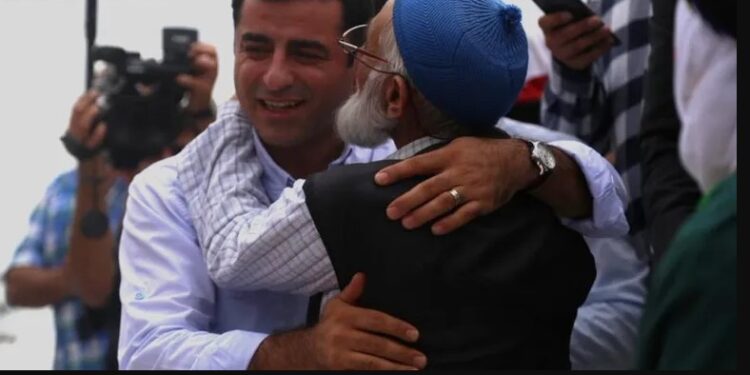
    Demirtaş, a former co-chair of the pro-Kurdish Peoples’ Democratic Party (HDP), has been behind bars since November 2016 on politically motivated charges.

    Sharing two paragraphs from an interview that will be published on Thursday on the Artı Gerçek news website in a tweet posted through his lawyers, Demirtaş expressed his gratitude for constructive criticism directed towards him, adding that he’s stepping back from political engagement “at this stage,” although he’ll continue the struggle “like every comrade from inside the prison.”

    The politician’s statement coincides with his article published on Artı Gerçek, in which he provides an analysis of the reasons behind the HDP’s poor performance in the May 14 general election, saying it wasn’t solely due to unfair competition.

    The HDP ran in the election under the banner of the Green Left Party (YSP) because the party faces the risk of being shut down due to an ongoing closure case against it. The YSP secured 8.8 percent of the vote in the elections, while the HDP won 11.7 percent in the 2018 parliamentary elections.

    Demirtaş stated that it would be “simplistic” to attribute the HDP’s failure in the election solely to such unfair conditions as the ruling Justice and Development Party (AKP) and its allies using all the resources of the state without limit, conducting a massive smear campaign against their rivals “without any regard for moral values” and “playing games at the ballot box.”

    “The alarm bells have been ringing for quite some time now, and these election results serve as a final warning. The way to silence the alarm bells and play victory songs lies in accurate analysis and proper action,” Demirtaş said.

    Stating that the HDP’s vote percentages decreased in 87 electoral districts, Demirtaş said it was mainly due to the party’s disorganized election campaign that lacked professionalism and the fact that the AKP and its far-right ally, the Nationalist Movement Party (MHP), had been conducting the campaign for the 2023 elections for the past five years.

    “Our party intensified its campaign one month before election day, but it was still a half-hearted and disorganized effort. On the other hand, the AKP-MHP government has been engaged in a form of [social] engineering … particularly over the past five years,” he said.

    According to Demirtaş, his attempt to conduct an election campaign from behind bars and his efforts to alarm the masses into working for a change of government have been misunderstood by some of his allies, who thought he was actually promoting himself.

    “I acknowledge my own shortcomings. … I should’ve put in more effort and pushed for collaboration. It’s also necessary for all my colleagues to engage in self-reflection because they haven’t correctly deciphered the AKP-MHP system and failed to make timely and appropriate moves. They also haven’t taken measures against the perception operations conducted against me,” the jailed leader added.

    Demirtaş said they need to make every topic, from the micro-level issues of society to the macro-level challenges, a main agenda and generate organizational and solution-oriented policies.

    “Nobody can make significant progress through slogans alone,” Demirtaş said, adding that social collapse becomes “inevitable” if they fail to explain democratic modernity to a population that has been so heavily exposed to capitalist modernity and provide them with “alternative, beautiful and honorable ways of living,” along with the necessary institutions.

    Demirtaş was an outspoken critic of Turkey’s ruling AKP and its leader, Erdoğan, before he was jailed. He ran in the presidential elections of 2014 and 2018 as a rival to Erdoğan. The imprisoned leader conducted his election campaign from jail for the 2018 election.

    Demirtaş also actively supported the YSP’s and opposition’s presidential candidate Kemal Kılıçdaroğlu’s election campaigns for the May elections on social media through his lawyers.

  • Crackdown on Gülen movement continues with detention of 12 following Erdoğan’s victory

    Crackdown on Gülen movement continues with detention of 12 following Erdoğan’s victory


    As part of an investigation launched by the İstanbul Chief Public Prosecutor’s Office, detention warrants were issued on Tuesday for 13 individuals including former military cadets over alleged links to the Gülen movement, a faith-based group accused by the government of “terrorist” activities.

    Turkish police conducted operations in nine provinces and detained 12 of the suspects.

    The accusations include secretly communicating with their contacts within the movement via payphones. The detention warrants were issued based on lists drafted by the country’s National Intelligence Organization (MİT) detailing people who used payphones.

    President Erdoğan has been targeting followers of the Gülen movement, inspired by Turkish Muslim cleric Fethullah Gülen, since the corruption investigations of December 17-25, 2013, which implicated then-prime minister Erdoğan, his family members and his inner circle.

    Dismissing the investigations as a Gülenist coup and conspiracy against his government, Erdoğan designated the movement as a terrorist organization and began to target its members. He intensified the crackdown on the movement following an abortive putsch that he accused Gülen of masterminding. Gülen and the movement strongly deny involvement in the coup attempt or any terrorist activity.

    The so-called “payphone investigations” are based on call records. The prosecutors assume that a member of the Gülen movement used the same payphone to call all his contacts consecutively. Based on that assumption, when an alleged member of the movement is found in call records, it is assumed that other numbers called right before or after that call also belong to people with Gülen links.

    Following the coup attempt, the Turkish government declared a state of emergency and carried out a massive purge of state institutions under the pretext of an anti-coup fight. More than 130,000 public servants, including 4,156 judges and prosecutors, as well as 24,706 members of the armed forces, were summarily removed from their jobs for alleged membership in or relationships with “terrorist organizations” by emergency decree-laws subject to neither judicial nor parliamentary scrutiny.

    In addition to the thousands who were jailed, scores of other Gülen movement followers had to flee Turkey to avoid the government crackdown.

  • Turkish FM says not all Syrians can be sent home since they are needed in labor market

    Turkish FM says not all Syrians can be sent home since they are needed in labor market


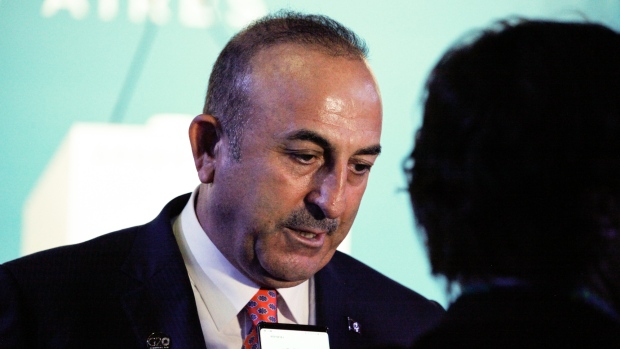
    “If we say we will send all Syrians back, this would not be accurate. Their labor is needed in some areas. My father has sheep, and he complains about not being able to find a shepherd,” Foreign Minister Mevlüt Çavuşoğlu said in televised remarks on Sunday

    The debate about the repatriating of Syrian refugees has heated up after the presidential election held on May 14 as Kemal Kılıçdaroğlu, the main opposition leader and presidential candidate, stepped up his rhetoric and called for the urgent expulsion of Syrian refugees in the country.

    Kılıçdaroğlu is seeking to defeat his rival, President Recep Tayyip Erdoğan, in the runoff election to be held on Sunday since neither of them managed to exceed the 50 percent threshold in the presidential election held on May 14.

    Turkey hosts nearly 3.5 million Syrian refugees who have fled civil war and were registered under temporary protection as of April 2023, according to official figures.

    Refugees in Turkey are frequently targeted by Turkish politicians, who hold them responsible for the social and economic problems in the country.

    Çavuşoğlu said Syrians are needed in Turkey’s agricultural and industrial sectors as well as in wholesale food and produce markets.

    Some people said on Twitter that Çavuşoğlu’s remarks were an admission of the fact that the government sees Syrian people as source of cheap labor.

  • Court releases all jailed suspects in 2002 murder case of Turkish academic


    Hablemitoğlu, an academic in the history department at Ankara University, was murdered outside his home in Ankara on Jan. 18, 2002.

    The Ankara 28th High Criminal Court on Friday released all six suspects due to the possibility of a change in the evidence in their favor.

    Among those who attended Friday’s hearing were suspects under arrest and former soldiers Levent Göktaş, Fikret Emek, Ahmet Tarkan Mumcuoğlu and Gökhan Nuri Bozkır; former intelligence officer Enver Altaylı; and Aydın Köstem, a Turkish arms smuggler who had long worked with the Turkish military and intelligence agency, as well as Mehmet Narin, a defendant who was previously released.

    Hablemitoğlu’s wife Şengül Hablemitoğlu and their daughters were also present in the courtroom.

    A total of 10 people are standing trial in the Hablemitoğlu murder case, including one of three fugitives, Islamic cleric Fethullah Gülen, a resident of the US whose views have inspired the Gülen movement.

    The Justice and Development Party (AKP) government designates the movement as a terrorist organization and accuses Gülen of masterminding a coup attempt on July 15, 2016. Gülen and the movement strongly deny involvement in the abortive putsch or any terrorist activity.

    Hablemitoğlu was known for his research and books on the Gülen movement.

    The movement has time and again been framed in conspiracy theories about Hablemitoğlu’s murder; yet after the 2016 coup attempt, these theories turned into an indictment that accuses the group of the murder.

    The AKP government launched a war against the Gülen movement after the corruption investigations of December 17-25, 2013 that implicated then-prime minister and current president Recep Tayyip Erdoğan’s family members and inner circle. Dismissing the investigations as a Gülenist coup and conspiracy, the AKP government labeled the movement as a terrorist organization and began to target its members. They intensified the crackdown on the movement following the attempted coup.

  • Elections well managed, but Erdoğan, ruling parties enjoyed unjustified advantage: int’l observers By Turkish Minute

    Elections well managed, but Erdoğan, ruling parties enjoyed unjustified advantage: int’l observers By Turkish Minute

    Elections in Turkey on Sunday were well managed and offered voters a choice between genuine political alternatives, but President Recep Tayyip Erdoğan and the ruling parties enjoyed an unjustified advantage, international observers representing the Organization for Security and Co-operation in Europe (OSCE) and the Parliamentary Assembly of the Council of Europe (PACE) said in a statement on Monday, the Stockholm Center for Freedom reported.

    International observers from PACE, the OSCE Office for Democratic Institutions and Human Rights (ODIHR) and the OSCE Parliamentary Assembly (OSCE PA) monitored the May 14 presidential and parliamentary elections in Turkey.

    The presidential election will be decided in a runoff, after incumbent President Erdoğan pulled ahead of his chief challenger Kemal Kılıçdaroğlu, leader of the main opposition Republican People’s Party (CHP), but fell short of an outright victory that would extend his rule into a third decade.

    The joint international observation mission found that the legal framework does not fully provide a basis for holding democratic elections.

    “These were competitive but still limited elections, as the criminalization of some political forces, including the detention of several opposition politicians, prevented full political pluralism and impeded individuals’ rights to run in the elections,” said Michael Georg Link, special coordinator and leader of the short-term OSCE observer mission. “Political interference in the electoral process is not in line with Türkiye’s international commitments.”

    Almost 61 million voters were registered to vote in the country as well as 3.5 million abroad, in an election that took place against the backdrop of devastating earthquakes in early February.

    “Turkish democracy is proving to be amazingly resilient. This election had a high turnout and offered a real choice. However, Türkiye does not fulfil the basic principles for holding a democratic election,” said Frank Schwabe, head of the PACE delegation. “Key political and social figures are in prison even after judgments of the European Court of Human Rights, media freedom is severely restricted and there is a climate of self-censorship. Türkiye is a long way from creating fair election campaign conditions.”

    According to the joint mission, misuse of public resources in some cases as well as announcements of significant social benefit programs provided undue advantage to those in power and blurred the line between party and state.

    The joint mission included 401 observers from 40 countries, made up of 264 ODIHR-deployed experts, long-term and short-term observers, 98 from the OSCE PA and 39 from PACE.

  • Mafia boss endorses Erdoğan’s candidacy, says nation needs him for another term


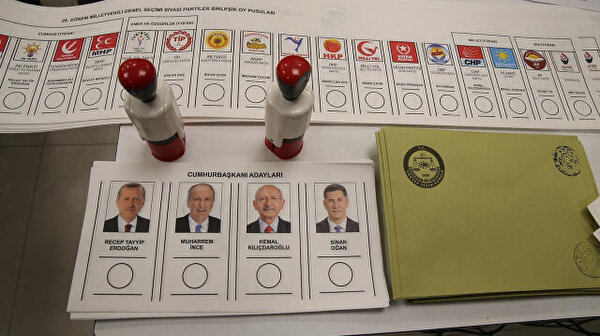
    Turkey held presidential and parliamentary elections on Sunday. According to the unofficial results of the presidential election, Erdoğan received 49.51 percent of the vote, while his main rival, Kemal Kılıçdaroğlu, the leader of the main opposition party and the joint presidential candidate of an opposition alliance, garnered 44.88 percent.

    A presidential runoff will be held on May 28 since none of the candidates were able to secure 50 percent of the vote plus one additional vote, a constitutional requirement for election to the position of president.

    In a statement posted on Twitter on Tuesday, Çakıcı called on people to foil the plans of “evil powers” in Turkey and abroad by electing Erdoğan for another term.

    Çakıcı said he chose to remain silent during the campaign leading up to the May 14 elections to avoid possible criticism that could target Erdoğan and the far-right Nationalist Movement Party (MHP).

    Çakıcı is known for his ties to MHP leader Devlet Bahçeli, an election ally of Erdoğan, and has been convicted of establishing and leading a criminal organization, ordering a murder, instigating an assault and insulting Erdoğan.

    He said he voted for the first time in 21 years in this election and that as a person who has the right to vote, thinks he has a right to speak out about the political situation in the country.

    Çakıcı praised Erdoğan’s ruling Justice and Development Party’s (AKP) infrastructure projects, saying he was shocked to see freeways, tunnels, airports, bridges and municipals hospitals in every part of Turkey after he was released from prison.

    Following Bahçeli’s call for a general amnesty, specifically citing Çakıcı, the mob boss was released on April 16, 2020 after serving 16 years of his decades-long sentence, as part of a law allowing for the release of tens of thousands of prisoners to ease overcrowding in Turkish jails during the coronavirus pandemic while excluding political prisoners convicted on terrorism charges

    “… our country and nation need our head of state, Mr Recep Tayyip Erdoğan, for another five years. It is important for him to complete his projects,” said Çakıcı, calling on people who respect him to vote for Erdoğan on May 28.