Category: World

  • [UPDATE] Turkey detains 126 in operation targeting Kurds ahead of critical elections


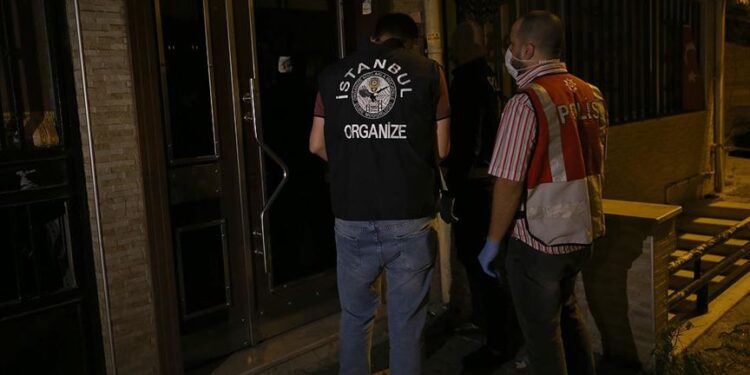
    The mass raids — described by sources as a “counterterrorism” operation — were carried out in 21 provinces including the majority-Kurdish southeastern province of Diyarbakır.

    State media TRT reported that police had detained people suspected of financing the outlawed Kurdistan Workers’ Party (PKK) or attracting new members to the group.

    Deemed a terrorist organization by Turkey and much of the international community, the PKK has been waging a decades-long war against the state for greater autonomy for the Kurdish minority.

    The operation also involved suspects who transferred money to the PKK from municipalities held by Turkey’s main pro-Kurdish party, the Peoples’ Democratic Party (HDP), TRT said.

    The HDP — the second largest opposition party in parliament — is widely seen as a kingmaker in the tight race.

    Erdoğan has often accused the HDP of alleged links to the PKK, which the party denies.

    The HDP said last month it would not field a presidential candidate in the May 14 elections, giving tacit support to Erdoğan’s main rival, Kemal Kılıçdaroğlu.

    The detainees include HDP politicians, journalists, lawyers and human rights activists.

    According to the pro-Kurdish Mezopotamya news agency (MA), police officers raided the houses of journalists from the agency, the Yeni Yaşam daily and Xwebûn, the only Kurdish-language newspaper distributed within Turkey; lawyers from the Association of Lawyers for Freedom (ÖHD) and the Diyarbakır Bar Association; politicians from the pro-Kurdish Democratic Regions Party (DBP); and activists from Turkey’s oldest human rights group, the Human Rights Association (İHD) early on Tuesday morning.

    Mezopotamya reported that its editor Abdurrahman Gök and correspondent Ahmet Kanbal were detained in addition to Yeni Yaşam’s managing editor Osman Akın; Kadri Esen, owner of Xwebûn; ÖHD Amed branch co-chair Halise Dakalı and lawyers Metin Özbadem, Özüm Vurgun, Bünyamin Şeker, Berdan Acun and Pirozhan Karali; DBP Co-chair Saliha Aydeniz’s press advisor Sezen Mercan; Yavuz Akkuzu, Özcan Ateş and Elvan Koçer Yıldırım from Amed City Theater; and politicians Halil Delen, Havva Bildik and Habat Mimkara.

    The Diyarbakır Bar Association said detention warrants have been issued for as many as 200 people, adding that a gag order has been imposed on the investigation. They said protective measures such as detention and arrest are used “without justification, necessity, and in a disproportionate manner” against human rights defenders.

    The ÖHD stated in a series of tweets that a 24-hour restriction on meeting with lawyers was imposed on their detained members and clients.

    “Political operations, illegitimate restrictions, and pressure can’t intimidate us. The defense will not be silenced! We will stand by our members, colleagues and clients!” the association added.

    Reacting to the operation on social media, HDP vice chair Tayip Temel also said it came weeks before the presidential and parliamentary elections slated for May 14 since Erdoğan and his ruling Justice and Development Party (AKP) were afraid of losing and were taking such steps to secure more votes.

    “The members of our party’s MYK [Central Decision Board], vice co-chairs, journalists, artists and lawyers, along with dozens of our friends, were detained in Amed. You can’t escape from defeat!” Temel said.

    Öztürk Türkdoğan, a parliamentary candidate for İstanbul from the Green Left Party (YSP) and former co-chair of the İHD, on Tuesday told the Artı Gerçek news website that the operation’s timing before the elections showed that it was carried out with political motives.

    “The government realized it will lose the elections. … I believe that such an operation was carried out to intimidate voters. … However, the voters won’t be affected by such operations anymore. I think this will backfire,” he added.

    İHD co-chair  Eren Keskin, a prominent Kurdish lawyer and human rights activist, also told Artı Gerçek that the morning raids and detentions were part of an “unlawful and arbitrary intimidation operation” aimed at the elections.

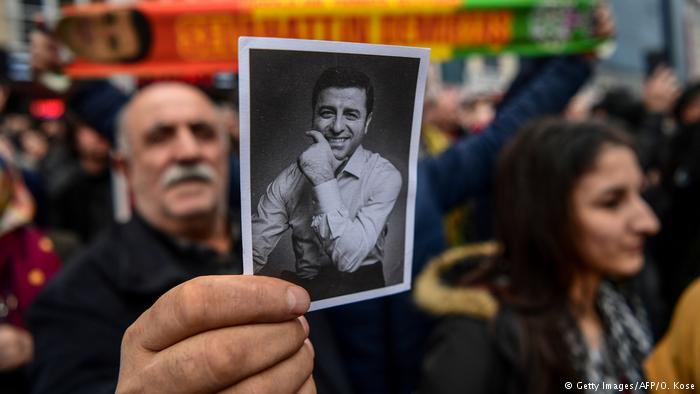
    Meanwhile, jailed Kurdish politician Selahattin Demirtaş tweeted through his lawyers that Interior Minister Süleyman Soylu had more people detained than attend his election rallies.

    Demirtaş called on HDP members across the country to conduct their election campaigns with patience and determination, saying that the government will not be able to prevent the advent of peace, welfare and democracy in the country.turkishminute
  • Journalist detained for ‘disseminating misleading information’ released on judicial probation

    Journalist detained for ‘disseminating misleading information’ released on judicial probation


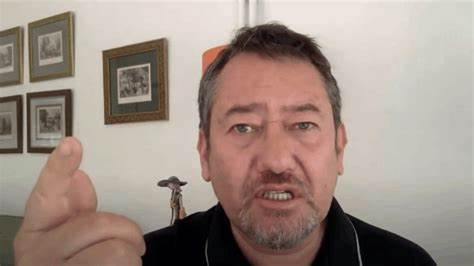
    Akinan was detained and taken to the police station in Ayvacık hours after he claimed that three helicopters carrying Islamic State in Iraq and the Levant (ISIL) militants from Libya and Syria landed near a hotel in Muğla where President Recep Tayyip Erdoğan was vacationing on the night of a failed coup in Turkey in 2016.

    Akinan said the helicopters carrying the ISIL militants arrived before the putschist soldiers who were allegedly planning to assassinate Erdoğan.

    He said there were records of phone conversations and a police report about the ISIL militants in the area on that night but that the police officer who reported about the ISIL militants in helicopters was killed after he was run over by a vehicle two days later.

    The detention of Akinan, who was taken to İstanbul for questioning, also came after an interview he conducted with a man named Muhammet Yakut, who has been making scandalous revelations on YouTube about Justice and Development Party (AKP) figures’ alleged links to dirty businesses, black money and mafia schemes as well as the shady background of the July 15 coup attempt.

    Citing the journalist’s lawyer, Serkan Günel, Turkish media reports said he was released on judicial probation later the same day after giving statements to the police and the prosecutor.

    “Thanks for your support! Down with tyranny, long live freedom!” Günel said in a tweet after announcing Akinan’s release.


    According to Günel, Akinan was detained for “disseminating misleading information” online, which was criminalized as part of a “disinformation” law that was approved by parliament with the votes of the ruling AKP and its ally the Nationalist Movement Party (MHP) in October, although it was vehemently opposed by Turkey’s main opposition groups.

    The legislation, which cements the government’s already-firm grip on social media platforms and news websites while criminalizing the sharing of information and came only seven months before a general election, was described by critics from within and without Turkey as yet another attack on free speech in the country.

    Criticism of the bill mainly focuses on Article 29, which amends the Turkish Penal Code by adding a provision (Article 217/A) that would subject persons found guilty of publicly disseminating “false or misleading information” to between one and three years in prison and would increase by half the penalty for offenders who hide their identity or act on behalf of an organization.

    The lawyer said that Akinan was also accused of insulting, threatening and targeting public officials.

    Akinan said in a video he released on Twitter early on Thursday that there is no doubt that he would continue engaging in his profession “in the same way” as Turkey needs free, independent journalists.


    Following his detention, people on social media expressed support for Akinan and demanded his release using the hashtags #gazetecilereözgürlük (freedom for journalists) and #GazetecilikSucDegildir (Journalism is not a crime).

    One of them was stage and film actor Şevket Çoruh, who said “Journalism isn’t a crime. Release Serdar Akinan,” in a video from the stage.


    Rights groups routinely accuse Turkey of undermining media freedom by arresting journalists and shutting down critical media outlets, especially since President Erdoğan survived a failed coup in July 2016.

    Turkey, which is one of the top jailers of journalists in the world, was ranked 149th among 180 countries in the Reporters Without Borders (RSF) 2022 World Press Freedom Index, released in May.

  • Businessman illegally brought to Turkey from Iraq arrested over Gülen links

    Businessman illegally brought to Turkey from Iraq arrested over Gülen links


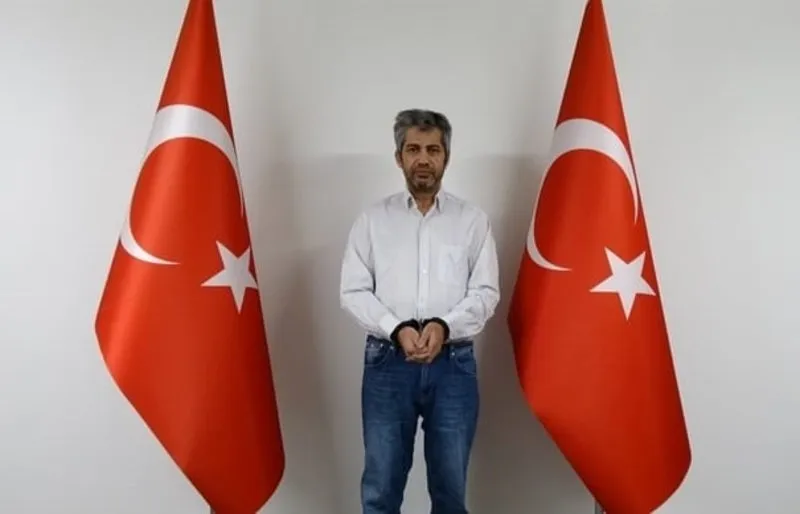
    Mehmet Cintosun, who went missing in Erbil, Iraq, on January 29, turned out to be in police custody in Turkey when photos of him were made public by MİT on April 14.

    He was sought on terrorism charges for alleged membership in the Gülen movement, a faith-based group accused by Ankara of orchestrating a failed 2016 coup and designated as a terrorist organization. The movement strongly denies involvement in the coup attempt or any terrorist activity.

    The businessman appeared before a court in the eastern province of Elazığ on Tuesday that ruled for his arrest on charges of terrorist organization membership due to his links to the movement.

    According to local reports, he was living with his wife and three children in Erbil and received a phone call on January 29 from the Kurdistan Regional Government (KRG) to discuss his residence permit pursuant to his registration by the United Nations High Commissioner for Refugees (UNHCR). His family has never heard from him since.

    The Cintosun family has been under the protection of UNHCR, according to the International Association for Human Rights Advocacy in Geneva (IAHRAG).

    The United Nations Committee on Enforced Disappearances also registered an Urgent Action request to Iraq on February 2, mentioning the seriousness of the situation, in particular the family’s “fear that he has been disappeared by the Turkish intelligence services (MIT) in order to bring him to Türkiye without him benefitting from applicable extradition and deportation due process rules.”

    Since the coup attempt in July 2016 the government of Turkish President Recep Tayyip Erdoğan has employed extralegal methods to secure the return of its critics after its official extradition requests were denied.

    In a joint letter UN rapporteurs accused the Turkish government of engaging in the systematic practice of state-sponsored extraterritorial abductions and forcible returns to Turkey, with at least 100 Turkish nationals renditioned from multiple states to Turkey.

    Most recently MİT confirmed in its annual report that it had conducted operations for the forcible return of more than 100 people with alleged links to the Gülen movement.

    “… [M]ore than 100 members of the [Gülen movement] from different countries were brought to Turkey as a result of the [agency’s] increased operational capacity abroad,” MİT’s 2022 report said.

    Erdoğan has been targeting followers of the Gülen movement, inspired by Turkish Muslim cleric Fethullah Gülen, since the corruption investigations of December 17-25, 2013, which implicated then-prime minister Erdoğan, his family members and his inner circle.

    Dismissing the investigations as a Gülenist coup and conspiracy against his government, Erdoğan designated the movement as a terrorist organization and began to target its members. He intensified the crackdown on the movement following the abortive putsch in 2016 that he accused Gülen of masterminding, a charge that Gülen strongly denies.

    Vice President Fuat Oktay earlier said in a speech in parliament that Turkish agents had conducted “diplomacy” with their counterparts in countries where Turkish nationals were abducted.

    An SCF report, released in October, 2021 and titled “Turkey’s Transnational Repression: Abduction, Rendition and Forcible Return of Erdoğan Critics,” focused on how the Turkish government under President Erdoğan has used extrajudicial and illegal methods for the forcible transfer to Turkey of its citizens abroad.

    In several of these cases the UN Working Group on Arbitrary Detention (WGAD) concluded that the arrest, detention and forced transfer to Turkey of Turkish nationals were arbitrary and in violation of international human rights norms and standards.

  • Turkey marks Eid al-Fitr holiday amid grief, longing for earthquake victims


    Turkey is still trying to recover from the trauma caused by the two powerful earthquakes, a magnitude 7.8 and a magnitude 7.6, which hit the country’s south and southeast on Feb. 6, claiming at least 50,500 lives. The temblor caused huge devastation across more than a dozen provinces as well as parts of Syria.

    Entire families perished in the thousands of buildings that were flattened in the first quake, which struck when people were still sleeping and had no chance to flee their homes.

    Relatives and remaining family members of the earthquake victims flocked to cemeteries in the early hours of the Eid to say prayers and be with their loved ones. They laid flowers and gifts around the graves as well as toys for the child victims of the earthquakes.

    Most of the victims were hastily buried in mass graves without a funeral ceremony, which led to further suffering and pain for their loved ones.

    This year’s Eid was also different for the survivors of the earthquakes since they no longer have homes where they can welcome their guests, set up big tables and enjoy the holiday, among the traditions of Eid. Most of them live in tents or container housing in the earthquake zone and say have still difficulty meeting their basic needs for shelter, water and food.

    The ruling Justice and Development Party (AKP) government, which was harshly criticized for its poor response to the tragedy, and pro-government media outlets present a rosy picture about the difficulties the victims have been experiencing for more than two months.

    Meanwhile, main opposition leader and presidential candidate Kemal Kılıçdaroğlu, who was in Adıyaman on Friday, one of the hardest-hit provinces, paid a visit to a cemetery in the city to share the pain of the people there and read prayers.

    As the crowd was praying, a man in the crowd began shouting, saying why is Kılıçdaroğlu reading the Surah al-Fatiha, the first surah of the Quran, when he does not even know how to read it.

    Many described the incident as an attack on Kılıçdaroğlu’s Alevi identity.

    Turkey is a majority Sunni country, with some in the conservative and religious population viewing Alevis as apostates. Alevis follow a heterodox Islamic tradition that separates them from Sunni and Shiite Muslims. Some view it as a cultural identity as much as a religious faith.

    Kılıçdaroğlu said in a tweet that he understands the pain and suffering of the people there and that he was not offended by the incident, which gained him appreciation for his tolerance.

  • Jailed Kurdish politician says voting for İnce the same as voting for Erdoğan

    Jailed Kurdish politician says voting for İnce the same as voting for Erdoğan


    Demirtaş gave an interview through his lawyers to BBC Turkish from Edirne Prison, where he has been jailed for around seven years.

    In a move that is expected to divide votes among Turkey’s opposition, İnce, a former presidential candidate from the main opposition Republican People’s Party (CHP), announced earlier in March that he would run in the May 14 presidential election. The politician qualified to run by collecting 111,301 signatures, the Supreme Board of Elections (YSK) announced last month.

    Commenting about İnce’s candidacy, Demirtaş said he can easily tell İnce’s voters to get ready for another five years with Erdoğan if they support İnce’s candidacy.

    “I’d advise them to vote directly for Erdoğan,” Demirtaş said.

    İnce is running against Erdoğan and CHP leader Kemal Kılıçdaroğlu, the joint candidate of a bloc of six opposition parties, known as the Nation Alliance.

    Many say İnce’s candidacy will prevent the election from being concluded in the first round, prompting Erdoğan and Kılıçdaroğlu to go to a runoff.

    Demirtaş, who also commented on the HDP’s decision not to field its own candidate in tacit support for Kılıçdaroğlu, said the HDP’s decision not to nominate its own candidate was Erdoğan’s biggest nightmare.

    He accused Erdoğan of trying to discredit Kılıçdaroğlu due to the HDP’s support for his candidacy since the HDP is accused by Erdoğan’s party and his far-right ally of having links to terrorism.

    According to Demirtaş, if Erdoğan had been sure about getting the HDP and Kurds’ support in the election, he would set up a tent in front of party headquarters and never leave.

    Demirtaş was arrested in November 2016 in a mass crackdown on Kurdish politicians and has been imprisoned since then despite a ruling from the European Court of Human Rights   in November 2018 that Demirtaş’s pretrial detention was political and ordering his release.turkishminute

  • Indictment of Kurdish journalists jailed for 10 months accepted by court


    The first hearing in the trial will be held at the Diyarbakır 4th High Criminal Court on July 11, more than a year after they were jailed on terrorism-related charges.

    MLSA co-director and lawyer Veysel Ok tweeted that the delayed preparation of indictments is a way of punishing defendants. He said the journalists will have already spent one year in jail before appearing in court, adding that they should be released immediately since they’ve been unjustly deprived of their freedom for months.

    Sixteen of the 21 detainees, including Serdar Altan, co-chair of the Dicle Fırat Journalists Association (DFG), Mezopotamya news agency (MA) Editor-in-Chief Aziz Oruç and JinNews News Director Safiye Alagaş, were arrested by a court on June 16, 2022 after they had been held in custody for eight days, in a move that sparked outrage among opposition politicians, members of the press and rights activists.

    The Kurdish journalists, who had been detained as part of an operation overseen by the Diyarbakır Chief Public Prosecutor’s Office, were arrested on charges of membership in a terrorist organization, a charge included in the indictment.

    Kurdish journalists in Turkey frequently face legal harassment, stand trial and are given jail sentences for covering issues related to Kurds and the outlawed Kurdistan Workers’ Party (PKK), which has been waging a bloody campaign in Turkey’s southeast since 1984 and is listed as a terrorist organization by Turkey and much of the international community.

    Rights groups routinely accuse Turkey of undermining media freedom by arresting journalists and shutting down critical media outlets, especially since President Recep Tayyip Erdoğan survived a failed coup in July 2016.

    Turkey, which is one of the top jailers of journalists in the world, was ranked 149th among 180 countries in the Reporters Without Borders (RSF) 2022 World Press Freedom Index, released in May.

  • Kurdish villager dumped from helicopter sentenced to prison on terrorism conviction


    The ruling from the Mersin 2nd High Criminal Court concerns Osman Şiban, who along with another Kurdish villager, Servet Turgut, were detained by gendarmes while working on their farm in the eastern province of Van in in September 2020 and were allegedly pushed out of a military helicopter. Initial reporting on the incident by rights groups and media outlets cited a medical report giving the reason for their admission to the hospital as a “fall from a height.”

    Yet, research by opposition deputy and investigative journalist Ahmet Şık revealed in November 2020 that the villagers were in fact assaulted by a mob of more than 100 soldiers.

    No individual involved in the incident has been indicted, although families of the victims have filed criminal complaints against the relevant security force members. However, criminal charges were filed against Şiban in December 2021 by the Van Chief Public Prosecutor’s Office. In the indictment, Şiban was accused of membership in the outlawed Kurdistan Workers’ Party (PKK), which is listed as a terrorist organization by Turkey and much of the international community.

    According to the indictment, Şiban provided logistical support to the PKK, with militants receiving food from his house in the village of Surik. Three 40 to 50-liter containers of diesel fuel that were found in the vicinity of Şiban’s house were also considered evidence in the indictment.

    The indictment also included the testimony of an informant who claimed that two top PKK figures, Murat Karayılan and Mahsum Korkmaz, had a meeting at Şiban’s house at the time.

    At the last hearing on Tuesday, Şiban was given the lengthy prison sentence on charges of terrorist organization membership. A travel ban imposed on him would also remain in place, according to the court’s decision.

    Şiban did not attend the hearing. His lawyers said they would appeal the court’s decision, which means that their client will not immediately be jailed.

    Interior Minister Süleyman Soylu, who spoke in parliament in November 2020 about the incident concerning Şiban and Turgut, did not respond to the allegations of torture, yet described them as “militia” of the PKK.

    In fact, throwing people to their death from a helicopter was commonplace in Turkey in the 1990s, when the Kurds were the victims of extraordinary violence. As is the case today, the then-ill treatment received almost no media coverage. Human Rights Watch (HRW) reported in 1995 that suspected female terrorists were thrown from a helicopter on May 14, 1994, citing a “reliable” witness.

  • Prosecutor seeks prison sentence for journalist who returned to Turkey for election campaign

    Cengiz Çandar, 75, appeared before an İstanbul court on Monday for a trial in which he faces charges of “praising crime and criminals” in a 2017 tweet decrying the death of a woman killed while fighting Islamic State in Iraq and the Levant (ISIL) militants in northern Syria.

    The journalist returned to Turkey on Sunday from the French city of Nice where he was spending the winter.

    Ayşe Deniz Karacagil was killed in northern Syria in May 2017 while fighting alongside the People’s Protection Units (YPG), a Kurdish militant group that spearheaded the fight against the self-proclaimed ISIL caliphate. Karacagil became famous in Turkey after standing trial on terrorism charges for wearing a red neckscarf during the countrywide anti-government protests in 2013 that erupted over plans to demolish Gezi Park in the Taksim neighborhood of İstanbul.

    Upon Karacagil’s death, Çandar tweeted, “The girl wearing a red scarf [Karacagil], the angel of Gezi with the most beautiful smile warming our hearts, has fallen before Raqqa and risen to the stars, once again searing our hearts.”

    An investigation was launched two years after the tweet was posted, culminating in legal proceedings in July 2020. The first hearing of the trial was held in İstanbul in January 2021. Çandar did not attend since he was living abroad at the time.

    The journalist left Turkey for Sweden in May 2016 upon the invitation of the Stockholm University Institute for Turkish Studies (SUITS) to work as a visiting scholar.

    Ankara maintains that the YPG is indistinguishable from Turkey’s outlawed Kurdistan Workers’ Party (PKK); hence, Karacagil’s association with the YPG is deemed a “crime” by the country’s judiciary.

    During Monday’s hearing, the prosecutor presented his final opinion and asked the court to sentence Çandar to two years in prison on charges of praising crime and criminals.

    Çandar denied the charges and demanded his acquittal, saying that as a father, he was moved by a social media post about Karacagil and did not even know the woman’s name at the time.

    The trial was adjourned until May 16.

    Monday’s hearing was scheduled for Tuesday but was moved to Monday because Çandar will attend a meeting of the Green Left Party (YSP) on Tuesday where the party’s parliamentary candidates will be introduced.

    Turkey will hold presidential and parliamentary elections on May 14.

    Çandar has been nominated by the YSP from the predominantly Kurdish province of Diyarbakır, where it is almost certain that he will be elected.

    The pro-Kurdish Peoples’ Democratic Party (HDP) decided to run under the banner of the YSP in the parliamentary elections in a bid to circumvent the risks that could emerge from its possible closure ahead of the elections.

    Çandar is known for his work on the Kurdish issue, a term prevalent in Turkey’s public discourse that refers to the demand for equal rights by the country’s Kurdish population and their struggle for recognition. He has written several books on the Kurdish issue.

  • Iraqi Kurds protest Turkish bombardment of airport


    The bombardment on Friday caused an explosion near the airport wall while the commander of the Kurdish-led and US-allied Syrian Democratic Forces (SDF) was present. US troops were also in the area but there were no casualties, the Pentagon said.

    Around 400 protesters, many of them middle-aged, walked in the center of Sulaimaniyah, the second city in Iraq’s autonomous Kurdistan region.

    They waved the flag of Iraqi Kurdistan and held a banner denouncing the airport bombardment as a “terrorist act.”

    Organized by activists and former parliamentarians, the demonstrators also shouted against the “dictator” President Recep Tayyip Erdoğan of Turkey, according to an AFP correspondent.

    “This is not the first Turkish aggression against civilian targets in the region,” said Ali Amine, 66, a retired civil servant.

    “It has become a permanent attack. Sometimes it’s villages, sometimes civilian targets — agricultural land, water or electricity installations.”

    Another protester, Fatma Hamid, 55, denounced “the lax positions” of authorities in the region which has been autonomous for three decades.

    Turkey has long maintained military positions inside northern Iraq, where it regularly launches operations against the militants of the outlawed Kurdistan Workers’ Party (PKK).

    The PKK, which Ankara and its Western allies classify as a “terrorist” organization, operates rear bases in Iraq’s north.

    Since 1984 the PKK has waged an insurgency in Turkey that has claimed tens of thousands of lives.

    Turkey regards the main component of the SDF, the People’s Protection Units (YPG), as an offshoot of the PKK.

    On April 3, Ankara halted flights to and from Sulaimaniyah until at least July 3, blaming increased PKK activity in and around the airport.

    A source at the Turkish defense ministry denied any involvement by the country’s military in the bombardment of Sulaimaniyah airport.

    Iraqi President Abdel Latif Rashid on Saturday condemned Turkey’s “military operations against the Kurdistan region, the last being the bombardment against Sulaimaniyah civilian airport.” Turkishminute

  • 61 detained over alleged Gülen links in a week

    61 detained over alleged Gülen links in a week


    In an investigation launched by the İzmir Chief Public Prosecutor’s Office, detention warrants were issued on Wednesday for 25 individuals including 16 former military cadets over alleged Gülen links. Police conducted operations in 10 provinces across Turkey and detained 22 of the suspects.

    The İstanbul Chief Public Prosecutor’s Office on Tuesday issued detention warrants for 23 suspects including doctors and teachers over alleged Gülen links. Police carried out operations in four provinces during which 20 of the suspects were detained.

    The same office issued detention warrants in a separate investigation for seven university students and two other people. Police conducted operations in two provinces to detain the suspects on Tuesday.

    Turkish President Recep Tayyip Erdoğan has been targeting followers of the Gülen movement, inspired by Turkish Muslim cleric Fethullah Gülen, since the corruption investigations of December 17-25, 2013, which implicated then-prime minister Erdoğan, his family members and his inner circle.

    Dismissing the investigations as a Gülenist coup and conspiracy against his government, Erdoğan designated the movement as a terrorist organization and began to target its members. He intensified the crackdown on the movement following an abortive putsch in July 2016 that he accused Gülen of masterminding. Gülen and the movement strongly deny involvement in the coup attempt or any terrorist activity.

    On Tuesday, 10 people were also detained in Ankara after the Ankara Chief Public Prosecutor’s Office issued detention warrants for 17 suspects, some of whom were accused of using ByLock, an encrypted messaging app used on smartphones that used to be available on Apple’s App Store and Google Play.

    The ByLock messaging app, once widely available online, is considered by the government to be a tool of secret communication among supporters of the movement. The UN Human Rights Council’s Working Group on Arbitrary Detention (WGAD) has repeatedly stated that arrest and conviction based on ByLock use in Turkey violated Articles 19, 21 and 22 of the International Covenant on Civil and Political Rights.

    Following the abortive putsch, the Turkish government declared a state of emergency and carried out a massive purge of state institutions under the pretext of an anti-coup fight. More than 130,000 public servants, including 4,156 judges and prosecutors, as well as 24,706 members of the armed forces, were summarily removed from their jobs for alleged membership in or relationships with “terrorist organizations” by emergency decree-laws subject to neither judicial nor parliamentary scrutiny.

    In addition to the thousands who were jailed, scores of other Gülen movement followers had to flee Turkey to avoid the government crackdown.