Category: World

  • Sweden agrees to one Turkey extradition amid NATO bid


    Turkey has accused Sweden of providing a safe haven for dozens of suspects it believes are linked to a failed 2016 coup attempt and a decades-long Kurdish war for an independent state, and has therefore held back on ratifying its NATO application.

    Sweden’s justice ministry said it had agreed to the extradition of Ömer Altun, a 29-year-old Turkish citizen sentenced last year by a Turkish court to 15 years in prison for “what in Sweden would be the equivalent of fraud.”

    The ministry said the extradition was only agreed on the condition that Altun would be granted a retrial upon his return to Turkey.

    The decision, a copy of which was obtained by AFP and was dated March 30, came after Sweden’s Supreme Court gave the green light for the extradition.

    “The government shares the Supreme Court’s assessment that there is nothing blocking the extradition of Ömer Altun to Turkey,” it said.

    Stockholm has repeatedly stressed that its judiciary is independent and has the final say in extraditions.

    The government did however reject an extradition request concerning 51-year-old Mehmet Zakir Karayel, a Swedish citizen whom Ankara suspects of being a member of an “armed terrorist organization,” according to documents from the Swedish justice ministry.

    Under Swedish law, “a Swedish citizen cannot be extradited,” it wrote.

    The Scandinavian country has extradited at least two Turkish citizens in the past year but rejected requests for several others, including one for the former editor-in-chief of the Today’s Zaman daily, whom Turkey accuses of being involved in a 2016 attempt to topple President Recep Tayyip Erdoğan.

    In a historic turnaround, Sweden and Finland abandoned their longstanding policies of military non-alliance and applied to join NATO after Russia invaded Ukraine.

    After months of delay, Ankara ratified Finland’s membership last month, enabling it to become of a full member of the defense alliance this week.
  • Antakya’s earthquake victims doubt Erdoğan’s rebuilding pledge


    Half a dozen growling excavators were levelling what was left of the 60-year-old apartment complex in the ancient Syria-border city of Antakya.

    Hundreds more swung their giant arms and raised a cacophony of noise across this mountain-ringed melting pot of ancient civilization.

    Antakya was known as Antioch until it became part of Turkey and inherited the mantle of one of the region’s most free-spirited cities.

    Its skeletal remains — precariously standing since a 7.8-magnitude quake unleashed its devastation exactly two months ago — were now being turned to rubble and dust.

    What comes in their place — and when — is a matter of intense social and political debate.

    “I don’t think the reconstruction can be accomplished in a year,” Çimen said, while watching his home being torn down.

    “Maybe somewhere else. But here, under these conditions, removing the rubble alone will take at least a year.”

    Antakya bore the brunt of a calamity that claimed more than 50,000 lives and tested the leadership of President Recep Tayyip Erdoğan ahead of May 14 elections.

    Erdoğan has made a bold campaign pledge to rebuild the entire disaster zone — originally home to more than 13 million people — by the start of next year.

    Few of those who remain in the hollowed shell of this city believe him.

    The stench of decomposing bodies wafts in with the wind from piles of uninspected rubble and random street corners.

    Lines of hanging laundry betray signs of life persevering in all the emptiness and ruin.

    Patches of the old city center — once a vibrant maze of romantic cafes and boutique shops — remain impassable because of meters-high mounds of debris.

    Erdoğan told the nation on Wednesday that half the rubble had already been cleared from Antakya’s Hatay province.

    Retiree Gökhan Karaoğlan treated Erdoğan’s pledges with a healthy dose of scorn.

    “It’s been two months and they still haven’t cleared the rubble,” the 54-year-old said.

    “It will take another three, four or five years. Meanwhile, we live in misery.”

    The chief engineer at the demolition site said workers were under orders to raze buildings most liable to collapse first.

    “Even the buildings you still see standing are damaged will eventually be torn down,” Murat Sırma said.

    “I think very few buildings will remain when this is all over,” said the 45-year-old.

    “Maybe five or 10 percent of them.”

    It is hazardous work. The dust is intermixed with cement and poisonous material such as asbestos — an insulant linked to cancer.

    Huge chunks of buildings often come crashing down in a tidal wave that covers the entire site in tall plumes of noxious dust.

    The workers tend to wear face masks. Locals who gather to watch the destruction do not.

    “There are 1,000 excavators working in Hatay,” Sırma said. “That’s a huge amount of work.”

    Heavy lorries piled high with the rubble clog that city’s outer roads.

    They trundle towards one of a handful of government-designated landfills that are then doused with water to keep down the dust.

    Many in Antakya appear so subsumed by shock and grief that they fail to clearly visualize a future that comes after all the debris is removed.

    Turkey’s record of rebuilding historic cities is blemished by the example of Diyarbakır — a mostly Kurdish city whose twice-reconstructed old town lacks much of the original’s charm.

    Engineer Sırma said the new plans for Antakya’s construction would be laid down once all the rubble is removed.

    Emina Burc could not think that far ahead.

    The 39-year-old divorcee joined a handful of others to watch excavators tear down the remains of her home.

    “To be honest, I feel like we’re the living dead,” she said.

    But Karaoğlan said he was clinging on to hope.

    “This is where I was born, this is where I built my home, and this is where I will eventually die,” he said.

    © Agence France-Presse

  • Turkish court files complaint against lawyer of academic who died in prison, due to remarks about trial


    Özşengül repeatedly mentioned his heart condition in court and told the judges he would die if he had another cardiac arrest in prison. However, the court unanimously decided that Özşengül should remain incarcerated.

    The retrial of Özşengül based on a separated case file was held on March 21 after the Supreme Court of Appeals overturned his conviction in December. The prosecutor submitted his final opinion and asked the court to drop Özşengül’s case. In his statement protesting the opinion, Özşengül’s lawyer, Mustafa Bal requested his client’s acquittal.

    “Some judges and prosecutors have taken the easy way out and have found it safer to cast aside the principles of justice and the rule of law and to serve under remote control,” Bal said, according to Expression Interrupted.

    The court ruled to dismiss the case against Özşengül due to his demise and decided to file a criminal complaint with the İstanbul Chief Public Prosecutor’s Office against Bal for “insulting” and “targeting” the court.

    Özşengül, who died at the age of 56, retired in 2014 as a lecturer at the Police Academy. After a controversial coup attempt on July 15, 2016, he was taken into custody and arrested for alleged membership in the Gülen movement, a faith-based group inspired by Turkish cleric Fethullah Gülen, which the government of President Recep Tayyip Erdoğan has declared a terrorist organization. The movement strongly denies any involvement in the failed coup.

    He was sentenced to life in prison by an İstanbul court in 2019. After the Supreme Court of Appeals overturned the decision, he was retried, and this time he was sentenced to 12 years. The verdict was again appealed at the top court and the Supreme Court of Appeals again overturned his conviction on December 8

  • Violence resumes at Jerusalem’s Al-Aqsa Mosque for a second night

    The confrontations, during the Muslim holy month of Ramadan and on the eve of the Jewish Passover holiday, triggered a cross-border exchange of fire in Gaza and stoked fears of further violence.

    In the second instance, late at night, police entered the compound and tried to evacuate worshippers, using stun grenades and firing rubber bullets, said staff of the Waqf, the Jordanian-appointed Islamic organisation managing the complex.

    Worshippers threw objects at police, witnesses said. The Palestinian Red Crescent said six people were injured.

    In a statement, police said dozens of youngsters brought rocks and firecrackers into the mosque and had tried to barricade themselves inside. The Waqf, however, said police entered the mosque before prayers were over.

    Less than 24 hours earlier, police raided the mosque to try to remove what they said were masked agitators who locked themselves inside after attempts to remove them by dialogue failed.

    The Palestinian Red Crescent said 12 Palestinians were injured in the earlier clash, including from rubber-tipped bullets and beatings. Israeli police said two officers were injured.

    White House national security spokesman John Kirby voiced concern about the violence at the mosque and said it was imperative that Israelis and Palestinians de-escalate tensions.

  • Turkish police tortured earthquake looting suspects: rights groups


    In a joint report, Amnesty and Human Rights Watch (HRW) accused Turkish police and the armed forces of using the state of emergency declared by President Recep Tayyip Erdoğan after the earthquake as a “license to torture.”

    In a response before the report was published, the Turkish justice ministry said Ankara had “zero tolerance” for torture but dismissed the findings without responding specifically to them, Amnesty and HRW said.

    The report said one person died in custody after being tortured.

    It said all the incidents occurred in the 10 provinces covered by the state of emergency but mostly concentrated in Antakya city, Hatay province, one of the areas worst hit by the February 6 quakes.

    Hugh Williamson, Europe and Central Asia Director at HRW said they were a “shocking indictment of law enforcement practices.”

    “Law enforcement officials are treating the state of emergency for the natural disaster as a license to torture, otherwise ill-treat and even kill with impunity,” he added in a statement.

    Esther Major, senior research adviser for Amnesty International’s Europe office, told AFP: “We recognize the size of the catastrophe that has happened, but within that context, a state of emergency must not lead to lawlessness and impunity, to torture and other ill-treatment.”

    The groups said they had interviewed 12 victims of alleged torture and other ill treatment and reviewed video footage of 13 such cases involving 34 male victims.

    They said in four cases, the victims were Syrian refugees and the attacks bore signs of additional xenophobic motivation.

    The report found in the majority of cases, victims were not taken into official custody, but immediately beaten or made to lie or kneel down while being kicked, slapped and sworn at for prolonged periods. In only two cases has there been any subsequent investigation.

    One Turkish man, Ahmet Güreşçi, 27, died after being arrested along with his brother Sabri and then being subjected to torture including attempted anal rape with police batons.

    Sabri Güreşçi was later released pending the investigation but three gendarmes have since been suspended over his brother’s death, the rights groups said.

    While emphasizing Turkey’s zero tolerance policy on torture, the justice ministry told the rights groups their findings were “vague claims devoid of a factual basis” and did not directly address them.

    Emma Sinclair-Webb, HRW associate director and Turkey director, said the 13 cases documented by the groups represented just the “tip of the iceberg.”

    “We have to admit there was security challenges, with theft and looting,” she told AFP.

    “However, the way of dealing with that is not to resort to completely prohibited means, with one case resulting in a death in custody.”

    The 7.8-magnitude and 7.5-magnitude earthquakes and aftershocks killed more than 55,000 people across southeastern Turkey and parts of war-torn Syria.

  • Documentary reveals injustices of post-coup purge faced by Turkish judges, prosecutors


    A documentary focusing on the injustices faced by nearly 5,000 judges and prosecutors in Turkey who were fired by government decrees in the aftermath of an abortive putsch on July 15, 2016 as well as the consequences of their purge has premiered on YouTube.

    The documentary, titled “Yellow Heat” (Sarı Sıcak) and directed by Bedrettin Uğur, a TV journalist in exile, was released Tuesday on CBJTV, the YouTube channel of the Cross Border Jurists, an association founded by purged Turkish jurists to monitor human rights violations.

    Following the coup attempt, the Turkish government declared a state of emergency and carried out a massive purge of state institutions under the pretext of an anti-coup fight. More than 130,000 public servants, including 4,156 judges and prosecutors, were summarily removed from their jobs for alleged membership in or relationships with “terrorist organizations” by emergency decree-laws subject to neither judicial nor parliamentary scrutiny.

    The documentary said Turkey fell by scores of positions in the World Justice Project Rule of Law Index after 2015 and ranked 116th among 140 countries in 2022.

    In the documentary judges Ünal Ocak, Saim Nergiz, Esat Özdem, Tuğba Demir and Esma Üçler Koç and prosecutor Mustafa Doğan, some of whom were jailed after they were purged from their jobs, recounted details of the injustices they and their colleagues experienced in the aftermath of the attempted coup.

    All the judges and the prosecutor currently live in exile.

    The judges claimed that the purge of judicial members in Turkey was part of a plan devised by the Justice and Development Party (AKP) government long before the coup attempt.

    “I saw my name on a red list approximately 13 months before July 15. … Even before news of the coup attempt came [to us], the names of 2,700 people [who would be dismissed] had already begun to be published on WhatsApp groups,” Özdem said.

    Nergiz said when they saw the list of purged people later on, they noticed that the lists contained the names of deceased individuals as well.

    “Even a person with an average IQ can see that these lists were not prepared on July 15. They were worked on for years … and they waited to push the button on a day that happened to be July 15,” he added.

    Üçler Koç talked about her prosecution after the coup attempt and said, “It’s very difficult to be treated contrary to your profession. I was arrested in my own courtroom. I was tried in my own courthouse.”

    Regarding the situation of the judiciary after the post-coup purge, Özdem said it was filled with people with no experience in the profession, adding that it wasn’t possible to expect fair decisions or independent judgments from them.

    “The judiciary was completely overthrown and lost its independence, turned into a body under the command of politics,” he added.

    “Law has been put on the shelf, but humanity has also been put on the shelf,” Demir said, explaining that she was so desperate that she got on a boat with her 2-year-old infant and fled to Greece across the Maritsa River, the land border between the two countries.

    When asked what would happen to the judges and prosecutors involved in the injustices they suffered following the attempted coup, Üçler Koç said she knew she wouldn’t be impartial about their possible prosecution and would certainly want them to be tried, insisting that “these atrocities not go unpunished.”

    The AKP’s post-coup crackdown ruined the lives of tens of thousands in Turkey who have been targets of hate speech, hate crimes, unlawful prosecution, torture and abductions, among other serious human rights violations.

    Former public servants were not only fired from their jobs; they were also banned from working again in the public sector and getting a passport. The government also made it difficult for them to work formally in the private sector.

    Most dismissed civil servants are accused of links to the faith-based Gülen movement, inspired by Islamic preacher Fethullah Gülen, but there were many others who belonged to other opposition groups.

    The ruling AKP labels the movement as a terrorist organization and accuses them of masterminding the abortive putsch, although Gülen and his followers strongly deny involvement in the coup attempt or any terrorist activity.

  • 7 university students among 35 detained over alleged Gülen links

    7 university students among 35 detained over alleged Gülen links

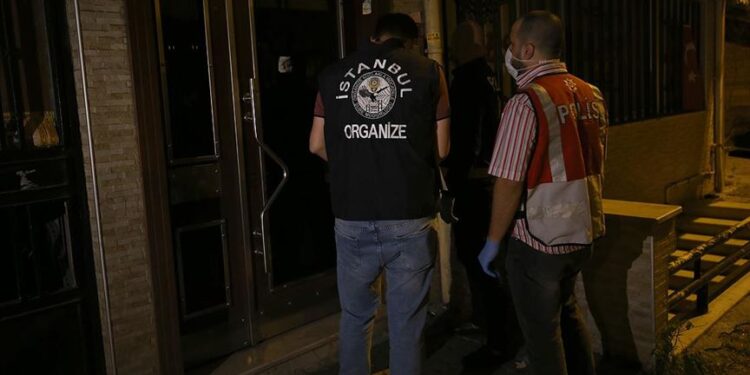
    Thirty-five people, including seven university students, were detained on Tuesday on warrants issued by Turkish prosecutors for alleged links to the Gülen movement, a faith-based group accused by the government of “terrorist” activities, the Stockholm Center for Freedom reported, citing local media.

    As part of an investigation launched by the İstanbul Chief Public Prosecutor’s Office, seven university students and two individuals who were accused of providing financial assistance to students were detained on Tuesday. Turkish police conducted operations in two provinces to detain the suspects.

    The same office issued detention warrants in a separate investigation for 18 suspects over alleged Gülen links. Police carried out operations in three provinces during which 16 of the suspects were detained.

    Turkish President Recep Tayyip Erdoğan has been targeting followers of the Gülen movement, inspired by Turkish Muslim cleric Fethullah Gülen, since the corruption investigations of December 17-25, 2013, which implicated then-prime minister Erdoğan, his family members and his inner circle.

    Dismissing the investigations as a Gülenist coup and conspiracy against his government, Erdoğan designated the movement as a terrorist organization and began to target its members. He intensified the crackdown on the movement following an abortive putsch in July 2016 that he accused Gülen of masterminding. Gülen and the movement strongly deny involvement in the coup attempt or any terrorist activity.

    In addition, the Ankara Chief Public Prosecutor’s Office issued detention warrants for 17 suspects, some of whom were accused of using ByLock, an encrypted messaging app used on smartphones that used to be available on Apple’s App Store and Google Play.

    The ByLock messaging app, once widely available online, is considered by the government to be a tool of secret communication among supporters of the movement. The UN Human Rights Council’s Working Group on Arbitrary Detention (WGAD) has repeatedly stated that arrest and conviction based on ByLock use in Turkey violated Articles 19, 21 and 22 of the International Covenant on Civil and Political Rights.

    Following the abortive putsch, the Turkish government declared a state of emergency and carried out a massive purge of state institutions under the pretext of an anti-coup fight. More than 130,000 public servants, including 4,156 judges and prosecutors, as well as 24,706 members of the armed forces, were summarily removed from their jobs for alleged membership in or relationships with “terrorist organizations” by emergency decree-laws subject to neither judicial nor parliamentary scrutiny.

    In addition to the thousands who were jailed, scores of other Gülen movement followers had to flee Turkey to avoid the government crackdown.

  • Turkish police detain 7 more people over financial aid to purge victims: journalist

    Turkish police have detained an additional seven people for providing financial support to people fired from their jobs on the pretext of an anti-coup purge following a failed putsch in 2016, Abdulhamit Bilici, a Turkish journalist in exile, claimed on his social media account.

    The detentions took place in the Central Anatolian province of Çorum, according to Bilici.

    The detainees are apparent followers of Turkish cleric Fethullah Gülen, who inspired a faith-based movement Turkey accuses of masterminding the 2016 coup attempt despite their strong denial of any involvement.

    Bilici shared an image of items confiscated by the police as pieces of evidence that include books, magazines, cash, computers, smartphones and videotapes of Gülen.

    A total of 219 people were jailed in a massive operation last week over accusations of either receiving financial assistance or distributing financial assistance sent by Gülen followers abroad to the families of people jailed over links to the Gülen movement or removed from the civil service for the same reason.

    The Turkish government has been cracking down for more than six years on the real and assumed members of the Gülen movement, which it designated as a terrorist organization. The government’s crackdown on the movement intensified following the coup attempt in 2016. The Gülen movement strongly denies any involvement in the abortive putsch or any terrorist activity.

    The mass detention of so many people for distributing or receiving donations has attracted widespread criticism from politicians and human rights activists from within and without Turkey.

    Following the coup attempt, the Turkish government declared a state of emergency and carried out a massive purge of state institutions under the pretext of an anti-coup fight. More than 130,000 public servants, including 4,156 judges and prosecutors, as well as 29,444 members of the armed forces, were summarily removed from their jobs for alleged membership in or relationships with “terrorist organizations” by emergency decree-laws subject to neither judicial nor parliamentary scrutiny.

    Victims of Turkey’s post-coup crackdown say they and their families experience severe financial and psychological problems due to what they call hate speech employed by the government and its supporters against them, which prevents them from leading normal lives, finding jobs and supporting their families.

  • Turkey’s top court rejects application from abducted teacher’s wife

    Turkey’s top court rejects application from abducted teacher’s wife

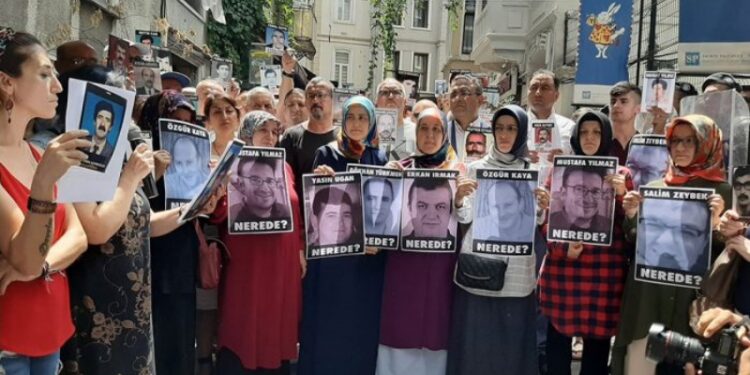
    Turkey’s Constitutional Court has found inadmissible an individual application filed by the wife of a teacher who was the alleged victim of an enforced disappearance in Ankara in 2019, the Bold Medya news website reported.

    The court’s decision concerns Özgür Kaya, who was reportedly abducted in Ankara on Feb. 13, 2019 along with three others by a group of police officers.

    The men disappeared after they were purged from their state jobs due to their alleged links to the Gülen movement, accused by the Turkish government of masterminding a failed coup in 2016 and subjected to a harsh crackdown for years. The movement strongly denies any involvement in the failed putsch.

    Their families were able to receive news on their whereabouts only five months later in July 2019, when they suddenly appeared at the Ankara Police Station.

    Kaya’s wife, Aycan Kaya, who waged a campaign along with the families of the other victims of the alleged enforced disappearances, filed a petition at the Constitutional Court claiming that her husband’s “right to [live a normal] life” was violated along with a constitutional article that prohibits torture and ill-treatment.

    However, the court rejected her application on the grounds that she withdrew her application at the European Court of Human Rights regarding the disappearance of her husband.

    Following his reappearance, Özgür Kaya, who lost around 20 kilograms and showed signs of having been subjected to torture or ill-treatment, said in his police testimony that he was not abducted or subjected to torture and that he was in hiding of his own free will.

    Kaya also told his wife, whom he saw at the police station for 30 minutes, to withdraw the complaints she had filed regarding his disappearance and not to meet with any lawmakers regarding his situation. The woman withdrew her application at the European Court of Human Rights.

    The top court’s decision came in disregard of a report drafted by the Ankara Bar Association about the seven people who were allegedly kidnapped in 2019 by Turkish authorities as well as a criminal complaint filed by the bar against government officials regarding the disappearance of the seven people.

    Out of the seven people who went missing in 2019, a former civil servant, Yusuf Bilge Tunç, still has not been found.

    Among the other six, four of them including Kaya were released pending trial at an Ankara court, where they said they were not abducted or subjected to torture. The other two men, who said they were abducted and subjected to acts of torture during their disappearance, were given lengthy jail sentences.

    Dozens of people have reportedly been abducted by Turkey’s intelligence agency in a massive post-coup crackdown targeting Gülen movement followers in the aftermath of the coup attempt on July 15, 2016.

  • Jailed media executive’s son kept in custody for 3 days for receiving donation from Gülen followers

    Jailed media executive’s son kept in custody for 3 days for receiving donation from Gülen followers

    The son of a media executive who has been jailed since 2014 was held in police custody for three days after he was detained in an operation targeting more than 700 people allegedly affiliated with a faith-based group, the Kronos news website reported.

    Sıdkı Karaca, a 26-year-old lawyer and the son of Hidayet Karaca, the former chief executive of the Samanyolu Media Group, was among the more than 650 people detained in a massive operation targeting alleged followers of the Gülen movement for accepting assistance from other Gülen followers or for distributing donations from Gülen members overseas to the families of people jailed by the Turkish government or purged from their jobs over links to the movement.

    The Turkish government has been cracking down on the real and assumed followers of the Gülen movement for more than six years. The government’s crackdown on the movement intensified following a coup attempt in 2016 because it accuses the movement of masterminding the failed coup and terrorism. The Gülen movement strongly denies any involvement in the abortive putsch or any terrorist activity.

    Hidayet Karaca was arrested two years before the coup and was sentenced by an İstanbul court to 18 years’ imprisonment over the scenario of a TV series that was broadcast by Samanyolu TV. Karaca was convicted on charges of leading a terrorist organization for his alleged ties to the Gülen movement and for allegedly slandering the al-Qaeda-affiliated radical Islamist group Tahşiyeciler.

    The mass detention of so many people for distributing or receiving donations has attracted widespread criticism from politicians and human rights activists from within and without Turkey.

    The pro-government Sabah daily targeted Sıdkı Karaca on Sunday, publishing secretly taken photos showing him in a shopping center in İstanbul where he allegedly received money from a Gülen follower. Sıdkı Karaca was reportedly released from police detention following his interrogation on Friday.

    At least 50 of the people detained in the operation last week have been arrested, according to media reports, although the exact number of arrestees is not yet known.

    Following the coup attempt, the Turkish government declared a state of emergency and carried out a massive purge of state institutions under the pretext of an anti-coup fight. More than 130,000 public servants, including 4,156 judges and prosecutors, as well as 29,444 members of the armed forces were summarily removed from their jobs for alleged membership in or relationships with “terrorist organizations” by emergency decree-laws subject to neither judicial nor parliamentary scrutiny.

    Victims of Turkey’s post-coup crackdown say they and their families experience severe financial and psychological problems due to what they call hate speech employed by the government and its supporters against them, which prevents them from leading normal lives, finding jobs and supporting their families.turkishminute