Category: World

  • Turkey wins thriller with spirited Euro 2024 debutant Georgia

    Turkey wins thriller with spirited Euro 2024 debutant Georgia

    Real Madrid midfielder Arda Güler crashed in a brilliant goal in the 65th minute to put Turkey ahead at a Westfalenstadion dominated by tens of thousands of Turkish fans, before Kerem Aktürkoğlu rolled home the third with the last kick of the game as Georgia pushed for a late leveller.

    Güler, 19, had a difficult time with injuries in his first season in Madrid but stepped up for Turkey in a fiercely contested match with Georgia, who did not look out of place in their first-ever match at a major international tournament.

    “I’m really happy with the win, I hope I can score more goals to help my team,” said Güler.

    “I don’t care about personal achievements, I’m only concerned about helping the team win and that we go as far as possible.”

    Georgia was dangerous after Georges Mikautadze levelled Mert Müldür’s 25th-minute opener for Turkey just after the half-hour mark, and was denied a second equalizer by the woodwork and a series of saves and blocks.

    But Aktürkoğlu made sure Turkey would top the group ahead of Portugal’s opening match with the Czech Republic later on Tuesday.

    “It’s a bit early to talk about what was missing, but I will say a bit of talent, a bit of experience,” said Georgia coach Willy Sagnol.

    “I’m sure that in the future, this kind of game in the next months and the next years, I’m sure Georgia won’t lose, because Georgia will learn. … I have absolutely nothing bad to say about them.”

    Turkey took the cue from their fervent support and went at Georgia from the off, pressuring their inexperienced opposition high up the pitch as a huge din came rolling down from the stands.

    Kaan Ayhan and Abdülkerim Bardakçı both went close with headers from corners inside the first 10 minutes before Ayhan crashed a low drive off the inside of the post.

    In a breathless opening period, Anzor Mekvabishvili almost gave Georgia a shock lead in the 11th minute when his wildly deflected shot was well saved by Mert Günok.

    But Müldür sparked wild celebrations in the stands in the 25th minute with a stunning volley after Ferdi Kadioglu’s cross was cleared to him on the edge of the area.

    The roars from Müldür’s goal had barely subsided when Kenan Yıldız poked home what he thought was Turkey’s second, only for the goal to be ruled out for the Juventus attacker’s toes straying offside before he tapped home.

    And Mikautadze then stunned what was effectively the home crowd in the 32nd minute by sweeping home Giorgi Kochorashvili’s low cross after brilliant play down the right.

    The small but loud Georgian contingent had their heads in their hands shortly afterwards when Mikautadze look certain to put their team ahead but dragged a great opportunity wide.

    Turkey again started on the front foot after the break, but Georgia held their own and Mikautadze was in the thick of it again in the 52nd minute when Bardakci blocked his effort after Khvicha Kvaratskhelia’s burst down the left.

    Kvaratskhelia, who was below-par throughout, then poked a good chance wide in the 62nd minute and only moments later Güler took aim from distance and arrowed in an unstoppable shot past the despairing Giorgi Mamardashvili.

    Güler’s goal made him the first teenager since Cristiano Ronaldo in 2004 to score on his Euros debut, with the pair possibly facing off on Saturday.

    Georgia pushed for another equalizer and came desperately close five minutes after Guler’s strike when Kochorashvili skipped past a couple of weak challenges only to see his shot rattle the crossbar.

    Kochorashvili and Zuriko Davitashvili were both unfortunate not to level in added time as goalkeeper Mamardashvili pushed forward for one last effort and Aktürkoğlu charged home on the break to seal a hugely entertaining win.
  • Turkey arrested 1,595 people in a year over Gülen links: minister

    Speaking to reporters at the “Ankara 365 Media Meetings,” Yerlikaya emphasized the scale of the operations against the movement.

    The Gülen movement, inspired by Turkish cleric Fethullah Gülen, is accused by the Turkish government and President Recep Tayyip Erdoğan of masterminding a failed coup in 2016 and is labeled as a “terrorist organization,” although the movement denies involvement in the coup attempt or any terrorist activity.

    This week’s arrests and detentions underscored the ongoing crackdown.

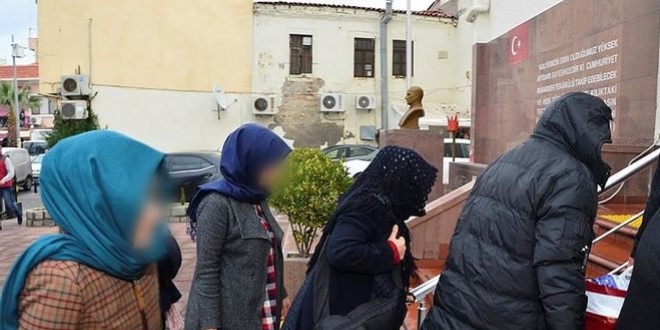
    On Tuesday arrest warrants were issued by the İzmir Chief Public Prosecutor’s Office for eight people allegedly linked to the movement. Five of these suspects have been detained, with police actively pursuing the remaining individuals. The suspects are accused of operating in significant roles within the organization, including “regional student coordinators” and “military personnel handlers.”

    Additional operations on the same day in Malatya resulted in the detention of four women allegedly active within the movement, with law enforcement seizing a trove of documents and digital materials.

    Detention warrants for eight people were issued on Thursday by the İzmir Chief Public Prosecutor’s Office. The police detained six of the suspects, who were accused of being affiliated with the movement and allegedly using the ByLock messaging app.

    ByLock, once widely available online, has been considered a secret tool of communication among supporters of the Gülen movement since the coup attempt on July 15, 2016, despite the lack of any evidence that ByLock messages were related to the abortive putsch.

    Erdoğan has been targeting followers of the Gülen movement since the corruption investigations in 2013, which implicated then-prime minister Erdoğan, his family members and his inner circle.

    Dismissing the investigations as a Gülenist coup and conspiracy against his government, Erdoğan designated the movement as a terrorist organization and began to target its members. He intensified the crackdown on the movement following the abortive putsch in 2016 that he accused Gülen of masterminding. Gülen and the movement strongly deny involvement in the coup attempt or any terrorist activity.

    In addition to the thousands who were jailed, scores of other Gülen movement followers had to flee Turkey to avoid the government crackdown.

  • Prosecutor demands charges be dropped against Dink’s killer in new trial

    Prosecutor demands charges be dropped against Dink’s killer in new trial

    The prosecutor demanded that the charges against Ogün Samast and six other defendants be dropped due to the statute of limitations.

    The 52-year-old Dink, editor-in-chief of the Turkish-Armenian bilingual Agos weekly, was shot dead with two bullets to the head outside the newspaper’s headquarters in central İstanbul on January 19, 2007 by Samast, then a 17-year-old jobless high school dropout.

    Samast was arrested the following day.

    After serving 16 years, 10 months, Samast was released from prison in western Bolu province on November 15, which led to outrage among opposition politicians, journalists, human rights activists and social media users.

    Days after Samast’s release, the İstanbul 2nd Juvenile Court accepted an indictment seeking a prison sentence ranging from seven to 12 years for Samast on charges that he “committed crimes on behalf of an armed terrorist organization.”

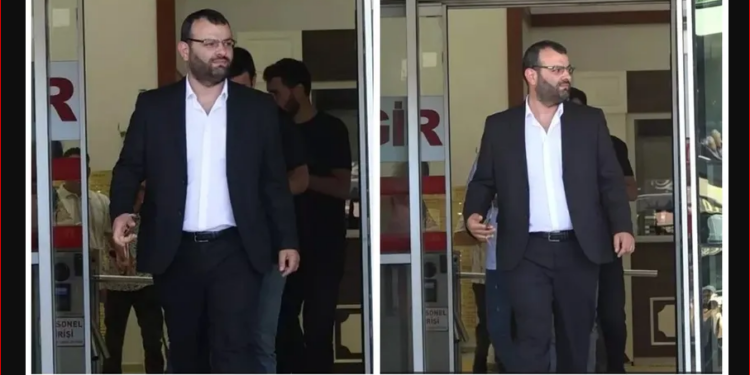
    The juvenile court merged Samast’s case with another ongoing trial at the İstanbul 14th High Criminal Court, involving 11 suspects, including Yasin Hayal and Erhan Tuncel, for their alleged involvement in the crime Samast is accused of committing.

    Samast attended the latest hearing of the trial at the İstanbul 14th High Criminal Court on Wednesday via the IT Voice and Image System (SEGBİS) from a courthouse in his hometown of Trabzon.

    Samast told the court that he agrees with the prosecutor’s opinion and does not want additional time for his defense statement.

    The other defendants in the merged trial wanted additional time to counter the opinion of the prosecutor, who sought prison sentences for them on charges of terrorist organization membership and attempting to destroy the constitutional order.

    The court adjourned the trial until October 16.

    Dink’s family and lawyers say justice will not have been served as long as the masterminds behind the murder and the state officials who allegedly did not prevent the murder, facilitated it or tried to cover it up are not brought before a court.

    Samast had confessed to the murder and was sentenced to almost 23 years in prison in 2011.

    The İstanbul 14th High Criminal Court in 2021 separated the files of 13 fugitive suspects, including Fethullah Gülen, on the grounds that their defense statements were not delivered, also ruling that Dink’s murder was committed “in line with the objectives of F.TÖ” – a derogatory term used by the Turkish government to refer to the faith-based movement inspired by Gülen as a terrorist organization.

    For years, prosecutors have looked into alleged links between the suspects and Gülen, who is accused of masterminding a failed coup against President Recep Tayyip Erdoğan in 2016, although he strongly denies the charges.

    The Turkish government’s ongoing crackdown on the Gülen movement was launched following corruption investigations in late 2013 that implicated then-prime minister and now president Recep Tayyip Erdoğan’s close circle and intensified in the aftermath of the failed coup on July 15, 2016.

  • Turkish court acquits police officers on trial for Kurdish lawyer’s death

    Turkish court acquits police officers on trial for Kurdish lawyer’s death

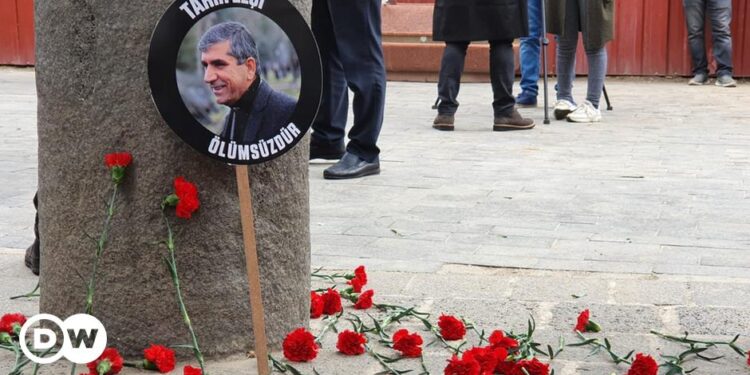
    Elçi, the former head of the Diyarbakır Bar Association, was shot in the head during a press conference on November 28, 2015 while calling for peace in front of the historic Four-Legged Minaret. A clash between Turkish police and members of the outlawed Kurdistan Workers’ Party (PKK) erupted at the scene, and Elçi was caught in the crossfire.

    The Diyarbakır court acquitted police officers Sinan Tabur, Fuat Tan and Mesut Sevgi, who were on trial for “causing death by gross negligence.” The officers attended the trial via video link and pleaded not guilty. The court’s decision followed a 30-minute recess during which tensions in the courtroom rose.

    Before the verdict was announced, Diyarbakır Bar Association President Nahit Eren and Tahir Elçi Foundation President Masum Batı left the courtroom in protest, stating they did not expect a fair decision. They were joined by other lawyers who then marched to the scene of Elçi’s death, the Four-Legged Minaret, to continue their protest.

    In the lead-up to the trial, the prosecutor’s office had presented an opinion on April 25, stating that “Elçi was killed by a bullet whose origin could not be definitively determined.” They recommended the acquittal of the three police officers and the conviction of fugitive PKK member Uğur Yakışır for “killing two police officers” and “undermining the unity of the state.”

    Lawyers for the Elçi family criticized the handling of the case, stating that their requests to uncover the truth were dismissed. They alleged that evidence was mishandled and destroyed. Türkan Elçi, the widow of Tahir Elçi, noted that the bullet that killed her husband was never found and that “key pieces of evidence, including 40 bullet casings, were lost or destroyed.”

    Erinç Sağkan, president of the Union of Turkish Bar Associations, condemned the trial for violating legal principles. “You claim to uphold universal legal principles, but where do we place the principle of direct confrontation?” Sağkan asked. “We were denied the right to cross-examine the suspects, and many fundamental rights of a fair trial were violated.”

    Berfin Elçi, another lawyer for the Elçi family, echoed these sentiments, stating that the conduct of the trial amounted to a denial of justice. “The trial failed to bring the perpetrators to justice and violated the right to a fair trial,” she said.

    The trial has garnered significant attention overseas, with 33 international legal organizations, including bar associations from Germany, France, Belgium and the Netherlands, issuing a joint statement. They called for a thorough investigation and a fair trial, noting several procedural flaws, such as a 110-day delay in the crime scene investigation and the initial failure to treat the police officers as suspects.

    A forensic report by the London-based Forensic Architecture played a crucial role in the case, concluding that Elçi was likely killed by a bullet fired from one of the police officers’ guns. However, this evidence was reportedly not given due consideration during the trial.

    Ali Yıldız, director of the Arrested Lawyers Initiative, criticized the investigation’s design, saying, “With the entire investigation designed to ensure impunity, it is not surprising at all that no one is held accountable for the killing of the president of a prominent bar. The destruction of key evidence in the Council of Forensic Medicine, as reported by journalist Cevheri Güven back in 2019, was to ensure today’s outcome.”

    The court’s decision to acquit the police officers has deepened concerns about impunity and the rule of law in Turkey, especially in cases involving state officials and Kurdish activists. The next steps for the Elçi family and their legal team remain uncertain, but they have vowed to continue their fight for justice.

  • Turkey arrests 7 for listening to religious sermons on X

    Turkey arrests 7 for listening to religious sermons on X

    Turkey’s National Intelligence Organization (MİT) and the Malatya Police Department’s Organized Crime Division conducted an operation targeting individuals participating in live audio discussions on X, where they were discussing the texts of Risale-i Nur, a Quranic exegesis written by the late Islamic scholar Said Nursi, the teachings of whom later helped inspire the faith-based Gülen movement.

    Turkish President Recep Tayyip Erdoğan has been targeting followers of the Gülen movement, inspired by Muslim cleric Fethullah Gülen, since the corruption investigations in 2013, which implicated then-prime minister Erdoğan, his family members and his inner circle.

    Dismissing the investigations as a Gülenist coup and conspiracy against his government, Erdoğan designated the movement as a terrorist organization and began to target its members. He intensified the crackdown on the movement following an abortive putsch on July 15, 2016, that he accused Gülen of masterminding. Gülen and the movement strongly deny involvement in the coup attempt or any terrorist activity.

    According to a report by journalist Sevinç Özarslan of Kronos, the authorities detained nine people, including a leukemia patient, during home raids in various cities on Tuesday.

    MİT and the police tracked the online activities of the participants for months before the arrests. Seven individuals, six of whom are women, were arrested. Two others were released under judicial supervision.

    Some of the detained women live abroad and were visiting Turkey for vacation. The interrogation included questions about their reasons for joining the discussion rooms, their roles within the groups and why they commented on Risale-i Nur texts.

    While in custody, the women were reportedly forced to pray without their headscarves, which were confiscated. An attorney described how his client was brought to him without her headscarf and requested a Quran, a prayer book and other religious texts.

    The pro-government media portrayed the operation as international, involving six countries and multiple Turkish cities. Outlets like the pro-government Star daily and Oda TV used images of men to report the arrests, allegedly to avoid backlash from conservative supporters of Erdoğan upon seeing images of women with headscarves.

    The detained women were accused of engaging in activities to support Gülen movement and recruit new members for the group.

  • Turkish judge faces investigation for displaying assault rifles in office

    In a statement on X, Minister Tunç emphasized that judges and public prosecutors are required to adhere to judicial ethics and avoid inappropriate behavior in all their activities.

    In response to the controversy, Tabur has been relieved of his commission duties, Tunç said.

    “In light of the images and allegations that have come to the public’s attention, the HSK has initiated an investigation. Furthermore, Tabur’s authority as the president of the Izmir Judicial Commission has been revoked.”

    Tabur, who was born in Elazığ in 1971, has held various judicial positions across Turkey. He was the presiding judge in the trial of Pastor Andrew Brunson, which caused a diplomatic row between Turkey and the United States. Tabur was appointed president of the Izmir Judicial Commission in January 2021 by the HSK.

    The BirGün daily on Wednesday published a photograph showing Tabur posing in his office at the İzmir Courthouse in front of a display of 13 handguns and seven long guns. The photo included senior HSK officials during a visit on May 2. Tabur confirmed the weapons were his and said they were all licensed.

    BirGün reported that Tabur is known for his luxurious lifestyle and often drives a Porsche Taycan to work and maintains a lavish office. He defended his wealth, stating that he is active in the stock market and has declared his assets to the Ministry of Justice.

    “All the weapons are licensed and belong to me. The long guns are licensed hunting rifles,” he said.

    However, according to military sources who spoke to Turkish Minute, at least two of the rifles are not hunting rifles but most probably assault rifles. Although there is a possibility that they are airsoft replicas, the claim by the judge saying they are all registered and licensed refutes this possibility, since airsoft replicas do not require the owner to register them.

    In Turkey, individuals cannot own assault rifles, and possessing an unlicensed firearm without any other criminal activity carries a three-year prison sentence.

    “I have nothing to hide. My office has been visited by the president of the Supreme Court of Appeals and inspectors from the Ministry of Justice, all of whom have expressed their admiration,” Tabur told BirGün.

    Addressing questions about his Porsche Taycan, Tabur said, “I trade on the stock market. There is no doubt about the source of my money. I have declared my assets to the Ministry of Justice. Everyone is aware of the timing and method of the car purchase.”

    The Turkish judiciary has faced numerous allegations of corruption and political influence, particularly following the 2016 failed coup. Recent developments have seen key judicial figures, such as İstanbul’s former chief public prosecutor İsmail Uçar, make corruption allegations that rocked the legal community. Uçar’s unexpected promotion to the Supreme Court of Appeals has been viewed by some as an attempt to silence him.

  • Turkey detains 90 people over alleged Gülen links

    Yerlikaya said the detainees included suspects who were involved in the movement’s alleged infiltration of the police and the judiciary as well as people who were determined to have used the ByLock messaging application and were accused of having secretly communicated with their contacts within the movement via pay phones or individuals whose sentences over Gülen links were upheld by the Supreme Court of Appeals and were at large.

    ByLock, once widely available online, has been considered a secret tool of communication among supporters of the Gülen movement, a faith-based group outlawed by Ankara, since a coup attempt on July 15, 2016, despite the lack of any evidence that ByLock messages were related to the abortive putsch.

    The so-called “pay phone investigations” are based on call records. The prosecutors assume that a member of the Gülen movement used the same pay phone to call all his contacts consecutively. Based on that assumption, when an alleged member of the movement is found in call records, it is assumed that other numbers called right before or after that call also belong to people with Gülen links.

    The minister also said that “large amounts of foreign currency and Turkish lira” as well as a number of digital materials and documents were confiscated in raids conducted in the provinces of Ankara, Antalya, Aydın, Balıkesir, Bursa, Bitlis, Denizli, Edirne, Gaziantep, Giresun, İstanbul, İzmir, Kayseri, Kütahya, Malatya, Şanlıurfa and Tekirdağ.

    The Gülen movement, inspired by Turkish cleric Fethullah Gülen, is accused by the Turkish government and President Recep Tayyip Erdoğan of masterminding the failed coup and is labeled a “terrorist organization,” although the movement denies involvement in the coup attempt or any terrorist activity.

    Erdoğan has been targeting followers of the Gülen movement since the corruption investigations of December 17-25, 2013, which implicated then-prime minister Erdoğan, his family members and his inner circle.

    Dismissing the investigations as a Gülenist coup and conspiracy against his government, Erdoğan designated the movement as a terrorist organization and began to target its members. He intensified the crackdown on the movement following the abortive putsch in 2016 that he accused Gülen of masterminding. Gülen and the movement strongly deny involvement in the coup attempt or any terrorist activity.

    In addition to the thousands who were jailed, scores of other Gülen movement followers had to flee Turkey to avoid the government crackdown.

    Turkish authorities routinely rely on witness statements as evidence to identify and prosecute members of the group.

    The defendants in the trials against the movement are often encouraged to benefit from the country’s repentance laws allowing for reduced penalties in exchange for denouncing other members of the group.

    In recent years, there have also been many reports about the alleged use of torture and ill-treatment in custody to coerce detainees into becoming informants and incriminating others.

  • Terrorist attacks would stop if jailed Kurdish leader Demirtaş were released: former CHP chairman

    Demirtaş has been jailed since November 2016 on bogus terrorism-related charges and not released from prison despite rulings from the European Court of Human Rights.

    Kılıçdaroğlu made the comments after visiting Demirtaş, the former co-chair of the pro-Kurdish Peoples’ Democratic Party (HDP), and Adnan Selçuk Mızraklı, the former mayor of Diyarbakır, in prison.

    An Ankara court recently sentenced 24 HDP politicians, among them Demirtaş, for their alleged roles in deadly protests in 2014 to prison terms ranging from nine to 42 years, while acquitting 12 other politicians who had stood trial with them.

    The trial, which lasted nearly three years, centered on the events of October 6-8, 2014, when ISIL laid siege to Kobani. Protests erupted across Turkey, particularly in the predominantly Kurdish southeastern provinces, resulting in 37 deaths. There were 108 defendants in the trial including former HDP co-chairs Selahattin Demirtaş and Figen Yüksekdağ.

    The Turkish government accused the HDP leaders of inciting the violence, while the defendants maintained that their calls for solidarity with Kobani were within the bounds of freedom of expression.

    “Mr. Demirtaş is a pioneer of civil politics,” Kılıçdaroğlu said. “He wants everyone in Turkey to live in peace and happiness. I don’t find it right that he is in prison.”

    Kılıçdaroğlu stressed the importance of freedom of expression and opposed imprisonment for political thought. He also highlighted the need for a new political discourse in Turkey that would allow all citizens to express their views freely and live in peace.

    In 2016 the CHP, led by Kılıçdaroğlu, supported a bill to remove parliamentary immunity, allowing the arrest of several HDP deputies, including former co-chair Demirtaş.

    Critics have long accused the CHP of politicizing within the red lines set by President Erdoğan and not putting up strong resistance that could challenge the president’s ruling Justice and Development Party (AKP).

    They claim that the CHP does not oppose the AKP’s policies when it comes to groups systematically targeted by the state apparatus, such as Kurds.

    Kılıçdaroğlu said the issue of his 2016 decision did not come up during the visit.

    The visit also touched on the broader issues in Turkish politics, including concerns about the exodus of young people from the country and the need for democratization. Kılıçdaroğlu argued that as long as authoritarian structures persist, normalization in Turkey cannot occur.

    “If Mr. Demirtaş were outside, civil politics would advance significantly, and I am sure terrorist incidents would end,” Kılıçdaroğlu added. “That’s why I believe it’s wrong for him to be in prison.”

    Kurdish politicians who have been under intense pressure from President Recep Tayyip Erdoğan’s administration. Following the failure of peace talks with the outlawed Kurdistan Workers’ Party (PKK) in 2015, the government adopted a more nationalist and anti-Kurdish stance.

  • Israel faces global outcry over Gaza strike that set ablaze tent city

    Israel said it was looking into the “grave and awful” impact on civilians after the latest mass casualty event during its military campaign, which has continued since October 7.

    The army said Sunday evening’s attack in the southern Rafah area had targeted and killed two senior Hamas operatives.

    The UN called on Israel to conduct a “thorough and transparent” investigation into the Rafah strike, as the Israeli military said it was launching a probe into civilian deaths.

    “These operations must stop. There are no safe areas in Rafah for Palestinian civilians. I call for full respect for international law and an immediate ceasefire,” French President Emmanuel Macron wrote on X.

    EU foreign policy chief Josep Borrell said he was “horrified by news coming out of Rafah on Israeli strikes killing dozens of displaced persons, including small children. I condemn this in the strongest terms.”

    “We’re looking into this,” Israeli government spokesman Avi Hyman told a media briefing.

    Israel’s army said its aircraft “struck a Hamas compound in Rafah” and killed Yassin Rabia and Khaled Nagar, both senior officials for the militant group in the occupied West Bank.

    Gaza’s civil defense agency said the strike set off a fire that tore through a displacement center in northwestern Rafah near a facility of the UN agency for Palestinians, UNRWA.

    “We saw charred bodies and dismembered limbs. … We also saw cases of amputations, wounded children, women and the elderly,” said agency official Mohammad al-Mughayyir.

    “We had just done with the evening prayers,” recalled one survivor, a woman who declined to be named. “Our children were asleep.

    “Suddenly we heard a loud sound and there was fire all around us. The children were screaming.”

    Footage from the Palestinian Red Crescent Society showed chaotic nighttime scenes of paramedics racing to the fiery attack site and evacuating the wounded, including children.

    The ICRC said one of its field hospitals was receiving an “influx of casualties seeking care for injuries and burns” and that its teams were “doing their best to save lives.”

    Mughayyir said the rescue efforts were hampered by war damage and the impacts of Israel’s siege.

    “There is a fuel shortage … there are roads that have been destroyed, which hinders the movement of civil defense vehicles in these targeted areas,” he said.

    “There is also a shortage of water to extinguish fires.”

    Across the region the Israeli attack sparked strong protests from mediators Egypt and Qatar as well as from Jordan, Kuwait, Saudi Arabia and Turkey.

    Egypt deplored the “targeting of defenseless civilians” and labeled it part of “a systematic policy aimed at widening the scope of death and destruction in the Gaza Strip to make it uninhabitable.”

    Jordan accused Israel of “ongoing war crimes,” and Saudi Arabia condemned “in the strongest terms the continued massacres committed by Israeli occupation forces.”

    Turkish President Recep Tayyip Erdoğan said, “We will do everything possible to hold these barbarians and murderers accountable.”

    Qatar condemned the Israeli bombing as a “dangerous violation of international law” and voiced “concern that the bombing will complicate ongoing mediation efforts and hinder reaching an agreement for an immediate and permanent ceasefire.”

    African Union chair Moussa Faki Mahamat also condemned the attack on X, saying, “Israel continues to violate international law with impunity and in contempt of an ICJ ruling two days ago ordering an end to its military action in Rafah.”

    The top world court, the International Court of Justice, on Friday ordered Israel to halt its offensive in Rafah.

    The Gaza Strip is suffering a humanitarian crisis caused by Israel’s military campaign against Hamas that started October 7.

    Hamas’ staged an unprecedented attack on Israel on October 7 that resulted in the death of roughly 1,200 people, mostly civilians, and some 250 people taken hostage.

    Israel’s retaliatory offensive against Hamas has killed at least 36,050 people in Gaza, mostly women and children, according to the Gaza health ministry, and has devastated the Gaza Strip.

    The Israeli military said Monday that its jets had over the past 24 hours struck and destroyed “over 75 terror targets” across the Gaza Strip.

    The United Nations has warned of looming famine in besieged Gaza, where most hospitals are no longer functioning.

    On Tuesday Spain, Ireland and Norway are due to formally recognize a Palestinian state — a step so far taken by more than 140 UN members but few Western powers.

  • Turkish gov’t to sell mansions seized from Gülen-linked businessmen for at least $23 mln

    Turkish gov’t to sell mansions seized from Gülen-linked businessmen for at least $23 mln

    Ankara accuses the Gülen movement, a faith-based group invested in education and relief work throughout the world and inspired by Muslim cleric Fethullah Gülen, of masterminding a failed coup in July 2016. The movement strongly denies any involvement in it.

    Following the failed coup, the Justice and Development Party (AKP) government launched a massive purge targeting real and alleged members of the movement under the pretext of an anti-coup fight, removing over 130,000 people from civil service jobs.

    The AKP designated the group as a terrorist organization before the coup and seized schools, universities, media outlets, companies and their buildings and the assets of individuals, corporations and organizations that were believed to have had ties to the movement.

    More than 1,100 companies have been transferred to Turkey’s TMSF, most of them following the failed coup. Journalists from confiscated newspapers and TV stations have been arrested, replaced and jailed.

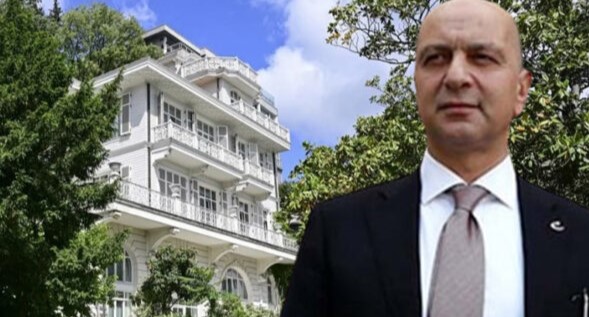
    İpek’s two mansions, the “White Mansion” and “Brown Mansion,” which are among the properties belonging to Koza İpek Holding, which was transferred to the TMSF in 2016, will be offered for sale in an auction on June 27.

    The starting price for the two mansions is TL 750 million ($23.3 million) and they are expected to fetch more than TL 1 billion ($31 million), according to Patronlar Dünyası.

    In 2016, 22 luxury cars belonging to Koza İpek Holding, including Bentleys, Ferraris and Lamborghinis, were sold after the holding’s transfer to the TMSF.

    President Recep Tayyip Erdoğan has been targeting followers of the Gülen movement since the corruption investigations of December 17-25, 2013, which implicated then-prime minister Erdoğan, his family members and his inner circle.

    Dismissing the investigations as a Gülenist coup and conspiracy against his government, Erdoğan designated the movement as a terrorist organization and began to target its members.

    A report last year titled “Persecutory Confiscation Amounting to Crimes Against Humanity: Case of the Gülen Group,” exposed the vast scale of property confiscations in Turkey targeting the movement, with an estimated value of $50 billion and affecting over 1.5 million individuals in what the authors call systematic and widespread.