Category: World

  • Turkey presses Greece to extradite Gülen-linked people

    Turkey presses Greece to extradite Gülen-linked people

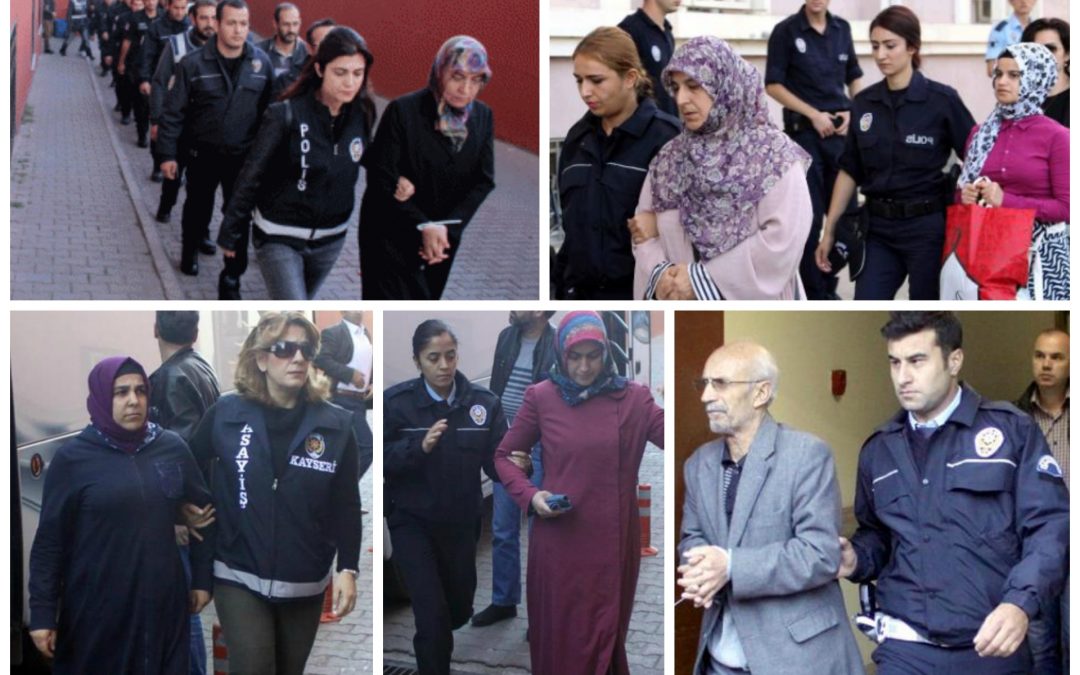
    Turkey is pressing Greece to extradite people accused of links to the faith-based Gülen movement, while Greek officials deny that the presence of Turkish asylum seekers amounts to an organized network, the Greek iefimerida news website reported on Monday.

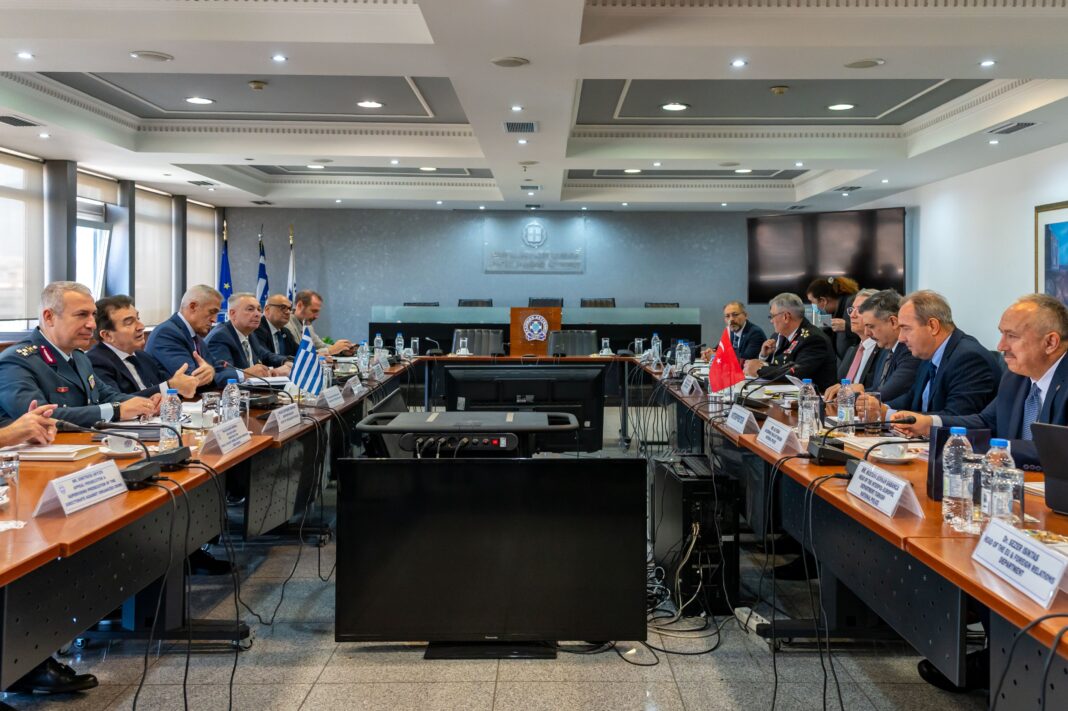
    Interior Minister Mustafa Çiftçi raised the issue during an October 8 visit to Athens, where he met with Greek Citizen Protection Minister Michalis Chrysochoidis and Migration and Asylum Minister Thanos Plevris.

    Çiftçi called for the return of Gülen movement members and accused them of abusing refugee protections. He also sought faster extradition proceedings for 60 people he described as being in Greek custody, some of whom he alleged were members of criminal organizations wanted through INTERPOL Red Notices.

    Greek Citizen Protection Ministry sources denied Ankara’s allegations that an organized branch of the movement operates in Greece and rejected equating Turkish nationals seeking international protection with a criminal organization, iefimerida wrote.

    A source familiar with extradition cases told the website that no recent formal request appeared to have been submitted for someone prosecuted over Gülen links or other political grounds. The requests received concerned accusations such as murder, robbery and kidnapping.

    The source explained that extraditions require review by prosecutors and courts, with the possibility of an appeal to Greece’s Supreme Court. A ministerial meeting cannot authorize someone’s return, and any final approval by the justice minister must follow the judicial process.

    An INTERPOL Red Notice is a request to locate and provisionally arrest someone pending extradition or similar proceedings. It does not compel a country to arrest or extradite the person.

    President Recep Tayyip Erdoğan began targeting the Gülen movement after corruption investigations in December 2013 implicated him, his relatives and political allies. The movement takes its inspiration from the late Islamic scholar Fethullah Gülen.

    His government designated the movement a terrorist organization in May 2016 and expanded the crackdown after accusing it of orchestrating a coup attempt that July. The movement denies orchestrating the coup attempt and engaging in terrorism.

    The United States and the European Union do not recognize Turkey’s designation. Thousands of people accused of Gülen links have been jailed, and many others have fled Turkey to seek asylum abroad.

    Extradition demands previously strained relations between Turkey and Greece after eight Turkish military officers fled to Greece by helicopter following the 2016 coup attempt. Greece’s Supreme Court rejected their extradition in January 2017, citing concerns about their safety and access to a fair trial.

    The latest discussions also coincided with Turkey’s efforts to secure the return of businessman Murat Gülibrahimoğlu, who faces accusations connected to a corruption case involving jailed İstanbul Mayor Ekrem İmamoğlu, Erdoğan’s main political rival.

    Greek police denied Turkish media accounts that Gülibrahimoğlu had been arrested. He applied for international protection in July and his application is under review. Police confirmed receiving extradition documents from Turkey, while Gülibrahimoğlu maintains that the case against him is politically motivated.
  • Court says lack of evidence reason for acquittal of police officers in lawyer’s murder trial

    Court says lack of evidence reason for acquittal of police officers in lawyer’s murder trial

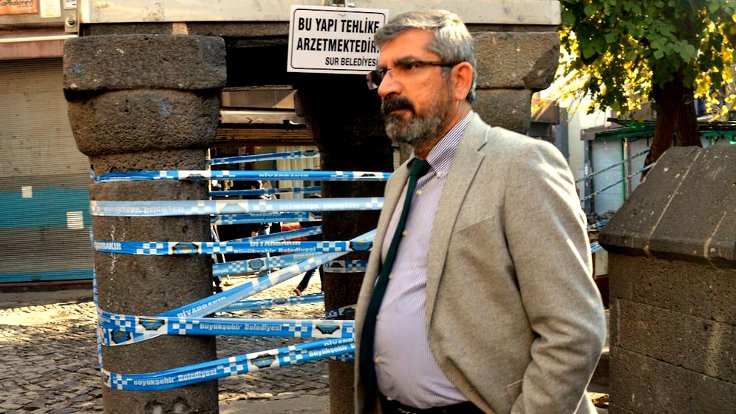
    Tahir Elçi, the former president of the Diyarbakır Bar Association, was shot in the head during a press conference on November 28, 2015 while calling for peace, in front of the historic Four-Legged Minaret in Diyarbakır’s Sur district. A clash between Turkish police and members of the outlawed Kurdistan Workers’ Party (PKK) had erupted at the scene, and Elçi was caught in the crossfire.

    On June 12 the Diyarbakır 10th High Criminal Court acquitted police officers Sinan Tabur, Fuat Tan and Mesut Sevgi, who were on trial for “causing death by gross negligence,” sparking protests from lawyers and human rights activists who argued that justice had not been served.

    The court issued its reasoned decision on Wednesday, explaining that it ruled to acquit the police officers due to a lack of sufficient evidence proving their guilt since there was uncertainty about who fired the shot that killed Elçi.

    The court said there was no concrete evidence such as camera footage or witness statements regarding the moment of Elçi’s death, adding that a conviction cannot be accomplished by interpreting suspicious events and allegations against the suspects.

    Lawyer Masum Batı, president of the Tahir Elçi Foundation, found the court’s emphasis on uncertainty regarding the person who fired the fatal shot in the reasoned decision insincere, saying it was the court itself that failed to shed light on the suspicious aspects of the murder.

    “The 27-page judgment by the court has simply listed the actions taken without explanation. It has not discussed the evidence or explained how it arrived at its conclusion. An unjustified decision,” Batı said.

    Lawyers for the Elçi family had previously criticized the handling of the case, saying their requests to uncover the truth were dismissed and alleging that evidence was mishandled or destroyed. Türkan Elçi, the widow of Tahir Elçi, said the bullet that killed her husband was never found and that “key pieces of evidence, including 40 bullet casings, were lost or destroyed.”

    A 2019 report by Forensic Architecture concluded that Elçi was most likely killed by one of three police officers present at the scene. It was only after their investigation that an indictment in which three police officers faced charges of causing death by culpable negligence was accepted in March 2020.

    However, this evidence was reportedly not given due consideration during the trial.

    The court’s decision to acquit the police officers has deepened concerns about impunity and the rule of law in Turkey, especially in cases involving state officials and Kurdish activists.

  • Gov’t pressures French schools in Turkey after France rejects Ankara-run Maarif schools

    Maarif, which was established prior to a coup attempt on July 15, 2016 through legislation in the Turkish parliament, has targeted the closure of educational institutions established by followers of the faith-based Gülen movement since the abortive putsch as part of the foreign policy of Turkey’s ruling Justice and Development Party (AKP), which labels the movement as a terrorist organization and accuses it of orchestrating the failed coup.

    The Gülen movement, a worldwide civic initiative inspired by the ideas of Muslim cleric Fethullah Gülen, strongly denies involvement in the failed putsch and any terrorist activity.

    The Maarif Foundation has so far taken over hundreds of schools worldwide that had been established by followers of the Gülen movement as part of the government-led crackdown on the group.

    It is now the only organization that has the right to open schools in a foreign country on behalf of the Republic of Turkey. It runs schools for all age groups, from pre-school to university.

    Journalist Nuray Babacan wrote for the Gazete Pencere news website that the Turkish Ministry of Education’s inspections of French schools in Ankara and İstanbul have reached a level that disrupts the students’ education. These actions are seen as retaliation for the failed attempt by the Maarif Foundation to establish schools in France.

    Babacan said in her article that the Turkish government, under the AKP administration, has targeted French institutions, including Charles de Gaulle School in Ankara and Pierre Loti High School in İstanbul. The schools have faced fines and interference in their curriculums under the guise of inspections.

    “This has gone beyond regular inspections; the government is now meddling with the curriculum,” Babacan wrote. “This issue began when Turkey’s attempts to open schools in France were blocked. Now, pressure is being exerted on French schools here, demanding they include religious and ethics courses, follow the Turkish curriculum and employ Turkish teachers.”

    This development follows a broader trend of deteriorating relations between Turkey and France, which have experienced fluctuating diplomatic ties. The situation has led to anxiety among students and parents. Both French and Turkish parents have appealed to Turkish Foreign Minister Hakan Fidan to intervene and seek a diplomatic resolution.

    Fidan is expected to address this issue during his upcoming visit to France, where discussions are anticipated to focus on resolving the issue before the new academic year begins in September.

    In recent years, the Maarif Foundation has received substantial financial support from the Turkish government. Since its inception, the foundation has assumed control of 216 schools in 44 countries and plans to take over more.

    Despite the significant funds allocated to Maarif, critics argue that these resources should be directed toward addressing domestic educational challenges, such as overcrowded classrooms and insufficient teacher appointments.

    The French government’s resistance to the Maarif Foundation’s expansion is partly due to concerns over the imposition of religious education, which contradicts France’s strict secular education system. In response, Turkey’s increased pressure on French schools within its borders has drawn criticism for potentially politicizing education and affecting the well-being of students and their families.

  • ECtHR faults Turkey for violating right to fair trial over denial of civil service jobs

    The ECtHR issued its ruling in the case titled “Kurkut and others v. Türkiye” on Tuesday. The court had decided to merge the applications filed by seven people into a single case due to similarities in the content of the applications.

    The Strasbourg-based court said the Turkish courts had failed to communicate the information about the background checks to the applicants and did not seek their comments on the allegations against them. The court concluded that there were “inadequate safeguards” to compensate for the non-disclosure of evidence, resulting in an insufficient review of the administrative decisions.

    The court awarded each applicant €2,000 in non-pecuniary damages and additional amounts for costs and expenses, emphasizing the need for transparency and fairness in judicial proceedings.

    One of the applicants, Bahar Dolgun Kılıç, had been working temporarily at Manisa Celal Bayar University and applied for a permanent position in 2018. Despite passing the necessary examinations, her appointment was blocked due to a negative background check, with no explanation provided.

    When Kılıç contested the decision, the Turkish court referenced alleged ties to the faith-based Gülen movement, inspired by Muslim cleric Fethullah Gülen, whom Turkish President Recep Tayyip Erdoğan blames for a failed coup in 2016. Gülen and the movement deny any involvement.

    However, Kılıç was not allowed to see or challenge these allegations. Turkish courts ultimately upheld the university’s decision without conducting a thorough review.

    Following the abortive putsch, the Turkish government declared a state of emergency and carried out a massive purge of state institutions under the pretext of an anti-coup fight. More than 130,000 public servants, including 4,156 judges and prosecutors, as well as 29,444 members of the armed forces, were summarily removed from their jobs for alleged membership in or relationships with “terrorist organizations” by emergency decree-laws subject to neither judicial nor parliamentary scrutiny.

  • Ex-spy chief reveals messaging data that served as grounds for mass arrests was obtained extralegally

    Ex-spy chief reveals messaging data that served as grounds for mass arrests was obtained extralegally

    ByLock, once widely available online, has been considered a secret tool of communication among supporters of the Gülen movement, a faith-based group outlawed by Ankara, since a coup attempt on July 15, 2016, despite the lack of any evidence that ByLock messages were related to the abortive putsch.

    The Gülen movement, inspired by Turkish cleric Fethullah Gülen, is accused by the Turkish government and President Recep Tayyip Erdoğan of masterminding the failed coup and is labeled a “terrorist organization,” although the movement denies involvement in the coup attempt or any terrorist activity.

    In a landmark ruling in September, the European Court of Human Rights (ECtHR) concluded that Turkey’s ByLock-related rights violations were systemic in nature.

    During a live interview on Turkish broadcaster Habertürk on Monday, Fidan admitted that in early 2016 the National Intelligence Organization (MİT) acquired ByLock data without a court order, employing covert intelligence operations.

    “We worked with a special unit we established in the Ankara Police Organized Crime Division to analyze the data,” Fidan said. According to Turkish law, evidence obtained in violation of the Code of Criminal Procedure (CMK) cannot be used in criminal trials. The first court order regarding ByLock data was issued on Dec. 9, 2016.

    Fidan revealed that after approximately one year of analysis, the ByLock data was handed over to the Ankara Chief Public Prosecutor’s Office, indicating that the data had been processed and utilized for investigative purposes well before any judicial authorization was obtained. Fidan’s statements also suggest that MİT shared the analyzed data with the Ministry of Interior and the Ministry of Justice.

    The former intelligence chief’s admission raises significant legal issues, as evidence obtained without judicial oversight is inadmissible in Turkish courts. The ECtHR has previously criticized Turkey for systemic rights violations in ByLock-related prosecutions. The ECtHR’s September 2023 ruling in the Yalçınkaya case emphasized that using ByLock alone as evidence did not constitute a reliable basis for criminal charges, urging Turkey to take remedial measures.

    Fidan’s revelations further fuel the ongoing debate about the integrity of ByLock evidence. Reports have highlighted numerous discrepancies in the ByLock data, including inconsistencies in message logs and unauthorized data recovery methods, casting doubt on the reliability of this evidence in criminal proceedings.

    Human rights organizations have called for a thorough review of ByLock-related convictions. They argue that the systemic flaws in how ByLock data was collected and processed undermined the right to a fair trial.

    In December Kerem Gülay, an academic at Koç University, warned that judges and prosecutors involved in ByLock prosecutions could face charges of crimes against humanity under universal jurisdiction laws if they travel abroad. “There is no statute of limitations for crimes against humanity,” Gülay said, underscoring the potential international legal ramifications for Turkish officials.

    The Turkish government has been notified by the ECtHR of 1,000 applications challenging ByLock-based convictions. These cases, involving multiple plaintiffs, allege violations of ECHR principles, including the right to a fair trial and the prohibition of retroactive criminal laws.

    Despite international criticism and legal challenges, Turkish authorities have continued to arrest and prosecute individuals based on ByLock usage.

  • ECtHR faults Turkey for arrest of 314 people over Gülen links after failed coup

    ECtHR faults Turkey for arrest of 314 people over Gülen links after failed coup

    The ECtHR issued its ruling in the case of Duymaz and others v. Türkiye on Tuesday. The court had decided to merge the applications filed by 314 people under a single judgment due to the similar subject matter of the applications.

    The applicants had been arrested as part of a mass crackdown on the faith-based Gülen movement, inspired by Turkish cleric Fethullah Gülen, whom the president blames for the failed coup. Gülen and the movement deny any involvement.

    The Strasbourg-based court said the grounds for their detention were “not of a nature” to constitute “reasonable suspicion” and ordered Ankara to pay 5,000 euros in non-pecuniary damages and for costs and expenses to 299 of the applicants. The remaining 15 applicants did not request compensation.

    Among the 314 applicants was Ali Ahmet Böken, a veteran Turkish journalist and prominent anchor who used to work for public broadcaster Turkish Radio and Television (TRT) and who has been in prison over alleged links to the Gülen movement since August 2016.

    In April 2018 Böken was convicted on terrorism charges due to his alleged affiliation with the Gülen movement and sentenced to almost 10 years’ imprisonment. His conviction was based on such evidences as using the ByLock messaging app, a charge denied by Böken; having an account at the now-closed Bank Asya, one of Turkey’s largest commercial banks at the time; and sending his children to Gülen movement-affiliated schools.

    Tuesday’s ruling is the latest by the ECtHR against Turkey, a member since 1950 of the Council of Europe, of which the court is a part. It said the detentions had violated Article 5 of the European Convention on Human Rights, which the court enforces, “on account of the lack of reasonable suspicion, at the time of the applicants’ initial pre-trial detention, that they had committed an offence.”

    Following the abortive putsch, the Turkish government declared a state of emergency and carried out a massive purge of state institutions under the pretext of an anti-coup fight. More than 130,000 public servants, including 4,156 judges and prosecutors, as well as 29,444 members of the armed forces, were summarily removed from their jobs for alleged membership in or relationships with “terrorist organizations” by emergency decree-laws subject to neither judicial nor parliamentary scrutiny.

    The ECtHR said, based on the court documents, that a majority of the applicants were identified as users of the ByLock messaging app. Some were suspected of being affiliated with the Gülen movement based on witness statements or having accounts at the Gülen-linked Bank Asya and some due to possession of Gülen-affiliated publications and/or United States one-dollar bills with an “F” serial number (denoting the initial of the first name “Fetullah”), while others were suspected due to their employment by and/or membership in Gülen-linked institutions and organizations.

    Following the coup attempt, the Turkish government accepted such activities as having an account at the Bank Asya; using the ByLock messaging application, which was available on Apple’s App Store and Google Play; and subscribing to the Zaman daily or other publications affiliated with members of the movement as benchmarks for identifying and arresting alleged followers of the Gülen movement on charges of membership in a terrorist organization.

    However, the ECtHR has on many occasions made clear that such activities are insufficient to prove that someone has committed a crime.

    For instance, in a landmark ruling, the Grand Chamber of the ECtHR last September found the use of ByLock not to constitute a criminal offense. The Grand Chamber ruled in the case of former teacher Yüksel Yalçınkaya that the use of the ByLock application is not an offense in itself and does not constitute sufficient evidence for an arrest.

    ByLock, once widely available online, has been considered a secret tool of communication among supporters of the faith-based Gülen movement since the coup attempt on July 15, 2016 despite the lack of any evidence that ByLock messages were related to the abortive putsch.

    The Strasbourg court also ruled in other cases that the use of ByLock or having an account at Bank Asya do not constitute criminal offenses.

    Turkish authorities continue their crackdown on followers of the Gülen movement and continue to deem the above-mentioned activities as evidence of a crime.

    Interior Minister Ali Yerlikaya announced at a press briefing earlier this month that since June 2023, Turkish police have carried out 5,543 operations and that 1,595 people have been arrested as part of the government’s ongoing crackdown on the Gülen movement.

  • Do they award caps to inflate transfer fees? Turkish national team’s lineup blamed for defeat

    Head Coach Vincenzo Montella’s choices, including benching young talents Kenan Yıldız and Arda Güler, drew ire from fans and commentators alike.

    Portugal’s Bernardo Silva opened the scoring in the 21st minute with a precise finish, followed by a bizarre own goal by Turkey’s Samet Akaydın seven minutes later. Cristiano Ronaldo assisted Bruno Fernandes for Portugal’s third goal, securing their spot in the Round of 16 at EURO 2024.

    Montella made several changes to the lineup from Turkey’s victorious opener against Georgia, citing fitness concerns. The decision sparked controversy, especially given the exclusion of Juventus’s Kenan Yıldız and Real Madrid’s Arda Güler, who were both left on the bench.

    The second goal of the match raised eyebrows as Akaydın’s back-pass found the net after a miscommunication with goalkeeper Altay Bayındır. Portugal’s final goal came from a play by Ronaldo that allowed Fernandes to tap into an empty net.

    Following the match, Montella defended his choices, saying, “Kenan and Arda are excellent players, but Arda was not fit to play more than 30 minutes. We decided to bring him on in the final stages to avoid risking his health.”

    However, Montella’s explanation did little to quell the dissatisfaction. Fans at the Dortmund stadium vocally supported Arda Güler, chanting his name from the 35th minute. Social media exploded with criticism, using the hashtag #EvladınaSahipÇıkTürkiye (Protect Your Child, Turkey), leading to over 80,000 posts.

    The Turkish Football Federation (TFF) released a statement attempting to clarify the situation, claiming Arda’s exclusion was due to a mutual decision to manage his groin pain. The TFF urged the public not to draw conclusions from the viral video of Montella removing Arda’s training vest and giving it to Yusuf Yazıcı.

    In the aftermath former Turkish star Hakan Şükur released a video criticizing the national team’s management and hinting at deeper issues within Turkish football.

    Investigative journalist Cevheri Güven previously exposed such practices in a YouTube video, revealing how underperforming players receive caps to boost their transfer values.

    In association football, a cap is awarded to a player making an official appearance for their national team.

    He suggested that favoritism and corruption are at play, potentially inflating the market value of players by giving them unwarranted international appearances.

    Güven pointed to examples like Erol Erdal Alkan, a player who, despite limited performance in the Dutch second division, was called up to the national team due to his agent’s influence.

    According to Güven, Turkish football is plagued by corruption, and many clubs are on the verge of bankruptcy because managers have fraudulently signed contracts with underperforming players for large sums of money to be shared out among those involved.

    Turkish law does not allow private ownership of football clubs, which observers say leads to what can be described as a “tragedy of the commons” as executives seek to line their pockets through fraudulent means rather than making a genuine contribution to the club.

    As Turkey braces for its crucial match against Czechia on Wednesday, the debate over Montella’s strategies and the integrity of Turkish football management continues to rage. The team must secure at least a draw to advance to the knockout stages as one of the best third-placed teams. With tensions high and scrutiny intense, the pressure is on Montella and his squad to deliver a decisive performance.

  • Turkey begins trial of 5 former MPs from pro-Kurdish party over Kobani protests

    The indictment, accepted by the Ankara 22nd High Criminal Court on May 28, demands 38 aggravated life sentences in addition to 19,680 years in prison for each of former pro-Kurdish Peoples’ Democratic Party (HDP) lawmakers Hüda Kaya, Serpil Kemalbay Pekgözegü, Garo Paylan, Fatma Kurtulan and Pero Dundar.

    This indictment, drafted for the five Kurdish politicians due to their alleged role in the Kobani protests, came shortly after an Ankara court sentenced 24 other HDP politicians for their alleged roles in the deadly protests in 2014 to prison terms ranging from nine to 42 years, while acquitting 12 others who had stood trial with them.

    The trial, which lasted nearly three years, centered on the events of October 6-8, 2014, when ISIL laid siege to Kobani. Protests erupted across Turkey, particularly in the predominantly Kurdish southeastern provinces, resulting in 37 deaths. There were 108 defendants in the trial including former HDP co-chairs Selahattin Demirtaş and Figen Yüksekdağ.

    The Turkish government accused the HDP leaders of inciting the violence, while the defendants maintained that their calls for solidarity with Kobani were within the bounds of freedom of expression.

    According to the second indictment, the five politicians should also be tried on the same charges faced by the politicians in the first Kobani trial on the grounds that they joined the HDP executives and politicians in calling on the people to take to the streets.

    The five politicians are standing trial on 29 different charges, ranging from attempting to “destroy the unity and integrity of the state” and “membership in a terrorist organization” to “murder.”

    While Kaya is in pre-trial detention, other former lawmakers are abroad and considered fugitives.

    The pro-Kurdish Kurdish Peoples’ Equality and Democracy Party (DEM Party) Co-chairperson Tülay Hatimoğulları spoke to the press before the hearing, saying that the ruling Justice and Development Party (AKP) staged the second Kobani trial as a “conspiracy case” because they “failed to cripple the HDP politically.”

    “The Kobani conspiracy trial is the result of [the actions of] a judiciary that has turned into a crutch of the AKP and the palace [President Recep Tayyip Erdoğan] and is guided by indictments written in the palace. … The sentences being handed down [to Kurdish MPs] … are pro-ISIL decisions. We will never accept them,” she added.

    The HDP is the predecessor of the DEM Party.

    Pro-Kurdish parties in Turkey are frequently accused of links to the outlawed Kurdistan Workers’ Party (PKK), and dozens of their politicians and members are in jail on terrorism charges. In the past, many such parties were closed down by the Constitutional Court due to their alleged links to the PKK, listed as a terrorist organization by Turkey and its Western allies. Every time a party was closed, another one was established in short order.

    The Kobani trial has significant political implications, especially for Kurdish politicians, who have been under intense pressure from Erdoğan’s government. The government’s stance hardened following the failure of peace talks with the PKK in 2015, leading to a more nationalist and anti-Kurdish policy.

    The ongoing detentions of Kurdish politicians have drawn significant attention and criticism from both local and international observers who argue that the charges against them are politically motivated and part of an ongoing government crackdown on Kurds.

  • Turkey’s wildfire toll hits 15 as experts flag faulty wires

    Turkey’s wildfire toll hits 15 as experts flag faulty wires

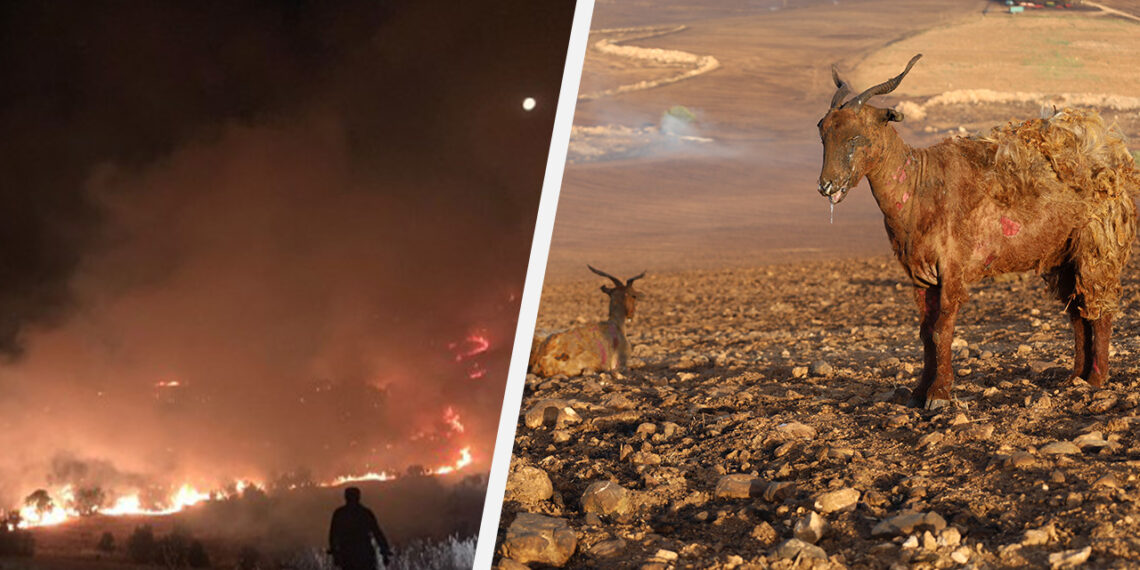
    The blaze, which broke out on Thursday between the cities of Diyarbakır and Mardin, killed 12 people outright and left five fighting for their lives.

    Three succumbed to their injuries on Sunday, the Anadolu state news agency said.

    Hospital sources confirmed the toll on Monday, saying two people remained in intensive care.

    Hundreds of animals also perished in the blaze that roared across the dry landscape.

    The government said “stubble burning” was the cause but the Diyarbakır branch of Chambers of Turkish Architects and Engineers (TMMOB) ruled that out and pointed to faulty electric cables as the likely trigger.

    “The fire could have been caused by the power cables,” it said in a report released late on Sunday, indicating there was “no stubble” in the area and saying the electric wires in the area were in a state of disrepair.

    “The cause of the fire was not stubble. The electricity cables and poles were unmaintained and dangerous,” it said, pointing to the absence of “fire prevention measures around the poles.” The findings came two days after an expert report sent to the local public prosecutor’s office said conductive wire “broke and ignited the grass on the ground and it spread to a wide area due to the effect of strong wind.”

    The faulty wiring was on a pole in Köksalan village, in an area where the fields had not yet been harvested, the experts said.

    They calculated the blaze had ravaged between 1,650 and 2,000 hectares (4,080 and 4,940 acres) of farmland, forest and residential areas.

    A preliminary report by the Diyarbakır Chief Public Prosecutor’s Office also included the determination that the fire was caused by faulty electrical wiring that spread quickly due to strong winds and not by a stubble burn.

    Interior Minister Ali Yerlikaya had on Friday blamed the fire on a “stubble burn,” and the justice ministry said it had opened a probe.

    The chamber’s findings came after officials from Dicle Electricity Distribution (DEDAŞ) in southwestern Turkey had filed criminal complaints against eyewitnesses who claimed that the fire was caused by electrical wires.

    Meanwhile, Sinan Ateş, who works for digital media platform Onedio, was widely criticized for his graphic post about the fire, which was found by many to be sarcastic and racist.

    The post includes a Smurf drawing of a villager in Diyarbakır among the flames with a text reading: “The Olympic[-size] stubble fire, which was started by village Smurfs, is heading towards Mardin.”

    “The Onedio website made fun of the fires in Diyarbakır and Mardin, where so many lives were lost. It called it an Olympic fire! … The prosecutor’s office determined that it was not a stubble fire. Isn’t this a provocation, then?” journalist Bahadır Özgür said in a tweet.

    The Mardin Labor and Democracy Platform also said on X that they do not accept Onedio’s “racist post.”

  • 781 people reported torture in Turkey in 2023: rights foundation

    781 people reported torture in Turkey in 2023: rights foundation

    The report states that 739 individuals personally claimed to have been subjected to torture, while 42 reported it on behalf of a relative, bringing the total number of applications to the TİHV over the last decade to 7,548, and since its establishment in 1990, to 21,894.

    The report also notes that six people died in custody under torture.

    Torture in custody and prisons is a systematic problem in Turkey about which local rights groups, parliamentarians and state authorities receive hundreds of complaints every year. Earlier this year, the Parliamentary Assembly of the Council of Europe (PACE) adopted a resolution that expressed concern about an increase in alleged incidents reported from Turkey in past years.

    The report indicates that 81.8 percent of the torture victims (598 individuals) underwent formal detention processes, while 18.8 percent (133 individuals) said they experienced unofficial detentions without formal records. This high rate of unofficial detentions is reportedly linked to police interventions during public demonstrations.

    Rights groups also complain about a climate of impunity, with most complaints against alleged incidents leading to no substantial investigation, in some cases despite available CCTV footage.

    Among the victims, 240 identified as women (32.8 percent), 428 as men (58.5 percent), and 63 as non-binary. The age range of victims spanned from seven to 77, with nearly half (49.2 percent) aged between 19 and 35. June and July saw a spike in applications due to police interventions during Pride Week events.

    The highest number of torture reports came from Istanbul, with 251 applications, followed by İzmir (172), Van (161), Diyarbakır (125), Cizre (40) and Ankara (32). İstanbul’s police department topped the list for locations where detainees reported experiencing torture.

    The distribution of torture reports shows a significant concentration in the southeastern and eastern Anatolia regions, home to a large Kurdish population. Kurdish speakers accounted for 67 percent of the reports, a stark contrast to the 23.5 percent of the Turkish population from these regions, highlighting a disproportionate impact on Kurdish individuals.

    Eight of the reported torture cases occurred outside Turkey. Since a coup attempt in July 2016 the government of President Recep Tayyip Erdoğan has employed extra-legal methods to secure the return of its critics after its official extradition requests have been denied. The government’s campaign has mostly relied on renditions, in which the government and its intelligence agency, MİT, persuade the relevant states to hand over individuals without due process. The victims have been the subjects of a number of human rights violations including arbitrary arrests, house raids, torture and ill-treatment during these operations.