Category: World

  • Police raid mosque to disperse members of anti-gov’t religious group in SE Turkey

    Turkish police on Monday raided a mosque in the southeastern province of Gaziantep and detained eight followers of an anti-government religious group who wanted to perform a religious ritual peculiar to the Muslim holy month of Ramadan, Turkish media outlets reported.

    The detainees were the followers of the Furkan Foundation, whose leader is an outspoken critic of the policies of the ruling Justice and Development Party (AKP).

    The police raided the mosque wearing their shoes, which is regarded as disrespectful, and used pepper spray and force to disperse the Furkan followers on the grounds that they were violating coronavirus measures.

    Furkan Foundation leader Alparslan Kuytul earlier announced that his followers would perform itikaf, which means to isolate in a mosque or at home with the intention of dedicating your time solely to the worship of Allah in the last 10 days of Ramadan.

    The AKP, which had previously imposed partial, shorter lockdowns and weekend curfews in a bid to reduce the closures’ impact on the economy, decided to impose a three-week full lockdown after Turkey saw COVID-19 infections averaging around 60,000 per day during the peak week in April.

    New restrictions, which took effect on the evening of April 29 and will last until May 17, will prohibit people from leaving their homes, except to shop for groceries or meet other essential needs, during the remainder of Ramadan as well as the three-day Eid al-Fitr holiday.

    Furkan members criticized what they described as the double standards against their group, saying the AKP did not observe coronavirus measures when it held party congresses with the attendance of thousands of people.

    Bir yasaklama olmadığı halde, itikafta kalan kardeşlerimizi camiden ekipler zorla çıkarıyor. Tamamen keyfi muamele. Biz 2004 yılından beri her yıl on gün evimize en yakın camide itikafa giriyoruz.

    5000 bin kişi ile maç serbest 5-10 kişi ile itikaf yasak öylemi.Yazıklar olsun! pic.twitter.com/fCBnJ2YEzc

    — Yakup ŞAHİN (@yakupsahin27) May 2, 2021

  • Police officer jailed over Gülen links dies of cancer after belated release from prison

    Abdulvahit Tuncay, a former police officer who was fired in the aftermath of a coup attempt in Turkey in 2016 and was subsequently jailed, has died of cancer after his belated release from prison, the Bold Medya news website reported.

    Tuncay, who was jailed in Tekirdağ Prison in northwestern Turkey, was also denied timely medical treatment although he wrote dozens of petitions to the prison administration asking to be taken to a hospital.

    Tuncay was most recently jailed in October 2020 to serve a 25-year sentence due to his alleged links to the Gülen movement, accused by the Turkish government of masterminding the failed coup in July 2016. Although the movement strongly denies any involvement, the Turkish government has been carrying out a witch-hunt against its followers for more than five years.

    “They left my husband to die. They did not even allow him to go to the prison infirmary. He filed 25-30 petitions about his need for treatment. … He was not released until April 24 although cancer had spread to his entire body. He dropped to 50 kilograms from 70 kilograms. They did not release a person with stage four pancreatic cancer,” Tuncay’s wife Songül said, recounting her husband’s plight in prison.

    Tuncay died on May 1.

    He was first arrested two months after the failed coup of July 15, 2016. He had been in Sincan Prison in Ankara and Keskin Prison in Kırıkkale for two years until he was released from prison pending trial. Tuncay was re-arrested in Tekirdağ in October 2020.

    Human rights activists and opposition politicians have frequently criticized the authorities for not releasing critically ill prisoners so they can seek proper treatment.

    A recent report by the Ankara-based Human Rights Association (İHD) said there are at least 1,605 ailing inmates in the country’s prisons, 604 of whom are in critical condition. The İHD said it estimates the number of sick inmates to be higher and calls on the government to release them and delay their sentences as the coronavirus pandemic poses a further threat to their medical well-being.

    According to a statement from Turkish Interior Minister Süleyman Soylu on February 20, a total of 622,646 people have been the subject of investigation and 301,932 have been detained, while 96,000 others have been jailed due to alleged links to the Gülen movement since the failed coup. The minister said there are currently 25,467 people in Turkey’s prisons who were jailed on alleged links to the Gülen movement.

  • Far-right MP attacks Armenian lawmaker, threatens another genocide

    A far-right, independent member of the Turkish Parliament has threatened a Turkish-Armenian lawmaker with facing yet another genocide amid debates over the recent recognition of the mass killings of Armenians at the hands of the Ottoman Empire as genocide by the US administration.

    Terbiyesiz tahrikçi adam. Çok memnun değilsen çek git cehennemin dibine. Talat Paşa vatansever Ermenileri değil senin gibi arkadan vuranları sürdü. Sen de zamanı gelince bir Talat Paşa deneyimi yaşayacaksın ve yaşamalısın. https://t.co/DicwpbvuAM

    — Prof. Dr. Ümit Özdağ (@umitozdag) April 26, 2021

    On April 24 President Joe Biden became the first US leader to use the term genocide in an annual message on the anniversary of the 1915-1916 massacres.

    Garo Paylan, an Armenian lawmaker from the pro-Kurdish Peoples’ Democratic Party (HDP), released a statement on Twitter on April 24 criticizing the naming of streets in Turkey after Talaat Pasha, the de facto political leader of the Ottoman Empire during World War I who is held responsible for the deportations and atrocities committed against Armenians at the time.

    “We are walking on streets 106 years later named after Talaat Pasha, the architect of the genocide. We send our kids to schools named Talaat Pasha. We are living in a Turkey like what Germany would have been if there had been streets and schools named after Hitler in Germany today,” tweeted Paylan.

    Paylan’s message drew an angry and threatening response from Ümit Özdağ, a professor of political science and currently an independent lawmaker who served with the far-right Nationalist Movement Party (MHP) and İYİ Party in the past.

    “Shameless, provocative man. If you are not very pleased [about living here], go to the hell. Talaat Pasha did not deport patriotic Armenians but those like you who hit [Turks] from behind. When the time comes, you will and should also go through a Talaat Pasha experience,” Özdağ tweeted in remarks that attracted widespread criticism on social media, with some users reporting him to the company for hateful conduct.

    The Human Rights Association (İHD) announced that it would file a complaint against Özdağ.

    Paylan responded to Özdağ’s threats a day later, saying: “The remnants of the mentality that massacred my people says, ‘We can do it again.’ You hit us and did we not die? We did. However, those left behind never abandoned the struggle for justice. They won’t do so after me,” Paylan tweeted, calling Özdağ a fascist.

    Paylan, whose HDP is the only political party that recognizes the Armenian genocide, on April 24 submitted a motion asking the Turkish parliament to declare the mass killings of Armenians over a century ago a genocide.

    “The Armenian Genocide took place in these lands, and justice can only be achieved in Turkey,” Paylan said in a statement on Saturday.

    “Turkey can heal the wounds of the Armenian people. I respectfully remember the victims of the genocide, who have waited for justice for 106 years,” he said.

    The Armenians — supported by historians and scholars — say 1.5 million of their people died in a genocide committed under the Ottoman Empire during World War I.

    Ankara accepts that both Armenians and Turks died in huge numbers as Ottoman forces fought czarist Russia.

    But Turkey vehemently denies a deliberate policy of genocide and notes that the term had not been legally defined at the time.

  • Jailed journalist Ahmet Böken contracts COVID-19 in prison

    Ali Ahmet Böken, 49, a veteran Turkish journalist and prominent broadcaster who has been in prison over alleged links to the Gülen movement since August 2016, has contracted COVID-19 according to his wife Nihan Böken.

    Nihan Böken said she received a text message from the Ministry of Health informing that her husband’s test result was positive and asking him “not to leave home.” She later said she was able to talk to Ahmet Böken and his condition was good for now.

    Evden mi?@a_ahmetboken

    1719. gün pic.twitter.com/Y40PGn6t8F

    — Nihan BÖKEN (@BokenNihan) April 24, 2021

  • EU chief says ‘sofagate’ shows need to tackle sexism

    European Commission President Ursula von der Leyen said Monday her recent treatment in Turkey, where she was denied a chair at top-level talks, underscores the EU’s need to tackle sexism, Agence France-Presse reported.

    In her most personal comments yet on the incident that has come to be known as “sofagate,” von der Leyen told MEPs, “I felt hurt and I felt alone as a woman, and as a European.”

    Much of the commentary on the affair has focused on Turkish President Recep Tayyip’s Erdoğan’s diplomatic faux pas in failing to provide a chair for von der Leyen.

    But von der Leyen told the European Parliament that she could see no reason in the EU’s own rules why she should have been treated differently to European Council chief Charles Michel.

    Michel was quick to take the single chair set out next to Erdoğan and the EU and Turkish flags, relegating a visibly annoyed von der Leyen to a sofa further away.

    “I am the first woman to be president of the European Commission. I am the president of the European Commission,” she said ahead of a parliamentary debate on EU-Turkey ties.

    “And this is how I expected to be treated when visiting Turkey two weeks ago, like a commission president, but I was not. I cannot find any justification for the way I was treated in the European treaties.

    “So I have to conclude that had happened because I am a woman.”

    Immediately after the Ankara meeting earlier this month, when footage emerged of von der Leyen’s embarrassment, some European officials stressed that technically Michel is her senior in the diplomatic hierarchy.

    But von der Leyen has made clear that she expects to be treated as an equal to her fellow EU chief.

    And she said not only must respect for women’s rights be “a prerequisite for a resumption of dialogue with Turkey” but that Europe itself must do better on this front.

    Erdoğan has been criticized for withdrawing Turkey from the Istanbul Convention on halting violence against women but, as von der Leyen recalled, several EU members have still not ratified the treaty at all.

    “And others are thinking about quitting. This is not acceptable,” she said, warning that she would try to find a way for the EU itself to join the convention despite resistance from some capitals.

  • US President Biden recognizes Armenian genocide

    US President Joe Biden on Saturday recognized the Armenian genocide, a landmark step in defiance of Turkey which strongly rejects the label for the 1915-1917 killings by the Ottoman Empire, Agence France-Presse reported.

    “We remember the lives of all those who died in the Ottoman-era Armenian genocide and recommit ourselves to preventing such an atrocity from ever again occurring,” Biden said in a statement, becoming the first US president to use the term in an annual message.

    “We affirm the history. We do this not to cast blame but to ensure that what happened is never repeated.”

    A US official reiterated that the intention was not to place blame on modern Turkey, which the official called a “critical NATO ally.”

    “It is very much the intention of the statement — very much the intention of the President — to be doing this in a very principled way focused on the merits of human rights, and not for any reason beyond that including placing blame,” the official told reporters.

  • Turkish police sexually assaulted navy sergeant, threatened him with rape of his daughter

    A navy sergeant in an elite special forces unit testified in court about the torture he and his colleagues suffered at the hands of the Turkish police, revealing some of the gruesome details of the abuse including sexual assault and threats to rape his wife and daughter, Nordic Monitor reported.

    Mevlüt Öncel, a 49-year-old first sergeant in Underwater Offense (Su Altı Taarruz, or SAT), the equivalent of the US Marines, gave shocking details at a hearing on July 23, 2018 at the Ankara 4th High Criminal Court. Speaking for the first time after spending 25 months in pre-trial detention awaiting an indictment on coup charges and a trial date, the sergeant told the panel of judges about the physical, psychological and sexual abuse he endured.

    His terrible ordeal was also registered by a delegation of the European Committee for the Prevention of Torture and Inhuman or Degrading Treatment or Punishment (CPT), a Council of Europe-affiliated body, when he was interviewed in jail. The Turkish government vetoed publication of the report, which documented the torture and abuse of many detainees in the aftermath of a false flag coup attempt on July 15, 2016. The CPT has stated since 2016 that it has no authority to release the report without Turkey’s approval.

    Öncel and his colleagues in the SAT unit were brought to a gendarmerie station located in Kazan, less than an hour north of the Turkish capital city Ankara. The district gendarmerie post was the first place officers who had been at Akıncı Air Base on various assignments on July 15 and were rounded up were taken.

    Court transcript that shows how Mevlüt Öncel was abused physically, psychologically and sexually. His daughter was threatened with rape:

    The station was effectively turned into a torture center when the police, some in plainclothes, took over from the gendarmerie command, which was told that only the police were authorized to process, take statements and refer military officers to the prosecutor’s office.

    Although active duty officers can only be processed by the Central Command, a military investigation unit, not the police, under Turkish law, the government simply ignored the Code on Criminal Procedure and de facto suspended the protections afforded military detainees.

    The police officers assaulted detainees with batons, stripped them down to their underwear, and beat and tortured them for hours. The court records paint a picture of the police acting as judge, jury and executioner with complete disregard for rights of the detainees held at the Kazan gendarmerie post.

    Öncel and his friend Erdinç Kurt, who is also a SAT member, thought they were turning themselves in to a safe refuge at the gendarmerie post and an escape from the chaotic events in and around the air base, where the landing strip was being bombed by jets on orders from the government. When they arrived at the Kazan station, they were shocked to see many officers stripped to their underwear and covered in blood, apparently from torture. They were forced to kneel in the courtyard under the hot sun.

    “The gendarmerie took us to the Kazan gendarmerie post. When I was still in the car, I saw people in civilian clothes as well as in uniforms. Most of them had wooden sticks in their hands. I also saw naked people leaning against the wall of the building and also sitting. Some of them were SAT members, our friends, some of them I didn’t know, but they were all bruised and bloodied on their heads and hands and distraught. It was obvious that they were subjected to terrible beatings and torture,” Öncel recalled.

    As soon as they stepped out of the vehicle, the police started attacking them with sticks, kicking and punching them. The beatings soon turned into torture and the violence steadily increased, with the police officers working in shifts. Sexual torture followed as well, according to Öncel, who said he could not talk about the details in the courtroom but rather put them in writing and submitted them to the court. Nordic Monitor was unable to locate the written statement but obtained the court transcript of his testimony as well as medical reports that verified the torture.

    The perpetrators were also filming the torture at the gendarmerie post. Many were threatened with the rape of their wives and daughters. Öncel related how he thought he could save his daughter by saying that he had a son, not a daughter. “Someone asked whether I had a daughter. I couldn’t say I had a little girl. I was terrified and lied. I said I had a little boy, and this is exactly what he told me: ‘Well, that’ll do The sex doesn’t matter.’ Now I’m asking, what is this? What kind of person does such a thing? I don’t want to talk about this any further,” Öncel testified, stopping short of revealing further details on the abuse.

    The sergeant said he did not even remember when the torture ended. What he recalled was that he found himself shivering from a chilly night wind, in wet clothes, leaning against the building in the yard. “After beatings, torture, starvation and thirst, now the test of the cold had begun. If I remember correctly, I was taken to a prosecutor’s office later in the night or in the morning,” he added. His statement was also tampered with, and the prosecutor added details to his statement that he never gave.

    His file has one medical report issued on July 17, 2016 by the Dr. Nafiz Körez Sincan Public Hospital, which recorded some of the torture and abuse Öncel had endured. Dr. Zehra Güven Çetin of the cardiology department wrote that he took beatings to his back, arms and legs and had multiple bruises on all over his body. Nevertheless, she cleared him as fit to stay in detention under such conditions. Medical doctors were threatened by the police to not put torture and beatings in medical reports, and most complied for fear of being arrested on fabricated charges.

    After a quick arraignment held at 02:48 hours on July 18, he was sent to Sincan F1-type Prison, where he was put in solitary confinement for a long time. The punishment of detainees in solitary cells is another form of torture used by Turkish authorities to inflict more pain on victims in prisons.

    At one point, Öncel was surprised to see the CPT delegation, which was conducting a special visit to inspect the situation. They somehow found Öncel and wanted to talk to him.

    “In the early days in prison, the door to the solitary cell where I was confined was opened. I saw civilians at the door accompanied by guards. They said they came from the CPT, the European Committee for the Prevention of Torture and Inhuman or Degrading Treatment or Punishment, and that they wanted to meet with individuals who had been tortured and that they wanted to talk to me in this context. So the request came from them. I talked to them. They wanted to see signs of torture. They wanted me to tell them what I’d been through. I told them,” Öncel said.

    The CPT delegation’s visit between August 28 and September 6, 2016 came amid widespread allegations torture and abuse, first raised by Amnesty International, which stated that it had collected credible evidence that detainees in Turkey were beaten, tortured and on some occasions raped in official and unofficial detention centers across the country.

    However, the details of the CPT report were never made public because Turkey vetoed its publication and has not lifted its objection since 2016. In fact CPT President Mykola Gnatovskyy stated in 2017 that even though he “[wanted] to discuss the findings,” he could not comment on the report due to Ankara’s decision.

    Kazan gendarmerie post officers and two police chiefs were identified from the records. The gendarmerie shifted the blame for the torture and abuse of detainees to the police:

    The torture was also recorded in internal communications between government agencies. In a three-page document, a copy of which was obtained by Nordic Monitor, Kazan gendarmerie post commander Lt. Murat Bozdağan and five sergeants – Osman Gök, Semis Kaman, Osman Tamaç, Abidin Sarıoğlu and Serhat Kalkan, who were assigned to the post — claimed they did not know how and by whom the detainees were tortured. As they tried to explain the medical report that recorded the torture, the post officers said the police had assumed authority and that the gendarmerie did not process or interrogate the detainees at all. They named Kadir Yılmaz and Hakan Kutlu as the police officers who took over the custody of the detainees from them.

    However, the Turkish government issued an executive decree providing immunity for officials who were accused of torture and ill-treatment in detention facilities and prisons. Based on this decree, prosecutors in Turkey refrained from conducting any probe into allegations of torture and abuse.

    Öncel was on a leave of absence when he was enlisted to be part of an emergency mission team by his commanding officer, which was not unusual for SAT team members who were often scrambled at the last minute as a rapid response team to intervene in breaking developments on special assignment. He and his navy colleagues were transported to the military section of Istanbul Atatürk Airport, from where they were flown on a CASA aircraft to Akıncı Air Base in Ankara. They did not know about the mission or where they were even heading. For Öncel, nothing seemed out of the ordinary as he had taken part in many missions in Turkey and abroad under exactly the same circumstances.

    When they landed, they were briefed on their mission, which was to secure the base against a terrorist threat. “I learned there that a terrorist attack was expected, that the chief of general staff [Hulusi Akar] and force commanders were all at the base and that we would protect the base,” Öncel recalled.

    He was assigned to the outer perimeter near the entry gate and took a position close to a wall and spent the night there. In the morning light he canvassed the area to spot vulnerable positions, if any, where terrorists might infiltrate. He did not find any areas that could be easily breached.

    The SAT team members were familiar with continuous alerts at the command base, which had received multiple intelligence reports from the police, the General Staff and intelligence agency MIT about possible terrorist attacks on military bases and installations in the weeks leading up to the failed coup on July 15, 2016.

    The terror alerts were taken seriously by all military bases and installations around the country, especially after the outlawed Kurdistan Workers’ Party (PKK) attacked General Staff service busses that were transporting military officers in Ankara on February 17, 2016, killing 29 people. Deadly terrorist attacks in Ankara and Istanbul by the Islamic State in Iraq and Syria (ISIS) killed hundreds of people in 2015 and 2016, which raised the alert level across the country. The General Staff issued orders to all commanders to beef up security in and around bases, military housing compounds and key strategic locations.

    Medical report issued for Mevlüt Öncel recorded torture and beating: 

    The SAT member had no idea he was one of many soldiers who were mobilized to make it appear that the military was carrying out a coup when in fact it was a false flag operation planned by President Recep Tayyip Erdoğan and his military and intelligence chief in order to launch a mass purge of NATO’s second largest army and staff the vacated positions with Islamists and neo-nationalists.

    The first shock Öncel experienced was when he and his team members came under machine gun fire that quickly stopped. Then the base came under bombardment.

    The situation quickly became chaotic, and his commanding officer, Özay Cödel, told team members that they had been taken to the base on false pretenses and SAT Group Commander Col. Mustafa Turan Ecevit was not picking up his phone. “Captain Özay said he would hold those responsible to account after explaining that the situation smelled of lies and betrayal. I had the same feeling as him. I was asking myself questions about what happened, how could something like this could happen and how we ended up like this” Öncel noted, collecting his thoughts at the time about how they were misled.

    Öncel did not have a chance to find out what really happened on July 15 when he was imprisoned after the torture and abuse he endured during detention. Despite multiple petitions, he was denied access to the indictment and evidence case file for two years, preventing him from mounting an effective defense when he was put on the stand in court. When he was finally allowed to see the indictment and evidence in prison on April 9, 2018, Turkish authorities limited the time allotted to him to use the computer. The short time was not enough to sort through tens of thousands of pages compiled by the prosecutor in the indictment and its annexes.

    At the end of proceedings that were marred by a series of procedural flaws, tampered evidence and the inability of lawyers to mount an effective defense, the court ruled on November 26, 2020 to convict him on coup charges and sentenced him to aggravated life, which had replaced capital punishment in Turkey.
  • Retrial of 4 Zaman journalists begins at İstanbul court after top court ruling

    An İstanbul court on Tuesday began the retrial of four journalists from the now-closed Zaman daily after the Supreme Court of Appeals in December annulled the local court’s rulings against the four journalists.

    The Zaman daily, which was Turkey’s best-selling newspaper, was closed down along with dozens of other media outlets due to their links to the Gülen movement, which is accused by Turkey’s Justice and Development Party (AKP) government of masterminding a coup attempt on July 15, 2016 although it strongly denies any involvement.

    Former Zaman daily columnists Şahin Alpay, Mümtaz’er Türköne and Ali Bulaç attended the first hearing of the trial at the İstanbul 13th High Criminal Court, while former Zaman editor Mehmet Öztürk was absent.

    The journalists had been arrested in the aftermath of the coup attempt as part of a crackdown on journalists critical of the government and journalists who used to work at Gülen-affiliated media organizations. Eleven journalists were tried on charges of violating the constitution, membership in a terrorist organization, disseminating the propaganda of a terrorist organization and aiding a terrorist organization.

    In December the Supreme Court of Appeals ruled to uphold the lower court’s decision for the acquittal of the four defendants as well as sentences given to the three of the defendants in the trial. The top court also ruled that sentences given to Türköne, Bulaç and Alpay as well as an acquittal decision for Öztürk were flawed.

    The journalists, who were all in pretrial detention for several years following the coup attempt, demanded that the court comply with the top appeals’ court ruling and rule for their acquittal. Alpay reminded the court of two rulings from Turkey’s Constitutional Court and one ruling from the European Court of Human Rights concerning the violation of his rights during his imprisonment and pretrial detention.

    The journalists denied all the charges against them, saying their activities at the Zaman daily were merely journalistic and that they had nothing to do with the coup attempt.

    The court adjourned the trial to a later date.

  • | Zaman Australia

    | Zaman Australia

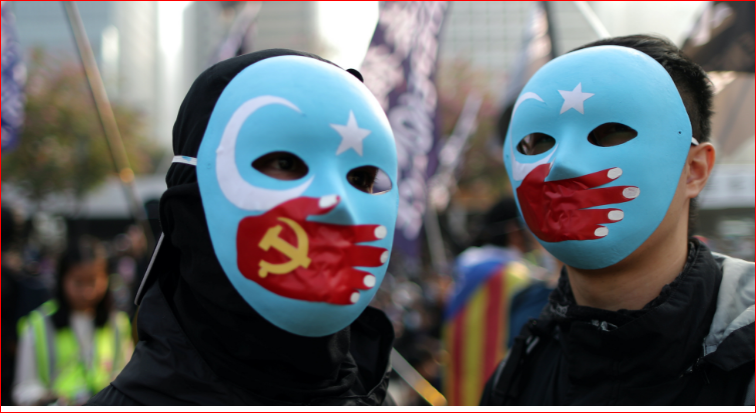
    Chinese authorities have blacklisted Australian Uyghur community leaders and activists as “suspected terrorists” for monitoring and harassment in a trove of police records obtained by the ABC.

    The Australian citizens, who have lived in Australia for between 7 and 20 years, are among thousands of Uyghurs in China and abroad who are singled out in an official Chinese blacklist for surveillance and interrogation.

    The leaked blacklist contains the records of 10,000 “suspected terrorists”, including children and more than 7,600 ethnic minority Uyghurs, who face a campaign of repression and detention which Beijing claims is aimed at stamping out Muslim extremism.

    The files are among more than 1 million police and surveillance records from Shanghai contained in a database named “uyghur terrorist” that was hacked late last year, as revealed by the ABC earlier this month.

    An ABC investigation has now identified at least three Australian-based ethnic minority Uyghurs blacklisted in the database as “suspected terrorists” — evidence of a far-reaching campaign to monitor and stamp out foreign influence and dissent.

    They include two Australian citizens — prominent Canberra-based community leader Nurgul Sawut and Melbourne Uyghur elder Maimaitiaji Kasimu — who both appeared in an explosive ABC Four Corners program in 2019 about human rights abuses in the province of Xinjiang.

    The third Australian Uyghur, whose identity the ABC is withholding for his family’s safety, is a permanent resident whose mother was threatened with detention in Xinjiang months after he attended a major protest in Canberra.

    Each of the three have family members or relatives who have been detained in a network of “re-education” camps in the province.

    “I take being on this list as a badge of honour,” said Ms Sawut, a director of the US-based Campaign for Uyghurs organisation, who has spent years gathering data on the detention of Australian residents and their families.

    “But some of the family members [of blacklisted Uyghurs] took it hard. They interpret it as they’re still being watched, even though they live in Australia.

    “When I saw my name on the Chinese terrorist list, I was shocked but not surprised because I have been outspoken about the Uyghur cause and the crisis in our region since 2017.”

    Ms Sawut says dozens of her family members in Xinjiang have been locked up in retaliation against her activism, and she has received attacks and warnings online which she believes were sent by Chinese authorities.

    Hayrullah Maimaitiaji, whose blacklisted father Maimaitiaji Kasimu is revered as a devoutly religious leader in Melbourne’s Uyghur community, told the ABC he feared the discovery would further discourage others from speaking out.

    “We are telling the truth, and now the Chinese government put my father with more than 7,000 people [Uyghurs] on that list,” said Mr Maimaitiaji, who was detained in Xinjiang in 2017 and is from a prominent Muslim family repeatedly targeted by authorities in China.

    “If we are suddenly on the list, our relatives in China or us ourselves are in a very hard position.

    “You [already] can’t go to China anymore or we can’t leave China anymore. It’s going to affect our safety as well.” ABC news

  • Boy struggling with leukemia needs jailed parents’ support, grandfather says

    Chinese authorities have blacklisted Australian Uyghur community leaders and activists as “suspected terrorists” for monitoring and harassment in a trove of police records obtained by the ABC.

    The grandfather of Hakan Dağdeviren, an 11-year-old boy diagnosed with leukemia in January whose parents are imprisoned as part of a crackdown in Turkey targeting followers of the faith-based Gülen movement, has told Deutsche Welle Turkish service that Hakan needs his parents to be able to battle his disease.

    “He is just a kid. He’s in a hospital, he’s ill. This is a period when he needs his parents the most,” 70-year-old Ali Dağdeviren told DW about Hakan, whose cancer metastasized to his liver, abdomen, neck and armpits, according to his doctors.

    Sabriye and Gökhan Dağdeviren, Hakan’s mother and father, were arrested in 2018 for alleged links to the Gülen movement, a faith-based group inspired by Muslim cleric Fethullah Gülen and critical of Turkish President Recep Tayyip Erdoğan and his ruling Justice and Development Party (AKP).

    The Erdoğan administration accuses Gülen and his followers of masterminding an abortive putsch on July 15, 2016 and labels the movement a terrorist organization. Both the preacher and members of his movement, however, strongly deny involvement in the coup or any terrorist activity.

    Hakan’s mother was sentenced to six years, 10 months in prison and his father to 19 years. Both are serving their time in Eskişehir Prison, while Hakan and his sister Halenur, are under the care of their grandparents.

    “According to his psychologist, Hakan, once an active child, withdrew into himself following the latest developments because he tries to carry his own burden as well as that of his sister and parents, and he can’t do it,” the grandfather said.

    He added that Hakan has undergone three rounds of chemotherapy since January and that the second was especially hard for him. “By then, he had scars in his mouth and throat. He needed respiratory support and his hair started to fall out,” he said.

    Hakan to have bone marrow transplant between May and June

    The grandfather also revealed some good news, saying that Hakan had a match for a bone marrow transplant with his sister and that the operation was scheduled to take place between May and June, DW said. Hakan is also expected to be allowed to go home next week.

    The hashtag #DirenBeHakan (Be strong, Hakan) was shared widely last week by Turkish social media users appealing to the Turkish government to postpone the execution of the jail sentence of Hakan’s mother.

    Referring to the campaign, the grandfather said: “It’s not just Hakan. There are many people, babies who are really ill and cannot have the company of either one or both of their parents. It’s not supposed to be like this. Be that as it may, I believe that they [the AKP government] will not release those parents. They won’t do it because they don’t want to do it.”

    Erdoğan has been targeting followers of the Gülen movement since the corruption investigations of December 17-25, 2013, which implicated then-Prime Minister Erdoğan, his family members and his inner circle.

    He intensified the crackdown on the movement following a coup attempt in 2016 and launched a massive post-coup purge that has taken a huge toll on human life, making no exceptions for children. Several children such as Ahmet Burhan Ataç, Mehmet Fatih Dedeoğlu, Selman Çalışkan, Eymen Küçükaydoğan, Ali İhsan Başer and Furkan Dizdar were diagnosed with cancer after their fathers were arrested. Some of these children were unable to cling to life and succumbed to their illnesses.

    According to a statement from Interior Minister Süleyman Soylu on February 20, a total of 622,646 people have been the subject of investigation and 301,932 have been detained, while 96,000 others have been jailed due to alleged links to the Gülen movement since the failed coup. The minister said there are currently 25,467 people in Turkey’s prisons who were jailed on alleged links to the Gülen movement.