Category: World

  • Interior minister to file complaint against journalists after mafia boss releases video calls

    Turkish Interior Minister Süleyman Soylu has said he will file a criminal complaint against two journalists whom he accused of conspiring against him with a mafia leader.

    Mafia boss Sedat Peker on Tuesday released two video calls with pro-government journalist Hadi Özışık after Özışık denied claims that he mediated between Soylu and Peker in the wake of an exchange of words and growing tension between the minister and the mafia leader.

    In the recordings, Peker and Özışık criticize Soylu, who recently called Peker a “dirty mafia leader,” with Özışık telling Peker he would not try to stop him from making revelations about his relationship with Soylu.

    Peker, the head of one of Turkey’s most powerful mafia groups, has for the last two weeks been setting the country’s political agenda through videos he releases on YouTube. The videos reach over a million viewers in the first day of their release. Peker, who lives in Dubai and is the subject of an outstanding warrant in Turkey, has been making shocking revelations about state-mafia relations and drug trafficking and murders implicating state officials.

    After the release of the video calls between Peker and Özışık, Soylu said he was shocked to see the conversation about him between the mafia leader and the journalist. He said he has known journalists Hadi Özışık and his brother Süleyman Özışık for years but denied Peker’s claims that the journalists mediated between Peker and Soylu in order to ensure Peker’s return to Turkey, according to the superhaber news website.

    In the videos, Peker is heard constantly telling Özışık, “I was going to return to Turkey in April. What has happened to that?” meaning that Soylu made his return impossible by attacking him on Twitter as a dirty mafia leader and failed to keep a promise.

    Soylu said he would file criminal complaints against the journalists accusing them of conspiring against him with a mafia boss.

    “If only something had happened to him and I didn’t see this day,” Soylu said, according to superhaber, expressing his disappointment over the association of his name with a mafia leader.

    In the meantime, Hadi Özışık released a statement on Wednesday in which he offered his apologies to Soylu and the public due to the conversations published by Peker.

    Özışık confirmed Soylu’s account in that neither he nor his brother met with Soylu to mediate between him and Peker. He said he tried to calm Peker down during the phone conversations and decided on his own to make the calls to the mafia leader. He said Soylu knew nothing about his calls with Peker.

    Once a staunch supporter of Erdoğan, Peker left Turkey following the publication of a report related to arms trafficking to Syria that was allegedly carried out under the guise of humanitarian aid. Although police recently raided his villa in İstanbul’s Beykoz district as part of an organized crime operation, they failed to detain him since he was out of the country.

  • Suppression of Kurdish language in Turkey is reflection of general intolerance towards Kurds: community leader

    The pressure on Kurds in Turkey to not speak their own language is a reflection of a general intolerance towards the Kurdish population, said Birca Belek Language and Culture Association Co-chair Mirza Roni.

    Speaking to the Mezopotamya news agency (MA), Roni said five people had been killed in Turkey in the last seven years for speaking Kurdish. He added that authorities had remained silent about hate crimes against Kurds.

    According to Roni in 2015 11-year-old A.Ö had been beaten and later expelled from school in eastern Erzurum province for speaking Kurdish. A year later another student, Pınar Çetinkaya, was thrown out of her dormitory for speaking Kurdish with her family on the phone. The dormitory management claimed she had links to illegal Kurdish organizations.

    Bedriye Yaşlı, 71, and her husband were beaten in a hospital by another patient’s visitor for speaking Kurdish with each other in 2019.

    “The Kurdish population is being oppressed for speaking their language,” Roni said. “Not only have people been killed, but Kurdish magazines, newspapers, news agencies and TV channels have been shut down.”

    According to Roni the government’s policies discouraging the use of Kurdish is embarrassing. Although Kurdish associations have worked hard to preserve their language and culture, their activities face the constant threat of being banned, he said.

    Authorities have increasingly restricted the use of Kurdish in recent years. The government-appointed local administration removed bilingual Turkish-Kurdish street signs in the majority-Kurdish-populated city Diyarbakır in southeastern Turkey in 2018. The same administration shut down a Kurdish-language audio library for disabled children.

    Hate crimes against Kurds have increased in Turkey in the recent past. Last October, a Kurdish seasonal farm worker, Şirin Tosun (19) was shot dead in Sakarya for speaking to his friends in Kurdish.

    Sixteen Kurdish seasonal farm laborers were attacked on September 4, 2020 by a farm owner and a group of villagers in Turkey’s northwestern province of Sakarya in an incident that appears to have been caused by anti-Kurdish sentiment.

    In another hate crime father and son Kadir Sakçı (43) and Burhan Sakçı (16) were attacked by a mob, again in Sakarya, for speaking in Kurdish to each other. Kadir Sakçı died as a result of his injuries, and Burhan was hospitalized for an extended period of time.

    Prohibitions against the use of Kurdish in Turkey go back many years. Kurdish language, clothing, folklore and names had been banned since 1937. The words “Kurds,” “Kurdistan” and “Kurdish” were among those officially prohibited. After a military coup in 1980, speaking Kurdish was officially forbidden even in private life.

  • Document shows mob boss given police protection after vowing to shed blood

    Document shows mob boss given police protection after vowing to shed blood

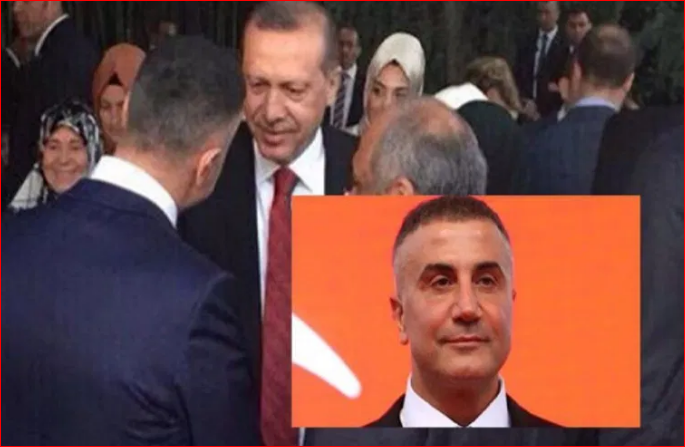
    Mafia leader Sedat Peker was given police protection after he vowed to shed rivers of blood at a rally he held to condemn terrorism in the Black Sea province of Rize in 2015, according to a document revealed by an opposition deputy.

    Peker, the head of one of Turkey’s most powerful mafia groups, has for the last two weeks been setting the country’s political agenda through videos he releases on YouTube. The videos reach over a million viewers in the first day of their release. Peker, who lives in Dubai and is the subject of an outstanding warrant in Turkey, has been making striking revelations about state-mafia relations and drug trafficking and murders implicating state officials.

    In his last video released on Wednesday, Peker made allegations about his relationship with Interior Minister Süleyman Soylu, who recently called him a “dirty mafia leader,” claiming that Soylu’s views of him were different until recently.

    In the video Peker said he was even given police protection by the state.

    Following Peker’s claims, Ömer Çelik of the ruling Justice and Development Party (AKP) said people who have documents proving Peker’s allegations should take legal action.

    Prompted by Çelik’s call, Ali Mahir Başarır of the main opposition Republican People’s Party (CHP) posted a document on Twitter which showed that Peker was given police protection by the İstanbul Governor’s Office in 2015 following the rally in Rize.

    “They are making a big mistake. When they realize their mistake, it will be too late. We will shed their blood in rivers as if the carotid arteries of the world were dissected,” said Peker at the rally targeting the outlawed Kurdistan Workers’ Party (PKK), which has been waging a bloody war in Turkey’s Southeast since 1984 and is listed as a terrorist organization by Turkey, the US and the EU.

    One day after Peker’s remarks on Oct.10, 2015, the deadliest terrorist attack in the history of modern Turkey took place in the Turkish capital city of Ankara where 109 civilians were killed and more than 500 others were injured in twin suicide bombings at a pro-Kurdish rally.

    No organization has ever claimed responsibility for the attack, but the attackers, who were two brothers, were later found to have had links to the Islamic State in Iraq and the Levant (ISIL).

    Başarır said the AKP government, which fails to provide police protection to women suffering from domestic violence, provided police protection for a mafia boss whom they now call a “dirty mafia leader.”

    The CHP said the police protection for Peker was provided before Soylu became interior minister but continued after he was appointed in August 2016, and hence he should resign.

    Following his controversial remarks in Rize, Peker also threatened academics who demanded the Turkish army halt operations in Turkey’s Southeast in 2015 that killed hundreds of people, displaced thousands and destroyed entire sections of cities.

    “We will shed your blood in streams and take a shower in your blood,” Peker said in a statement released on his personal website in January 2016 targeting the academics whom he accused of supporting the PKK.

    He was indicted following an investigation into his threats, facing 11 years in prison, but was acquitted of charges in 2018.

  • Then-and-now photos of dismissed public servants reveal extent of Turkey’s purge

    Former public servants have revealed on Twitter the extent of Turkey’s post-coup purge by sharing “then-and-now photographs” of them in their new jobs as day laborers and blue-collar workers, according to a report in the Stockholm Center for Freedom.

    Siz hiç karpuzcu hakim gördünüz mü🙂 pic.twitter.com/XulPjNNFq8

    — Mehmet Köroğlu (@HkmMhmtKoroglu) May 7, 2021

    Former judge Mehmet Köroğlu posted a photograph of his watermelon stand with the caption, “Have you ever seen a judge selling watermelons?” His post was quickly joined by other former public servants who added their current work with the same caption, “Have you ever seen?”

    Ahmet Arıcı posted a photograph of a construction site where he worked as a day laborer and said, “Have you ever seen a fighter pilot working in construction?” Yakup Sevinçhan shared a photograph of his lemon stand asking people if they had ever seen a state auditor selling lemons.

    The posts aimed to draw attention to the aftermath of the purge that has left thousands of families facing economic difficulties and social marginalization.

    Many purge victims have had to work in uninsured jobs with very little job security. There have also been cases where former public servants have died due to occupational accidents in physically demanding jobs.

    Following a coup attempt on July 15, 2016, the Turkish government declared a state of emergency and carried out a massive purge of state institutions, summarily dismissing more than 150,000 public servants including academics, teachers, military personnel, diplomats and police officers with emergency decree-laws subject to neither judicial nor parliamentary scrutiny.

    A total of 4,156 judges and prosecutors as well as 20,571 members of the armed forces, were removed from their jobs for alleged membership in or relationships with “terrorist organizations” by emergency decree-laws.

    Former public servants were not only fired from their jobs; they were also banned from working again in the public sector and getting a passport. The government also made it difficult for them to work formally in the private sector. Notes were put on the social security database about dismissed public servants to deter potential employers.

    The Justice for Victims Platform and former Peoples’ Democratic Party (HDP) deputy Ömer Faruk Gergerlioğlu released a joint report in July 2020 which said that the two-year-long state of emergency declared after the coup in Turkey caused immense suffering among public servants who were dismissed from their jobs by the government as well as their families.

    “The decree-law victims not only were removed from their jobs but also barred from seeking employment in the private sector and denied access to social security benefits,” said Gergerlioğlu.

    The dismissed public servants lost 70 percent of their average monthly income, a circumstance that reduced them to dire financial straits, according to a survey conducted for the joint report.

    The survey indicates that 99.1 percent of the victims are college or university graduates or holders of master’s or doctoral degrees, which means an immense loss of human resources for Turkey’s public administration.

    According to the victims’ family members taking part in the survey, the biggest problem they have been facing is economic hardship (97.9 percent) followed by psychological problems (88.6 percent), loss of social prestige and social exclusion (83.7 percent), disintegration of social circles (83.1 percent), unemployment/lack of employment (80.4 percent) and lack of social security (73.2 percent), respectively.

  • NBA star Kanter faces lawsuit from Erdoğan for alleged insult

    Portland Trail Blazers center Enes Kanter, an outspoken critic of Turkish President Recep Tayyip Erdoğan and the widespread human rights violations taking place under his rule, announced on Monday that he has been sued by Erdoğan on allegations of insult.

    Kanter posted a photo of an official notice of the lawsuit sent to him by Turkey’s Consulate General in Los Angeles. Kanter tore up the official notice and then burned it.

    “DictatorErdogan is suing me and asking for my arrest for ‘Insulting him.’ His skin is thinner [than] an onion. Looks like I hurt RTErdogan feelings a little,” tweeted Kanter.

    Kanter, who has lived mainly in the United States for more than a decade, has used his substantial platform as an international star athlete to condemn Turkey’s pivot towards authoritarianism under Erdoğan over the past few years. Turkey revoked his passport in 2017 like those of thousands of others in a massive crackdown launched by the Turkish government following a coup attempt in July 2016.

    Turkish officials are also seeking an Interpol Red Notice for Kanter and have been pursuing his arrest since January 2019, alleging that he backed Turkish Islamic scholar Fethullah Gülen and provided financial support to his group.

    Kanter describes himself as a close ally of Gülen, a US-based Muslim cleric who inspired the Gülen movement, which is regarded as a terrorist organization by the Turkish government and is accused of masterminding the abortive putsch on July 15, 2016.

    Although both Gülen and his followers strongly deny involvement in the attempted coup and in any terrorist activities, Ankara removed more than 130,000 civil servants from their jobs on alleged Gülen links following the failed coup as part of a massive crackdown on non-loyalist citizens that was launched under the pretext of an anti-coup fight.

    Kanter dismisses the failed coup attempt in Turkey as a “fake coup” staged by Erdoğan.

    Thousands of people in Turkey are under investigation, and most of them are under the threat of imprisonment, over alleged insults of President Erdoğan. The insult cases generally stem from social media posts shared by Erdoğan opponents. The Turkish police and judiciary perceive even the most minor criticism of Erdoğan or his government as an insult.

    Insulting the president is a crime in Turkey, according to the controversial Article 299 of the Turkish Penal Code (TCK). Whoever insults the president can face up to four years in prison, a sentence that can be increased if the crime was committed through the mass media.

  • Turkish student combat pilot, top in his class and awarded by the US Air Force, was condemned to life in prison on bogus charges

    Turkey jailed one of its the best and brightest lieutenants who was on his way to becoming a top-gun combat pilot after receiving multiple awards from the US Air Force for his excellent performance in a training program, Nordic Monitor reported.

    Buğra Baldan, a 30-year-old lieutenant who was condemned to life in prison on bogus charges, made the headlines in Turkey in 2015 when he collected three awards — Top Stick (flight performance and flight scores), Distinguished Graduate (for academic training, flight discipline and basic military qualifications) and the Air Training Commander’s Trophy – in the US.

    Recognized for his outstanding performance in the Euro-NATO Joint Jet Pilot Training Program (ENJJPT), he accepted his awards at a special ceremony held at Laughlin Air Force Base, located in Del Rio, Texas, on August 14, 2015. ENJJPT is the world’s only multi-nationally manned and managed flying training program chartered to produce combat pilots for NATO. The program is run by the 80th Flying Training Wing at Sheppard Air Force Base in Texas and trains about 200 student pilots annually.

    Baldan is one of hundreds of combat pilots who were purged and/or imprisoned by the Islamist government of the President Recep Tayyip Erdoğan in the aftermath of a false flag coup event in 2016, leaving the Turkish Air Force crippled by a huge shortage of pilots. Four in every five pilots in the Turkish Air Force were dismissed and/or jailed by the government, which carried out unprecedented dismissals of pro-NATO and pro-Western officers in NATO’s second largest army.

    Buğra Baldan’s court testimony revealed how the prosecutor’s case was based on dubious evidence:

    Graduating at the top of his class at the Air Force Academy in 2013, Baldan scored very well in the language competency exam conducted by the Office of Defense Cooperation Turkey (ODC-T), which is a US Security Assistance Organization (SAO) to Turkey. In April 2014 he was sent to Laughlin US Air Force Base for a pilot training program and completed it with an excellent record. Laughlin nominated him as pilot of the year, which was approved by the US Air Force, according to Baldan’s testimony.

    He returned to Turkey in February 2016 and continued his training in flying F-16s at the Ankara 4th Jet Base Command, located at Akıncı Air Base, the alleged center of putschist attempt, according to the government. As a trainee pilot for six months, Baldan had worked hard to keep up his excellent track record and was about to finish the last part of his training as an F-16 combat pilot in Ankara.

    The morning of July 15, 2016 was not unusual for him when he went to the base at 8 a.m. and spent the entire morning studying for an exam scheduled for Monday. He planned to spend the weekend with his girlfriend in Konya, some two hours by train from his base. He bought a ticket for 6:40 p.m. train and told the love of his life that he was looking forward to seeing her again.

    After the flag ceremony at 1:30 p.m., which was standard for trainee pilots on Friday afternoons, they were asked to stay for a social gathering by the fleet commander, Maj. Mustafa Azimetli. Baldan thought this was like the many cocktail parties he had attended in the past to acknowledge the performance of pilots in training such as successfully pulling 9G – a high-speed stress trial on a jet that translates into more 2,000 pounds of stress on the pilot’s body.

    While they were waiting for the event, all pilots were scrambled as part of a counterterrorism (Terörle Mücadele Harekatı, or TMH) mission. Veteran combat pilots who had already left the base or were on leave were recalled on emergency orders to fly warplanes in the mission. In past TMH missions, trainee pilots were allowed to remain to observe maverick pilots, learn the procedures and if needed help with errands on the ground. They were not allowed to fly any planes for actual missions. As a result Baldan and the other students stayed at the base.

    For Baldan this was the first TMH mission he would observe. He was assigned to what he called a desk unit that functioned as an internal system for members of the 143rd fleet to reach out to one another. His job was to make announcements from the mic when needed. He had been at the desk for 40 minutes and never made an announcement. For the remainder of his stay, he wandered around, watched “The Dark Knight” in the mess hall with his buddies to kill the time and slept for few hours.

    The train ticket Buğra Baldan bought to go to Konya to spend the weekend with his girlfriend. He had no prior knowledge about a military mobilization on July 15, 2016:

    In the meantime, his angry girlfriend who did not know what was happening in Ankara was waiting at the Konya train station for Baldan’s arrival and thought she had been stood up. As mobile phones were collected for the security of the mission at the base, Baldan was unable to call his girlfriend to let her know that he couldn’t make it. His phone kept receiving angry messages from her, but he was unable to read them. In his defense, Baldan displayed the train ticket he bought that day to prove that he had no prior knowledge of what would happen at the base that night.

    He was not involved in any of the chaotic events on the night of July 15 or the early morning hours of the next day. He stayed clear of what was happening and had to spend the entire night at the base trying to make sense of what was unfolding. At his young age he had never before seen a coup and thought his commanders were handling and managing the developing situation.

    In the morning he went home and checked in every day with his commanding officer, who asked them to stay at home for the time being. On July 27 he was asked to come in to the base and give a statement on what he had experienced on July 15. He never thought he would be a suspect when he reported to the base. With no questions asked, the police detained him and took him to the football field of a police academy located in in Ankara’s Kızılay neighborhood. He was subjected abuse and ill-treatment for 10 days in the field. At the end, he was formally arrested at arraignment.

    The evidence presented against him by the prosecutor to support the charges of coup plotting, membership in a terrorist group and manslaughter lacked credibility and was totally unconvincing. Phone calls he made to Kazakhstan on July 16 and 17, 2016 were found by the prosecutor as suspicious and entered into evidence against him to support the coup conspiracy.

    In his defense statement at the Ankara 4th High Criminal Court on November 7, 2017 Baldan explained that the phone numbers in the court records actually belonged to his father, who has been living as a migrant worker in Kazakhstan for the last 10 years. An accountant by profession, his father was working away from home and sending remittances to the family back in Turkey. Baldan even submitted the phone bills of his father’s cell phone from Kazakhstan to prove his point while expressing dismay at the prosecutor’s lack of due diligence in drafting the indictment.

    Photos extracted from CCTV recordings at the base were more evidence. Baldan said it was normal for him to be at the base where he had been going through a combat pilot training program. He said did not understand why the prosecutor put photos of him walking in the halls of the building assigned to trainees as criminal evidence.

    Another piece of evidence against him was a WhatsApp group set up by the 2009 graduates of the prestigious Kuleli Military High School in order to stay in contact. The prosecutor alleged that the communications were part of the coup plot when Baldan did not even have access to his phone during the July 15 events. His helping out a buddy who was short on cash after purchasing a new car was also presented as criminal evidence against him.

    He maintained his innocence during the trial, but his calls fell on deaf ears of the three judges that oversaw the proceedings. The prosecutor alleged he was a Gülenist, a group that is critical of President Erdoğan on a range of issues from pervasive corruption in the administration to Turkey’s aiding and abetting of armed jihadist groups. Being a highly successful student and well versed in foreign language was one of the criteria applied to identify alleged Gülenists in the Turkish military. He said he had worked hard to get where he was and had nothing to do with the group.

    Despite the lack of solid evidence to warrant any charges against him, the court in November 2020 convicted him and sentenced him to life in prison at the end of a sham trial.

    As a result the air force lost one of the best student pilots. But he was not an exception to the terrible story. Even before the purge the air force was experiencing a pilot shortage that has only become worse since then.

    According to the air force’s own internal report dated January 19, 2016, the military needed 554 new pilots including 190 combat pilots to reach its normal level. Departures had already brought the ratio of pilots to aircraft to 0.65, which is dangerously low, in 2014. The commanders urged the government to take immediate measures to raise the ratio and delay departures from the force by adopting incentives, extending compulsory service and offering other attractive options.

    As of May 2016, the air force had 1,275 pilots in total with 378 combat pilots who were assigned to fly F-16s and F-4s. However the mass purge in the aftermath of the false flag coup dealt a further setback to the air force. The government did not officially announce how many pilots it had purged from the air force in the aftermath of the failed putsch, but the figures reported in the Turkish media ranged from 600 to 716. This means the air force had a shortage of 1,154 pilots by January 2017, and there was no way to compensate for such a huge loss. The ratio of pilots to aircraft dropped to 0.37.

    The Turkish defense minister admitted in July 2018 that one pilot had to carry out the assignments of five because of the acute shortage. Turkey tried to recruit Pakistani pilots as trainers on F-16s, but that was rejected by the US, which has the right to approve third-country access to F-16s based on bilateral contract terms.
  • Toddler, jailed with his mother when 60 days old, still suffers the consequences

    Muaz Bahadır, a 2-year-old boy who had to stay in prison for 13 months with his mother, still suffers from a problem with the eyes known as esophoria after his treatment was delayed during that time, the Bold Medya news website reported.

    Muaz’s mother, Nurhan Erdal Bahadır, 40, was arrested on December 7, 2018 on alleged links to the Gülen movement, a faith-based group inspired by Muslim cleric Fethullah Gülen, and later sentenced to eight years, nine months’ imprisonment for membership in a “terrorist organization.” She had to take her 60-day-old son to prison with her. Muaz suffered from a heart condition known as aorta coarctation and esophoria, but she wasn’t allowed to take her son to a doctor’s appointment to check the problems he had with his eyes. The necessary medication and the eyeglasses to treat his condition were provided after a long delay.

    During their time in prison Muaz experienced all sorts of difficulties. When the time came for him to be introduced to solid foods, the prison administration didn’t allow his mother to buy an electric pot to steam vegetables and make soup. Bahadır had to feed him the prison food. When he started crawling, he fell from the bunkbed. When she took the issue to the prison administration to find a solution, she was told to “tie the baby by his foot to the bed.”

    After 13 months in prison, Bahadır was released following the decision of an appeals court.

    Turkish President Recep Tayyip Erdoğan has been targeting followers of the Gülen movement since the corruption investigations of December 17-25, 2013, which implicated then-Prime Minister Erdoğan, his family members and his inner circle.

    Dismissing the investigations as a Gülenist coup and conspiracy against his government, Erdoğan designated the movement as a terrorist organization and began to target its members. He intensified the crackdown on the movement following a coup attempt on July 15, 2016 that he accused Gülen of masterminding. Gülen and the movement strongly deny involvement in the abortive putsch or any terrorist activity.

    The family fled Turkey and are currently living in Greece. Muaz will undergo eye surgery on May 27. The family will soon start a campaign to raise the funds necessary for the procedure.

    According to a statement from Turkish Interior Minister Süleyman Soylu on February 20, a total of 622,646 people have been the subject of investigation and 301,932 have been detained, while 96,000 others have been jailed due to alleged links to the Gülen movement since the failed coup. The minister said there are currently 25,467 people in Turkey’s prisons who were jailed on alleged links to the Gülen movement.

  • Former minister Albayrak surfaces after 6 months out of sight

    Former finance minister Berat Albayrak, who is also the son-in-law of Turkish President Recep Tayyip Erdoğan, made an appearance in public for the first time since his unexpected resignation from office in early November, with a photo of him attending Friday prayers circulating on social media today.

    Albayrak’s disappearance without a trace after his resignation led to widespread speculation as well as jokes as to his whereabouts.

    In a surprise move on Nov. 8, Albayrak stepped down, citing health reasons, in a statement on Instagram. His resignation was accepted by Erdoğan on Nov. 9 after hours of silence from the Justice and Development Party (AKP) government and pro-government media outlets.

    Since then, no one has heard from Albayrak nor has he been seen in public. Some said the former minister moved overseas, while others claimed he was in seclusion in his Black Sea hometown of Trabzon.

    After an absence of six months, a picture of Albayrak at the recently built Çamlıca Mosque in İstanbul was shared on Twitter, with a user commenting, “I will give the location to people who are asking where Berat Albayrak is. He was in the Çamlıca Mosque, İstanbul, attending Friday prayers.”

    Albayrak, who was appointed finance minister in 2018, has frequently been blamed for the deterioration of the Turkish economy as a decline in the value of the Turkish lira, nearly 30 percent in 2020, led to higher inflation via imports priced in hard currencies.

  • SCF releases report on COVID-19 in Turkish prisons and discrimination against political prisoners

    The Stockholm Center for Freedom (SCF) on Monday released its latest report, “Left Behind to Die: COVID-19 in Turkish Prisons and Discrimination Against Political Prisoners,” a study that focuses on amendments made to the Law on the Execution of Sentences and Security Measures in order to decrease Turkey’s prison population to prevent the spread of COVID-19.

    The Turkish parliament passed an early parole law on April 14, 2020 aimed at reducing the inmate population of the country’s overcrowded prisons due to the pandemic. The legislation excluded political prisoners such as politicians, journalists, lawyers, academics and human rights defenders convicted under the country’s controversial counterterrorism laws and prompted calls from the UN and the EU for the non-discriminatory reduction of prison populations.

    Part of a series of reports prepared by SCF’s team of legal experts, the report details how the Turkish government continues to pursue a political agenda even during its fight against the virus.

    “The amendments made to the Law on the Execution of Sentences and Security Measures go against the basic principles of the rule of law,” said Dr. Merve R. Kayıkçı, research director at the Stockholm Center for Freedom. “Understanding the discriminatory aspects of the amendments is important to get a better grasp of the Erdoğan government’s ongoing crackdown on its perceived opponents. Erdoğan has always made use of crises to further weaken the opposition, and the COVID-19 crisis has been no exception.”

    The report begins by providing an overview of the general state of prisons in Turkey. It then moves on to explore how the concept of “terrorism offenses” has been instrumentalized and misused as a pretext to oppress and criminalize political dissidents, for the most part since an abortive putsch on July 15, 2016.

    It further examines the blatantly discriminatory amendments to the Law on the Execution of Sentences in light of basic principles of the rule of law. Finally, it provides a discussion of the government’s responsibility, particularly in terms of the right to life resulting from the discriminatory nature of the amendments.

    About the Stockholm Center for Freedom

    SCF is a non-profit advocacy organization that promotes the rule of law, democracy and human rights with a special focus on Turkey.

    Committed to serving as a reference source by providing a broad perspective on rights violations in Turkey, SCF monitors daily developments, documents individual cases of the infringement of fundamental rights and publishes comprehensive reports on human rights issues.

    SCF is a member of the Alliance Against Genocide, an international coalition working to exert pressure on the UN, regional organizations and national governments to act on early warning signs and take action to prevent genocide.

  • Daughter of abducted former bureaucrat petitions ECtHR for missing father

    Nursena Küçüközyiğit, the daughter of a former Turkish bureaucrat who has been missing since late last year, has filed an application at the European Court of Human Rights requesting an interim measure concerning her father’s case.

    Hüseyin Galip Küçüközyiğit has been missing since December 29. He was a successful lawyer who served as the chief legal counsel for the Turks Abroad and Related Communities Agency (YTB). He was fired from his job by a government decree in the aftermath of a coup attempt in July 2016. He was later sentenced to six years, three months in prison for “membership in a terrorist organization” due to his alleged ties to the Gülen movement, a faith-based group inspired by Turkish cleric Fethullah Gülen. Küçüközyiğit was released from pretrial detention pending appeal.

    The ECtHR may, under Rule 39 of its Rules of Court, indicate interim measures to any state party to the European Convention on Human Rights. Interim measures are urgent measures which, according to the court’s well-established practice, apply only where there is an imminent risk of irreparable harm. Such measures are decided in connection with proceedings before the court without prejudging any subsequent decisions on the admissibility or merits of the case in question.

    Nursena, who has been calling on Turkish authorities to carry out an effective investigation into the whereabouts of her father for months, tweeted: “We applied to all judicial authorities in Turkey for my father. We completed our application at the ECtHR since no effective investigation has been made for months and the Constitutional Court rejected our request for an interim measure. It is very saddening that we need to apply to the ECtHR and the UN for a person who went missing in Ankara. Where is my father?” Nursena tagged Turkey’s Justice Ministry to answer her question.

    Babam için Türkiye'de tüm başvuruları yapmıştık. Aylardır hiçbir inceleme yapılmaması ve AYM'nin tedbir talebimizi reddetmesi ile AİHM başvurumuzu da tamamladık. Ankara'da kaybedilen bir insan için AİHM'e ve BM'ye başvuru yapmamız gerekmesi çok acı. @adalet_bakanlik babam nerede? pic.twitter.com/VXJwbAVuCg

    — Nursena Küçüközyiğit (@NeredeBabam) May 3, 2021

    President Recep Tayyip Erdoğan has been targeting followers of the Gülen movement since the corruption investigations of December 17-25, 2013, which implicated then-Prime Minister Erdoğan, his family members and his inner circle.

    Dismissing the investigations as a Gülenist coup and conspiracy against his government, Erdoğan designated the Gülen movement as a terrorist organization and began to target its members. He intensified the crackdown on the movement following the coup attempt, that he accused Gülen of masterminding. Gülen and the movement strongly deny involvement in the abortive putsch or any terrorist activity.

    Amnesty International issued an urgent call for action at the beginning of February for a thorough investigation of Küçüközyiğit’s disappearance.

    Nearly 30 people have reportedly been abducted by Turkish intelligence since 2016. Most of the abductions targeted members of the Gülen movement. Many of the abductees mysteriously reappeared in police custody in Ankara after six to nine-month absences.