Category: World

  • Jakarta lights up 10 city spots with the colors of the Palestine flag

    The Jakarta Provincial Government recently lit up a number of pedestrian bridges and main roads in the city with the colors of the Palestinian flag in a show of solidarity with the Middle Eastern state, as hundreds were killed in escalating attacks in the Gaza strip.

    Hari Nugroho, who heads Jakarta’s Bina Marga public works agency, said that the order for the installation of the lights came directly from Jakarta Governor Anies Baswedan.

    “I was instructed by the governor to set the [lights in] colors of the Palestinian flag as a solidarity message to the people of Palestine, and to raise awareness to the public regarding the conflicts that are faced by the Palestinian people,” Hari Said

    Since Monday night, at least eight pedestrian bridges were lit in the colors of the Palestinian flag ⁠— green, white, black, and red ⁠— namely those located near the Jakarta Metro Police HQ, Gelora Bung Karno (GBK), Senayan roundabout, Dr. Sumarno street, Jelambar, Daan Mogot, Senen, and Pasar Minggu.

    In addition to the pedestrian bridges, similar lights were installed in Kendal Tunnel in Menteng, Central Jakarta and the Semanggi junction.

    Anies previously showed his support for Palestine by draping a turban with the colors of the Indonesian and Palestinian flags on his neck during the Eid prayer at his home last week.

    “Our brothers and sisters in Palestine, our children in Palestine, they bow down to God in a tense atmosphere, they went through Ramadan in a situation where their relatives died, victims of violence,” Anies said at the time.

    This isn’t the capital’s first display of solidarity for fellow Muslims around the world, as the Jakarta Provincial Government previously paid tribute to the victims of the Christchurch Mosque Shootings in March 2019 by lighting up spots in the colors of the New Zealand flag.

    More than a week after escalating violence in Gaza strip, at least 219 Palestinians, including 63 children, have so far been killed, with over 1,500 others wounded. The United Nations said that the Israeli air raids have destroyed more than 450 buildings — including a tower that housed several international news outlets, schools, and residential buildings, among others — which have displaced over 50,000 Palestinians living in the area.

    Over in Israel, 12 people including two children were reportedly killed in rocket attacks launched by Palestinian groups, while around 300 others were wounded. Diplomatic efforts between Israel and Gaza’s Hamas rulers for a ceasefire have so far made little progress.
  • Journalist who stood trial for posting Nevruz photo acquitted of terror charges

    Journalist Melis Alphan, who faced a prison sentence of up to seven-and-a-half years for posting a Nevruz photo in 2015, has been acquitted of terrorism charges.

    Alphan was standing trial on charges of disseminating terrorist propaganda due to a photo she posted on social media during celebrations marking the spring festival of Nevruz in the southeastern province of Diyarbakır in 2015.

    “I have been acquitted. I am very happy. I offer my thanks to my dear friends, colleagues and everyone who has supported me,” she tweeted following the second hearing of her trial in an İstanbul court on Friday.

    The indictment claimed Alphan sought to disseminate terrorist propaganda because the Nevruz photo she posted on social media showed flags and banners of the outlawed Kurdistan Workers’ Party (PKK), the Kurdistan Communities Union (KCK) and the Kurdish People’s Protection Units (YPG), all listed as terrorist organizations by Turkey, as well as photos of jailed PKK leader Abdullah Öcalan.

    In her defense statement at the first hearing in April Alphan said she shared a photo from the celebrations that was broadcast by many TV stations in Turkey.

    “I was not even there. The accusations against me are related to the flags and banners carried by the people in the photo. I am standing trial just because of sharing a photo. Do I have links to a terrorist organization? The crime is made up. I did not commit these crimes. I demand my acquittal,” said the journalist.

    The International Press Institute (IPI) on Thursday called on Turkish authorities to drop charges against the journalist ahead of her trial.

    “This is an outrageous example of targeting journalists who reported on, supported and shared previous official activities of the government during peace talks with Kurdish representatives to solve a long-term national conflict,” IPI Turkey Program Coordinator Renan Akyavaş said. “Alphan is being prosecuted just for sharing a photo taken from an officially sanctioned event during an official process which the government now aims to forget, act as if it never happened and to deem everything related to it illegal.”

    She added: “The Turkish government’s current attitude is one of targeting those independent journalists who reported positively on the peace process but continued their criticism against the government since then and are therefore being targeted now on baseless accusations.”

    “This is absolutely unacceptable, and Turkey must immediately end the prosecution of Alphan and compensate her for the damage done to her during this baseless prosecution.”

    Journalistic activities have more frequently been regarded in Turkey as criminal acts or terrorism particularly after a military coup attempt in Turkey in July 2016. Following the failed putsch, dozens of critical journalists were arrested, while hundreds of media outlets were closed down as part of a government-led post-coup crackdown.

    One of the leading jailers of journalists in the world, Turkey was ranked 153rd out of 180 countries in the 2021 World Press Freedom Index published by Reporters Without Borders (RSF) in April.

  • Wife of purge victim dies, leaving 2 children to the care of relatives

    Another family has fallen victim to Turkey’s post-coup purge as the wife of Yusuf Coşkun, a former teacher who was arrested on terrorism charges, died yesterday, leaving their children to be taken care of by relatives, Bold Medya reported.

    Yeşim Coşkun, 44, was diagnosed with amyotrophic lateral sclerosis (ALS), a progressive nervous system disease that causes loss of muscle control, after her husband was arrested nearly five years ago. Coşkun was confined to a wheelchair and could not visit her jailed husband.

    After suffering a brain hemorrhage five months ago, Coşkun slipped into a coma. Yusuf Coşkun was able to see his wife one last time before her death thanks to special permission granted by the prison administration. The couple’s children are currently with their grandmother in her village.

    Yusuf Coşkun was arrested in January 2017 due to alleged links to the Gülen movement and was sentenced to 13 years, nine months in prison.

    Turkish President Recep Tayyip Erdoğan has been targeting followers of the Gülen movement, a faith-based group inspired by Turkish cleric Fethullah Gülen, since the corruption investigations of December 17-25, 2013, which implicated then-Prime Minister Erdoğan, his family members and his inner circle.

    Dismissing the investigations as a Gülenist coup and conspiracy against his government, Erdoğan designated the movement as a terrorist organization and began to target its members.

    Erdoğan intensified the crackdown on the movement following a coup attempt on July 15, 2016 that he accused Gülen of masterminding. Gülen and the movement strongly deny involvement in the abortive putsch or any terrorist activity.

    The purge has damaged the unity of many families and left children to the care of relatives. Such separations have had a negative impact on the mental and physical well-being of children. In cases where grandparents are responsible of the child’s care, they cannot meet every need, especially in education and schoolwork.

    Following the abortive putsch, the Turkish government declared a state of emergency and carried out a massive purge of state institutions under the pretext of an anti-coup fight. More than 130,000 public servants, including 4,156 judges and prosecutors, as well as 29,444 members of the armed forces, were summarily removed from their jobs for alleged membership in or relationships with “terrorist organizations” by emergency decree-laws subject to neither judicial nor parliamentary scrutiny.

  • Yavaş, İmamoğlu have more than 10 percent lead against Erdoğan: survey

    Ankara Mayor Mansur Yavaş and İstanbul Mayor Ekrem İmamoğlu both have a nationwide lead of more than 10 percent over Turkish President Recep Tayyip Erdoğan in a possible presidential election, according to a recent survey conducted by the Ankara-based MetroPoll.

    In a possible race between İmamoğlu from the opposition Republican People’s Party (CHP) and Erdoğan, the İstanbul mayor would garner 49.7 percent of the vote, while his opponent would receive 38.8 percent, with 5.7 percent undecided.

    A contest between the CHP’s Yavaş and the president would see the Ankara mayor receiving 49.4 percent of the vote and Erdoğan with 37.5 percent. Undecided voters would again constitute 5.7 percent.

    Yavaş and İmamoğlu would fare better than the possible candidacy of İYİ (Good) Party chair Meral Akşener and CHP chair Kemal Kılıçdaroğlu, the survey suggests.

    Akşener would garner 42.5 percent of the vote against Erdoğan, who would win 38.5 percent.

    Kılıçdaroğlu, on the other hand, lags behind Erdoğan in the MetroPoll survey, as he would get 39.7 percent of the vote while the president would garner 42.5 percent.

    Erdoğan, whose ruling Justice and Development Party (AKP) has been in power as a single party government since 2002, was elected president in 2014 and reelected in 2018. His election in 2018 was under a presidential system as Turkey switched from a parliamentary to a presidential system of governance in a referendum in 2017.

    Under the presidential system, Erdoğan is accused of establishing one-man rule, destroying the separation of powers and silencing dissent.

  • 2 Kurdish men shot on Turkey’s Iraq border by Turkish security forces

    Two Kurdish men were shot and seriously injured by Turkish security forces in southeastern Hakkari province on Tuesday while trying to cross the border into Turkey from Iraq, the Stockholm Center for Freedom reported, citing Turkish media.

    Şahap Şendol, 23, and Celil Ekinci, 17, live in the village of Derindere on the Turkish-Iraqi border. They were in the fields tending their sheep and crossed to the Iraqi side to buy some cigarettes, according to the Bianet news website. According to another account Şendol was looking for some animals he had lost at the border, and Ekinci was helping him in the search. Both men were shot without warning on their way back and taken to a hospital in Iraqi Kurdistan.

    Şendol lost two of his fingers and Ekinci had two operations and is currently being treated in a hospital.

    Sait Dede, a former deputy from the Peoples’ Democratic Party (HDP), shared a video of the incident on Twitter. The videos show the security forces shouting at witnesses trying to help the victims, who are covered in blood.

    According to Dede animals always cross the border because of how close the village is to the border. “Many of the families from this village live in Iraqi Kurdistan,” Dede said. “Due to their family ties they go back and forth, and the authorities know about this. Some of them have dual citizenship.”

    Dede said in the event of border violations the perpetrators can be given citations or detained, but instead the security forces choose to shoot. “If the incidents are covered by the media, the authorities come up with explanations like ‘They were smugglers’.” he said. “Is smuggling punishable by death?“

    According to Dede in this case the soldiers didn’t even come to their aid after shooting them. In the video some soldiers are seen watching the two men from a distance while they begged for help.

    President of the Hakkari Bar Association Ergün Canan said the security forces are not authorized to fire without warning. “These incidents have become commonplace in the region. They are not taken to court and are being covered up,” he added.

    Ekinci’s brother Reşat Ekinci, who was also shot and injured by security forces in December, said his brother was shot without warning.

  • Court rules to keep businessman Kavala in jail in Gezi Park retrial

    Court rules to keep businessman Kavala in jail in Gezi Park retrial

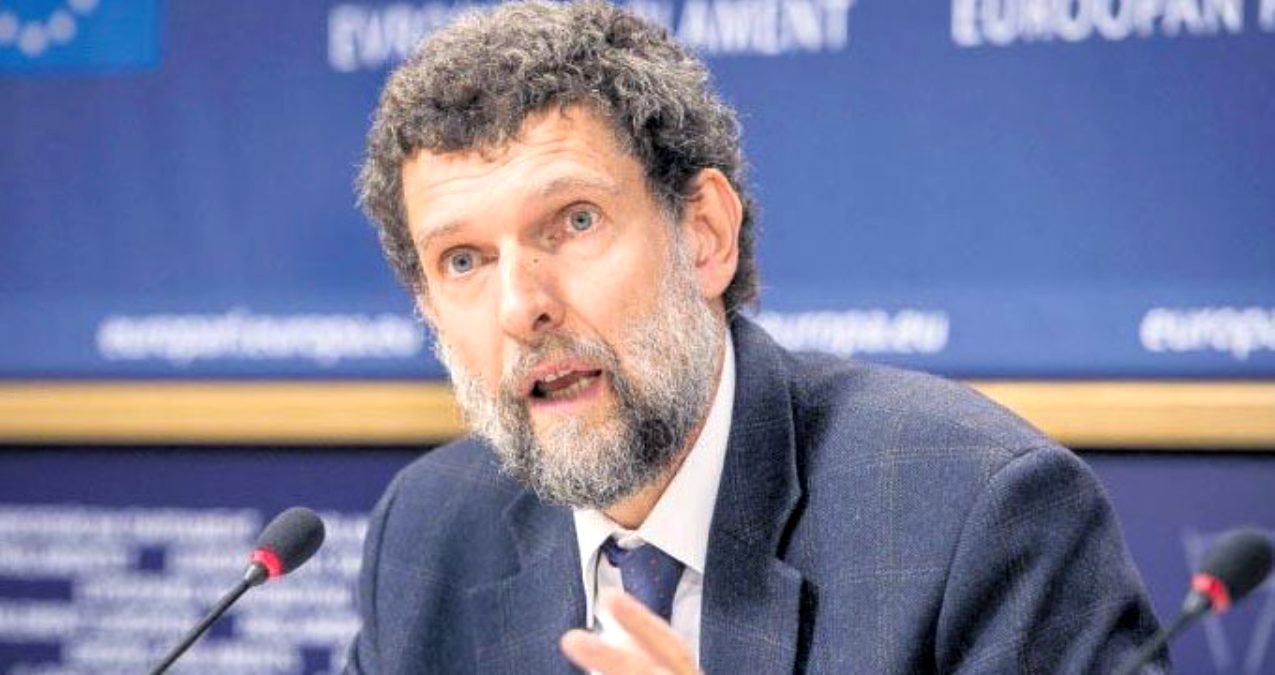
    A Turkish court on Friday ruled to keep prominent businessman and rights activist Osman Kavala in jail as it began to hear the retrial of Kavala and 15 others for their role in anti-government mass protests in 2013, known as the Gezi Park protests.

    The İstanbul 30th High Criminal Court issued the ruling for the continued detention of Kavala by a majority of votes. The presiding judge dissented.

    Disappointed by the court’s decision, Kavala said: “The court ruled for the continuation of my detention although there is no evidence against me, although I was acquitted in the Gezi Park trial, although the European Court of Human Rights ruled there were rights violations in my detention and called for my release. The accusations change, but like in the case of a relay race, different judges and courts pass off my detention to each other.”

    Kavala and eight others accused of organizing the Gezi Park protests, which were sparked in protest of government plans to redevelop Gezi Park in İstanbul’s Taksim neighborhood in May 2013 and quickly turned into nationwide anti-government protests, were acquitted of all charges in February 2020, but an appeals court overturned the verdict in January.

    Kavala, who has been kept in detention for three-and-a-half years, is also accused of involvement in a 2016 coup attempt. Those charges were combined with the Gezi case in February.

    The European Court of Human Rights ruled in December 2019 that the prolonged pre-trial detention of Kavala, director of the Turkish cultural foundation Anadolu Kültür, was in violation of the European Convention on Human Rights and demanded his immediate release. But Turkey has not abided the ruling despite repeated calls by the Committee of Ministers of the Council of Europe.

    Kavala was most recently tried on charges that include “attempting to overthrow the constitutional order” and “obtaining confidential information of the state for political or military espionage.”

    Earlier this week representatives of the German and French governments called on Turkey to immediately release Kavala.

    The joint statement regarding the retrial of Kavala and his codefendants issued by Bärbel Kofler, the federal government commissioner for human rights policy and humanitarian aid at the Federal Foreign Office, and French Ambassador for Human Rights Delphine Borione was released on Wednesday.

    “Osman Kavala has been behind bars for almost 1300 days, even though the European Court of Human Rights demanded his release a year and a half ago. Turkey’s treatment of Osman Kavala and the non-implementation of the ECtHR judgment is not worthy of a state governed by the rule of law or with longstanding membership of the Council of Europe,” the statement said.

  • Gülen followers face accusations of spreading COVID-19, homosexuality in new wave of detentions

    Turkish police teams on Friday detained 127 people in police raids across 14 provinces due to their alleged links to the Gülen movement and on various accusations such as deliberately spreading COVID-19 and engaging in homosexual relations, the Demirören news agency reported.

    The Gülen movement is accused by the Turkish government of masterminding a failed coup in 2016, a claim strongly denied by the movement whose real or alleged followers have been subjected to an unprecedented crackdown for several years.

    The detainees, who include 17 former police chiefs, seven commissioned military officers and 43 noncommissioned officers, are being investigated as part of two separate probes based in the western province of Çanakkale and the Turkish capital city of Ankara.

    According to the agency, the detainees are accused of providing financial support to the families of people who are behind bars on alleged Gülen links, suspicious communication with each other on the Internet and through online games and trying to illegally flee abroad. They also face charges unusual for Gülen followers such as intentionally spreading COVID-19, engaging in homosexual relations, living beyond their means and spending money donated by Gülen followers on prostitutes.

    Some of these accusations, for example, homosexuality, are not crimes under Turkish law.

    In addition, a book supplement produced by the now-closed Zaman daily was presented by the police as evidence of Gülen movement membership in one of the houses raided. The Zaman daily was closed down by the government following the 2016 coup attempt due to its links to the Gülen movement. Publications and books printed by the Gülen-linked publication houses are all considered evidence of terrorist organization membership in Turkey where people had to destroy hundreds of thousands of books to avoid legal action.

    Friday’s detentions come at a time when Turkey’s ruling Justice and Development Party (AKP) has been shaken by the allegations of a mafia leader, Sedat Peker, who has been making revelations on his YouTube channel about relations between some government officials and organized crime.

    Turkish President Recep Tayyip Erdoğan has been targeting followers of the Gülen movement, inspired by US-based Turkish Muslim cleric Fethullah Gülen, since the corruption investigations of December 17-25, 2013, which implicated then-Prime Minister Erdoğan, his family members, and his inner circle.

    Dismissing the investigations as a Gülenist coup and conspiracy against his government, Erdoğan designated the movement as a terrorist organization and began to target its members. He intensified the crackdown on the movement following the abortive putsch.

    According to a statement from Interior Minister Süleyman Soylu on February 20, a total of 622,646 people have been the subject of investigation and 301,932 have been detained, while 96,000 others have been jailed due to alleged links to the Gülen movement since the failed coup. The minister said there are currently 25,467 people in Turkey’s prisons who were jailed on alleged links to the Gülen movement.

    The government also removed more than 130,000 civil servants from their jobs on alleged Gülen links following the coup attempt.

    In addition to the thousands who were jailed, scores of other Gülen movement followers had to flee Turkey to avoid the government crackdown.

  • Turkish gov’t abducted teacher in Kenya over relationship to Gülen, wife claims

    The wife of a teacher who is a nephew of US-based Muslim preacher Fethullah Gülen has claimed that her husband was abducted by operatives of the Turkish government in Kenya due to his relationship to Gülen, local media reported on Wednesday, citing a video released by the woman.

    President Recep Tayyip Erdoğan on Wednesday revealed in televised remarks that they had recently apprehended an important member of “FETÖ,” a derogatory term coined by the Turkish government to refer to the cleric’s faith-based Gülen movement as a terrorist organization, adding that he will announce that person’s identity soon.

    Hours after Erdoğan’s revelation, Seriyye Gülen released a video on YouTube in which she said her husband, Selahattin Gülen, a teacher, went missing on May 3 in Kenya, where he has been living for the past seven months.

    “I haven’t heard from him [since May 3]. … At this point, I don’t know how, but I think it’s very likely that he was abducted [by people working for the government] and taken to Turkey on May 5,” she said.

    Gülen also argued that her husband was kidnapped solely due to being a relative of Fethullah Gülen, calling on authorities to find Selahattin Gülen and release him immediately.

    The incident follows the enforced disappearance of nearly 30 people with real or alleged links to the faith-based Gülen movement, labeled as a terrorist organization by the Justice and Development Party (AKP) government and accused of masterminding a coup attempt on July 15, 2016, since the abortive putsch.

    Some of the enforced disappearance victims in Turkey have spoken out in court, after they were found in police custody, recounting the systematic and severe torture they were subjected to during their interrogation by government operatives, who, victims said, waited until their wounds had healed to hand them over to the police.

    According to a recent report by Freedom House on global transnational repression Turkey has become number one among countries that have conducted renditions from host states since 2014. The Turkish government has pursued its perceived enemies in at least 30 different host countries spread across the Americas, Europe, the Middle East, Africa and Asia since July 2016.

    “Ankara’s campaign has primarily targeted people affiliated with the movement of religious leader Fethullah Gülen, which the government blames for the coup attempt,” the report said.

    Although both Gülen and the members of his group strongly deny any involvement in the abortive putsch or any terrorist activities, Erdoğan’s AKP has jailed some 96,000 people while investigating 622,646 over alleged links to the movement as part of a massive purge launched under the pretext of an anti-coup fight, according to official data.

    In addition to the thousands who were jailed, scores of other Gülen movement followers had to flee Turkey to avoid the government crackdown.

    The Turkish government has been targeting members of the movement, which conducts educational activities as well as charity work around the world, since corruption investigations in late 2013 that implicated Erdoğan’s close circle. The governmen’s war against the movement culminated in the aftermath of the 2016 coup attempt.

    📹Seriyye Gulen, a Kenya-based Turkish teacher, says her husband Selahattin Gulen (Fethullah Gulen's relative) was kidnapped in Nairobi on May 3. She's concerned that he was taken to Turkey.

    Erdogan's "long-arm" has reached over 18 countries to abduct more than 100 Gulenists. pic.twitter.com/fAqmC8S0aR

    — Turkish Minute (@TurkishMinuteTM) May 20, 2021

  • Videos show pro-gov’t journalists as mediators between Turkish interior minister, mob boss

    Videos show pro-gov’t journalists as mediators between Turkish interior minister, mob boss

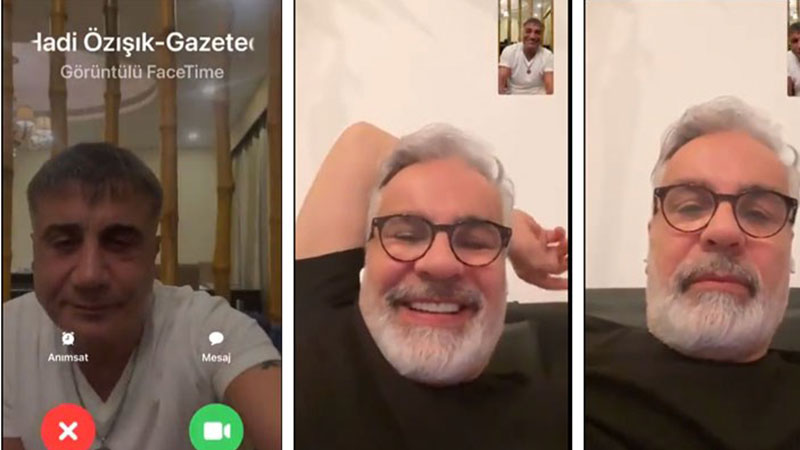
    Footage of two video calls recently released by notorious Turkish mob boss Sedat Peker has revealed that pro-government journalists and brothers Hadi Özışık and Süleyman Özışık acted as mediators between Peker and Interior Minister Süleyman Soylu.

    Peker on Tuesday released two videos on Twitter showing his phone calls with Hadi Özışık, owner of the Internethaber news website, as proof of his recent claim that the journalist mediated between him and Soylu in order to stop him from releasing new videos on YouTube.

    Peker, the head of one of Turkey’s most powerful mafia groups, has for the last two weeks been setting the country’s political agenda through videos he posts on YouTube, each of which reach over a million viewers on the first day of their release. The mafia boss, who lives in Dubai and is the subject of an outstanding warrant in Turkey, has been making shocking revelations about state-mafia relations and drug trafficking and murders implicating state officials.

    The mafia leader released footage of the calls after Özışık, known for his close links to Soylu, denied his claims regarding mediation between him and Soylu through a message he sent to opposition Halk TV after the channel reported on an opposition MP’s remarks demanding that Soylu account for the allegations.

    Halk TV quoted main opposition Republican People’s Party (CHP) deputy group chairman Özgür Özel as saying, “Did a journalist very close to Soylu speak to Sedat Peker or not? … Did that journalist make Süleyman Soylu watch one of Peker’s videos before its release and then tell Peker on Soylu’s behalf not to release it?”

    Peker released the footage of one of his video calls with Özışık with a note saying, “My dear friends: The Hadi-Süleyman Özışık brothers, the owners of the İnternethaber website, have denied that they mediated between Süleyman Soylu and me. … I don’t play tricks on anyone; however, I don’t let anyone disgrace me, either.”

    “I warn everyone whose names I mention in my videos. Don’t refute me [my claims]. I will disgrace all of you,” the mob boss said in a tweet in which he released the other footage.

    The conversation between Özışık and Peker in the footage reveals that the journalist watched the fourth installment of Peker’s videos in which he made several claims against Soylu after the minister publicly said he was “dirty mafia.”

    “Why did you mention my name? My name in that video will cause me trouble. … You exposed what I told you [about Soylu],” Özışık is heard saying in the call.

    “[Because] you are the witness in this case. You went to see Mr. Süleyman and the issue came up. That’s what I said,” Peker replies.

    Özışık says that it was his brother Süleyman Özışık who went to meet with Soylu and that there would be no problem if they removed that part of the video where Peker says his name.

    In the other phone call Peker asks why Soylu insulted him in the first place and says, “Didn’t this guy tell you, ‘Both our president and I love him [Peker] very much’ just five months ago?”

    Peker continues, referring to President Recep Tayyip Erdoğan’s son-in-law Berat Albayrak, “We became enemies of Mr. Berat because of him [Soylu]. … He was my ticket back [to Turkey]. I was supposed to come back in April. I can accept being called ‘the leader of a criminal organization,’ which I also hate, but what does he [Soylu] mean by saying ‘dirty mafia’?”

    To which Özışık replies, “I couldn’t understand why he [Soylu] is doing this. I couldn’t figure it out. You’re right about this.”

    When Peker tells him he will release a video about Soylu, Özışık says: “Think this over carefully. … I’m still friends with you. I won’t be offended by this, do whatever you want.”

    Once a staunch supporter of Erdoğan, Peker left Turkey following the publication of a report related to arms trafficking to Syria that was allegedly carried out under the guise of humanitarian aid. Although police recently raided his villa in İstanbul’s Beykoz district as part of an organized crime operation, they failed to detain him since he was out of the country.

  • Appeals court upholds sentences given to İpek family members

    A regional appeals court has upheld prison sentences given to members of the İpek family, whose İpek Holding was seized by the Turkish government in 2015 due to their alleged links to the Gülen movement, labeled by the Turkish government as a terrorist organization.

    The 4th criminal chamber of the Ankara Regional Court on Thursday upheld a prison sentence of 79 years, eight months for Cafer Tekin İpek, a brother of Akın İpek, the founder of İpek Holding who has been living in the UK since 2015, and a prison sentence of 11 years, eight months to his mother, Melek İpek.

    The İpek family members were given the jail sentences on charges of membership in a terrorist organization and tax evasion at the end of a trial concluded in January by the Ankara 24th High Criminal Court.

    Cafer Tekin İpek has been behind bars since April 2016. Melek İpek was a well-known and respected woman even among ruling Justice and Development Party (AKP) circles as a pioneer of charity activities before the government crackdown on the Gülen movement began.

    There were 20 defendants in the trial. The remaining defendants were also given jail sentences ranging between two and almost 10 years.

    The defendants will be able to challenge the court’s ruling at the Supreme Court of Appeals.

    The court also ordered that the defendants’ shares in the company be transferred to the Treasury and that a board of trustees continue to run the organization.İpek Holding has been managed by a group of government-appointed trustees since 2015.

    Turkey accuses the Gülen movement of orchestrating a 2016 coup attempt, although it strongly denies any involvement. Ankara also believes the movement had attempted to overthrow the ruling Justice and Development Party (AKP) government several times before the failed coup, most notably by conducting a corruption investigation into the close circle of then-Prime Minister Recep Tayyip Erdoğan in 2013.

    When the government decided to seize İpek Holding, Akın İpek was in the UK and decided not to return home.

    The Turkish government filed a formal extradition request for the senior İpek that was rejected by a UK court.