Category: World

  • Turkey sentenced 266,811 to prison for terrorism in last 4 years

    Turkey sentenced 266,811 to prison for terrorism in last 4 years

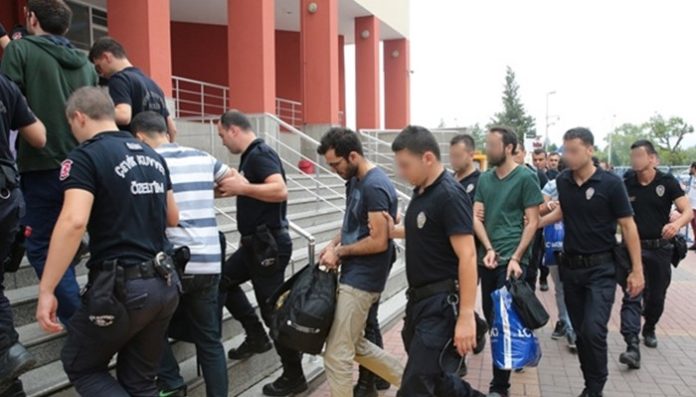
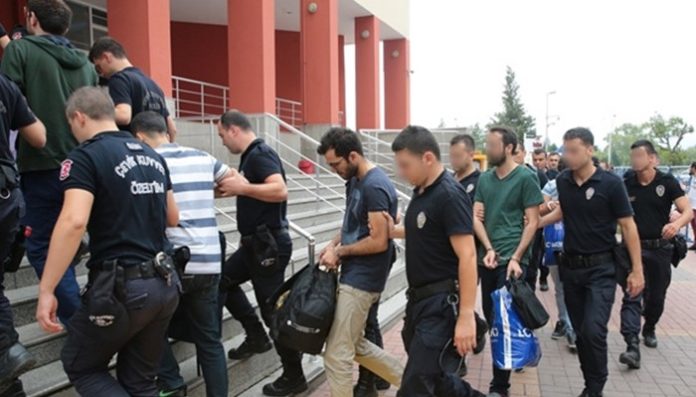
    Turkish courts sentenced 266,811 people to prison on convictions of terrorism between 2016 and 2020, abusing vague anti-terrorism legislation, according to a recent survey by the Arrested Lawyers Initiative of Justice Ministry data.

    According to the survey official statistics highlight that Turkish public prosecutors filed more than 420,000 charges under Article 314 (membership in a terrorist organization) of the Turkish Penal Code in the last eight years. 

    According to a report by the Council of Europe, Turkey has the largest population of inmates convicted of terrorism-related offenses. The report shows there are currently a total of 30,524 inmates in COE member states who were sentenced for terrorism, and of those, 29,827 are in Turkish prisons.

    “The problem is that the Turkish Penal Code contains neither the definition of what constitutes armed organizations and armed groups nor the offense of membership,” the Arrested Lawyers Initiative states. “The lack of legal definitions and criteria of what constitutes an armed terrorist organization and the offense of membership in the armed terrorist organization makes these articles prone to arbitrary application and abuse.”

    Under the Turkish Penal Code, offenses under Article 314 carry a sentence of between seven-and-a-half and 22-and-a-half years in prison.

    “Vague formulation of the criminal provisions on the security of the state and terrorism and their overly broad interpretation by Turkish judges and prosecutors make all critics, particularly lawyers, human rights defenders, journalists, and rival politicians, a potential victim of judicial harassment.

    This indistinct area under the Turkish Penal code is actively used by the Turkish government to investigate, prosecute and convict opponents,” the initiative said.

    Turkey has also been using the vague formulation of the anti-terrorism legislation in its hostage diplomacy. 

    According to a report titled “Erdogan’s Hostage Diplomacy – Western Nationals in Turkish Prisons” undertaken by the Foundation for Defence of Democracies (FDD), more than 30 Western nationals have been jailed in Turkey since a failed military coup on July 15, 2016. Almost all of these foreign citizens were accused of terrorism-related offenses.

    “Besides foreigners, deputies of People’s Democratic Party (HDP) and the Republic People’s Party (CHP), the chairperson and the director of the Amnesty (Turkey branch) Taner Kilic and Idil Eser, philanthropist businessman Osman Kavala, 1,542 lawyers, including presidents of 14 regional bar associations, more than 150 journalists, and innumerable others have all been accused of being a member of an armed terrorist organization or aiding and abetting one or more of those,” the Arrested Lawyers Initiative said.

    Turkey’s anti-terrorism legislation has been criticized by the European Union, the Council of Europe (CoE), United Nations human rights bodies and international human rights organizations for years.

    “Turkish prosecutors regularly open terrorism investigations into people for peacefully exercising rights to freedom of expression, assembly, and association,” Human Rights Watch said in a statement.

    The EU and the CoE have urged Turkey to make its anti-terrorism legislation compliant with human rights standards, including the European Convention on Human Rights and the jurisprudence of the European Court of Human Rights.turkishminute
  • Turkey accuses UN of intervening in proceedings over killing of human rights lawyer Elçi

    In its official response to a joint UN letter about the investigation into the killing of lawyer and human rights defender Tahir Elçi, the Turkish government accused UN special rapporteurs of intervening in the ongoing legal proceedings.

    “The government finally is of the view that reaching conclusions on the present case by the Special Rapporteurs before the proceedings are finalized in a manner that could be interpreted as an intervention is inappropriate and could prejudice the ongoing proceedings,” the Turkish government said in its diplomatic communiqué, conveyed by the country’s permanent mission to the UN office in Geneva, via a note verbale dated June 8.

    Elçi, the former head of the Diyarbakir Bar Association, was killed in November 2015 while delivering a speech in the southeastern province of Diyarbakir during a clash between the Turkish police and members of the outlawed Kurdistan Workers’ Party (PKK).

    Calling for a peace rally on what turned out to be the day of his death in Sur’s historic district, Elçi said he wanted no violence, war, destruction or armed operations in the area.

    The UN special rapporteurs in a joint letter sent to the Turkish government on April 9 expressed serious concern about “the significant delay and the serious defects in the investigations carried out in 2016.”

    The UN letter was sent by UN rapporteurs Irene Khan, special rapporteur on the promotion and protection of the right to freedom of opinion and expression; Mary Lawlor, special rapporteur on the situation of human rights defenders; Fernande de Varennes, special rapporteur on minority issues; and Fionnuala Ní Aoláin, special rapporteur on the promotion and protection of human rights and fundamental freedoms while countering terrorism.

    The UN rapporteurs had asked the Turkish government to provide detailed information on “the reasons behind the five-year delay in the conduct of investigations into the unlawful killing” of human rights lawyer Elçi.

    Elçi received death threats in 2015 after stating that “the PKK is not a terrorist group. While some of its actions may be called as such, it is an armed political movement with significant support” during a live TV show on CNN Türk hosted by a pro-government columnist Ahmet Hakan.

    Elçi was briefly detained in November 2015 over the remarks. He was subsequently released pending trial and faced up to seven-and-a-half years in prison.

    Turkish prosecutors claimed three police officers and a PKK member at the scene were suspects in the murder, on which no light has been shed until now.

    Three police officers — Mesut S., Fuat T. and Sinan T. — are charged in the indictment with “causing death by culpable negligence,” which carries a prison sentence of two to six years.

    On the other hand Uğur Yakışır, an alleged member of the PKK, is charged with “murdering Tahir Elçi and two police officers [who died on the same day], attempting to destroy the unity of the state and possession of a firearm.” Prosecutors demand multiple life sentences and an additional 45 years in prison for Yakışır.

    Elçi’s lawyers accuse the Turkish police and the judicial authorities of hiding a 13-second segment of video footage captured by police cameras that allegedly shows the moment Elçi was shot.

    Investigating cases of state violence and human rights violations through architectural evidence and 3D technology, Goldsmith research group Forensic Architecture refuted the claims that the PKK member had killed Elçi.stockholmcf

  • Turkish court rearrests victim of rendition immediately after release

    Ayten Öztürk, who was forcibly transported from Lebanon to Turkey in 2018 by Turkish intelligence and testified in an İstanbul court in March about the torture and inhumane treatment she was subjected to at a black site before she was “officially” detained, was rearrested immediately after her release from prison, Turkish Minute reported on Thursday.

    The İstanbul 3rd High Criminal Court on Thursday handed down two aggravated life sentences to Öztürk, also ruling to release her into house arrest.

    According to a statement on social media by the People’s Law Office, Öztürk was rearrested as she was leaving Silivri Prison in İstanbul, based on charges related to an incident that took place the same day as other activities she was accused of in her case file.

    “End this lawlessness!” the office demanded in a tweet on Thursday.

    Öztürk was detained in Lebanon, handed over to Turkish intelligence and transferred against her will to Turkey on March 8, 2018. After being held at a black site for six months under torture and ill-treatment, she was left in an vacant field where she was “officially” detained and taken to Ankara police headquarters.

    She is accused of links to the outlawed Revolutionary People’s Liberation Party/Front (DHKP/C), a militant Marxist group, based on witness testimony. DHKP-C is listed as a terrorist organization by Turkey, the United States and the European Union.

    In her testimony in March, before she was convicted, Öztürk argued that she was being held in pre-trial detention despite a lack of evidence in order to prevent her from showing the signs of torture.

    State-sponsored abductions and the forcible return of Turkish nationals have become common practice in recent years.

    The Turkish government is accused of engaging in the systematic practice of state-sponsored extraterritorial abductions and forcible returns to Turkey, with more than 100 Turkish nationals from multiple states that are dependent on Ankara for financial, political or humanitarian support — including Afghanistan, Albania, Azerbaijan, Afghanistan, Cambodia, Gabon, Kosovo, Kazakhstan, Lebanon and Pakistan — removed to Turkey.

    Some victims of forcible return have said they were subjected to torture in unknown locations for months. They claimed their families and lawyers had not heard from them during that time, and they were later handed over to the police.

    In different cases the UN Working Group on Arbitrary Detention (WGAD) concluded that the arrest, detention and forced transfer to Turkey of Turkish nationals were arbitrary and in violation of international human rights norms and standards.SCF

  • London protestors stand in solidarity with missing Turkish-Kyrgyz educator

    Sixty human rights activists gathered in front of the Turkish Embassy in London on Thursday to protest Turkish authorities’ alleged sanctioning of enforced disappearances and to stand in solidarity with a Turkish-Kyrgyz educator in Kyrgyzstan who is feared to have been abducted by Turkey.

    Organized by Human Rights Solidarity, a London-based advocacy group founded by immigrants, the protest commenced as other protests were ongoing in Bishkek where Orhan İnandı, the founder and and president of the Turkish-Kyrgyz Sapat school network operating in Kyrgyzstan, went missing on May 31, and in Brussels where activists gathered to raise European politicians’ awareness about the case of İnandı, who is feared to have been abducted by Turkey’s National Intelligence Organization (MİT) due to his alleged links to the Gülen movement.

    Turkey claims the founder of the school network is Turkish Islamic cleric Fethullah Gülen, whose movement is accused by the Turkish government of masterminding a failed coup in Turkey in July 2016. The movement strongly denies any involvement in the abortive putsch or any terrorist activity.

    “Today we are in solidarity with victims of enforced disappearances all over the world. Today we are here for people who are missing, or are kidnapped,” Merve Aslan, co-chair of Human Rights Solidarity, said in a statement she read out during the protest.

    “The Erdoğan regime has become the prime perpetrator of enforced disappearances in the world. We are here today for Yusuf Bilge Tunç who has been missing for 673 days! We are here today for Hüseyin Galip Küçüközyiğit who has been missing for 164 days!”

    A financial services specialist and one of the 130,000 civil servants removed from their jobs following the attempted coup in July 2016, Tunç disappeared in the Turkish capital of Ankara on August 6, 2019, and his whereabouts remain unknown. Küçüközyiğit has been missing since December 29. A successful lawyer who served as the chief legal counsel for the Turks Abroad and Related Communities Agency (YTB), he was fired from his job by a government decree in the aftermath of the coup attempt in July 2016 and was later sentenced to six years, three months in prison for “membership in a terrorist organization” due to his alleged ties to the Gülen movement. Küçüközyiğit was released from pretrial detention pending appeal.

    “We are here today for people kidnapped from outside Turkey and who are being tortured or tormented in Turkish prisons,” Aslan said and added, “We are here today for Orhan İnandi.”

    “He has been missing for the last 10 days. We are afraid he will be flown to Turkey, where he will be tortured. For the time being, we still have hope that he is in Kyrgyzstan. And we are here to call on Turkish and Kyrgyz authorities alike: Let Orhan be free! Set him free,” Aslan said as protesters chanted “Set Orhan free! Set them free!”

    According to a recent report by Freedom House on transnational repression, Turkey has become number one among countries that have conducted renditions from host states since 2014. The Turkish government has pursued its perceived enemies in at least 30 host countries spread across the Americas, Europe, the Middle East, Africa and Asia since July 2016.

    “Ankara’s campaign has primarily targeted people affiliated with the movement of religious leader Fethullah Gülen, which the government blames for the coup attempt,” the report said.

    The report sheds light on the corruption and co-optation of some host country institutions including local police or security services that arrested Turkish citizens, who are then held in detention for a short period before being secretly transferred to Turkish custody and immediately taken to Turkey on Turkish aircraft.

    “Turkey’s top officials openly claim credit for the kidnapping offensive against the Gülen movement, and praise the role of the MİT in the renditions,” the report stated.

    The statement read out by Aslan during the protests of London also pointed to Turkey’s campaign of transnational repression.

    “We call on Turkey to stop silencing critics of the regime in Ankara. We call on Turkey to stop using its diplomatic missions for criminal activity. We call on Turkey to release Orhan Inandi now,” Aslan said.

    “Wake up people, Erdoğan is a kidnapper,” the protesters chanted.

    On Wednesday Turkish President Recep Tayyip Erdoğan told Kyrgyz President Sadyr Japarov during his official visit to Ankara that he had no idea of İnandı’s whereabouts.

    Erdoğan’s statement, the first comment made about İnandı’s disappearance by Ankara, contradicts a claim by Orhan İnandı’s wife, Reyhan İnandı, and the family’s lawyer, Taalaigul Toktakunova, who say based on information they received, Orhan İnandı is being held at the Turkish Embassy in Bishkek. They refuse to reveal their source for security reasons.

    During the protest in London, the co-chair of the advocacy group also addressed the Kyrgyz authorities.

    “We know you are under immense pressure from Turkey. We know Ankara is blackmailing you with all kinds of threats about economic sanctions and cancellation of all deals between the two countries,” Aslan said. “This mindset ruling Turkey is a temporary one. In fact, it has become even more aggressive recently because it also knows that it is already disintegrating. Don’t invest in temporary realities! Invest in the future of Turkey. Invest in the future of Kyrgyzstan.”

    Over the past five years scores of men alleged by Turkish authorities to have links to the Gülen movement, living in countries around the world, have been arbitrarily detained and forcibly returned to Turkey. There they are incarcerated on bogus terrorism charges in violation of due process rights and protections.

    According to recent official statements by the interior ministry, more than 110 alleged members of the movement have been brought back to Turkey as part of the government’s global campaign.

  • Erdoğan’s long arm: Turks arrested and abducted abroad

    The disappearance of a Turkish teacher in Kyrgyzstan has renewed claims that Turkey’s secret services have abducted scores of the country’s citizens abroad over the past five years, according to Agence France-Presse.

    The kidnappings and forced renditions are mostly of suspected supporters of Fethullah Gülen, the Muslim preacher who Turkish President Recep Tayyip Erdoğan blames for a failed coup against him in 2016.

    Turkey has boasted that its secret service masterminded some of the cloak and dagger operations, with the justice minister saying 107 “traitors” had been captured abroad by 2019.

    Before Gülen became Erdoğan’s arch-enemy, the elderly US-based cleric — who denies any part in the coup — was one of his closest and most powerful allies.

    Gülen’s worldwide network of schools was once an important part of Turkish soft power abroad.

    Here are some of the most notorious cases:

    Orhan İnandı, a Turkish-born Kyrgyz citizen who used to head a network of Gülen-linked schools in Kyrgyzstan, went missing on May 31. His car was found near his home with the door open, tires flat and with the teacher’s phone and jacket still inside.

    While some 1,000 Kyrgyz security forces search for him, his wife claims he is being held inside the Turkish Embassy in Bishkek.

    As hundreds protest over the disappearance in the Central Asian capital, Kyrgyz President Sadyr Japarov visits Erdoğan Wednesday, who says the two leaders agree the Gülen movement “poses a national security threat to both countries”.

    Last month Gülen’s nephew Selahaddin Gülen disappears from a police station in the Kenyan capital despite a court order banning his extradition.

    He later appears handcuffed, triumphantly photographed between two Turkish flags in Ankara.

    The abduction echoed the most celebrated operation ever by Turkey’s National Intelligence Organization (MİT), when its agents seized outlawed Kurdistan Workers’ Party (PKK) leader Abdullah Öcalan in Nairobi in 1999.

    The founder of the PKK, which has fought a war against Ankara since the 1980s, has been held on an island prison off İstanbul since.

    The former head of the Kosovo Intelligence Agency, a border police chief and a top interior ministry official are charged in February with abusing their positions in handing over six Turks working in Gülen-linked schools to Turkey in March 2018.

    The men’s families say they were tortured on a private jet by Turkish agents on their way to Turkey.

    The same month, Turkish state media reports that two Gülenists had been captured and returned from Uzbekistan. 

    Europe’s top rights court condemns Moldova in June 2019 over the “extra-legal transfer” the previous September of five Turkish nationals with alleged ties to Gulen.

    They were put on a special plane back to Turkey in a joint operation between Turkish and Moldovan intelligence agencies.

    A report earlier this year by Freedom House says Erdoğan has pursued his “perceived enemies in at least 31 different countries.”

    Erdoğan hails the MİT agents who flew three suspected members of the Gülen movement from the west African state of Gabon after a secret mission in April 2018.

    Mongolian stand-off 

    Mongolia grounds a Turkish air force jet in July 2018 after Ankara denies claims it had tried to smuggle a Gülen-linked teacher from the country.

    Veysel Akçay was seized by five men as he left his home in the capital Ulaanbaatar and thrown into a minibus. He was later freed and the jet allowed to leave after a stand-off between the Mongolian and Turkish governments.

    ‘Money man’ grabbed 

    Turkey says its spies in Sudan repatriated businessman Memduh Çıkmaz in November 2017. Ankara claims he was Gülen’s “money man.” turkishminute

  • Erdoğan receives Kyrgyz president amid outrage over missing educator

    Turkish President Recep Tayyip Erdoğan on Wednesday received his Kyrgyz counterpart, Sadyr Japarov, with an official ceremony in Ankara amid ongoing protests in Kyrgyzstan about the alleged abduction of a Turkish-Kyrgyz educator by Turkey’s intelligence service.

    Japarov’s visit comes at a time of outrage in his country over the alleged abduction of Orhan İnandı, the founder and president of the Turkish-Kyrgyz Sapat school network operating in Kyrgyzstan, who went missing in Bishkek on the evening of May 31 and is feared to have been abducted by Turkey’s National Intelligence Organization (MİT) due to his alleged links to the Gülen movement.

    Turkey claims the founder of the school network is Turkish Islamic cleric Fethullah Gülen, whose movement is accused by the Turkish government of masterminding a failed coup in Turkey in July 2016. The movement strongly denies any involvement in the abortive putsch.

    It was not clear whether the two leaders would talk about İnandı during their meeting at Erdoğan’s presidential palace. Japarov ordered the State Committee for National Security and the Ministry of Internal Affairs to conduct an extensive search to locate İnandı, according to a statement on the presidency website on June 1.

    Landesgrenzen stören #Erdogan nicht, um seine KritikerInnen verschwinden zu lassen. #Orhanİnandı wurde von der türkischen Regierung entführt & sitzt nun in der Botschaft in Bishkek fest. Seine Verschleppung in die Türkei muss mit allen diplomatischen Mitteln verhindert werden!

    — Cem Özdemir (@cem_oezdemir) June 9, 2021

    Kyrgyz have been protesting since the suspicious disappearance of İnandı in the hope of finding the missing educator. The protests mostly take place in front of the Turkish Embassy building where İnandı is believed to be held and the parliament and presidential buildings in Bishkek. Some protestors direct criticism at the Kyrgyz authorities for not carrying out an effective investigation to locate İnandı.

    Orhan İnandı’s wife, Reyhan İnandı, and the family’s lawyer, Taalaigul Toktakunova, say based on information they received, Orhan İnandı is being held at the Turkish Embassy in Bishkek. She has refused to reveal her source for security reasons.

    In the meantime, Cem Özdemir, a German politician of Turkish descent from Alliance 90/The Greens expressed outrage on Twitter on Wednesday over the alleged abduction of İnandı by Turkey, saying his deportation to Turkey must be stopped using all diplomatic means.

    Over the past five years scores of men alleged by Turkish authorities to have links to the Gülen movement, living in countries around the world, have been arbitrarily detained and forcibly returned to Turkey. There they are incarcerated on bogus terrorism charges in violation of due process rights and protections.turkishminute

  • ECtHR rules Turkey violated rights of writer jailed over Gülen links

    The European Court of Human Rights (ECtHR) has faulted Turkey over the imprisonment of journalist and writer Ali Bulaç, who was jailed for close to two years over alleged links to the faith-based Gülen movement in the aftermath of a failed coup in 2016.

    Bulaç, who was a writer for the now-closed Zaman daily, was arrested in the aftermath of the coup attempt on July 15, 2016 as part of a crackdown on journalists critical of the government and journalists who used to work at Gülen-affiliated media organizations. The Zaman daily, which was Turkey’s best-selling newspaper, was closed down along with dozens of other media outlets due to their links to the Gülen movement.

    The Strasbourg-based court ruled in a decision made public on Tuesday that Turkey violated Bulaç’s freedom of expression and right to security and ordered Turkey to pay 12,240 euros in damages. The court’s ruling is expected to set a precedent for thousands of people who were jailed on terrorism charges due to their alleged links to the Gülen movement.

    Bulaç was behind bars from July 30, 2016 to May 11, 2018. He was given a prison sentence of eight years, nine months at the end of his trial. Turkey’s Supreme Court of Appeals ruled in December 2020 that the prison sentence given to Bulaç was flawed and his retrial began in April.

    In May 2019 Turkey’s Constitutional Court also ruled that a rights violation occurred during the prosecution of Bulaç.

    Bulaç, who was a former advisor to President Recep Tayyip Erdoğan when Erdoğan was the mayor of İstanbul between 1995 and 1998, attracted the ruling Justice and Development Party’s (AKP) anger when he said in a newspaper interview in 2014 that the AKP was the biggest disaster experienced by the people of Turkey since the Battle of the Gallipoli, a World War I military campaign fought by the Ottoman Empire against British and French forces. The battle formed the basis for the Turkish War of Independence and the declaration of the Republic of Turkey eight years later.

    Turkish President Erdoğan has been targeting followers of the Gülen movement, inspired by US-based Turkish Muslim cleric Fethullah Gülen, since the corruption investigations of December 17-25, 2013, which implicated then-Prime Minister Erdoğan, his family members, and his inner circle.

    Dismissing the investigations as a Gülenist coup and conspiracy against his government, Erdoğan designated the movement as a terrorist organization and began to target its members. He intensified the crackdown on the movement following the abortive putsch  that he accused Gülen of masterminding. Gülen and the movement strongly deny involvement in the coup attempt or any terrorist activity.turkishminute

  • Mob boss claims to have financed banned Osmanen Germania through Erdoğan confidant

    Mob boss claims to have financed banned Osmanen Germania through Erdoğan confidant

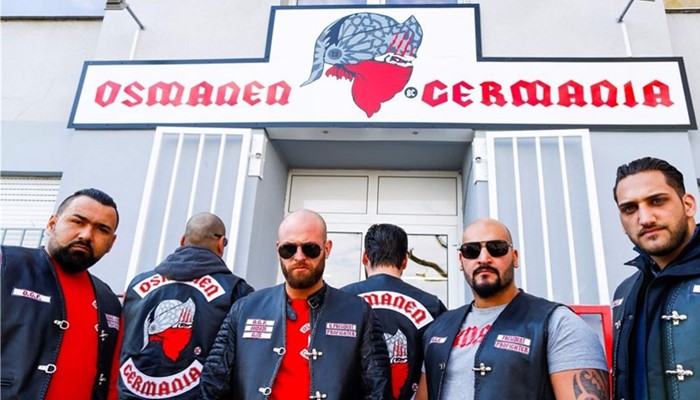
    Crime boss Sedat Peker claimed on Sunday that he had given 1.5 million Turkish lira ($180,000) to a relative of Metin Külünk, a former lawmaker from the ruling Justice and Development Party (AKP) and a confidant of Turkish President Recep Tayyip Erdoğan, to finance Osmanen Germania, a Turkish nationalist biker gang banned in Germany.

    Osmanen Germania has threatened local Kurdish activists in the past and was banned by the German government in 2018. The group still operates in various European countries such as the Netherlands and Switzerland.

    In January 2019 a German court convicted five members of the gang on charges that include attempted murder, extortion, drug trafficking, deprivation of liberty and forced prostitution and sentenced them to three to six years in prison.

    According to a report by German news outlet Stuttgarter Nachtringen citing wiretap records from court documents, Külünk financed the outlawed gang at Erdoğan’s behest and told them to buy automatic weapons such as submachine guns.

    According to the German authorities, the Turkish government was also involved in financing the group as Turkey’s National Intelligence Organization (MİT) funded the group’s purchase of weapons.

    For the first time, a senior figure claiming to have been involved in the scheme, mafia boss Peker, corroborated the accusations, with his latest tell-all video garnering more than 10 million views since Sunday.

    Peker, the head of one of Turkey’s most powerful mafia groups who was once a staunch supporter of Erdoğan, has since early May been setting the country’s political agenda through videos he posts on YouTube from Dubai. The mob boss has been accusing former and current government officials and their relatives of corruption, drug trafficking, rape and murder, among other crimes.

    In his eighth video on May 30, Peker claimed that a paramilitary group established by a former aide to the Turkish president sent weapons to the al-Qaeda-linked al-Nusra Front in Syria in 2015.

    Peker said the weapons to the radical al-Nusra group were sent in 2015 by the SADAT International Defense Consultancy, a paramilitary organization established by Adnan Tanrıverdi, a former aide to Erdoğan.

    Trucks that allegedly belonged to MİT which were carrying weapons to jihadists in Syria were caught near the border in 2014, sparking a political firestorm in Turkey about the role of the Turkish spy agency in arming rebel factions in Syria.

    The AKP and then-Prime Minister Erdoğan strongly denied the claims, saying the trucks were carrying humanitarian aid to Turkmens in northern Syria.

    Following the mafia boss’s revelation, Can Dündar, a Turkish journalist who along with fellow journalist Erdem Gül stood trial for reporting in May 2015 on the MİT trucks that allegedly carried weapons to the jihadist group in Syria and was sentenced to 27 years on various charges including espionage, made a statement saying that Peker’s claims confirmed the authenticity of his report, which was published in the Cumhuriyet daily.

    He said the prosecutors and military officers who were prosecuted and given lengthy jail sentences for stopping the MİT trucks as well as the journalists who reported on the trucks like him were paying a price for uncovering the truth behind the MİT trucks.

    Dündar fled Turkey in 2016 to avoid a crackdown on journalists critical of the government and has been living in exile in Germany ever since.

  • Interpol to assist Kyrgyz authorities in search of missing Turkish citizen

    The International Criminal Police Organization, commonly known as INTERPOL, is reportedly in process of assisting the Kyrgyz authorities in search of Orhan İnandı, a Turkish citizen who is feared to have been abducted by Turkey’s National Intelligence Organization (MİT) due to his alleged links to the Gülen group.

    According to a Kyrgyz news portal, Deputy Interior Minister Nurbek Abdiev confirmed the INTERPOL’s involvement today at a meeting of the parliamentary committee.

    “We are searching for İnandı internationally now.  We have sent instructions to look for him in Russia, Turkey and other countries around the world. He may have left the country by using other documents, ”Abdiev said.

    İnandı’s wife, Reyhan İnanlı, said in a tweet on Monday that her husband has been held in a building housing the Turkish Embassy in Bishkek.

    “My husband, Orhan İnandı who has worked for the good of Kyrgyz children for 26 year, was abducted 7 days ago. According to the information I managed to gather, he has been held at the Turkish embassy in Bishkek.” Reyhan İnandı said in a tweet on Monday,

    According to several Kyrgyz media outlets, Orhan İnandı, the founder and president of the Turkish-Kyrgyz Sapat school network operating in Kyrgyzstan, went missing in Bishkek on Monday. Hours after the initial reports, İnandı was reported to be in custody in The Turkish Embassy in Bishkek. İnandı’s Toyota Lexus was found parked several blocs away from his house with its doors were open and tires were flat.

    Speaking to the media, İnandı’s wife, Reyhan said on Tuesday that her husband’s jacket and phones were in the car. “We don’t have any eyewitnesses at the moment, but I believe he was abducted to be taken to Turkey. I am extremely concerned for his safety.”

    Since 2016, tens of Turkish nationals were abducted and rendered to Turkey by the Turkish intelligence over alleged links to the Gülen group, which Ankara accuses of orchestrating a failed coup in 2016. The group strongly denies any connection with the abortive putsch.

    Late on Tuesday, Kyrgyz security forces and a heavy police contingent surrounded the Turkish consulate in Bishkek,  implementing strict controls at both entry and exit in order to prevent İnandı’s forced transferred to the Manas International Airport.

    People close to the family said there was a private jet waiting at Manas International Airport in Bishkek that was not listed on scheduled flights, raising suspicions that the jet could be used to return the teacher to Turkey where he will possibly face prosecution.

  • 26 former military cadets detained over alleged Gülen links

    26 former military cadets detained over alleged Gülen links

    Turkish police on Tuesday detained 26 former military cadets as part of an operation targeting alleged followers of the Gülen movement, Turkish media outlets reported.

    Police raids were conducted across 12 provinces as part of the investigation based in the Turkish capital city of Ankara. According to a statement from the Ankara Chief Public Prosecutor’s Office, detention warrants were issued for 40 former military cadets on accusations that they communicated with alleged members of the Gülen movement via payphones to avoid detection.

    The remaining 14 suspects could not be found at their addresses.

    The cadets were expelled from the Turkish military following a failed coup in 2016 as part of a government-led crackdown on the Gülen movement.

    Turkish President Recep Tayyip Erdoğan has been targeting followers of the Gülen movement, inspired by US-based Turkish Muslim cleric Fethullah Gülen, since the corruption investigations of December 17-25, 2013, which implicated then-Prime Minister Erdoğan, his family members, and his inner circle.

    Dismissing the investigations as a Gülenist coup and conspiracy against his government, Erdoğan designated the movement as a terrorist organization and began to target its members. He intensified the crackdown on the movement following the abortive putsch on July 15, 2016 that he accused Gülen of masterminding. Gülen and the movement strongly deny involvement in the coup attempt or any terrorist activity.

    The so-called “payphone investigations” are based on call records. The prosecutors assume that a member of the Gülen movement used the same payphone to call all his contacts consecutively. Based on that assumption, when an alleged member of the movement is found in call records, it is assumed that other numbers called right before or after that call also belong to people with Gülen links. Receiving calls from a payphone periodically is also considered a red flag.

    Turkish Interior Minister Süleyman Soylu said on February 20, that a total of 622,646 people have been the subject of investigation and 301,932 have been detained, while 96,000 others have been jailed due to alleged links to the Gülen movement since the failed coup. The minister said there are currently 25,467 people in Turkey’s prisons who were jailed on alleged links to the movement.

    The government also removed more than 130,000 civil servants from their jobs on alleged Gülen links following the coup attempt.

    In addition to the thousands who were jailed, scores of other Gülen movement followers had to flee Turkey to avoid the government crackdown.