Category: World

  • Turkish gov’t “brazenly boasting” about the “success” of the country’s intelligence agency

    Emma Sinclair-Webb, a senior Turkey researcher at Human Rights Watch (HRW), has said during a live interview that the Turkish government is “brazenly boasting” about the “success” of the country’s intelligence agency in abducting and rendering tens of political opponents of President Erdogan to Turkey.

    Speaking to Beverley O’Connor from the ABC news on Thursday, Sinclair-Webb dived into the issue of abduction of Turkish nationals around the world since July 2016.

    Yürekleri yakan Türk mülteci anne Esma Uludağ’ın özel video versiyonu (Ingilizce) #UNHCR #EsmaUludag #TurkishRefugee @Refugees #WorldRefugeeDay 2021! @dwnews @euronews @BBC https://t.co/mIouGQC8FV

    — Advocates for Dignity (@AFD_AUSTRALIA) June 20, 2021

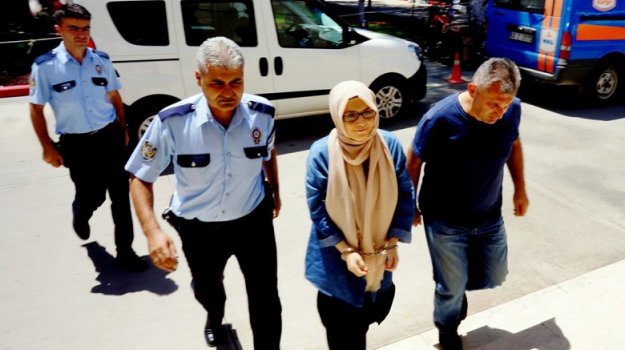
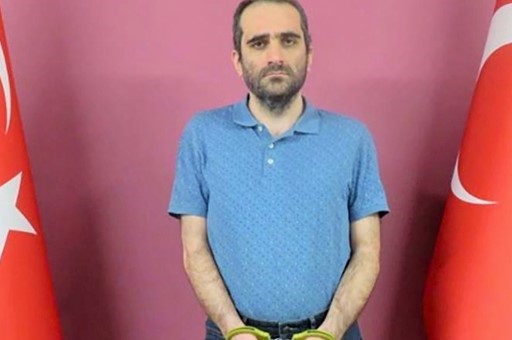
    “Turkish authorities are literally boast about tehir success in bringing these men back to Turkey. So, we often see pictures of the men handcuffed in front of the Turkish flags, presented to the public,” she said.

    Since 2016, tens of Turkish nationals were abducted and rendered to Turkey by the Turkish intelligence over alleged links to the Gülen group, which Ankara accuses of orchestrating a failed coup in 2016. The group denies any connection with the abortive putsch.

    The latest example in a long line of these abductions is the case of Orhan İnandı, a Kyrgyz citizen of Turkish origin who is feared to have been abducted by the Turkish Intelligence in Bishkek, the capital of Kyrgyzstan.

    He has been held in a building housing the Turkish Embassy in Bishkek, İnandı’s wife claimed.

    “My husband, Orhan İnandı who has worked for the good of Kyrgyz children for 26 year, was abducted 7 days ago. According to the information I managed to gather, he has been held at the Turkish embassy in Bishkek.” Reyhan İnandı said in a tweet on Monday.

    Human rights groups say they have evidence Turkish spies are abducting political opponents of President #Erdogan. @esinclairwebb tells @bevvo14 #Turkey is brazenly boasting about the "success" of their intelligence services. #TheWorld pic.twitter.com/fbILLlmQoV

    — ABC News (@abcnews) June 17, 2021

  • German gov’t contacted Kyrgyzstan about missing educator: report

    An official from the German Foreign Ministry has revealed that the federal government contacted Kyrgyz authorities earlier this month regarding the situation of a Turkish-Kyrgyz educator in Kyrgyzstan who is allegedly being held against his will in the Turkish Embassy in Bishkek, Deutsche Welle Turkish service reported on Saturday.

    Orhan İnandı, the founder and president of the Turkish-Kyrgyz Sapat school network operating in Kyrgyzstan, went missing on May 31. The educator is feared to have been abducted by Turkey’s National Intelligence Organization (MİT) due to his alleged links to the Gülen movement.

    Turkey claims the founder of the school network is Turkish Islamic cleric Fethullah Gülen, whose movement is labeled as a terrorist organization by the Turkish government and accused of masterminding a failed coup in Turkey in July 2016. The movement strongly denies any involvement in the abortive putsch or any terrorist activity.

    The contact was revealed in response to a parliamentary question posed by Cem Özdemir, a German politician of Turkish descent from Alliance 90/The Greens, asking if the federal government had contacted Kyrgyz authorities about İnandı and whether they can guarantee that a similar incident won’t take place in Germany.

    According to DW, State Secretary of the Federal Foreign Office Miguel Berger said, in response to Özdemir’s questions, that the federal government had talked to Kyrgyz authorities on June 3 and expressed concern over the missing educator.

    Berger added that there were no signs indicating the possibility of a similar incident in Germany and that they would take the necessary steps within the law in the event that there was.

    Özdemir told DW that the federal government’s communication with Bishkek regarding the situation of İnandı, who has been missing for over two weeks, was a right and necessary move.

    Underlining that Turks living in exile around the world continued to be in danger, the politician said the practice of extraterritorial abduction is a state-backed act of terrorism that should have consequences for the parties involved.

    The educator’s wife, Reyhan İnandı, also spoke to DW, arguing that Turkish authorities had planned to render her husband to Turkey but couldn’t in the face of unexpectedly intense international support for İnandı.

    “We are supported by the locals, hundreds of our graduates [from Sapat schools] and their families,” the wife added.

    Protests have taken place in Berlin, London and Brussels as well as Bishkek in support of the Turkish educator, demanding his release. The United Nations Human Rights Committee has called on Turkey to promptly take all measures necessary to establish the whereabouts of İnandı and said the government should ensure that İnandı would not be subjected to torture and inhuman treatment, guarantee his physical and mental integrity and immediately place him under the protection of the law.

    Rights organizations such as Human Rights Watch (HRW) and the Human Rights Foundation have also asked Kyrgyz authorities to exert efforts for the release of İnandı.

    Over the past five years scores of men alleged by Turkish authorities to have links to the Gülen movement, living in countries around the world, have been arbitrarily detained and forcibly returned to Turkey. There they are incarcerated on bogus terrorism charges in violation of due process rights and protections.turkishminute

  • Kyrgyz intel agency seized video recordings from café where İnandı was last seen, lawyer claims

    The Kyrgyzstan State Committee for National Security (GKNB) seized video recordings from a cafe where Orhan İnandı, who is allegedly being held against his will in the Turkish Embassy in Bishkek, was seen talking with former Interior Minister Melis Turgunbaev, the Tr724 news website reported.

    According to Taalaygül Toktakunova, the attorney for the İnandı family, they were able to find photographs of the cafe where İnandı is seen talking to Turgunbaev and two suspicious looking men on May 31, the day he disappeared. “We went back to the cafe to request the footage from that day to understand what was going on,” she said. “But we were told the recordings were taken by the GKNB and that there were no copies.”

    İnandı, the founder and president of the Turkish-Kyrgyz Sapat school network operating in Kyrgyzstan, went missing in Bishkek on the evening of May 31 and is feared to have been abducted by Turkey’s National Intelligence Organization due to his alleged links to the Gülen movement, a faith-based group inspired by Muslim cleric Fethullah Gülen.

    Toktakunova said she made a request to the prosecutor’s office for the removal of the GKNB from the investigation team. According to Interior Ministry Press Secretary Adinay Şarşeyeva, there are currently more than a thousand policemen involved in the search for İnandı.

    Kyrgyzstan had previously denied an extradition request from Turkey for İnandı, which was conveyed through diplomatic channels in 2018, Deputy Interior Minister Nurbek Abdiev said in a parliamentary hearing held on Wednesday.

    İnandı’s wife, Reyhan İnandı, said in a June 6 statement that an undisclosed source told her that her husband was being held against his will at the Turkish Embassy, and she claimed he was being tortured to renounce his Kyrgyz citizenship. This would simplify İnandı’s forcible transfer to Turkey, she said.

    Toktakunova previously shared records from a dashcam in İnandı’s car showing suspicious individuals who could have been involved in his disappearance, which occurred right after a meeting with the former minister, who took a trip outside Kyrgyzstan soon after İnandı went missing.

    Turkish President Recep Tayyip Erdoğan has been targeting followers of the Gülen movement, inspired by US-based Turkish Muslim cleric Fethullah Gülen, since the corruption investigations of December 17-25, 2013, which implicated then-Prime Minister Erdoğan, his family members and his inner circle.

    Dismissing the investigations as a Gülenist coup and conspiracy against his government, Erdoğan designated the movement as a terrorist organization and began to target its members. He intensified the crackdown on the movement following an abortive putsch on July 15, 2016 that he accused Gülen of masterminding. Gülen and the movement strongly deny involvement in the coup attempt or any terrorist activity.

    Kyrgyz citizens, politicians and NGOs continue calling on the country’s authorities to take all possible steps to ensure İnandı’s safety. The protesters have expressed their intent to continue their demonstrations until İnandı is released and allowed to return home.

    Since June 1 protests have taken place in Berlin, London, Oslo and Brussels as well as Bishkek in support of the Turkish educator, demanding his release. The United Nations Human Rights Committee has called on Turkey to promptly take all measures necessary to establish the whereabouts of İnandı and said the government should ensure that İnandı would not be subjected to torture and inhuman treatment, guarantee his physical and mental integrity and immediately place him under the protection of the law.

    Rights organizations have also asked Kyrgyz authorities to exert efforts for the release of İnandı. Human Rights Watch (HRW) called on Kyrgyz authorities to investigate the disappearance of İnandı and “ensure his safety and that he is not unlawfully removed to Turkey.” According to HRW, allowing İnandı’s rendition to Turkey would violate Kyrgyzstan’s obligations under the Convention against Torture and Other Cruel, Inhuman, or Degrading Treatment or Punishment, which it ratified in 1997.

    In a joint letter UN rapporteurs accused the Turkish government of engaging in the systematic practice of state-sponsored extraterritorial abductions and forcible returns to Turkey, with at least 100 Turkish nationals from multiple states including Afghanistan, Albania, Azerbaijan, Afghanistan, Cambodia, Gabon, Kosovo, Kazakhstan, Lebanon and Pakistan removed to Turkey.

    In a number of cases the UN Working Group on Arbitrary Detention (WGAD) concluded that the arrest, detention and forced transfer to Turkey of Turkish nationals were arbitrary and in violation of international human rights norms and standards.

    A recent report by Freedom House on global transnational repression also revealed the intensity, geographic reach and suddenness of the Turkish government’s campaign targeting dissidents abroad, noting that Turkey has become number one among countries that have conducted renditions from host states since 2014.
  • Ultranationalist issued threats, posted photos with assault weapons before attacking HDP office

    Ultranationalist issued threats, posted photos with assault weapons before attacking HDP office

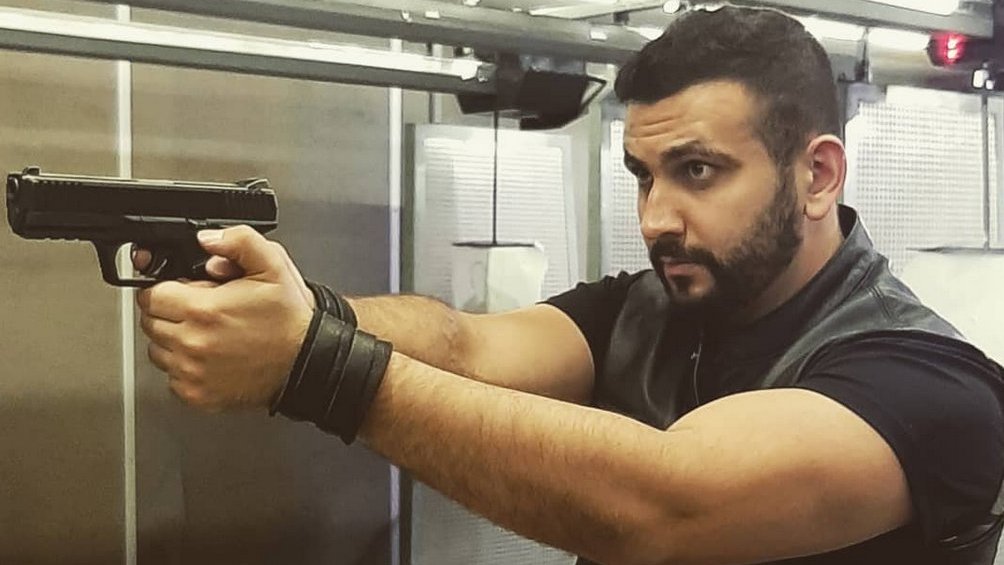
    Onur Gencer, 27, who on Thursday admittedly killed a woman in an attack on the pro-Kurdish Peoples’ Democratic Party (HDP) office in İzmir, had posted photos of himself carrying assault rifles and made threats against HDP members, calling them “Armenian spawn.”

    The HDP is the Turkish parliament’s third-largest party, which the government is trying to close over alleged links to the outlawed Kurdistan Workers’ Party (PKK). The party directed its anger over the attack at the government.

    “After months of attacks by the ruling party and interior ministry and families being told to organize outside our provincial offices to spark provocations, there was an attack today at 10:30 a.m. on our İzmir provincial building,” it said.

    Gencer, currently under arrest, claimed to be acting on his own, saying in a statement: “I am not affiliated with any group. I entered the building because I hate the PKK and fired at random.” He threatened the HDP in a social media post, expressing his resentment and promising to “make them bleed.”

    The pro-Kurdish party identified the victim as Deniz Poyraz, a party official in the western province of İzmir where the morning attack occurred.turkishminute

    Cinayetin ayrıntıları geliyor… 3 silahlı içeri giriyor. O sırada tesadüfen sadece mutfakta çalışan genç HDP'li kadın Deniz Poyraz var. Onu ateş ederek öldürüyorlar. Binayı yakmaya çalışıyorlar. 2 saldırgan kaçıyor. Yakalanan Onur Gencer'in fb profili çok şey anlatıyor… https://t.co/y4w30sw4Gk pic.twitter.com/bQ4DpxUVxP

    — Ertuğrul Kürkçü (@ekurkcuHDP) June 17, 2021

  • Conviction for insulting Erdoğan, dismissal over Facebook likes violated applicants’ rights: ECtHR

    The European Court of Human Rights (ECtHR) has faulted Turkey over the conviction of a student for insulting then-Prime Minister Recep Tayyip Erdoğan in 2012 and the dismissal of a contractual employee who had worked for the Ministry of Education for clicking the “Like” button on Facebook posts.

    In April 2016 a court ordered Ömür Çağdaş Ersoy to pay a fine of 2,524 euros, finding that he had insulted Erdoğan, noting that Ersoy’s statements had been injurious and humiliating and that he had used the insulting expression “like a rabid dog” about the prime minister.

    After his objection to the judgment and his individual application to Turkey’s Constitutional Court were unsuccessful, Ersoy submitted the case to the ECtHR.

    The ECtHR ruled that Ersoy’s remarks “were indisputably linked to a public-interest debate about the police intervention in the student demonstration of 18 December 2012 and the attitude and policies of the State authorities and the Prime Minister in respect of the ODTÜ [Middle East Technical University] students.”

    In December 2012 more than 3,000 police officers entered the ODTÜ campus to guard Prime Minister Erdoğan as he witnessed the launch of Turkey’s first-ever domestically produced satellite, Göktürk-2. Several hundred students were staging a protest at his presence when they were attacked by the police, resulting in clashes and injuries.

    “Politicians inevitably and knowingly laid themselves open to close scrutiny of their every word and deed by both journalists and the public at large, and they had therefore to display a greater degree of tolerance,” the court said in a press release on the judgment.

    The Strasbourg court ordered Turkey to pay Ersoy 2,000 euros in non-pecuniary damages and 2,000 euros for costs and expenses.

    Dismissal over liking Facebook posts

    Selma Melike, a contractual employee at the Ministry of Education, was dismissed in September 2016 by a disciplinary committee for having clicked “Like” on various Facebook articles.

    Melike was employed as a janitor at the Seyhan National Education Directorate in Adana and had been working in public institutions since 1996 as a permanent employee.

    The posts in question disturbed the peace and tranquillity of the workplace as they alleged that teachers had committed rapes and contained accusations against political leaders, according to Turkish authorities.

    The ECtHR noted that “the content in question consisted of virulent political criticism of allegedly repressive practices by the authorities.”

    “The disciplinary commission, whose decision had been endorsed by the national courts, applied in her case the maximum penalty provided for by the collective labour agreement, namely immediate termination of the employment contract without entitlement to compensation,” the court noted and ordered Turkey to pay Melike 2,000 euros in non-pecuniary damages.

    Turkey was ranked first among the 47 Council of Europe (CoE) member states in the number of judgments from the ECtHR concerning violations of freedom of expression in 2020, according to an activity report announced by the court in January.

  • Turkish journalist released on probation after five years in prison

    Turkish journalist released on probation after five years in prison

    Turkish journalist Büşra Erdal has recently been released on probation after serving a total of 4 years, 8 months in İstanbul’s Bakırköy Prison on terror charges.

    Erdal used to work for the Zaman and Yeni Hayat dailies, both of which were closed down by the Turkish government due to their links to the Gülen group.

    A high criminal court in İstanbul in March 8 concluded the trial of Erdal and dozens of other journalists and handed down a jail sentence of six years, three months to her on charges of membership in a terrorist organization.

    The Turkish government accuses the Gülen group of masterminding a failed coup attempt on July 15, 2016 and labels it a “terrorist organization,” although the movement denies involvement in the coup attempt.

  • Jailed air force cadet not allowed to attend parents’ funeral

    Murat Can Güney, 27, a former air force cadet sentenced to life imprisonment on coup charges, was not allowed to attend his parents’ funeral after the local gendarmerie command claimed it would be difficult to take the necessary precautions due to the COVID-19 pandemic, the Stockholm Center for Freedom reported, citing Turkish media.

    According to a document shared by his lawyer, Ayça Çiçek, local authorities in Ordu province’s Fatsa district said security in the neighborhood was adequate. Yet, they ultimately did not want Güney to attend the funeral, saying, “Considering the size of the crowd that will gather for the funeral and the number of COVID-19 cases in the neighborhood, pandemic-related regulations could lead to vulnerabilities and problems with security measures.”

    Güney’s parents died in a traffic accident on Saturday. Çiçek said staff at İstanbul’s Silivri Prison had completed all the preparations for him to attend the funeral.

    Sezgin Tanrıkulu, a deputy from the main opposition Republican People’s Party (CHP) and a human rights defender, asked the authorities to let Güney attend the ceremony. “Don’t prevent the inmate from exercising his legal rights and be known for that,” he said in a tweet.

    Güney is one of the air force cadets who were arrested and sentenced to life in prison after a coup attempt in July 2016. The cadets were in the western city Yalova for training during the coup. They were taken to İstanbul’s Bosporus Bridge by bus that night, where some of them were attacked by a pro-government mob, claiming the lives of two of the cadets, Murat Tekin and Ragıp Enes Katran.

    The cadets said they were unaware that a coup was underway as the putschist bid unfolded. According to CCTV footage, they were not involved in any acts of violence despite the fact that their bus was attacked by the mob.

    In the case of one of the cadets, Ahmet Dinçer Sakaoğlu, the United Nations Working Group on Arbitrary Detention (WGAD) said in a recent opinion that the Turkish government deprived him of his liberty on an arbitrary basis.

    “The military cadets, including Mr. Sakaoğlu, did not take any action other than to obey simple military orders for support against the said terrorist attack, such as ‘get on the bus,’ ‘get off the bus,’ ‘stop’ and ‘walk.’ Such orders were given by the military commanders, who were appointed by their state-appointed superiors,” WGAD said.

    The working group’s opinion is considered to have set a precedent for the more than 300 other former military cadets who were also sentenced to life in prison for allegedly participating in the abortive putsch.

    Social media users started a campaign on Twitter to ask authorities to allow Güney to attend the funeral with the hashtag #MurataCenazeizniVerilsin.

    Hüda Kaya, a deputy from the pro-Kurdish rights Peoples’ Democratic Party (HDP), said Güney was only a student, yet he was sentenced to life on coup charges, asking the authorities to allow him to attend the funeral.

    Another HDP lawmaker, Hüseyin Kaçmaz, appealed to the Ministry of Justice on Twitter to allow Güney to attend the funeral.

    “It is against the law and the conscience of the nation not to allow him attend the funeral citing security reasons,” Kaçmaz said. turkishminute

  • Turkish citizens’ abduction sparks panic in South Africa: report

    Turkish citizens’ abduction sparks panic in South Africa: report

    The recent abduction of a teacher by Turkish government operatives in Kenya and the suspicious disappearance of an educator in Kyrgyzstan have sent shivers among Turkish immigrants living in South Africa, the Citizen reported.

    According to Eric Naci, political editor of the Citizen, they fear being kidnapped and sent back home to face arbitrary arrest and prison.

    Selahaddin Gülen, a nephew living in Kenya of Islamic scholar Fethullah Gülen, was brought back to Turkey by agents from Turkey’s National Intelligence Organization (MIT) in May. Then, he was arrested on June 5 by an Ankara court on charges of “managing an armed terrorist organization.”

    Orhan İnandı, the founder and president of the Turkish-Kyrgyz Sapat school network operating in Kyrgyzstan, went missing in Bishkek on the evening of May 31 and is feared to have been abducted by Turkey’s National Intelligence Organization due to his alleged links to the Gülen movement.

    İnandı’s  wife, Reyhan İnandı, said in a June 6 statement that an undisclosed source told her that her husband was being held against his will at the Turkish Embassy, and she claimed he was being tortured to renounce his Kyrgyz citizenship. This would simplify İnandı’s forcible transfer to Turkey, she said.

    “What happened in Kenya and Kyrgyzstan has left us traumatised because we don’t know when they will strike and abduct one of us,” said a member of the small Turkish community in South Africa.

    A Turkish immigrant, Dr Aydın İnal, director of the Turquoise Harmony Institute in the Western Cape, said: “Given the history of Turkish intelligence, it is not unthinkable that they could do more serious things, including targeting of individuals in the Gulen Movement [in South Africa].”

    Turkish intelligence has intensified its efforts to target dissidents abroad.

    In a joint letter UN rapporteurs accused the Turkish government of engaging in the systematic practice of state-sponsored extraterritorial abductions and forcible returns to Turkey, with at least 100 Turkish nationals from multiple states including Afghanistan, Albania, Azerbaijan, Afghanistan, Cambodia, Gabon, Kosovo, Kazakhstan, Lebanon and Pakistan removed to Turkey.

    In a number of cases the UN Working Group on Arbitrary Detention (WGAD) concluded that the arrest, detention and forced transfer to Turkey of Turkish nationals were arbitrary and in violation of international human rights norms and standards.

    A recent report by Freedom House on global transnational repression also revealed the intensity, geographic reach and suddenness of the Turkish government’s campaign targeting dissidents abroad, noting that Turkey has become number one among countries that have conducted renditions from host states since 2014.
    According to the report, Ankara’s campaign has primarily targeted people affiliated with the Gülen movement, but the government has started applying the same tactics to Kurdish and leftist individuals living abroad.

    The Freedom House report also indicated that the Turkish government has pursued its perceived enemies in at least 30 host countries spread across the Americas, Europe, the Middle East, Africa and Asia since a 2016 coup attempt.

    According to official statements by its interior ministry, Turkey has sent 800 extradition requests to 105 countries since the attempt, and more than 110 alleged members of the movement have been brought back to Turkey as part of the government’s global campaign.

  • Erdoğan aide slams UK’s Financial Times for Erdoğan-Biden shot on front page

    An aide to Turkish President Recep Tayyip Erdoğan has criticized the UK-based Financial Times newspaper for using a photo from the NATO summit that shows Erdoğan, without a mask, as if he were bowing before US President Joe Biden, on its front page in its Tuesday edition.

    İsmail Cesur on Tuesday posted a tweet, sharing the front page of the FT that includes the shot taken at the NATO summit in Brussels on Monday, ahead of Erdoğan’s first meeting with Biden since his inauguration in January 2021.

    “The Financial Times’ use of this photo, which has been exploited all day to create a [false] perception [of Erdoğan], among others, is, in itself, an indication of the extent of Erdoğan’s struggle and the arenas where it has been taking place. We will stand behind you to the end, world leader,” Cesur said, addressing Erdoğan.

    According to Turkish media reports, the photo, shared by both the AFP and Reuters international news agencies, was taken while an unmasked Erdoğan was getting up from his chair to give Biden, who wears a mask, a fist bump, a manner of greeting that has beeb widely used amid the coronavirus pandemic.

    Many foreign news outlets highlighted, releasing photos of Erdoğan greeting Biden, that the Turkish president wasn’t wearing a mask although one of the issues on the NATO summit’s agenda was efforts to combat the pandemic.turkishminute

  • Is Turkey facing a ‘Khashoggi moment’ in Kyrgyzstan?

    The president of a Turkish school network in Kyrgyzstan suddenly goes missing, shortly after an evening meeting at a café with a disgraced former minister and “friend” who left the country shortly thereafter. His car was found abandoned, with doors ajar and tires flattened and valuables left inside. The educator had refused a nighttime security detail recommended by the government since he had lived in Kyrgyzstan for 20 years and felt himself safe there. He hasn’t been heard from since May 31 and is believed to be held captive at the Turkish Embassy in Bishkek by Turkey’s spy agency, apparently the intended subject of a rendition to his home country as some 100 other Turkish nationals considered “enemies” of the state have been. His wife believes he is being tortured in an attempt to force him to renounce his acquired Kyrgyz citizenship, a legal barrier for Turkey simply removing him from the country.

    So what is the Turkish government to do with Orhan İnandı?

    They can’t get him out of the embassy to a private aircraft reportedly waiting at the airport in Bishkek due to the constant vigil of protestors demanding his release. They can’t let him live in the embassy forever, nor can they continue to bar all cars from entering and exiting the compound.

    So could İnandı just “disappear” permanently, as happened to Saudi journalist and Washington Post contributor Jamal Khashoggi, who entered the Saudi Consulate General in Istanbul in 2018 and never left, brutally assassinated and dismembered by a murder team sent from Riyadh?

    Turkey has been relentless in its pursuit, both at home and abroad, of alleged members of the Gülen movement — with which İnandı is affiliated — a faith-based group inspired by cleric Fethullah Gülen, a vocal critic of the current regime in Ankara led by President Recep Tayyip Erdoğan.

    Kyrgyz authorities should investigate the disappearance of İnandı amid concern that he may be forcibly deported to Turkey, Human Rights Watch said in a statement on June 9, adding that if returned to Turkey, İnandı could be at risk of mistreatment or torture and would face arbitrary detention and an unfair trial.

    A recent report by Freedom House on global transnational repression indicated that the Turkish government has pursued its perceived enemies in at least 30 countries spread across the Americas, Europe, the Middle East, Africa and Asia since a 2016 coup attempt, noting that Turkey has become number one among countries that have conducted renditions since 2014.

    In a joint letter UN rapporteurs accused the Turkish government of engaging in the systematic practice of state-sponsored extraterritorial abductions and forcible returns to Turkey, with at least 100 Turkish nationals from multiple states including Afghanistan, Albania, Azerbaijan, Afghanistan, Cambodia, Gabon, Kosovo, Kazakhstan, Lebanon and Pakistan removed to Turkey.

    Protests have taken place in Berlin, London and Brussels as well as Bishkek in support of the Turkish educator, demanding his release. The United Nations Human Rights Committee has called on Turkey to promptly take all measures necessary to establish the whereabouts of İnandı and said the government should ensure that İnandı would not be subjected to torture and inhuman treatment, guarantee his physical and mental integrity and immediately place him under the protection of the law.

    So the world is watching Turkey in this pivotal moment. Will it, due to the international backlash it is has sparked, allow İnandı to reappear as if he had simply wandered off on his own? Will it try to outlast the protestors outside the embassy and ultimately render him from Kyrgyzstan to Turkey, where he faces imprisonment and almost certain torture? Or will İnandı never reemerge from the embassy, like Jamal Khashoggi, murdered by a dictatorial regime, with no trace of him ever to be found.

    The world is watching and waiting, Turkey. Your move.