Category: World

  • 28-year-old relative of Fethullah Gulen in police custory in İzmir

    Munise Gülen, a relative of Turkish cleric Fethullah Gulen, has been detained by the police in İzmir over links to the Gulen group, accused by the government of masterminding a coup attempt on July 15, 2016.

    The group denies any involvement.

    According to the Cumhuriyet daily, the 28-year old woman is the grandchild of Fethullah Gulen’s uncle, Seyfeddin Gulen.Munise is accused of having ByLock, an encrypted mobile app that Turkish government sees as a communication tool among followers of the Gulen group.

  • EU working to locate educator feared to have been abducted in Bishkek

    EU working to locate educator feared to have been abducted in Bishkek

    An official from the European Union has announced that they are working closely with the Office of the United Nations High Commissioner for Human Rights to locate a Turkish-Kyrgyz educator who has been missing in Kyrgyzstan for a month and is allegedly being held against his will at the Turkish Embassy in Bishkek, local media reported.

    Orhan İnandı, the founder and president of the Turkish-Kyrgyz Sapat school network operating in Kyrgyzstan, went missing in Bishkek on the evening of May 31 and is feared to have been abducted by Turkey’s National Intelligence Organization due to his alleged links to the Gülen movement, a faith-based group inspired by Muslim cleric Fethullah Gülen.

    Boris Iarochevitch, head of the Central Asia Division of the European External Action Service, recently answered questions from Brussels-based human rights associations, stating that the EU delegation in Kyrgyzstan had been closely monitoring developments regarding the situation of İnandı.

    Iarochevitch added that Kyrgyz President Sadyr Japarov convened law enforcement officers for an emergency meeting and reiterated his order to prioritize locating İnandı, upon a request by the EU.

    Underlining that they noted Japarov’s quick response and instructions, the EU official said they have also conveyed similar requests to other Kyrgyz authorities in Bishkek and Brussels.

    Iarochevich indicated that it was regrettable not to have obtained a result from the investigation to find İnandı, adding that they would remind Kyrgyz Foreign Minister Ruslan Kazakbaev of his international obligations regarding human rights and reiterate their request to locate İnandı at a meeting next week.

    Meanwhile the missing educator’s wife Reyhan İnandı on Thursday called on Japarov to help find İnandı, reminding that her husband has been missing for a month, in a video she released on Twitter.

    “Today it has been a month since Orhan went missing. So far, there is no information about his whereabouts, those who have him or his health. My four children and I can’t sleep and are waiting night and day,” she said.

    She added that she was waiting hopefully for Japarov to make sure that an effective investigation is being carried out to locate her husband.

    Over the past five years scores of men alleged by Turkish authorities to have links to the Gülen movement, living in countries around the world, have been arbitrarily detained and forcibly returned to Turkey. There they are incarcerated on bogus terrorism charges in violation of due process rights and protections.

    Turkish President Recep Tayyip Erdoğan has been targeting followers of the Gülen movement since the corruption investigations of December 17-25, 2013, which implicated then-Prime Minister Erdoğan, his family members and his inner circle.

    Dismissing the investigations as a Gülenist coup and conspiracy against his government, Erdoğan designated the movement as a terrorist organization and began to target its members. He intensified the crackdown on the movement following a coup attempt on July 15, 2016 that he accused Gülen of masterminding, an allegation both Gülen and his followers strongly deny.

  • Twitter users call on Turkish authorities to postpone cancer patient’s prison sentence

    Turkish Twitter users conducted a hashtag campaign on Friday calling on authorities to postpone the execution of the prison sentence of Ayşe Özdoğan, 34, who suffers from a rare form of cancer.

    An appeals court on June 11 upheld a nine year, six month prison sentence for former teacher Özdoğan. She currently faces years in prison despite severe health problems.

    The hashtags #AyşeÖzdoğanTutuklanmasın (Don’t arrest Ayşe Özdoğan) and #AyşeÖzdoğanİçinSesOl (Be a voice for Ayşe Özdoğan) were shared widely by Turkish social media users to appeal the Turkish government.

    Özdoğan and her husband were detained on April 8, 2019 for alleged links to the Gülen movement. She was released due to her son’s heart condition, but her husband was sent to prison in southern Antalya province.

    Özdoğan developed cancer seven months later and underwent an operation on November 12, 2019. However, she was arrested shortly after, convicted and sentenced to nine years, six months in prison.

    Özdoğan’s arrest sparked outrage, and thanks to an online campaign started by Ömer Faruk Gergerlioğlu, a human rights activist and former deputy from the Peoples’ Democratic Party (HDP), she was released on appeal on December 27, 2019.

    It was already too late for her second surgery, however, as the cancer had spread. Özdoğan’s tooth, palate, zygomatic bone and lymph nodes were removed in an emergency operation. Özdoğan lost her ability to see and hear after the operation due to the trauma her facial bones suffered.

    Turkish President Recep Tayyip Erdoğan has been targeting followers of the Gülen movement since the corruption investigations of December 17-25, 2013, which implicated inmatethen-Prime Minister Erdoğan, his family members and his inner circle.

    Dismissing the investigations as a Gülenist coup and conspiracy against his government, Erdoğan designated the movement as a terrorist organization and began to target its members. Erdoğan intensified the crackdown on the movement following a coup attempt on July 15, 2016 that he accused Gülen of masterminding. Gülen and the movement strongly deny involvement in the abortive putsch or any terrorist activity.

    Critics have slammed Turkish authorities for refusing to release critically ill prisoners.

    Gergerlioğlu said critically ill political prisoners were not released from prison “until it reaches the point of no return.” He depicted the deaths of seriously ill prisoners in Turkey who are not released in time to receive proper medical treatment as acts of “murder” committed by the state.

    According to the Human Rights Association (İHD), there are more than 1,605 sick prisoners in Turkish prisons, approximately 604 of whom are critically ill. Although most of the seriously ill patients have forensic and medical reports deeming them unfit to remain in prison, they are not released. Authorities refuse to release them on the grounds that they pose a potential danger to society. In the first eight months of 2020, five critically ill prisoners passed away because they were not released in time to receive proper medical treatment.

  • Victims commemorated on 28th anniversary of Sivas massacre

    Families of the victims of a 1993 fire at the Madımak Hotel in Sivas commemorated their loved ones in the city on the 28th anniversary of the massacre, Turkish media reported.

    The families were accompanied by delegations from the Republican People’s Party (CHP) and Peoples’ Democratic Party (HDP) as well as representatives from Alevi organizations and CSOs during the ceremony held in front of the hotel.

    The victims’ families and attendees called on the government to turn the hotel into a “museum of shame,” saying they were still waiting for justice.

    Some 5,000 people marched to the Madımak Hotel, where they laid carnations and photos of the victims.

    Speaking on behalf of his party during the ceremony, CHP deputy group chairman Özgür Özel said no statutory limitation applies to crimes against humanity, adding, “The [massacre at the] Madımak Hotel was a crime against humanity.”

    Noting that the party’s deputy group chairman, the head of women branches, party assembly members and 15 deputies were in attendance,  CHP Deputy Chairman Veli Ağbaba said: “Unfortunately, we have witnessed one of the gravest massacres in human history. [Therefore] we say that the Madımak Hotel should be declared a museum of shame.”

    HDP spokesperson and Mardin deputy Ebru Günay said justice had not been served since the ruling party protected the assailants, claiming that the “massacre mentality” was still alive today. “We all know the perpetrators very well. We are faced with a massacre mindset. That mentality is still working with the deep state,” she added.

    Federation of Alevi Bektaşi Associations Chairman Hüseyin Güzelgül stated they continue to be a voice for those who died in the Sivas massacre and vowed to keep the memory of the massacre alive.

    Pir Sultan Abdal Culture Foundation (PSAKD) Chairman Gani Kaplan said, “It is the state itself that was behind the Sivas massacre.”

    Nilgün Karababa, the elder sister of Gülsüm Karababa, who died in the fire, expressed regret for not being able to take the case to the European Court of Human Rights (ECtHR). “We commemorate our lost ones and are engaged a legal battle. Yet our main regret is that we were not able to take such a serious case to the ECtHR,” she said.

    The ceremony ended with a semah, an Alevi religious rite.

    Meanwhile, İYİ (Good) Party leader Meral Akşener posted a message on Twitter commemorating the massacre. “Twenty-eight years ago a fire was set at the Madımak Hotel with a torch that never died away in the deepest part of our hearts. Commemorating those who lost their lives and wishing God’s mercy on them,” she tweeted.

    On July 2, 1993 an angry mob torched the Madımak Hotel, killing 37 people, mostly Alevi artists and scholars who were there to attend a conference hosted by the PSAKD.

    In attendance was Aziz Nesin, a left-wing Turkish short story writer, hated among religious Sunnis in Turkey, who had become the target of attacks for attempting to translate Salman Rushdie’s controversial novel “The Satanic Verses” into Turkish.

    A group of radical Islamists, having been provoked by several local political leaders, gathered in front of the hotel following Friday prayer and accused conference participants of being infidels.

    Thirty-three attendees, two hotel staff members and two protesters died in the fire. Nesin was able to escape because the attackers initially failed to recognize him.

    In a controversial move President Recep Tayyip Erdoğan in 2020 used his presidential power to pardon a man who was given an aggravated life sentence for his role in the Sivas massacre.

    A number of lawyers who defended the suspects in the massacre later became politicians in Erdoğan’s ruling party.turkishminute

  • Thousands protest as Erdoğan defends Turkey’s withdrawal from Istanbul Convention

    Turkish President Recep Tayyip Erdoğan on Thursday defended Turkey’s withdrawal from an international treaty to combat violence against women, a move that has drawn condemnation from many Turks and rights groups, prompting protests across the country.

    The Istanbul Convention, negotiated in Turkey’s biggest city and opened for signature in 2011, had as of 2019 been signed by 45 countries and the European Union, committing its signatories to preventing and prosecuting domestic violence and promoting equality.

    Erdoğan sparked outrage in March by pulling out from the treaty, a decision that formally came into force today.

    “Some circles are trying to portray our withdrawal from the Istanbul Convention as a step backwards in our battle with violence against women,” Erdoğan said during a speech in Ankara to present an alternative action plan.

    “Our battle did not start with the Istanbul Convention, and it will not end with our withdrawal from the treaty,” he said.

    Turkey’s highest administrative court on Tuesday rejected an attempt to annul the withdrawal, saying that Erdoğan had the “authority” to make the decision.

    On Thursday thousands protested the decision across Turkey, where femicide has surged in recent years.

    On Thursday thousands protested the decision across Turkey, where femicide has surged in recent years.

    One monitoring group has logged roughly one femicide per day in Turkey since a sharp rise five years ago.

    Rights organizations say Erdoğan’s decision will put women at greater risk of violence when femicide is already prevalent in Turkey.

    Ankara’s withdrawal triggered condemnation from both the United States and the European Union, and critics say it puts Turkey even further out of step with the bloc that it applied to join in 1987.

    Three opposition parties also pulled out of a parliamentary commission on Thursday to protest the decision.

    Women’s rights groups accuse Ankara of withdrawing from the treaty to appease conservatives at a time when Erdoğan’s ruling Justice and Development Party (AKP) is recording lower levels of support.

    “We will continue our struggle,” Canan Güllü, president of the Federation of Turkish Women’s Associations, said on Wednesday. “Turkey is shooting itself in the foot with this decision.”

    She said that since March, women and other vulnerable groups had been more reluctant to ask for help and less likely to receive it, with COVID-19-fuelled economic difficulties causing a dramatic increase in violence against them.

    Proponents of the convention and related legislation say more stringent implementation is needed.

    The Turkish Industrialists and Businessmen’s Association (TÜSİAD) said in a written statement on Thursday that Turkey should turn back from the decision to withdraw from the convention.

    However, many conservatives in Turkey and people supporting Erdoğan’s Islamist-rooted Justice and Development Party (AKP) say the pact undermines the family structures that protect society.

    This month, Council of Europe Commissioner for Human Rights Dunja Mijatovic sent a letter to Turkey’s interior and justice ministers expressing concern about a rise in homophobic narratives by some officials, some of which targeted the convention.

    “All the measures provided for by the Istanbul Convention reinforce family foundations and links by preventing and combating the main cause of destruction of families, that is, violence,” she said.

    “The withdrawal sends a reckless and dangerous message to perpetrators who abuse, maim and kill: that they can carry on doing so with impunity,” said Amnesty International’s secretary-general, Agnes Callamard.
  • “My husband is forced to renounce Kyrgyz citizenship,” says İnandı’s wife

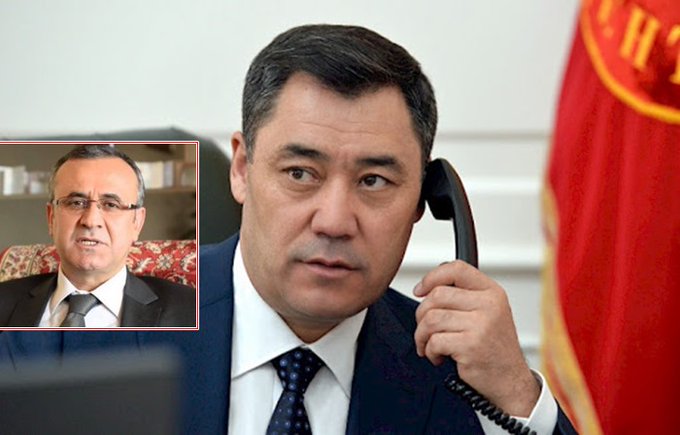
    Turkish authorities are forcing Orhan İnandı to renounce his Kyrgyz citizenship in order to be able to deport him to Turkey to prosecute on alleged links to the Gulen group, İnandı’s wife, Reyhan İnandı tweeted.

    Orhan İnandı, a Kyrgyz citizen of Turkish origin, is feared to have been abducted by the Turkish Intelligence in early June. While his whereabouts are still unknown, his family members say he is being held in a building housing the Turkish Embassy in Bishkek.

    “Today marks the 29th day of my husband’s abduction. I believe he is still being held at the Turkish Embassy in Bishkek and is being forced to renounce his Kyrgyz citizenship. I’m worried about his health,” Reyhan İnanlı tweeted on Tuesday.

    İnandı is accused by the Turkish authorities of having membership in the Gulen group, accused of masterminding a coup attempt in July 15, 2016. The group denies any involvement in the attempt.

    According to Kyrgyz media outlets, İnandı has been living in Kyrgyzstan for over 20 years and had worked as a teacher at several elementary schools established by the Gulen members across the country.

    Since 2016, tens of Turkish nationals were abducted and rendered to Turkey by the Turkish intelligence over alleged links to the Gülen group.

  • Turkish judge who called Intelligence head to testify in court, sentenced to 11 years in prison on Gulen charges

    Sadrettin Sarıkaya, a judge who called Turkey’s İntelligence chief to testify as part of corruption investigations of December 17-25, 2013, which implicated then-Prime Minister Erdoğan, has been sentenced to 11 years and 3 months in prison on membership of the Gulen group.

    The Gulen group is accused by the government of masterminding a coup attempt on July 15, 2016. It denies any involvement.

    Judge Sarıkaya was dismissed from his job with a decree issued by the government in the aftermath of the coup attempt.

    He has been held in İstanbul’s notorious Silivri prison since late 2016.

  • Twitter users call on Turkish authorities to postpone cancer patient’s prison sentence

    Turkish Twitter users conducted a hashtag campaign on Friday calling on authorities to postpone the execution of the prison sentence of Ayşe Özdoğan, 34, who suffers from a rare form of cancer, the Stockholm Center for Freedom reported.

    An appeals court on June 11 upheld a nine year, six month prison sentence for former teacher Özdoğan. She currently faces years in prison despite severe health problems.

    The hashtags #AyşeÖzdoğanTutuklanmasın (Don’t arrest Ayşe Özdoğan) and #AyşeÖzdoğanİçinSesOl (Be a voice for Ayşe Özdoğan) were shared widely by Turkish social media users to appeal the Turkish government.

    Özdoğan and her husband were detained on April 8, 2019 for alleged links to the Gülen movement. She was released due to her son’s heart condition, but her husband was sent to prison in southern Antalya province.

    Özdoğan developed cancer seven months later and underwent an operation on November 12, 2019. However, she was arrested shortly after, convicted and sentenced to nine years, six months in prison.

    Özdoğan’s arrest sparked outrage, and thanks to an online campaign started by Ömer Faruk Gergerlioğlu, a human rights activist and former deputy from the Peoples’ Democratic Party (HDP), she was released on appeal on December 27, 2019.

    It was already too late for her second surgery, however, as the cancer had spread. Özdoğan’s tooth, palate, zygomatic bone and lymph nodes were removed in an emergency operation. Özdoğan lost her ability to see and hear after the operation due to the trauma her facial bones suffered.

    Turkish President Recep Tayyip Erdoğan has been targeting followers of the Gülen movement since the corruption investigations of December 17-25, 2013, which implicated inmatethen-Prime Minister Erdoğan, his family members and his inner circle.

    Dismissing the investigations as a Gülenist coup and conspiracy against his government, Erdoğan designated the movement as a terrorist organization and began to target its members. Erdoğan intensified the crackdown on the movement following a coup attempt on July 15, 2016 that he accused Gülen of masterminding. Gülen and the movement strongly deny involvement in the abortive putsch or any terrorist activity.

    Critics have slammed Turkish authorities for refusing to release critically ill prisoners.

    Gergerlioğlu said critically ill political prisoners were not released from prison “until it reaches the point of no return.” He depicted the deaths of seriously ill prisoners in Turkey who are not released in time to receive proper medical treatment as acts of “murder” committed by the state.

    According to the Human Rights Association (İHD), there are more than 1,605 sick prisoners in Turkish prisons, approximately 604 of whom are critically ill. Although most of the seriously ill patients have forensic and medical reports deeming them unfit to remain in prison, they are not released. Authorities refuse to release them on the grounds that they pose a potential danger to society. In the first eight months of 2020, five critically ill prisoners passed away because they were not released in time to receive proper medical treatment.

  • Mob boss exposes gov’t figures involved in extortion of businessmen over Gülen links

    Mob boss exposes gov’t figures involved in extortion of businessmen over Gülen links

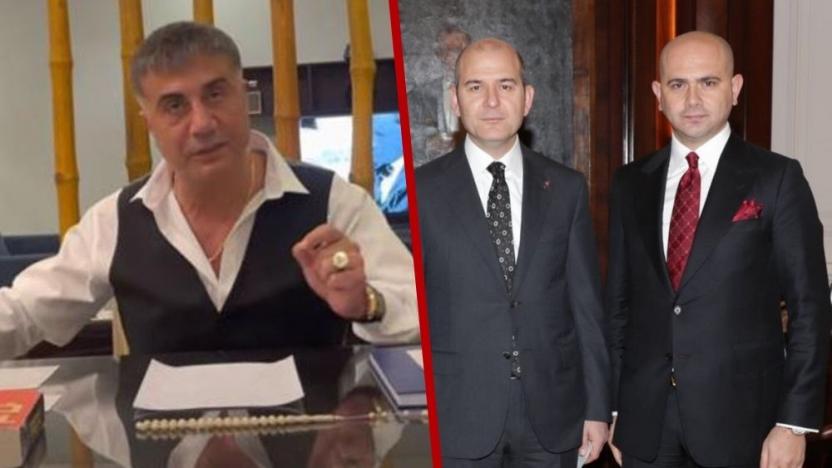
    Sedat Peker, a well-known Turkish mob boss, has exposed individuals affiliated with Turkey’s ruling Justice and Development Party (AKP) who are allegedly part of an extortion ring that has been taking over the assets of businessmen under pressure and threat, Turkish media reported on Monday.

    Once a staunch supporter of President Recep Tayyip Erdoğan, Peker has since early May been making shocking revelations about state-mafia relations, drug trafficking and murders implicating state officials and their family members.

    The mafia boss on Monday said Interior Minister Süleyman Soylu, his brother Mehmet Soylu and EKBA Holding CEO Cihan Ekşioğlu, who was alleged to be an intermediary between the AKP government and mafia groups in Turkey and abroad, were among those who extorted businessmen’s assets.

    According to Peker, an extortion ring including the Soylu brothers and Ekşioğlu had been filing terrorist accusations against wealthy businessmen through the Presidential Communications Center (CİMER), thereby causing the launch of bogus terrorism investigations into them.

    The ring would then threaten the businessmen, saying the charges against them wouldn’t be dropped until they handed over their money and valuable assets.

    “You seized the assets of many honorable people. If surveillance camera footage and Historical Traffic Search (HTS) recordings of the last six months from Akmerkez [a shopping mall in İstanbul] are analyzed, it will expose which businessmen’s assets you took over using the excuse of FETÖ,” Peker said.

    “FETÖ” is a derogatory term coined by the Turkish government to refer to Islamic preacher Fethullah Gülen’s faith-based Gülen movement as a terrorist organization.

    The government accuses the group of masterminding an abortive putsch in 2016 and has since jailed some 96,000 people while investigating 622,646 over alleged links to the movement as part of a massive purge launched under the pretext of an anti-coup fight, although both Gülen and the movement strongly deny the charges.

    Peker claimed that Ekşioğlu, whom he referred to as Soylu’s “secret safe,” took over Victoria Gardens shopping mall in Ukraine in collaboration with then-suspected FETÖ member Burak Başlılar, after pressuring its owner, Aytaç Ocaklı, by way of a report they forced the pro-government Sabah daily publish saying that Ocaklı had helped a Gülen follower flee abroad.

    “Ocaklı handed the mall over to Burak Başlılar since he was a friend. But you sold it and split the $66 million you [unlawfully] made. This was your first [illegal] gain from the FETÖ market,” Peker said, referring to the extortion ring that is alleged to have slandered people to take over their assets.

    The crime boss also claimed that Ekşioğlu paid a bribe of $3 million to a prosecutor named Mesut Erdinç Bayhan in İstanbul to drop terror-related charges against Başlılar.

    Peker further claimed that Ekşioğlu bought a device from the Israelis that analyzes social media platforms for $3 million and sold it to the Turkish government for $50 million.turkishminute

  • Dismissed first lieutenant heavily injured working on a construction site

    Recep Karaşal, a first lieutenant who was fired from his job following a coup attempt on July 15, 2016, has heavily been injured working on a construction site to make a living, his wife tweeted.

    “I’m proud of my husband. He hasn’t had any ill-gotten gains. This is better than being called a thief,” she tweeted.

    According to the media, Karaşal’s health condition is still critical. He is currently in the Intensive Care Unit (ICU) of a state hospital in Ankara.

    Karaşal had reportedly spent nine months in prison following the coup attempt until he was released on pending trial in mid 2017.

    More than 150,000 people have lost their jobs since the failed coup in 2016. Dismissed or suspended civil servants have been prohibited from securing jobs in other public institutions. Since most of the private sector is concerned about government retaliation, they prefer not to hire fired public workers.

    In order to survive, many purged civil servants and others have become unregistered market vendors or laborers on farms, for construction companies and such.