Category: Politics

  • Erdoğan says will run in 2023 presidential election

    Turkish President Recep Tayyip Erdoğan on Thursday said he would run in next year’s presidential election and brushed aside rumors of a snap poll in the economically battered country, Agence France-Presse reported.

    It was the first time that the strongman, who has been in power since 2003, officially announced his widely expected candidacy.

    “Let me say it here. Tayyip Erdoğan is the candidate of the People’s Alliance,” Erdoğan told a party rally in the western city of İzmir, referring to an alliance between his ruling Justice and Development Party (AKP) and the Nationalist Movement Party (MHP).

    The opposition Republican People’s Party (CHP), the second-largest party in parliament, has not yet fielded a candidate, and Erdogan tossed a challenge to its leader, Kemal Kilicdaroglu.

    “Declare either your candidate or your candidacy,” Erdoğan said.

    Erdoğan said the election would be held on time, on June 24 of next year.

    There have been rumors of an early election amid Turkey’s economic woes triggered by the weakening lira and 73.5 percent inflation — the highest level since 1998.

    Critics have blamed Erdoğan’s unorthodox economic policy of pushing for lower interest rates to combat price rises for the economic mess.

    Contrary to conventional economic theory, Erdoğan is convinced that high interest rates fuel inflation rather than rein it in.

    On Monday he said, “This government will not hike interest rates.”

    TurkishMinute

  • Closure of HDP may spell end of Turkey’s EU accession process: EP rapporteur

    Amor, also a member of the Group of the Progressive Alliance of Socialists and Democrats in the European Parliament, spoke at the general assembly of the European Parliament in Strasbourg on Monday before a vote on the 2021 annual Turkey report.

    Turkey’s Constitutional Court in June 2021 accepted an indictment filed by a prosecutor seeking the closure of the HDP and the imposition of a political ban on 451 party members as well as a freeze of the party’s bank accounts for alleged ties to the outlawed Kurdistan Workers’ Party (PKK).

    According to Amor, if the HDP is closed down by the Constitutional Court, it may mean the end of Turkey’s process of accession to the EU.

    Turkey’s relations with the EU date back to 1963. The country was named a candidate in 1999, and negotiations for full membership started in 2005. The EU has suspended talks with Turkey due to the EU’s unhappiness with what the union has described as a decline of democratic norms in the country.

    Amor also said there are deliberate efforts for the deterioration of democratic standards in Turkey, adding that people in the country are witnessing the fading away of their hopes in a never-ending cycle of authoritarianism.

    Amor said if the current trend regarding Turkish democracy and the human rights situation continue following the elections in 2023, this will also mean the end of the country’s EU membership process.

    Turkey is scheduled to hold parliamentary and presidential elections in 2023.

    Turkey’s incumbent President Recep Tayyip Erdoğan is accused by critics of establishing one-man rule in the country, engaging in massive corruption and using the state’s resources for the benefit of his family and cronies while the Turkish people are overwhelmed by the increasing cost of living caused by the depreciation of the Turkish lira and a record level of inflation at around 70 percent.

    Public surveys show Erdoğan and his election ally, the Nationalist Movement Party (MHP), losing considerable public support.

    Commenting on Turkey’s relations with Russia, Amor accused Turkey of violating sanctions imposed on Russia by the international community due to its invasion of Ukraine. He said Turkey is granting Russian kleptocrats the right to make investments on the Turkish coasts, that the number of flights between Russia and Turkey have increased and that thousands of Russian citizens have been allowed to obtain credit in Turkey.

    Turkey, which has not joined international sanctions on Russia as it tries to stay neutral in the Russian-Ukrainian conflict, is accused by some of trying to take advantage of the situation by helping Russians evade the international sanctions.

    TurkishMinute

  • Erdoğan says Turkey won’t raise rates in face of soaring inflation

    Turkish President Recep Tayyip Erdoğan insisted on Monday that his government was opposed to higher interest rates even as inflation in the country soars to its highest level in nearly 25 years, Agence France-Presse reported.

    “This government will not hike interest rates. On the contrary, it will reduce them,” Erdoğan said in a televised address after a weekly cabinet meeting.

    The Turkish central bank, which is nominally independent, holds its next policy-setting meeting on June 23.

    But Erdoğan’s comments came after official data showed that inflation in Turkey hit 73.5 percent in May, the highest level since 1998.

    Contrary to economic orthodoxy, Erdoğan is convinced that high interest rates fuel inflation rather than rein it in.

    The Turkish economy has gone into a tailspin since last year when Erdoğan — who is up for re-election next year — put pressure on the central bank to start slashing interest rates.

    TurkishMinute

  • Poll shows Erdoğan losing presidency to each of 3 potential rivals from CHP

    President Recep Tayyip Erdoğan would have been defeated by each of three potential presidential candidates — all members of the main opposition Republican People’s Party (CHP) –- among his rivals if a presidential election were to be held in late May, local media reported on Friday, citing the results of a survey conducted by the Eurasia Public Research Center (AKAM).

    The results of the poll, which was conducted in telephone interviews with 1,500 participants in 26 provinces between May 26 and June 1, were announced by AKAM President Kemal Özkiraz on Twitter on Friday.

    The results showed ruling Justice and Development Party (AKP) leader Erdoğan being defeated by each of his potential rivals – CHP leader Kemal Kılıçdaroğlu, İstanbul Mayor Ekrem İmamoğlu and Ankara Mayor Mansur Yavaş, both also from the CHP — in a possible presidential election scenario in which one of them is running against the incumbent president.

    According to the survey, when Erdoğan is pitted against CHP leader Kılıçdaroğlu, Erdoğan and Kılıçdaroğlu would receive 39.1 percent and 51.5 percent, respectively, with undecided votes distributed between the two.

    In the scenario in which İstanbul Mayor İmamoğlu runs for president against Erdoğan, İmamoğlu would defeat Erdoğan by nearly a 14-point margin, with Erdoğan garnering 39.2 percent and İmamoğlu receiving 53 percent of the vote.

    Ankara Mayor Yavaş, too, defeats Erdoğan hands down as 38.3 percent of respondents said they would vote for Erdoğan, while 51.7 percent opted for Yavaş, resulting in a more than a 13-point difference in favor of Yavaş.

    When respondents were asked the open-ended question “Which party will you vote for?” 30.7 percent said they would vote for the main opposition CHP, followed by the ruling AKP (29.5 percent), the İYİ (Good) Party (13 percent), the pro-Kurdish Peoples’ Democratic Party (HDP) (9.2 percent), the Nationalist Movement Party (MHP) (5.4 percent), the Democracy and Progress Party (DEVA) (4.8 percent), the Future Party (GP) (1.8 percent), the Victory Party (ZP) (1.6 percent), the Felicity Party (SP) (1.1 percent), the New Welfare Party (YRP) (1.1 percent), the Democrat Party (DP) (0.4 percent) and other parties (1.4 percent), with undecided votes distributed among the parties.

    In the last general election held in June 2018, the AKP garnered a nationwide vote of 42.6 percent. However, public surveys have increasingly been showing the party’s public support to be slipping.

    Erdoğan, whose ruling AKP has been in power as a single-party government since 2002, was elected president in 2014 and re-elected in 2018. His election in 2018 was under a presidential system as Turkey switched from a parliamentary to a presidential system of governance with a public referendum in 2017.

    Under the presidential system, Erdoğan is accused by critics of establishing one-man rule in the country, engaging in massive corruption and using the state’s resources for the benefit of his family and cronies while the Turkish people are overwhelmed by the increasing cost of living caused by the depreciation of the Turkish lira and a record level of inflation at around 73.5 percent.

    TurkishMinute

  • Turkish court faults Birgün daily for report on Erdoğan’s son-in-law

    An İstanbul court has ruled in favor of President Recep Tayyip Erdoğan’s son-in-law Selçuk Bayraktar, the chief technical officer of Turkish unmanned aerial vehicle producer Baykar, and his brother Haluk Bayraktar in a lawsuit they filed against the Birgün daily and one of its reporters, Birgün reported on Tuesday.

    According to the report, the İstanbul 23rd Civil Court of First Instance recently ordered the newspaper and reporter İsmail Arı to pay each of the complainants TL 100,000 ($6,266) in damages due to a report by the journalist that was published in Birgün on Aug. 21, 2021.

    Titled “TÜBİTAK works for the son-in-law’s foundation,” the report accused the Bayraktars of using millions of Turkish lira from the budget of Turkey’s Scientific and Technological Research Council (TÜBİTAK), on whose board Haluk Bayraktar sits, to organize TEKNOFEST, an aerospace and technology festival organized by Selçuk and Haluk Bayraktar’s Turkey Technology Team (T3) Foundation in 2021.

    The Bayraktars had demanded a total of TL 250,000 ($15,679) from Birgün and Arı in the lawsuit they filed on Sept. 22, claiming that the daily and Arı had no intention of reporting news or informing the public but were aiming to attack their personal rights.

    A similar lawsuit filed by the brothers was previously rejected by the Ankara 18th Civil Court of First Instance, Birgün said.

    Ali Deniz Ceylan, one of the lawyers representing Birgün, said the report was “lawful and within the limits of press freedom,” describing the court’s verdict as “a desperate and shameful decision” and including one of the highest awards for damages imposed for a news report in the history of the Turkish press law.

    “The lawsuit filed at the İstanbul 23rd Civil Court of First Instance was a typical example of the cases frequently launched by the government and its circle that seemingly demand protection of personal rights but is actually aimed at deterring the [critical] press outlets from reporting. … First, we’ll appeal this decision. I hope it will be overturned as soon as possible,” he added.

    President Erdoğan’s Justice and Development Party (AKP) government increased its crackdown on critical media outlets and journalists in the aftermath of a coup attempt in July 2016 following which dozens of journalists were jailed, while more than 200 media outlets were closed down under the pretext of an anti-coup fight.

    Turkish journalists are often targeted and jailed for their journalistic activities. Turkey is one of the world’s biggest jailers of professional journalists and ranked 149th among 180 countries in the Reporters Without Borders (RSF) 2022 World Press Freedom Index.

  • Former military cadet arrested to serve sentence for links to Gülen movement

    Former military cadet arrested to serve sentence for links to Gülen movement

    A former military cadet was arrested on Tuesday at the Izmir airport to serve a seven year, six month sentence for links to the Gülen movement, the Bold Medya news website reported.

    Mustafa Enis Durak, 22, who is currently a third-year medical student, has been arrested three times over the last six months. He was first arrested on December 6, 2021 but was released 20 days later. He was re-arrested on April 14 and sent to a prison in Izmir only to be released a week later.

    Durak was accused of taking part in religious meetings when he was a military cadet and observing Islamic practices such as praying, which are strictly regulated by the Turkish army. He was pressured to give up the names of his friends who attended the meetings; however, Durak refused and denied all the accusations.

    Turkish President Recep Tayyip Erdoğan has been targeting followers of the Gülen movement, a faith-based group inspired by Turkish cleric Fethullah Gülen, since the corruption investigations of December 17-25, 2013, which implicated then-prime minister Erdoğan, his family members and his inner circle.

    Dismissing the investigations as a Gülenist coup and conspiracy against his government, Erdoğan designated the movement as a terrorist organization and began to target its members. He intensified the crackdown on the movement following a coup attempt on July 15, 2016 that he accused Gülen of masterminding. Gülen and the movement strongly deny involvement in the abortive putsch or any terrorist activity.

    Durak’s family said the young boy was only 14 when he was accepted at a military high school in Istanbul. He was 16 when the coup attempt took place, and according to his family, he cannot be held accountable.

    Shortly after the coup attempt, the government closed war academies, military high schools and prep schools and replaced them with a military university under the jurisdiction of the Ministry of Defense.

    A total of 259 military cadets were detained on coup charges on July 16, 2016 and were arrested four days later. The cadets were indicted a year after they were put in pretrial detention, and their trial was concluded in May 2018.

    One hundred seventy-eight of the cadets were given life sentences on charges of attempting to overturn the constitutional order and attempting to overthrow the Turkish government and parliament by use of force as well as membership in a terrorist organization.

    The cadets say they didn’t know a coup attempt was underway and were acting on orders from their superiors, who told them there was a terrorist attack. STC

  • Ankara mayor has 70 pct of Kurdish vote in possible presidential election: MetroPoll

    Political observer, pollster and owner of the MetroPoll company Professor Özer Sencar has said that Ankara Mayor Mansur Yavaş has the potential to receive over 70 percent of Kurdish votes in the second round of a possible presidential race between him and current President Recep Tayyip Erdoğan, Euronews Turkish service reported on Tuesday.

    Sencar told Euronews that MetroPoll’s latest survey conducted in April destroyed the popular belief that Yavaş wouldn’t be able to get support from Kurdish voters in a possible presidential election.

    The pollster explained, citing the results of the April survey, that more than 70 percent of supporters of the pro-Kurdish Peoples’ Democratic Party (HDP) were saying they would vote for Yavaş in the second round in the event that he runs for president.

    According to the survey a contest among Erdoğan, the main opposition Republican People Party (CHP)’s Yavaş and jailed Kurdish leader Selahattin Demirtaş, a former HDP co-chair, would see the Ankara mayor receiving 44 percent of the vote, the president garnering 34.3 percent and Demirtaş 13.3 percent.

    However, a race between Erdoğan and Yavaş would result in the Ankara mayor getting 53.9 percent of the vote, while Erdoğan would attract 36.5 percent, with the undecided or protesting votes constituting 9 percent, in the first round, the poll shows.

    The survey further reveals that Yavaş has the potential of winning the votes of 73.2 percent of HDP supporters and 23.1 of voters of the far-right Nationalist Movement Party (MHP), an ally of Erdoğan’s Justice and Development Party (AKP).

    “We’ll see [more clearly] how the Kurds or HDP supporters will behave as the election approaches,” Sencar said, adding that according to the April survey one-third of voters say they’d support Erdoğan as the next president, while one-third would support his rival and the other one-third say their decision would depend on who Erdoğan’s rival is.

    “If Erdoğan and Yavaş become rivals, Erdoğan could run a very different election campaign and undermine the popularity of Mansur Yavaş,” the pollster also said.

    Turkey’s main opposition CHP ousted the ruling AKP from the Ankara government for the first time in 25 years by winning the March 31 local elections in 2019. CHP candidate Yavaş garnered 50.9 percent of the vote and became mayor, while Mehmet Özhaseki, the AKP candidate, came in with only 47.1 percent.

    As part of its political strategy in Turkey’s west, the HDP, the country’s second-largest opposition party, in 2019 sat out the mayoral races in big cities and urged its supporters to cast strategic votes for the Nation Alliance, consisting of several opposition parties including the CHP.

    Partly due to the support of Kurdish voters, the CHP was able to defeat the governing AKP in a number of major cities, including Ankara and İstanbul, during the 2019 local elections.

    An attorney, Yavaş has been in politics since 1989, always in Ankara, where he became mayor of Beypazarı in 1999. He was elected Ankara mayor in 2019, ending the 25-year rule in the city of the AKP and its predecessors. The politician has growing public support due to his fight against corruption and efforts aimed at saving taxpayer dollars.

    He was named winner of the 2021 World Mayor Capital Award by the London-based City Mayors Foundation, an international think tank dedicated to urban affairs, for his “efforts and vision to build a metropolis that will equal the great capitals of Europe and Asia” as well as his support for “the poor and the most vulnerable segments of the society.”

    Erdoğan, however, has been accused by his critics of creating a one-man rule and destroying the separation of powers under the presidential system, which went into effect following a referendum in 2017, replacing the country’s parliamentary system and granting him vast powers while weakening parliament.
  • Turkey’s top court follows ECtHR ruling, finds uploading correspondence to judicial network server violates inmate’s rights

    Turkey’s top court follows ECtHR ruling, finds uploading correspondence to judicial network server violates inmate’s rights

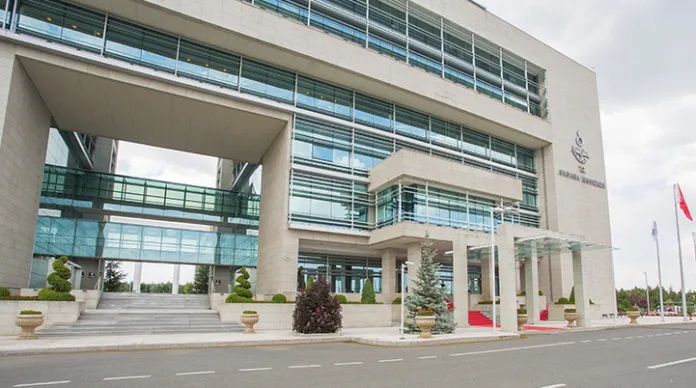
    A week after a decision issued by the European Court of Human Rights (ECtHR), Turkey’s top court has ruled that uploading correspondence onto the National Judicial Network Server (Ulusal Yargı Ağı Bilişim Sistemi, or UYAP) violated the right to respect for privacy and freedom of communication.

    According to a report by the Bianet news website, the Constitutional Court heard an individual application filed by Ümit Karaduman claiming that his rights, enshrined in Articles 20 and 22 of the Constitution, had been violated.

    The decision was published in the Official Gazette on Thursday.

    The ECtHR ruled on March 29 that Turkey violated the right to respect for private life of 14 inmates by uploading their incoming and outgoing correspondence onto UYAP.

    A central information system, UYAP covers all judicial institutions and other government departments that have been equipped with computers and given access to all legislation, jurisprudence and judicial records.

    “The Court found that the uploading of the correspondence of remand and convicted prisoners onto the UYAP server stemmed directly and specifically from an instruction issued by the Ministry of Justice on 10 October 2016 and reissued on 1 March 2017,” the Strasbourg judges said in the decision.

    Applicants Nuh Uzun and 13 other Turkish nationals were detained and incarcerated in various prisons following a coup attempt in July 2016. Some of them were subsequently released while others are still in jail. SCF

  • Asylum seekers in Germany speak about mistreatment in Turkish detention centers

    A group of Turkish asylum seekers on Monday spoke about the mistreatment they faced in Turkish detention centers during an event in the German town of Warendorf, the Bold Medya news website reported.

    The event took place at the Christ Church (Christuskirche) and was attended by German residents of the town. Journalist Tuncer Çetinkaya said he was kept in prison for two years for alleged links to the Gülen movement and criticizing Turkish President Recep Tayyip Erdoğan and his government’s policies.

    “I had several health problems in prison, and some developed after my imprisonment because they neglected to give me my medicine on time,” he said. “I suffered from prostate cancer and a hernia and was scheduled for surgery. So they prepared me for it, took me to the operating room and left me there for 10 hours waiting for the doctors and nurses, completely naked and handcuffed to the bed.”

    Çetinkaya worked for the now-closed Zaman daily. He was arrested on July 26, 2016 and sent to Antalya L-Type Prison in southern Turkey. He was accused of membership to an armed terrorist organization and sentenced to seven years, six months in prison.

    Turkish President Recep Tayyip Erdoğan has been targeting followers of the Gülen movement, inspired by Turkish Muslim cleric Fethullah Gülen, since the corruption investigations of December 17-25, 2013, which implicated then-prime minister Erdoğan, his family members and his inner circle.

    Dismissing the investigations as a Gülenist coup and conspiracy against his government, Erdoğan designated the movement as a terrorist organization and began to target its members. He intensified the crackdown on the movement following an abortive putsch in July 2016 that he accused Gülen of masterminding. Gülen and the movement strongly deny involvement in the coup attempt or any terrorist activity.

    Çetinkaya was released on April 24, 2018 pending the decision of the Supreme Court of Appeals. After his release, he fled to Germany.

    Turkey has a poor record on freedom of the press and was ranked 153rd out of 180 countries in the 2021 World Press Freedom Index.

    Former teacher Cengiz Sönmez said he was abruptly detained in the middle of the street one day as he was walking with his son. He found out at the police station that his wife had also been detained.

    “I was beaten and insulted at the police station,” said Sönmez. “Police officers would hang me out of the fourth floor window and threaten to drop me.”

    An engineer who wanted to stay anonymous said he was beaten so badly in detention that his eardrum was perforated. Police officers pushed him to the floor and stepped on him so he could barely breathe.

    His condition was so bad from the mistreatment that the police took him to the doctor; however, the doctor did not document the mistreatment.

    “I was in police detention for four days. They did not allow me to go to the toilet and the light was on 24 hours,” he said. “They poured water over me and tried to get me to sign a false confession. When I did not agree to this, I was stripped naked and threatened me with rape.”

    After the abortive putsch, ill-treatment and torture became widespread and systematic in Turkish detention centers. Lack of condemnation from higher officials and a readiness to cover up allegations rather than investigate them have resulted in widespread impunity for the security forces.

    A total of 319,587 people have been detained and 99,962 arrested in operations against supporters of the Gülen movement since the coup attempt, Turkey’s Interior Minister Süleyman Soylu said in November. SCF

  • Critical Turkish journalist living in exile in Sweden brutally attacked

    Ahmet Dönmez, a Turkish journalist critical of President Recep Tayyip Erdoğan’s ruling Justice and Development Party (AKP) who has been living in exile in Sweden, was attacked by two men in Stockholm, Turkish Minute reported, citing the Kronos news website.

    According to Kronos, Dönmez, known for his reports on mafia groups associated with Turkish government officials including President Recep Tayyip Erdoğan, lost consciousness after the attack, which took place in front of his 6-year-old daughter, and is currently in intensive care at a local Stockholm hospital.

    Dönmez had previously tweeted that he was receiving death threats from crime boss İhsan Hızarcı after saying in a Youtube video that Interior Minister Süleyman Soylu provided protection to a mob boss named Ayhan Bora Kaplan.

    Releasing a photo of the threats he received as WhatsApp messages, Dönmez said in a tweet on Feb. 19, “The Ankara mafia İhsan Hızarcı, who was mentioned in my last video, sent me this threatening message: ‘Don’t feel safe that you’re in Sweden, I’ll have your head cut off within 24 hours.’”

    Dönmez was a former Ankara correspondent for the Zaman daily, which was seized and shut down by the Turkish government in 2016 over links to the faith-based Gülen movement.

    The daily, which had the largest daily circulation — with more than 600,000 subscribers — in Turkey at the time, was confiscated by government officials in the aftermath of a rift between Erdoğan’s AKP government and the movement.

    Erdoğan has been targeting followers of the movement, which is inspired by the ideas and activism of Muslim cleric Fethullah Gülen, since the corruption investigations of December 17-25, 2013, implicating then-prime minister Erdoğan, his family members and inner circle.

    Dismissing the investigations as a Gülenist coup and conspiracy against his government, Erdoğan designated the movement as a terrorist organization and began to target its members. He locked up thousands, including many prosecutors, judges and police officers involved in the investigation.

    Erdoğan intensified the crackdown on the movement following a coup attempt on July 15, 2016 that he accused Gülen of masterminding. Gülen and the movement strongly deny involvement in the abortive putsch or any terrorist activity.

    Turkish journalists are often targeted and jailed for their journalistic activities.

    Last year in July, dissident journalist Erk Acarer, a columnist for the Birgün daily who lives in exile in Germany, was attacked “with fists and knives” in the courtyard of his apartment building in Berlin.

    Turkey is one of the world’s biggest jailers of professional journalists and ranked 153rd among 180 countries in terms of press freedom in 2021, according to Reporters Without Borders (RSF). SCF