Category: Politics

  • Journalist says 2016 coup attempt was carried out with knowledge of AKP gov’t


    Many believe the abortive putsch, which killed 251 people and wounded more than a thousand others, was a false flag aimed at entrenching the authoritarian rule of President Recep Tayyip Erdoğan by rooting out dissidents and eliminating powerful actors such as the military in his desire for absolute power.

    On the night of the abortive putsch, President Erdoğan immediately blamed the faith-based Gülen movement. The next morning, after announcing the coup had been put down, the Turkish government immediately started a wide-ranging purge of military officers, judges, police officers, teachers and other civil servants that ultimately led to the dismissal of more than 130,000 from their jobs.

    Çandar on Monday said in an interview with the T24 news website that he didn’t like discussing July 15 based on the narrative pushed by the Justice and Development Party (AKP) government.

    “If we were to discuss the theory that the Gülen movement led people to distance themselves from Islam by attacking the parliament with tanks and artillery on July 15, killing many people, then let’s first discuss whether what we were told about July 15 really the truth,” Çandar said.

    The journalist said it was “understandable” that there were elements of both the state and the Gülen movement involved in the events of July 15 since the movement had close ties to the government at the time.

    “However, I perceive it as an operation orchestrated by the government. … I believe that Erdoğan was aware of it,” he added.

    Referring to the civil servants purged in the wake of the coup attempt, Çandar said, “Their lives have been ruined. Are all these people now coup plotters? Were they aware of the coup, or would they have approved of it if asked? I’m not so sure.”

    The journalist further argued that the list of civil servants to be purged was already prepared before the attempted coup.

    “Think about it. A lot people die in İstanbul [on July 15]. … Early the [next] morning, a Saturday, hundreds of judges, prosecutors and members of the Constitutional Court are being arrested. … Clearly, there was a list. … There are many indications that this was a planned coup attempt,” Çandar said.

    He also questioned whether Adil Öksüz, the prime civilian suspect in the coup attempt, was actually “a prominent figure of the Gülen movement or a person placed in the movement by the state’s security system with instructions to carry out a failed coup.”

    Çandar, who left Turkey for Sweden in May 2016 upon the invitation of the Stockholm University Institute for Turkish Studies (SUITS) to work as a visiting scholar, returned to the country earlier this month from the French city of Nice where he was spending the winter.

    He has been nominated by the Green Left Party (YSP) from the predominantly Kurdish province of Diyarbakır, where it is almost certain that he will be elected.

    Erdoğan has been targeting followers of the Gülen movement, a faith-based group inspired by Turkish cleric Fethullah Gülen, since the corruption investigations of December 17-25, 2013, which implicated then-prime minister Erdoğan, his family members and his inner circle.

    Dismissing the investigations as a Gülenist coup and conspiracy against his government, Erdoğan designated the movement as a terrorist organization and began to target its members. He locked up thousands including many prosecutors, judges and police officers involved in the investigation as well as journalists who reported on them.

    Erdoğan intensified the crackdown on the movement following the coup attempt. Gülen and the movement strongly deny involvement in the abortive putsch or any terrorist activity.
  • Jailed Kurdish leader promises to work towards ending armed conflict with PKK

    Jailed Kurdish leader promises to work towards ending armed conflict with PKK


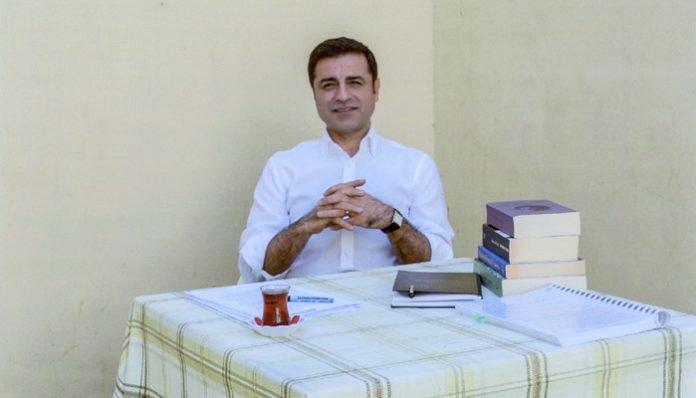
    Arrested on Nov. 4, 2016 on terrorism-related charges, Demirtaş has since then remained in prison despite two European Court of Human Rights (ECtHR) rulings in 2018 and 2020 that said Demirtaş was imprisoned for “political” reasons and not for “legal” reasons, ordering his “immediate release.”

    In a series of tweets Demirtaş accused Erdoğan of feeding on conflict and preventing efforts at peace. He also criticized the government’s crackdown on pro-Kurdish politicians, including imprisoning those who advocated for peace and appointing trustees to their municipalities.

    “We could have done this already, but Erdoğan imprisoned those who wanted peace, put them in isolation, tried to close down their parties, appointed trustees to their municipalities, fueled the conflict with provocations and tried to scare the people with the discourse of ‘terror’ to get votes. And they’re still doing this,” Demirtaş tweeted.

    Despite these challenges, Demirtaş said peace and tranquillity are possible. However, he warned of persistent provocations and the risk of bloodshed before upcoming elections.

    “We will be careful together and we will not be tricked. Please remember, we want peace and democracy. We want to live together equally and fraternally,” he said.

    Demirtaş also said the Green Left Party (YSP) would work towards achieving peace as its primary goal.

    The YSP is the party under whose banner the HDP decided to run in the parliamentary elections slated for May 14 in a bid to circumvent the risks that could emerge from its possible closure ahead of the elections.

    The HDP is facing a closure case on terrorism charges that was filed in March 2021 and could be concluded before the elections since the Constitutional Court, which is hearing the case, has rejected the HDP’s request to delay the verdict until after the elections.

    “Trust us, not the liars and frauds who provoke people for votes. We will win together, and we will surely win,” he said.

    Demirtaş has been in prison since 2016 on terrorism-related charges, which he denies. His imprisonment has been widely criticized by human rights organizations and Western governments, who see it as politically motivated. Turkishminute

  • Kılıçdaroğlu hints Erdoğan targeted him for Alevi identity after prayer rug incident


    Kılıçdaroğlu, leader of the Republican People’s Party (CHP) and the joint presidential candidate of an opposition bloc of six parties known as the Nation Alliance, is one of two main contenders in Turkey’s presidential election on May 14, with the other being the country’s current president, Erdoğan.

    A photo showing Kılıçdaroğlu stepping on a prayer rug with his shoes on recently triggered a debate in Turkey, with pro-government media outlets and ruling Justice and Development Party (AKP) figures targeting him for allegedly insulting religious values.

    The photo, taken during an iftar gathering on March 31 as Muslims observe the holy month of Ramadan, went viral on social media.

    The CHP leader apologized for the incident, stating he had not noticed the prayer rug on the floor due to the crowd and that the photo was being used as part of a defamation “operation” against him.

    Erdoğan took advantage of the situation, getting his rival booed by a crowd at an election rally in İstanbul last week.

    Following the development, Kılıçdaroğlu on Thursday implied in a tweet that his Alevi identity, which has also been an issue in the race, with some arguing that Turkey’s Sunni Muslims wouldn’t vote for him, was the real reason Erdoğan targeted him during the rally, using the prayer rug faux pas as an excuse.

    “Well, doesn’t Erdoğa know that this [defamation operation] will not work? He knows. [But] he’s aiming for something else. … Erdoğan, spill the beans. … Just say it and be done with it,” Kılıçdaroğlu said, referring to his Alevi identity.


    The CHP leader also underlined that they have said everything there is to say about the prayer rug incident and that “sincere” Muslims would understand him.

    The prayer rug incident has sparked a debate about the differences between secular and conservative lifestyles in Turkey, which Erdoğan has exploited for years to further polarize society.

    President Erdoğan, whose ruling AKP has its roots in political Islam, attracts frequent criticism for abusing people’s religious sensitivities to remain in power and to keep his voter base happy. Opinion polls show the AKP losing support amid serious financial problems in the country.

    Erdoğan’s 20-year rule as first as prime minister and then as president saw him champion the rights of conservative Muslims after decades of more secular rule.

    Kılıçdaroğlu has been trying to woo Erdoğan’s core supporters and attract some of the AKP’s vote by abandoning his party’s hard-line secularism and embracing a more moderate tone toward conservative Muslims. Turkishminute

  • Kurdish politician suffering from dementia fit to remain in prison: Turkey’s forensics council

    In yet another controversial report drafted by Turkey’s Council of Forensic Medicine (ATK), it was stated that a jailed Kurdish politician who is suffering from dementia is fit to remain in prison, according to the Mezopotamya news agency, which cited the politician’s lawyers.

    This was the third time the ATK had issued such a report for Aysel Tuğluk, who is currently held in a maximum-security prison in Kocaeli province.

    Tuğluk’s lawyers said in a statement on Thursday that they had filed an objection to the ATK report, which they said was biased and lacked evidence. The lawyers said statements by Tuğluk’s cellmates, family members who visit her in prison and an opinion presented by the Human Rights Foundation of Turkey (TİHV) on the condition of the Kurdish politician all show that she is not fit to remain in prison and cannot meet her daily needs alone.

    The lawyers said Tuğluk should be released from prison as soon as possible in order to prevent a deterioration of her condition.

    Earlier this year the court ordered that Tuğluk be observed by the ATK for a maximum three-week period. However, the ATK sent her back to prison after three days.

    As the number of sick prisoners dying in prison has increased, doubts about the credibility and independence of the council have grown since the institution is affiliated with the Ministry of Justice.

    Tuğluk was arrested on December 29, 2016, when she was deputy co-chair of the pro-Kurdish Peoples’ Democratic Party (HDP), along with seven other Kurdish opposition politicians. She was sentenced to 10 years in prison on charges of serving as an executive of a terrorist organization and taking orders from Abdullah Öcalan, the jailed leader of the outlawed Kurdistan Workers’ Party (PKK), an armed group listed as a terrorist organization by Turkey, the European Union and the US.

    Tuğluk has denied the accusations, saying she never called for violence and always sought democratic solutions to problems the Kurds faced.

    On September 5, 2021, her lawyers issued a written statement saying Tuğluk was sick and was denied access to proper healthcare in prison, without disclosing her illness. It was later revealed she was showing symptoms of dementia.

  • Greece says stops over 1,000 migrants from Turkey

    Greek Merchant Navy Minister Yannis Plakiotakis said Turkish smugglers had “tried to disembark” about 1,130 refugees on Greek islands in the last three days.

    Greek authorities have “turned back the smuggling boats in 24 separate incidents,” the minister told private radio station Real in an interview.

    The boats had tried to reach the islands of Chios, Kos, Lesbos, Rhodes and Samos, Plakiotakis’ ministry said in a statement.

    Greek coastguards said none of the boats entered Greek waters and that “all foreigners were rescued by Turkish marine authorities”.

    The Greek coastguard respected international law while taking “all appropriate measures for the effective protection of the maritime borders of Greece and the European Union,” it added.

    Aid groups and media frequently accuse Athens of organizing “illegal pushbacks” of migrants, allegations that Greece denies.

    In May, Greece said it prevented around 600 migrants from crossing into its waters from Turkey.

    A Greek migration ministry source said nearly 30 percent more asylum seekers had tried to come to Greece in the first four months of 2022 than in the same period last year.

    “Turkey continues to behave like a pirate state violating international law and endangering the lives of unfortunate people,” Plakiotakis said, accusing Ankara of turning a blind eye to smuggling networks.

  • Turkey says NATO summit ‘not the deadline’ for Finland, Sweden talks

    The comments from Turkish President Recep Tayyip Erdoğan’s top foreign policy adviser followed a round of urgent talks in Brussels that NATO leaders had hoped would pave the way for the Nordic states’ formal approval to join the bloc at the Madrid summit.

    Ankara has accused Finland and Sweden of providing a safe haven for outlawed Kurdish militants whose decades-long insurgency against the Turkish state has claimed tens of thousands of lives.

    Ankara has also demanded the two countries lift their weapons freezes on Turkey.

    Erdoğan’s foreign policy chief İbrahim Kalın reported no breakthrough at the Brussels talks.

    “The Madrid NATO summit is not the deadline, so our negotiations will continue,” Kalin told reporters.

    “The existence of terrorist organizations must end in those countries. That is what we expect both from Finland and Sweden.”

    NATO chief Jens Stoltenberg called the meeting “constructive” while conceding that Turkey’s “legitimate” concerns had still not been fully addressed.

    “Turkey’s has legitimate security concerns over terrorism that we need to address,” Stoltenberg said.

    “So we will continue our talks on Finland and Sweden’s applications for NATO membership, and I look forward to finding a way forward as soon as possible.”

    TurkishMinute

  • Dissenting judge in Khashoggi trial to quit profession after demotion

    Nimet Demir, head of the panel of the judges at the İstanbul 12th High Criminal Court, which in a controversial move in April decided to halt the murder trial in absentia of 26 suspects linked to the killing of the journalist and transfer it to Riyadh, was among the more than 5,000 judges and prosecutors replaced by Turkey’s Board of Judges and Prosecutors (HSK) under a summer decree.

    Demir submitted a dissenting opinion to the court’s decision, which was labelled as politically motivated, angered rights groups and dashed hopes about justice being served in the murder of Khashoggi.

    The 59-year-old journalist was killed inside the Saudi Consulate General in İstanbul on Oct. 2, 2018 in a gruesome murder that shocked the world. Khashoggi had gone to the consulate to get papers for his upcoming marriage to his Turkish fiancée.

    Demir was appointed as a judge to the southern province of Kahramanmaraş under the HSK’s summer decree, interpreted as a demotion for an experienced judge like him.

    Journalist İsmail Saymaz from the pro-opposition Halk TV news website wrote on Monday that he talked to judge Demir on the phone on Monday morning and said the judge thinks his transfer is related to his dissenting opinion in the Khashoggi case.

    Demir said he was not expecting such a move and was planning to submit his resignation in a sign of protest.

    “I am planning to quit. It [Kahramanmaraş] is not a place for senior judges like me,” he said.

    The judge said he was trying to act in line with democratic values, human rights and freedoms in expressing a dissenting view and has faced a sanction for his attitude.

    “My attitude is the kind that will always be condemned in authoritarian structures,” he said, adding that he is talking to his family about his resignation and would soon submit a letter to that effect.

    Exiled Turkish journalist Can Dündar hailed judge Demir’s decision to quit the legal profession after his transfer, saying in a tweet that when the rule of law is reestablished in Turkey, people like Demir will be remembered as the guardians of justice.

    The HSK replaced 5,426 judges and prosecutors in its summer decree.

    Among them was another dissenting judge in in the Gezi Park trial.

    Judge Kürşad Bektaş, who was on the panel of judges in the Gezi Park trial heard by a high criminal court in İstanbul, has been appointed as a prosecutor in a small district in central province of Tokat. Bektaş recommended the acquittal of the eight defendants who included prominent businessman and civil society leader Osman Kavala.

    The İstanbul court where Bektaş used to serve on April 25 sentenced Kavala, who had been behind bars without a conviction for over four years, to aggravated life on charges of “attempting to topple the government,” while sentencing seven other defendants to 18 years each on charges of aiding the attempt due to their alleged role in the anti-government Gezi Park protests of 2013.

    The ruling sparked international condemnation as well as protests across Turkey for being politically motivated.

    Bektaş, who submitted a dissenting opinion to the court’s ruling, said there was no evidence against the defendants except for some wiretaps that were conducted illegally. He said there was not sufficient evidence against the defendants for a conviction; hence, they should be acquitted of the charges.

    The Turkish government is being widely criticized for taking the judiciary under its control and imposing pressure on its members to make politically motivated decisions. The government has removed thousands of judges and prosecutors from their posts on coup charges since a failed coup attempt on July 15, 2016.

    TurkishMinute

  • Saudi Arabia lifts travel restrictions to Turkey amid thaw in relations

    The Saudi Interior Ministry on Monday lifted the Covid-19 travel restrictions it had imposed on India, Ethiopia, Turkey and Vietnam.

    Travel to Turkey and several other countries was prohibited for Saudi nationals during the Covid-19 health emergency, with the threat of a three-year ban on foreign travel for violators. The decision coincided with a period of particularly tense relations between the two regional powers.

    The Saudi ministry’s decision comes ahead of a visit by Crown Prince Mohammed bin Salman to Turkey on June 22 as Ankara and Riyadh move on from the 2018 murder of journalist Jamal Khashoggi.

    It will be Prince Mohammed’s first visit to Turkey since the brutal killing of Khashoggi inside the Saudi consulate in İstanbul, which shocked the world and dealt a heavy blow to ties between the regional rivals.

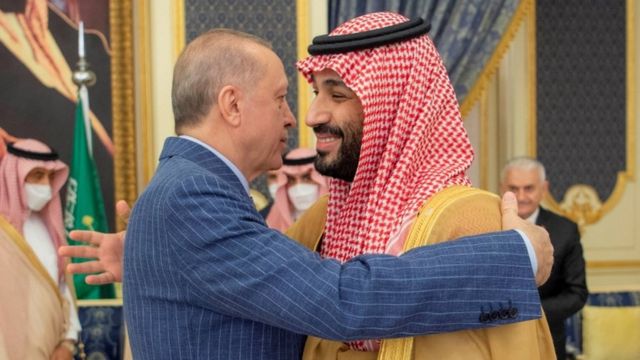
    Turkish President Recep Tayyip Erdoğan had already paid a visit to Saudi Arabia in late April, where he met with the prince before traveling to Mecca.

    Saudi agents killed and dismembered Khashoggi, an insider turned critic, in the kingdom’s İstanbul consulate in October 2018. His remains have never been found.

    Erdoğan previously said the “highest levels” of the Saudi government ordered the killing and Turkey angered the Saudis by vigorously pursuing the case, opening an investigation and briefing international media about the lurid details of the murder.

    Turkey already had strained relations with Saudi Arabia because of its support for Qatar during the Riyadh-led blockade on the Gulf state, but relations were frozen for three years after Khashoggi’s killing.

    Saudi Arabia responded at the time with an unofficial boycott of Turkish imports, putting pressure on Turkey’s economy.

    Now with high inflation and a cost-of-living crisis a year before a presidential election, Erdoğan is seeking backing from Gulf countries.

    Before Covid-19, Turkey was a favored tourism destination for many Saudis, who viewed it as a relatively affordable and culturally familiar vacation spot. Nearly 750,000 Saudis visited Turkey in 2018, despite the strained diplomatic relations, according to Bloomberg.

    TurkishMinute

  • Saudi crown prince to visit Turkey on June 22: Turkish official

    Saudi crown prince to visit Turkey on June 22: Turkish official

    It is Prince Mohammed’s first visit to Turkey since the brutal killing of Khashoggi inside the Saudi consulate in İstanbul, which shocked the world and dealt a heavy blow to ties between the regional rivals.

    The details of the visit will be announced “over the weekend”, the official said.

    The two countries will sign several agreements during the trip, which is expected to be in the capital Ankara, but the location is yet to be confirmed, the official added.

    Turkish President Recep Tayyip Erdoğan had already paid a visit to Saudi Arabia in late April, where he met the prince before traveling to Mecca.

    The pair “reviewed the Saudi-Turkish relations and ways to develop them in all fields”, Saudi state news agency SPA said at the time.

    Saudi agents killed and dismembered Khashoggi, an insider turned critic, in the kingdom’s İstanbul consulate in October 2018. His remains have never been found.

    Erdoğan previously said the “highest levels” of the Saudi government ordered the killing and Turkey angered the Saudis by vigorously pursuing the case, opening an investigation and briefing international media about the lurid details of the murder.

    Turkey already had strained relations with Saudi Arabia because of its support to Qatar during the Riyadh-led blockade on the Gulf state but relations were frozen for three years after Khashoggi’s killing.

    Saudi Arabia responded at the time with an unofficial boycott of Turkish imports, putting pressure on Turkey’s economy.

    Now with high inflation and a cost-of-living crisis a year before a presidential election, Erdoğan is seeking backing from Gulf countries.

    TurkishMinute

  • HDP lawmaker submits parliamentary question regarding detention of 21 journalists in SE Turkey

    Meral Danış Beştaş from the Peoples’ Democratic Party (HDP) on Thursday submitted a parliamentary question regarding the detention of 21 journalists in southeastern Diyarbakır province, the Stockholm Center for Freedom reported, citing the Bianet news website.

    Addressing the Ministry of Justice, Beştaş said there was a confidentiality order regarding the investigations and demanded to know why the journalists were detained.

    Turkish authorities detained 21 Kurdish journalists on Wednesday. The detainees worked for Kurdish news outlets JinNews and the Mezopotamya news agency (MA). Among those who were detained were MA’s Editor-in-Chief Aziz Oruç, JinNews News Director Safiye Alagaş and JinNews Editor-in-Chief Gülşen Koçuk.

    The journalists are currently in custody at Diyarbakır police headquarters’ counterterrorism division, where they are reportedly being kept in one-person cells.

    The journalists’ lawyer Resul Temur contacted the prosecutor to find out why they were detained and to see his clients. However, the prosecutor said the investigations were still underway and that he was reluctant to disclose the reason for the detentions. He only said the journalists were detained for their journalism activities and servicing news for foreign television stations.

    Opposition politicians, journalists and activists expressed outrage over the detentions, saying it was a huge blow to freedom of the press. At a press conference in eastern Turkey’s Van province, representatives for the Human Rights Foundation (IHD) said the journalists were punished for their journalistic work.

    “The police raided the homes and offices of these journalists as if they were terrorists,” they said. “They were made to wait in handcuffs for hours while the police conducted the searches.”

    They added that the independent press would never stop telling the public the truth. “Independent journalists will not give in to political pressure and violence,” they said.

    Journalists in southern Mersin province also said they would not give in to political pressure and supported their detained colleagues. At a press briefing they added that censorship had become common in Turkey but that they would cover the news with the utmost transparency.

    The Turkish Journalists’ Association (TGC) said the detention of journalists was unacceptable. “The government is trying to monopolize the press,” they said. “They want journalists to cover the news according to the government agenda. But a country where independent media does not exist cannot be democratic.”

    The TGC said the government urgently needed to stop referring to government critics as terrorists and their journalistic work as terrorism. Moreover, they demanded that all detained and arrested journalists be immediately released.

    Turkey is one of the world’s biggest jailers of professional journalists and was ranked 153rd among 180 countries in terms of press freedom in 2021, according to Reporters Without Borders (RSF).

    Turkish journalists are often targeted and jailed for their journalistic activities.

    TurkishMinute