Category: Politics

  • Motherless children left to care of relatives after father sent to prison over Gülen links

    Two motherless children aged 7 and 2 were left to the care of their relatives in different cities after their father was sent to prison last Thursday to serve a terrorism-related sentence due to his alleged ties to the Gülen movement, Bold Medya news website reported.

    Muhammed Hanefi Aksoy was working at a student dormitory affiliated with the movement before it was shut down in 2016. He was sentenced to seven years, six months in prison on conviction of membership in a terrorist organization for working at a Gülen-affiliated institution, having an account at the now-closed Bank Asya, one of Turkey’s largest commercial banks at the time, and using the ByLock encrypted messaging app.

    His wife Nagihan Aksoy died in September in a traffic accident. She was a former teacher dismissed from her job by an emergency decree due to her alleged links to the Gülen movement. Two-year-old Fatih is currently staying with his uncle in Yalova province, and Hümeyra is with her aunt in Nevşehir province, 700 kilometers away. Their father is in a prison in İzmir.

    Turkey’s Justice and Development Party (AKP) government launched a war against the Gülen movement, a worldwide civic initiative inspired by the ideas of Muslim cleric Fethullah Gülen, after the corruption investigations of December 17-25, 2013 that implicated then-prime minister and current President Recep Tayyip Erdoğan’s family members and inner circle.

    Dismissing the investigations as a Gülenist coup and conspiracy, the AKP government designated the movement as a terrorist organization and began to target its members. The government intensified the crackdown on the movement following a coup attempt on July 15, 2016 that they accused Gülen of masterminding. Gülen and the movement strongly deny involvement in the abortive putsch or any terrorist activity.

    Turkey considers ByLock, once available in Google Play and Apple’s App Store, a secret tool of communication among supporters of the faith-based Gülen movement, leading to the arrest of thousands who were using it. The UN Human Rights Council’s Working Group on Arbitrary Detention stated in October 2018 that detention, arrest and conviction based on ByLock use in Turkey violated of Articles 19, 21 and 22 of the International Covenant on Civil and Political Rights.

    Following the abortive putsch, the Turkish government declared a state of emergency and carried out a massive purge of state institutions under the pretext of an anti-coup fight. More than 130,000 public servants were summarily removed from their jobs for alleged membership in or relationships with “terrorist organizations” by emergency decree-laws subject to neither judicial nor parliamentary scrutiny.

    A total of 319,587 people have been detained and 99,962 arrested in operations against supporters of the Gülen movement since the coup attempt, Turkey’s Interior Minister Süleyman Soylu said in November. SCF
  • Boğaziçi University academic says he was fired over a tweet

    Can Candan, a former faculty member at İstanbul’s Boğaziçi University and a documentary filmmaker, has said he was informed that his dismissal from the university in July was due to an administrative investigation into one of his tweets, Turkish Minute reported.

    Candan revealed in a series of tweets late Tuesday that he received a notice from the university more than five months after his dismissal saying he was fired due to an administrative investigation into a tweet of his in which he quoted Erkan Baş, the chairman of the Workers’ Party of Turkey (TİP).

    According to the media reports, the tweet quoted Baş as saying, “Is there one person who would recognize you if the AKP [ruling Justice and Development Party] and its accomplice, Melih [Bulu], hadn’t stood behind you?”

    Baş’s remarks were directed at Prof. Dr. Naci İnci, the then-vice rector of Boğaziçi University who replaced Melih Bulu as acting rector in July. The TİP leader was criticizing İnci due to his cancelation of a course in May taught by lawyer-academic Feyzi Erçin, who had been giving classes at Boğaziçi for eight years.

    Candan said the university administration summoned him to give his defense as part of the investigation on Dec. 29, adding that he informed them via a written response that he would not be coming to their office at the specified time since the investigation he was facing was “against procedure and the law.”

    “They are now trying to conduct an investigation that they didn’t conduct and conclude [when they should have] five-and-a-half months ago but which they cited as the reason for my unjust and unlawful dismissal. Why?” Candan said.

    The former Boğaziçi academic explained that it was because the court wanted to see the documents for the investigation launched into him as part of a lawsuit he filed against the rector’s office in August.

    Candan demanded an injunction and annulment of his dismissal by İnci in a lawsuit that also includes the left-wing Education and Science Workers’ Union (Eğitim-Sen), of which Candan is a member, as a complainant.

    A vocal supporter of the resistance against appointed rectors at Boğaziçi, where he had been a lecturer since 2007, Candan was fired by İnci, who was appointed acting rector after the dismissal of Bulu.

    A prolonged series of protests broke out at Boğaziçi University after President Recep Tayyip Erdoğan appointed Bulu, a founding member of the ruling AKP’s Sarıyer district branch and former deputy chairman of the AKP’s İstanbul provincial chapter, as rector in early January.

    Following the dismissal of Bulu in July, İnci was appointed acting rector despite a 95 percent disapproval rating he received in polls held among the university community to determine possible rector candidates.

    Although 17 candidates emerged with high rates of approval, the president appointed İnci, again prompting outrage among academics and students. SCF


  • Leader of right-wing party warns Turkish citizens of ‘Syrian threat’ in anti-migrant social media post


    Ümit Özdağ, leader of the newly established far-right Victory Party (ZP), warned Turkish citizens of a “Syrian threat” in a video shared on Twitter on Monday, sparking outrage among academics, activists and politicians, the Stockholm Center for Freedom reported.

    In the video Özdağ visited a shop run by Syrian owners and asked them if they had a permit for the shop. He then  asked them if they ever thought about returning to Syria. When the owner said he did not want to go back, Özdağ left the shop.

    Sharing the video on Twitter, Özdağ said there were 900,000 shops in Turkey owned by Syrians, which constituted a threat to Turkey. “This man came seven years ago and can barely speak Turkish,” he said. “He has acquired Turkish citizenship and even a gun license. He was able to open a shop, and there are thousands of Syrians like him.”

    Mustafa Yeneroğlu, a deputy from the Democracy and Progress Party (DEVA), said the real threat was xenophobic people like Özdağ. “This man is targeting ordinary people who are just getting on with their lives,” he said. “What is even more dangerous is that the mainstream media allows such people a place on their platforms.”

    Nesi Altaras, the editor of Avlaremoz, an online magazine focusing on topics concerning Turkey’s minorities, said Özdağ had no right asking the shop owners about permits. “Migrants are so intimidated by the increasing xenophobia, they can’t even protest this ridiculous request by Özdağ,” he said. “Özdağ is behaving as if he is superior to the Syrians and has the right to do anything.”

    Altaras drew attention to the 12,000 people who had liked Özdağ’s video and said they were potential perpetrators of hate crimes.

    Journalist Erem Şentürk criticized Özdağ and said he was a right-wing populist in search of new victims.

    This is not the first incident in which Özdağ has targeted migrants. In November he  started a signature campaign to throw Syrian and Afghan refugees out of Turkey. Sharing a link to the campaign on social media, Özdağ urged people to participate to curb the “migrant invasion.”

    Refugees in Turkey have been increasingly targeted by hate speech and hate crimes and are blamed for many of Turkey’s social and economic troubles.

    Turkish media including both pro-government and opposition outlets have fueled and exploited the flames of hatred against people who fled their countries and sought refuge in Turkey.

    Last week news of three Syrian men being burned to death in western Izmir province emerged.

    A Turkish man named Kemal Korkmaz poured gasoline over the Syrians, identified as Mamoun al-Nabhan, 23; Ahmed al-Ali, 21; and Muhammed el-Bish, 17, while they were asleep and set them on fire on Nov. 16. The perpetrator admitted in his testimony to a prosecutor to have committed a hate crime.

    Prominent public figures shared their outrage on social media and said the hatred of refugees and migrants had come to a point where they were being set on fire. Some people pointed out that hate crimes had become so normalized in the country that nobody was even talking about the terrible incident.

    According to the latest figures provided by Interior Minister Süleyman Soylu on Nov. 22, Turkey is home to a total of 4,038,857 refugees from around the world. Speaking to parliament’s Planning and Budget Committee, Soylu said 3,731,028 of these were Syrian refugees who are residing in Turkey under temporary protection status. The number of refugees with international protection status is 307,829.

  • İstanbul mayor defiant as interior ministry accuses his staff of terrorist links

    A defiant İstanbul mayor on Monday called on the country’s interior minister to resign in the wake of an investigation launched by the ministry into municipal employees over alleged terrorism links, Turkish Minute reported.

    The Turkish Interior Ministry on Sunday claimed that 557 municipal personnel hired by İstanbul Mayor Ekrem İmamoğlu had links to “terrorist groups,” including the Kurdistan Workers’ Party, (PKK) the Marxist–Leninist Communist Party, (MLKP) and the Revolutionary People’s Liberation Party/Front (DHKP/C).

    “A special investigation has been launched by our ministry so that all aspects of the issue can be looked into,” the Interior Ministry said in a statement.

    İstanbul Mayor Ekrem İmamoğlu, who spoke at a news conference at his Republican People’s Party (CHP) headquarters in Ankara along with 11 other CHP mayors, said one should be careful when speaking about an institution that has more than 86,000 employees, adding that if terrorists can walk free and find jobs in public institutions, Interior Minister Süleyman Soylu should resign due to his failure to take action.

    “If you detect anyone [who is a terrorist], inform us, and we can do what needs to be done,” İmamoğlu said.

    On Sunday the İstanbul mayor said those attacking his municipality would see only greater unity in İstanbul, adding that the municipality and its workers will claim their rights in court.

    Minister Soylu, however, insisted that the investigation was not political.

    “We have no business with anyone’s municipality, but we do have business with the fight against terrorism, and for this we have to keep Turkey on the alert,” Soylu said on Monday.

    The ministry also claimed that some people reportedly had links to US-based preacher Fethullah Gülen and the movement inspired by him. Turkish President Recep Tayyip Erdoğan has been accusing the Gülen movement of masterminding a failed coup attempt in 2016 and terrorism. The movement denies any involvement in the coup bid or any terrorist activity.

    The investigation came after Erdoğan also accused the Istanbul mayor of hiring people with terrorist links. “They recruited 45,000 people, among whom are some affiliated with terrorist organizations,” Erdoğan said on Sunday at a party meeting.

    Mayor İmamoğlu has been one of the most frequently targeted figures by Erdoğan and his government since the 2019 local elections saw the ruling party defeated in several big cities.

    İmamoğlu, the CHP candidate in the elections who initially won in local polls on March 31 by a narrow margin against ruling party candidate Binali Yıldırım, scored a much larger victory during a re-run on June 23.

    İmamoglu has since become one of the most popular opposition politicians in the country. Many see him as the opposition’s likely candidate for the presidency against Erdoğan in the next elections.

    According to a Metropoll survey conducted in December, Erdoğan and İmamoğlu would receive 36.6 percent and 48.7 percent of the vote, respectively, if a presidential election were to be held today. SCF

  • Woman dies of cancer without being able to see husband imprisoned on Gülen links

    A woman whose husband was imprisoned on conviction of alleged links to the Gülen movement succumbed to cancer on Monday without being able to see her husband one last time, the Tr724 news website reported.

    Leyla Kurt suffered from breast cancer and she was admitted to the intensive care unit last week after her health deteriorated. Her husband, Yusuf Kurt, has been in prison for five years, and despite being eligible for parole, he was not released in time to see his wife.

    Yusuf Kurt was arrested on August 16, 2016 and sentenced to seven years, nine months in prison. He was accused of working at a private tutoring center affiliated with the movement.

    Turkey’s Justice and Development Party (AKP) government launched a war against the Gülen movement, a worldwide civic initiative inspired by the ideas of Muslim cleric Fethullah Gülen, after the corruption investigations of December 17-25, 2013 that implicated then-prime minister and current President Recep Tayyip Erdoğan’s family members and inner circle.

    Dismissing the investigations as a Gülenist coup and conspiracy, the AKP government designated the movement as a terrorist organization and began to target its members. The government intensified the crackdown following a coup attempt on July 15, 2016 that they accused Gülen of masterminding. Gülen and the movement strongly deny involvement in the abortive putsch or any terrorist activity.

    According to the Turkish Penal Code, people convicted of membership in a terrorist organization are eligible for parole after serving two-thirds of their sentence.

    Leyla Kurt was diagnosed with cancer five months after her husband’s arrest. Although she underwent surgery and treatment, she was unable to recover.

    In a previous interview Leyla Kurt had said she was worried about her three children, who were trying to cope with their mother’s sickness and father’s incarceration. “My son has dropped out of school because we could not pay the tuition, and my youngest daughter is using antidepressants to cope,” she said. “My children have been experiencing psychological problems, but we are trying to stay strong.”

    Following the abortive putsch, the Turkish government declared a state of emergency and carried out a massive purge of state institutions under the pretext of an anti-coup fight. A total of 319,587 people have been detained and 99,962 arrested in operations against supporters of the Gülen movement since the coup attempt, Turkey’s Interior Minister Süleyman Soylu said on November 22.

    Turkey’s post-coup purge has taken a huge toll on human life, and many of those who were imprisoned have not been able to see their loved-ones a final time. Kübra Kuzan, a five-year-old girl, died of cancer in February while her father was in prison for affiliation with the movement.

    Selman Çalışkan, 7, died last September from cancer without being able to see his father, a former teacher jailed in 2017.

    Ahmet Burhan Ataç, 8, was another child who died from cancer without being able to see his imprisoned father. SCF

  • Turkey freezes assets of 770 people, including journalists and rights activists, over alleged terrorism links

    Turkey has frozen the assets of 770 people including some journalists in exile and an organization on the grounds of terrorism financing, Turkish Minute reported, citing a ruling bearing the signatures of Treasury and Finance Minister Nureddin Nebati and Interior Minister Süleyman Soylu that was published in the Official Gazette on Friday.

    The ruling includes 454 people – among them journalists Adem Yavuz Arslan, Bülent Keneş, Cevheri Güven, Said Sefa, Sevgi Akarçeşme, Sevinç Özarslan, Mehmet Efe Çaman and Tarık Toros — and the Chicago-based Niagara Foundation, which is suspected of financing the Gülen movement, inspired by ideas and activism of Islamic preacher Fethullah Gülen.

    “According to an arbitrary decision of the Turkish regime … the assets of 770 people in TR have been frozen. My name is also on the list. Turkey acts like the mafia. The only ‘crime’ (!) I have committed is my critical voice and being a dissident,” journalist Çaman tweeted in English.

    Sharing two photos, one showing a court decision about her and the other the ruling to freeze assets, Akarçeşme said: “[They gave] the same decisions in 2016 and 2021. [They’re like] thieves who forget what they stole and rob the same house again… The thing they know best…”

    Akarçeşme was referring to the December 17-25 bribery and corruption investigations that shook the country back in 2013. The probe implicated, among others, the family members of four cabinet ministers as well as the children of the then-prime minister and current President Recep Tayyip Erdoğan.

    Erdoğan launched a war against the Gülen movement after the corruption investigations of 2013. Dismissing the investigations as a Gülenist coup and conspiracy, he locked up thousands, including many prosecutors, judges and police officers involved in the investigation, as well as journalists who reported on them.

    Erdoğan intensified the crackdown following a coup attempt on July 15, 2016 that he accused Gülen of masterminding. Gülen and the movement strongly deny involvement in the abortive putsch or any terrorist activity.

    Since the coup attempt, a total of 319,587 people have been detained and 99,962 arrested over alleged links to the movement as part of a massive purge launched under the pretext of an anti-coup fight, while the government also removed more than 130,000 civil servants from their jobs on alleged Gülen links, according to the latest Interior Ministry data.

    The names of Adil Öksüz, a leading suspect in Turkey’s failed coup attempt, and Nurettin Demirtaş, brother of imprisoned Kurdish leader Selahattin Demirtaş, the former co-chair of the pro-Kurdish Peoples’ Democratic Party (HDP), were also on the list, according to local media reports.

    The ruling also listed the names of 108 people accused of links to the outlawed Kurdistan Workers’ Party (PKK) and its umbrella organization the Kurdistan Communities Union (KCK), and 119 people accused of links to “terror organizations that abuse religion,” including the Islamic State in Iraq and the Levant (ISIL).

    The assets of 89 individuals accused of links to the leftist organizations, mainly the Revolutionary People’s Liberation Party/Front (DHKP/C) and the Marxist-Leninist Communist Party (MLKP), were also frozen, according to the decision.

    The assets of 770 individuals and the Niagara Foundation would be frozen based on the fact that they “engaged in acts mentioned in Articles 3 and 4 of Law No. 6415, in accordance with subsection 3 of Article 7 of the same law,” the decision said, in reference to “providing or collecting funds” for terror-related acts.

    People whose assets are frozen are allowed to file a lawsuit at the Ankara High Criminal Court, the ruling also noted. SCF

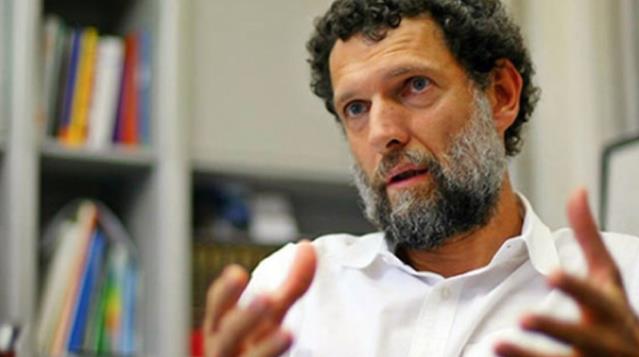
  • Turkish court rules to keep businessman Kavala in prison once again

    Turkish court rules to keep businessman Kavala in prison once again

    A Turkish court ruled to keep renowned Turkish philanthropist and rights advocate Osman Kavala in prison at his latest court hearing, state-run Anadolu news agency reported.

    Kavala is accused of orchestrating the Gezi Park mass protests in the summer of 2013 in a trial described as absurd by rights groups.

    Prosecutors claim the Gezi protests were organized from outside the country to “bring Turkey to its knees.”

    Kavala has been in jail since November 2017 and has become a symbol of what activists say is the deliberate targeting of civil society.

    He was among tens of thousands of people rounded up after an attempted coup in July 2016.

    A respected figure in intellectual circles, Kavala is the chairman of the Anatolian Culture Foundation, which seeks to bridge ethnic and regional divides through art, including with neighboring Armenia, with which Turkey has no diplomatic ties. TurkeyPurge

  • Greek police rescue Turkish migrants in danger of freezing to death: report

    The Greek police rescued at least 10 Turkish asylum seekers, who crossed the Evros River from Turkey to Greece and were in danger of freezing to death, after the group made urgent calls for help.

    Following the pleas of the migrants, which circulated on social media and were amplified by Turkish journalists in exile, the stranded group was reportedly rescued by the Greek officers. They are currently at a police station in Soufli, a town in the Evros regional unit, Greece.

    The asylum seekers are believed to have fled Turkey in an attempt to avoid persecution over alleged links to the Turkey’s Gulen group, which the government accuses of masterminding a coup attempt in 2016. The group denies any involvement.

    According to a statement from Turkish Interior Minister Süleyman Soylu on February 20, a total of 622,646 people have been the subject of investigation and 301,932 have been detained, while 96,000 others have been jailed due to alleged links to the Gülen group since the failed coup. The minister said there are currently 25,467 people in Turkey’s prisons who were jailed on alleged links to the movement. TurkeyPurge 

  • Turkey detains, arrests people for Gülen links on basis of scant evidence: US report

    Turkey’s Justice and Development Party (AKP) government continues to detain and arrest Turks over alleged links to the Gülen movement, “often on the basis of scant evidence and minimal due process,” the US Department of State said in the Turkey section of its  “Country Reports on Terrorism 2020,” Turkish Minute reported.

    According to the report, titled “Country Reports on Terrorism 2020: Turkey,” the AKP government labeled the movement of “self-exiled cleric and political figure Fethullah Gülen” as “the Fethullah Terrorist Organization (FETO),” in the aftermath of the July 15, 2016 coup attempt, while it “is not a designated terrorist organization in the United States.”

    “The Turkish government continues to detain and arrest Turkish citizens as well as foreign citizens residing in Turkey, including locally employed staff at the U.S. Mission to Turkey, for alleged FETO or terrorism-related links, often on the basis of scant evidence and minimal due process,” the report said.

    The AKP government also continued to dismiss military, security and civil servants from public office in 2020, having dismissed or suspended more than 125,000 civil servants from public office, arrested more than 96,000 citizens and closed more than 1,500 NGOs for alleged FETO links, since the failed coup, according to the report.

    Turkish President Recep Tayyip Erdoğan has been targeting followers of the Gülen movement since the corruption investigations of December 17-25, 2013, which implicated then-prime minister Erdoğan, his family members and his inner circle.

    Dismissing the investigations as a Gülenist coup and conspiracy against his government, Erdoğan designated the movement as a terrorist organization and began to target its members. He intensified the crackdown on the movement following the abortive putsch in 2016 that he alleged Gülen to have orchestrated, an accusation strongly denied by the cleric as well as the group.

    The report also said Turkey has a broad definition of terrorism, including so-called crimes against the constitutional order and internal and external security of the state, which is regularly used by the government to criminalize the exercise of freedom of expression and peaceful assembly.

    Citing data from the Turkish Interior Ministry, the report said the government examined 14,186 social media accounts and took legal action against more than 6,743 social media users whom it accused of “propagandizing or promoting terror organizations, inciting persons to enmity and hostility, or insulting state institutions.”

    “Legal actions taken by Turkey against the accused included a mix of charges related to terrorism or other criminal activity under Turkish law,” it added.

    It was also stated in the report that politically motivated detentions and arrests of individuals in Turkey, including journalists, human rights activists, lawyers and politicians accused of supporting or aiding the Kurdistan Workers’ Party (PKK), continued in 2020.

    The outlawed PKK, which has been waging a bloody war in Turkey’s Southeast since 1984, is listed as a terrorist organization by Turkey, the US and the EU.

    The report further said Turkey was “a source and transit country” for foreign terrorist fighters seeking to join the Islamic State in Iraq and Syria (ISIS) and other terrorist groups fighting in Syria and Iraq as well as for foreign terrorist fighters who seek to depart Syria and Iraq.

    “Turkey continues its efforts to defeat terrorist organizations both inside and outside its borders, including the PKK, the Revolutionary People’s Liberation Party/Front, and ISIS. Turkey is an active contributor in international counterterrorism fora, including the GCTF [Global Counterterrorism Forum] and the Defeat-ISIS Coalition,” the Department of State said.

    “From 2015 until December, Turkey deported 8,143 individuals for suspected terrorism ties, with Turkey’s ‘banned from entry’ list reportedly containing around 100,000 names,” the report said, citing interior ministry data, and adding that Turkish authorities had detained 2,343 suspected ISIS supporters for questioning and pressed charges against 333 of them.

    “Turkish press alleged that one suspect, Mahmut Ozden, detained in August, was the ISIS emir for Turkey; he has reportedly been detained in Turkey at least four previous times,” the department further said.

    “The PKK continues to conduct terrorist attacks in Turkey and against Turkish interests outside of Turkey including by taking hostages,” the report said, with 35 civilians, 41 security force members and 265 PKK militants having been killed in eastern and southeastern provinces in PKK-related clashes this year, according to the data from the International Crisis Group.

    Meanwhile, Turkish Foreign Ministry spokesman Tanju Bilgiç criticized the report in a written statement on Friday, saying that allegations regarding the disproportionate and groundless restriction of rights and freedoms in Turkey by way of the broad definition of terrorism were “baseless” and “unacceptable.” SCF

  • Turkish watchdog fines Netflix and TV stations for gov’t criticism, ‘immoral’ content

    Turkey’s broadcasting watchdog, the Radio and Television Supreme Council (RTÜK), has imposed fines on digital platforms Netflix and local streaming application Exxen in addition to pro-opposition Halk TV, Fox TV and TELE1 due to their “immoral” and anti-government broadcasting, Turkish Minute reported on Wednesday.

    Netflix was fined on the grounds that a Spanish movie titled “Donde Caben Dos” (More the Merrier) streaming on the platform was “based on a fiction in which homosexuality, incest and couple swapping were predominantly featured,” a situation characterized by the council as damaging to public morals.

    RTÜK also ordered Netflix to remove the movie from its catalog of content offered to viewers in Turkey, according to local media reports.

    Local streaming service Exxen was fined due to the use of “a large number of swear words and slang words containing sexist elements and references to family members” in an episode of a talk show called “Konuşanlar,” Turkish media reports said, adding that the platform was also ordered to remove the episode from its content.

    Local media reports also said Fox TV, Halk TV and TELE1 were fined due to a series called “Yasak Elma,” political debate programs “Açıkça” and “İki Yorum,” and “Demokrasi Arenası,” respectively.

    İlhan Taşçı and Okan Konuralp, RTÜK members from the main opposition Republican People’s Party (CHP), criticized the decisions for violating freedom of expression and thought.

    Underlining that he voted against the board’s decisions on Exxen and Netflix as well as those on the TV channels, Konuralp said: “RTÜK fined TELE1 because CHP group deputy chairman Engin Altay called President Recep Tayyip Erdoğan a ‘dictator’ [during a program]. However, aside from discussions about whether using the word ‘dictator’ is a crime or not, Altay’s words were [uttered] within the scope of [his] parliamentary immunity.”

    Taşçı said RTÜK imposed a TL 210,000 ($13,883) fine on Halk TV because of the criticism made during programs regarding Devlet Bahçeli, the far-right leader of the Nationalist Movement Party (MHP) and Erdoğan’s election ally, and Ali Erbaş, head of Turkey’s Religious Affairs Directorate.

    The Justice and Development Party (AKP) government shuttered 60 TV and radio channels by decree during a state of emergency imposed after an abortive putsch in July 2016.

    The government has also played an active role in the takeover of big media outlets since 2007 by companies it considers friendly. Under new ownership, the media outlets have tailored their coverage to avoid criticism of the government, and in some cases, acted as direct mouthpieces for the presidency.

    RTÜK has been accused of contributing to increasing censorship in the country by imposing punitive and disproportionate sanctions on independent television and radio stations critical of the government.

    According to Reporters Without Borders (RSF), 85 percent of the national media in Turkey is owned by pro-government businessmen and toe the official line. SCF