Category: Politics

  • Controversial spy chief takes helm of Turkey’s foreign ministry


    Fidan, once a figure in the background with his voice known only to a few, on Monday took over the office from Mevlüt Çavuşoğlu during a handover ceremony held in the courtyard of the Ministry of Foreign Affairs building in Ankara. He stepped into the public spotlight with a speech, standing side-by-side with Çavuşoğlu.

    “After 13 years of service at the National Intelligence Organization, I express my gratitude to President Erdoğan for his trust in me by appointing me to the Ministry of Foreign Affairs, which carries an equally significant responsibility. … With Mr. Çavuşoğlu, we have successfully carried out critical duties with great harmony and trust,” Fidan said.

    Fidan served as undersecretary of MİT from 2010 to 2023.

    The former spy chief was alleged to be behind the abduction of scores of Turkish dissidents abroad through various methods, with kidnappings and forced renditions being mostly of individuals suspected of links to the faith-based Gülen movement, inspired by the views of Islamic cleric Fethullah Gülen.

    Local mafia groups and intelligence organizations were reportedly employed in the abductions that occurred mainly in African, Balkan and Southeast Asian countries.

    The Gülen movement is labelled as a terrorist organization and accused by the Turkish government of masterminding a failed coup on July 15, 2016, which was suppressed overnight and claimed the lives of 251 people. The movement, which strongly denies involvement in the failed putsch or in any terrorist activity, has been facing an unprecedented crackdown on its members, which escalated after the coup attempt.

    MİT confirmed in its yearly report for 2020 that it had conducted operations for the forcible return of more than 100 people with alleged links to the Gülen movement.

    “… [M]ore than 100 members of the [Gülen movement] from different countries were brought to Turkey as a result of the [agency’s] increased operational capacity abroad,” the report said.

    Although many blamed MİT and Fidan for their failure to prevent the coup attempt by informing the government about it in a timely fashion, Fidan, as well as then-army chief Hulusi Akar, did not appear before a parliamentary inquiry committee regarding the coup attempt and did not testify in court during coup trials.

    This was despite the apparent failure of the Turkish intelligence to gather information about the coup plans. No intelligence official has resigned or been fired by the government, either.

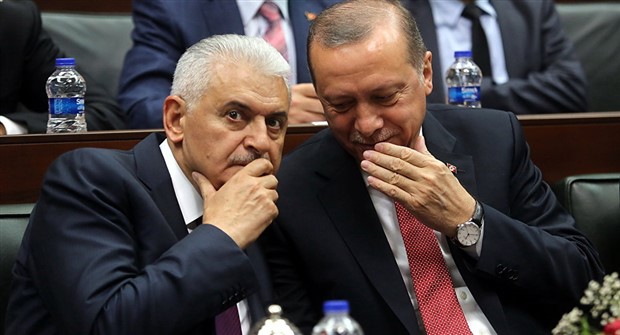
    Among the questions still persisting as to what happened before and after the coup attempt  is why Fidan informed neither Erdoğan nor then-prime minister Binali Yıldırım although it turned out that he had learned about the coup attempt seven hours before they did.

    It was also revealed in 2017 that Akar and Fidan had a six-hour meeting in Ankara a day before the failed coup.

    Following the coup attempt, Fidan’s tenure was also marked by allegations of enforced disappearances of government opponents and their torture at the hands of MİT agents.

    Enforced disappearances, common in Turkey during the 1990s, made a comeback following the coup attempt.

    A recent report from human rights group the Advocates of Silenced Turkey (AST) documented at least 30 instances of enforced disappearance where individuals, largely in Ankara, were whisked away in black transporter vans, in what the report describes as the “Black Transporter” cases. Several victims who were subsequently found reported being tortured during their enforced disappearances, pointing the finger at MİT. Almost all of them were accused of links to the Gülen movement. Some victims who are still missing are feared to have been killed.

    Fidan surprised many when he was heard in an audio clip, the authenticity of which was confirmed by a Turkish court in 2021, suggesting a shocking method to create an excuse for a war on Syria.

    The audio clip dates back to March 13, 2013, when then-foreign minister Ahmet Davutoğlu, then-foreign ministry undersecretary Feridun Sinirlioğlu, then-deputy chief of general staff Gen. Yaşar Güler and Fidan are heard discussing military operations in Syria in Davutoğlu’s Foreign Ministry office.

    Fidan says in the recording: “If needed, I would dispatch four men to Syria. [Then] I would have them fire eight mortar shells at the Turkish side and create an excuse for war.”

    The Turkish government blamed the leak of the audio clip on the Gülen movement, although an investigation failed to provide any evidence to that effect and found nobody from the group who might have been involved in the leak.

    While the opposition accused the government of planning a “provocation” involving Syria that had been exposed on social media, then-prime minister Erdoğan confirmed the security meeting at a public rally in Diyarbakır.

    Instead of questioning the false flag that would drag NATO’s second largest army into a war in Syria, Erdoğan said the wiretapping of his foreign minister’s office was “immoral,” an act of “cowardice,” “dishonest” and “mean.” turkishminute
  • Erdoğan under fire after acknowledging doctored video linking Kılıçdaroğlu with terrorism

    Erdoğan under fire after acknowledging doctored video linking Kılıçdaroğlu with terrorism


    More than 40,000 people, including 5,500 security force members, have been killed in four decades of fighting between Turkish security forces and the PKK, which is listed as a terrorist organization by Turkey and much of the international community.

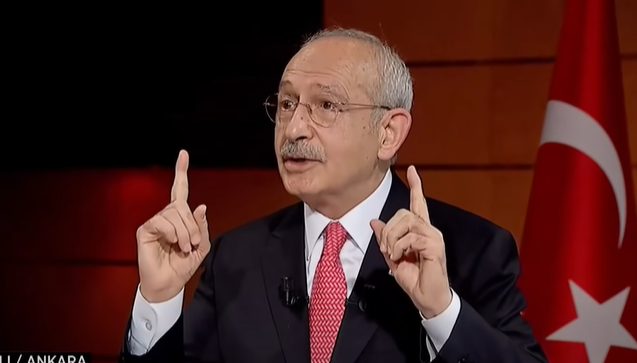
    Shown by Erdoğan at a huge rally in İstanbul on May 7 and broadcast on live TV, the 14-second clip showed the main opposition Republican People’s Party (CHP) leader and presidential candidate Kılıçdaroğlu trying to rally his supporters to the tune of his campaign song. In the next sequence, members of the PKK echoed that call while clapping their hands to the beat of the song.

    The message Erdoğan was trying to project was clear: The secular opposition leader had formed a union with “terrorists.” Only it was a manipulation, one of the latest pieces of disinformation to pollute the May 14 elections, Turkey’s most important in generations.

    As a response to a question asked during a live broadcast on the state-run TRT Haber on Monday, Erdoğan again accused Kılıçdaroğlu of having video shoots with the PKK and said, referring to the 14-second clip, “Fake or not, PKK members supported [the opposition] with videos.”

    Erdoğan’s statement acknowledging that the video clip he used as evidence linking Kılıçdaroğlu with the PKK was a fake sparked outrage among opposition figures, who accused the president on social media of orchestrating a deliberate campaign to discredit his political opponent.

    Referring to Erdoğan as a manipulator, Kılıçdaroğlu said in a series of tweets that he was tired of being falsely accused while Erdoğan never seems to get tired of spreading false accusations.

    “My God, please reveal to everyone who is innocent and who is guilty,” Kılıçdaroğlu added.


    İstanbul Mayor Ekrem İmamoğlu from the CHP also posted Erdoğan’s remarks in a tweet, saying that a campaign of “slander and conspiracy” unbecoming a Muslim backfired on Erdoğan.

    “The morality, conscience and foresight of this nation won’t tolerate manipulation, false accusations or schemes,” he added.


    Erdoğan’s remarks also drew a reaction from CHP İstanbul branch chairperson Canan Kaftancıoğlu, who accused him of being “not only a manipulator but also a conspirator.”

    She was referring to an incident in 2018 in which Erdoğan shared a photo with the public claiming that the person in it was Kaftancıoğlu. The photo showed a female protester whose face is partially covered preparing to throw rocks during the Gezi Park protests of 2013.


    The protests in 2013 erupted over government plans to demolish Gezi Park in the Taksim neighborhood of İstanbul. They quickly turned into mass anti-government demonstrations that were violently suppressed by the government, leading to the death of 11 protestors due to the use of disproportionate force by the police.

    Former prime minister Ahmet Davutoğlu, leader of the opposition Future Party (GP), also posted a video of Erdoğan’s statement, saying, “Does a Muslim tell lies?”


    Academic Nesrin Nas, a former leader of the Motherland Party (ANAP), also said it was “painful” and “devastating” that the president was making excuses for a fake video, saying it might be something else.


    Meanwhile, Presidential Communications Director Fahrettin Altun criticized Kılıçdaroğlu for referring to Erdoğan as a manipulator, adding that the Turkish nation would hold anyone accountable who dared insult and attack Erdoğan.


  • G7 leaders announce united approach to China as Joe Biden aims for meeting with Xi Jinping

    G7 leaders announce united approach to China as Joe Biden aims for meeting with Xi Jinping

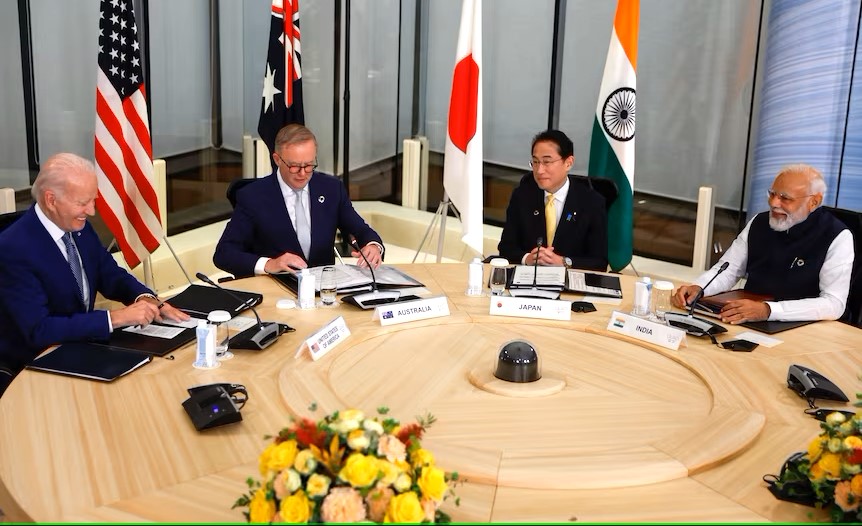
    “We’re not looking to decouple from China. We’re looking to de-risk and diversify our relationship with China,” Mr Biden said on Sunday after a three-day summit with G7 leaders.

    He said G7 nations were more unified than ever in terms of “resisting economic coercion together and countering harmful practices that hurt our workers”.

    G7 leaders outlined a shared approach to “de-risk, not decouple” economic engagement with China in a Saturday communique, prompting China’s embassy in Japan to urged the G7 to stop creating confrontation and division.

    Despite the reaction, Mr Biden said he expected a thaw in frosty relations with China “very shortly” after strains caused by an incident earlier this year when the US shot down a Chinese balloon that flew over sensitive military sites.

    He added that he had agreed with Chinese President Xi Jinping during a G20 summit in Bali last year to keep communications open, but everything changed after “this silly balloon that was carrying two freight cars worth of spying equipment”.

    Mr Biden suggested a shift in US-China relations could occur soon, echoing his comment to reporters before his departure.

    “In terms of talking with them, I think you’re going to see that thaw very shortly,” Mr Biden said.

    On the issue of tensions between China and Taiwan, Mr Biden said there was a clear understanding among most of the allies that if China were to act unilaterally against the self-governed island Taiwan, there would be a response.

    “We’re not going to tell China what they can do,” he said.

    Taiwan’s President Tsai Ing-wen vowed on Saturday to maintain the status quo of peace and stability across the Taiwan Strait amid high tensions with China, which has stepped up military pressure on the democratically governed island.

    Mr Biden reiterated that the US and G7 allies would not trade in materials that would allow China to build weapons of mass destruction, but insisted that was “not a hostile act”.

    He said he would not considering easing restrictions on China on those materials, but it was under negotiation whether to ease sanctions on Chinese General Li Shangfu, who was named in March as China’s new defence minister.Reuters

  • Turkish expatriates across 73 countries casting votes in presidential runoff


    The presidential election, held on May 14, saw incumbent president Recep Tayyip Erdoğan vying for re-election against his main rival Kemal Kılıçdaroğlu, leader of the Republican People’s Party (CHP). Official results put Erdoğan at 49.52 percent of the vote, narrowly missing the mark, while Kılıçdaroğlu received 44.88 percent. With neither candidate securing the required 50 percent plus one additional vote in the first round, election officials announced that a runoff would be held on May 28.

    Voting for overseas Turks started on Saturday and will continue until May 24 at ballot boxes located in Turkish foreign missions and at customs gates until May 28. According to Anadolu, approximately 3.5 million Turkish nationals are registered to vote overseas.

    Erdoğan’s Justice and Development Party (AKP) and its electoral alliance secured a majority in the parliamentary elections, winning 321 out of 600 seats.

  • Kılıçdaroğlu seeks support of Turkish youth in runoff, works to devise new strategy

    Kılıçdaroğlu seeks support of Turkish youth in runoff, works to devise new strategy


    Turkey held parliamentary and presidential elections on Sunday. Although most public surveys showed Kılıçdaroğlu running neck-and-neck with President Recep Tayyip Erdoğan or defeating him in the first round, Kılıçdaroğlu finished the race lagging behind Erdoğan.

    According to preliminary unofficial results, while Kılıçdaroğlu received 44.8 percent of the nationwide vote, the support for Erdoğan stood at 49.5 percent, which requires a runoff since neither of the candidates was able to exceed the 50 percent threshold.

    The CHP leader on Tuesday asked Turkish youth in a series of tweets to support him in the runoff scheduled for May 28 so that he can lead the people of Turkey out of “a dark tunnel.”

    “My dear young people. … The greatest truth is that … those who desire change in this country now outnumber those who don’t. … Are you aware that your youth will not come back? We have 12 days. We can get out of this dark tunnel [if we act now],” Kılıçdaroğlu said.


    Meanwhile, the T24 news website reported on Tuesday that İstanbul Mayor Ekrem İmamoğlu and Ankara Mayor Mansur Yavaş, both from the CHP, were heading to the party’s headquarters in Ankara for a strategy meeting with Kılıçdaroğlu later in the day.

    İmamoğlu’s team also reportedly told T24 that a rumor that the mayor would request to be given control of the new election campaign management meeting was not true.

    CHP vice chairmen and advisors are expected to participate in the meeting that will address the details of the election campaign to be conducted until May 28, with a particular focus on strategies to gain nationalist votes that went to Sinan Oğan, the presidential candidate who secured 5.2 percent and finished third in Sunday’s election.

    Oğan on Monday said he could only support Kılıçdaroğlu in the runoff if he agrees to offer no concessions to a pro-Kurdish party.

    Oğan, who was nominated by a group of ultranationalist parties, received nationwide support that was more than expected, which led to comments that his support for either Erdoğan or Kılıçdaroğlu will determine the outcome of the runoff.

    According to analysts, both Erdoğan and Kılıçdaroğlu will try to court Oğan, but the conservative Erdoğan has the upper hand.

  • Former Erdoğan insider exposes $1 bln corruption scheme in bombshell revelations

    Former Erdoğan insider exposes $1 bln corruption scheme in bombshell revelations

    Bünyamin Tekin

    A former confidant of Turkish President Recep Tayyip Erdoğan revealed the details of a $1 billion corruption scheme involving a 2007 tender, implicating the then-prime minister and current president and other key political figures in the scandal, in a shocking video released by journalist Cevheri Güven on Friday.

    Ali Yeşildağ, a former associate of Erdoğan and a member of the influential Yeşildağ family, claimed that he and Ali İhsan Arslan, also known as Mücahit Arslan, an MP from the ruling Justice and Development Party (AKP) since 2015, were key figures in a criminal organization that helped Erdoğan profit by manipulating a tender for the operating rights of Antalya Airport. In the video Yeşildağ shared how the operation was taken over from Çelebi Holding through a series of crimes and tricks, with the contract ultimately awarded to businessman İbrahim Çeçen.

    According to Yeşildağ, Çelebi Holding was prepared to bid up to $5 billion for Antalya Airport, but its tender documents were stolen, which resulted in the company being excluded from the bidding. The specifications of the tender were detailed and the bureaucracy justified the disqualification of Çelebi Holding.

    The contract was then awarded to İbrahim Çeçen for $3 billion, with Erdoğan allegedly pocketing the $1 billion in the process

    “The biggest characteristic of Tayyip Abi [Erdoğan] is that he steals your money and then makes you applaud him,” Yeşildağ said in the video.

    “So far, two people have released videos and made revelations about Erdoğan’s corruption and crimes. One is Sedat Peker, and the other is Muhammed Yakut. Both are known mafia leaders in Turkey. They are people Erdoğan used for a while and then got into conflicts of interest with,” investigative journalist Güven, who posted the video on his YouTube channel, told Turkish Minute.

    Peker and Yakut have both made revelations about Erdoğan’s alleged corruption and crimes. Peker is a mafia boss living in exile in the United Arab Emirates, while Yakut, a Kurdish businessman, has been exposing alleged links between AKP figures and shady businesses, black money, mafia schemes and the murky background of a 2016 coup attempt on his YouTube channel, which was recently blocked by Turkish authorities. Many believe the failed coup was a false-flag aimed at entrenching the authoritarian rule of President Erdoğan by rooting out dissidents and eliminating powerful actors such as the military in his quest for absolute power.

    “Ali Yeşildağ, however, is different from these two people. Ali Yeşildağ is a member of the Yeşildağ family. Erdoğan and the Yeşildağ family have a 40-year relationship. When Erdoğan was arrested and jailed in 1999, Hasan Yeşildağ, the eldest of the Yeşildağ brothers, went to prison with Erdoğan for a minor offense and, in his own words, served as Erdoğan’s bodyguard in prison. The Yapı Yapı company, in which the Yeşildağ family has a share, is now worth several billion dollars, a fortune made during the Erdoğan era. Etiler Ulus Cafe, owned by the Yeşildağ family, with its exquisite view of the Bosporus, is an important meeting place for the AKP government and state bureaucracy, including members of the Erdoğan family,” Güven said.

    Ali Yeşildağ and his two older brothers, Hasan and Zeki Yeşildağ, have been on the public agenda for a long time. Hasan Yeşildağ was allegedly involved in the assassination of Abdi İpekçi and has been exposed for a series of crimes by Peker.

    “It wouldn’t be an exaggeration to say that members of the government are more likely to make important decisions at the Ulus cafe rather than at a Cabinet meeting,” he added.

    According to the 2022 Corruption Perceptions Index released by Transparency International, Turkey has fallen to 101st place among 180 countries, with a score of 36 out of 100, which is the lowest in the past 10 years. The score indicates the perceived level of public sector corruption on a scale of 0 to 100.

    Transparency International’s study shows that Turkey’s backsliding started in late 2013 when two corruption investigations implicated then-prime minister and current president Erdoğan’s inner circle, which the government subsequently suppressed.

    However, Yeşildağ’s allegations are unique, as they show corrupt practices go as far back as 2007, when the country was on track to become an EU member state and the rule of law, albeit flawed, was in place.

    The release of the video comes at a critical time, with presidential and parliamentary elections set to take place on May 14. These allegations could impact the outcome of the elections, as Erdoğan’s administration faces increased scrutiny amid an economic crisis and high inflation.

    The Turkish government has not yet issued an official response to the allegations made by Ali Yeşildağ.

    According to Güven, this is the first of seven videos in which Yeşildağ will make revelations, to be released until the elections on May 14.

    Güven is a Turkish journalist who lives in exile in Germany and is on Erdoğan’s wanted list. His videos on YouTube, in which he talks about the Turkish government’s corruption and shady relations, attract millions of viewers.

  • Kılıçdaroğlu says if elected, his first act will be to remove bureaucrats involved in crime


    Kılıçdaroğlu, the presidential candidate of an opposition bloc of six parties, on Tuesday told Sözcü that he expects to win the presidential race on May 14 by securing 60 percent of the vote in the first round.

    The CHP leader added that his first act after assuming the top state post would be to dismiss bureaucrats who obeyed unlawful orders from President Recep Tayyip Erdoğan and his Justice and Development Party (AKP) government.

    “Today, there are partisan bureaucrats in state positions. … After we come to power, our priority will be to dismiss those who are involved in bribery, facilitated dirty deeds and served the palace [Erdoğan] rather than the state,” Kılıçdaroğlu said.

    He said Egemen Bağış cannot serve as the Turkish ambassador to the Czech Republic because he is known to have taken “bribes,” and Metin Feyzioğlu cannot remain as the ambassador to the self-declared Turkish Republic of Northern Cyprus (KKTC) since he was recently engaged in disseminating political propaganda for the ruling AKP.

    Bağış, Turkey’s former EU minister and chief negotiator for EU accession, was one of four ministers forced to resign on Dec. 25, 2013, after prosecutors targeted officials from the ruling AKP in a corruption probe. He was accused of accepting bribes in a sanctions-busting scheme run through Turkish state-owned Halkbank to circumvent US sanctions on Iran.

    The AKP government says the corruption probe and the New York trial of people involved in the sanctions-breaking scheme were masterminded by police, prosecutors and judges linked to the faith-based Gülen movement, which it labels as a terrorist organization and also blames for orchestrating a July 2016 coup attempt to topple Erdoğan.

    The movement strongly denies involvement in the coup attempt or any terrorist activity.

    According to Sözcü, Kılıçdaroğlu will also remove the chairmen of the Turkish Statistical Institute (TurkStat), the Disaster and Emergency Management Authority (AFAD), the Housing Development Administration (TOKİ), the Turkish Central Bank, the Red Crescent (Kızılay) and Turkey’s public broadcaster TRT, which are thought by many to have come under political interference from Erdoğan’s government.

    Sözcü also said hundreds of bureaucrats whose tenure is limited to the time in office of the president will only continue to serve until new appointments are made following the election of a new head of state, according to a presidential decree issued in 2018.

    They include the heads of the Religious Affairs Directorate (Diyanet), the National Intelligence Organization (MİT), the National Security Council (MGK), the Social Security Institution (SGK) and the Directorate General of Migration Management (DGMM) in addition to deputy ministers.

  • Erdoğan vows not to release Demirtaş from prison as long as he is in power


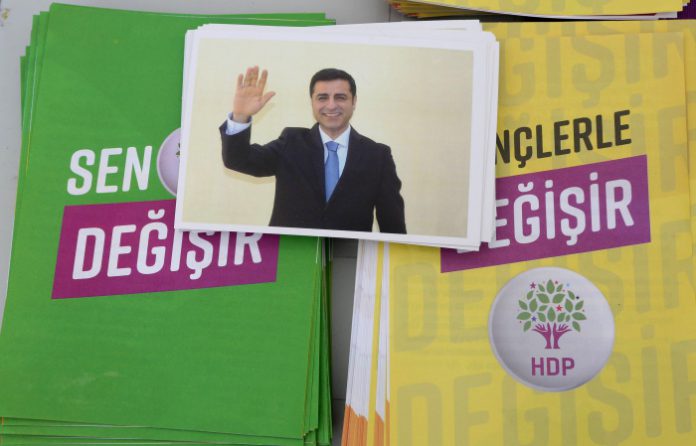
    Demirtaş, former co-chairperson of the pro-Kurdish Peoples’ Democratic Party (HDP) and also a human rights lawyer, has been behind bars since November 2016 on politically motivated charges.

    He was an outspoken critic of Turkey’s ruling Justice and Development Party (AKP) and its leader, Erdoğan, before he was jailed. He ran in the presidential elections of 2014 and 2018 as a rival to Erdoğan. The imprisoned leader conducted his election campaign from jail for the 2018 election.

    Erdoğan was speaking at his party’s election rally in Ankara on Sunday.

    “As long as we are in office, neither Selo nor that child murderer can be released, they won’t be able to get out, they will serve their sentences,” the president said, referring to Demirtaş and Abdullah Öcalan, jailed leader of the outlawed Kurdistan Workers’ Party (PKK), respectively.

    Recognized as a terrorist organization by Turkey and much of the international community, the PKK has been waging a bloody campaign in Turkey’s Southeast since 1984. Öcalan was captured by Turkish security forces in Nairobi in 1999 and has been jailed on İmralı Island in the Sea of Marmara ever since.

    Following Erdoğan’s remarks, Demirtaş said in a tweet, posted through his lawyers, that he would explain why the president was being “so bitter, angry and hostile” towards them in a statement he would make at 7 p.m. on Monday.

    Demirtaş last week shared four decisions for his release in a series of tweets, accusing Erdoğan of ignoring the judgments of local courts and the European Court of Human Rights (ECtHR).

    Listing the decisions that were rendered by the ECtHR in 2018, the Ankara 19th High Criminal Court in 2019, the Constitutional Court in 2020 and the Grand Chamber of the ECtHR in 2021, the Kurdish leader argued that it was Erdoğan who had prevented compliance with those decisions.

    Erdoğan and his ruling AKP, in addition to their ultranationalist election partner, the Nationalist Movement Party (MHP), accuse the HDP of links to the outlawed PKK and also accuse other opposition parties of collaboration with it from time to time.

    The HDP currently faces a closure case on charges of “attempting to destroy the indivisibility between the state and the people,” and hundreds of its politicians, including former co-chairs, are behind bars on terrorism charges, while most of the 65 HDP mayors elected in the predominantly Kurdish Southeast in 2019 have been replaced by government-appointed trustees.

    The HDP said last month it would not field a presidential candidate in the May 14 elections, giving tacit support to Erdoğan’s main rival, Kemal Kılıçdaroğlu.turkishminute

  • Demirtaş accuses Erdoğan of disregarding local court, ECtHR decisions for his release

    Demirtaş accuses Erdoğan of disregarding local court, ECtHR decisions for his release


    Demirtaş, former leader of the pro-Kurdish Peoples’ Democratic Party (HDP) and also a human rights lawyer, has been behind bars since November 2016 on politically motivated charges.

    The Kurdish leader on Wednesday listed in a series of tweets four court decisions for his release that were rendered by the ECtHR in 2018, the Ankara 19th High Criminal Court in 2019, the Constitutional Court in 2020 and the Grand Chamber of the ECtHR in 2021, saying Erdoğan prevented compliance with those decisions.

    “I’m not the guilty one. It is Erdoğan who openly gives instructions to the courts and judges. My response to those who call me a ‘terrorist leader’ is this: You are the terrorists, and you are their leaders!” Demirtaş added.

    Demirtaş was an outspoken critic of Turkey’s ruling Justice and Development Party (AKP) and its leader, Erdoğan, before he was jailed. He ran in the presidential elections of 2014 and 2018 as a rival to Erdoğan. The imprisoned leader conducted his election campaign from jail for the 2018 election.

    His tweets, posted through his lawyers, came after Erdoğan on Monday criticized one of his rivals, presidential candidate Kemal Kılıçdaroğlu, for his election promise to release political prisoners, including such figures as Demirtaş and philanthropist Osman Kavala. Erdoğan also referred to Demirtaş as a “terrorist” in the same speech delivered in the western province of Bursa.

    Erdoğan and his ruling AKP, in addition to their ultranationalist election partner, the Nationalist Movement Party (MHP), accuse the HDP of links to the outlawed Kurdistan Workers’ Party (PKK) and also accuse other opposition parties of collaboration with it from time to time.

    The PKK, recognized as a terrorist organization by Turkey and much of the international community, has been waging a bloody campaign in Turkey’s Southeast since 1984.

    The HDP currently faces a closure case on charges of “attempting to destroy the indivisibility between the state and the people,” and hundreds of its politicians, including former co-chairs, are behind bars on terrorism charges, while most of the 65 HDP mayors elected in the predominantly Kurdish Southeast in 2019 have been replaced by government-appointed trustees.Turkishminute

  • Kılıçdaroğlu refers to his Alevi roots for the first time in historic speech

    Republican People’s Party (CHP) leader Kılıçdaroğlu, 74, who is running against incumbent president Recep Tayyip Erdoğan in the presidential election on May 14, released a video on Twitter titled “Alevi.”

    Since Kılıçdaroğlu was elected leader of the secular CHP in 2010, much has been said about his roots in the eastern province of Tunceli and his Alevi identity. Kılıçdaroğlu himself has never made it an issue until Wednesday, when he openly discussed it.

    Turkey is a majority Sunni country, with some in the conservative and religious population viewing Alevis as apostates; therefore people adhering to the Alevi faith generally avoid revealing their beliefs in public out of fear of facing discrimination or social alienation.

    Alevis follow a heterodox Islamic tradition that separates them from Sunni and Shiite Muslims. Some view it as a cultural identity as much as a religious faith.

    “Dear sons and daughters who will vote for the first time [in the upcoming elections]. I am an Alevi,” Kılıçdaroğlu said, adding that he is an honest Muslim who would never violate the rights of others and who would never use the state for personal gain.

    There was a tacit reference to Erdoğan and his Islamic-rooted Justice and Development Party (AKP) in Kılıçdaroğlu’s remarks since Erdoğan and his government are accused of corruption, favoritism and numerous rights violations despite making frequent references to the values of Islam, which forbids such actions.

    Kılıçdaroğlu said every person’s identity is what makes them special and that they should stand behind it proudly.

    He called on young people to help Turkey cross a “critical threshold” and support his presidency despite claims that an Alevi cannot assume the country’s top state post.

    “We will no longer talk about our identities, but rather our successes. We will no longer talk about separations and differences but instead, our common features and dreams. Will you be with me on this journey of change?… Are you ready to pull this discriminatory system out by its roots?” Kılıçdaroğlu asked young people.

    The CHP leader’s remarks about his Alevi roots unleashed a flood of appreciation and praise on social media, with many congratulating him for breaking a taboo. The video has been watched more than 50 million times in 24 hours, making it one of the most watched videos in a single day on Twitter.

    Nick Ashdown, a Canadian journalist who mainly covers Turkey, described Kılıçdaroğl’s statement as “historic.”

    “Historic statement from KK, talking openly about his Alevi background, something he’s very rarely done in the past. A huge deal from a major politician, breaking a big taboo and taking ownership of his identity (which Erdoğan tries to throw in is face),” he tweeted.


    “These are not just the words of a leader but of a sincere and good person. Turkey’s opp leader Kilicdaroglu speaks at eye-level with Turkey’s citizens, sharing about him being an Alevi-a religious minority (and shunned in the past by some conservative Muslims). He has my respect,” tweeted Louis Fishman, an assistant professor of Modern Middle East history at Brooklyn College, City University of New York.

    Turkish journalist Aslı Aydıntaşbaş described Kılıçdaroğlu’s video as “incredibly courageous,” saying he is “almost breaking a political taboo in Turkey.”

    Jailed Kurdish politician Selahattin Demirtaş said on Twitter through his lawyers that he congratulates Kılıçdaroğlu for his beautiful messages and sincerely supports them, adding that it is possible to live without discrimination, equally and peacefully, in the country.

    Kılıçdaroğlu’s statements also prompted some Alevis on social media to recount their memories when they had to hide their beliefs during their childhood or at their workplace or faced discrimination for being an Alevi. They said they were very much honored by Kılıçdaroğlu’s courageous remarks.

    One Twitter user said his late father, who used to tell him to never reveal his Alevi faith, fearing that he could face discrimination, would be proud if he had seen Kılıçdaroğlu today.

    Turkey has long denied Alevi demands for state recognition, and Alevi houses of worship, known as cemevis, are not officially recognized by the state, hence given no financial assistance.

    Meanwhile, Interior Minister Süleyman Soylu and Devlet Bahçeli, leader of the far-right Nationalist Movement Party (MHP), as well as some pro-government figures criticized Kılıçdaroğlu for talking about his Alevi faith. They accused him of playing with the country’s sensitivities ahead of the elections.

    Kılıçdaroğlu is the presidential candidate of an opposition alliance of six parties that espouse different ideologies and world views.