Blog

  • Scott Morrison says opening Australia’s internal borders by Christmas will be up to the states.

    Scott Morrison has conceded opening Australia’s internal borders will be up to state governments despite making Christmas a key goal.

    The prime minister has been pushing premiers and chief ministers to allow families to be reunited at the end of the year as part of a national agreement.

    There remains ongoing tensions with state and territory governments over the plan to reduce restrictions when 70 and 80 per cent of the over-16 population is vaccinated.

    WA Premier Mark McGowan has signalled he won’t abandon his hardline stance towards states with high virus cases.

    Attorney-General Michaelia Cash warned the same legal arguments that led the High Court to block billionaire Clive Palmer’s WA border challenge last year could change at the higher vaccine coverage threshold.

    “Once you hit 80 per cent, you are in a fundamentally different position if you are looking at the issue of proportionality,” the most senior WA federal government member told The Australian.

    Senator Cash said the government was not considering court action but expects Mr Palmer or others could try to overturn interstate travel bans.

    Senior Labor frontbencher Tanya Plibersek said the Morrison government had supported the billionaire’s last legal effort.

    “Court challenges are ridiculous,” she told the ABC.

    “When Clive Palmer wanted to take the West Australian government to court, I think he united every West Australian against him.”

    The federal government argues it withdrew from the case despite earlier intervening in support of Mr Palmer.

    Liberal frontbencher Jane Hume said Senator Cash’s comments were misinterpreted as paving the way for a court challenge.

    “There is going to be no High Court challenge,” she told the ABC.

    “She was saying the reasoning behind that High Court challenge last year, that was taken out by Clive Palmer, the reasoning behind that really will have been diminished once we reach those vaccination rates.”

    Mr Morrison said he expected leaders to ensure the country reconnected safely when high vaccination rates were reached.

    “Ultimately, everything is a state matter,” he told reporters in Canberra.

    “But, I know that there was agreement to the national plan, which wants to see Australians come together, and we want to do that safely.”

    An alliance of 80 major employers including the big four banks, Qantas, mining giant BHP, major supermarkets and energy companies have called for the national plan to be maintained.

    Australia has fully vaccinated 35 per cent of its population aged 16 and over, while 58.7 have received one dose. aap
  • Australian property prices are $103,400 higher than last year

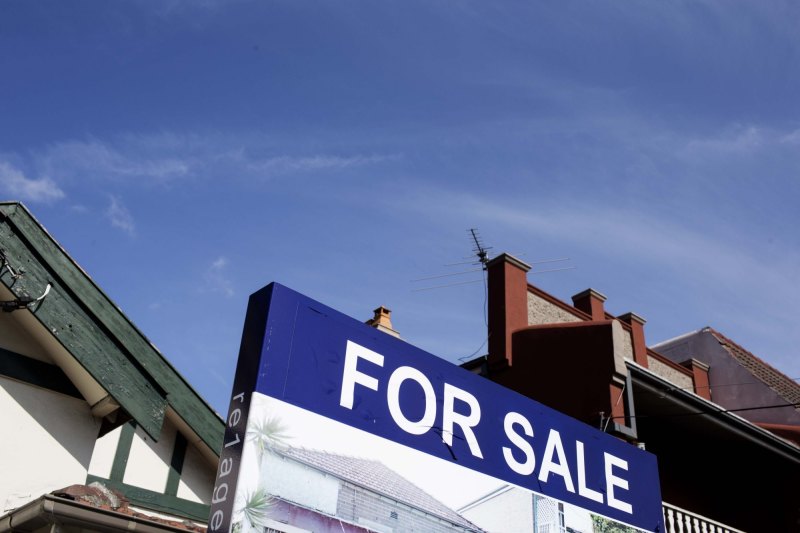
    Australian property prices are $103,400 higher than last year

    Australian property prices are $103,400 higher than last year, CoreLogic says

    Australian house prices have become even more expensive, with coronavirus lockdowns across NSW, Victoria and the ACT having practically no impact on property values.

    The nation’s median property price lifted by 1.5 per cent last month (to $666,514), according to the latest CoreLogic data.
    Houses and apartments in nearly every capital city were even pricier, with Hobart (+2.3pc), Canberra (+2.2pc) and Brisbane (+2pc) posting the biggest increases.

    Prices in the other capitals also went up sharply, including Adelaide (+1.9pc), Sydney (+1.8pc) and Melbourne (+1.2pc). But Darwin was the outlier, with prices down 0.1 per cent last month.

    However, this month’s figures from CoreLogic did not include Perth or regional Western Australia “pending the resolution of a divergence from other housing market measures in WA”.

    Housing values have risen at a slower pace in the past few months, but that “probably has more to do with worsening affordability constraints than ongoing lockdowns”, said CoreLogic research director Tim Lawless.

    Strong demand despite lockdowns
    Property prices went up sharply in August despite a sharp fall in the number of properties advertised for sale.

    CoreLogic noted that in August, the number of new property listings fell 5.8 per cent below the five-year average.

    In contrast, a lot more people wanted to sell their properties before the Delta outbreak plunged much of Australia into various stages of COVID-19 restrictions. New listings were 19.7 per cent higher than average in early May.

    “Housing prices have risen almost 11 times faster than wages growth over the past year, creating a more significant barrier to entry for those who don’t yet own a home,” Mr Lawless said.

    “Lockdowns are having a clear impact on consumer sentiment, however to date the restrictions have resulted in falling advertised listings and, to a lesser extent, fewer home sales, with less impact on price growth momentum.”

    “It’s likely the ongoing shortage of properties available for purchase is central to the upwards pressure on housing values.”

    In context, Australian property values have jumped 15.8 per cent since the year began.

    They were also 18.4 per cent higher compared with this time, last year — making it the fastest annual rate of
    growth in 32 years (since July 1989 to be exact).

    “Through the late 1980s, the annual pace of national home value appreciation was as high as 31 per cent, so the market isn’t quite in unprecedented territory,” he added.

    “The annual growth rate at the moment is trending higher — in fact, it is 3.6 times higher than the 30-year average rate of annual growth.”

    In dollar terms, Australia’s median property price has risen by around $103,400 in the past year (which equates to about $1,990 per week).

    In comparison, Australian wages are growing at a much slower pace (about 1.7 per cent annually), underscoring the worsening affordability issues. ABC News

  • Australia’s medicinal magic mushrooms will be studied for their psychoactive properties

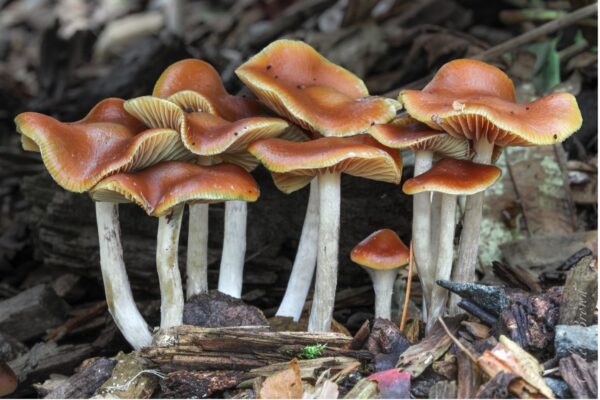
    Australia’s medicinal magic mushrooms will be studied for their psychoactive properties

    Australia’s first legal collection of native “magic” mushrooms could provide medical options to treat severe depression, alcohol and drug addiction, post-traumatic stress disorder (PTSD), and the fear experienced at the end of terminally ill people’s lives.

    University of Queensland mycologist and evolutionary biologist Dr Alistair McTaggart has been given approval to collect and catalogue psilocybin mushrooms found growing in cow manure and leaf litter on damp forest floors after rain.

    The federal government is investing a total of $15 million in grants to support Australian-led research into the use of mushrooms, ecstasy and ketamine to combat illnesses such as PTSD, major depressive disorders, addiction and eating disorders.

    “Psychedelic mushrooms are taking off, everyone’s talking about them,” Dr McTaggart said.

    “In America the USDA [United States Department of Agriculture] has fast tracked psilocybin treatment. It’s considered a breakthrough therapy,” Dr McTaggart said.

    “With COVID-19 right now, I think there’s never been a better time to start looking for therapies for mental health.”

    Trip into the unknown

    Globally, 200 species of mushroom produce psilocybin — a natural psychoactive compound with hallucinogenic effects similar to LSD.

    But little is known about the 20-30 species of psychedelic mushrooms in Australia, with Dr McTaggart’s research to investigate whether they are native, edible, poisonous or adaptable for medicinal use.

    Some, like the golden top mushroom, or Psilocybe cubensis — that is commonly found growing in cow pats — may originate from overseas.

    At The University of Queensland, the Queensland Alliance for Agriculture and Food Innovation project will investigate the DNA of the mushrooms and their psychoactive properties.

    Dr McTaggart is keen to tap into the knowledge of citizen scientists who photograph fungi and collaborate with researchers interested in cultivating promising genetic strains to tailor-make specific medical treatments.

    In Australia, it is illegal to cultivate, possess, use or supply psychedelic mushrooms.

    But, like medicinal marijuana, Dr McTaggart said that would change, in line with other countries. ABC News

  • NSW Premier Gladys Berejiklian said she was disappointed to hear of the alleged arson attack.

    NSW Police are treating as suspicious a fire which badly damaged a COVID-19 testing clinic in Sydney’s west.

    About 10:50pm on Saturday police were patrolling nearby and discovered the fire at the testing site on Forrester Road in North St Marys.

    On arrival, a demountable building was well alight before firefighters were able to extinguish the blaze.

    Police searched the surrounding area and discovered graffiti on a separate building.

    Some of the graffiti read: “COVID-19 is a lie. People wake up now. Fight the system. Revolt.

    Nepean Police Area Command Crime Manager Detective Inspector Jason Pietruszka described the messages as “anti-government and anti-COVID”.

    “To be perfectly honest, obviously I think they’re quite ridiculous and quite pointless to engage in such conduct.

    “To make such comments, and to engage in such activity is criminal and will be seriously frowned upon by the courts when that person is put before them.”

    Detective Inspector Pietruszka said people were entitled to have an opinion “but what this person has engaged in overnight is criminal”.

    “It’s also very damaging to the community who rely on this testing clinic to assist with the health message and with their own health,” he said.

    No testing swabs were destroyed in the fire and Detective Inspector Pietruszka said the clinic would be able to continue to administer tests, despite the damage caused.

    NSW Police said while the cause of the fire was yet to be determined, but it was being treated as suspicious.

    While investigations are still ongoing and officers are scouring CCTV of the area, police believe only one person is involved in the incident.

    “Judging on what they’ve done today, they’re very likely to do it again,” Detective Inspector Pietruszka said.

    NSW Premier Gladys Berejiklian said she was disappointed to hear of the alleged arson attack.

    “It is always disappointing when people ignore health advice or pretend that COVID-19 is not serious,” she said.

    “A number of people do have those views and demonstrate them from time to time and that is the threat of Delta.”

    Police are urging anyone with information to contact Crime Stoppers. ABC News

  • Pro-Kurdish party member abducted, tortured by men posing as police: report

    Celalettin Yalçın, a member of the pro-Kurdish Peoples’ Democratic Party (HDP), was abducted and subjected to torture by individuals who introduced themselves as “the police” in İstanbul, the Mezopotamya news agency reported.

    After he left the HDP’s Sancaktepe district office at around 8 p.m. on Wednesday, Yalçın was approached in the Levent metro station by a man who told him a detention warrant had been issued for him and that he had go to the police station.

    “They rear-handcuffed me before they put me in a car. I was blindfolded. … After an hour, they got me out of that car and I was put in another one. Following two more hours of driving, other people got in the car. But I couldn’t see them due to the blindfold. … I was then taken to a house where they laid me face down on the floor. They tied my opposite hands and legs together,” Yalçın said.

    According to the report, Yalçın, who was accused by his abductors of “engaging in illegal business,” explained that he was a party assembly member who conducts his affairs openly.

    Yalçın was initially deprived of water and was then stripped and beaten, Mezopotamya said.

    “They kicked me in the kidneys. They tried to get me to be an informant for them, but I refused. When their torture didn’t work, they threatened to sodomize me. They pulled down my pants and put a gloved [hand] near my anus. They took photos of me while I was naked,” the HDP member recounted.

    “When the torture didn’t work, they told me they were sparing my life this one time but that they wouldn’t do it again it if I didn’t leave İstanbul immediately,” Yalçın said, adding that he was then left on a roadside in İstanbul’s Tuzla district at around 6 a.m. on Thursday, wearing only his underwear.

    The pro-Kurdish party member, who went to a hospital and got a medical report after he was released by his abductors, said he would file a complaint about the incident.

    Underlining that many similar abductions, torture and killings took place in Turkey before, Yalçın said he was determined to fight against them in İstanbul, despite the pressure and threats facing him.

    Enforced disappearances, which were common in Turkey during the 1990s, made a reappearance following a failed coup in July 2016, according to a report in January drafted by Republican People’s Party (CHP) deputy Sezgin Tanrıkulu, who is also a prominent human rights activist and deputy chair of the Human Rights Committee in parliament.

    An annual report released by the Human Rights Foundation of Turkey (TİHV) also revealed in late June that a total of 404 people were tortured and 10 were abducted in Turkey last year.

  • Qantas has announced a loss of $1.7 billion in the last financial year.

    Qantas loss remains large even before Sydney lockdown. Qantas has posted another massive COVID-related loss, but is optimistic international travel will resume before Christmas. The airline lost $1.73 billion in the 2020-21 financial year, as the global COVID pandemic raged.

    The loss is actually a little smaller than the previous year’s $1.96 billion loss, despite revenue plunging by 58 per cent to less than $6 billion, due to an aggressive cost-cutting campaign and staff stand-downs.

    However, Qantas estimates that the pandemic has so far cost it around $16 billion in lost revenues over the past two financial years, with that set to rise to $20 billion by the end of this calendar year.

    “This loss shows the impact that a full year of closed international borders and more than 330 days of domestic travel restrictions had on the national carrier,” Qantas chief executive Alan Joyce said.

    For now, Qantas is assuming that current domestic border closures will remain in place until early December, which will wipe about $1.4 billion off its top-line profit numbers for the current half year.

    Offsetting that, Qantas said it had already achieved $650 million per annum of ongoing savings from its cost-cutting program, while the current eight-week domestic staff stand-down will be extended while New South Wales and Victoria remain locked down.

    The airline said it had paid down around half a billion dollars of debt and was looking at a potential land sale in Mascot, near Sydney Airport, to pay down hundreds of millions more.

    In the meantime, Qantas said it had $3.8 billion in cash and available debt facilities to finance it through its current losses.

    “It’s obviously up to government exactly how and when our international borders re-open, but with Australia on track to meet the 80 per cent trigger agreed by National Cabinet by the end of the year, we need to plan ahead for what is a complex restart process,” Mr Joyce said.

    “We can adjust our plans if the circumstances change, which we’ve already had to do several times during this pandemic.

    “Some people might say we’re being too optimistic, but based on the pace of the vaccine rollout, this is within reach and we want to make sure we’re ready.”

    Qantas said the initial routes being planned for include Singapore, the United States, Japan, United Kingdom and Canada, while it expects the New Zealand travel bubble will resume in some form by mid-December.

    The airline said it was hoping to restart flights to Hong Kong in February and the rest of the Qantas and Jetstar international network was set to open up from April 2022, with capacity increasing gradually.

    So hopeful is the airline of an immediate rebound in travel demand when borders reopen that it has plans to bring back five of its A380 Airbus super jumbos earlier than expected, in 2022, although it is also planning to retire two, bringing its fleet of the planes down to 10. ABC News

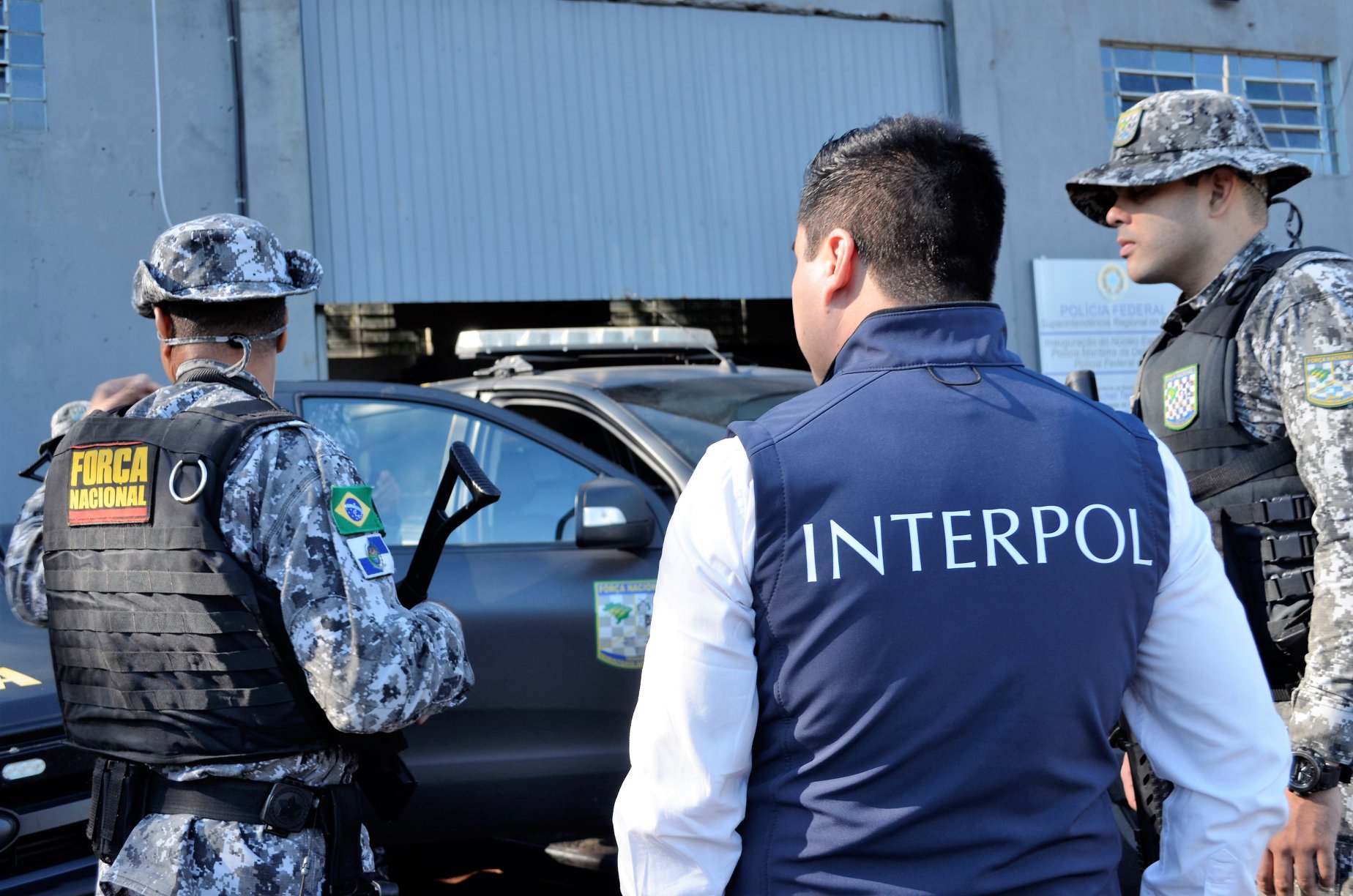
  • Turkey’s Abuse of INTERPOL: How Erdoğan Weaponized the International Criminal Police Organization for Transnational Repressio

    Turkey’s Abuse of INTERPOL: How Erdoğan Weaponized the International Criminal Police Organization for Transnational Repressio

    This report focuses on how the Turkish government, under President Recep Tayyip Erdoğan, has abused INTERPOL in a number of ways.

    The Erdoğan government has used the International Notice System, such as Red Notices and diffusions, to target political opponents who have done nothing more than criticize the government. Similarly, it has also abused INTERPOL’s Stolen and Lost Travel Documents Database (SLTD) by filing tens of thousands of notifications for critics and opponents who, in many instances, were not even aware that their passports had been invalidated. In several cases some of these people were stranded at international airports or put in detention before they were released or, in the worst cases, were handed over to Turkish operatives and ended up in Turkish prisons.

    “The Turkish government must be held responsible for abusing the INTERPOL system to commit human rights violations,” said Dr. Merve R. Kayıkcı, research director at the Stockholm Center for Freedom. “It is encouraging to see that the organization’s General Secretariat took considerable steps to safeguard the rights of innocent people and, in many cases, chose not to look the other way when the Turkish government went after critics without credible evidence.”

    The report sheds light on such abusive practices by providing information on how INTERPOL mechanisms work and the way Turkey misused them in various cases. It ends with policy proposals aimed at preventing future abuse of the system by autocratic regimes to target their opponents.

    In view of increasing attempts by repressive governments to abuse its mechanisms, INTERPOL needs to develop new ways to ensure that it operates strictly within the confines of its mandate and does not become an accomplice to transnational repression.

    “INTERPOL’s constitution explicitly forbids intervention or activities of a political, religious or racial nature and requires cooperation to be ‘in the spirit of the Universal Declaration of Human Rights’,” Dr. Kayıkcı said. “The governments of democratic countries might prevent abuse of INTERPOL mechanisms by verifying that a communication comports with the organization’s constitution before removing an individual from the country or denying visa, asylum or other immigration status and by not relying on INTERPOL notices as the sole basis for taking action.”

    About the Stockholm Center for Freedom

    SCF is a non-profit advocacy organization that promotes the rule of law, democracy and human rights with a special focus on Turkey.

    Committed to serving as a reference source by providing a broad perspective on rights violations in Turkey, SCF monitors daily developments, documents individual cases of the infringement of fundamental rights and publishes comprehensive reports on human rights issues.

    SCF is a member of the Alliance Against Genocide, an international coalition working to exert pressure on the UN, regional organizations and national governments to act on early warning signs and take action to prevent genocide.

  • AKP lawmaker insults police officers in video posted by opposition MP

    A lawmaker from the ruling Justice and Development Party (AKP) insulted two police officers who stopped her car after receiving a complaint, calling them “idiots,” according to a video posted by a main opposition Republican People’s Party (CHP) MP, Turkish media reported on Monday.

    In the video CHP deputy Ali Mahir Başarı posted on Twitter, AKP lawmaker Zeynep Gül Yılmaz’s car is stopped by two police officers who explain the reason for stopping her car, but Yılmaz insults the police officers and calls them “idiots.”

    Yılmaz’s car was stopped at a police checkpoint near the Erdemli district of Mersin on July 18, and it turned out that Yılmaz had later gotten the two police officers suspended ahead of the Eid-al Adha holiday.

    In the video, Yılmaz tries to learn the names of the police officers who stopped her car.

    In his tweet, Başarır said: “Ahead of the last Eid al-Adha, AKP Mersin lawmaker Zeynep Gül Yılmaz had insulted two police officers who stopped her car upon a complaint and wanted to check her ID card at a police checkpoint near Erdemli, Mersin. I brought the incident to the agenda at that time, but Yılmaz denied it. In the video I am posting today, you will witness the disgraceful side of the AKP, the real face of the AKP.”

    The suspension of the police officers, as noted by Başarır, had become a trending topic on Twitter with the tags “SidingWithMyPoliceOfficers” and “Zeynep Gül Yılmaz.”

    Social media users urged Yılmaz to resign and that she be expelled from the party.

    Although Yılmaz initially denied the accusations, she made a statement on social media after Başarır posted the video.

    Yılmaz argued that she was subject to unlawful treatment by the police officers.

    “I am sorry… Although I stopped my car and presented my ID, I was kept there for half an hour unlawfully and deliberately by the police officers, who were not wearing masks. I’m sure the people will understand,” she tweeted.

    Meanwhile, the Mersin Governor’s Office issued a statement regarding the incident showing support for the AKP lawmaker. “The police officers exceeded their authority,” the statement said.

    Deputy Interior Minister Muhterem İnci posted the Mersin Governor’s Office’s statement on social media, accusing Başarır of provoking the police. “In response to Mersin deputy Ali Mahir Başarır, who frequently humiliates Turkish police and tries to provoke them: The Mersin Governor’s Office’s statement can be found below,” the message said.turkishminute

  • The Covid-19 outbreak in New Zealand is growing

    There have been 21 new cases of Covid-19 detected in New Zealand, bringing the total number of people infected in the latest outbreak to 51. Prime Minister Jacinda Ardern indicated she not think the latest outbreak had hit its peak. Because Auckland is at the centre of the outbreak, she said it was “very likely” restrictions would remain beyond Tuesday.

    17 people charged over lockdown breaches

    Seventeen people have been charged with breaking with Covid-19 lockdown restrictions this lockdown, Ms Ardern said. A further 70 people have been issued infringements. Ms Ardern applauded the numbers as very low in the circumstances.

    PM defends speed of releasing locations of interest

    Locations of interest prior to August 7 have been taken of the list, Ms Ardern said. This needs to be updated on the Ministry of Health (MOH) site though, she added.

    “There is always a balance to be struck,” between getting locations of interest up quickly on the MOH site, and putting up wrong locations of interest that lead to an influx of people getting tested unnecessarily, Ms Ardern said.

    Director of Public Health Dr Caroline McElnay said people who were close contacts would have already been contacted by health officials before the new locations went up on the locations of interest site.  news.com.au

  • Inmates subjected to insults, threats and battery in Turkish prisons: report

    A recent report jointly prepared by three human rights organizations in Turkey has revealed that inmates were subjected to insults, threats and battery in two prisons in Turkey’s southern Adana and Kahramanmaraş provinces, Turkish Minute reported, citing the Mezopotamya news agency.

    The report, prepared by the Çukurova Association for Assistance for Families of Prisoners and Convicts (Çukurova TUAYDER), the Lawyers Association for Freedom (ÖHD) and the Human Rights Association (İHD), is based on interviews with prisoners from the Kürkçüler T Type Closed Prison in Adana and the Türkoğlu L Type Prison No. 1 in Kahramanmaraş.

    Inmates Mehmet Emin Ado, Zafer Bahadır, Ömer Toluk and Mustafa Özer, who were on July 9 transferred from the Ceyhan M Type Closed Prison to the Kürkçüler T Type Closed Prison, both in Adana, were battered by the prison guards because they refused to undergo a strip-search while being admitted to the prison, Mezopotamya said.

    The inmates were insulted and attacked by the guards once again on Aug. 12, after they refused to form a line while they were waiting to be fingerprinted. Disciplinary proceedings were launched against them soon afterward.

    According to Mezopotamya, the four inmates’ request to be sent to the infirmary to get an assault report from the doctor after the attack on Aug. 12 was refused, and they were threatened by the head guard, who told them, “I’m the God of this place and you’ll do as I say.”

    Inmates Mehmet Erden, Sedat Karak and Veysi Altan in the Türkoğlu L Type Prison No. 1 were punished as a result of a disciplinary proceeding launched against them on the grounds that they went on a hunger strike in protest of the “isolation” of imprisoned leader of the outlawed Kurdistan Workers’ Party (PKK) Abdullah Öcalan, the report also said.

    The inmates were protesting Öcalan’s inability to speak with his lawyers, which is commonly referred to in Turkish media reports as his “isolation.”

    Despite the prisoners’ request to be in the same ward, the prison administration put them into separate wards far from each other in order to punish the inmates by preventing them from contacting one another, Mezopotamya said, adding that Karak wasn’t released on July 28, as was expected, due to the prison parole board’s negative evaluation of him.

    Although there have been widespread claims of torture in Turkey’s prisons and detention centers, especially since an attempted coup claimed the lives of more than 250 civilians in Turkey on July 15, 2016, they have so far not been investigated.  By SCF