Blog

  • Turkish Twitter users demand authorities release father of young boy whose mother died in exile

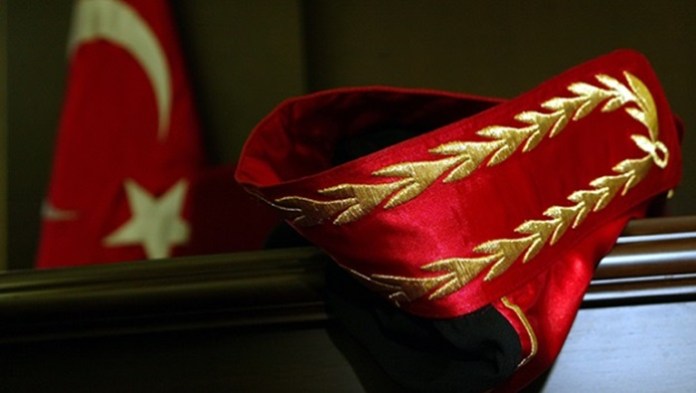
    Turkish Twitter users demanded that authorities release the father of a 5-year-old boy after his mother, Gülsüm Coşar, 31, a former judge who fled Turkey and was living in exile, died in Germany last week, the Stockholm Center for Freedom reported.

    Hundreds of social media users shared the hashtag “#AykutCoşarTahliyeEdilmeli” (Aykut Coşar must be released), demanding the release of father Aykut Coşar, who has been behind bars since 2016 for alleged links to the Gülen movement.

    Ömer Faruk Gergerlioğlu, a deputy from the Peoples’ Democratic Party (HDP), said on Twitter that the young boy must be reunited with his father immediately.

    “There is a 5-year-old boy whose mother has died in exile,” he said. “What will become of him? Will he also be left without a father?”

    Gülsüm Coşar was summarily dismissed from her job by a government decree in the aftermath of a 2016 coup in Turkey. She fled to Germany with her son but fell seriously ill several days before her death.

    Coşar was sentenced to seven years, six months in prison on terrorism charges for alleged links to the Gülen movement. Her husband, a former prosecutor, was handed down nine years, two months on similar charges. He is currently in a prison in southeastern Gaziantep province.

    Turkish President Recep Tayyip Erdoğan has been targeting followers of the Gülen movement, inspired by Turkish Muslim cleric Fethullah Gülen, since the corruption investigations of December 17-25, 2013, which implicated then-Prime Minister Erdoğan, his family members and his inner circle.

    Dismissing the investigations as a Gülenist coup and conspiracy against his government, Erdoğan designated the movement as a terrorist organization and began to target its members. He intensified the crackdown on the movement following an abortive putsch on July 15, 2016 that he accused Gülen of masterminding.

    The purge has damaged the unity of many families. In some cases, children have lost a parent while the other one was imprisoned. These children have been left to the care of elderly grandparents or distant relatives.

    According to official data, 622,646 people have been the subject of investigation and 301,932 have been detained, while 96,000 others have been jailed due to alleged links to the Gülen movement since the failed coup.

    The government also removed more than 130,000 civil servants from their jobs on alleged Gülen links following the coup attempt.
  • 82-year-old philanthropist with Alzheimer’s remains behind bars in Turkey

    Eighty-two-year-old businessman and philanthropist Yusuf Bekmezci remains behind bars in Turkey despite serious health problems and advanced age.

    Bekmezci suffers from Alzheimer’s and is unable to take care of himself. He also has high blood pressure, sleep apnea, prostate cancer and partial deafness. Bekmezci was tried on charges of terrorism, with the prosecutor demanding a life sentence.

    The İzmir 2nd High Criminal Court handed down a sentence of 17 years, four months in April.

    Speaking to Bold Medya earlier, his daughter Şeyma Bekmezci said her ailing father had been condemned to die in prison.

    Turkish President Recep Tayyip Erdoğan has been targeting followers of the Gülen movement, a faith-based group inspired by Turkish cleric Fethullah Gülen, since the corruption investigations of December 17-25, 2013, which implicated then-Prime Minister Erdoğan, his family members and his inner circle.

    Dismissing the investigations as a Gülenist coup and conspiracy against his government, Erdoğan designated the movement as a terrorist organization and began to target its members. He intensified the crackdown on the movement following a coup attempt on July 15, 2016 that he accused Gülen of masterminding. Gülen and the movement strongly deny involvement in the abortive putsch or any terrorist activity.

    According to Şeyma Bekmezci, her father could barely understand the court proceedings due to his advanced Alzheimer’s and was unable to defend himself. The lack of proper health care in prison has caused his mental state to deteriorate. “He completely forgets himself in court and is in a vulnerable position,” she said.

    She said a hospital could easily issue a health report saying her father was not fit to be in prison, but the judge did not request one. “If the judge says there’s no need for a report, then he is not taken to the hospital,” she added.

    Human rights activists and opposition politicians have frequently criticized authorities for not releasing critically ill prisoners so they can seek proper treatment.

    According to a recent report by the Ankara-based Human Rights Association (İHD), there are at least 1,605 ailing inmates in the country’s prisons, 604 of whom are in critical condition. The İHD said it estimates the number of sick inmates to be higher and calls on the government to release them and delay their sentences as the coronavirus pandemic poses a further threat to their medical well-being.

    Human rights defender and Peoples’ Democratic Party (HDP) deputy Ömer Faruk Gergerlioğlu said critically ill political prisoners were not released from prison “until it reaches the point of no return.” He depicted the deaths of seriously ill prisoners in Turkey who are not released in time to receive proper medical treatment as acts of “murder” committed by the state.

    According to a statement from Turkish Interior Minister Süleyman Soylu on February 20, a total of 622,646 people have been the subject of investigation and 301,932 have been detained, while 96,000 others have been jailed due to alleged links to the Gülen movement since the failed coup. The minister said there are currently 25,467 people in Turkey’s prisons who were jailed on alleged links to the movement.

  • Melbourne Star will close after 15 years, due to COVID-19 travel restrictions

    The much-loved Melbourne Star will close after 15 years in operation due to COVID-19 travel and lockdown restrictions in Victoria.

    On Monday afternoon, a statement was issued by MB Star Properties Pty Ltd, saying they were announcing “with a heavy heart” the popular attraction in Docklands will be permanently closed and the company placed into liquidation.

    “The giant observation wheel has been a part of the city’s skyline for more than 15 years, during which time it has welcomed more than 300,000 visitors every year, with international and interstate tourists making up 45 per cent of the business,” a statement read.

    “Unfortunately, the global COVID-19 pandemic and subsequent travel restrictions and sustained shutdowns, adding to pre-existing challenges of operating amid increased high-rise development and changes in the Docklands area, has made it impossible to sustain the business.

    “The directors of the wheel are absolutely committed to doing the right thing by our dedicated team and have made arrangements to ensure all our employees will be paid their full entitlements,” the company said.

    When it first opened in 2008, the 120 metre tall wheel was called the Southern Star.

    It opened two years behind schedule, but then closed a month later due to structural defects including cracking and did not reopen again until 2013.

    A ride in the star took 30 minutes to do one rotation. 7News

  • Josh Frydenberg: Australia resists China trade action

    Josh Frydenberg says the Australian economy has proved to be remarkably resilient in the face of political tensions with China, the nation’s number one trading partner.

    In an online address on Monday, the treasurer likened China’s stance to last century’s Cold War, but with some key differences this time around.

    The global economy and trading is now highly integrated, and while the Soviet Union during the Cold War was largely cut off from the rest of the world, China has increased its dominance.

    And while flexing its power, Mr Frydenberg said China has made no secret of targeting Australia’s economy.

    The Asian giant has cited 14 grievances, covering everything from Australia’s foreign investment laws to its calling out of cyber attacks.

    “They have targeted our agricultural and resources sector, with measures affecting a range of products including wine, seafood, barley and coal,” Mr Frydenberg told the ANU Crawford Leadership Forum.

    But he said Australia has remained steadfast in defending its sovereignty and core values, and always will.

    “Our economy has also proven to be remarkably resilient,” Mr Frydenberg said.

    “I am not downplaying the impact of China’s actions. They have hurt specific industries and regions, significantly in some cases.”

    However, many of the firms and industries targeted by China’s trade restrictions have also been successful in redirecting goods to other export destinations, particularly for larger bulk commodities that trade on global markets.

    China’s trade actions have seen total exports to China fall by around $5.4 billion over the year to the June quarter.

    “But over the same period, exports of those goods to the rest of the world have increased by $4.4 billion,” the treasurer said.

    For example, over the past year Australia’s coal exports to China have fallen by around 30 million tonnes, but to the rest of the world its coal exports have risen by around 28 million tonnes.

    Australian barley has also been redirected, including to new markets such as Saudi Arabia.

    But he warned that China’s trade actions will carry a cost to both Australia and China.

    “They rob Chinese consumers of premium Australian wine, seafood and other goods,” he says.

    “And they rob Chinese industry of high quality and high value inputs, such as Australian coal. We would both be better off if markets were allowed to operate freely.”

    He said Australian firms have pivoted, by finding new buyers for their goods and global markets.

    “That is the benefit of a strong, dynamic, open, market-based economy,” Mr Frydenberg says.

    “A precondition for our prosperity and something we should always seek to protect, preserve and promote.”

  • 70-year-old inmate with advanced leukemia dies 2 weeks after being released from prison

    Mehmet Ali Çelebi, a 70-year-old inmate with advanced leukemia, has died almost two weeks after being released from prison following strong reactions from hundreds of social media users.

    The purge victim man was incarcerated over alleged membership to the Gulen group, accused of masterminding a coup attempt in 2016. The group denies any involvement.

    In addition to leukemia, he also suffered from kidney failure and thus receives daily dialysis treatment.

    He was released from Ankara’s Sincan prison late on August 27. TurkeyPurge

  • More than 457,000 of COVID-19 Pfizer vaccine touching down in Sydney under UK deal.

    First shipments of COVID-19 Pfizer vaccine secured under UK deal land in Australia

    Australia has received its first shipments of Pfizer COVID-19 vaccines from a major swap deal with the UK, with two flights carrying more than 457,000 doses touching down in Sydney.

    Prime Minister Scott Morrison last week announced the deal would add 4 million Pfizer doses to Australia’s supplies, doubling the nation’s Pfizer supply this month.

    The first flight from London was carrying 164,970 doses landed on Sunday evening while the second, carrying 292,500 doses, arrived a few hours later.

    It came as the national medical regulator, the Therapeutic Goods Administration (TGA), approved an additional half a million doses of the Pfizer vaccine from Singapore, after they arrived last week under a separate vaccine swap deal.

    The government has agreed to return the same number of doses at a later date.

    Vaccines arrive as rollout expands

    The additional supplies have arrived as Australia moves to expand its vaccine rollout, with 12- to 15-year-olds able to get the Pfizer shot from next week.

    Deputy Chief Medical Officer Sonya Bennett said the extra vaccines had bolstered the rollout.

    “The additional supply is really reassuring,” she said

    “We just would like to encourage all Australians to book in and get their first dose as soon as possible,” Ms Bennett said.

    The government has been repeatedly criticised for not securing more vaccines sooner, with supply issues and changing advice hindering the rollout initially.

    But speaking in Sydney, New South Wales Premier Gladys Berejiklian said the doses from the UK would close a supply gap this month and help states boost vaccination rates.

    “I was very pleased when the Prime Minister announced extra doses, of which New South Wales will get their share, because there was going to be a gap in supply in September and now, to some extent, that has been closed, which is positive, so we now look forward to people coming forward and getting vaccinated,” she said.

    “Come October, supply won’t be an issue, so it is really about how we manage the vaccination strategy for the next four weeks.”

    The doses from the UK will now be batch tested by the TGA before being released.

  • Plight of former judge who died seeking asylum in Germany reveals extent of Turkey’s purge

    Plight of former judge who died seeking asylum in Germany reveals extent of Turkey’s purge

    Gülsüm Coşar, 31, a former judge who was summarily dismissed from her job by a government decree in the aftermath of a 2016 coup in Turkey, died in Germany yesterday, where she had fled with her 5-year-old son, the TR724 news website reported.

    Coşar fell seriously ill several days ago due to a heart condition and was admitted to an intensive care unit. Turkish Twitter users shared her story to raise awareness about the suffering of purge victims.

    Coşar was sentenced to seven years, six months in prison on terrorism charges for alleged links to the Gülen movement. Her husband, a former prosecutor, was handed down nine years, two months on similar charges. He is currently in a prison in southeastern Gaziantep province.

    Turkish President Recep Tayyip Erdoğan has been targeting followers of the Gülen movement, inspired by Turkish Muslim cleric Fethullah Gülen, since the corruption investigations of December 17-25, 2013, which implicated then-Prime Minister Erdoğan, his family members and his inner circle.

    Dismissing the investigations as a Gülenist coup and conspiracy against his government, Erdoğan designated the movement as a terrorist organization and began to target its members. He intensified the crackdown on the movement following the abortive putsch on July 15, 2016 that he accused Gülen of masterminding.

    Thousands of people had to flee Turkey in the aftermath of the coup attempt due to a widespread crackdown on non-loyalist citizens under the pretext of an anti-coup fight. These people, some of whom had to flee the country illegally by way of the Aegean Sea or the land border because their passports had been canceled under state of emergency measures taken by the government, have applied for asylum in Europe.

    According to official data, 622,646 people have been the subject of investigation and 301,932 have been detained, while 96,000 others have been jailed due to alleged links to the Gülen movement since the failed coup.

    The government also removed more than 130,000 civil servants from their jobs on alleged Gülen links following the coup attempt.  SCF

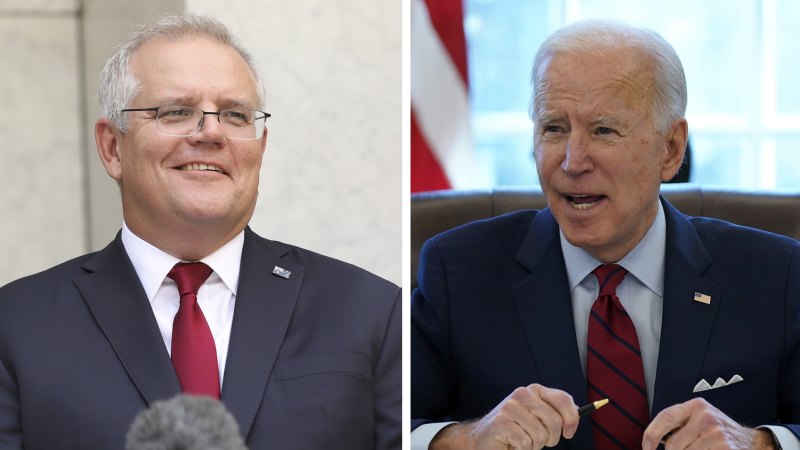
  • Joe Biden and Prime Minister Scott Morrison have discussed the future of Afghanistan

    Joe Biden and Prime Minister Scott Morrison have discussed the future of Afghanistan

    Joe Biden and Prime Minister Scott Morrison have discussed the future of Afghanistan in their first phone call since the US President decided to pull US troops out of the country.

    Mr Morrison described the call as “warm”, and said he expressed Australia’s condolences for the 13 US troops who died in the terrorist attack outside Kabul’s airport during the perilous evacuation mission.

    “We acknowledged the importance and sacrifice of our shared 20-year contribution in Afghanistan, and need for our ongoing humanitarian cooperation,” the Prime Minister tweeted.

    The White House said the pair affirmed their plans for an in-person “Quad” meeting in the US coming months, along with leaders from Japan and India.

    When the President decided US troops would leave Afghanistan earlier this year, Australia was not consulted.

    That fuelled concerns the alliance between the two nations, as well as the relationship between Mr Biden and Mr Morrison, was strained.

    “Australia remains a pivotal partner to the United States,” White House press secretary Jen Psaki said before the call.

    “We have worked with our partners around the world to evacuate individuals from a range of countries around the world who need evacuating from the country.

    “We are in close touch and close coordination and Australia is an incredibly vital partner, not just over the last several years in the war in Afghanistan but on a range of important global issues.”

    This week marked the 70th anniversary of the ANZUS treaty between the United States, Australia and New Zealand.

    “Through the years Australians and Americans have built an unsurpassed partnership and an easy mateship, grounded in shared values and shared vision,” Mr Biden said in a video statement posted to social media.

    Australian soldiers did not ‘die in vain’

    The White House earlier dismissed suggestions from the Taliban that Australian soldiers “died in vain” in Afghanistan.

    With the withdrawal of coalition forces from Afghanistan completed earlier this week, the debate over the legacy of the two-decade-long Afghan conflict continues.

    On Wednesday, a Taliban spokesman told Nine the 41 diggers who lost their lives during the war had “died in vain … occupying our country”.

    “I would say, and the President would say if he were standing here, those 41 Australians did not die in vain,” Ms Psaki said.

    “And we are incredibly grateful for their partnership, we’re incredibly grateful for their support over the course of a 20-year war.”

    Foreign Minister Marise Payne earlier said the Taliban’s comments were “repugnant”. ABC News

  • Turkish authorities destroy building housing now-closed Samanyolu TV

    Turkish authorities have destroyed a building housing the now-closed Gülen-linked Samanyolu TV Samanyolu Broadcasting Group, a media company that had operated radio and television broadcasting, publication and distribution of newspapers.

    The building was located in Istanbul’s Üsküdar district. According to the T24 news portal, a student dormitory will be built on the land.

    The Samanyolu Media Group is among the dozens of media organizations that were closed down by the Turkish government in the aftermath of a failed coup in 2016 due to their links to the Gülen group. Its chairman, Hidayet Karaca, has been behind bars since December 2014.

    Among the TV and radio channels housed by the building were: Samanyolu TV Europe, Mehtap TV, Samanyolu Haber, Yumurcak TV, MC TV, Dünya TV, Tuna Shopping TV, Irmak TV, Samanyolu TV Turkey, MC EU, Ebru TV, Samanyolu Africa, Samanyolu Haber Radio, Burç FM, Radyo Mehtap, Dünya Radyo, Radyo Berfin, Radyo Cihan.

  • I wish I would die, pregnant inmate mistreated in prison says in voice recording

    Arzu Nur Özkan, an eight-months-pregnant former teacher, said the mistreatment she has endured in prison made her wish she could die, Bold Medya reported.

    According to the recording of a phone call with a family member, Özkan said she was mocked by prison doctors and that her multiple health problems were not taken seriously. “I have been put through things I can only describe as torture,” she said in tears. “I want to die rather than continue suffering like this.”

    Özkan was two months pregnant when she was arrested. She already had a high-risk pregnancy and had been taking medication before going to prison. “Hospital visits are very trying,” said Özkan. “I don’t even know the results of medical tests as I’m not allowed to talk to the doctor after being tested,” she added.

    Every time she returned to prison from visiting the hospital, Özkan had to stay in a quarantine cell, notorious for their poor conditions, due to COVID19-related measures.

    Stressing that her problems were far more than what she made public, Özkan said she could not talk openly about even half the things she was made to endure in prison.

    Kemal Kılıçdaroğlu, chair of the main opposition Republican People’s Party (CHP), called Özkan’s father yesterday and said he would appoint a deputy to monitor Özkan’s situation.

    It was revealed by Özkan’s sister today on Twitter that there was a COVID-19 outbreak in her ward, placing the mother and her unborn child in further danger.

    Özkan was convicted of membership in a terrorist organization for her alleged links to the Gülen movement. Working at a pre-school affiliated with movement followers, witness testimony and an account in her name at the now-closed Bank Asya were used as evidence against her. She was sentenced to six years, 10 months in prison. Her case is pending appeal.

    Turkish President Recep Tayyip Erdoğan has been targeting followers of the Gülen movement, inspired by Turkish cleric Fethullah Gülen, since the corruption investigations of December 17-25, 2013, which implicated then-Prime Minister Erdoğan, his family members and his inner circle.

    Dismissing the investigations as a Gülenist coup and conspiracy against his government, Erdoğan designated the movement as a terrorist organization and began to target its members. He intensified the crackdown on the movement following a coup attempt on July 15, 2016 that he accused Gülen of masterminding. Gülen and the movement strongly deny involvement in the abortive putsch or any terrorist activity.

    After a month in Edirne Prison Özkan was transferred Bünyan Prison in Kayseri province, a distance of more than 1,000 kilometers, by car. She travelled in handcuffs for 16 hours.

    “I threw up frequently during the journey, and my handcuffs were not removed even when vomiting,” she said in a letter to Peoples’ Democratic Party (HDP) deputy Ömer Faruk Gergerlioğlu. “My already poor health deteriorated even further.”

    In her letter Özkan appealed to Turkish authorities for conditional release, saying she didn’t want to give birth while in prison.

    The Law on the Execution of Sentences and Security Measures stipulates that even if a pregnant woman is convicted, her sentence must be postponed. The law stipulates that “execution of the prison sentence is delayed for women who are pregnant or have given birth within the last year and a half.”

    Yet, according to a report by Solidarity with OTHERS, a nongovernmental organization comprising mainly political exiles from Turkey, a total of 219 pregnant women and women with children under 6 years of age were arbitrarily detained or arrested over their suspected links to the Gülen movement.