Blog

  • Out of sight for 4 years, Iranian-Turkish gold trader Zarrab spotted in Florida

    Out of sight for 4 years, Iranian-Turkish gold trader Zarrab spotted in Florida

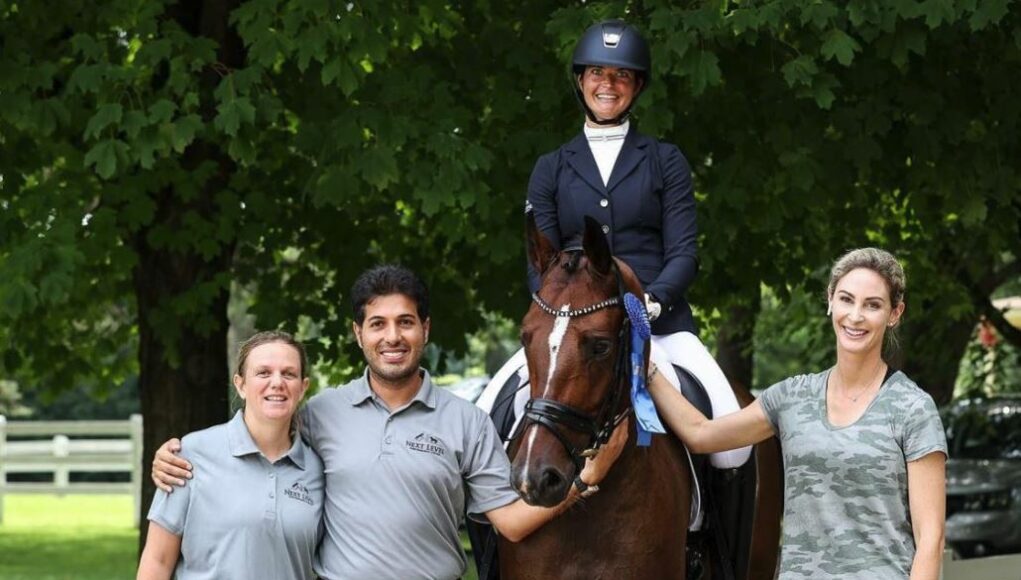
    Reza Zarrab, an Iranian-Turkish gold trader who back in 2017 struck a plea deal in a sanctions evasion case before a New York federal court, gave testimony incriminating Turkish President Recep Tayyip Erdoğan and his government and then vanished, is currently living in Davie, Florida, under the name of Aaron Goldsmith, according to a special report by the TR724 news website.

    and seven other people, including Turkey’s former economy minister and two additional Halkbank executives, were charged with engaging in transactions worth hundreds of millions of dollars for Iran’s government and Iranian entities from 2010 to 2015 in a scheme to evade US sanctions.

    Zarrab, who previously had avoided justice in Turkey despite being the prime suspect in a massive corruption investigation implicating Erdoğan’s cabinet and family, gave a detailed account of the scheme during his seven-day testimony and disappeared after his last appearance in court, on December 8, 2017, never to be seen again.

    That is until today, when Adem Yavuz Arslan, a Turkish journalist in exile working for the TR724 news website, published a report revealing the new identity of Erdoğan’s friend-turned-foe, including photos featuring him looking far thinner than in the past.

    In a YouTube video posted by TR724, Arslan said he was tipped off by an Uber driver who picked up Zarrab and recognized him, giving the addresses where he picked him up and dropped him off.

    Working on that information, Arslan found that Zarrab was running a company named Next Level Performance Center, Inc., a new equestrian training facility. After trying to no avail to see him at his home, located in a gated community, Arslan found Zarrab at his workplace.

    Arslan recorded his brief exchange with Zarrab on video. Zarrab is heard refusing to speak in Turkish and asking the journalist to leave the premises.

    Zarrab testified in December 2017 that he had bribed Turkey’s former economy minister, Mehmet Zafer Çağlayan, in a scheme to smuggle gold for oil in violation of US sanctions on Iran and that then-Prime Minister and current President Erdoğan personally authorized the involvement of Turkish banks in the scheme although he was not charged in the case.

    2013 graft probe

    The December 17-25 bribery and corruption investigations shook the country back in 2013. The probe implicated, among others, the family members of four cabinet ministers and Erdoğan’s children.

    Zarrab was one of the main suspects in the investigation. He was accused of paying large bribes to Turkish ministers and bureaucrats in return for their help in evading Iran sanctions.

    The graft scandal erupted with the arrest of the sons of three then-ministers from the ruling Justice and Development Party (AKP), Zarrab, the director of Halkbank, a district mayor and others on December 17, 2013.

    Zarrab’s close relationships with the Turkish ministers, whom he admitted bribing when he came forward as a witness after a plea bargain with US prosecutors in the federal case, were revealed via audio recordings of wiretapped phone conversations shared on the Internet by anonymous users.

    Despite the scandal resulting in the resignation of the cabinet members, the investigation was dropped after prosecutors and police chiefs were removed from the case. Erdoğan, officials of the ruling AKP and the pro-government media described the investigation as an attempt to overthrow the government.

    Dismissing the investigation as a conspiracy against his government by the Gülen movement, a group inspired by Muslim cleric Fethullah Gülen, Erdoğan designated the faith-based movement as a terrorist organization and began to target its members.

    He locked up thousands, including many prosecutors, judges and police officers involved in the investigation.

    In 2018, the 13th İstanbul High Criminal Court announced aggravated life sentences for former police chiefs Yakub Saygılı, Kazım Aksoy, Yasin Topçu and Mahir Çakallı along with Arif İbiş, Mustafa Demirhan, Mehmet Habib Kunt, İbrahim Şener, Mehmet Fatih Yiğit and Mehmet Akif Üner, who were behind the graft probe, on charges of attempting to overthrow the government.

    Hüseyin Korkmaz, one of the police chiefs working on the probe who was arrested by the Erdoğan government in 2014 and fled Turkey after being released in 2015, told the New York court in December 2017 that the investigation initially focused on the organization run by gold trader Zarrab but later grew to include dozens of others.

    He called Erdoğan the “No. 1” target in a group that also included Halkbank’s former general manager Süleyman Aslan and Mehmet Zafer Çağlayan, Turkey’s economy minister at the time.

    Following Korkmaz’s testimony, detention warrants were issued for his mother, father, wife, two sisters, brother and lawyer in Turkey.

    The closed Dec. 17 investigation had come into the spotlight once more back in August, when Erdoğan Bayraktar, the former Turkish minister of environment and urban planning and one of the four ministers implicated in the 2013 probes, confirmed the validity of charges against him in connection with the graft scandal. Turkish Minute

  • Turkey orders detention of 249 people over alleged Gülen links in a week

    Turkish authorities have over the past week ordered the detention of 249 people including former diplomats, teachers, dismissed civil servants, active duty and former military and police officers, and former cadets due to alleged links to the Gülen movement.

    According to the state-run Anadolu news agency the Ankara Chief Public Prosecutor’s Office on Friday issued detention warrants for 29 former diplomats. Police conducted operations across 15 provinces to detain them. The suspects are accused of using the ByLock messaging app, once widely available online and considered by the government to be a tool of secret communication among supporters of the movement.

    The UN Human Rights Council’s Working Group on Arbitrary Detention (WGAD) has repeatedly stated that arrest and conviction based on ByLock use in Turkey violated Articles 19, 21 and 22 of the International Covenant on Civil and Political Rights.

    As part of an investigation launched by the İzmir Chief Public Prosecutor’s Office, detention warrants were issued on Wednesday for 39 women including a teacher and three midwives over Gülen links. Thirty-two of the women were detained the same day following raids across five provinces. The detention warrants targeting the women were issued based on the allegations of a secret witness, named “garson” (waiter). The women are accused of organizing activities among female members of the movement.

    Turkish President Recep Tayyip Erdoğan has been targeting followers of the Gülen movement, inspired by Turkish Muslim cleric Fethullah Gülen, since the corruption investigations of December 17-25, 2013, which implicated then-Prime Minister Erdoğan, his family members, and his inner circle.

    Dismissing the investigations as a Gülenist coup and conspiracy against his government, Erdoğan designated the movement as a terrorist organization and began to target its members. He intensified the crackdown on the movement following the abortive putsch on July 15, 2016 that he accused Gülen of masterminding. Gülen and the movement strongly deny involvement in the coup attempt or any terrorist activity.

    The İzmir Chief Public Prosecutor’s Office has also ordered the detention of 158 individuals including active duty and former military officers and former cadets. The suspects are accused of using payphones to secretly communicate with their contacts in the Gülen movement.

    The so-called “payphone investigations” are based on call records. The prosecutors assume that a member of the Gülen movement used the same payphone to call all his contacts consecutively. Based on that assumption, when an alleged member of the movement is found in call records, it is assumed that other numbers called right before or after that call also belong to people with Gülen links. Receiving calls from a payphone periodically is also considered a red flag.

    Turkish police on Monday detained 15 former police academy students as part of an İstanbul-based operation after prosecutors issued detention warrants for 23 of them.

    Turkish Interior Minister Süleyman Soylu said on February 20, that a total of 622,646 people have been the subject of investigation and 301,932 have been detained, while 96,000 others have been jailed due to alleged links to the Gülen movement since the failed coup. The minister said there are currently 25,467 people in Turkey’s prisons who were jailed on alleged links to the movement.

    The government also removed more than 130,000 civil servants from their jobs on alleged Gülen links following the coup attempt. SCF

  • NSW Police investigating if car was ‘deliberately’ left on train tracks before derailment near Wollongong

    NSW Police are investigating if a stolen car was ‘deliberately’ left on a level crossing before a major train derailment near Wollongong early on Wednesday morning.

    The smash around 4.15am caused significant damage to the four-car passenger train at Kembla Grange station.

    The front carriage ended up on its side and metres away from the rest of the train. Other carriages were leaning sideways against the station platform.

    It also caused substantial damage to overhead wiring.

    Four people suffered minor injuries in the crash, including two passengers and the train’s driver and guard.

    The passengers suffered “abrasions” and the driver had back and abdominal pain.

    Nine passengers were on board along with the train driver and guard when the accident happened. Emergency crews had to rescue the train driver who was trapped in the cabin.

    “It was a chaotic scene when emergency services first arrived with the front carriage completely off the tracks and on its side and the second tilting,” NSW Ambulance Chief Inspector Norm Rees said in a statement.

    “The train had brought down power lines which were draped over the carriages and when you see all that, it’s lucky there weren’t more serious injuries to those on board.”

    A man called Nick who was on the train on his way to Sydney told radio station 2GB he was lucky not to have been injured.

    “It was like being on a trampoline. (We were) just bouncing up and down,” he said.

    Sydney Trains Chief Executive Matt Longland told Sunrise it was a “significant derailment” and it was “too early to speculate” why the car was left on the tracks.

    “The site is under the control of the NSW Police and emergency services so we will await their investigation to continue,” Longland said.

    Kembla Grange station serves NSW TrainLink trains on the South Coast line.

    NSW TrainLink said buses were replacing trains between Wollongong and Albion Park on Wednesday morning, while trains continue to operate between Wollongong and Waterfall.

    Customers are warned to “allow plenty of additional travel time”.

    The accident comes on an already chaotic day for train services in NSW.

    Commuters are being told to make other arrangements as rail workers strike over the lack of progress on a new enterprise bargaining agreement.

    Sydney Trains and the NSW TrainLink Intercity network will have fewer services on Wednesday, with some running to a reduced timetable and others replaced with buses.

    Transport for NSW chief operating officer Howard Collins said travellers should “expect your trip to be impacted and longer than usual”, with disruption all day and only about 30 per cent of services running.

    People should use trip planning apps and the Transport for NSW website to find the latest information and alternative travel options.

    Crews are refusing to drive privately built trains, which include Waratah and Millennium trains.

    Sydney Trains chief executive Matt Longland said those comprise “about two-thirds of our available trains”. 7News

  • Ministry sues family of man who died in crash involving military vehicle

    The Turkish Interior Ministry has filed a lawsuit for damages in the amount of $290,823 against the family of Fikri Demirbaş, who died in an accident involving a military vehicle in southeastern Diyarbakır province in 2017, accusing Demirbaş damaging the armored car, Turkish Minute reported on Wednesday, citing the Jin News website.

    In 2019 the ministry sent a notice to the family informing them that they must pay for the damages the 2017 crash — which involved Demirbaş’s car and a military vehicle and resulted in the death of five members of his family — had caused to the armored vehicle.

    Since the family hadn’t paid as demanded, the ministry recently filed a lawsuit for damages based on a crime scene report by the gendarmerie station in Lice that said that the accident occurred due to Demirbaş’s “improper lane change.” The report also stated that Demirbaş was “primarily” at fault for the accident while the driver of the armored vehicle was found to be secondarily at fault.

    The case was accepted by the Diyarbakır 3rd Civil Court of First Instance, which requested that both the ministry and the Demirbaş family submit their written defense regarding the incident. The court will decide whether the case will be heard with or without a hearing after evaluating the defenses, Jin News said.

    “We have already suffered enough. I have eight children. Three of them are married, but I’m taking care of the rest. … While we are suffering all this [financial difficulty], what does the government do? It sends each of us notices [to have us pay for the damages]. … How can I pay millions when I can’t even pay my rent?” Halime Demirbaş, the widow of Fikri Demirbaş, said.

    Referring to the decision of non-prosecution for the police officer driving the military vehicle at the time of the accident, she added: “Five people were killed, but those who killed them haven’t been punished. We witness what punishment is given when even a stone is thrown at an armored vehicle, but five people were killed here. Despite what happened, they punish the family of those who were killed, not those who killed them. Now I’m asking: What kind of conscience is this?”

    The killing of civilians by military vehicles is common in Turkey’s Southeast, where there is a heavy military presence due to ongoing clashes between the Turkish military and the outlawed Kurdistan Workers’ Party (PKK).

    According to a report by the Human Rights Association (İHD) Diyarbakır branch, 36 people, including six women and 16 children, have been killed and 85 were injured in 63 accidents involving armored vehicles over the past 10 years. SCF

  • Documentary filmmaker standing trial for allegedly insulting President Erdoğan

    Documentary filmmaker standing trial for allegedly insulting President Erdoğan

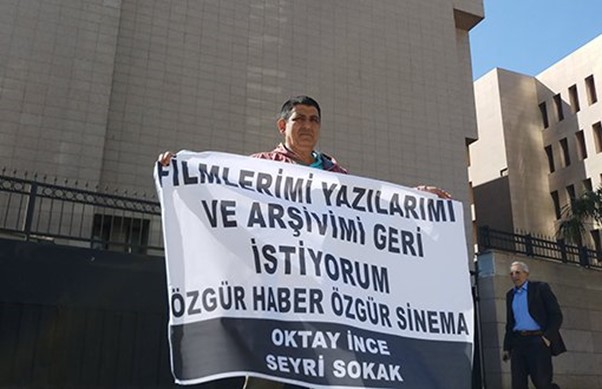
    Oktay İnce, a documentary filmmaker and activist, appeared in court on Tuesday for the first hearing in his trial for insulting Turkish President Recep Tayyip Erdoğan after his archives concerning street protests were seized by the police in a home raid in 2018, the Bianet news website reported.

    İnce’s archive documented 20 years of street protests by people demanding better rights. He posted parts of his archive on Twitter under the handle “Seyri Sokak.” İnce was charged with spreading terrorist propaganda, and on October 18, 2018 the police confiscated his laptop, other electronic devices and his archives.

    Following the seizure of his property, İnce staged a protest demanding the return of his archives, after which insult charges were brought against him. Posts from an anonymous Twitter account whose content was not disclosed were also presented as evidence against him. İnce’s next hearing is scheduled for November 23.

    Insulting the president is a crime in Turkey, according to the controversial Article 299 of the Turkish Penal Code (TCK). Whoever insults the president can face up to four years in prison, a sentence that can be increased if the crime was committed through the mass media.

    According to the Justice Ministry, a total of 160,169 investigations and 35,507 cases have been launched on charges of insulting the president over the past seven years, beginning with the election of Erdoğan to the presidency in 2014 to the end of 2020.

    The European Court of Human Rights on Tuesday urged Turkey to amend the law granting Erdoğan extra protection from perceived insults while it awarded damages to a man jailed over Facebook posts deemed disrespectful of the president.

    The court found that the conviction had a “chilling effect” that discouraged criticism and constituted a violation of the man’s freedom of expression.

    It also said the Turkish law imposing harsher punishments for anyone convicted of insulting the president was “against the spirit” of the European Convention on Human Rights, which Ankara ratified in 1954.

    “A state’s interest in protecting the reputation of its head of state could not serve as justification for affording the head of state privileged status or special protection vis-a-vis the right to convey information and opinions concerning him,” it said. SCF

  • Antalya police detain 72-year-old woman for protesting imprisonment of daughter with stage 4 maxillary sinus cancer

    Antalya police on Tuesday detained Fatmana Karakuzu, the mother of Ayşe Özdoğan, an imprisoned woman with stage 4 maxillary sinus cancer, for protesting her daughter’s imprisonment over trumped-up charges of “participation in a terrorist organization.”

    Karakuzu was detained in front of the Antalya courthouse. She was reportedly taken to a police station for interrogation.

    According to a later tweet posted by Melek Çetinkaya, the purge-victim woman was released after almost five hours in police custody.

    Ayşe Özdoğan was sent to prison early in October on charges of membership to the Gulen group, which the government accuses of masterminding a coup attempt.

    The group denies any involvement.

    Ayşe was sent to prison after a regional appeals court in Turkey has upheld a prison sentence of nine years, five months handed down to her.

    Among the accusations are claims that she deposited 300 Turkish Liras (35 USD) into a Bank Asya account, as well as working at a Gulen-affiliated student dormitory.

    The Gulen group is accused by the government of masterminding a coup attempt on July 15, 2016. The group denies any involvement.

    The purge-victim woman, Ayşe, was initially put in pre-trial detention in April 2019 for working at a now-closed Gulen-affiliated student dormitory. After spending a week under police custody, she was released on bail. She was eventually sentenced to nine years and five months in prison in December 2019.

    The same court also sentenced her husband, İlker Özdoğan to 13 years and five months in prison over similar charges. TurkeyPurge

  • Price of groceries set to increase amid global container shortage

    Price of groceries set to increase amid global container shortage

    Every single thing you buy is at risk of becoming more expensive.

    From toilet paper to pet food, mayonnaise to butter, a blowout in global commodity prices along with a severe container shortage and dramatically rising freight costs are putting suppliers under unprecedented pressure.

    The cost of tin in Australian dollars per metric ton rose 93 per cent between September last year and August this year.

    That means every canned good from tuna to cat and dog food is costing suppliers a small fortune.
    NextGen partner Neil Rechlin says suppliers have been making efficiencies to absorb the added costs but the price pressures are now too much.

    “In the 30 years I’ve been in the grocery industry I’ve never seen these kinds of pressures coming through for suppliers,” he told 9News.

    “Suppliers have done a good job over the last 10 years of improving efficiency, of absorbing some of these cost movements… but when you’re seeing increases of 20 to 30 per cent of the ingredients to make these products, there’s no way suppliers can soak that up.

    “We’re certainly going to see those costs getting passed on through the retailers and ultimately unfortunately to shoppers’ baskets.”

    The cost of shipping a 40-foot container has skyrocketed by almost 400 per cent since last year, according to the Drewry World Container Index.

    At the same time, reliability has plunged.

    A global shortage of containers has driven up the cost along with higher landing fees, labour shortages and the increased volume of goods shipped this year amid the COVID-19 pandemic.

    Sorbent Paper Co, which produces Sorbent toiler paper, facial tissues, Handee paper towel and Deeko napkins and tableware locally, brings in its pulp from overseas.

    The cost of pulp, which is the base for paper, rose 40 per cent just in the first quarter this year and again spiked in July.

    Factors contributing to the costs include high demand for fibre-based packaging due to environmental concerns, high demand from the building industry and the consolidation of global pulp producers.
    But Angela Thorpe from Sorbent said increased pulp prices aren’t as worrying as the price of freight.

    “That’s the one that’s really hurting us right now,” she told 9News.
    “Ocean freight increases are around 500 to 600 per cent which is unprecedented.”

    Ms Thorpe said the lack of containers and the delays and congestion at ports amplified the issues for an industry like toiler paper which is so bulky.
    “To give you an example, over 30 million rolls of toilet paper are bought in supermarkets each week but to support that you need containers coming in at two an hour to support that kind of volume.”

    Ms Thorpe said the company had made significant efficiencies and had absorbed the rising costs but that was now unsustainable.
    “We’re really facing challenging times and with this addition of the freight cost, it’s not something we can continue to absorb. We’re working closely with retailers but those costs will have to be passed on.”

    Earlier this month, various size packs of toilet paper were increased by around 50 cents.

    But more increases are on the way.
    “I expect you’ll see a lot more to come in the next few months,” Ms Thorpe said.

    Mr Rechlin said commodity prices were rising across the board.
    The plastic to make the lid of a mayonnaise tub has gone up, as has the oil inside the mayo.

    Some prices began going up in September, there’s more movement now with additional pain to come next month.
    “By February, March, we’ll see some quite significant increases across your general grocery basket and that might be as high as 20 to 30 per cent more than what we were paying earlier this year,” Mr Rechlin said.
    “If it’s packaged in glass or plastic or paper, these costs are going up.
    “If it’s coming from overseas, the freight costs of these … is up.
    “Dairy prices are up. The humble tin can for your dog food, that’s going up significantly just in terms of the metal in the packaging.” 9News

  • Malaysia, Indonesia ‘worried and concerned’ AUKUS could lead to Asia regional arms race

    Malaysia and Indonesia have said they share strong reservations over Australia’s decision to acquire nuclear-powered submarines, even though nuclear weapons were not part of the plan.

    Referring to AUKUS, a trilateral security pact agreed last month between Australia, the United States and Britain, Malaysia’s Foreign Minister, Saifuddin Abdullah, said the two South-East Asian nations were similarly concerned about its ramifications.

    “We agree on the latest issue in the region regarding a country near our territory that is purchasing new nuclear-powered submarines,” Mr Saifuddin told a joint news conference after a meeting counterpart Retno Marsudi.

    “Even though that country doesn’t have the capacity for nuclear weapons, we are worried and concerned.”

    Indonesia last month said it was concerned AUKUS could lead to a regional arms race.

    The deal comes amid increasing tensions in the East and South China Seas, conduits for trillions of dollars of shipments amounting to about a third of global trade.

    The Philippines, a US defence treaty ally, has backed AUKUS, saying it offers a necessary counterbalance to an increasingly assertive China.

    Malaysia previously said it would seek views on the issue with China and the Association of South-East Asian Nations (ASEAN).

    The Indonesian and Malaysian ministers also expressed disappointment with the Myanmar junta’s lack of progress in implementing an agreed peace plan with ASEAN.

    ASEAN on Friday decided to exclude junta chief Min Aung Hlaing, who led a February 1 coup, from an upcoming regional meeting, in an unprecedented snub by the bloc.

    ASEAN would continue to offer humanitarian assistance to Myanmar, Indonesia’s Foreign Minister Retno Marsudi said.

    The foreign ministers also said they were in discussions about starting a travel corridor between Indonesia and Malaysia, and had agreed to finalise maritime sea borders in southern Malacca and the Sulawesi Sea.

    Reuters

  • Statement made in mosques by members of pro-gov’t foundation embroiled in scandal draws ire: report

    Members of the Turkey Youth Foundation (TÜGVA), on whose advisory board President Recep Tayyip Erdoğan’s son Bilal Erdoğan sits, made a statement after morning prayers in all 81 Turkish provinces on Sunday regarding a leak that showed TÜGVA members as a result of nepotism were appointed to state institutions, drawing criticism on social media, Turkish Minute reported.

    Last week journalist Metin Cihan disclosed a document that included information on executives and members of TÜGVA who were appointed to posts in the Turkish military, police force and judiciary.

    TÜGVA members all over Turkey gathered in Turkey’s mosques after morning prayers on Sunday and made a statement that denied the allegations, claiming that the document was fake.

    Initially claiming that the document was a fabrication, TÜGVA Chairman Enes Eminoğlu later confirmed the authenticity of the document in an interview with journalist Cüneyt Özdemir. After the interview, Eminoğlu said his remarks were misinterpreted and that he had not acknowledged the authenticity of the leaked list.

    Saying that they were being targeted by a social media lynch mob, TÜGVA members stated that their only purpose was to cultivate a young generation with religious training and traditional values.

    TÜGVA members’ use of mosques to make their statement sparked anger on social media as many Turks deemed the act as an exploitation of religion for the group’s political ends.

    “In a tight spot, TÜGVA is making a statement from inside a mosque. Exploiters of religion,” a user tweeted.

    On Friday a court in the southern province of Osmaniye issued an access ban to a news story about the TÜGVA leak, the Freedom of Expression Association’s (İFÖD) EngelliWeb initiative reported.

    Erdoğan’s Justice and Development Party (AKP) government has long been attracting criticism for engaging in nepotism and filling state posts with its cronies.

    Critics say the level of AKP nepotism reached new heights following a failed coup in July 2016 after which the government removed more than 150,000 civil servants from their jobs under the pretext of an anti-coup fight. SCF

  • Turkish gov’t to increase prison capacity by a further 500,000 beds by 2024: deputy

    Turkish government is in process of building hundreds of new prisons within the next four years to create space for as many as 500,000 people, according to Ömer Faruk Gergerlioğlu, a deputy from the Peoples’ Democratic Party (HDP).

    Speaking to the Karar TV early on Monday, Gergerlioğlu said that the unprecedented increase in the number of people jailed as part of Turkey’s ever-expanding purge following the July 15 coup attempt, has created the need for more space in prisons.

    “If they (the AK Party) remains in power, they will increase prison capacity by a further 500,000 beds by 2024,” Gergerlioğlu said.

    Turkish Interior Minister Süleyman Soylu said on February 20 that a total of 622,646 people have been the subject of investigation and 301,932 have been detained, while 96,000 others have been jailed due to alleged links to the Gülen group since a failed coup in 2016. The minister said there are currently 25,467 people in Turkey’s prisons who were jailed on alleged links to the group. TurkeyPurge