Blog

  • Jailed Kurdish leaders mark 5 years behind bars on terrorism charges

    Former co-chairs of the pro-Kurdish Peoples’ Democratic Party (HDP) Selahattin Demirtaş and Figen Yüksekdağ, who were jailed on Nov. 4, 2016 on terrorism-related charges, on Thursday passed the five-year mark behind bars.

    The HDP on Thursday described in a tweet the former members’ arrest as “a coup” that targeted the party.

    “Our former co-chairs Demirtaş and Yüksekdağ and elected officials have been imprisoned since 2016. Those who kidnapped our friends are now reaching the point of exhaustion. We will win! The people will win!” they added, referring to President Recep Tayyip Erdoğan and his Justice and Development Party (AKP).

    Başak Demirtaş, the wife of Selahattin Demirtaş, also released a video on social media, giving messages of hope.

    “Exactly five years have passed since Selahattin and his friends were taken out of their homes, unlawfully. We’re entering the sixth year. … Despite everything, we have never lost hope over the last five years. Neither our will nor our faith was broken. We know that justice, freedom and equality aren’t far away,” she said in a video released on Twitter on Thursday.

    The Kurdish leader has remained in prison for five years despite two European Court of Human Rights (ECtHR) rulings in 2018 and 2020 that said he was imprisoned for “political” reasons and not for “legal” reasons, ordering his “immediate release.” The Council of Europe also called on Turkey to immediately release the Kurdish politician on Sept. 17, 2021.

    Although the ECtHR rulings are legally binding, there have been many instances in which Turkey has not implemented them. Erdoğan has dismissed both rulings on Demirtaş, accusing the court of applying a double standard and of hypocrisy.

    Demirtaş also said they hadn’t been the only ones who had paid a price in past years, referring to Erdoğan and his government’s crackdown on dissidents, which culminated in the aftermath of a July 15, 2016 coup attempt.

    “Think about it, the night when Selahattin and his friends were unlawfully imprisoned, the Turkish lira was worth around 3 to the dollar. Today, the dollar is around 9.5 lira due to the economic collapse caused by all the injustice in the country. So, just to silence the opposition, [they have caused] the value of our currency [to] have decreased by about 300 percent,” she said.

    Demirtaş stated that the AKP government “completely destroyed the already incomplete peace and joy of the country and made people feel tired of their lives,” adding that they made three out of every four youngsters in Turkey think about leaving the country for a better future abroad.

    Meanwhile, the Evrensel daily on Thursday reported that the pro-Kurdish HDP would submit its first written defense to the Constitutional Court on either Nov. 5 or 8 as part of a case launched after the court in June accepted an indictment seeking the closure of Turkey’s second-largest opposition party.

    According to the report, the defense will be examined by Bekir Şahin, the chief public prosecutor of the Supreme Court of Appeals who had submitted the 850-page indictment calling for the imposition of a political ban on 451 party members as well as a freeze on the party’s bank accounts. Şahin will then present his opinion within the coming month.

    The HDP is accused in the indictment of links to the outlawed Kurdistan Workers’ Party (PKK), listed as a terrorist organization by Turkey, the US and the EU, and of posing a threat to the “indivisible integrity of the state.”

    Erdoğan and his ruling AKP have long portrayed the HDP as the political front of the PKK. The party denies links to PKK and says it is working to achieve a peaceful solution to Turkey’s Kurdish issue, which refers to the demand for equal rights by the country’s Kurdish population and their struggle for recognition, and is only coming under attack because of its strong opposition to Erdoğan’s 19-year rule.turkishminute
  • Ugg boot maker says federal government support could help take case to US Supreme Court

    Ugg boot maker says federal government support could help take case to US Supreme Court

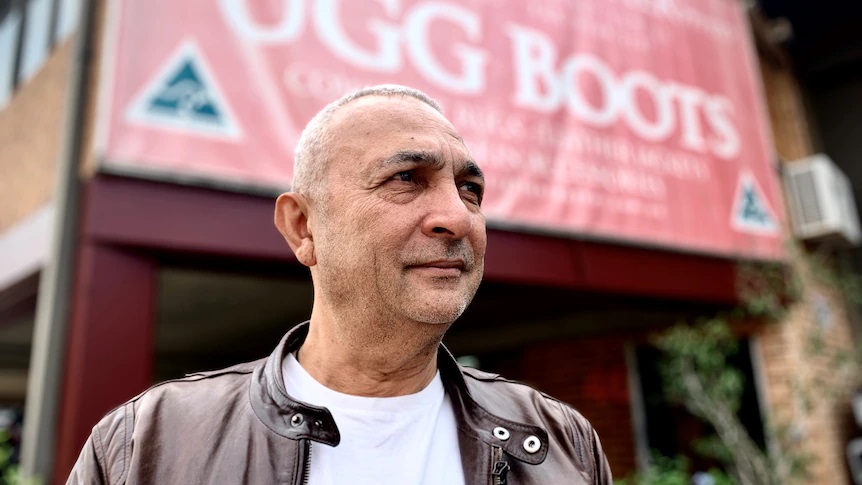
    An Australian ugg boot manufacturer says his legal battle with a US company has received a major boost thanks to federal government support.

    Footwear giant Deckers holds the UGG trademark in more than 130 countries and, in 2019, successfully sued Western Sydney boot maker Eddie Oygur over the sale of about a dozen products into the US.

    After losing a US court appeal against Deckers in April, Mr Oygur said he was facing the collapse of his business, owing $US450,000 ($572,629) in damages and millions in legal fees.

    South Australian former senator and lawyer Nick Xenophon is part of his legal team and has been lobbying for federal government support.

    Mr Xenophon said the government had briefed a senior American appeals lawyer to file a “friend of the court” brief that would provide “critical support” to help take the case to the US Supreme Court.

    “We’ve now filed an appeal in the US Supreme Court to say this trademark ‘ugg’ can’t belong to the US or to any country or any private company because ‘ugg’ is a generic Australian term,” he said.

    “The Australian government has coughed up $US150,000 for the American lawyers.

    “It’s a defibrillator … that should make a huge difference in actually getting before those nine justices of the US Supreme Court.”

    Mr Oygur said he was elated by the news, saying he had “no other choice” than to continue his fight.

    “I’m really grateful … I really need all the Australian support I can to bring ugg back home,” he said.

    “We’re still on our feet, thank God. We’re still fighting them and we’re going to bring ugg back home.

    “It did put a tear in my eye, I must say, because it made me proud to be an Australian. I put all my life savings into this. But I knew I was fighting and I’m still fighting for what’s right for Australia and for my business.”

    Mr Xenophon said preliminary arguments would be heard as early as next month, and is hoping the US Supreme Court will then hear the case in May or June.

    The term “ugg” is widely used in Australia to refer to sheepskin boots, but in major markets, including the US and the UK, Deckers owns the UGG trademark. ABC

  • 20,333 inmates in Turkish prisons have university degrees, a 151 pct increase since 2016

    The number of inmates with university degrees in Turkey increased more than twofold between 2016 and 2020, reaching 20,333, EuroNews Turkish reported, citing data released by Turkish Statistical Institute (TurkStat).

    University graduates made up only 8.1 percent of Turkey’s prison population in 2016, while that rate went up to 20.33 percent in 2020. Four hundred sixty inmates in Turkish prisons have doctorates and 2,371 have master’s degrees.

    The dramatic increase reflects the increasing number of political prisoners in the country in the aftermath of a coup attempt on July 15, 2016.

    Following the abortive putsch, the Turkish government declared a state of emergency and jailed 96,000 people due to alleged links to the Gülen movement, which it accuses of being behind the attempt. As of February 2020, a total of 622,646 people had been the subject of investigation and 301,932 had been detained for alleged ties to the movement.

    The crackdown also targeted political opponents of the government, Kurdish activists and human rights defenders, among others. According to Council of Europe’s “Annual Penal Statistics on Prison Populations for 2020,” out of 30,524 prisoners convicted on terrorism charges in CoE member states, 29,827 were in Turkey alone.

    Turkish President Recep Tayyip Erdoğan has been targeting followers of the Gülen movement, a faith-based group inspired by Muslim cleric Fethullah Gülen, since the corruption investigations of December 17-25, 2013, which implicated then-Prime Minister Erdoğan, his family members and his inner circle.

    Dismissing the investigations as a Gülenist coup and conspiracy against his government, Erdoğan designated the movement as a terrorist organization and began to target its members. He locked up thousands including many prosecutors, judges and police officers involved in the investigation as well as journalists who reported on them.

    Erdoğan intensified the crackdown on the movement following the 2016 coup attempt that he accused Gülen of masterminding. Gülen and the movement strongly deny involvement in the abortive putsch or any terrorist activity.

    According to the statistics, the total number of inmates in Turkish penal institutions was 266,831 as of the end of 2020, an 8.5 percent decrease compared to the previous year. The decrease was mainly due to a law that allowed the early release of some 90,000 inmates in order to prevent the spread of COVID-19 in prisons. Yet, Turkish prisons are still at overcapacity according to the statistics. The penal institutions have a capacity of 245,200 inmates, some 20,000 fewer than the number of inmates. SCF

  • 96-year-old woman facing judicial ordeal due to Erdoğan insult charges

    A 96-year-old woman is being forced to travel more than 500 kilometers from her home to receive treatment as part of judicial measures imposed on her by a court on the grounds that she insulted Turkish President Recep Tayyip Erdoğan, Turkish Minute reported, citing the Mezopotamya news agency reported.

    A video of Aliye Yabansu, which was shot without her approval in Şanlıurfa province in January 2019 and shared on social media, prompted a criminal complaint against her from an Erdoğan supporter, identified only by the initials M.İ. Acting on the video and the criminal complaint, prosecutors drafted an indictment against Yabansu on charges of insulting the president, which is a crime in Turkey according to the controversial Article 299 of the Turkish Penal Code (TCK).

    At the final hearing of her trial on Dec. 1, 2020, Yabansu’s lawyer Celil Tanış requested the woman’s acquittal, saying that his client is bedridden and suffers from multiple health problems, adding that it’s not clear in the video that her remarks were aimed at Erdoğan. The lawyer also presented a medical report to the court attesting to the fact that the woman has no criminal liability due to a series of psychological and physiological problems.

    In its opinion, the prosecutor, however, asked that judicial security measures be imposed on the woman, which are implemented in the case of persons with no criminal liability in accordance with Article 57 of the TCK and require them to be hospitalized at the nearest high-security hospital to receive treatment and protection.

    Although the court ruled for Yabansu’s hospitalization at the nearest hospital, prosecutors demanded that she be transferred to the Kayseri City Hospital by Nov. 5, which is more than 500 kilometers away from her home in Siverek. Her lawyer’s request for Yabansu’s hospitalization at a hospital in Diyarbakır, which is 80 kilometers away, was rejected.

    According to lawyer Tanış, Yabansu’s hospitalization at the Kayseri hospital will be tantamount to torture because she will have to travel more than eight hours and will have nobody there to care for her. He said the woman’s biological age is actually above 100 and she suffers from a range of health problems including high blood pressure and diabetes and is unfit for travel.

    “Sending this elderly woman to a city and into the hands of people she doesn’t know will be no different than burying her alive,” said the lawyer.

    Thousands of people in Turkey are under investigation, and most of them are under the threat of imprisonment, over alleged insults of President Erdoğan. The insult cases generally stem from social media posts shared by Erdoğan opponents. The Turkish police and judiciary perceive even the most minor criticism of Erdoğan or his government as an insult.

    Whoever insults the president can face up to four years in prison, a sentence that can be increased if the crime was committed through the mass media. SCF

  • Reactions mount as critical media outlets not allowed to cover Republic Day ceremony

    Reporters from the Cumhuriyet daily, Fox TV and the ANKA news agency, all critical of the Turkish government, were reportedly prevented from covering the Republic Day ceremony held at Anıtkabir in Ankara upon instructions from the Turkish presidency’s communications director Fahrettin Altun, sparking criticism from media associations, Turkish Minute reported on Friday.

    The executive board of the Turkish Journalists’ Association (TGC) denounced the move in a statement, while Fox TV Editor-in-Chief Doğan Şentürk posted a protest on Twitter. “Half of the media outlets including Fox TV were not allowed to cover the Republic Day ceremony at Anıtkabir! This move, unparalleled in our political history, which I have never experienced in

    my professional career spanning 35 years, is not only a violation of the Constitution, but also an eclipse of reason,” Şentürk tweeted.

    In its statement the TGC indicated that no one has a monopoly on Republic Day, noting that the ruling Justice and Development Party’s (AKP) accreditation of reporters to cover specific events has evolved into censorship.

    The TGC reminded that critical reporters have been prevented from covering newsworthy events, initially at the Prime Ministry and then at party congresses, ministry meetings, mosques, cemeteries and official ceremonies.

    “The latest example of this is the prevention of our fellow reporters from covering the Republic Day ceremony at Anıtkabir,” the statement said, adding that the ruling AKP has discriminated among reporters.

    The exclusion was also protested by the Turkish Journalists Union (TGS), which called on the government to halt its discriminatory practices.

    “Our fellow reporters from Fox TV, the Cumhuriyet daily and the ANKA news agency who wanted to cover the ceremony at Anıtkabir were not allowed to enter upon instructions from the communications director. This is not a matter of accreditation but censorship. Stop discrimination and do not violate the public’s right to information,” the TGS tweeted.

    Erol Önderoğlu, the Turkey representative for Reporters without Borders (RSF), referred to the incident as discriminatory accreditation.

    “RSF Representative Erol Önderoğlu: It is very sad that discriminatory accreditation targeted media outlets like Fox TV, the Cumhuriyet daily and the ANKA news agency during the Republic Day ceremony. Those who ordered that those reporters not be allowed to enter Anıtkabir have spurned media freedoms once again,” RSF Turkish tweeted.  SCF

  • Darko Desic facing deportation 30 years after escaping from NSW prison

    A fugitive who was at large for nearly three decades is facing deportation after being sentenced to two months in jail for his historical escape from a NSW prison.

    Darko Desic had been evading authorities since 1992 after using a hacksaw blade and bolt cutters to escape Grafton Correctional Centre where he was serving a three-and-a-half-year term for marijuana supply.

    To move under the radar, the 64-year old evaded authorities by doing cash-in-hand jobs around Sydney’s northern beaches and never signing up for government services.

    After work dried up during the COVID-19 crisis, he fell into homelessness and turned himself into police last month.

    Desic’s lawyer said his client broke out because he was terrified of being deported to war-torn Yugoslavia and being placed in detention or forced to become a front-line fighter in the civil war.

    ‘You’re going to be returned somewhere as a deserter, or used as a person put on their frontlines … it was almost a genocide,” defence solicitor Paul McGirr said.

    “This is a man who has had 30 years blemish free, in respect to his life he’s had no Medicare, he’s had to remove his own teeth, never seen a doctor.

    “He’s had this hanging over his head for all this time — in some sense the sentence has been served.”

    The offence of escaping a prison has a maximum 10-year sentence under laws in place at the time of Desic’s getaway.

    Police prosecutor Scott Williams told the court he believed a prison sentence was necessary to deter other prisoners from escaping and evoking a “sense of Australian larrikinism”.

    Magistrate Jennifer Atkinson sentenced Desic to two months noting there was no alternative to a custodial sentence for the crime.

    “He chose to take tools and break out of a custodial centre… I accept he had real fears about what might happen to him,” she said.

    She spoke to Desic directly as he appeared via video link from Grafton’s Clarence Correctional Centre.

    “You have had a very tough time over the years but I have a job to do,” Magistrate Atkinson said.

    Desic’s laywer, who was arguing for no sentence, noted it was not “unfair”.

    “I think the magistrate really felt for him and a custody sentence of two months is certainly not an unfair result,” Mr McGirr said.

    However, a new concern for his client is a letter the Australian Border Force (ABF) has sent to Desic advising him of deportation at the end of his sentence.

    Mr McGirr will be seeking clemency for Desic from the Attorney-General and Governor-General.

    “Certainly I and a number of other people are going to fight for him because I just think it’s unAustralian to kick someone when they’re down,” he said.

    “He’s a loved member of the community and he’s one of us and we’re going to continue to fight for him.”

    Desic is currently serving out his original custodial sentence which will end October, 2022 at which point his additional sentence will begin.

    Desic will be due for release in December, 2022.abcnews

  • Inflation climbs on fuel and houses, pushing above the bottom of Reserve Bank target range

    A jump in fuel prices has contributed to a broader rise in inflation over the past few months, which could put upward pressure on interest rates.

    The official ABS measure of consumer prices rose 0.8 per cent over the September quarter, with prices 3 per cent higher than a year earlier.

    The quarterly rise was driven primarily by a jump in fuel (7.1 per cent) and new dwelling purchase (3.3 per cent) costs.

    Rising energy costs have caught the attention of Steve Cassidy, who runs a truck mechanic business in Sydney’s west.

    He runs a fleet of mobile mechanic vehicles that meet broken-down trucks and other machinery in and around Sydney.

    “I think 12 months ago it was $1.20 a litre, and now today I was driving to work and it was nearly $1.60 a litre,” he told The Business.

    This week the national average petrol price rose to a 13-year high and is at record levels in some cities.

  • Rights advocates slam journalists for claiming ‘systematic torture no longer exists in Turkey’

    Rights advocates slam journalists for claiming ‘systematic torture no longer exists in Turkey’

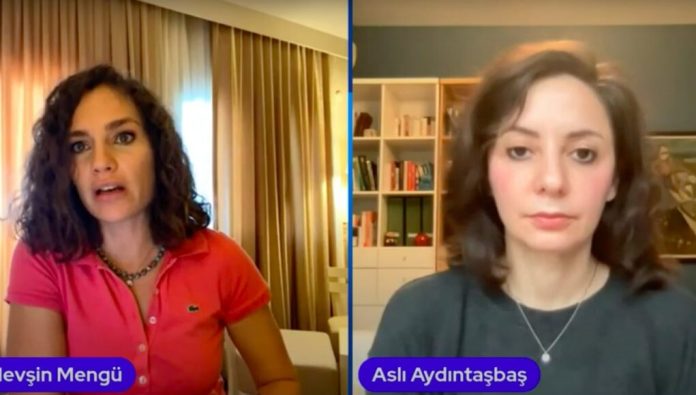
    Two Turkish journalists who are critical of the ruling Justice and Development Party (AKP) have come under fire for arguing that “systematic torture no longer exists in Turkey” during a program broadcast on YouTube on Sunday, Turkish Minute reported.

    Journalist Nevşin Mengü and Aslı Aydıntaşbaş, a journalist and senior fellow at the European Council on Foreign Relations (ECFR), were criticized by rights advocates, journalists and social media users after the latter argued that systematic torture no longer exists in Turkey on Mengü’s program and Mengü failed to object to the statement.

    “Aslı Aydıntaşbaş, who can actually say ‘systematic torture no longer exists’ (!), I invite you to monitor data from the Human Rights Association [İHD] and the Human Rights Foundation of Turkey [TİHV],” Şebnem Korur Fincancı, a prominent human rights activist and head of the Turkish Medical Association (TTB), tweeted.

    İHD co-chair and lawyer Eren Keskin said, “To the ‘white journalists’ of [this] land: Is the suffering of a mother in [the southeastern town of] Cizre, who had lost both her sons and her daughter and still can’t find her daughter’s body, included in ‘systematic torture’? And we still haven’t confronted [the events of] 1915 and 1938…”

    Keskin was referring to the term “white Turk,” which is widely used to refer to the urban republican elite.

    Many scholars see the massacre of as many as 1.5 million Armenians in 1915, during the final days of the Ottoman Empire, as the 20th century’s first genocide, while Turkey disputes the description and says the toll has been inflated, considering those killed victims of a civil war.

    The years 1937-1938 refer to the killing of thousands of Alevis and the displacement of  hundreds of others in Dersim in eastern Turkey in the early years of the Turkish Republic.

    “Nobody expects you to say ‘There’s systematic torture in Turkey’ because that would get you in trouble. [But] at least don’t say ‘there’s no systematic torture.’ With this kind of discourse, you will be the voice of the [Erdoğan] regime, whether you’re aware of it or not,” exiled journalist Tarık Toros said, addressing Mengü and Aydıntaşbaş.

    Criticizing the two journalists’ gestures and expressions when talking about torture, Adem Yavuz Arslan, another Turkish journalist in exile, said, “If you forget to turn up the volume [of the YouTube video], you might think they’re talking about something fun!”

    “[They say] there’s no systematic torture in Turkey, which means they don’t consider systematically tortured Gülen movement supporters and Kurds to be human beings,” he added, referring to President Recep Tayyip Erdoğan and his AKP government’s years-long crackdown targeting both communities.

    “I wish torture had ended in Turkey! … They say there’s no systematic torture, and I say ‘Have a heart,’ some prisoners don’t even go to the hospital just to avoid strip-searches [when leaving and re-entering the facility],” the MP added.

    Most recently Turkey’s Constitutional Court on May 18 ordered that Eyüp Birinci, a former teacher arrested for links to the Gülen movement, be paid 40,000 Turkish lira in compensation for being sexually assaulted, beaten and insulted in police custody.

    According to the family of Birinci, who was arrested in July 2016 and sentenced to eight years, nine months in prison, he fainted from the torture and was taken to a hospital where it was determined that he was experiencing internal bleeding due to his colon being ruptured from torture inflicted with a police baton.

    The court previously ruled in favor of an applicant who claimed that he was tortured for 25 days during his detention at Afyon police headquarters in 2016, ordering the Turkish government to pay TL 50,000 ($6,000) in damages and to launch an investigation into the perpetrators.

    Erdoğan has been targeting followers of the Gülen movement, a faith-based group inspired by Muslim cleric Fethullah Gülen, since the corruption investigations of Dec. 17-25, 2013, which implicated then-Prime Minister Erdoğan, his family members and his inner circle.

    Dismissing the investigations as a Gülenist coup and conspiracy against his government, Erdoğan designated the movement as a terrorist organization and began to target its members. Erdoğan intensified the crackdown on the movement following a coup attempt that he accused Gülen of masterminding. Gülen and the movement strongly deny involvement in the abortive putsch or any terrorist activity.

    After the abortive putsch, ill-treatment and torture became widespread and systematic in Turkish detention centers as evidenced by the UN special rapporteur on torture and other cruel, inhuman, or degrading treatment or punishment in a report based on his mission to Turkey between Nov. 27 and Dec. 2, 2016. Lack of condemnation from higher officials and a readiness to cover up allegations rather than investigate them have resulted in widespread impunity for the security forces. SCF

  • Daughter of purge-victim professor dies in traffic accident: report

    Daughter of purge-victim professor dies in traffic accident: report

    Rümeysa Berin Şen, a 25-year-old medical doctor and the daughter of purge-victim Turkish professor, Murat Şen, died late on Saturday in a traffic accident in Capital Ankara.

    According to the Turkish media, Berin’s vehicle crashed into the back of the truck at very high speed in Çankaya district. She was an assistant doctor in the Gynecological Clinic of Ankara City Hospital.

    According to tweets posted by journalist Sevinç Özarslan, Murat Şen, former dean of the Melihşah University’s Faculty of Law, has been in prison since February 8, 2018 over alleged links to the Gulen group, which the Turkish government accuses of masterminding a coup attempt in 2016. The group denies any involvement.

    Following the coup attempt that killed 249 people and wounded more than a thousand others, the Turkish government declared a State of Emergency and issued dozens of emergency decrees, known as KHK, to purge its critics from state bodies.

    So far, a total of 6021 academics were dismissed by gov’t decrees No. 672/673/674 issued on Sept. 1, 2016, No.675/676 issued on Oct. 29, 2016, No. 677/678 issued on Nov. 22, 2016, No.679/680/681 issued on Jan. 6, 2017, No.686/687 issued on Feb. 7, 2017, No.689 issued on April 29, No.692 issued on July 14, 2017, No.693/694 issued on August 25, 2017. Also, immediately after the failed putsch, the Turkish government passed a decree ordering the closure of 15 universities and 800 student dorms across Turkey. The shutting down of the universities has left 61,382 students in academic limbo.

    Those dismissed were accused of having links to either the Gulen movement, outlawed Kurdistan Workers’ Party (PKK) or other alleged terror groups. TurkeyPurge

  • Alec Baldwin breaks silence over shooting death of film crew member

    Alec Baldwin breaks silence over shooting death of film crew member

    Alec Baldwin has spoken about the on-set tragedy that killed a crew member and wounded the director while it emerged the gun fired by the actor contained a “live round”.

    Alec Baldwin has broken his silence after accidentally shooting a cinematographer dead on set.

    Director of photography, Halyna Hutchins, 42, died from her injuries while director, 48, was hospitalised with a gunshot wound to his shoulder after the actor fired a prop gun during shooting on the film, Rust.

    “There are no words to convey my shock and sadness regarding the tragic accident that took the life of Halyna Hutchins, a wife, mother and deeply admired colleague of ours,” Baldwin said in a statement.

    “I’m fully cooperating with the police investigation to address how this tragedy occurred and I am in touch with her husband, offering my support to him and his family.

    “My heart is broken for her husband, their son, and all who knew and loved Halyna.”

    Hutchins’ grieving husband, Matthew, told the Daily Mail that he had spoken to Baldwin and that the actor was “being very supportive”.

    Sources close to Baldwin told the New York Post the actor is “devastated” by the tragedy.

    Insiders say Baldwin is so distraught after his prop weapon there are immediate concerns about his mental health.


    A source close to the star told the New York Post, “


    Alec is absolutely devastated, distraught, in shock and in disbelief how this could have happened.

    “Yes, he can be hotheaded, but deep down Alec has a very good heart.

    “But he’s a fragile guy, and we don’t know how he will ever his prop weapon there are immediate concerns about his mental health.

    er come to terms with this.”

    The tragic accident happened Thursday afternoon while Baldwin was filming the Western film Rust at Bonanza Creek Ranch in Sante Fe.

    According to a report, the bullet Baldwin fired from the prop gun first struck director of photography Hutchins — then exited her body and hit director Souza’s clavicle.

    The movie set was quickly locked down and Hutchins and Souza were rushed to a hospital via helicopter, according to the report. Hutchins died while being transported. Telegraph