Blog

  • Australia is launching its first moon mission under a deal with NASA

    Australia is launching its first moon mission under a deal with NASA

    Australia is launching its first moon mission under a deal with NASA to build a lunar rover that could blast off within five years.

    Leading Australian businesses and researchers will help develop the vehicle to be used in a future mission to the moon.

    The semi-autonomous rover will collect lunar soil containing oxygen, which NASA will aim to extract.

    Finding a source of oxygen on the moon is considered crucial to establishing a sustainable human presence and supporting future missions to mars.

    Australian Space Agency boss Enrico Palermo said the mission would showcase the nation’s skills in remote operations drawing on mining sector expertise.

    “Australia is at the cutting edge of robotics technology and systems for remote operations, which are going to be central to setting up a sustainable presence on the moon and eventually supporting human exploration of Mars,” he said.

    Mr Palermo said it would grow Australia’s space sector and help its resources industry.

    Under the agreement, NASA could fly the rover to the moon as early as 2026, provided it meets a range of conditions during development.

    NASA administrator Bill Nelson said the deal built on more than half a century of Australian-American co-operation on space exploration.

    “By working together with the Australian Space Agency and our partners around the world, NASA will uncover more discoveries and accomplish more research through the Artemis program,” he said.

    Artemis is NASA’s push to return humans to the moon and set up a base on its surface for new space exploration.

    The Morrison government will spend $50 million from its moon to Mars initiative to help get the rover off the ground.

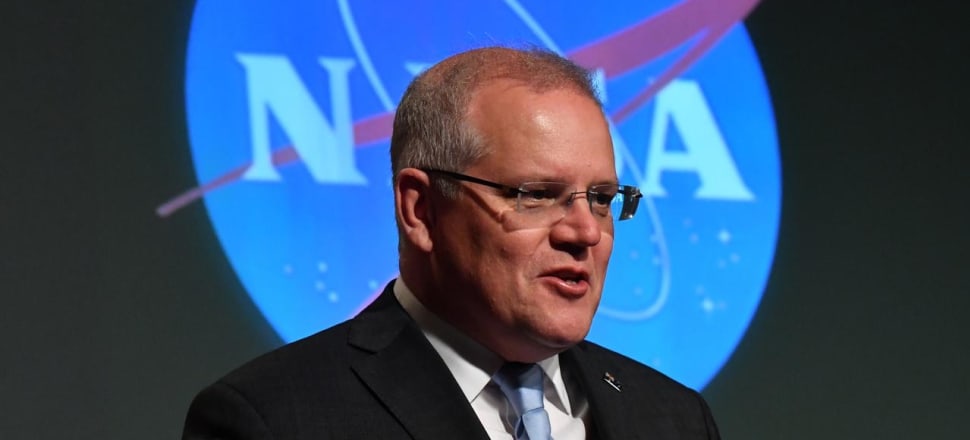
    Prime Minister Scott Morrison said it was an incredible opportunity for Australia to succeed in the global space sector.

    “This mission to the moon is just one exciting way that we can create opportunity and jobs for the future, and our government will ensure Australians reap the benefits,” he said.

    The government is aiming to triple the size of the space sector by 2030 to add $12 billion to the economy and create up to 20,000 high-skilled jobs.

    Science Minister Melissa Price said the milestone agreement would herald a new era for the space sector.

    “With our expertise in robotics technology, NASA wants to partner with us on this project to the moon, creating our own lunar history,” she said.
  • Representatives of seized Turkish schools in Pakistan file appeal with Interior Ministry

    Representatives of Turkish schools in Pakistan have filed a petition with the Pakistani Interior Ministry contesting the transfer of their schools to a Turkish government-run foundation, marking the first step in their legal battle, Turkish Minute reported.

    A group of representatives of the private PakTurk International Schools and Colleges (PakTurk) demanded in their petition that the schools be removed from the list of banned institutions in Pakistan and restored to their rightful owners.

    The group received help from London Advocacy (LA), which advises victims of human rights violations on how to fight their cases in court and in the media.

    In December 2018 the PakTurk schools, run by volunteers affiliated with the Gülen movement, were listed as “institutions supporting terrorism” by the Pakistani government due to pressure from Turkish President Recep Tayyip Erdoğan. The Pak Turk International Çağ Educational Foundation (ICEF), which was running the schools, was transferred to the Turkish government-run Maarif Foundation.

    Erdoğan has been targeting followers of the Gülen movement, inspired by Turkish Muslim cleric Fethullah Gülen, since the corruption investigations of December 17-25, 2013, which implicated then-Prime Minister Erdoğan, his family members, and his inner circle.

    Dismissing the investigations as a Gülenist coup and conspiracy against his government, Erdoğan designated the movement as a terrorist organization and began to target its members. He intensified the crackdown on the movement following an abortive putsch in July 2016.

    The representatives, consisting of former teachers and executives of the PakTurk schools, also launched a website as well as a donation campaign on GoFundMe to secure funds for their legal battle and to reach out to a broader audience.

    Going live on Monday, the donation campaign is expected to raise £30,000 for various projects.

    Murat Ercan, a former school administrator, said their appeal was a bit delayed due to official procedures but that they are ready to pursue their fight in the face of a negative response from the ministry and to elevate it to the highest legal authorities in Pakistan.

    Noting that looking for a legal solution to politically motivated decisions wouldn’t be enough, Ercan indicated that they have launched a website and opened a YouTube channel and social media accounts in an effort to raise international awareness of their struggle.

    “We are planning to implement the projects mentioned on our website by the end of 2022,” Ercan said, adding that they need support from former workers and stakeholders of the PakTurk schools.

    As part of these projects, the group is planning to file cases with the High Court and Supreme Court of Pakistan, publish books based on material collected on the website, organize social media campaigns, create a short documentary and organize panel discussions and conferences. SCF

  • Aggravated life sought for assailant who killed HDP employee in İzmir

    Turkish prosecutors are seeking an aggravated life sentence and up to an additional seven years in prison for the man who carried out a deadly attack on the pro-Kurdish Peoples’ Democratic Party (HDP) office in western Turkey in June, killing a party employee, the state-run Anadolu news agency reported.

    Onur Gencer, the 27-year-old assailant who admittedly killed HDP official Deniz Poyraz, 38, turned himself in to the police after the assault and was arrested by a criminal court of peace the next day.

    Gencer faces aggravated life on charges of premeditated murder and the additional seven years on charges of violating the privacy of of a workplace, damaging buildings and property used by political parties.

    The indictment against Gencer, drafted by the İzmir Chief Public Prosecutor’s Office, has been accepted by the İzmir 6th High Criminal Court. The indictment said Gencer confessed to the murder on the day of his arrest and that prosecutors have found no connection between Gencer and any terrorist organization.

    It has emerged that Gencer formerly posted photos on social media making an ultranationalist hand gesture associated with the Grey Wolves, a far-right paramilitary group with close ties to the Nationalist Movement Party (MHP).

    President Recep Tayyip Erdoğan and his ruling Justice and Development Party (AKP) as well as their election partner, the MHP, have long portrayed the HDP as the political front of the PKK. The party denies links to the PKK and says it is working to achieve a peaceful solution to Turkey’s Kurdish issue and is only coming under attack because of its strong opposition to Erdoğan’s 18-year rule.

    The Kurdish issue, a term prevalent in Turkey’s public discourse, refers to the demand for equal rights by the country’s Kurdish population and their struggle for recognition.

  • Ministers signed blank papers for Erdoğan to issue as Cabinet decrees, Babacan says

    Democracy and Progress Party (DEVA) leader and former Turkish deputy prime minister Ali Babacan said in an interview aired on TELE1 on Saturday that the Cabinet, which comprises members of the ruling Justice and Development Party (AKP), signs blank papers for President Recep Tayyip Erdoğan to fill in as he pleases to be published as Cabinet decisions.

    “Blank pieces of paper would be signed by the ministers, and these would be filled in later. They would then be published in the Official Gazette with President Erdoğan’s signature,” Babacan said of the time before his resignation from the AKP. “So it was really up to one signature.”

    Babacan said state of emergency decrees issued following a coup attempt in 2016 were also prepared in this manner. He added that nobody would confess to the practice, but Cabinet members of the time would instead confirm it off the record.

    Following Babacan’s revelation, Ömer Faruk Gergerlioğlu, a lawmaker from the pro-Kurdish Peoples’ Democratic Party (HDP), urged him to disclose the Cabinet members who went along with the practice.

    “Mr. Ali Babacan revealed a big scandal. Can one call a minister signing a blank piece of paper, a minister? Look at this [mess]! Decrees that ruined the lives of millions were prepared with a yes-man attitude,” Gergerlioğlu tweeted, adding that the names of the ministers who signed blank papers should be publicized.

    Turkey has been going through a series of political and financial crises. According to critics there have been gross human rights violations and a regression in freedom of speech during the AKP’s 19-year rule.

  • Opposition MP not allowed to visit critically ill woman in prison

    Main opposition Republican People’s Party (CHP) Deputy Chairwoman Gülizar Biçer Karaca wasn’t allowed to visit critically ill Ayşe Özdoğan, 34, who was sent to prison last week on a terrorism conviction despite her end-stage cancer, the Stockholm Center for Freedom reported on Monday, citing the Kronos news website.

    According to Özdoğan’s sister, Emine Erdem, Karaca wanted to visit Özdoğan in Denizli Prison on Friday, but the prison administration denied her request.

    Özdoğan, a former teacher, was handed down a nine-year, four-month prison sentence for alleged links to the Gülen movement. An appeals court on June 11 upheld her sentence despite severe health problems and a hospital report saying she was not fit to stay in prison.

    Özdoğan and her husband were detained on April 8, 2019 for alleged links to the movement, but she was released due to her son’s heart condition. Her husband was sent to prison in southern Antalya province.

    Özdoğan developed cancer seven months later and underwent an operation on November 12, 2019. However, she was arrested shortly thereafter, convicted and sentenced to nine years, six months in prison.

    Özdoğan’s arrest sparked outrage, and thanks to an online campaign started by Human rights defender and Peoples’ Democratic Party (HDP) deputy Ömer Faruk Gergerlioğlu, she was released pending appeal on December 27, 2019.

    It was already too late for her second surgery, however, as the cancer had spread. Özdoğan’s teeth, palate, zygomatic bone and lymph nodes were removed in an emergency operation. Özdoğan lost her ability to see and hear after the operation due to the trauma her facial bones suffered.

    Özdoğan previously said she could no longer eat solid foods and suffered from a chronic infection in her sinuses, where a tumor was removed. She added that she could not chew or swallow because of the cancer.

    Turkish President Recep Tayyip Erdoğan has been targeting followers of the Gülen movement since the corruption investigations of December 17-25, 2013, which implicated then-prime minister Erdoğan, his family members and his inner circle.

    Dismissing the investigations as a Gülenist coup and conspiracy against his government, Erdoğan designated the movement as a terrorist organization and began to target its members. Erdoğan intensified the crackdown on the movement following a coup attempt on July 15, 2016 that he accused Gülen of masterminding. Gülen and the movement strongly deny involvement in the abortive putsch or any terrorist activity.

  • Turkish businessman Osman Kavala to remain in prison: court

    Turkish businessman Osman Kavala to remain in prison: court

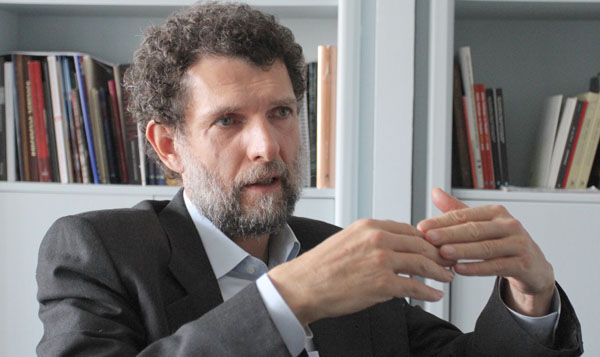
    An İstanbul court ruled on Friday to keep Osman Kavala, a renowned businessman and a human rights advocate, in pre-trial detention, the Turkish media reported.

    Kavala has been behind bars for 1,438 days. The next hearing is scheduled for Nov. 26.

    The ruling was made although the European Court of Human Rights called in December for Kavala’s release on the grounds that there was a lack of reasonable suspicion that he committed an offense.

    Kavala is accused of orchestrating the Gezi Park mass protests in the summer of 2013 in a trial described as absurd by rights groups. The latest hearing of his trial took place at the İstanbul 30th High Criminal Court in the Silivri Prison Complex on Thursday.

    Prosecutors claim the Gezi protests were organized from outside the country to “bring Turkey to its knees.”

    Kavala has been in jail since November 2017 and has become a symbol of what activists say is the deliberate targeting of civil society.

    He was among tens of thousands of people rounded up after an attempted coup in July 2016.

    A respected figure in intellectual circles, Kavala is the chairman of the Anatolian Culture Foundation, which seeks to bridge ethnic and regional divides through art, including with neighboring Armenia, with which Turkey has no diplomatic ties.

  • Afghan army deserter Hekmatullah, who murdered three Australian soldiers, freed from custody in Qatar

    A rogue Afghan soldier who murdered three Australians almost a decade ago has been released from custody in Qatar, and his precise whereabouts remain unknown.

    Relatives of Lance Corporal Stjepan Milosevic, Private Robert Poate and Sapper James Martin were told about the release by Defence.

    Known as Hekmatullah, the Afghan army deserter ambushed Australian soldiers in a so-called “green on blue” attack while they were playing cards at a forward operating base near Tarin Kowt in Uruzgan province in 2012.

    After being captured, he spent seven years in an Afghan jail, but was transported to a facility in Qatar last year as the United States held peace talks with the Taliban.

    At the time, the families of the slain Australian soldiers expressed dismay and even called on the Australian government to rethink its alliance with the United States.

    Hekmatullah was released shortly after the Taliban recaptured Kabul in August, but it is not known whether he has returned to Afghanistan.

    In a statement, an Australian government spokesperson expressed the government’s disappointment and confirmed it did not know the former soldier’s whereabouts.

    “The Australian government is aware that Afghan Army deserter Hekmatullah, who murdered three off-duty Australians, has been released from custody. His whereabouts cannot be verified,” the statement said.

    “The government’s position has always been that Hekmatullah should serve a just and proportionate sentence, appropriate to his crimes, and not be granted early release or pardon.”

    The spokesperson added that Australia made “repeated representations over a long period advocating this position to relevant governments”.

    “We share the sorrow of Australians at this outcome and again offer our condolences to the families and the loved ones of our three fallen soldiers.”

    Last year, Robert Poate’s father, Hugh Poate, said the fact his son’s killer was allowed to leave Afghanistan was a “damning indictment on the Australian-American alliance”.

    “America negotiated this deal with the Taliban and did not include Australia or any of the other 50 nations that went to war with the US,” he said. ABC

  • Victorian Premier Daniel Andrews has been hit with two fines for breaching COVID-19 restrictions.

    Mr Andrews was filmed walking through the state parliament’s car park without a mask on Thursday.

    He also did not wear a mask as he approached the media on Wednesday.

    On both days, Mr Andrews wore a mask as he was driven to parliament but took it off before he walked through the car park.

    Victoria Police confirmed on Friday the Premier had been issued two $200 infringement notices over the incidents.

    Currently, Melburnians aged over 12 must wear a fitted face mask whenever they leave their home, indoors or outdoors, unless a lawful exception applies, including for broadcasting purposes.

    In a statement earlier on Friday, Mr Andrews apologised and said he would pay a fine if police issued one.

    “If they do not issue a fine I will donate the same value to a charity working to support people in this pandemic because whilst this was an oversight, oversights matter – everyone needs to follow the rules and I am sorry it occurred,” he said.

    Treasurer Tim Pallas defended the premier, who he said has been “pretty diligent in terms of his behaviour” throughout the pandemic.

    “I had a brief look at the footage and it looks like he is approaching a camera for the purpose of doing a piece to camera. You are allowed to not wear a mask for that and we will leave it at that,” he told reporters at the daily COVID-19 briefing on Friday.

    Opposition Leader Matthew Guy said most Victorians had “momentarily forgotten a mask” but noted Mr Andrews walked “some distance” without wearing his.

    “He’s done it in front of media, which is probably a bit silly but I will leave that to police,” he said. SBS

  • Turkish asylum seeker dies in Germany after fleeing persecution in Turkey

    A 31-year-old man who fled to Germany in search of a safer life after being sentenced to prison in Turkey for alleged links to the Gülen movement died of a heart attack on October 1, Bold Medya reported.

    İbrahim Kılınç had no pre-existing conditions. He was the father of a 4-year-old boy and had arrived on August 24 in Germany, where he was living in a refugee camp. According to his family Kılınç had suffered a mental breakdown while in pretrial detention and told them he was “exhausted from the suffering.”

    Kılınç was a public servant working for the Ministry of Finance but was summarily dismissed from his job by a government decree. He was arrested in March 2017, and his then-pregnant wife was detained shortly thereafter.

    Kılınç was accused of using ByLock, an encrypted messaging app now banned in the country. Turkey considers ByLock, once widely available online, a secret tool of communication among supporters of the faith-based Gülen movement since a coup attempt on July 15, 2016 despite the lack of any evidence that ByLock messages were related to the abortive putsch, leading to the arrest of thousands who were using it.

    Kılınç was handed down a six year, 10 month sentence and released while his case was pending before the Supreme Court of Appeals. According to his family, Kılınç was under immense psychological stress in prison.

    “Nobody cares about us in there,” he told his family. “They wouldn’t care if we died. We asked for a doctor, but he came hours later. Our life has no value.”

    Kılınç’s wife said her husband was also very stressed after he was released from prison. She said they crossed the border with Greece in November 2020, from where they tried to reach Germany, but the journey was very tiring. “He told me he felt exhausted, and sometimes he felt like his heart would stop,” she said. “He fainted once in Greece, and he was scared about his health.”

    Kılınç’s wife said they had not had a happy day since the coup attempt. She said they were subjected to immense suffering, and their life as asylum seekers had also been exhausting. “I believe all that suffering could have led to the heart attack,” she said.

    Turkish President Recep Tayyip Erdoğan has been targeting followers of the Gülen movement, inspired by Turkish Muslim cleric Fethullah Gülen, since the corruption investigations of December 17-25, 2013, which implicated then-Prime Minister Erdoğan, his family members and his inner circle.

    Dismissing the investigations as a Gülenist coup and conspiracy against his government, Erdoğan designated the movement as a terrorist organization and began to target its members. He intensified the crackdown on the movement following the abortive putsch that he accused Gülen of masterminding. Gülen and the movement strongly deny involvement in the coup attempt or any terrorist activity.

    Turkish Interior Minister Süleyman Soylu said on February 20 that a total of 622,646 people have been the subject of investigation and 301,932 have been detained, while 96,000 others have been jailed due to alleged links to the Gülen movement since the failed coup. The minister said there are currently 25,467 people in Turkey’s prisons who were jailed on alleged links to the movement.

    The government also removed more than 130,000 civil servants from their jobs on alleged Gülen links following the coup attempt.

    In addition to the thousands who were jailed, scores of other Gülen movement followers had to flee Turkey to avoid the government crackdown. SCF

  • EP Turkey rapporteur says he can’t forget post-mortem photos of Kabakçıoğlu, who was found dead in his cell

    Nacho Sánchez Amor, an MEP from the Progressive Alliance of Socialists and Democrats (S&D) and EP standing rapporteur on the annual report on Turkey, on Thursday discussed ongoing human rights violations in Turkey with Peoples’ Democratic Party (HDP) deputies Ömer Faruk Gergerlioğlu and Züleyha Gülüm.

    Gergerlioğlu disclosed the details of the discussion from his Twitter account. “We discussed the increasing pressure on the HDP,” said Gergerlioğlu. “We also talked about the persecution of government critics and the situation of political prisoners.”

    Gergerlioğlu said he explained the extent of human rights violations in Turkey, including torture and mistreatment in prisons, and the situation of critically ill inmates. He said he highlighted the cases of Ayşe Özdoğan, an imprisoned woman suffering from a rare form of cancer, and Mehmet Emin Özkan, an 83-year-old man who remains in prison despite severe health problems.

    Human rights activists and opposition politicians have frequently criticized authorities for not releasing critically ill prisoners so they can seek proper treatment.

    According to the most recent statistics published by the Human Rights Association (İHD), the number of sick prisoners is in the thousands, more than 600 of whom are critically ill. Although most of the seriously ill patients have forensic and medical reports deeming them unfit to remain in prison, they are not released. Authorities refuse to free them on the grounds that they pose a potential danger to society.

    A number of critically ill prisoners passed away in 2020 because they were not released in time to receive proper medical treatment.

    “Amor said he followed my social media posts about ongoing human rights violations in Turkey,” said Gergerlioğlu. ” He said he was very aware of the situation in Turkey and supported me.”

    Amor told Gergerlioğlu and Gülüm he could not forget the post-mortem photographs of Mustafa Kabakçıoğlu, a decorated police inspector who was found dead in a quarantine cell in August 2020.

    Kabakçıoğlu was arrested in July 2016 for alleged membership to the Gülen movement. He was sentenced to seven years, six months in prison.

    The Turkish government accuses the Gülen movement, a faith-based group inspired by Muslim cleric Fethullah Gülen, of masterminding a coup attempt in July 2016 and labels it a terrorist organization. The movement strongly denies involvement in the coup attempt or any terrorist activity.

    Kabakçıoğlu struggled with multiple health problems during his time in prison. He started coughing on August 20 and was put in a solitary cell on suspicion of having contracted COVID-19. He was alone for the next nine days, and it was claimed that he died in his cell after heavy coughing that continued until morning.

    A post-mortem COVID-19 test came back negative, which raised doubts about the conditions of his death.

    Post-mortem photographs Kabakçıoğlu’s lifeless body revealed he was in a chair in a sitting position, his head drooping back and his nails turned blue. The conditions of his prison cell were also photographed, revealing damp and filthy quarters and dirt on his T-shirt. It was obvious he used the trash bin as a dinner table and did not eat his last meal, seen in the photos untouched on top of the bin.

    Thinking that his death was not due to the coronavirus, Kabakçıoğlu’s family filed a criminal complaint with the Gümüşhane Chief Public Prosecutor’s Office demanding that the parties responsible for the imprisoned police officer’s death be found and punished.

    However, the prosecutor’s office said there were no grounds for legal action in April. SCF