Blog

  • Woman dies of cancer without being able to see husband imprisoned on Gülen links

    A woman whose husband was imprisoned on conviction of alleged links to the Gülen movement succumbed to cancer on Monday without being able to see her husband one last time, the Tr724 news website reported.

    Leyla Kurt suffered from breast cancer and she was admitted to the intensive care unit last week after her health deteriorated. Her husband, Yusuf Kurt, has been in prison for five years, and despite being eligible for parole, he was not released in time to see his wife.

    Yusuf Kurt was arrested on August 16, 2016 and sentenced to seven years, nine months in prison. He was accused of working at a private tutoring center affiliated with the movement.

    Turkey’s Justice and Development Party (AKP) government launched a war against the Gülen movement, a worldwide civic initiative inspired by the ideas of Muslim cleric Fethullah Gülen, after the corruption investigations of December 17-25, 2013 that implicated then-prime minister and current President Recep Tayyip Erdoğan’s family members and inner circle.

    Dismissing the investigations as a Gülenist coup and conspiracy, the AKP government designated the movement as a terrorist organization and began to target its members. The government intensified the crackdown following a coup attempt on July 15, 2016 that they accused Gülen of masterminding. Gülen and the movement strongly deny involvement in the abortive putsch or any terrorist activity.

    According to the Turkish Penal Code, people convicted of membership in a terrorist organization are eligible for parole after serving two-thirds of their sentence.

    Leyla Kurt was diagnosed with cancer five months after her husband’s arrest. Although she underwent surgery and treatment, she was unable to recover.

    In a previous interview Leyla Kurt had said she was worried about her three children, who were trying to cope with their mother’s sickness and father’s incarceration. “My son has dropped out of school because we could not pay the tuition, and my youngest daughter is using antidepressants to cope,” she said. “My children have been experiencing psychological problems, but we are trying to stay strong.”

    Following the abortive putsch, the Turkish government declared a state of emergency and carried out a massive purge of state institutions under the pretext of an anti-coup fight. A total of 319,587 people have been detained and 99,962 arrested in operations against supporters of the Gülen movement since the coup attempt, Turkey’s Interior Minister Süleyman Soylu said on November 22.

    Turkey’s post-coup purge has taken a huge toll on human life, and many of those who were imprisoned have not been able to see their loved-ones a final time. Kübra Kuzan, a five-year-old girl, died of cancer in February while her father was in prison for affiliation with the movement.

    Selman Çalışkan, 7, died last September from cancer without being able to see his father, a former teacher jailed in 2017.

    Ahmet Burhan Ataç, 8, was another child who died from cancer without being able to see his imprisoned father. SCF
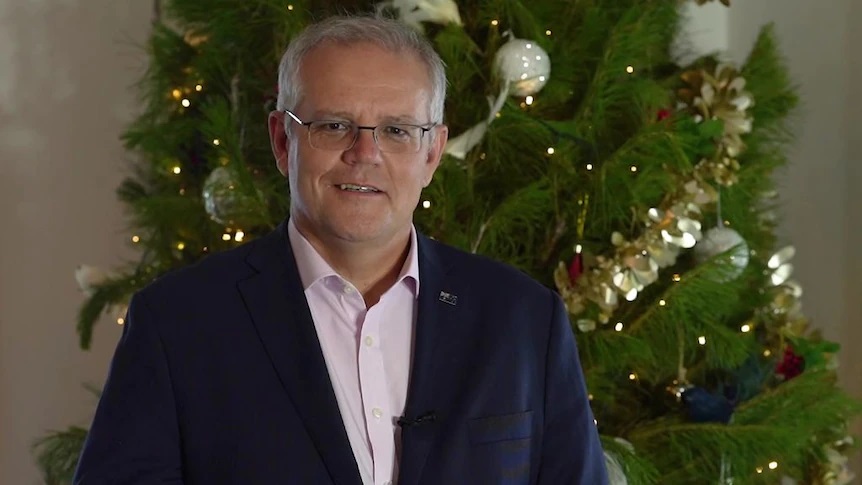
  • PM Scott Morrison has joined Tiktok and shared videos to his account, wishing Australians a Merry Christmas.

    PM Scott Morrison has joined Tiktok and shared videos to his account, wishing Australians a Merry Christmas.

    He’s been an accidental star of TikTok for months and now Scott Morrison has joined the controversial Chinese-owned social media platform, uploading a selfie video with family pet dog Buddy for his debut message.

    Last year, the Prime Minister criticised the video-sharing app, which is wildly popular with younger audiences, warning Australians it “connects right back to China”.

    During 2020, the federal government directed intelligence agencies to investigate whether TikTok, which harvests vast amounts of data, posed a security threat to Australia.

    Analysts have long warned that ByteDance, the Chinese company which owns TikTok, may be forced to share information it gathers on users with authorities in Beijing, and former president Donald Trump attempted to ban the platform.

    “We’ll obviously keep watching them, but there’s no evidence to suggest to us today that [a ban] is a step that is necessary,” Mr Morrison declared back in August last year.

    In October, a TikTok executive appearing before a US congressional hearing declared the globally popular video-sharing app did not give information to the Chinese government and had sought to safeguard American data.

    Last year, Scott Morrison also fired off an impassioned attack on TikTok after a man’s videoed suicide was seen by children using the platform.

    “Social media has become, like it or not, part of our modern life,” Scott Morrison said in a September 2020 video message.

    “It gives us a bit of a laugh, people doing silly dances. Sometimes, they are taking the mickey out of me.

    “But there is a serious concern and a serious side with what happens with social media and we saw that with that disgraceful video that was uploaded onto TikTok.”

    @pm_scomo on Tiktok
    Despite his previous criticisms, the Prime Minister opened his own official TikTok account on Christmas Eve with the handle “pm_scomo” and has so far uploaded two video messages for the festive season.

    “G’day TikTok, Merry Christmas from me and Bud and all of our family here to you and all of yours,” Mr Morrison says in his first appearance while holding his pet in a 14-second video set to a Jingle Bells soundtrack.

    “Stay safe, think of those obviously doing it a bit tough, Buddy’s going off to wrap some presents, I’ll catch you later”.

    Comments are turned off for Mr Morrison’s account.

    With a federal election due in the first half of next year, TikTok is seen as increasingly important to political leaders as a way of reaching and communicating with younger voters.

    Last year as the coronavirus pandemic was unfolding, videos of Scott Morrison clashing with ABC Political Editor Andrew Probyn at a late-night press conference became viral hits on TikTok, generating hundreds of thousands of individual views.

    In a second video uploaded late on Christmas Day, the Prime Minister stands in front of a Christmas tree reflecting on the challenges of the COVID pandemic.

    “Well, merry Christmas Australia, yeah, it’s been a tough year, there’s no doubt about that,” Mr Morrison observes.

    “We’ve faced many challenges together and we’re doing it again with this Omicron variant, but we’ll get through that too.”

    He also praises Australians who have volunteered to work over the Christmas period before signing off “god bless”.

    “Thank you so much for what you do — you’re the ones who make Australia such a wonderful place.” ABC

  • Perpetrator of 3 Syrian men’s murder admits to committing hate crime

    Perpetrator of 3 Syrian men’s murder admits to committing hate crime

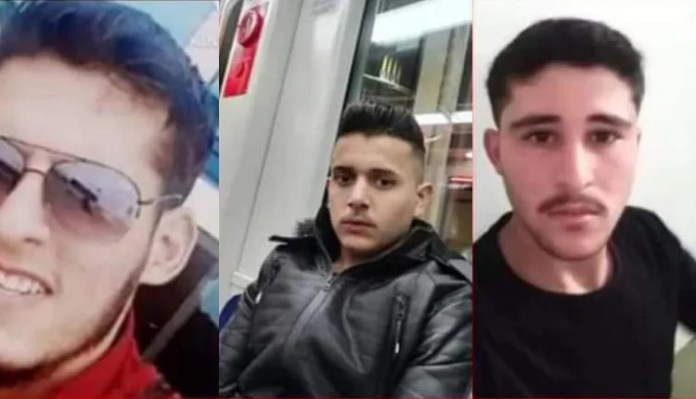
    The perpetrator of the murder of three Syrian men, which took place in Turkey’s İzmir province in November, has admitted in his testimony to a prosecutor to have committed a hate crime, Turkish Minute reported.

    The Turkish man poured gasoline over the Syrians, identified as Mamoun al-Nabhan, 23; Ahmed al-Ali, 21; and Muhammed el-Bish, 17, while they were asleep and set them on fire on Nov. 16, according to Evrensel.

    The daily said the perpetrator, born in 1981, was offered a chance to take part in the extrajudicial operations of JİTEM by his commander while he was doing his military service in the 2000s and that he accepted the offer.

    JİTEM, the Gendarmerie Intelligence and Anti-terror Unit, was a clandestine military organization accused of involvement in the torture, disappearance and execution of many Kurdish politicians and businesspeople during the 1990s, a period of bloody conflict between the Turkish state and Kurdish militants.

    “I can’t talk about them [JİTEM operations] now, it’s a state secret. Then I came back to İzmir, my hometown. … One day I found a note on my car saying ‘Begin duty.’ After a while I found another note saying ‘Continue duty.’ A third note then said ‘Start cleansing,’” said the perpetrator, who then explained that he interpreted the third note as someone ordering him to “cleanse Turkey of Syrians,” Evrensel said.

    The perpetrator then told the prosecutor that he had five liters of gasoline in his car on the night of the attack and that he used it to set the three Syrians on fire. They were all working for the Birlik Beton construction company and staying in the same room, according to Evrensel.

    The daily further said that after taking his statement, the prosecutor’s office requested a psychological evaluation of the attacker.

    Meanwhile, human rights defender and Peoples’ Democratic Party (HDP) deputy Ömer Faruk Gergerlioğlu on Thursday questioned the reason why the hate attack targeting the three Syrians was kept a secret from the public for over a month and why people only recently found out about it in the news.

    “This was a hate crime. … The public shouldn’t be talking about anything but this right now. Unfortunately, this hatred [of Syrians] has turned into a culture of lynching,” the MP said during a press conference in parliament.

    Mustafa Yeneroğlu, a deputy from Turkey’s opposition Democracy and Progress Party (DEVA), on Thursday asked in a parliamentary question posed to Interior Minister Süleyman Soylu if claims that the perpetrator of the hate crime was only arrested after he killed two Turks in the aftermath of setting the three Syrians on fire were true.

    “It was claimed that the killing of the three Syrians wasn’t investigated as a murder [case] and that an investigation was launched only after the suspect stabbed two Turkish citizens to death and that only then was the suspect arrested,” the MP said, asking Soylu the reason why there wasn’t an effective investigation launched into the hate crime before the murder of the two Turks.

    Yeneroğlu also asked whether the allegation that the families of the murdered Syrians were summoned to the police station afterward and warned to keep quiet about the attack was true.

    Refugees in Turkey have been increasingly targeted by hate speech and hate crimes and are blamed for many of Turkey’s social and economic troubles.

    Turkish media including pro-government and opposition outlets fuel and exploit the flames of hatred against people who fled their countries and sought refuge in Turkey.

    According to the latest figures provided by Interior Minister Süleyman Soylu on Nov. 22, Turkey is home to a total of 4,038,857 refugees from around the world. Speaking to parliament’s Planning and Budget Committee, Soylu said 3,731,028 of these were Syrian refugees who are residing in Turkey under temporary protection status. The number of refugees with international protection status is 307,829. SCF

  • Turkey freezes assets of 770 people, including journalists and rights activists, over alleged terrorism links

    Turkey has frozen the assets of 770 people including some journalists in exile and an organization on the grounds of terrorism financing, Turkish Minute reported, citing a ruling bearing the signatures of Treasury and Finance Minister Nureddin Nebati and Interior Minister Süleyman Soylu that was published in the Official Gazette on Friday.

    The ruling includes 454 people – among them journalists Adem Yavuz Arslan, Bülent Keneş, Cevheri Güven, Said Sefa, Sevgi Akarçeşme, Sevinç Özarslan, Mehmet Efe Çaman and Tarık Toros — and the Chicago-based Niagara Foundation, which is suspected of financing the Gülen movement, inspired by ideas and activism of Islamic preacher Fethullah Gülen.

    “According to an arbitrary decision of the Turkish regime … the assets of 770 people in TR have been frozen. My name is also on the list. Turkey acts like the mafia. The only ‘crime’ (!) I have committed is my critical voice and being a dissident,” journalist Çaman tweeted in English.

    Sharing two photos, one showing a court decision about her and the other the ruling to freeze assets, Akarçeşme said: “[They gave] the same decisions in 2016 and 2021. [They’re like] thieves who forget what they stole and rob the same house again… The thing they know best…”

    Akarçeşme was referring to the December 17-25 bribery and corruption investigations that shook the country back in 2013. The probe implicated, among others, the family members of four cabinet ministers as well as the children of the then-prime minister and current President Recep Tayyip Erdoğan.

    Erdoğan launched a war against the Gülen movement after the corruption investigations of 2013. Dismissing the investigations as a Gülenist coup and conspiracy, he locked up thousands, including many prosecutors, judges and police officers involved in the investigation, as well as journalists who reported on them.

    Erdoğan intensified the crackdown following a coup attempt on July 15, 2016 that he accused Gülen of masterminding. Gülen and the movement strongly deny involvement in the abortive putsch or any terrorist activity.

    Since the coup attempt, a total of 319,587 people have been detained and 99,962 arrested over alleged links to the movement as part of a massive purge launched under the pretext of an anti-coup fight, while the government also removed more than 130,000 civil servants from their jobs on alleged Gülen links, according to the latest Interior Ministry data.

    The names of Adil Öksüz, a leading suspect in Turkey’s failed coup attempt, and Nurettin Demirtaş, brother of imprisoned Kurdish leader Selahattin Demirtaş, the former co-chair of the pro-Kurdish Peoples’ Democratic Party (HDP), were also on the list, according to local media reports.

    The ruling also listed the names of 108 people accused of links to the outlawed Kurdistan Workers’ Party (PKK) and its umbrella organization the Kurdistan Communities Union (KCK), and 119 people accused of links to “terror organizations that abuse religion,” including the Islamic State in Iraq and the Levant (ISIL).

    The assets of 89 individuals accused of links to the leftist organizations, mainly the Revolutionary People’s Liberation Party/Front (DHKP/C) and the Marxist-Leninist Communist Party (MLKP), were also frozen, according to the decision.

    The assets of 770 individuals and the Niagara Foundation would be frozen based on the fact that they “engaged in acts mentioned in Articles 3 and 4 of Law No. 6415, in accordance with subsection 3 of Article 7 of the same law,” the decision said, in reference to “providing or collecting funds” for terror-related acts.

    People whose assets are frozen are allowed to file a lawsuit at the Ankara High Criminal Court, the ruling also noted. SCF

  • Christmas Eve chaos as Jetstar and Virgin suddenly cancel dozens of flights in and out of Sydney with just a few hours’

    Jetstar and Virgin airlines have caused Christmas Eve travel chaos by cancelling dozens of flights as families around Australia prepare to reunite with loved ones.

    Hundreds of passengers suddenly found their plans in dire straits as they were notified late on Thursday night of the mass cancellations.

    Australia’s busiest route between Sydney and Melbourne is by far the worst affected with 23 flights between the two capitals cancelled on Friday.

  • Turkish court rules to keep businessman Kavala in prison once again

    Turkish court rules to keep businessman Kavala in prison once again

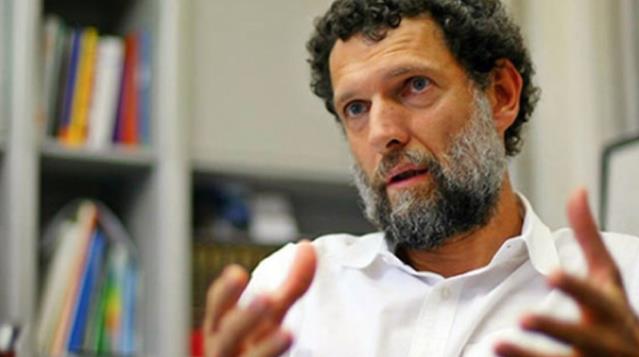
    A Turkish court ruled to keep renowned Turkish philanthropist and rights advocate Osman Kavala in prison at his latest court hearing, state-run Anadolu news agency reported.

    Kavala is accused of orchestrating the Gezi Park mass protests in the summer of 2013 in a trial described as absurd by rights groups.

    Prosecutors claim the Gezi protests were organized from outside the country to “bring Turkey to its knees.”

    Kavala has been in jail since November 2017 and has become a symbol of what activists say is the deliberate targeting of civil society.

    He was among tens of thousands of people rounded up after an attempted coup in July 2016.

    A respected figure in intellectual circles, Kavala is the chairman of the Anatolian Culture Foundation, which seeks to bridge ethnic and regional divides through art, including with neighboring Armenia, with which Turkey has no diplomatic ties. TurkeyPurge

  • Mithat’s story: ‘If you give an opportunity to refugees, they can succeed’

    Turkish refugee Mithat came to Australia with his family ‘with nothing’ in 2017. He started a successful telecommunications company and is now determined to contribute positively to the asylum seeker community

    Mithat Unlu was living a comfortable expat life in China with his wife and young daughters in 2017. He was running his own business – an education consulting company that employed seven staff.

    One day, on a visit to the Turkish consulate office in Shanghai to extend his visa, he received alarming news.

    “They told me, ‘We can’t give you anything’, they told me, ‘Your passport is cancelled’,” he said.

    “I was shocked, I didn’t know what to do.”

    Mithat would later find out that he was one of 300,000 Turkish people branded “anti-government” whose passports had been cancelled.

    He had two options. He could return to Turkey – where he would at best be unemployable, and at worst imprisoned – or he could seek safety in a new country.

    Mithat, his wife and two daughters flew to Australia in December 2017 and applied for asylum.

    After arriving, the family came to the Asylum Seekers Centre for support. They accessed English classes, children’s recreational activities and food support.

    “At first it was hard because I had nothing in my pocket. I came here with nothing, the first six to eight months, it was hard,” he said.

    Mithat completed several local courses and qualifications, and worked in construction before getting a job with an NBN telecommunications company.

    Mithat and his family were granted permanent protection visas in December 2018, and they welcomed a new baby girl in 2020.

    Then in 2019, with the help of a loan from a friend, he established his own NBN telecommunications business. It quickly became a stable company, employing Mithat’s wife in administration as well as three contractors.

    Mithat has made a point of offering work opportunities to refugees and people seeking asylum.

    “I know how difficult it is to be a refugee. They don’t have a network, they have language barriers, they don’t have enough money,” he said.

    “Many times, if you give an opportunity to refugees, they can succeed in lots of things, and they can give back to the community.”

    One of Mithat’s contractors, Adam*, has lived in Australia for seven years and has applied for protection. He said his temporary visa status had been a barrier to finding work, and in his experience: “If you don’t have friends, you can’t find any jobs.”

    Adam has worked with Mithat’s business since 2019.

    “He’s been through difficult times but he wants to help everyone,” he said. “He tries to give us more than what we deserve, he’s like a big brother to us.”

    Mithat’s generosity has been demonstrated through his charitable donations to the Asylum Seekers Centre and other organisations.

    He has chosen philanthropy over buying a house for his family to live in.

    “This is a multicultural country, you can live your religion here, you can live your own culture here. No one disturbs you,” he said.

    “Sometimes I tell my wife I feel like I’ve lived in Australia for 20 or 30 years.” Asylum Seekers Centre

    *Name changed

  • A sixth child has died following Tasmania’s jumping castle tragedy

    A sixth child, an 11-year-old boy, has died following the Hillcrest Primary School tragedy in Tasmania.

    An 11-year-old boy has become the sixth fatality of Devonport’s Hillcrest Primary School tragedy.

    Tasmania Police Commissioner Darren Hine said Chace Harrison died in hospital on Sunday afternoon.

    His death follows those of 11-year-old Addison Stewart and 12-year-olds Zane Mellor, Jye Sheehan, Jalailah Jayne-Maree Jones and Peter Dodt. They were formally identified on Friday with permission from their families.

    A gust of wind sent a jumping castle being played on by nine children in total 10 metres into the air during year-end celebrations at the school on Thursday.

    Two children remain in a critical condition in Royal Hobart Hospital and one other is in recovery at home.

    “It is with a heavy heart that I can confirm a sixth child has lost his life following the tragedy,” Commissioner Hine told reporters in Hobart on Sunday.

    “An 11-year-old boy died this afternoon, his name is Chace Harrison. Our thoughts continue to be with his family and all other families and loved ones of the children involved.”

    He said the investigation into the incident in conjunction with WorkSafe Tasmania was ongoing and would be for some time.

    “We are working tirelessly with all parties concerned to ensure the extensive investigation is completed as a matter of priority for the coroner,” he said.

    “Their priority will be to interview all witnesses, gather and analyse forensic evidence at all in biomedical aspects including weather patterns and conditions of the time of this incident.”

    Given the magnitude of what happened and the need to speak to a large number of children within a short period of time, Tasmanian detectives have accepted an offer of help from NSW police.

    Four forensic child interviewers will travel there from Sydney over the coming days.

    “I am certain all Tasmanians share with me a deep sadness and heartache that young Chace Harrison, another child involved in this terrible tragedy, has now passed away,” Premier Peter Gutwein said.

    “I know that our community, which is so connected, will be deeply saddened, for the family involved and indeed all the families of the now six children who have lost their lives.”

    Prime Minister Scott Morrison announced on Saturday an extra $800,000 will also be made available to fund trauma counselling for those impacted.

    Some $250,000 will go to first responders involved in the aftermath of the accident and $550,000 to the broader community.

    More than one million dollars has also been raised in the community to support those mourning the tragedy. SBS/ABC

  • Greek police rescue Turkish migrants in danger of freezing to death: report

    The Greek police rescued at least 10 Turkish asylum seekers, who crossed the Evros River from Turkey to Greece and were in danger of freezing to death, after the group made urgent calls for help.

    Following the pleas of the migrants, which circulated on social media and were amplified by Turkish journalists in exile, the stranded group was reportedly rescued by the Greek officers. They are currently at a police station in Soufli, a town in the Evros regional unit, Greece.

    The asylum seekers are believed to have fled Turkey in an attempt to avoid persecution over alleged links to the Turkey’s Gulen group, which the government accuses of masterminding a coup attempt in 2016. The group denies any involvement.

    According to a statement from Turkish Interior Minister Süleyman Soylu on February 20, a total of 622,646 people have been the subject of investigation and 301,932 have been detained, while 96,000 others have been jailed due to alleged links to the Gülen group since the failed coup. The minister said there are currently 25,467 people in Turkey’s prisons who were jailed on alleged links to the movement. TurkeyPurge 

  • Turkey detains, arrests people for Gülen links on basis of scant evidence: US report

    Turkey’s Justice and Development Party (AKP) government continues to detain and arrest Turks over alleged links to the Gülen movement, “often on the basis of scant evidence and minimal due process,” the US Department of State said in the Turkey section of its  “Country Reports on Terrorism 2020,” Turkish Minute reported.

    According to the report, titled “Country Reports on Terrorism 2020: Turkey,” the AKP government labeled the movement of “self-exiled cleric and political figure Fethullah Gülen” as “the Fethullah Terrorist Organization (FETO),” in the aftermath of the July 15, 2016 coup attempt, while it “is not a designated terrorist organization in the United States.”

    “The Turkish government continues to detain and arrest Turkish citizens as well as foreign citizens residing in Turkey, including locally employed staff at the U.S. Mission to Turkey, for alleged FETO or terrorism-related links, often on the basis of scant evidence and minimal due process,” the report said.

    The AKP government also continued to dismiss military, security and civil servants from public office in 2020, having dismissed or suspended more than 125,000 civil servants from public office, arrested more than 96,000 citizens and closed more than 1,500 NGOs for alleged FETO links, since the failed coup, according to the report.

    Turkish President Recep Tayyip Erdoğan has been targeting followers of the Gülen movement since the corruption investigations of December 17-25, 2013, which implicated then-prime minister Erdoğan, his family members and his inner circle.

    Dismissing the investigations as a Gülenist coup and conspiracy against his government, Erdoğan designated the movement as a terrorist organization and began to target its members. He intensified the crackdown on the movement following the abortive putsch in 2016 that he alleged Gülen to have orchestrated, an accusation strongly denied by the cleric as well as the group.

    The report also said Turkey has a broad definition of terrorism, including so-called crimes against the constitutional order and internal and external security of the state, which is regularly used by the government to criminalize the exercise of freedom of expression and peaceful assembly.

    Citing data from the Turkish Interior Ministry, the report said the government examined 14,186 social media accounts and took legal action against more than 6,743 social media users whom it accused of “propagandizing or promoting terror organizations, inciting persons to enmity and hostility, or insulting state institutions.”

    “Legal actions taken by Turkey against the accused included a mix of charges related to terrorism or other criminal activity under Turkish law,” it added.

    It was also stated in the report that politically motivated detentions and arrests of individuals in Turkey, including journalists, human rights activists, lawyers and politicians accused of supporting or aiding the Kurdistan Workers’ Party (PKK), continued in 2020.

    The outlawed PKK, which has been waging a bloody war in Turkey’s Southeast since 1984, is listed as a terrorist organization by Turkey, the US and the EU.

    The report further said Turkey was “a source and transit country” for foreign terrorist fighters seeking to join the Islamic State in Iraq and Syria (ISIS) and other terrorist groups fighting in Syria and Iraq as well as for foreign terrorist fighters who seek to depart Syria and Iraq.

    “Turkey continues its efforts to defeat terrorist organizations both inside and outside its borders, including the PKK, the Revolutionary People’s Liberation Party/Front, and ISIS. Turkey is an active contributor in international counterterrorism fora, including the GCTF [Global Counterterrorism Forum] and the Defeat-ISIS Coalition,” the Department of State said.

    “From 2015 until December, Turkey deported 8,143 individuals for suspected terrorism ties, with Turkey’s ‘banned from entry’ list reportedly containing around 100,000 names,” the report said, citing interior ministry data, and adding that Turkish authorities had detained 2,343 suspected ISIS supporters for questioning and pressed charges against 333 of them.

    “Turkish press alleged that one suspect, Mahmut Ozden, detained in August, was the ISIS emir for Turkey; he has reportedly been detained in Turkey at least four previous times,” the department further said.

    “The PKK continues to conduct terrorist attacks in Turkey and against Turkish interests outside of Turkey including by taking hostages,” the report said, with 35 civilians, 41 security force members and 265 PKK militants having been killed in eastern and southeastern provinces in PKK-related clashes this year, according to the data from the International Crisis Group.

    Meanwhile, Turkish Foreign Ministry spokesman Tanju Bilgiç criticized the report in a written statement on Friday, saying that allegations regarding the disproportionate and groundless restriction of rights and freedoms in Turkey by way of the broad definition of terrorism were “baseless” and “unacceptable.” SCF