Blog

  • $44 million to expand Australia’s future health and medical research capability

    $44 million to expand Australia’s future health and medical research capability

    The Australian Government is investing in the future competitiveness of Australian health and medical research with more than $44 million for postgraduate scholarships, international collaboration and research infrastructure and equipment through the National Health and Medical Research Council.

    Investment in health and medical research capability through postgraduate scholarships and international partnerships is critical to both create and maintain Australia’s competitive sector.

    This funding is part of the $1 billion available for NHMRC’s 2021 grant round, the highest yet through the Medical Research Endowment Account.

    The postgraduate scholarships will create opportunities for many graduates in medicine and health sciences to pursue their ideas and tackle the health challenges facing our community.

    Today’s investment also includes funding to support international collaboration by established researchers.

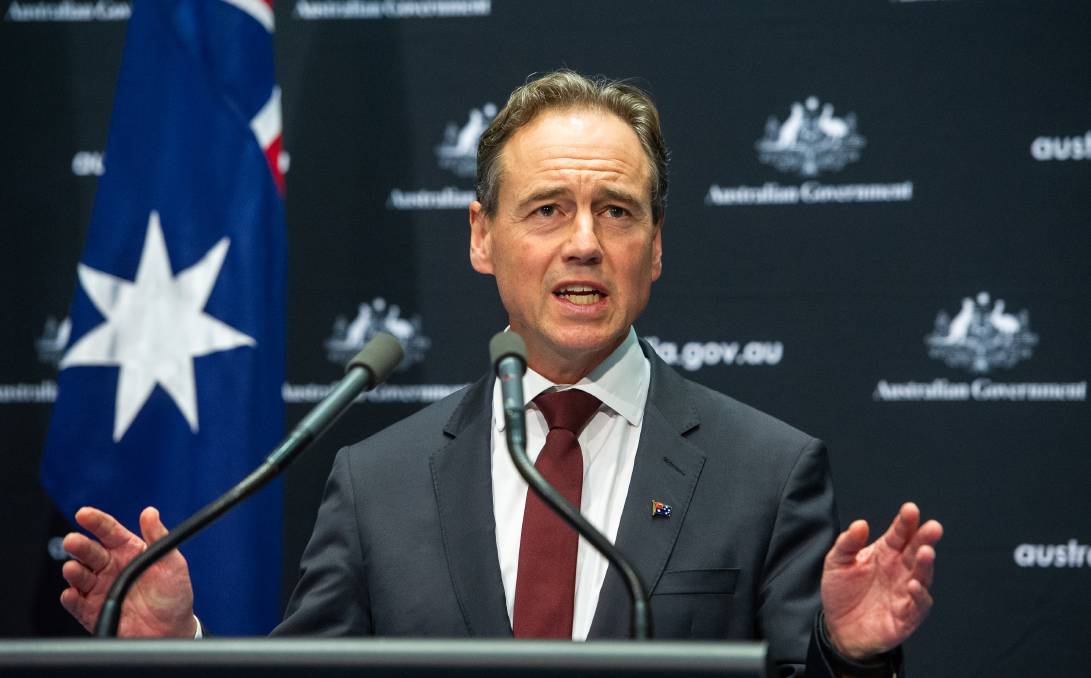
    Minister for Health and Aged Care, Greg Hunt, said sharing scientific knowledge enables Australian researchers to develop best practices and build international research networks that will accelerate discoveries and their translation into better health outcomes.

    “NHMRC’s international partnerships bring researchers together to promote global health objectives and strengthen Australian participation in international research efforts,” Minister Hunt said.

    “This announcement is also an investment in the next generation of Australian medical research leaders, with the careers of many of Australia’s foremost health and medical researchers kick-started by an NHMRC postgraduate scholarship.”

    Funding announced today comprises:

    $25.7 million to contribute to infrastructure costs of research for 21 independent medical research institutes through the Independent Research Institutes Infrastructure Support Scheme (IRIISS).

    More than $7.24 million to support the early research careers of 65 outstanding health and medical graduates through NHMRC Postgraduate Scholarships.

    More than $2.8 million to support collaboration with our regional neighbours, sharing vital resources and ideas to combat complex regional health challenges through NHMRC’s participation in the e-ASIA Joint Research Program.

    More than $2.5 million to support collaborative research with partners through the 2021 NHMRC – European Union Joint Programme – Neurodegenerative Disease Research (JPND) Grants and NHMRC – National Institute for Research Health (UK) Collaborative Research Grants.

    $5.7 million for 45 grants for the procurement of equipment to support the highest quality health and medical research.

    “A strong health and medical research system relies on scientists, clinicians and others working together to share knowledge and accelerate discoveries and their translation into better health outcomes,” NHMRC CEO Professor Anne Kelso AO said.

    “This collaboration begins with postgraduate research students learning from their mentors, sharing skills and ideas, and continues with international partnerships when researchers around the world come together to solve shared health challenges.”
  • Mayor faces probe for employing post-coup victim at municipal company

    An opposition party mayor in western Turkey is facing an investigation for employing a former judge who was fired in the aftermath of a failed coup in Turkey at a company owned by the municipality, Turkish Minute reported.

    Journalist İsmail Saymaz from the anti-government Halk Tv wrote in a column on Monday that the Interior Ministry in October 2020 allowed prosecutors to launch an investigation into Ünal Çetin from the İYİ (Good) Party. Çetin is the mayor of Gökçeada, an island in Çanakkale province in western Turkey.

    Çetin is under investigation for the September 2019 hiring of former judge N.G., who was one of the more than 130,000 civil servants who were fired from public service under a state of emergency declared following the coup attempt on July 15, 2016 on the pretext of an anti-coup fight. N.G.’s job at the municipality’s GÖK-AŞ company was to deal with the files of the municipality’s judicial cases.

    Arrested two days after the coup attempt, N.G. was dismissed from her job in August 2016 and was put in pre-trial detention for nine months. She stood trial on charges of terrorist organization membership due to her alleged links to the Gülen movement but was acquitted of the charges in February 2019. A court has even ruled that the government pay her pecuniary and non-pecuniary damages as she was unjustly charged and subjected to judicial supervision.

    The Turkish government accuses the Gülen movement of masterminding the coup attempt and labels it a “terrorist organization,” although the movement strongly denies involvement in the coup attempt or any terrorist activity.

    Mayor Çetin said despite the judicial proceedings proving the former judge’s innocence, he was told to fire her from the municipality.

    Çetin said he is accused of employing N.G. based solely on her criminal record and not after a thorough security check, which would have revealed that she was a purged judge. He said he refuses to fire the woman despite pressure from the government.

    “I was told to fire her even though she was acquitted in court. I am supposed to fire this woman to save my position. This would be an act of total dishonesty. What I care about most is that this country be a state of law. Who are we supposed to trust if not the judiciary?” the mayor told Saymaz.

    The Turkish government launched a massive crackdown on the Gülen movement’s alleged and real followers following the coup attempt.

    A total of 319,587 people have been detained and 99,962 arrested in operations against supporters of the Gülen movement since the coup attempt, Turkey’s Interior Minister Süleyman Soylu announced in November.

    Former public servants were not only fired from their jobs, they were also prohibited from working again in the public sector and getting a passport. The government also made it difficult for them to work formally in the private sector. Notes were put on the social security database about dismissed public servants to deter potential employers.

    In addition to the thousands who lost their jobs and were jailed, scores of other Gülen movement followers had to flee Turkey to avoid the government crackdown. SCF

  • Former court clerk who perished while fleeing Turkey’s crackdown laid to rest on Greek island

    Nurdan Şenocak Gündüz, 34, a former court clerk who died with her husband while trying to flee to Greece, was laid to rest on the Greek island of Kos on Saturday although none of her family members could attend the funeral due to bureaucratic obstacles, Turkish media reported.

    Speaking to the Kronos news website, Gündüz’s brother, Bilal Şenocak, said consenting to his sister being buried on Kos was a difficult decision for the family. “Thankfully the Muslim community on Kos arranged the funeral,” he said. “We could not go to Kos to identify my sister’s remains and bring her body back to Turkey. We were unable to obtain a visa, and neither the Turkish nor the Greek consulates helped us despite calls from opposition politicians and prominent public figures.”

    Gündüz and her husband died on December 3 after a speedboat carrying them overturned in the Aegean Sea.

    Şenocak said they heard about his sister’s death on social media and confirmed the news through friends in Athens. Their attempts to obtain a visa failed, and the family had to consent to burying Gündüz in Greece since it had been over a month since her death.

    “We found out that if the body was in the morgue for more than a month, they would have to send it back to Turkey after removing the internal organs,” said Şenocak. “We did not want to subject my sister’s body to more suffering so we consented for her to be buried where she was.”

    Gündüz and her husband, a former public prosecutor, were among the thousands of civil servants who were expelled from public service in Turkey in the aftermath of a failed coup attempt in the country in July 2016.

    Following the abortive putsch, the Turkish government declared a state of emergency and carried out a massive purge of state institutions under the pretext of an anti-coup fight. More than 130,000 public servants, including 4,156 judges and prosecutors, as well as 29,444 members of the armed forces, were summarily removed from their jobs for alleged membership in or relationships with “terrorist organizations” by emergency decree-laws subject to neither judicial nor parliamentary scrutiny.

    According to Şenocak, his sister and brother-in-law were successful people but could not find a job after their dismissal. Nobody wanted to give them a job and they felt increasingly marginalized from society.

    In addition to the thousands who were jailed, scores of people have fled Turkey since the coup attempt due to the massive witch-hunt carried out by the Turkish government against alleged members of the Gülen movement, inspired by Turkish Muslim cleric Fethullah Gülen. Many have tried to illegally flee Turkey as the government had canceled the passports of thousands of people.

    Turkish President Recep Tayyip Erdoğan has been targeting followers of the Gülen movement, a faith-based group since the corruption investigations of December 17-25, 2013, which implicated then-prime minister Erdoğan, his family members and his inner circle.

    Dismissing the investigations as a Gülenist coup and conspiracy against his government, Erdoğan designated the movement as a terrorist organization and began to target its members. He intensified the crackdown on the movement following a coup attempt on July 15, 2016 that he accused Gülen of masterminding. Gülen and the movement strongly deny involvement in the abortive putsch or any terrorist activity.

    Dismissed civil servants lost 70 percent of their average monthly income, a circumstance that reduced them to dire financial straits. The biggest problem they have been facing is economic hardship (97.9 percent) followed by psychological problems (88.6 percent), loss of social prestige and social exclusion (83.7 percent), disintegration of social circles (83.1 percent), unemployment/lack of employment (80.4 percent) and lack of social security (73.2 percent), respectively. SCF

  • 2021 was Australia’s coolest year since 2012 and the wettest since 2016.

    2021 was Australia’s coolest year since 2012 and the wettest since 2016.

    November rainfall reached record levels in Australia before 2021 officially became the country’s coolest year in almost a decade, the Bureau of Meteorology said.

    BOM’s annual climate statement on Thursday has revealed 2021 was the wettest since 2016, with states receiving rainfall up to 30 per cent above average thanks to unprecedented showers late last year.

    Overall rainfall in Australia was nine per cent above average in 2021, with the wettest November registered since national records began in 1910.

    BOM senior climatologist Dr Simon Grainger said the precipitation had ensured the majority of the country was not experiencing rainfall deficits or drought for the first time in five years.

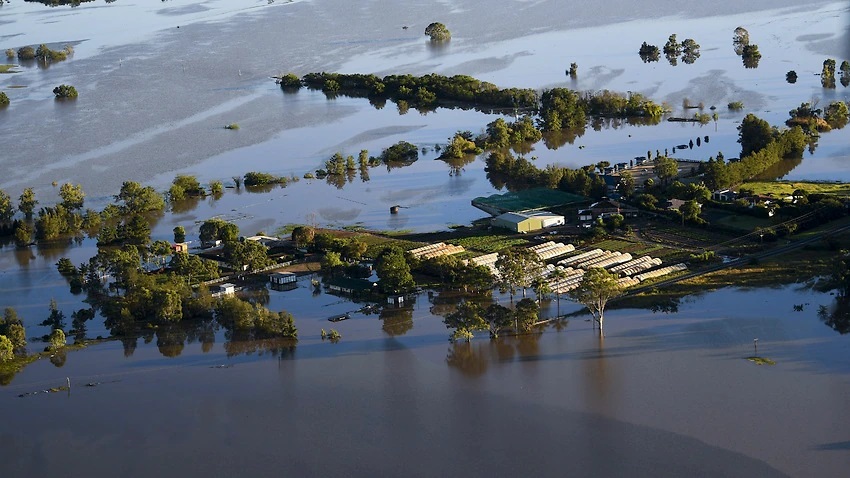
    “After three years of drought from 2017 to 2019, above average rainfall last year resulted in a welcome recharge of our water storages but also some significant flooding to eastern Australia,” he said.

    Overall above average rainfall was observed for NSW (30 per cent above average), Western Australia (nine per cent), Queensland (eight per cent), Victoria (five per cent), Northern Territory (three per cent) and Tasmania (one per cent).

    Only South Australia missed out, with rainfall two per cent below average in 2021.

    Dr Grainger said the rainfall was influenced by the impacts of a negative Indian Ocean Dipole – a period of warmer than usual temperatures in the western Indian ocean – and La Nina, cooling of the central and eastern tropical Pacific Ocean.

    Dr Grainger said they also had an impact on Australia’s mean temperature for 2021, which was 0.56C above average (1961-90 climate reference period) but still the coolest year since 2012.

    “It turns out 2021 was almost 0.4 degrees cooler than the average temperature over the last decade (since 2012),” he said.

    Temperatures were above average for most of northern Australia, Tasmania and WA’s west coast but below average for parts of inland NSW and around the southern border of the Northern Territory and WA.

    “The cooler and wetter conditions because of that meant we continued our recovery from the really extreme drought we had over 2017-19 period,” Dr Grainger said.

  • Torture and Inhuman Treatment in Turkey: 2021 in Review

    Turkey has experienced a marked resurgence of torture and ill-treatment in custody over the past six years and especially since a coup attempt on July 15, 2016. Lack of condemnation from higher officials and a readiness to cover up allegations rather than investigate them have resulted in widespread impunity for the security forces.

    The enormous gulf between Turkey’s constitutional provisions for the protection of human rights and the grim reality on the ground continued to grow during the year. In a landmark decision, Turkey’s Constitutional Court in November 2020 found a government decree that granted immunity to civilians who were involved in criminal activities to suppress the abortive putsch to be constitutional, hence sanctioning the country’s culture of impunity at the highest level.

    Turkey is party to several international conventions that have different review and inspection mechanisms such as the United Nations, the Council of Europe (CoE) and the Organization for Security and Co-operation in Europe. According to information published on the Turkish Ministry of Foreign Affairs website, the country is currently party to 16 UN human rights conventions and 121 of the CoE’s 225 conventions and has signed 31 other conventions.

    Yet in the recent past the Turkish government has continuously disregarded the provisions of the constitution and failed to uphold its international obligations. For instance, Turkey has for four years blocked the publication of a report by a CoE delegation that paid a fact-finding visit to Turkey in 2016 to investigate allegations of torture and ill treatment in Turkish correctional facilities.

    The CoE’s Committee for the Prevention of Torture and Inhuman or Degrading Treatment or Punishment (CPT) confirmed in two reports published in August 2020 the continued existence of ill-treatment, torture, informal questioning and restricted access to a lawyer as well as a fundamentally flawed medical screening system in Turkish detention facilities.

    Here is some of the most important news from 2021 in the field of torture and inhuman treatment:

    Torture and Inhuman Treatment in Turkey: 2021 in Review – Stockholm Center for Freedom (stockholmcf.org)

  • Turkish gov’t sells company seized over alleged Gülen links at far below market value

    Turkey’s Savings Deposit Insurance Fund (TMSF) has sold at well below its market value Naksan Holding, once one of Turkey’s largest corporations before it was seized by President Recep Tayyip Erdoğan’s Justice and Development Party (AKP) government following a coup attempt in 2016, Turkish Minute reported.

    Yapıen Construction, an Ankara-based company founded in 2003 with paid-in capital of TL 100 billion  ($7.2 billion), according to the Turkish Trade Registry Gazette, won a tender held by the TMSF for the purchase of Naksan Holding, with an offer of $92 million, Turkish media reports said.

    According to local media, the amount bid by Yapıen is equal to the five-year average profit of Naksan Holding, which earned TL 197 million ($14.3 million) in 2019 even after it had been transferred to the TMSF.

    The Turkish government seized Naksan Holding, which comprises more than 50 companies operating in various sectors including industry, energy, construction and transportation, appointing trustees to replace its board of directors due to their alleged links to the Gülen movement, days after an abortive putsch on July 15, 2016.

    Ankara deems the faith-based movement inspired by Muslim preacher Fethullah Gülen a terrorist organization and accuses Gülen as well as members of his movement of masterminding the coup attempt. Gülen and the movement strongly deny involvement in the abortive putsch or any terrorist activity.

    Following the fail coup, the AKP government launched a massive purge targeting the Gülen movement under the pretext of an anti-coup fight and has removed more than 130,000 people from civil service jobs.

    The government also seized schools, universities, media outlets, companies and buildings and the assets of individuals, corporations and organizations that were believed to have ties to the movement.

    In addition to Naksan Holding, Turkey’s TMSF has taken over major conglomerates including Dumankaya, Boydak Holding, the Koza Ipek Group and Kaynak Holding among 880 other private companies, according to Turkish media reports.

    No figures are available verifying how much personal wealth and how many assets have been seized by Erdoğan’s government during the massive post-coup purge that still ongoing in Turkey. SCF

  • Novak Djokovic’s exemption to play the Australian Open sparks fury and confusion

    Australians have reacted with fury and confusion after tennis star Novak Djokovic revealed he had received a travel exemption to play in the Australian Open.

    Djokovic has consistently declined to reveal his vaccination status, and as a result looked unlikely to be allowed to play in the tournament.

    However, the Serbian star revealed on Instagram on Tuesday that he had received a medical exemption.

    The Australian Open and the Victorian government confirmed the exemption on Tuesday night, stating a review had been carried out to confirm Djokovic had “a genuine medical condition that meets the criteria for an exemption”.

    The decision was met with fury by Australians on social media.

    Tennis journalist Ben Rothenberg posted the Australian government’s guidelines on who could be allowed an exemption, and said questions would be raised about the legitimacy of Djokovic’s exemption.

    “Though we now know that Djokovic plans to play the Australian Open, there will still be considerable speculation about the legitimacy of his exemption,” Rothenberg wrote.

    “What ‘acute major medical condition’, as listed here by Australian authorities, could a healthy No.1-ranked athlete have?

    “There are also non-medical exemptions which can be applied for to enter Australia; Djokovic did not say his exemption was medical. However it’s difficult to imagine a tennis player, even a good one, could be deemed ‘in the national interest’ or possessing ‘critical skills.'”

    Tennis players tried to be diplomatic in their responses, with rising Australian star Alex de Minaur keeping his response short during a press conference after his ATP Cup match.

    “It’s very interesting. That’s all I’m going to say,” de Minaur said.

    British player Jamie Murray, the elder brother of Andy, said people had to trust Djokovic had a medical condition.

    “I think if it was me that wasn’t vaccinated I wouldn’t be getting an exemption … but well done to him for getting clear to come to Australia and compete,” Murray said.

    “At the end of the day you kind of have to trust that he does have a valid reason for the medical exemption.”

    Prominent Victorian emergency department doctor Stephen Parnis said the exemption sent an appalling message to people trying to stop the spread of COVID-19.

    “I don’t care how good a tennis player he is. If he’s refusing to get vaccinated, he shouldn’t be allowed in,” Parnis wrote.

    “If this exemption is true, it sends an appalling message to millions seeking to reduce COVID-19 risk to themselves and others. Vaccination shows respect, Novak.” ABC

  • Press Freedom in Turkey: 2021 in Review

    The Turkish government continued to muzzle the press in 2021 in a variety of ways, including imprisoning journalists and using regulatory authorities to exert financial pressure.

    According to the Committee to Protect Journalists (CPJ) Turkey, once the world’s worst jailer of journalists, is now ranked sixth in CPJ’s 2021 prison census after releasing 20 jailed journalists in the last year, but this doesn’t mean media freedom has improved in the country.

    Journalism is still associated with terrorism in Turkey, and journalistic work is used as evidence against journalists in the overwhelming majority of convictions. In most of the trials, the evidence is typically made up of social media posts, news stories, articles or TV broadcasts.

    Turkey has dropped precipitously since it was ranked 100th among 139 countries when Reporters Without Borders (RSF) published its first worldwide index in 2002, the year the ruling Justice and Development Party (AKP) came to power. The country was ranked 153rd out of 180 countries in the 2021 World Press Freedom Index.

    According to a report by the Center for American Progress (CAP), despite heavy censorship, two key trends undercut President Recep Tayyip Erdoğan’s efforts to control the media landscape: “rising distrust toward the media and increasing fragmentation in the ways that Turks get their news.”

    Cognizant of these trends, the Turkish government continued to increase its control over social media through restrictive laws. According to Freedom House’s yearly report on global Internet freedom, Internet freedom continued to decline for a third year in a row in Turkey. Hundreds of websites were blocked, online content deemed critical of President Erdoğan or his ruling AKP was removed from websites and social media platforms, while online activists, journalists and social media users were harassed both physically and online for their social media posts.

    Here is some of the most important news from 2021 in the field of press freedom:

    Press Freedom in Turkey: 2021 in Review – Stockholm Center for Freedom (stockholmcf.org)

  • Veteran actor faces 2 years in prison on charges of insulting the Turkish nation

    A veteran actor has been indicted on charges of insulting the Turkish nation on social media and faces up to two years in prison, Turkish Minute reported.

    İlyas Salman, 72, is accused in the indictment of insulting the Turkish nation, the Republic of Turkey, the Turkish Parliament and government and legal institutions of the state in a video he posted on social media on Jan. 25, 2021. The charges are based on Article 301 of the Turkish Penal Code (TCK), which criminalizes public denigration of “Turkishness, the Republic or Grand National Assembly of Turkey.”

    In the video Salman criticizes the policies of the ruling Justice and Development Party (AKP) and the people who vote for the party, which has been in power as a single-party government since 2002.

    In his statement to the prosecutor, Salman said he did not intend to insult any person or any state institution and that his remarks were within the limits of freedom of expression. The actor said he is opposed to the government and that he criticizes it for a better future for the country.

    An investigation into Salman was launched in September. The actor will appear before an İstanbul court in March.

    The infamous Article 301 of the TCK was frequently used in the 2000s to prosecute intellectuals on charges of insulting Turkishness. In the wake of widespread criticism from local and international rights groups and the European Union, the AKP government amended the controversial article in 2008 and made permission from the Justice Ministry a prerequisite for the launch of investigations based on this article. SCF

  • Tasmania’s Covid cases jump 50 per cent in a day

    Tasmania has recorded 404 new Covid-19 infections while the number of people in hospital with the virus has grown to three.

    The state’s health department confirmed the new cases on Sunday morning, as active infections across the state rose to 1219 cases.

    The figures represented a slight decrease on Saturday’s daily case tally, when 428 were recorded.

    Sixty cases are being cared for at community case management facilities and 316 are being managed at home.

    Only one of three cases in the state’s hospitals are there due to Covid-19, with the other two admitted to hospital due to unrelated conditions.

    There are no Covid-19 cases in intensive care or requiring ventilation.

    More than 1500 tests were performed on New Year’s Day with another 1200 booked in on Sunday.

    Health Minister Jeremy Rockliff said 120 people were released from isolation on Saturday after recovering from Covid-19.

    He said a three-year-old child had tested positive for Covid-19 in the state’s south, after presenting to Royal Hobart Hospital’s emergency department.

    ‘While no doubt distressing for the family, the child was treated by an emergency department medical specialist and was deemed safe for discharge,’ Mr Rockliff said in a statement.

    He said rapid antigen tests remained available to asymptomatic close contacts or anyone directed to take a test by the health department.

    ‘Please contact the Public Health Hotline if you cannot obtain a RAT test and we will direct you to a distribution point in the South, North and North West,’ he said.

    ‘While the case numbers will continue to cause some concern in the community – which is completely understandable – it is not unexpected, and the reason we are now able to live with Covid is because of our highly vaccinated population.’

    On Saturday Premier Peter Gutwein said, with a highly vaccinated population, Tasmania would not be heading into lockdown or closing its borders.

    But he did advise caution to travellers, reminding Tasmanians and visitors if they contracted the virus or became a close contact while away, they would have to isolate at their own cost. DailyMail