Blog

  • International Day of Families: Fleeing Persecution and Separation from Family

    International Day of Families: Fleeing Persecution and Separation from Family


    Every year on 15 May, the UN observes the International Day of Families to reflect on the importance which the international community attaches to families as basic units of society as well as its concern regarding their situation around the world. In 2022, we have seen an increase in the number of conflicts around the world, with many families becoming separated in the midst of a conflict or during the process of fleeing or migrating.

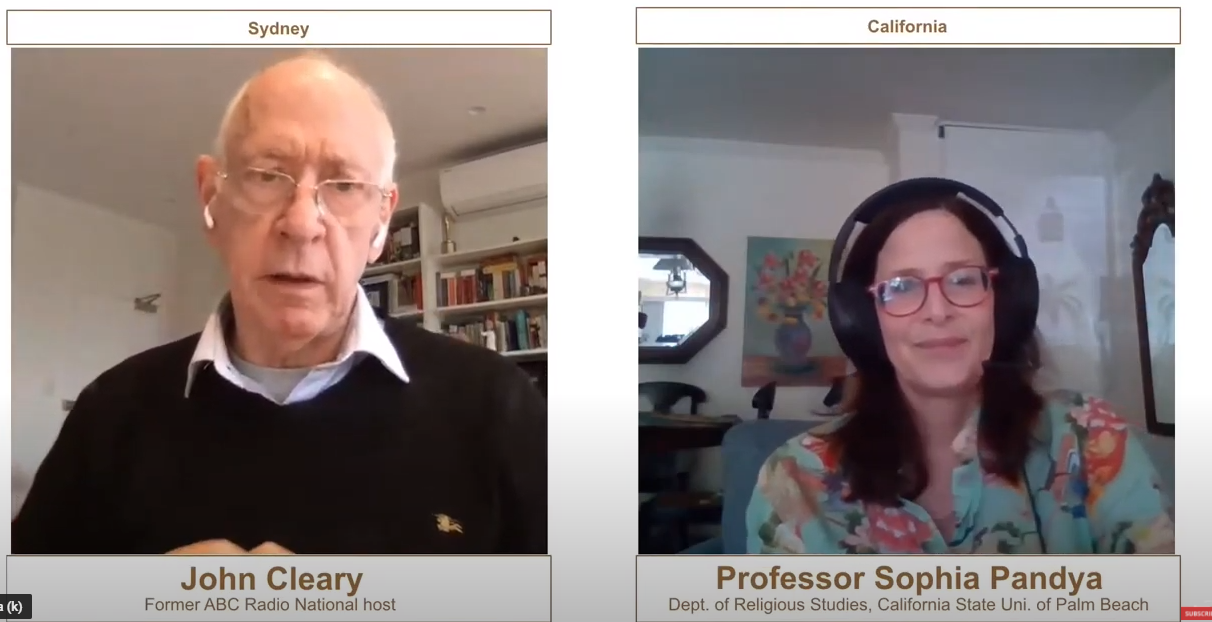
    In honour of the International Day of Families 2022, Advocates for Dignity (AFD) hosted a webinar on Wednesday 18 May, focusing on the effect that despotic regimes have had on families from Ukraine, Afghanistan and Turkey. The webinar was opened by AFD President, Mehmet Saral, who introduced the moderator for the webinar, former ABC journalist John Cleary. Mr Cleary introduced each of the guest speakers and conducted a Q&A session after each speaker’s talk. There were three notable speakers who were experts in their respective fields. The speakers included:

    The webinar began with Prof Pandya reflecting on her studies of Turkish families that crossed the borders of Turkey to Greece through the Maritsa river, to flee persecution as a result of President Erdogan’s regime after the attempted coup of 2016. She noted that in 2022, over 84 million people have become displaced to political turbulence and conflict around the world, with at least 35 million of those being children.

    “When we think about the refugee status, crossing a river is only one stage of their journey. For some, the journey may include hiding from arrest, exploitation, human trafficking, sexual assault, conlfict and death,” she said. “It is actually women and children who die in higher rates, and they are more vulnerable, especially to violence and sexual assault. Many women and girls suffer disproportionately from poverty, family separation, language barriers, lack of access to resources.”

    Pandya’s research has found that the impacts of the trauma of displacement result in depression, anxiety, and a very concerningly diminished ability to parent effectively, which is how displacement becomes an intergenerational issue within families. Not only do children have to endure the trauma of the journey, poor living conditions, a series of relocations, mental health problems, especially PTSD, but they also face poor care due to the mental health of their parents.

    She then provided an example of an interview with a displaced Turkish mother in Greece. She said: “A mother of twins said she arrived in Greece with her twins, and couldn’t even access diapers for them in the refugee camp. Now that her twins are 2 years old she expresses that she does not want to play with them anymore. She said ‘I don’t want to be with them, I can’t handle them’. She did not want to be a mother. This is a family crisis, there are many mothers who are so emotionally and psychologically affected that their family lives are in crisis.”

    Em Prof Maley then spoke about how displacement has been such a major part of the life of Afghan families for decades, highlighting that what displacement fundamentally does is tear apart support networks that are fundamental in sustaining families in functioning societies.

    Maley stated that several specific problems have arisen for Afghan families both within and outside of Afghanistan as a result of the Taliban taking over Afghanistan as of August last year. The first is physical safety; people are being attacked/becoming victims of terrorist strikes. “Each victim is a member of a family. This will affect the internal dynamics of the family, they may lose their breadwinner, their children, their elders. It is very difficult for families to move forward when they are dealing with the overwhelming grief of these attacks.” he said.

    He then continued: “The very idea of family is complex, it can very significantly vary in different countries. About 1 million people have fled since August last year. The conception of family which tends to be applied by western bureaucracies, which can be relevant when people are seeking to use sponsorship mechanisms to reunite fractured families, does not cover their relationship with aunts, uncles, cousins and other extended family members…disruption to family life then affects their ability to function on a day to day basis.”

    Dr Oleinikova started her presentation with an image of destruction in the Kyiv Region, which has severely suffered from the Russian invasion of Ukraine this year. She stated that the human costs of war are severe, with 7.1 million people that have become internally displaced, and 5.5 million refugees that have fled the country. This equates to 25% of the whole population of Ukraine being displaced. Within this escalating refugee crisis an estimated 55 children are forced to flee Ukraine every minute.

    “Men between the ages of 18 and 60 can’t leave Ukraine because they can be called to the front at any time. Those who are fleeing Ukraine are mostly women and children as a result, as well as the older generations, so mostly vulnerable groups are being displaced.” she said.

    As the war started, Oleinikova established a small fund to cover relocation costs for Ukrainian refugees including visa applications, document translation and much more, to assist in the first week of the war when these resources weren’t available as they are now. She was working with 10 volunteers on the ground in Ukraine. “My grandparents live in Kyiv, they are 85, they were surviving the first very harsh months thanks to food and medication provided by volunteers, otherwise they would not have been able to maintain their basic survival needs,” she said.

    Oleinikova then recounted many cases of mothers and children which she knew of personally, who were forced to cross the borders to flee Ukraine during the freezing winter months. Many of these cases had safe endings, however some included the loss of mothers and fathers volunteering to protect their country.

    The program was concluded by Mehmet Saral, who thanked each of the speakers for their insightful talks.


  • Turkish court faults Birgün daily for report on Erdoğan’s son-in-law

    An İstanbul court has ruled in favor of President Recep Tayyip Erdoğan’s son-in-law Selçuk Bayraktar, the chief technical officer of Turkish unmanned aerial vehicle producer Baykar, and his brother Haluk Bayraktar in a lawsuit they filed against the Birgün daily and one of its reporters, Birgün reported on Tuesday.

    According to the report, the İstanbul 23rd Civil Court of First Instance recently ordered the newspaper and reporter İsmail Arı to pay each of the complainants TL 100,000 ($6,266) in damages due to a report by the journalist that was published in Birgün on Aug. 21, 2021.

    Titled “TÜBİTAK works for the son-in-law’s foundation,” the report accused the Bayraktars of using millions of Turkish lira from the budget of Turkey’s Scientific and Technological Research Council (TÜBİTAK), on whose board Haluk Bayraktar sits, to organize TEKNOFEST, an aerospace and technology festival organized by Selçuk and Haluk Bayraktar’s Turkey Technology Team (T3) Foundation in 2021.

    The Bayraktars had demanded a total of TL 250,000 ($15,679) from Birgün and Arı in the lawsuit they filed on Sept. 22, claiming that the daily and Arı had no intention of reporting news or informing the public but were aiming to attack their personal rights.

    A similar lawsuit filed by the brothers was previously rejected by the Ankara 18th Civil Court of First Instance, Birgün said.

    Ali Deniz Ceylan, one of the lawyers representing Birgün, said the report was “lawful and within the limits of press freedom,” describing the court’s verdict as “a desperate and shameful decision” and including one of the highest awards for damages imposed for a news report in the history of the Turkish press law.

    “The lawsuit filed at the İstanbul 23rd Civil Court of First Instance was a typical example of the cases frequently launched by the government and its circle that seemingly demand protection of personal rights but is actually aimed at deterring the [critical] press outlets from reporting. … First, we’ll appeal this decision. I hope it will be overturned as soon as possible,” he added.

    President Erdoğan’s Justice and Development Party (AKP) government increased its crackdown on critical media outlets and journalists in the aftermath of a coup attempt in July 2016 following which dozens of journalists were jailed, while more than 200 media outlets were closed down under the pretext of an anti-coup fight.

    Turkish journalists are often targeted and jailed for their journalistic activities. Turkey is one of the world’s biggest jailers of professional journalists and ranked 149th among 180 countries in the Reporters Without Borders (RSF) 2022 World Press Freedom Index.

  • Turkish expatriate in Germany attacked over Gülen links in apparent hate crime

    A Turkish man who has been residing in Germany for 41 years was attacked in an apparent hate crime by the Turkish owner of a kebab shop in Kamen, North Rhine-Westphalia, due to his links to the Gülen movement, the Kronos news website reported on Wednesday.

    According to Kronos, 59-year-old Ramazan Yılmazer was physically attacked by Rıfat Yılmaz, the owner of Özay’s Kebab Haus in Kamen, where he went to have dinner with his daughter and son-in-law more than a year after the last time had eaten there.

    Yılmazer told Kronos that upon entering the shop, he asked Yılmaz about its owner, whom he had known for years, and found that Yılmaz had recently taken over the shop. He then asked him about an employee named Yetiş, and Yılmaz answered: “I fired them all, I can’t work with guys like that. The man was a FETÖ member, that’s a terrorist, you know.”

    FETÖ is a derogatory term used by the Turkish government to refer to the Gülen movement, a faith-based group inspired by Turkish cleric Fethullah Gülen, as a terrorist organization.

    Yılmazer continued: “I told him, ‘I don’t know you, but I’ve known those people for 30 years. Did they use violence against you? Were they engaged in any armed acts? How can you talk [about them] like that?’ Then, he replied, ‘So you are one of them,’ [and] he started swearing. He got really aggressive.”

    On his way out of the shop, Yılmazer also told the attacker, “You can’t label people as terrorists. We all live in Europe. Terrorism has a definition. Besides, I’m a customer. I came here to buy a kebab, not to listen to insults.”

    According to Kronos, Yılmaz then started swearing at his family, came out from behind the counter and attacked Yılmazer, who had some of his front teeth broken as a result of the assault.

    When the police arrived, Yılmaz complained to them about Yılmazer, saying he was afraid of him because he was a terrorist, but the officers paid no attention to his claims, Kronos said, citing Yılmazer.

    After filing a police report, Yılmazer also went to the hospital to get a medical report, where he was advised to leave immediately since Yılmaz has a large family that nobody wanted to mess with.

    “[But] I’m not the guilty one. I am not the attacker. Germany is a state of law. I’ll seek my rights in court,” Yılmaz said.

    Saying that he had been attacked by racists in Germany back in 1996 and was now being targeted by supporters of Turkey’s Justice and Development Party (AKP) government, Yılmaz described his links to the Gülen movement as follows: “I’m only a transporter [by profession]. I’m not a manager in any association or foundation [affiliated with the movement]. I support [Gülenists’] educational and cultural activities voluntarily.”

    The Gülen movement is a worldwide civic initiative rooted in the spiritual and humanistic tradition of Islam. The bases of the movement are diverse service projects that are initiated, funded and conducted by people who are motivated by Gülen’s humanitarian discourse.

    Turkish President Recep Tayyip Erdoğan has been targeting followers of the movement since the corruption investigations of December 17-25, 2013, implicating then-prime minister Erdoğan, his family members and inner circle.

    Dismissing the investigations as a Gülenist coup and conspiracy against his government, Erdoğan designated the movement as a terrorist organization and began to target its members. He locked up thousands, including many prosecutors, judges and police officers involved in the investigation.

    Erdoğan intensified the crackdown on the movement following a coup attempt on July 15, 2016, that he accused Gülen of masterminding. Gülen and the movement strongly deny involvement in the abortive putsch or any terrorist activity.

    Followers of the movement have been targets of hate speech, hate crimes, unlawful prosecution, torture and abductions among other serious human rights violations.

  • Opposition parties protest demolition at Atatürk Airport to build ‘nation’s garden’


    The main opposition Republican People’s Party (CHP) and its ally, the nationalist İYİ (Good) Party, have held separate protests against the demolition of Atatürk Airport to build one of the “nation’s gardens” in its place as part of a project funded by Turkey’s Ministry of Environment, Urbanization and Climate Change, local media reports said.

    Atatürk had been the primary airport in İstanbul before the ruling Justice and Development Party (AKP) decided to build a third airport in the city. It was closed on April 7, 2019, with the opening of the larger, $12 billion İstanbul Airport, though with much controversy.

    Later, the government decided to build a pandemic hospital at the old airport, destroying two runways in the process.

    Turkish President Recep Tayyip Erdoğan had also announced that they would build a “nation garden” in its place, but no move had been made in that direction until recently.

    Environment Minister Murat Kurum said on Sunday in a series of tweets that they were continuing preparations for the sapling planting ceremony of “Turkey’s largest nation’s garden,” which is planned to be built in place of Atatürk Airport.

    Following the minister’s announcement, representatives from the youth branch of İYİ gathered in front of Atatürk Airport to protest its demolition on Monday, releasing a press statement on the issue at 9.30 p.m.

    “Today, we are faced with another attempt by the AKP government to destroy the assets and values of the Republic of Turkey, which has become routine for them. … We, as the youth of the Republic of Turkey and the İYİ Party, want this destruction to be stopped as soon as possible,” they said.

    After a call by CHP İstanbul chair Canan Kaftancıoğlu, many representatives from the party, including vice chairman Oğuz Kaan Salıcı and lawmakers Mahmut Tanal and Turan Aydoğan, gathered in front of the airport, in addition to a large group of protesting citizens.

    One of the placards carried by the protesters read, “Where will the ministers land when it snows?” in reference to late January when two ministers had to land at Atatürk Airport as snow and the coldest weather in decades crippled transportation in İstanbul, with the new airport closed and cut off from the city.

    Also making a statement to the press in front of the airport, Kaftancıoğlu claimed that the AKP government had plans to sell the new İstanbul airport to their “Qatari and Saudi Arabian collaborators” and were only taking the step of establishing a nation’s garden in place of Atatürk Airport because the buyers did not want any other airports in the area.

    “The reason why İstanbul Airport isn’t allowed to operate together with Atatürk Airport is definitely not due to technical reasons. … They’re closing it saying they would build a nation’s garden so that they can make it [İstanbul airport] available to the Qataris,” she argued.

    Meanwhile, Ali Kıdık, an İYİ Party İstanbul city council member, on Monday said in a tweet that he found out that a verbal order was given to accelerate the demolition at Atatürk Airport after İstanbul Mayor Ekrem İmamoğlu, from the main opposition CHP, recently vowed to reopen it following the upcoming elections scheduled for June 2023.

    İstanbul Airport replaced the old Atatürk Airport as the global hub of Turkish Airlines in 2019.

    Hailed as the “pride of our country and an example to the world” by President Recep Tayyip Erdoğan, the new airport, one of the mega-projects built under Erdoğan’s two-decade rule, handled 37 million passengers last year, making it Europe’s busiest for the second year running.

    But opponents have criticized the airport’s location, which is near the Black Sea coast and 35 kilometers (22 miles) away from the city center, exposing it to fog and strong winds.

  • Greek soldiers hold kids at gunpoint, throw them into river in family’s attempt to flee Turkey


    Greek soldiers on Friday pushed back 15 Turks, among them five children, who were fleeing President Recep Tayyip Erdoğan’s relentless crackdown on dissent by crossing the Evros River on an inflatable boat, held the children at gunpoint to threaten their parents and threw them into the river before forcing the boat back to Turkey, the brother of a victim told    https://www.turkishminute.com/Turkish Minute.

    Ö.H. (43), his wife, S.H. (39) and their children A.H. (8) and A.Y.H. (5) were among the 15 Turks who tried to cross the Evros River to make it to Europe and seek asylum, Ö.H.’s brother E.H. told Turkish Minute.

    The boat was damaged and was losing air. The group barely made it to the Greek side, where armed men wearing military uniforms and speaking Greek were on a boat hidden between the vegetation, apparently waiting for them. 

    The men took the five children onto their boat and held their guns to children’s heads, E.H. cited his brother as saying. After a stand-off between the asylum seekers pleading for help and the armed men, the latter threw the children into the water. 

    Ö.H. went to the rescue of the children and took them back to the boat. The group then was pushed back to Turkey, where Turkish gendarmes were waiting for them. 

    After a brief detention, eight adults were arrested and jailed, among them Ö.H.’s wife S.H, who is in the early stages of leukemia.

    Ö.H. had already spent 44 months in prison on charges of membership in the Gülen movement, a faith-based group inspired by Muslim cleric Fethullah Gülen.

    The Turkish government accuses the Gülen movement of masterminding a coup attempt on July 15, 2016 and labels it a “terrorist organization,” although the movement strongly denies involvement in the coup attempt or any terrorist activity.

    After spending 44 months in prison, Ö.H. was released on probation. He was a manager of an NGO with links to the Gülen movement and he struggled to find a job after his release but was unable to due to the demonization of the Gülenists, which led employers to avoid giving them jobs. 

    S.H. was also arrested after the failed 2016 coup but released pending trial and now faces at least 38 months in jail as a cancer patient, E.H. told Turkish Minute. She might not be released even if her treatment requires her to be outside prison. 

    Human rights activists and opposition politicians have frequently criticized Turkish authorities for not releasing critically ill prisoners so they can seek proper treatment. 

    The family wanted to avoid this fate but were pushed back to Turkey, leaving the children, who had a gun pointed at their heads and thrown into the river, traumatized.

    Another pushback incident took place on May 3, when S.E. tried to make it to Greece via the same route with his nine months pregnant wife and another couple with a 5-year-old child. After arriving in Greece and walking for a while, they were stopped by the Greek police, who took their phones.

    “A white transporter van came and picked us up. They took us to a forest,” S.E. said.

    “After keeping us there for a while, they took us to another place. There were many police cars outside, but this was not a police station. Then they took us back to the forest where they had taken us before. Male cops strip-searched us, while a female police officer did the same with the women,” he recounted.

    S.E. said they were put in a vehicle along with 50 others and were kept in there for eight hours before they were pushed back to Turkey.

    “When we said that we want to seek asylum, why are you doing this to us, they replied, ‘Did you ask us when you were coming here?’ We were dying of suffocation. A child inside the car was screaming. The women were crying,” S.E. said.

    “They attacked us, stripped us completely and took our money. They put us in the boats. Don’t do it, we said, that they would arrest us if they sent us back. They didn’t listen and they took us to Turkey by boat. Turkish gendarmes took us, and my nine months pregnant wife was arrested by court order. I was released because I was previously in prison for five years,” S.E. told Turkish Minute, referring to his release on probation. He had to turn himself in to serve his remaining jail time until October, and he was arrested and put in prison on Thursday after he talked to Turkish Minute about his experience.

    Turkey’s crackdown on the Gülen movement

    The Justice and Development Party (AKP) government launched a war against the Gülen movement, a worldwide civic initiative inspired by the ideas of Muslim cleric Fethullah Gülen, after the corruption investigations of Dec. 17-25, 2013 that implicated then-prime minister and current President Recep Tayyip Erdoğan’s family members and inner circle.

    Dismissing the investigations as a Gülenist coup and conspiracy, the AKP government designated the movement as a terrorist organization and began to target its members. The government intensified the crackdown following the coup attempt in July 2016.

    A total of 319,587 people have been detained and 99,962 arrested in operations against supporters of the Gülen movement since the coup attempt, Turkey’s Interior Minister Süleyman Soylu announced in November.

    In addition to the thousands who were jailed, scores of other Gülen movement followers had to flee Turkey to avoid the government crackdown.

    Purge victims who wanted to flee the country to avoid the post-coup crackdown took dangerous journeys across the Evros River or the Aegean Sea. Some were arrested by Turkish security forces, some were pushed back to Turkey by Greek security forces and others perished on their way to Greece.

    The purge victims had to leave the country illegally because the government had revoked their passports.

    Greece accused of pushbacks

    According to data collected by The Guardian based on reports from United Nations agencies as well as the databases of civil society organizations, European countries pushed back 40,000 migrants, forcibly in most cases, between January 2020 and May 2021, and more than 2,000 migrants died during these pushbacks.

    The pushback policy was supported by the European Border and Coast Guard Agency (Frontex) and has become systematic as the migrants, including children, who escaped wars were sent back, the daily reported.

    A total of 6,230 pushbacks by Greece took place between January 2020 and May 2021, according to a report by the Border Violence Monitoring Network (BVMN).

    In February 12 migrants froze to death after being stripped of their clothes and pushed back by Greek border guards. The incident sparked international condemnation.

    According to a December 2021 report by Open Democracy, the number of Turkish refugees illegally sent back home by Greek border officials has risen dramatically amid a surge in migration that is fueled by President Erdoğan’s crackdown.

    Interviews and documents received from lawyers in Greece and Turkey as well as from the family members of victims and the victims themselves, allege that Greece carried out at least 233 illegal pushbacks of Turkish nationals between May and December 2021 alone, compared to 98 pushbacks tracked in 2019.

    All of those pushback victims fleeing persecution in Turkey made it to Greece by crossing the land or sea border. They shared their locations with lawyers or family members via messaging apps, or sent pictures and videos of themselves in Greece, in a bid to prove that they had arrived inGreek territory and to avoid being returned to Turkey.

    Pushing refugees back to countries they fled is illegal under the principle of non-refoulement, which forbids a country from forcing refugees or asylum seekers to return to a country in which they are liable to be subjected to persecution. Athens has continually denied allegations about its use of this practice.  Bünyamin Tekin

  • 54 civil servants among 224 facing detention on bribery charges


    Detention warrants have been issued for 224 people including 54 civil servants as part of an investigation conducted by the Anadolu Chief Public Prosecutor’s Office, local media reported on Tuesday.

    The 54 civil servants for whom the warrants were issued were for the most part police officers and engineers serving at the Kadıköy Municipality, run by the main opposition Republican People’s Party (CHP).

    According to Turkish media reports, the detention warrants were issued for 224 people on suspicion of “giving or accepting a bribe,” “acting as an intermediary [in bribery]” and “forgery of official documents.”

    Simultaneous police raids were carried out on numerous locations as part of the İstanbul-based operation in İzmir, Adana, Kocaeli and Şırnak provinces.

    The operation comes on the heels of a top court ruling against the CHP’s İstanbul chair, which was seen by opponents of President Recep Tayyip Erdoğan as a crackdown on the opposition ahead of next year’s presidential and parliamentary elections.

    Turkey’s Supreme Court of Appeals last week upheld a political ban and prison sentence for CHP İstanbul chairperson Canan Kaftancıoğlu on charges of insulting the president and the Turkish state in tweets posted between 2012 and 2017. She had been free pending appeal.

    The decision attracted condemnation and anger from opposition politicians as well as members of the country’s intelligentsia, with many referring to Kaftancıoğlu’s key role in the shock victory of the CHP’s Istanbul mayoral candidate Ekrem İmamoğlu in 2019 — the first time Erdoğan’s ruling Justice and Development Party (AKP) had lost power in Turkey’s biggest city in 25 years.

  • Former intel official says MİT abducts Gülenists from Africa, Central Asia by paying bribes

    Associate Professor Ali Burak Darıcılı, an intelligence expert and former official at Turkey’s National Intelligence Organization (MİT), has said the organization has forcibly returned to Turkey individuals linked to the Gülen movement from some African and Central Asian countries by bribing local officials.

    Darıcılı, who left MİT in 2014 and is currently an academic at Bursa Technical University, on Monday spoke to journalists Burcu Uğur and Şaban Sevinç during an online program on the Bizim TV YouTube channel.

    During the program Darıcılı was asked how MİT had been able to forcibly return Gülen movement members in some African and Central Asian countries but had failed to do the same in European countries or the United States.

    The ex-intelligence official explained that locals were being bribed to help them as collaborators in such “failed states” as those in Africa and Central Asia while carrying out the abduction of Gülenists.

    Darıcılı added that it’s not possible to do the same in countries with strong governments, such as Germany, since “if you’re exposed performing such a covert activity, you’ll have a big problem under international law” because it amounts to interfering with the internal affairs of the relevant country.

    When Sevinç claimed he could also abduct people from those countries using bribery and that one didn’t need to be an intelligence official to do that, Darıcılı said: “Don’t underestimate it [MİT because] knowing whom to bribe is also important.”

  • Scott Morrison woos voters from Hindu and Sikh communities on campaign trail

    Prime Minister Scott Morrison attended a Hindu Council of Australia in the Western Sydney seat of Parramatta and a Sikh Temple event in the Melbourne seat of La Trobe on Saturday.

    In his sixth campaign trip to the seat of Parramatta, Mr Morrison met with members of the Indian Australian community to announce $250,000 for a kitchen program providing meals for homeless people in an election pledge.

    The prime minister was joined by his Liberal candidate Maria Kovacic and Multicultural Affairs Minister Alex Hawke at the Hindu Council of Australia’s Meet and Greet event.

    He also on Saturday spent time at the Gurdwara Siri Guru Nanak Darbar Sikh Temple in Pakenham in the Melbourne seat of La Trobe.

    Coalition makes superannuation policy pitch

    With less than a week to go until polling day, the Liberal Party will officially launch its federal election campaign, along with news of an expanded superannuation policy to help entice voters.

    The Liberal leader will announce an expansion of a superannuation contribution scheme, funded by the sale of property, coalition sources have told Nine newspapers.

    Under the scheme, people aged 55 and above who are downsizing their primary residence, can contribute up to $1.6 million into superannuation. The terms lower the current policy age of 65 and lift the current cap from $300,000.

    Former prime minister John Howard is expected to be among the Liberal stalwarts in the audience at the Brisbane Convention Centre on Sunday.

    Labor commits to more funding for manufacturing industry

    Labor Leader Anthony Albanese will also start the day in Brisbane where he will announce Labor’s $1 billion election commitment for Australia’s advanced manufacturing industry.

    Labor’s fund aims to build the nation’s industrial base and create new opportunities in key manufacturing industries such as transport, defence, food processing, medical science, and renewables.

    Key economic data on unemployment and wages is due to be released this week.

    Mr Morrison on Saturday reaffirmed his promise to “empathise” and be more consultative after admitting some people find him to be “a bit of a bulldozer”.

    The prime minister said if he is re-elected his government will be “changing gears” and that he had needed to be a strong leader during the COVID-19 pandemic.

    “That was a time for me as prime minister in my government to be in the gear of pushing through and that was necessary,” Mr Morrison said.

    “I will seek … to explain my motives and my concerns, and empathise a lot more.

    “The next stage is very different … I’m looking forward to changing the gears of our government to secure those opportunities that are ahead of us.”

    Mr Morrison said the nation was moving to an “optimistic mode”. sbs

  • Former military cadet arrested to serve sentence for links to Gülen movement

    Former military cadet arrested to serve sentence for links to Gülen movement

    A former military cadet was arrested on Tuesday at the Izmir airport to serve a seven year, six month sentence for links to the Gülen movement, the Bold Medya news website reported.

    Mustafa Enis Durak, 22, who is currently a third-year medical student, has been arrested three times over the last six months. He was first arrested on December 6, 2021 but was released 20 days later. He was re-arrested on April 14 and sent to a prison in Izmir only to be released a week later.

    Durak was accused of taking part in religious meetings when he was a military cadet and observing Islamic practices such as praying, which are strictly regulated by the Turkish army. He was pressured to give up the names of his friends who attended the meetings; however, Durak refused and denied all the accusations.

    Turkish President Recep Tayyip Erdoğan has been targeting followers of the Gülen movement, a faith-based group inspired by Turkish cleric Fethullah Gülen, since the corruption investigations of December 17-25, 2013, which implicated then-prime minister Erdoğan, his family members and his inner circle.

    Dismissing the investigations as a Gülenist coup and conspiracy against his government, Erdoğan designated the movement as a terrorist organization and began to target its members. He intensified the crackdown on the movement following a coup attempt on July 15, 2016 that he accused Gülen of masterminding. Gülen and the movement strongly deny involvement in the abortive putsch or any terrorist activity.

    Durak’s family said the young boy was only 14 when he was accepted at a military high school in Istanbul. He was 16 when the coup attempt took place, and according to his family, he cannot be held accountable.

    Shortly after the coup attempt, the government closed war academies, military high schools and prep schools and replaced them with a military university under the jurisdiction of the Ministry of Defense.

    A total of 259 military cadets were detained on coup charges on July 16, 2016 and were arrested four days later. The cadets were indicted a year after they were put in pretrial detention, and their trial was concluded in May 2018.

    One hundred seventy-eight of the cadets were given life sentences on charges of attempting to overturn the constitutional order and attempting to overthrow the Turkish government and parliament by use of force as well as membership in a terrorist organization.

    The cadets say they didn’t know a coup attempt was underway and were acting on orders from their superiors, who told them there was a terrorist attack. STC

  • Turkish Rear Admiral Uğurlu says July 15 coup attempt was a diabolical scheme

    Asserting the July 15 incident was not a military coup attempt, Rear Admiral Mustafa Zeki Uğurlu said, “None of what was perpetuated that night indicated a coup attempt. I mean, if one wishes a coup to fail, they plan something like this.”


    Terming the July 15 coup attempt as a “diabolical scheme”, Rear Admiral Mustafa Zeki Uğurlu, said the perpetrators of the July 15 events had planned every second, considering myriad alternatives. Uğurlu said, “It would not matter if my fellow soldiers had locked themselves in their homes that night or gone out on the streets to protest the coup attempt or even chanted praises in mosques, or evacuated the headquarters and discharged everyone, they would not have been able to prevent what happened. You know, as they say in the Navy, let your seas be calm and your winds be fair, let there be no sailing condition to hinder or endanger your navigation and let your enemies be brave…  Unfortunately, we were dealt with the craven.”

    Reminding how the Ottoman Empire entered the World War 1 in 1914 after the German battleships Goeben and Breslau slipped across the Dardanelles and, hoisting the Ottoman flag, sailed to the Black Sea to bombard Russian ports, Uğurlu said, “That night, the perpetrators hoisted false flags and false banners like Goeben and Breslau. Unfortunately, our nation mistook them for Turkish battleships Yavuz and Midilli. They carried out bloody operations in several locations like as Marmaris, Akıncılar Airforce Base, Bosporus Bridge, Turkish Grand National Assembly, and the Special Forces Command.”

    Rear Admiral Mustafa Zeki Uğurlu, who was dismissed from military service via a statutory decree on July 27, 2016, despite being on duty in the United States on July 15, answered the questions of the dismissed naval staff officers on the YouTube channel, Alesta. Uğurlu made striking assessments on the July 15 coup attempt.

    The highlights from Rear Admiral Mustafa Zeki Uğurlu’s statements are:

    “I was in Norfolk, USA on July 15. I was stationed at the NATO-ACT (Allied Command Transformation) headquarters. We were on an intensive routine and would hold three or four meetings every day, mostly I used to preside over those meetings. We were at a meeting back then. When we left the meeting, an associate conveyed some updates about strange things happening in Turkey, that the Turkish Armed Forces had carried out a coup d’état, and that the Bosporus Bridge was closed to traffic. I was surprised as I walked to my office and frankly, I did not find the attempt very convincing due to the contradictions in its delivery. I also thought if something like that had been planned, as the most senior Turkish military officer in the US, they should have informed me at first. I immediately tried to reach the Chief of the General Staff, my Force Commander, my batch-mates and my daughter in Istanbul, but it was impossible. It was complete chaos in Turkey. I remembered checking the Istanbul traffic on the Google Maps. Indeed, the Bosporus bridge and all the roads leading there were red.

    “NONE OF WHAT HAPPENED THAT NIGHT DENOTED A COUP ATTEMPT”

    Actually, when compared to the previous coups in Turkey, there didn’t seem much movement from my military viewpoint. Divisions and brigades were immobile in Thrace, in the Southeast and across Anatolia. Likewise, no news arrived from the Field Commands. Some unusual, simple and serially strange events incompatible with military doctrines and norms kept on happening. None of what happened that night denoted a coup attempt.

    IF YOU WISH TO GUARANTEE THE FAILURE OF A COUP, YOU PLAN SUCH

    I mean, if you wish a coup to fail, you conduct it in an evening when everyone is on the streets. If you wish to guarantee this failure, you close the Bosporus Bridge to traffic in a metropolis like Istanbul, or you hand 13-year-old cadets’ guns without bullets… or if you wish to lose the sympathy of the people and to provoke and instigate them into resistance, you bomb the national assembly. If you wish to fail, you do not touch political figures and do not impose a serious restriction on the press. What happened that evening was not the style of those smart and experienced generals and admirals I’ve known for years. I know many and worked with some. Many had also received trainings abroad. Probably, they had participated in or planned dozens of peace support operations, war games and joint exercises. They were the military personnel who prepared and periodically updated the actual operational plans of the Turkish Armed Forces. They were commanders in the corps and garrisons that night, and they were stationed on critical missions. They did not have such limited units under their control; they had aircraft squadrons, battleship fleets, armored units, battle tanks, and fighter helicopters. Had they planned or wished to stage a coup, they would not have done and would have planned none of what happened that night.

    THEY HAD MANUALLY ADDED MY NAME ON THE PROFILING LIST

    That night passed like that…  and then, as you know, the historic witch-hunt began. About two weeks later, I learned from the press, like many of my associates, that I had been dismissed from the military service via the Statutory Decree No. 668 without asking me anything or notifying me with anything. Interestingly, months later, I saw my name written by hand on an Excel spreadsheet printout included as a profiling list in court records. So, I had been one of those profiled in the last minute to be dismissed. In the days that followed, 80 percent of my associates who served with me at the NATO Headquarters shared the same fate. There were even some who had been appointed in our places and started to work abroad. They were summoned to Turkey and arrested immediately. Now you know, the authorities harass young cadets who had been in their early teens back in July 2016.

    In 1914, Ottoman flags were hoisted on the German battleships Goeben and Breslau, and the ships were dispatched to the Black Sea to bombard the Russian ports such as Odessa and Sevastopol. This led the Ottomans to enter the First World War. In the same way, a group of accomplishes in vile interests, using the state means, hoisted false flags and false banners, just like the battleships Goeben and Breslau. Unfortunately, our nation mistook them for the Turkish battleships Yavuz and Midilli. They carried out bloody operations in several locations like Marmaris, Akıncılar Air Force Base, Bosporus Bridge, Turkish Grand National Assembly and the Special Forces Command.

    EVERYONE, INCLUDING THE OPPOSITION, MADE TO BELIEVE IN THE IMPOSED STORY OF THE COUP

    That evening and afterwards, we encountered a relentless perception management operation. Despite hundreds of contradictions, some of our associates unfortunately believed or had to pretend to believe this imposed ‘coup attempt’ story. The differences between the things said to us have happened that night and what actually happened surfaced months later. That time, the authorities increased the dose of oppression. I mean, they enacted laws and suppressed the courts to protect the actual criminals, the torturers. They hindered the probes. They silenced the journalists and litigators who did not enter their wake, by threatening and arresting them. They implemented such an effective information war that numerous people, including the opposition, became affected. Even though she knew I had been abroad, even my own mother asked, “Son, were you here that night?”, referring to the night of July the 15th.

    THE TERM ‘CONTROLLED COUP’ IS A MILD ONE: THEY HAD PLACED AT LEAST TWO INTELLIGENCE OPERATIVES IN EACH SQUAD

    Yet we glean from the evidence that has surfaced these days that everything actually happened as they wanted. It seems they had started the preparations in January 2016, maybe even earlier. They planned so well that they even set up control mechanisms where disruptions could occur. For example, they had dispatched General Sönmezateş (Gökhan Şahin Sönmezateş) to Marmaris and they wanted to set deadly trap for him the same they had done for General Semih Terzi in the Special Forces Command. They wished to guarantee this outcome so much they placed two National Intelligence Operation informants, or maybe more, in the squads. It is certain there were at least two operatives, given their court statements. The informants constantly updated the squads’ location to the National Intelligence Organization (MIT). They delayed the departure time from Çiğli Air Base so the vile preparations in Marmaris could be completed and they allowed departure when it was the time at last. The expression ‘controlled coup’ is mild here; it conceals what actually happened.

    A DIABOLICAL PLAN: NO MATTER IF MY FELLOW SOLDIERS WOULD EVEN RECITE PRAISES FROM THE MINARETS, THEY WOULD STILL BE ARRESTED

    It seems no matter what our fellow soldiers, who had been deprived of their freedom, did that evening, it was impossible to prevent what happened. I mean, no matter if they had shut themselves up in their homes, taken to the streets to protest the coup attempt, recited praises to the Holy Prophet from the minarets of the mosques, evacuated the garrisons and demobilized everyone, or even if they had sealed the gates of their brigades and had let no one out, they would not have prevented what happened. It is clear those bombs were to explode that night in the National Assembly building and near the Presidential Palace. Those three helicopters, feigned to belong to the Turkish Armed Forces, would fly over Marmaris, the killers with black camouflage masks would rappel on the hotels district, open random fire no different than an assassination team, and would even kill those police officers. No matter what, those cadets would be murdered on the Bosporus Bridge. The perpetrators had been prepared; they lied in ambush. Again, with the profiling lists they prepared beforehand; thousands of people would already be arrested. It’s a diabolical plan and it is an unbelievable case, but this is what happened. You know, as they say in the Navy, let your seas be calm and your winds be fair, let there be no sailing condition to hinder or endanger your navigation and let your enemies be brave…  Unfortunately, we were dealt with the craven.

    CLOCKWORK PLANNING

    The perpetrators planned and rehearsed that night’s events with multiple alternatives in clockwork manner. It is very clear it didn’t matter which military officer was where or what he or she was doing that night. For example, my classmate, a rear admiral who was the Director of Naval Operations. One cannot plan a coup without him. He was on vacation with his family hundreds of kilometers from the headquarters when the incident started. When he learned about the events, he phoned the Chief of the Navy directly and asked for his orders. The Naval Chief later confirmed this had been the case. My friend then called the Fleet Commander Veysel Kösele and acted on his orders. He stayed with his family for a few more days and then returned to Ankara. Another classmate, an admiral, behaved similarly. Another admiral friend was at a meeting in the United States that night. Even though the arrests and torture against the military personnel had started in Turkey, he had his flight ticket rescheduled and returned to Turkey earlier than planned. Without exception, they were arrested and sentenced to aggravated life sentences.

    1600 OF OUR FRIENDS HAVE BEEN SENTENCED TO LIFETIME IMPRISONMENT

    We face a grim picture. We have 1600 fellow soldiers who have been sentenced to life in prison. Nearly 100 people, who had been dismissed with statutory decrees, lost their lives in prisons. Such people are denied of their life-saving treatment under severe prison conditions. Nowadays they are transferred to other prisons, far away from their families. Families too are under pressure; almost 70 percent of the children are prescribed with anti-depressants. Suicide rate among people dismissed with statutory decrees is 30 times higher than Turkey’s average.

    WE HAVE TO REVERT TO THE WESTERN PATH CHARTED BY ATATURK 100 YEARS AGO

    I do not know how to put out this fire or how to treat this wound. I’m not a political scientist or a sociologist, but I can say this: If someone is keen on placing the Republic of Turkey on the path towards the West charted by Mustafa Kemal Atatürk and his comrades 100 years ago, returning the country to democratic values, and establishing the rule of law, it is incumbent to consider the agony and injustice suffered by a large part of the society and take steps. Annulling the statutory decrees, releasing the cadets from prisons, and re-investigating the July 15 cases by true public prosecutors as per the rule of law and supremacy of justice may be the first steps.

    THOSE WHO PLANNED THE JULY 15 LEFT MUCH EVIDENCE IN THEIR WAKE

    I am hopeful. They carried out their evil plans on July 15 well, but they also left bulks of evidence in their wake. There are hundreds of video recordings, eyewitnesses, reports and hard evidence about the events in Marmaris, for example. 47 of those evidences have been included in court records. It is impossible to understand why the so-called public prosecutors, who pursue cadets and even expectant mothers, do not wonder who those masked, camouflaged, heavily armed agents flying over Marmaris, creating chaos and martyring two police officers were. Whether they are interested or not, the tale of July 15 is over. With so many partners and so many actors, the planners could not conceal a conspiracy with dire consequences for the millions of people. I think a few questions asked by a true public prosecutor will bring the dissolution of all cases and our friends will regain their freedom.

    THOSE IN POWER ARE HEEDLESS, ASTRAY AND TREACHEROUS

    The current condition of our country is as in the last paragraph of Atatürk’s Address to the Youth. What was that: “Those who are in power can be heedless, astray, and even treacherous. What’s more, these rulers can merge their personal interests with the political ambitions of the invaders. The nation may be devastated and exhausted because of poverty.” This situation seems much clearer from abroad. Unfortunately, our country has hit rock bottom in recent years. For example, in the Rule of Law Index, it ranks 117th below Russia, China, Zambia and Kenya. It also occupies the lowest ranks in the Liberties of the World report. The peoples of Tunisia, Gambia, and Tanzania are freer than the people in Turkey. Our country ranks in ‘no longer free’ category.

    FOREIGN OFFICERS DID NOT HEED THOSE WHO WERE SENT TO REPLACE US

    That perception management, fake news and the red bulletins the regime unleashed with all its resources after July 15 caused no hesitation among the foreign officers we worked with at the NATO Headquarters. When I heard I had been expelled with a statutory decree, a military general friend, who was in a meeting in Brussels back then, phoned. He was much upset and tried his best to tell me coherently where the key to his residence was. He said, “You go and settle in my place. We will find a solution when we return.” While empathizing, some officers wept while seeing us off. I frankly did not expect that. They were not hassled by their religious beliefs or nationalism; they really considered us as their comrades in arms. The foreign officers did not heed to have rapport with those who had been hastily sent in our place from Turkey. The foreign officers wanted to deliver some aid that had collected for us, but we kindly declined. We had Turkish military officers with young children. The foreign officers secretly left relief packets at those officers’ doorsteps and they were upset when our officers kindly declined. One evening, a French general invited us to a cocktail party at his residence. Of course, we attended. We saw generals, admirals and senior NATO bureaucrats among the invitees; I and my wife were the only invitees from Turkey. Despite all the time until now, they still keep in touch with us. Our foreign friends said about us, “Everything was taken away from them, but they did not lose anything from their dignity. What befell them was hefty, but they did not want anything for themselves. Their only concern was their innocent fellow officers and friends in Turkey.” They probably investigated us institutionally. If they had the slightest doubt about us, they would show no gestures.

    WHILE OUR HOMELAND DISTANCED ITSELF FROM THE WEST, WE ESTABLISHED CULTURAL AND EMOTIONAL LINKS

    If I am to recap the last five years, we have established strong cultural and emotional bonds while our homeland widened its distance from the West. People opened their hearts and homes to us. Believe me, many considered us as one of their family and invited us to their tables on Thanksgiving Days. You know, Thanksgiving is celebrated among families, not friends. We reciprocated: We invited them to our Republic Day celebrations and shared our Eid al-Fitr and Eid al-Adha occasions.

    I LOOK FORWARD TO MY DAY OF HOMECOMING

    I missed my brothers in arms so much. They suddenly disappeared from my life. I do not have a cohort at my age to sit down and chat with. I cannot even hear the voices of my comrades. I cannot even write letters fearing the regime may bother them. Yet, I think about them and their families a lot. Sometimes even a greeting from them makes me smile for weeks. I miss my hometown so much with its air, water and sea. I look forward to the day I will return to my homeland Turkey where I hope democratic values too will return and the rule of law will prevail again.

    “I CANNOT SALUTE THE CURRENT REGIME”

    When I graduated from the Naval Academy, I took an oath I would gladly sacrifice my life for my country and nation. I served this oath for 30 years without a single taint. So did my friends who were dismissed unwarrantedly. I have not forgotten or broken this oath. Yet, it is impossible for me to salute the current regime that has suspended the constitution. If a democratic government asks me to return and continue where I left off, I would happily do that for my nation.”