Blog

  • Main opposition leader slams Erdoğan due to change of stance on Khashoggi case


    Turkey’s main opposition leader Kemal Kılıçdaroğlu has criticized President Recep Tayyip Erdoğan due to the transfer of the trial concerning the murder of Saudi journalist Jamal Khashoggi to Saudi Arabia, recalling his former remarks about the impossibility of such a move, Turkish media outlets reported.

    In a move that attracted international condemnation and dashed hopes about the possibility of justice for Khashoggi, a Turkish court last week confirmed a halt of the trial in absentia of 26 suspects linked to the murder of Khashoggi and its transfer to Riyadh.

    The 59-year-old journalist was killed inside the Saudi Consulate General in İstanbul on Oct. 2, 2018 in a gruesome murder that shocked the world.

    Republican People’s Party (CHP) leader Kemal Kılıçdaroğlu on Tuesday recalled remarks by Erdoğan, who said in 2018 that Turkey was not a “fool,” as thought by Riyadh, that would transfer the murder case to Saudi Arabia as Turkey the Saudis would destroy evidence related the murder and would not hold a fair trial.

    Erdoğan said at the time that since the crime was committed in İstanbul, an İstanbul court should try the suspects and that Saudi Arabia should hand over the suspects it had arrested to Turkey.

    A Saudi court sentenced eight lower-level operatives found responsible for the murder to prison terms of seven to 20 years in a trial that lacked transparency.

    The Saudi authorities failed to arrest the most senior officials accused of involvement in the plot to target Khashoggi, including the former royal court adviser, Saud al-Qahtani, and the deputy intelligence chief, Ahmed al-Assiri, merely announcing their resignations.

    Kılıçdaroğlu accused Erdoğan of damaging the prestige of the Turkish state by handing the Khashoggi murder trial over to Saudi Arabia.

    “He [Erdoğan] transferred the rights and prestige of Turkish courts to Saudi Arabia over a murder that was committed in Turkey. … It has now become clear who the fool is,” Kılıçdaroğlu said, claiming that Erdoğan agreed to the transfer of the Khashoggi trial in exchange for money from Saudi Arabia.

    Ankara’s move is interpreted by many as an attempt to put relations with Saudi Arabia back on track at a time when Turkey is desperate for investment to help pull it out of an economic crisis.

    In the meantime, Turkey’s Justice Minister Bekir Bozdağ said on Monday, amid mounting criticism about the transfer of the Khashoggi trial to Riyadh, that the transfer of the case was in compliance with the law.

    To Riyadh’s dismay, Turkey pressed ahead with the Khashoggi case and Erdoğan had, at the time, said the order to kill him came from the “highest levels” of government.

    Subsequently, Saudi Arabia sought unofficially to put pressure on Turkey’s economy, with a boycott on Turkish imports.

    Last year Foreign Minister Mevlüt Çavuşoğlu visited Riyadh to mend fences with the kingdom.

    Transferring the case to Riyadh removes the last obstacle to a normalization of ties.

    Erdoğan has sought to improve ties with regional rivals including Egypt and the United Arab Emirates in the face of increasing diplomatic isolation that has caused foreign investment to dry up — particularly from the West.

    In January he said he was planning a trip to Saudi Arabia as the economy was going through a turbulent period.

    Turkey’s annual inflation has soared to 61.1 percent, according to official data last week.
  • Turkish authorities arrest pregnant women, sparking public outrage

    A five-months-pregnant woman was arrested on Sunday for alleged links to the Gülen movement, sparking outrage among activists and opposition politicians, the Stockholm Center for Freedom reported, citing the Bold Medya news website.

    Aslı Ünlü, 40, who also has a 4-year-old son, was sent to a prison in western Edirne province. She was accused of using ByLock, once widely available online and considered by the government to be a tool of secret communication among supporters of the movement since a failed coup in 2016 despite the lack of any evidence that ByLock messages were related to the abortive putsch.

    Turkish President Recep Tayyip Erdoğan has been targeting followers of the Gülen movement, a faith-based group inspired by Turkish cleric Fethullah Gülen, since the corruption investigations of December 17-25, 2013, which implicated then-prime minister Erdoğan, his family members and his inner circle.

    Dismissing the investigations as a Gülenist coup and conspiracy against his government, Erdoğan designated the movement as a terrorist organization and began to target its members. He intensified the crackdown on the movement following a coup attempt on July 15, 2016 that he accused Gülen of masterminding. Gülen and the movement strongly deny involvement in the abortive putsch or any terrorist activity.

    Peoples’ Democratic Party deputy Ömer Faruk Gergerliğolu said on Twitter it was unacceptable that pregnant women and mothers with young children were being arrested.

    The Law on the Execution of Sentences and Security Measures stipulates that even if a pregnant woman is convicted, her sentence shall be postponed. According to the law, “execution of the prison sentence is delayed for women who are pregnant or have given birth within the last year and a half.”

    Ünlü’s husband, Emre Ünlü, said his wife had already been experiencing a difficult pregnancy. “When she appeared in court, my wife could barely stand upright from the cramps. The stress of being incarcerated and hunger caused additional problems,” he said.

    Emre Ünlü added that their 4-year-old son had surgery just 10 days earlier and desperately needed his mother by his side. He demanded the release of his wife, or at least for her to be put in home arrest.

    According to a report by Solidarity with OTHERS, as of November 2021 a total of 219 pregnant women and women with children under 6 years of age were arbitrarily detained or arrested over their suspected links to the Gülen movement.

  • Company seized over alleged Gülen links being sold to pro-gov’t firm at rock bottom price

    Turkey’s Competition Authority has authorized the sale of a company owned by Naksan Holding, at one time one of Turkey’s largest corporations before it was seized by President Recep Tayyip Erdoğan’s Justice and Development Party (AKP) government following a coup attempt in 2016, to a pro-government company at a very low price, the TR724 news portal reported on Monday.

    A recent decision by the authority allowed Turkey’s Savings Deposit Insurance Fund (TMSF) to sell Naksan Holding’s Naksan Plastic Economic and Commercial Integrity to Aby Plastik Ambalaj, a pro-government plastic packaging company, for TL 1.2 billion ($81.7 million), which corresponds to one-fifth of the company’s real value, according to Turkish media reports.

    Among Naksan Plastic’s products are pallet covers, heavy-duty bags, greenhouse covers, mulch film, industrial shrink wrap, stretch film and printed bags.

    TR724 said that in the event of a sale, either the TMSF or the buyer also would have to pay Naksan Plastic’s current debt in the amount of TL 7.521 billion ($512 million).

    The Competition Authority’s decision comes after Dilek Güngör, a columnist for the pro-government Sabah daily, claimed in an article in March that the 3rd Criminal Chamber of Turkey’s Supreme Court of Appeals would decide in 20 days’ time to transfer the ownership of Naksan Holding and the Koza-İpek Group to the government.

    The Turkish government seized Naksan Holding, which comprises more than 50 companies operating in various sectors including industry, energy, construction and transportation, appointing trustees to replace its board of directors due to their alleged links to the Gülen movement, days after the abortive putsch on July 15, 2016.

    In addition to Naksan Holding, the TMSF has taken over major conglomerates including Dumankaya, Boydak Holding, the Koza Ipek Group and Kaynak Holding among 880 other private companies, according to Turkish media reports.

    Ankara deems the faith-based movement inspired by Muslim preacher Fethullah Gülen a terrorist organization and accuses Gülen as well as members of his movement of masterminding the coup attempt. Gülen and the movement strongly deny involvement in the abortive putsch or any terrorist activity.

    Following the failed coup, the AKP government launched a massive purge targeting the Gülen movement under the pretext of an anti-coup fight and has removed more than 130,000 people from civil service jobs.

    The government also seized schools, universities, media outlets, companies and buildings and the assets of individuals, corporations and organizations that were believed to have ties to the movement.

    No figures are available verifying how much personal wealth and how many assets have been seized by Erdoğan’s government during the massive post-coup purge that is still ongoing in Turkey.

  • Hundreds evacuated in NSW as flooding set to continue over weekend

    Hundreds of NSW residents remain under evacuation orders on the first day of school holidays, with forecasts warning it will take time for water to drain from saturated catchments.

    Heavy falls eased across much of NSW on Friday, however, flooding is likely to continue in parts of Greater Sydney throughout the weekend.

    River rises were still being observed in the Hawkesbury-Nepean on Friday and 13 evacuation orders remained in place across 11 low-lying suburbs.

    On the first day of the Easter school holiday, some 1200 people remain under evacuation order, and a further 1,500 have been given warnings they may still need to leave.

    “We’re urging people in those communities to remain vigilant,” NSW SES Assistant Commissioner Dean Storey told the ABC on Friday.

    “Hopefully we’ll be able to lift those evacuation orders and evacuation warnings as soon as it’s safe to do so.”

    Recent severe weather events had taken a toll on communities and SES rescuers, he said.

    “It has been a very tough few months for communities across NSW including in Western Sydney with multiple major weather events,” he said.

    “It is heartbreaking. It’s been a very tough storm season, one of the toughest in recent memory for the SES.”

    The SES has received more than 2300 calls for help and conducted about 700 rescues since the rain event began Monday.

    On Saturday morning, the SES said over the last 24 hours it had conducted nine flood rescues and received more than 280 requests for help.

    More than 1,200 SES volunteers were on the ground on Friday.

    In southwest Sydney, the body of a 68-year-old man was found in a submerged van before 8am on Friday.

    His body was retrieved about 1pm following an operation by police divers and the SES, but he is yet to be formally identified.

    The Hawkesbury-Nepean Valley is being monitored with moderate flooding at North Richmond, Windsor, Menangle, Camden and Wallacia, and peaks expected on Friday night and Saturday morning.

    In Penrith, the Nepean River peaked at moderate flood levels on Friday and was falling, and in Sackville the peak is expected on Saturday, while water continues to spill at Warragamba Dam.

    A flood warning has also been issued for the Orara River on the Mid North Coast, with minor flooding possible at Coutts Crossing.

    “Despite the substantial flooding that we’ve seen across our state, what is incredibly pleasing has been that we’ve only lost a very few amount of lives, and that has occurred because of the efforts that everyone has made across our state in following the instructions of the SES,” NSW Premier Dominic Perrottet said Friday.

    Emergency Services Minister Steph Cooke said the people of NSW were fatigued from extreme weather, but needed to keep following the advice of emergency services.

    “It will stop raining, it will get better,” Ms Cooke said.

    “We just need to keep (getting) through this one day at a time.” SBS

  • Turkey’s top court follows ECtHR ruling, finds uploading correspondence to judicial network server violates inmate’s rights

    Turkey’s top court follows ECtHR ruling, finds uploading correspondence to judicial network server violates inmate’s rights

    A week after a decision issued by the European Court of Human Rights (ECtHR), Turkey’s top court has ruled that uploading correspondence onto the National Judicial Network Server (Ulusal Yargı Ağı Bilişim Sistemi, or UYAP) violated the right to respect for privacy and freedom of communication.

    According to a report by the Bianet news website, the Constitutional Court heard an individual application filed by Ümit Karaduman claiming that his rights, enshrined in Articles 20 and 22 of the Constitution, had been violated.

    The decision was published in the Official Gazette on Thursday.

    The ECtHR ruled on March 29 that Turkey violated the right to respect for private life of 14 inmates by uploading their incoming and outgoing correspondence onto UYAP.

    A central information system, UYAP covers all judicial institutions and other government departments that have been equipped with computers and given access to all legislation, jurisprudence and judicial records.

    “The Court found that the uploading of the correspondence of remand and convicted prisoners onto the UYAP server stemmed directly and specifically from an instruction issued by the Ministry of Justice on 10 October 2016 and reissued on 1 March 2017,” the Strasbourg judges said in the decision.

    Applicants Nuh Uzun and 13 other Turkish nationals were detained and incarcerated in various prisons following a coup attempt in July 2016. Some of them were subsequently released while others are still in jail. SCF

  • Torture, mistreatment not allowed in Turkish prisons, justice minister claims

    Torture, mistreatment not allowed in Turkish prisons, justice minister claims

    Turkey’s Justice Minister Bekir Bozdağ said on Saturday that the Turkish government does not allow torture and mistreatment in prisons, claiming it has one of the best penal systems in the world, the Stockholm Center for Freedom reported.

    Speaking to prisons guards at an event, Bozdağ said the government “has not closed its eyes to torture and mistreatment in its prisons” and will continue that policy.

    In response to Bozdağ, human rights defender and Peoples’ Democratic Party (HDP) lawmaker Ömer Faruk Gergerlioğlu stated that the Justice Ministry has not replied to his 175 parliamentary questions on cases in Turkish prisons since the appointment of Justice Minister Bozdağ, accusing the minister of lying.

    President Recep Tayyip Erdoğan appointed Bozdağ as Turkey’s new justice minister, replacing Abdülhamit Gül after his resignation in January. Bozdağ had previously served as justice minister between 2013 and 2015 as well as from 2015 to 2017.

    After an abortive putsch in 2016, ill-treatment and torture became widespread and systematic in Turkish detention centers. Lack of condemnation from higher officials and a readiness to cover up allegations rather than investigate them have resulted in widespread impunity for the security forces.

    An annual report by Amnesty International (AI) on the state of human rights in the world has revealed that serious and credible allegations of torture and other ill-treatment were made in Turkey last year.

    According to a report drafted by main opposition Republican People’s Party (CHP) lawmaker Sezgin Tanrıkulu, there were 2,694 deaths and 3,145 incidents of torture or maltreatment in 2021, with 925 of them taking place in prisons.

    Garibe Gezer, an inmate who alleged that she was beaten and sexually harassed by prison guards in Kocaeli’s Kandıra Prison, was found dead in her cell in December. In a letter sent to the Peoples’ Democratic Party (HDP), her brother Haşim, an inmate in Elazığ Prison, said Garibe told him in a phone call how she was abused physically and sexually by prison guards.

    Most recently, people who were detained due to alleged links to the Gülen movement, a faith-based group inspired by Turkish Muslim cleric Fethullah Gülen, were subjected to torture at a police detention center in Ankara.

  • Opposition MP calls on justice ministry to respond to his questions on deaths in Turkish prisons


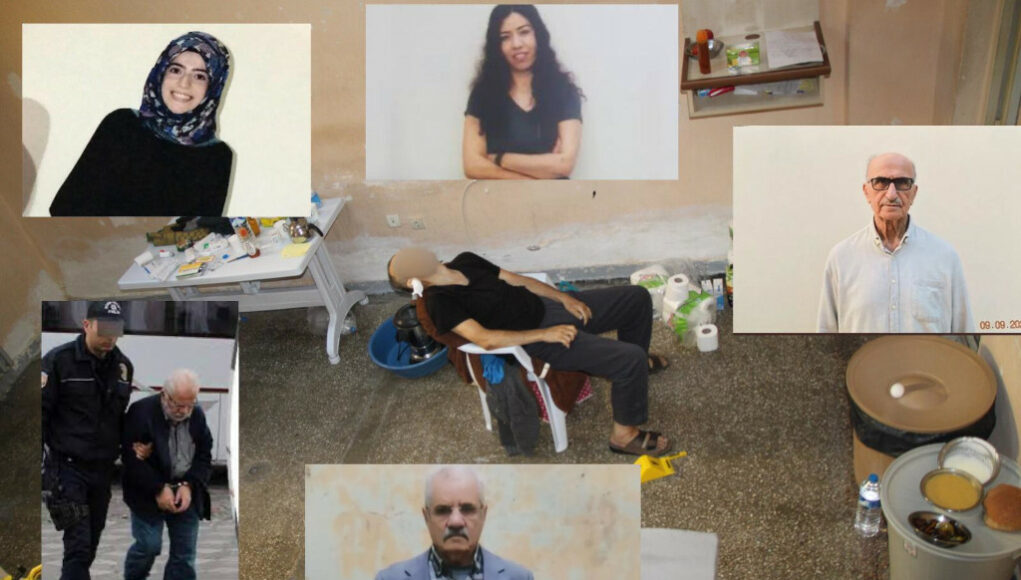
    Human rights defender and Peoples’ Democratic Party (HDP) lawmaker Ömer Faruk Gergerlioğlu has called on Turkey’s justice ministry to respond his parliamentary questions on the deaths of inmates, citing the cases of Abdo Baran, Nusret Muğla, Yusuf Bekmezci, Mustafa Kabakçıoğlu, Garibe Gezer and Nesrin Gençosman, the Stockholm Center for Freedom reported.

    Gergerlioğlu also said on social media on Monday that the ministry has not replied to 175 parliamentary questions on cases in Turkish prisons since the appointment of Justice Minister Bekir Bozdağ on January 29, 2022.

    Speaking to prison guards at an event on Saturday, Bozdağ said the government “has not closed its eyes to torture and mistreatment in its prisons,” claiming it has one of the best penal systems in the world.

    After an abortive putsch in 2016, ill-treatment and torture became widespread and systematic in Turkish detention centers. Lack of condemnation from higher officials and a readiness to cover up allegations rather than investigate them have resulted in widespread impunity for the security forces.

    An annual report by Amnesty International (AI) on the state of human rights in the world revealed that serious and credible allegations of torture and other ill-treatment were made in Turkey last year.

    Kurdish inmate Baran, 80, who was suffering from end-stage colon cancer, died in March in southeastern Turkey’s Mardin province after being denied release from prison to seek proper treatment.

    Eighty-two-year-old philanthropist with Alzheimer’s disease Bekmezci died in February amid calls for his immediate release from prison.

    Muğla, an 84-year-old ailing man who was serving a sentence on conviction of links to the Gülen movement, passed away in February after contracting COVID-19 in prison.

    Gezer, an inmate who alleged that she was beaten and sexually harassed by prison guards in Kocaeli’s Kandıra Prison, was found dead in her cell in December. In a letter sent to the HDP, her brother Haşim, an inmate in Elazığ Prison, said Garibe told him in a phone call that she was abused physically and sexually by prison guards.

    Kabakçıoğlu was found dead on a chair in a quarantine cell in prison in August 2020. He struggled with multiple health problems during his time in prison. Already an asthma patient, Kabakçıoğlu lost 40 kilos and developed diabetes while serving a sentence at the Gümüşhane E Type Closed Prison due to the poor conditions of the facility.

    Gençosman, a 30-year-old Turkish woman who was put in pretrial detention in May 2018 over alleged links to the Gülen movement, died in July 2018 in a prison in Ordu province, reportedly due to deprivation of the medication she took for pneumonitis.

  • Opposition party calls for investigation into death of Kurdish teenager in police target practice area

    Turkey’s pro-Kurdish Peoples’ Democratic Party (HDP) has called for an investigation into the death of Muharrem Aksem in a police target practice area in southeastern Turkey on March 24, the Stockholm Center for Freedom reported, citing the Bianet news website.

    Sixteen-year-old Aksem was a shepherd and had gone out to tend to his flock. His body was discovered late on March 24 in an open area in Turkey’s southeastern Şanlıurfa province that is used by special operations police twice a week for target practice. On the day the body was discovered, officers had been practicing in the area, according to witness statements, local media reports said.

    “An effective investigation into his death should immediately be launched, and the people responsible for the killing should be brought to justice,” HDP Co-chair Pervin Buldan said at a meeting of her party in the Turkish Parliament on Tuesday.

    According to Euronews, Aksem’s preliminary autopsy report revealed that 12 different sizes of metallic objects were removed from his body; he had multiple wounds on his face and body; and his right hand was severed.

    Commenting on the report, the family’s lawyer Hatice Akıllı Öz told Euronews that the report did not include the cause of death, adding that at first glance, they suspected it might be an explosion that had killed the boy.

    The Urfa Governor’s Office also released a statement, saying that based on the data from the preliminary report, the victim died as a result of the detonation of an object that he may have found after 5:30 p.m. on Thursday, when he made his last phone call.

    Speaking to Deutsche Welle Turkish service about the incident, Turkey’s Human Rights Association (İHD) Urfa provincial branch head Mustafa Vefa claimed that the police officers participating in the shooting practice were breaking the law.

    Vefa stated that the ruling Justice and Development Party (AKP) government’s policy of impunity for law enforcement officers in such incidents unfortunately indicates that similar deaths will continue to take place in Turkey.

    According to a report by the Diyarbakır Bar Association, 67 children have been killed in Turkey in accidents involving explosions and armored vehicles over the past 10 years, mostly in Kurdish-populated areas, DW said.

  • Greek journalist’s documentary focuses on family that fled Turkey’s post-coup crackdown

    A documentary by Greek journalist Mariana Kakaounaki tells of the injustices faced by victims of Turkey’s post-coup crackdown, focusing on a tragedy that took place when the Kara family was trying to flee the country, the Bold Medya news website reported on Thursday.

    Ebubekir and Gonca Kara, who used to work in Gülen movement-linked schools that were closed down by the government in the aftermath of the 2016 coup attempt, were among 18 Turks who got in a boat to make their way to Europe because they were facing prison due to their links to the faith-based movement.

    Seven of them — two women and five children — drowned when their boat capsized on Sept. 27, 2019, in the eastern Aegean Sea. The couple’s 6-year-old son Mustafa and 8-year-old daughter Gülsüm were among the victims, while their baby boy, Ali İhsan, survived the tragedy.

    Kakaounaki’s 82-minute documentary, titled “Invisible,” which tells the tragic story of the Kara family, will be shown on April 2-3 as part of the Greek Film Festival in Berlin, which takes place between March 30 and April 3, according to Bold Medya.

    Kakaounaki and Kara the family got together for the first time since they shot the documentary at an event held at the House of Democracy and Human Rights in Berlin by the Human Right Defenders (HRD), an NGO founded by Turkish lawyers, businesspeople and former bureaucrats in Cologne who are political asylum seekers in Europe.

    When talking about the reasons why she chose the word “invisible” as the title of the documentary, Kakaounaki said Turkish President Recep Tayyip Erdoğan wanted to make victims of the post-coup purge in Turkey “invisible” and to destroy them.

    “The second [reason] is that the families who fled Turkey and came to Greece still want to keep a low profile although they are now free. They want to become invisible,” the journalist said, adding that the documentary aims to make the tragedies and injustices faced by Turkey’s purge victims “more visible.”

    Saying that the director of the festival in Berlin hadn’t known about such injustices taking place in Turkey before seeing the documentary, Kakaounaki added that the situation applies to most people and that it’s partly because the victims don’t talk about the tragedies they suffered.

    The journalist also said she personally handed a copy of the documentary to Greek President Katerina Sakelaropulu since she wanted people who are competent and influential in decision-making to see it.

    Also speaking at the event, Gonca Kara said she and her husband had a hard time talking about the boat tragedy while it was still very fresh in their minds and that sometimes they considered dropping the whole thing but in time they understood the importance of the documentary.

    “I’ve always thought my children didn’t die for nothing. It meant something. [I thought] I could pay my respects to them by telling people what we had gone through. … They lost their lives on our way to freedom, I wanted it to be heard, but it was a very difficult decision. Mariana was a big support for us,” Kara said.

    Ebubekir Kara also said Kakaounaki worked so hard to do something for them, that she stayed with them, ate and went out with them and encouraged them to build a new life.

    In addition to the thousands who have been jailed since the coup attempt in July 2016, scores of people have fled Turkey due to a massive purge carried out by the Turkish government against alleged members of the Gülen movement, inspired by Turkish Muslim cleric Fethullah Gülen. Many have tried to illegally flee Turkey as the government had canceled the passports of thousands of people.

    Following the abortive putsch, the Turkish government declared a state of emergency and carried out a massive purge of state institutions under the pretext of an anti-coup fight. More than 130,000 public servants, including 4,156 judges and prosecutors, as well as 29,444 members of the armed forces, were summarily removed from their jobs for alleged membership in or relationships with “terrorist organizations” by emergency decree-laws subject to neither judicial nor parliamentary scrutiny.

    Turkish President Erdoğan has been targeting followers of the movement since the corruption investigations of December 17-25, 2013, which implicated then-prime minister Erdoğan, his family members and his inner circle.

    Dismissing the investigations as a Gülenist coup and conspiracy against his government, Erdoğan designated the movement as a terrorist organization and began to target its members. He intensified the crackdown on the movement following the coup attempt on July 15, 2016 that he accused Gülen of masterminding. Gülen and the movement strongly deny involvement in the abortive putsch or any terrorist activity.

    For more information on the Greek Film Festival in Berlin: https://thegreekfilmfestivalinberlin.com/

    The Instagram page of “Invisible” can be followed for more information on the screenings in cinemas in Athens on April 8-9.

  • Opposition MP to take Ankara bar’s decision not to publish torture report to UN working group

    Human rights defender and Peoples’ Democratic Party (HDP) lawmaker Ömer Faruk Gergerlioğlu has said he will take a decision made by the Ankara Bar Association not to publish a report drafted by the bar’s human rights committee on allegations of torture made by detainees held at a police detention center in January to the United Nations Working Group on Arbitrary Detention (WGAD), the Stockholm Center for Freedom reported.

    The report was presented by the committee to the management of the Ankara Bar Association, which decided not to publish it. Several lawyers and the head of the committee resigned in February in protest following the bar’s decision. Last week Ankara bar’s president Kemal Koranel resigned amid criticism over the bar’s failure to publish the report.

    WGAD has the mandate to investigate cases of deprivation of liberty imposed arbitrarily or inconsistently with the international standards set forth in the Universal Declaration of Human Rights, or the international legal instruments accepted by the states concerned.

    The lawyers who resigned earlier said the bar administration had also censored the committee’s statements on the Saturday Mothers case, the health of former HDP deputy Aysel Tuğluk in prison, European Court of Human Rights (ECtHR) judgments on human rights violations in the country and the imprisonment of former military cadets.

    People who were detained due to alleged links to the Gülen movement, a faith-based group inspired by Turkish Muslim cleric Fethullah Gülen, were subjected to torture at a police detention center in Ankara, according to a report by the TR724 news website on January 25.

    TR724 said 300 people were detained in January in police raids across Turkey as part of investigations overseen by the Ankara Chief Public Prosecutor’s Office.

    Gergerlioğlu on February 10 tweeted that he had “finally” been able to read the report. “It [the report] has everything: insults, swearing at the detainees, humiliating and battering them and threatening them with sexual torture. The document has the quality of an international report. So why is this report still not published and why were no criminal complaints filed [on the allegations of torture in it]?” the lawmaker said.

    After an abortive putsch in 2016, ill-treatment and torture became widespread and systematic in Turkish detention centers. Lack of condemnation from higher officials and a readiness to cover up allegations rather than investigate them have resulted in widespread impunity for the security forces.