Category: World

  • Turkey’s top court upholds sentences given to 60 former cadets on coup charges


    Turkey’s top appeals court has upheld life sentences handed down to 60 former military cadets who were jailed in the aftermath of a failed coup in July 2016 and convicted on coup charges, according to a platform defending the rights of jailed military cadets.

    Three former female air force cadets — Nagihan Yavuz, Nimet Ecem Gönüllü and Şüheda Sena Öğütalan — are among the 60 whose sentences have been upheld. They were convicted in May 2018.

    The cadets have denied taking part in the coup attempt and said they were only acting on orders from their superiors, who told them there was a terrorist attack on the night of the attempted coup on July 15, 2016.

    Dozens of other military cadets who were sentenced to life on coup charges have been released in recent months for retrial after the Supreme Court of Appeals overturned their sentences. The cadets had been in jail for about six years. The top court’s latest decision on the 60 former cadets has come as a disappointment for those who were awaiting a similar ruling that would have made their release possible.

    “The life sentences given to our friends in the Orhanlı trial have been upheld by the Supreme Court of Appeals. Take the cadets into the midst of chaos, open fire on them, then give them life sentences. Damn your justice,” the military cadets committee tweeted on Wednesday.

    Orhanlı refers to the trial of military cadets over incidents that took place at the Orhanlı toll booths in the Tuzla neighborhood of İstanbul on the night of the coup attempt.

    Immediately after the abortive putsch, the Justice and Development Party (AKP) government along with President Recep Tayyip Erdoğan pinned the blame on the faith-based Gülen movement. The movement strongly denies any involvement.

    A documentary telling the stories of military cadets in Turkey, hundreds of whom were unjustly convicted due to their alleged involvement in the failed coup in 2016, premiered on YouTube several days before the sixth anniversary of the coup attempt this month, drawing more than 1 million viewers.

    Following the coup attempt, 16,409 military cadets were expelled from their academies by emergency decree-laws subject to neither judicial nor parliamentary scrutiny, and 355 of them were given life sentences, with some of them overturned by the Supreme Court of Appeals, according to figures revealed at the end of the video. As of July 2022, 209 cadets are still behind bars.

  • British cities becoming ‘urban heat islands’

    The UK has experienced scorching heat like it never has before, and it is causing all sorts of problems in a country built for cool, drizzly weather.

    For the first time since records began, temperatures reached 40 degrees Celsius in the country, peaking at 40.3C at Coningsby, a small village in England’s Midlands.

    It is about 1.6 degrees warmer than the last hottest day recorded, 38.7C in Cambridge in July 2019.

    A new record was also set in Wales on Monday when the maximum reached 37.1C, beating a previous high of 35.2C, while Scotland topped its previous hottest temperature of 32.9C set in 2003, by reaching 34.8C at Charterhall on Tuesday.

    Vikki Thompson, a climate scientist from the University of Bristol, told the ABC the record-setting temperatures were “not normal”.

    “With temperature records, we are seeing them jump up by two or three degrees at a time,” she said.

    Australians might be used to seeing the mercury climb this high at the peak of summer, but the usual July average maximum in London is about 23C.

    In fact, records show that 100 years ago the maximum temperature reached in the UK on July 18, 1922, was just 19.9C.

    “Nine of the 10 hottest days have happened in the last decade,” Dr Thompson said.

    “These heatwaves, they are happening more and more often, and are getting hotter and hotter. That is because of climate change.”

    Across Europe, the intense heatwave has seen wildfires tear through more than 19,000 hectares in south-west France, and dangerous blazes break out across Portugal, Spain and Greece.

    Temperatures hit 47C in Portugal last week, a new July record for the country.

    Even in London, the hot, dry, windy conditions saw fires break out around the capital on Tuesday afternoon, forcing the London Fire Brigade (LFB) to declare a major incident.

    The LFB said 15 fire engines and about 100 firefighters were dealing with a fire that had already destroyed several houses in the small village of Wennington on London’s eastern outskirts.

    London Mayor Sadiq Khan said the fire brigade was under immense pressure and that the situation was “critical”.

    The unprecedented summer temperatures in the UK are compounded by infrastructure that just “isn’t set up for this kind of heat,” Dr Thompson said.

    The country is now contemplating a future where these sorts of extreme heatwaves become commonplace.

    Britain, with its centuries-old buildings and densely populated towns, faces real challenges during heatwaves. Few residential buildings are fitted with air-conditioning, a problem many schools, aged-care homes and even some hospitals have struggled with in recent days.

    Most structures are designed to keep out wind and trap heat to overcome the long, cold winters.

    “I’ve been to Australia and you’re much more adapted to heat,” the UK Met Office’s services director Simon Brown told the ABC.

    “Houses have ceramic floors, air conditioning, and there’s more air conditioning in transport systems.

    “The UK is just simply not adapted. My house has got carpets and double glazing [on windows].”

    The rail network in the country has also been riddled with delays and cancellations, as the infrastructure buckles under the heat.

    Multiple stations on London’s Underground network had to be temporarily closed early due to issues caused by the weather.

    Many British cities turn into “urban heat islands” when the temperatures soar, Professor Prashant Kumar, from the Global Centre for Clean Air Research at the University of Surrey, told the ABC.

    “This happens wherever you have a lot of buildings which are made of concrete and other construction materials, like brick,” he said.

    “Also, on the roads which are made with asphalt … you can think of all of it as a kind of radiator.

    Scientists suggested this is why Heathrow airport was the first area to hit 40C in the UK on Tuesday, due to the concentration of runways, roads and concrete areas at the site.

    This phenomenon of urban heat islands happens all over the world, especially in cities lacking greenery, tree cover and shade, Professor Kumar said.

    Even in smaller cities and towns surrounded by grasslands and vegetation, the urbanised areas will be significantly warmer.

    “This temperature difference could vary up to 10 degrees or even more depending on where you are,” Professor Kumar said.abcnews

  • 9 civilians killed in northern Iraq in shelling blamed on Turkey


    Nine civilians including children were killed and 23 wounded in northern Iraq’s Kurdistan region on Wednesday, when artillery shells hit a park in an attack local officials blamed on Turkey, Agence France-Presse reported.

    The artillery strikes killed nine and wounded 23, Zakho health official Amir Ali told reporters. He had earlier put the toll at eight dead, including two children.

    In an unusually strong rebuke, Iraqi Prime Minister Mustafa al-Kadhemi warned Turkey that Baghdad reserves the “right to retaliate,” calling the artillery fire a “flagrant violation” of sovereignty — a line echoed by Iraq’s Kurdish administration.

    Iraq said it was recalling its charge d’affaires from Ankara and summoning Turkey’s ambassador, and demanded an official apology from Turkey along with “the withdrawal of its armed forces from all Iraqi territory.”

    But Turkey’s foreign ministry said these “kinds of attacks” were committed by “terrorist organizations,” and invited Baghdad to avoid making statements influenced by “terrorist propaganda.”

    “Türkiye is against all kinds of attacks targeting civilians. Türkiye carries out its fight against terrorism in accordance with international law, with utmost sensitivity to the protection of civilians, civilian infrastructure, historical and cultural property and the environment. It is considered that such attacks which aim at innocent civilians and are assessed to be organized by the terrorist organization, target our country’s just and determined stance in the fight against terrorism,” said a statement from the ministry released on Wednesday evening.

    The victims included Iraqi tourists who had come to the northern Iraqi hill village of Parakh in Zakho district to escape sweltering temperatures further south in the country, according to Mushir Bashir, the head of Zakho region.

    “Turkey hit the village twice today,” Bashir told AFP.

    One witness spoke of a deluge of fire falling on the park and its water features, where visitors had been relaxing.

    Turkey launched an offensive in northern Iraq in April dubbed “Operation Claw-Lock”, which it said targets militants from the outlawed Kurdistan Workers Party (PKK).

    ‘Bodies in the water’

    In front of a hospital in Zakho, Hassan Tahsin Ali, a young man who had come from Iraq’s central Babylon region, spoke to AFP with a bandage around his head.

    “There were indiscriminate strikes on us, there were bodies in the water,” he said. “Our young people are dead, our children are dead, who should we turn to? We have only God.”

    Another survivor said the shelling took place just 15 minutes after “more than 20 buses came into the park,” and said he counted at least “five” projectiles, Iraq’s INA news agency reported.

    Iraq’s prime minister dispatched the country’s foreign minister and top security officials to the site.

    “Turkish forces have perpetrated once more a flagrant violation of Iraqi sovereignty,” Kadhemi said, condemning the harm caused to “the life and security” of Iraqi citizens.

    “Iraq reserves the right to retaliate against these aggressions and take all necessary measures to protect our people,” Kadhemi added.

    In the Iraqi city of Karbala, a few dozen people protested in front of a Turkish visa center, burning a Turkish flag, according to an AFP photographer. Protesters also gathered in Nassiriyah.

    ‘Security threat’

    The Kurdistan Regional Government also criticized the deadly shelling “by Turkish forces” and urged both the federal government and the international community to “work more effectively to prevent” repetitions.

    “Clashes between Turkish forces and PKK fighters in the border areas of the Kurdistan Region have become a constant threat to the lives and wellbeing of our citizens,” it said.

    Iraq’s President Barham Saleh deplored repeated “Turkish bombardment” and said the situation amounted to a “national security threat.”

    Meanwhile, US State Department Spokesperson Ned Price said the US is monitoring the situation on the ground and reaffirms that military action in Iraq should respect territorial integrity and sovereignty, in an answer to Rudaw’s question during a press briefing in Washington D.C. on Wednesday.

    Designated as a terrorist group by Ankara and its Western allies, the PKK has been waging a war against the Turkish state since 1984 that has claimed tens of thousands of lives.

    Arbil, the capital of Iraqi Kurdistan, has complicated relations with the PKK as its presence in the region hampers vital trade relations with neighboring Turkey.

    The military operations have seen Turkey’s ambassador in Baghdad regularly summoned to the Iraqi Ministry of Foreign Affairs.

    Turkey is also deeply opposed to a semiautonomous Kurdish administration in war-torn Syria’s oil-rich northeast.

    President Recep Tayyip Erdoğan has lately repeatedly vowed to launch an offensive against the Kurdish militants there, on the back of a 2019 onslaught, pressing his case most recently with his Iranian and Russian counterparts at a summit in Tehran on Tuesday.Turkish minute

  • Top court ruling preventing arbitrary passport bans goes into effect


    Turkey’s Interior Ministry will no longer impose arbitrary restrictions on Turkish passports in line with a ruling from the Constitutional Court that has recently gone into effect, Turkish media outlets reported.

    Following a failed coup in Turkey on July 15, 2016, the government cancelled nearly 50,000 passports on the grounds that it was fighting terrorism.

    While the courts ruled for the annulment of the passport revocations in some cases, the Interior Ministry, in a controversial move, decided to impose restrictions on their passports, depriving them of the right to the freedom of movement, based on amendments to the law on passports.

    The relevant articles of the law on passports, which allowed the Interior Ministry to impose arbitrary restrictions on passports, were challenged by a group of lawmakers from the main opposition Republican People’s Party (CHP) at the Constitutional Court last year.

    The top court issued a ruling on July 14, 2021 finding that the passport restrictions imposed by the Interior Ministry due to a person’s alleged affiliation with terrorist groups violate the 13th and 23rd articles of the Turkish Constitution, which concern the restriction of fundamental rights and freedoms only by law and the right to freedom of movement, respectively.

    The top court’s decision was to go into effect one year after it was published in the Official Gazette.

    There must now be a court decision for the Interior Ministry to impose restrictions on a passport.

    Many people including children drowned in the Aegean Sea or the Maritsa River while trying to flee a government crackdown in Turkey on followers of the Gülen movement after the coup attempt. These people had to leave the country illegally to make their way to Europe because their passports had been revoked by the government.

    The Turkish government accuses the Gülen movement of masterminding the failed coup on July 15, 2016 and labels it a “terrorist organization,” although the movement strongly denies involvement in the coup attempt or any terrorist activity.turkishminute

  • Documentary details persecution of hundreds of military cadets over failed 2016 coup

    A documentary telling the stories of military cadets in Turkey, hundreds of whom were unjustly convicted due to their alleged involvement in a failed coup in 2016, has premiered on YouTube, drawing widespread attention, the Kronos news website reported on Thursday.

    Titled “Mavi Otobüs” (Blue Bus), the 44-minute documentary, subtitled in 14 languages and which gives voice to six air force cadets who talk about the key events that unfolded before, during and after the attempted coup on July 15, 2016, was released on the “Askeri Öğrenci Komitesi” (Committee of Military Cadets) YouTube channel two days before the sixth anniversary of the abortive putsch.

    Cadets Halit Tunç, Adnan Yıldız, Lokman Hekim Avcı, Rıdvan Aydın, İhsan Kurt and Samet Yazgaç, who had left Turkey fearing for their lives and are currently living abroad, said they had shot the documentary in four countries “for the freedom of our friends and the understanding of the truth.”

    The military cadets have denied taking part in the coup attempt and said they were only acting on orders from their superiors, who told them there was a terrorist attack on the night of the attempted coup. Dozens of military cadets who were given life sentences on coup charges have been released from prison in recent months to be retried after the country’s Supreme Court of Appeals overturned their sentences.  The cadets had been in jail for about six years.

    The title of the documentary refers to the buses hundreds of cadets boarded on the night of the coup attempt on orders by their commanders, thinking they were going to confront a terrorist attack. However, they suddenly found themselves in the middle of an angry crowd, according to the documentary, which led to the lynching of two cadets, Murat Tekin and Ragıp Enes Katran.

    Following the coup attempt, 16,409 military cadets were expelled from their academies by emergency decree-laws subject to neither judicial nor parliamentary scrutiny, and 355 of them were given life sentences, with some of them overturned by the Supreme Court of Appeals, according to figures revealed at the end of the video. As of July 2022, 209 cadets are still behind bars.

    The documentary, which reached over 250,000 viewers on the first day of its release, received positive reviews from many, including journalists.

    “On July 15, they found themselves in a lynching. They talked about it many times in court. They spent months and years in prison. Their voices were barely heard. Now they … are telling of the great injustice [they faced] on #MaviOtobus. Take 45 minutes of your time [to watch it],” journalist Banu Güven said in a tweet.

    Lawyer and author Hürrem Sönmez also said that as a “gun-phobic person with no military sympathies,” she found what was told in the documentary “horrific” from an objective point of view.

    “Justice must come for the students who are still in detention, too, even if it’s been 6 years. I think everyone should watch [and see] how these people’s lives were stolen. I hope those who used these children as bait and threw them in front of the crowd [on July 15] don’t get away with it,” she added.

    The coup attempt claimed the lives of 251 people and was put down overnight.

    Immediately after the abortive putsch, the Justice and Development Party (AKP) government along with President Recep Tayyip Erdoğan pinned the blame on the faith-based Gülen movement. The movement strongly denies any involvement.

  • Diyanet pens different texts for Friday sermons in Turkey and abroad on 6th anniversary of failed coup

    Diyanet pens different texts for Friday sermons in Turkey and abroad on 6th anniversary of failed coup

    Turkey’s Directorate of Religious Affairs (Diyanet) prepared two different texts to be read for this week’s Friday sermons that will be delivered in Turkey and abroad on the sixth anniversary of an attempted coup in Turkey, local media reported on Thursday.

    The sermon to be delivered in Turkey included such insults as “the network of treason” and “evil group” aimed at the Gülen movement, accused by the government of masterminding the abortive putsch, while the one prepared for the Netherlands included no such insults, with only the word “munafiq” being used to describe the movement’s members, according to Turkish media reports.

    “Munafiq” refers to religious hypocrites who profess to believe in Islam but actually don’t.

    The sermon for Muslims in Turkey also repeated the government narrative about the coup attempt, holding the Gülen movement responsible for the failed putsch and including the acronym FETÖ, a derogatory term used by the Justice and Development Party (AKP) government to refer to the Gülen movement as a terrorist organization.

    The Gülen movement is a worldwide civic initiative rooted in the spiritual and humanistic tradition of Islam. The bases of the movement are diverse service projects that are initiated, funded and conducted by people who are motivated by the humanitarian discourse of Fethullah Gülen, a Turkish cleric resident in the US.

    Immediately after the coup attempt, which claimed the lives of 251 people, injured a thousand others and was suppressed overnight, Turkish President Recep Tayyip Erdoğan and his AKP government pinned the blame on the Gülen movement, labeling the group as a terrorist organization.

    Gülen and the movement strongly deny involvement in the abortive putsch or any terrorist activity.

    According to local media reports, the directorate refrained from using the same words it used to describe members of the movement in the text prepared for Turkey in other countries’ sermons as well as from referring to the movement as “FETÖ,” fearing it could have legal consequences in European countries where laws impose heavy penalties for hate crimes and discrimination.

    While many criticized the Diyanet’s move on social media for being “hypocritical,” hadith expert Prof. Dr. Ayhan Tekineş stated that while the AKP government was afraid of the law and therefore wouldn’t use insulting expressions in a sermon to be read in European countries, they weren’t afraid of the eternal punishment of unjustly calling members of a faith-based group “munafiq.”

  • Six years on, Turkey’s July 15 coup still shrouded in mystery

    Bünyamin Tekin

    Six years have passed since July 15, 2016, the day a controversial coup attempt took place in Turkey, but what we don’t know about that day is still more than what we do know, according to Adem Yavuz Arslan, a Turkish journalist living in exile and working for the TR724 news website, who spoke to Turkish Minute on the anniversary of the abortive putsch.

    Turkey experienced a military coup attempt on the night of July 15, 2016 which, according to many, was a false flag aimed at entrenching the authoritarian rule of President Recep Tayyip Erdoğan by rooting out dissidents and eliminating powerful actors such as the military in his desire for absolute power.

    The failed coup killed 251 people and wounded more than a thousand others. The next morning, after announcing the coup had been put down, the Turkish government immediately started a wide-ranging purge of military officers, judges, police officers, teachers and other civil servants that ultimately led to the dismissal of more than 130,000 from their jobs.

    On the night of the abortive putsch, President Erdoğan immediately blamed the Gülen movement for the attempt. He has been targeting followers of the movement, a faith-based group inspired by Turkish cleric Fethullah Gülen, since the corruption investigations of December 17-25, 2013, which implicated then-prime minister Erdoğan, his family members and his inner circle.

    Dismissing the investigations as a Gülenist coup and conspiracy against his government, Erdoğan designated the movement as a terrorist organization and began to target its members. He locked up thousands including many prosecutors, judges and police officers involved in the investigation as well as journalists who reported on them.

    Erdoğan intensified the crackdown on the movement following the coup attempt. Gülen and the movement strongly deny involvement in the abortive putsch or any terrorist activity.

    “The way to find out what really happened that night was through parliamentary committees and the courts,” Arslan said, adding that those institutions could not function due to the obstruction by Erdoğan and his government.

    A parliamentary inquiry committee abruptly suspended its work on a report about the coup attempt in 2017, when Erdoğan expressed his disapproval of the deepening investigations.

    In July 2021 Selçuk Özdağ, the then-vice chair of the committee, said Turkish authorities had refrained from publishing the findings of the inquiry, following legal advice warning that the report could help members of the Gülen movement in future legal claims for compensation.

    “Then-Chief of General Staff Hulusi Akar and the head of intelligence, Hakan Fidan, never testified to the committee to shed more light on what happened that night,” Arslan said.

    Akar and National Intelligence Organization (MİT) chief Fidan did not appear before the parliamentary committee and did not testify in court during the coup trials.

    Despite the apparent failure of the Turkish intelligence authorities to gather intel about the coup plans, no intelligence official has resigned or been fired by the government. Likewise, Akar was not fired and became defense minister after retiring.

    Many questions still persist as to what happened before and after the coup attempt.

    Major O.K. said in his testimony to a court that he personally went and informed MİT at 14:30, about seven hours before the coup attempt started.

    Why MİT chief Fidan informed neither President Erdoğan nor then-Prime Minister Binali Yıldırım during those seven hours, despite the fact that he had learned of the coup attempt at 14:30, is one of the questions still being asked.

    It was also revealed in 2017 that Chief of General Staff Gen. Akar and MİT chief Fidan had a six-hour meeting in Ankara a day before the failed coup.

    “Instead of finding out what happened on July 15th, every political party was more interested in how to profit politically from this event,” Arslan said.

    “The government [Justice and Development Party, AKP] changed the [system of governance] under the pretext of an anti-coup fight. The MHP [Nationalist Movement Party] became a partner in the government and filled key government jobs. The CHP [Republican People’s Party] and the İYİ [Good] Party, instead of investigating the coup and finding out what really happened, have sought to score political points,” he added.

    “Due to the intense pressure on the press, journalists were unable to follow and report on the coup trials,” Arslan said.

    Turkey, which is known as one of the top jailers of journalists in the world, was ranked 149th among 180 countries in the Reporters Without Borders (RSF) 2022 World Press Freedom Index.

    “Journalists questioning the official narrative were imprisoned. As a result, six years have passed and we still don’t know what really happened,” said Arslan.

    Dozens of critical journalists were jailed in Turkey, while many media outlets were closed down in the aftermath of the coup attempt.

    Cracks in the government narrative on the coup attempt

    According to Arslan, statements by former Erdoğan allies indicate that there is more to the attempted coup than the government’s account of events.

    “Confessions of people like Sedat Peker and Selim Temurci came out. In addition, the statements of Nilah Olçok and Ümit Özdağ show that those who are silent today for various reasons know that the official July 15th narrative is not true.”

    Last week, Temurci, a former member of the ruling AKP, said that he would reveal everything he knows about claims that a large number of civilians were armed with unregistered guns during the coup attempt after the AKP government is removed from power following the elections of 2023.

    It was Peker, the head of one of Turkey’s most powerful mafia groups and once a staunch supporter of Erdoğan, who first claimed in a series of tweets in July 2021 that a large number of civilians were armed with unregistered guns during the July 15 coup attempt and afterward, under the coordination of then-minister of labor and current interior minister Süleyman Soylu.

    There are widespread suspicions that the weapons delivered to civilians that night were not only used against the coup plotters but also to provoke people who took to the streets to suppress the coup attempt upon a call from Erdoğan.

    While allies like Temurci and Peker are cautious, others like Nihal Olçok, whose husband and AKP publicist Erol Olçok and son Abdullah Olçok were killed during the 2016 failed coup, were more straightforward.

    Olçok has said her husband and son had been killed by a sniper who shot them in the back during the coup attempt, knowing who they were. Turkish authorities haven’t been able to shed light on the murder of the father and son in the past six years.

    In February of this year, Olçok said on a live broadcast on pro-CHP Halk TV that her son Abdullah was killed to keep the government’s story on the July 15 coup attempt intact, because, according to her, his testimony would harm the official narrative.

    In May, Özdağ, the leader of the far-right and anti-refugee Victory Party (ZP), revealed a conversation he had with Adnan Tanrıverdi, the head of SADAT International Defense Consultancy –- a company with alleged links to Erdoğan –- in the aftermath of July 15.

    Özdağ said Tanrıverdi told him that his firm had been preparing to overrun military bases with civilians in the event of a coup long before July 15 and that much of what happened with regard to the civilian resistance to the coup was SADAT’s doing.

    His revelation almost six years after the coup is significant according to observers as it is seen by many as another crack in the government narrative on the coup attempt, which claims that officials learned about the putsch mere hours in advance.

    “If the actors or their allies spoke out, it would be very easy to reveal what really happened on July 15th. But I think everyone who will speak is waiting for the end of the Erdoğan regime,” Arslan said

    Many in Turkey believe that Erdoğan knew of the coup attempt or was part of the group that plotted it as he wanted a pretext to launch a crackdown on the Gülen movement and his critics to consolidate his one-man rule.

    The Turkish government labels the faith-based movement as a terrorist organization and accuses Gülen and his followers of masterminding the attempted coup.

    Although both Gülen and the members of his group strongly deny any involvement in the abortive putsch or any terrorist activity, Erdoğan initiated a widespread purge aimed at cleansing sympathizers of the movement from within state institutions, dehumanizing its popular figures and putting them in custody.

    A total of 332,467 people have been detained and 101,305 arrested in operations against supporters of the Gülen movement since the coup attempt, Turkey’s Interior Minister Süleyman Soylu said on June 30.

    According to recent figures provided by Justice Minister Bekir Bozdağ, 117,208 people have been convicted, with 1,366 sentenced to life in prison and 1,634 to aggravated life with no chance of parole over Gülen links.

    Yet judicial experts voice skepticism about the figures announced by Bozdağ, saying that 117,208 convictions are only those that have been upheld by an appeals court, since Justice Ministry data show that more than 265,000 people were sentenced on charges of terrorist organization membership between 2016 and 2020 due to their alleged Gülen links. turkishminute
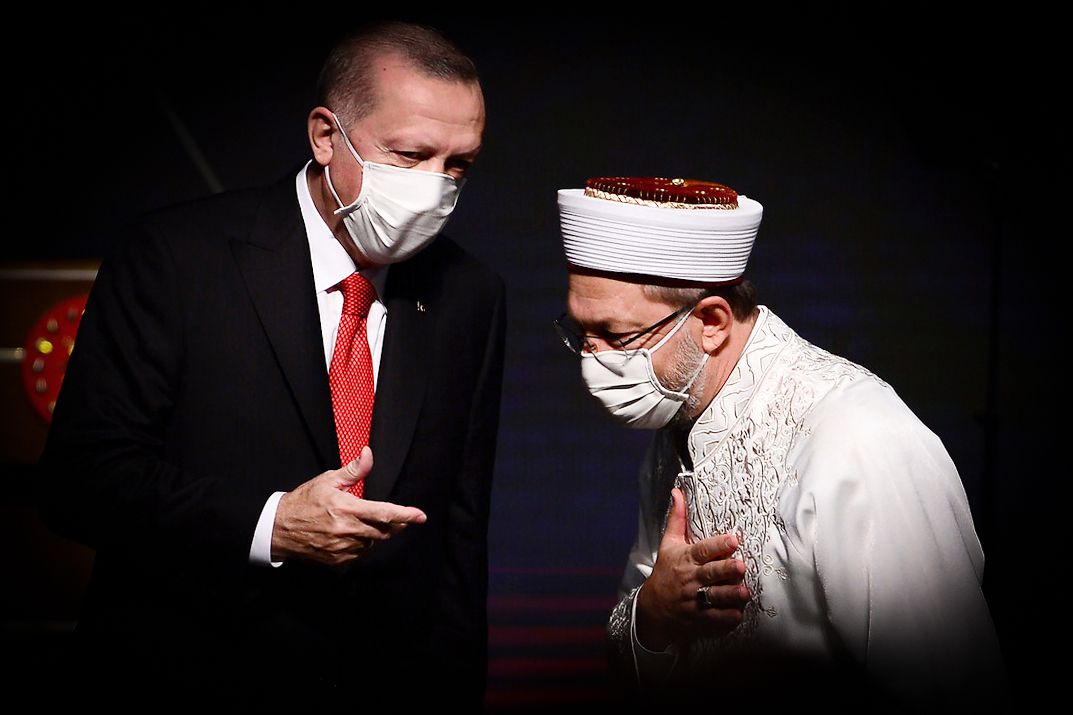
  • Criminal complaint filed against ex-AKP member over claims of guns delivered on coup night

    Lawyers hired by the People’s Liberation Party (HKP), a left-wing populist political party in Turkey, filed a criminal complaint against a former member of the ruling Justice and Development Party (AKP) for failing to report a crime after he said last week that he would not reveal what he knows about claims that a large number of civilians were armed with unregistered guns during a 2016 coup attempt in Turkey until after AKP government is removed from power following the elections of 2023.

    During a debate program on Halk TV on July 7, AKP İstanbul provincial chair at the time and current vice chair of the opposition Gelecek (Future) Party Selim Temurci said he was keeping quiet about the claims for now to protect the rights of loved ones and “people who shed their blood” on the night of the coup attempt.

    It was Sedat Peker, the head of one of Turkey’s most powerful mafia groups and once a staunch supporter of President Recep Tayyip Erdoğan, who first claimed in a series of tweets in July 2021 that a large number of civilians were armed with unregistered guns during the July 15 coup attempt and afterward, under the coordination of then-minister of labor and current interior minister Süleyman Soylu.

    There are widespread suspicions that the weapons delivered to civilians that night were not only used against the coup plotters but also to provoke people who took to the streets to suppress the coup attempt upon a call from Erdoğan.

    HKP lawyers filed a criminal complaint against Temurci with the İstanbul Chief Public Prosecutor’s Office, stating that he had committed a crime by “failing to report a crime.”

    HKP Central Disciplinary Board Chairperson Ayça Okur made a statement regarding the criminal complaint.

    “Selim Temurci confirms Sedat Peker’s statements about the weapons distributed,” Okur said in the statement, and added that Temurci held his political interest and the fate of his loved ones above “the interests of the country.”

    Reminding that they had previously filed two separate criminal complaints over Peker’s statement about Soylu and the weapons, Okur said: “Our two criminal complaints are still under investigation. This is our third criminal complaint about this issue.”

    “As the People’s Liberation Party, we have prepared another file that will be released from the archives when the day comes, when prosecutors and judges who derive their power from their conscience and the law take their places in the courts. We have filed a criminal complaint against Selim Temurci, who, like Recep Tayyip Erdoğan and other AKP members, pursues his own political interests while pretending to protect the interests of his supporters, and despite having clear information about crimes and criminals, conceals it, for committing the crime of not reporting the crime as stipulated under Article 279 of the Turkish Penal Code,” Okur said.

    Temurci claimed during a televised interview in July 2021 that Erdoğan and Albayrak were more likely to have been involved in the alleged arming of civilians during the attempted coup and afterward than Soylu.

    “Who in the world can transport [unregistered] AK-47s in the car of the AKP İstanbul youth branch chairman and then distribute them [to civilians] without the knowledge of the president?” Temurci speculated.

    “If my youth branch chairman was involved in such a thing, then let me say this clearly: I think Berat Albayrak must have been much more involved in this than Soylu,” he added. turkishminute

  • Disputed Russian grain ship moves away from Turkish coast

    The Zhibek Zholy moved at least 20 kilometers (12 miles) away from Turkey’s Black Sea port of Karasu before apparently switching off its transponder and disappearing from view, data on the marinetraffic.com website showed.

    Kyiv alleges that the 7,000-ton vessel had set off from Ukraine’s Kremlin-occupied port of Berdyansk after picking up confiscated wheat.

    But Russia claims to have “nationalized” Ukrainian state assets and to be buying crops from local farmers.

    NATO member Turkey has been trying to negotiate a solution that could preserve its good relations with both Moscow and Kyiv.

    Ukraine has demanded that Turkey impound the vessel and return the allegedly stolen wheat.

    The traffic monitor showed the ship moving across the Black Sea toward Russia.

    It was not immediately clear what had happened to the wheat.

    An unnamed crew member of the Zhibek Zholy told Russia’s TASS news agency that the crew intended to offload the grain to another ship so as “not to lose money.”

    TurkishMinute

  • 332,884 detained and 101,000 incarcerated due to Gülen links: interior minister

    In a statement during an event marking the coup attempt, Soylu said there were currently 19,252 people in prison for links to the movement. According to Soylu, operations against members of the movement will continue in the future.

    Turkish President Recep Tayyip Erdoğan has been targeting followers of the Gülen movement, a faith-based group inspired by Turkish cleric Fethullah Gülen, since the corruption investigations of December 17-25, 2013, which implicated then-prime minister Erdoğan, his family members and his inner circle.

    Dismissing the investigations as a Gülenist coup and conspiracy against his government, Erdoğan designated the movement as a terrorist organization and began to target its members. He intensified the crackdown on the movement following the coup attempt on July 15, 2016 that he accused Gülen of masterminding. Gülen and the movement strongly deny involvement in the abortive putsch or any terrorist activity.

    “We are continuing our fight against this organization in Turkey and in other countries, and searching for 24,000 fugitives,” Soylu said. “We have increased crackdowns on the movement by 175 percent in comparison to last year, and the number of people who were arrested has increased by 133 percent.”

    Throughout his speech, Soylu referred to the Gülen movement as FETÖ, a derogatory term used by the Turkish government.

    In addition to the thousands who were jailed, scores of other Gülen movement followers have had to flee Turkey to avoid the government crackdown.

    TurkishMinute