Category: World

  • Wildfire in southwest Turkey largely under control: minister

    A wildfire in southwestern Turkey was largely contained on Wednesday, Forestry Minister Vahit Kirişçi said, after scenes of burning woodland reminded Turks of blazes last year that devastated tens of thousands of hectares across the region, Reuters reported.

    Aerial footage from forestry authorities earlier showed smoke billowing as fire spread through a forest in the sparsely populated area, fanned by strong winds.

    Firefighters battled to extinguish the wildfire from air and land, officials said. The cause of the fire, which began around 8 pm (1700 GMT) on Tuesday, remained unclear.

    The Turkish government and President Recep Tayyip Erdoğan attracted widespread criticism over their poor response and inadequate preparedness for large-scale wildfires that ravaged the country’s southern and western coasts last summer, claiming the lives of eight people and thousands of animals, also destroying large swathes of forestland.

    The harsh criticism by opposition figures and the public targeting Turkish authorities centered around Erdoğan’s inaction and the small number of firefighting planes actively used to respond to fires.

    TurkishMinute

  • Majority of respondents in EU survey have negative view of Turkey

    Respondents in only eight member states had a positive view of Turkey, with the highest level of 56 percent seen in Latvia.

    The results of the survey, commissioned by the European Parliament (EP), were recently released in a report titled “EP Spring 2022 Survey: Rallying around the European flag | Democracy as anchor point in times of crisis.”

    According to the survey, which asks about EU citizens’ views of China, Russia, the US, the UK, India and Turkey, 65 percent of Europeans have the most positive image of the United Kingdom, followed by the US (58 percent), India (38 percent), Turkey (28 percent), China (22 percent) and Russia (10 percent).

    India enjoys a better image than Turkey, which has a small percentage of positive views, especially in Sweden (12 percent), Cyprus (9 percent) and Greece (4 percent), the report said, adding that a majority of respondents have a positive view of Turkey in eight member states, with the highest levels seen in Latvia (56 percent), Romania (55 percent), Croatia and Lithuania (both 52 percent).

    The socio-demographic analysis further showed that the younger the respondent, the more likely they are to have a positive view of Turkey — with 38 percent of 15-24 year-olds viewing Turkey favorably compared to 22 percent of those aged 55 and older.

    Students (36 percent) and manual laborers (33 percent) are the most likely to have a positive view of Turkey, particularly compared to retirees (21 percent), the report said, adding that respondents with a positive view of the EU (31 percent) are slightly more likely to also have a positive view of Turkey than those with a neutral (26 percent) or negative (23 percent) perception of it.

    The survey results further revealed that there is also a small difference between respondents who do not follow the news related to the war in Ukraine (31 percent) compared to those who do follow such news (27 percent).

    Meanwhile, when asked whether they had a positive or a negative view of Turkey, 60 percent of respondents said they had a negative view and some 12 percent answered, “I don’t know.”

    TurkishMinute

  • Cadets convicted on coup charges released pending retrial after 6 years in prison

    There were conflicting reports about the exact number of military cadets who would be released from prison. Some reports said it was 71 while others said 66 or 67 cadets would be released from prison following the top court’s decision.

    A large crowd of people including family members gathered at İstanbul’s notorious Silivri Prison on Tuesday night where most political prisoners are jailed to welcome the released cadets.

    The air force cadets said on the night of the coup attempt, which claimed the lives of 251 people and was suppressed overnight, they were taken to İstanbul in buses from Yalova and that they did not know they were part of a coup attempt.

    Among the former cadets released on Tuesday night was Furkan Çetinkaya, 26. Çetinkaya’s mother, Melek, has become famous due to her campaign for the release of the military cadets whom she said were jailed on bogus charges. The woman, who has staged numerous street protests for the release of the cadets, has been detained numerous times and even jailed for two months in 2020 on charges of disseminating terrorist propaganda and praising a criminal.

    “I will continue to fight until I get all my sons in prison back,” tweeted Melek Çetinkaya after a posting a photo of herself with her son Furkan following his release from prison.

    A platform defending the rights of jailed military cadets, the Military Cadets Committee, tweeted on Wednesday that they were experiencing bittersweet joy due to the release of some of the jailed military cadets on Tuesday night.

    “As we said at the beginning, we will be here until the last cadet is released from jail. We will continue to fight against injustice. Nobody should doubt it,” the platform tweeted.

    Furkan and the other cadets were initially handed down aggravated life sentences by the court on charges of violating the constitution, but their sentences were later reduced to life in prison for good behavior during the trial.

    During their trial, the cadets denied taking part in the coup attempt and said they were only acting on orders from their superiors, who told them there was a terrorist attack.

    The cadets said the only surprising thing on July 15, 2016 was an unplanned morning visit by then-Air Forces Commander Gen. Abidin Ünal to their training camp in Yalova.

    Turkish media reported claims that during a speech to cadets in Yalova on July 15, Ünal underlined the importance of carrying out the orders of their commanders.

    Columnist Ahmet Nesin wrote on the Artıgerçek news website that during his unplanned visit Ünal told the commander of the camp to cancel all training activities in the afternoon: “He told the commander ‘Don’t tire the boys out; they’ll get tired this evening’.”

    A total of 259 military cadets were detained on coup charges on July 16, 2016 and were arrested four days later. The cadets were indicted a year after they were put in pretrial detention, and their trial was concluded in 2018. One hundred seventy-eight of the cadets were given life sentences on charges of attempting to overturn the constitutional order and attempting to overthrow the government and parliament by use of force as well as membership in a terrorist organization.

    Immediately after the abortive putsch, the Justice and Development Party (AKP) government along with President Recep Tayyip Erdoğan pinned the blame on the faith-based Gülen movement. The movement strongly denies any involvement.

    TurkishMinute

  • Court blocks access to 257 news stories on 5 prosecutors’ dismissal over Gülen links

    An Ankara court has blocked access to online news stories on 257 websites that in March covered the dismissal of five prosecutors by Turkey’s Council of Judges and Prosecutors (HSK) over their alleged affiliation with the Gülen movement, a faith-based group accused by Ankara of masterminding an attempted coup in 2016, the ANKA news agency reported on Tuesday.

    According to ANKA, one of the prosecutors, who was later reinstated, demanded that the Ankara Nallıhan High Criminal Court block access to the news stories since the “hurtful and traumatic” content relating to private life that can be accessed at any time “harmed” his honor and dignity and “adversely affected” his business and social life, a demand rejected by the court on June 2.

    The prosecutor then appealed the decision on June 10, and the Ankara Batı 2nd Penal Court agreed to his demand, blocking access to news stories on 257 websites, including those of the state-run TRT and the pro-government Anadolu news agency.

    The court saiid in the decision that the applicant’s request was accepted since the news reports about him “lost their value of reality and actuality” after he was reinstated on May 12.

    Turkish President Recep Tayyip Erdoğan has been targeting followers of the Gülen movement, inspired by US-based Turkish Muslim cleric Fethullah Gülen, since the corruption investigations of December 17-25, 2013, which implicated then-Prime Minister Erdoğan, his family members, and his inner circle.

    Dismissing the investigations as a Gülenist coup and conspiracy against his government, Erdoğan designated the movement as a terrorist organization and began to target its members. He intensified the crackdown on the movement following an abortive putsch on July 15, 2016 that he accused Gülen of masterminding. Gülen and the movement strongly deny involvement in the coup attempt or any terrorist activity.

    Following the abortive putsch, the Turkish government declared a state of emergency and carried out a massive purge of state institutions under the pretext of an anti-coup fight. More than 130,000 public servants, including 4,156 judges and prosecutors, as well as 29,444 members of the armed forces were summarily removed from their jobs for alleged membership in or relationships with “terrorist organizations” by emergency decree-laws subject to neither judicial nor parliamentary scrutiny.

    A total of 319,587 people have been detained and 99,962 arrested in operations against supporters of the Gülen movement since the coup attempt, Turkey’s Interior Minister Süleyman Soylu said in November.

    In addition to the thousands who were jailed, scores of other Gülen movement followers had to flee Turkey to avoid the government crackdown.

    TurkishMinute

  • Turkey to host Ukraine grain talks next week: report

    The meeting in İstanbul would be preceded by a visit to Moscow by a Turkish defense delegation this week, NTV television and CNN Turk cited Turkish presidential sources as saying.

    Millions of tons of wheat and other grains are currently stuck in Ukrainian ports, either blockaded or occupied by Russian forces, and vessels face the danger of mines.

    According to the Turkish foreign ministry, the UN has submitted a plan to facilitate exports that would see safe corridors set up around known mines.

    The plan would not require lengthy and complex demining operations, Turkish Foreign Minister Mevlüt Çavuşoğlu said last week.

    The initiative has been backed by the European Union but received a cautious response from Kyiv, which is looking for ways to export the grain by land, without talking to the Russians.

    Çavuşoğlu this month hosted his Russian counterpart Sergei Lavrov in Ankara to discuss the issue, but without conclusive results.

    The Turkish reports did not specify who would attend next week’s meeting.

    Turkish President Recep Tayyip Erdogan discussed grain deliveries with UN Secretary-General Antonio Guterres on Monday.

    Turkey is “exerting joint efforts with the United Nations for the export of Ukrainian grain via the Black Sea in a bid to avert a global food crisis,” Erdoğan’s office said on Tuesday.

    TurkishMinute

  • Man who killed ex-lover gets reduced sentence on grounds he was ‘provoked’

    The femicide case, closely followed by women’s rights groups, concerns the brutal killing of 27-year-old university student Pınar Gültekin, who went missing in Turkey’s southwestern Aegean province of Muğla on July 16, 2020. Five days later, the woman was found dead in a forest.

    Forensic investigations revealed that Gültekin was strangled and then set on fire by her ex-boyfriend, Cemal Metin Avcı, who confessed to the murder.

    The Muğla 3rd High Criminal Court, which heard the trial concerning the murder of Gültekin, who was among at least 300 women killed in Turkey in 2020, according to the We Will Stop Femicide Platform, first handed down an aggravated life sentence to Avcı on charges of premeditated murder. But the court later ruled to reduce his sentence to 23 years based on Article 29 of the Turkish Penal Code (TCK), which is often used to reduce sentences for men accused of such crimes on the grounds that the victim provoked the murder with her actions.

    Turkish courts are often accused of interpreting laws leniently in cases of gender-based violence. They also reduce sentences for men based on “good conduct” in the courtroom, which is at the discretion of the judge.

    Avcı’s family members who faced up to five years in prison for aiding and abetting, helping to cover his tracks and concealing evidence of the crime, have been acquitted of the charges.

    The court’s decision led to outrage among Gültekin’s family members and the women rights groups following the trial.

    Lawyer Rezan Epözdemir, who represented the slain woman’s family, said “Justice and law have died in Muğla today” after the announcement of the court’s decision.

    “She was set alight and then buried. All the evidence [related to the murder] was destroyed. The court gave credit to a fictional defense that nobody believed and let the [defendant] benefit from supposed provocation,” said Epözdemir.

    Gültekin’s mother Şefika said her daughter suffered a horrific death and that she will never find the sentence given to the killer adequate.

    The gruesome murder took place as the ruling Justice and Development Party (AKP) was considering withdrawing from the İstanbul Convention.

    Despite opposition from the international community and women’s rights groups, Turkish President Recep Tayyip Erdoğan issued a decree in March 2021 that pulled the country out of the international treaty, which requires governments to adopt legislation prosecuting perpetrators of domestic violence and similar abuse as well as marital rape and female genital mutilation.

    The Council of Europe Convention on Preventing and Combating Violence against Women and Domestic Violence, better known as the Istanbul Convention, is an international accord designed to protect women’s rights and prevent domestic violence in societies and was opened to the signature of member countries of the Council of Europe in 2011.

    Femicides and violence against women are serious problems in Turkey, where women are killed, raped or beaten every day. Many critics say the main reason behind the situation is the policies of the AKP government, which protects violent and abusive men by granting them impunity.

    According to the We Will Stop Femicide Platform, 280 women were murdered in Turkey in 2021.

    TurkishMinute

  • Amnesty International names 7 jailed Gezi defendants ‘prisoners of conscience’

    Amnesty defines prisoners of conscience as people who haven’t used or advocated violence or hatred in the circumstances leading to their imprisonment but are imprisoned solely because of who they are (sexual orientation, ethnic, national or social origin, language, birth, color, sex or economic status) or what they believe (religious, political or other conscientiously held beliefs).

    An İstanbul court on April 25 sentenced Kavala, who had been behind bars without a conviction for over four years, to aggravated life while sentencing seven other defendants – architect Mücella Yapıcı, city planner Tayfun Kahraman, lawyer Can Atalay, documentary filmmaker Mine Özerden, film producer Çiğdem Mater, higher education director Hakan Altınay and university founder Yiğit Ekmekçi – to 18 years each on charges of instigating the anti-government Gezi Park protests.

    Six of them were immediately put in prison, and an arrest warrant was issued for Ekmekçi.

    Agnes Callamard, secretary-general of Amnesty International, wrote on Friday that the organization had taken the significant step of naming all seven jailed Gezi defendants prisoners of conscience, “aiming to highlight the chronicle of injustice they’ve suffered— from arbitrary detentions and politically-motivated prosecutions to a show trial ending in these chilling convictions.”

    Since the prosecution failed to provide any evidence to substantiate the charges brought against the accused and the court offered no convincing grounds for its majority verdict when it published its reasoned judgment on June 7, the only substantial conclusion to emerge from the trial, according to Callamard, was that Turkey’s courts operate at the bidding of President Recep Tayyip Erdoğan and aren’t independent, impartial, free from political interference, or fair.

    “… the Gezi Seven’s imprisonment comes as no surprise in a country that’s been cracking down on human rights, especially freedom of expression, with increasing intensity since a failed coup in 2016,” Callamard said, adding that overly broad anti-terrorism laws had been used to target dissent, with thousands being subjected to abusive criminal investigations, prosecutions and punitive pretrial detentions and the judiciary — already lacking independence — being used to repress peaceful dissent.

    Callamard further stated that Erdoğan had shown active involvement in Kavala’s case from day one, and his repeated public comments had undermined the presumption of innocence — a key tenet of fair trial rights.

    “The shocking injustice handed out to the Gezi Seven exposes, yet again, how Turkey’s judicial system has become a repressive tool to silence peaceful dissent. And each day they spend behind bars is an affront to the concept of justice and human rights — principles the Turkish state has committed itself to upholding but repeatedly and relentlessly violates,” the secretary-general said.

    The Gezi Park demonstrations, which took place in the summer of 2013 in reaction to the Justice and Development Party (AKP) government’s attempt to destroy one of the few green spaces left in İstanbul, quickly turned into a nationwide protest against the authoritarian policies of then-prime minister and current president Erdoğan.

    Eleven protestors died and thousands more were injured as they were brutally suppressed by the police on Erdoğan’s instructions.

    TurkishMinute

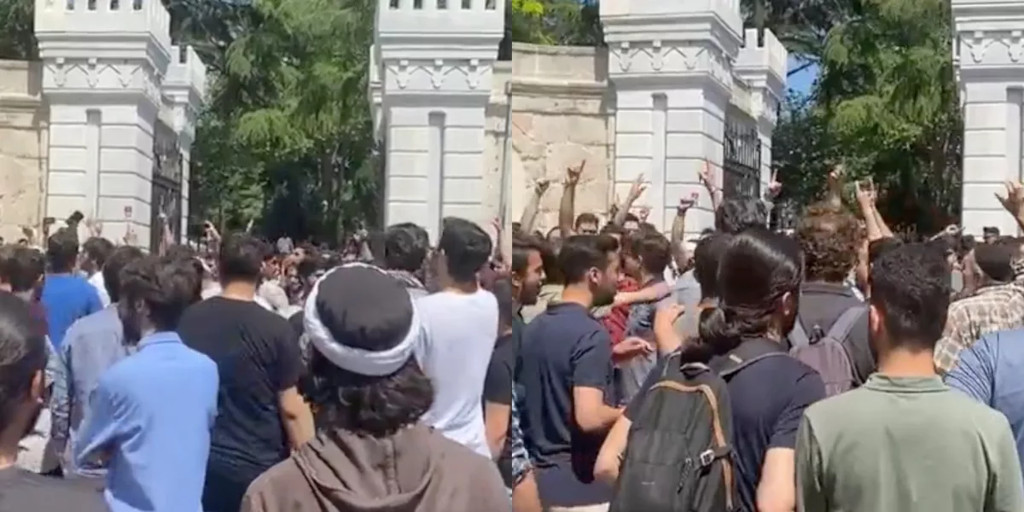
  • LGBTI event at İstanbul University canceled over threats, 26 students briefly detained

    LGBTI event at İstanbul University canceled over threats, 26 students briefly detained

    While police didn’t disperse the group that had gathered in front of the campus gate and chanted “Takbir, Allahu Akbar” (God is the greatest) and “Beyazıt is ours and it will remain ours,” they briefly detained 26 students who turned out to support their friends, the organizers of the picnic.

    The picnic, which was planned by the İstanbul University Equality Society to be held at 4 p.m. on Friday, was canceled due to security concerns, with the Equality Society announcing the development on social media and warning those planning to participate not to be seen in the vicinity in large groups and to leave Beyazıt safely.

    The İstanbul Governor’s Office announced the detentions in a written statement, saying that 26 students were detained because those who gathered for the picnic refused to leave the area although police repeatedly warned them that the event they were about to hold was illegal and that they should cancel it.

    The Equality Society then released a written statement, saying: “We exist as the students of this university, and we will continue to exist. … We are calling out to those who make us look like we are not legitimate, what’s not legitimate is you, it’s your fascism, your phobias and your attacks.”

    Homosexuality is not illegal in Turkey, but homophobia is widespread. After a spectacular Pride March in İstanbul drew 100,000 people in 2014, the government responded by banning future events in the city, citing security concerns.

    It is common for Turkish President Recep Tayyip Erdoğan and other politicians from the ruling Justice and Development Party (AKP) to attack LGBTI individuals and accuse them of perversion and ruining family values.

    Turkey was ranked 48th among 49 countries as regards the human rights of LGBT people, according to the 2022 Rainbow Europe Map published by the International Lesbian, Gay, Bisexual, Trans and Intersex Association (ILGA)-Europe in May.

    TurkishMinute

  • Turkish authorities detain pregnant woman for links to Gülen movement

    Five-months-pregnant Emine Coşkun was detained with her husband Zafer Coşkun in western Edirne province. The couple was trying to cross into Greece to seek asylum but was pushed back to Turkey by the Greek border authorities. Upon their return to Turkey, they were detained and taken to a police station.

    Coşkun’s father, Arif Yıldırım, said he went to see his daughter in detention. “Her clothes were wet from the Evros River and she was covered in mud, but I’m thankful she’s alive,” he said.

    According to Yıldırım his daughter’s pregnancy is high risk and the baby will require surgery as soon as it born. “The baby suffers from cleft lip,” he said. “It will need surgery upon birth. It will also need an artificial palate.”

    Yıldırım added that his daughter was also at risk of preterm labor and needed frequent monitoring.

    Coşkun was first detained in 2018 for links to the movement. Her husband, a former healthcare worker, was dismissed from his job by an executive decree. The couple was trying to flee to Europe in search of a safer life.

    Turkish President Recep Tayyip Erdoğan has been targeting followers of the Gülen movement, a faith-based group inspired by Turkish cleric Fethullah Gülen, since the corruption investigations of December 17-25, 2013, which implicated then-prime minister Erdoğan, his family members and his inner circle.

    Dismissing the investigations as a Gülenist coup and conspiracy against his government, Erdoğan designated the movement as a terrorist organization and began to target its members. He intensified the crackdown on the movement following the coup attempt on July 15, 2016 that he accused Gülen of masterminding. Gülen and the movement strongly deny involvement in the abortive putsch or any terrorist activity.

    As a result of the crackdown, the number of asylum applications in EU countries from Turkish citizens has peaked in recent years.

    According to a Eurostat report for 2008-2020, Turkish citizens are among the top asylum seekers in EU countries, ranking seventh in a list of countries whose citizens sought asylum in the EU in 2020.

    TurkishMinute

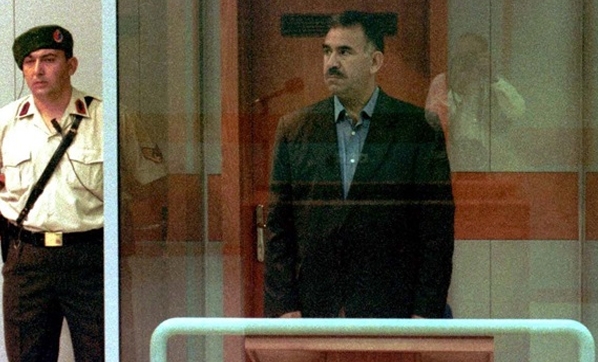
  • Öcalan will be allowed to meet with family member, journalist says

    Öcalan will be allowed to meet with family member, journalist says

    The “isolation” of Öcalan, who has been jailed in a high-security prison on İmralı Island in the Sea of Marmara since 1999, refers to his inability to speak with his lawyers for years.

    Selvi’s claim, based on rumors, came after police prevented a march to protest Öcalan’s isolation over the weekend, detaining 70 protestors in İstanbul and 19 in northwestern Bursa province, as they sought to gather in the Gemlik district of Bursa, a harbor town from where boats sail to İmralı Island.

    Referring to the person who is to meet with Öcalan, Selvi said: “It may be his brother Mehmet Öcalan. [His nephew] Ömer Öcalan, who is still the HDP’s lawmaker for Şanlıurfa, may also go to İmralı.”

    “I don’t know whether Öcalan’s meeting [with a family member] will be a one-time thing or will continue to be held regularly,” the journalist said, adding that the important thing, in his opinion, was whether Öcalan would send a message to the outlawed PKK or the HDP via the meeting.

    Saying that claims about a possible meeting between Öcalan and a family member could spark discussions on whether the ruling Justice and Development Party (AKP) was to launch a new settlement process, Selvi insisted that this wasn’t the case and that “providing Öcalan with the opportunity to meet someone again meant nothing but an attempt to eliminate tension.”

    The settlement process, which refers to talks between the AKP government and the leadership of the PKK to resolve the Kurdish issue, began in 2012 and ended after two police officers were executed in southeastern Şanlıurfa province in June 2015.

    Selvi also said that he didn’t think it was right to have had Osman Öcalan, brother of Abdullah Öcalan, appear on public broadcaster TRT seeking support for the ruling AKP ahead of a critical vote in İstanbul in June 2019.

    TRT’s Kurdish TV station, TRT Kurdi, broadcast an interview with Osman Öcalan, who commented on a letter from Abdullah Öcalan calling on the HDP, whose supporters would play a crucial role in determining the winner, to remain impartial in a repeat mayoral election in İstanbul.

    Despite the PKK leader’s call, the HDP, the country’s second-largest opposition party, in 2019 sat out the mayoral races in big cities as part of its political strategy in Turkey’s west and urged its supporters to cast strategic votes for the Nation Alliance, consisting of several opposition parties including the main opposition Republican People’s Party (CHP).

    Partly due to the support of Kurdish voters, the CHP was able to defeat the governing AKP in a number of major cities, including Ankara and İstanbul, during the 2019 local elections.

    The PKK leader, who was jailed for treason after Turkey removed the death penalty, has been barred from meeting with his legal representatives since 2011 with one exception, and has had only limited family visits since the collapse of the settlement process in 2015.

    On March 25, 2021 he was allowed a phone call with Mehmet Öcalan, following rumors that he had died in prison. The PKK leader had previously spoken with his brother on April 27, 2020, according to his representatives at the Asrın Law Office. The lawyers said they last spoke with their client on Aug. 7, 2019.

    TurkishMinute