Category: Politics

  • Former judge with 6-month-old baby sent to prison in defiance of legal provisions

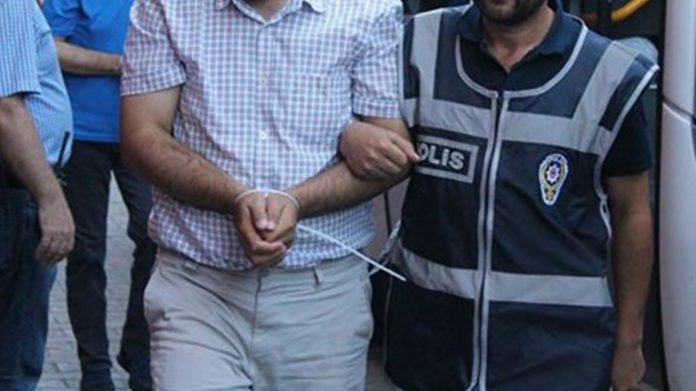
    Esra Çiçeklidağ, a former judge dismissed from her job by a government decree, was arrested on November 10, 2021 in violation of a Turkish law that requires the postponement of the execution of prison sentences for women who are pregnant or have given birth within the last year and a half.

    Çiçeklidağ’s case was brought to light by human rights defender and Peoples’ Democratic Party (HDP) deputy Ömer Faruk Gergerlioğlu on Thursday. Gergerlioğlu said in a tweet that Çiçeklidağ was sent to Gebze Prison with her 6-month-old baby and 4-year-old son.

    “Her husband [a former district governor] was sent to prison the same day after his sentence was upheld [by an appeals court],” Gergerlioğlu said.

    No details were shared about the accusations against the couple.

    According to legal experts, the arrest of pregnant women or women with babies falls afoul of the Law on the Execution of Sentences and Security Measures, which stipulates that “execution of the prison sentence is delayed for women who are pregnant or have given birth within the last year and a half.” The law also applies to inmates in pre-trial detention.

    But the detention and arrest of pregnant women and mothers with babies have been continuing unabated in Turkey since a coup attempt in July 2016.

    According to a report by Solidarity with Others, a nongovernmental organization that consists mainly of political exiles from Turkey, a total of 219 pregnant women and women with children under 6 years of age were arbitrarily detained or arrested over their suspected links to the Gülen movement.

    Turkey experienced a controversial military coup attempt on the night of July 15, 2016 which, according to many, was a false flag aimed at entrenching the authoritarian rule of President Recep Tayyip Erdoğan by rooting out dissidents and eliminating powerful actors such as the military in his desire for absolute power. The abortive putsch killed 251 people and wounded more than a thousand others.

    The next morning, after announcing the coup had been suppressed, the Turkish government immediately started a wide-ranging purge of military officers, judges, police officers, teachers and other government officials that ultimately led to the dismissal of more than 130,000 public servants from their jobs.

    As part of the massive crackdown, 150 of the Turkish Armed Forces’ (TSK) 326 generals and admirals and 4,156 judges and prosecutors as well as 29,444 members of the armed forces, more than 33,000 police officers and in excess of 5,000 academics were fired from their jobs for alleged membership in or relationships with “terrorist organizations” by emergency decree-laws subject to neither judicial nor parliamentary scrutiny.

    According to Turkey’s Interior Minister Süleyman Soylu, as of November 15, 2021 a total of 319,587 people had been detained and 99,962 arrested in operations against supporters of the Gülen movement since the coup attempt. scf
  • Today marks the 84th month of former STV head’s imprisonment on “terror” charges

    Today marks the 84th month of former STV head’s imprisonment on “terror” charges

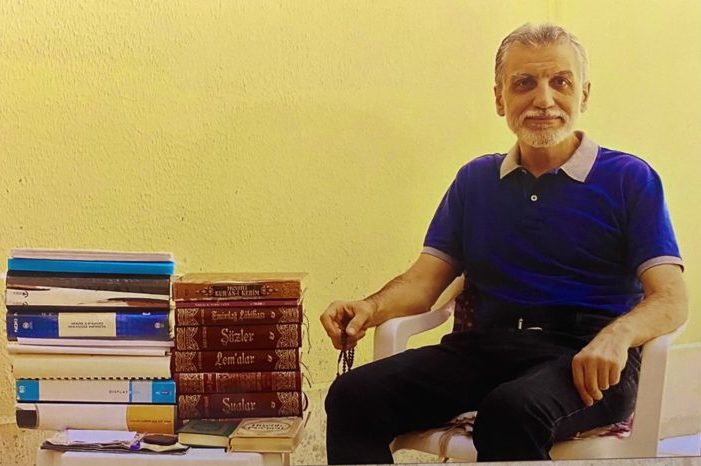
    Today marks the 84th month of imprisonment of Hidayet Karaca, former chief executive of the Samanyolu Media Group, on terror charges.

    According to tweets posted by his son, Sıdkı, Hidayet Karaca has been in İstanbul’s Silivri Prison for a total of 2557 days. 1496 of those days were in solitary confinement.

    “As of today, he is in the 84th month (2557 days) of his imprisonment” Sıdkı tweeted.

    Hidayet Karaca has been held in the notorious Silivri Prison in İstanbul since December 14, 2014 and was sentenced by an İstanbul court to 31 years, six months’ imprisonment over the scenario of a TV series that was broadcast by Samanyolu TV. Karaca was sentenced on charges of membership in a terrorist organization for his alleged ties to the Gülen movement and for allegedly slandering the al-Qaeda-affiliated radical Islamist group Tahşiyeciler.

    In June 2018 the Ankara 4th High Criminal Court handed down an aggravated life sentence to Karaca on charges of attempting to overturn the constitutional order. His sentence was later upheld by the 20th Criminal Chamber of the Ankara Regional Court of Justice in November 2020 as part of a case that was launched against 75 people accused of links to the faith-based movement inspired by Muslim cleric Fethullah Gülen.

    Turkish President Recep Tayyip Erdoğan has been targeting followers of the Gülen group since the corruption investigations of December 17-25, 2013, which implicated then-Prime Minister Erdoğan, his family members and his inner circle.

    Dismissing the investigations as a Gülenist coup and conspiracy against his government, Erdoğan designated the movement as a terrorist organization and began to target its members. He locked up thousands including many prosecutors, judges and police officers involved in the investigation as well as journalists who reported on them.

    Erdoğan intensified the crackdown on the movement following a coup attempt on July 15, 2016 that he accused Gülen of masterminding. The crackdown also targeted political opponents of the government, Kurdish activists and human rights defenders, among others. Gülen denies involvement in the abortive putsch or any terrorist activity.

  • Turkish prosecutors ordered detention of 149 people over alleged Gülen links in a week

    Turkish prosecutors ordered detention of 149 people over alleged Gülen links in a week

    Turkish prosecutors have over the past week ordered the detention of 149 people on terrorism charges due to their alleged links to the faith-based Gülen movement, local media reported.

    On Monday the İstanbul and Kars public prosecutors issued detention warrants for 51 suspects, including active duty officers, noncommissioned officers and former military cadets.

    On Tuesday prosecutors in Ankara issued detention warrants for 37, including officers and former military cadets, on accusations of secretly communicating with their contacts within the Gülen movement via payphones.

    An additional 32 detention warrants were issued in Kayseri, Samsun, Edirne, Bursa and Manisa provinces on Wednesday.

    On Friday detention warrants were issued for 29 individuals by the İstanbul Chief Public Prosecutor’s Office and 24 were detained for alleged links to the Gülen movement.

    Turkish President Recep Tayyip Erdoğan has been targeting followers of the Gülen movement, inspired by Turkish Muslim cleric Fethullah Gülen, since the corruption investigations of December 17-25, 2013, which implicated then-prime minister Erdoğan, his family members and his inner circle.

    Dismissing the investigations as a Gülenist coup and conspiracy against his government, Erdoğan designated the movement as a terrorist organization and began to target its members. He intensified the crackdown on the movement following an abortive putsch that he accused Gülen of masterminding.

    The so-called “payphone investigations” are based on call records. The prosecutors assume that a member of the Gülen movement used the same payphone to call all his contacts consecutively. Based on that assumption, when an alleged member of the movement is found in call records, it is assumed that other numbers called right before or after that call also belong to people with Gülen links. Receiving calls from a payphone periodically is also considered a red flag.

    Following the abortive putsch, the Turkish government declared a state of emergency and carried out a massive purge of state institutions under the pretext of an anti-coup fight. More than 130,000 public servants were summarily removed from their jobs for alleged membership in or relationships with “terrorist organizations” by emergency decree-laws subject to neither judicial nor parliamentary scrutiny.

    A total of 319,587 people have been detained and 99,962 arrested in operations against supporters of the Gülen movement since the coup attempt, Turkey’s Interior Minister Süleyman Soylu said on Nov. 22.

    In addition to the thousands who were jailed, scores of other Gülen movement followers had to flee Turkey to avoid the government crackdown. SCF

  • Main opposition leader visits Şenyaşar family members, who have been demanding justice in political murder case

    The leader of Turkey’s main opposition Republican People’s Party (CHP), Kemal Kılıçdaroğlu, on Thursday visited members of the Şenyaşar family, who have been demanding justice for three of their relatives murdered by people connected to a lawmaker from the ruling Justice and Development Party (AKP), Turkish media reported.

    Kılıçdaroğlu visited the family in front of a courthouse in Şanlıurfa province where they have been staging a sit-in for the past 276 days. Speaking to the press next to Emine Şenyaşar, the mother of some of the victims, Kılıçdaroğlu said this wasn’t an ordinary case.

    “This is the struggle of a mother who lost her husband and children,” he said. “Everyone needs to support this mother. How can we be deaf to the cries of a mother?”

    Kılıçdaroğlu promised Emine Şenyaşar that he and his party would be following the case until justice is served.

    Emine’s husband, Esvet Şenyaşar, and two of their sons, Adil and Celal, were brutally murdered on June 14, 2018 in Şanlıurfa province.

    They were initially attacked in their store and taken to a hospital. However, they were followed by the family of AKP deputy İbrahim Halil Yıldız to the hospital, where they were ultimately murdered. Eight more people were injured during clashes between the two groups. An older brother of Yıldız was also killed.

    According to Ferit Şenyaşar, bullets from 17 different guns were retrieved from the body of one of his brothers.

    Two Şenyaşar brothers, Ferit and Fadıl, who were injured but survived, were later detained, and Fadıl Şenyaşar was arrested. However, none of Yıldız’s relatives or his bodyguards were detained despite the fact that three people had died.

    Only 15 months later, on September 18, 2020, was Yıldız’s older brother Enver Yıldız arrested.

    The Yıldız family claimed the Kurdish Şenyaşar family had links to the outlawed Kurdistan Workers’ Party (PKK) and that they had been victims of terrorism. SCF

  • Ex-prosecutor, former judge wife fleeing Turkey’s crackdown perish in Aegean

    A former public prosecutor and his wife, a former judge, died after a speedboat carrying them overturned in the Aegean Sea as they were trying to flee to Greece to avoid a government-led crackdown in Turkey, Turkish Minute reported on Friday, citing Greek media outlets.

    Two other former judges and one smuggler in the speedboat were able to survive, according to the Greek media. The incident, which is thought to have been caused by excessive speed, took place northeast of the Greek island of Kos on Thursday night, according to the Greek coast guard authorities.

    The three other people in the boat were rescued by the Greek coast guard, while the man and the woman appeared lifeless as they were taken out of the water. They were pronounced dead at a hospital in Kos.

    The couple, İbrahim Gündüz and his wife E. Gündüz, along with the two other surviving judges, identified as M.Ç. and İ.T.A., were among the thousands of civil servants who were expelled from public service in Turkey in the aftermath of a failed coup attempt in the country in July 2016, according to the Kronos news website.

    Following the abortive putsch, the Turkish government declared a state of emergency and carried out a massive purge of state institutions under the pretext of an anti-coup fight. More than 130,000 public servants, including 4,156 judges and prosecutors, as well as 29,444 members of the armed forces, were summarily removed from their jobs for alleged membership in or relationships with “terrorist organizations” by emergency decree-laws subject to neither judicial nor parliamentary scrutiny.

    In addition to the thousands who were jailed, thousands of people have fled Turkey since the coup attempt due to the massive witch-hunt carried out by the Turkish government against alleged members of the Gülen movement, inspired by US-based Turkish Muslim cleric Fethullah Gülen. Many have tried to illegally flee Turkey as the government had canceled the passports of thousands of people.

    Turkish President Recep Tayyip Erdoğan has been targeting followers of the Gülen movement, a faith-based group inspired by Turkish cleric Fethullah Gülen, since the corruption investigations of December 17-25, 2013, which implicated then-Prime Minister Erdoğan, his family members and his inner circle.

    Dismissing the investigations as a Gülenist coup and conspiracy against his government, Erdoğan designated the movement as a terrorist organization and began to target its members. He intensified the crackdown on the movement following a coup attempt on July 15, 2016 that he accused Gülen of masterminding. Gülen and the movement strongly deny involvement in the abortive putsch or any terrorist activity.

    A total of 319,587 people were detained and 99,962 arrested in operations against supporters of the Gülen movement since the coup attempt, Turkey’s Interior Minister Süleyman Soylu said in November. SCF

  • Emirati general accused of torture elected new INTERPOL president at İstanbul meeting

    An Emirati general accused of torture was elected president of INTERPOL at the organization’s meeting in İstanbul on Thursday, despite the concerns of human rights organizations who fear the agency will be at risk of exploitation by repressive regimes, Agence France-Presse reported.

    The decision follows generous funding by the United Arab Emirates for the Lyon, France-based body and accusations Abu Dhabi has abused INTERPOL’s system of so-called “red notices” for wanted suspects to persecute political dissidents.

    Emirati General Ahmed Nasser Al Raisi was elected following three rounds of voting during which he received 68.9 percent of votes cast by member countries, INTERPOL said in a statement.

    Raisi, head of the UAE’s security forces, will take on a largely ceremonial and voluntary role for a four-year term.

    It is INTERPOL Secretary General Juergen Stock who handles day-to-day management of the organization. Stock was given a second five-year term in 2019.

    South Korean Kim Jong-yang was president since the 2018 arrest of his predecessor Meng Hongwei in China, where he had served as a vice minister of public security.

    Complaints of “torture” were filed against the Emirati general in recent months in France and Turkey, which is hosting INTERPOL’s general assembly in İstanbul this week.

    Only the Czech Republic’s Sarka Havrankova, a veteran officer overseeing the country’s international cooperation in police matters, stood against the general for the post.

    ‘Undermine INTERPOL ’

    Raisi joined the Emirati police force in 1980 and worked there for several decades.

    Three European Parliament members wrote a letter dated November 11 to European Commission President Ursula von der Leyen to warn of the impact the general’s appointment would have on INTERPOL .

    “The election of General Al Raisi would undermine the mission and reputation of INTERPOL and severely affect the ability of the organization to carry out its mission effectively,” they wrote.

    And in October 2020, 19 NGOs, including Human Rights Watch, expressed concern about the possible choice of Raisi, whom they described as being “part of a security apparatus that continues to systematically target peaceful critics.”

    One of the complainants against Raisi, British national Matthew Hedges, said he was detained and tortured between May and November 2018 in the United Arab Emirates after he was arrested on false charges of espionage during a study trip.

    In another complaint, lawyers for the Gulf Centre for Human Rights accuse the general of “acts of torture and barbarism” committed against government critic Ahmed Mansoor.

    Mansoor has been detained since 2017 in a four-square-meter (43-square-foot) cell “without a mattress or protection against the cold” and “without access to a doctor, hygiene, water and sanitary facilities”, the lawyers said.

    These complaints have not resulted in any formal proceedings against the general.

    ‘Defamation campaign’

    Anwar Gargash, a former UAE minister of state for foreign affairs who now advises the country’s president, described the general’s election as “a testament to our country’s achievements and efficiency in the fields of law enforcement and security.”

    Gargash dismissed the accusations against Raisi as an “organized and intense smear and defamation campaign” which the election had now “crushed on the rock of truth.”

    The UAE donated $54 million (48 million euros) to INTERPOL in 2017 — almost equivalent to the required contributions of all the organization’s 195 member countries which amounted to $68 million in 2020.

    The UAE gave or had pledged to INTERPOL around 10 million euros in 2019, approximately seven percent of its total annual budget.

    INTERPOL Secretary General Stock welcomed the general’s appointment, saying “I look forward to working closely with him in ensuring that INTERPOL continues to fulfil its mandate and support international police cooperation.” SCF

  • Gov’t denies assistance to autistic teen due to father’s alleged links to Gülen movement

    A district governor’s office in Hatay province has been refusing to provide assistance to the family of Rüveyda Tekgöz, a 16-year-old autistic girl because her father was fired from his job due to alleged links to the Gülen movement, the Bold Medya news website reported.

    According to a report by a state hospital, Tekgöz is considered 70 percent disabled and is entitled to TL 800 ($80) in government assistance provided to the families of disabled individuals. Yet, the family has been denied assistance since August 2019.

    Rüveyda’s father Mehmet Ali Tekgöz, a teacher, was dismissed from his job by an emergency decree-law on September 1, 2016 due to his alleged links to the Gülen movement. He was later sentenced to six years, three months’ imprisonment for membership in a terrorist organization. An appeals court overturned his conviction and he was released in January 2018, after spending 16 months in prison. His retrial will start in December.

    Turkish President Recep Tayyip Erdoğan has been targeting followers of the Gülen movement since the corruption investigations of December 17-25, 2013, which implicated then-prime minister Erdoğan, his family members and his inner circle.

    Dismissing the investigations as a Gülenist coup and conspiracy against his government, Erdoğan designated the movement as a terrorist organization and began to target its members. He intensified the crackdown on the movement following a coup attempt on July 15, 2016 that he accused Gülen of masterminding. Gülen and the movement strongly deny involvement in the abortive putsch or any terrorist activity.

    Mehmet Ali Tekgöz is one of tens of thousands of former public servants who were removed from their jobs for alleged membership in or relationships with “terrorist organizations” by emergency decree-laws following the coup attempt.

    Former public servants were not only fired from their jobs; they were also banned from working again in the public sector and getting a passport. Their families also faced discrimination.

    Rüveyda’s family brought the case to the ombudsman’s office, which investigates claims of rights violations by public institutions and officials. Human rights defender and Peoples’ Democratic Party (HDP) deputy Ömer Faruk Gergerlioğlu asked the office about the case but was told they had not received an application concerning it.

    In a tweet on Wednesday, however, Gergerlioğlu shared a copy of the ombudsman’s office’s decision about the case, which stated that the application was denied.

    There have been other cases where disabled children were denied public benefits. Financial assistance paid by the Turkish government to the family of Nurbanu Aydın, a “spastic quadriplegia cerebral palsy” patient, was cut off after her father, Muammer Aydın, was arrested on trumped-up terrorism charges.

    Nurefşan Ketenci, who suffers from Cri-du-chat syndrome, also known as 5p minus syndrome, was forced to leave a public special needs school because her father used to work for an institution that was shut down by a government decree for its affiliation with the Gülen movement . She is totally disabled and according to the doctors her heart function is similar to that of a 94-year-old. SCF

  • 20,333 inmates in Turkish prisons have university degrees, a 151 pct increase since 2016

    The number of inmates with university degrees in Turkey increased more than twofold between 2016 and 2020, reaching 20,333, EuroNews Turkish reported, citing data released by Turkish Statistical Institute (TurkStat).

    University graduates made up only 8.1 percent of Turkey’s prison population in 2016, while that rate went up to 20.33 percent in 2020. Four hundred sixty inmates in Turkish prisons have doctorates and 2,371 have master’s degrees.

    The dramatic increase reflects the increasing number of political prisoners in the country in the aftermath of a coup attempt on July 15, 2016.

    Following the abortive putsch, the Turkish government declared a state of emergency and jailed 96,000 people due to alleged links to the Gülen movement, which it accuses of being behind the attempt. As of February 2020, a total of 622,646 people had been the subject of investigation and 301,932 had been detained for alleged ties to the movement.

    The crackdown also targeted political opponents of the government, Kurdish activists and human rights defenders, among others. According to Council of Europe’s “Annual Penal Statistics on Prison Populations for 2020,” out of 30,524 prisoners convicted on terrorism charges in CoE member states, 29,827 were in Turkey alone.

    Turkish President Recep Tayyip Erdoğan has been targeting followers of the Gülen movement, a faith-based group inspired by Muslim cleric Fethullah Gülen, since the corruption investigations of December 17-25, 2013, which implicated then-Prime Minister Erdoğan, his family members and his inner circle.

    Dismissing the investigations as a Gülenist coup and conspiracy against his government, Erdoğan designated the movement as a terrorist organization and began to target its members. He locked up thousands including many prosecutors, judges and police officers involved in the investigation as well as journalists who reported on them.

    Erdoğan intensified the crackdown on the movement following the 2016 coup attempt that he accused Gülen of masterminding. Gülen and the movement strongly deny involvement in the abortive putsch or any terrorist activity.

    According to the statistics, the total number of inmates in Turkish penal institutions was 266,831 as of the end of 2020, an 8.5 percent decrease compared to the previous year. The decrease was mainly due to a law that allowed the early release of some 90,000 inmates in order to prevent the spread of COVID-19 in prisons. Yet, Turkish prisons are still at overcapacity according to the statistics. The penal institutions have a capacity of 245,200 inmates, some 20,000 fewer than the number of inmates. SCF

  • Reactions mount as critical media outlets not allowed to cover Republic Day ceremony

    Reporters from the Cumhuriyet daily, Fox TV and the ANKA news agency, all critical of the Turkish government, were reportedly prevented from covering the Republic Day ceremony held at Anıtkabir in Ankara upon instructions from the Turkish presidency’s communications director Fahrettin Altun, sparking criticism from media associations, Turkish Minute reported on Friday.

    The executive board of the Turkish Journalists’ Association (TGC) denounced the move in a statement, while Fox TV Editor-in-Chief Doğan Şentürk posted a protest on Twitter. “Half of the media outlets including Fox TV were not allowed to cover the Republic Day ceremony at Anıtkabir! This move, unparalleled in our political history, which I have never experienced in

    my professional career spanning 35 years, is not only a violation of the Constitution, but also an eclipse of reason,” Şentürk tweeted.

    In its statement the TGC indicated that no one has a monopoly on Republic Day, noting that the ruling Justice and Development Party’s (AKP) accreditation of reporters to cover specific events has evolved into censorship.

    The TGC reminded that critical reporters have been prevented from covering newsworthy events, initially at the Prime Ministry and then at party congresses, ministry meetings, mosques, cemeteries and official ceremonies.

    “The latest example of this is the prevention of our fellow reporters from covering the Republic Day ceremony at Anıtkabir,” the statement said, adding that the ruling AKP has discriminated among reporters.

    The exclusion was also protested by the Turkish Journalists Union (TGS), which called on the government to halt its discriminatory practices.

    “Our fellow reporters from Fox TV, the Cumhuriyet daily and the ANKA news agency who wanted to cover the ceremony at Anıtkabir were not allowed to enter upon instructions from the communications director. This is not a matter of accreditation but censorship. Stop discrimination and do not violate the public’s right to information,” the TGS tweeted.

    Erol Önderoğlu, the Turkey representative for Reporters without Borders (RSF), referred to the incident as discriminatory accreditation.

    “RSF Representative Erol Önderoğlu: It is very sad that discriminatory accreditation targeted media outlets like Fox TV, the Cumhuriyet daily and the ANKA news agency during the Republic Day ceremony. Those who ordered that those reporters not be allowed to enter Anıtkabir have spurned media freedoms once again,” RSF Turkish tweeted.  SCF

  • Daughter of purge-victim professor dies in traffic accident: report

    Daughter of purge-victim professor dies in traffic accident: report

    Rümeysa Berin Şen, a 25-year-old medical doctor and the daughter of purge-victim Turkish professor, Murat Şen, died late on Saturday in a traffic accident in Capital Ankara.

    According to the Turkish media, Berin’s vehicle crashed into the back of the truck at very high speed in Çankaya district. She was an assistant doctor in the Gynecological Clinic of Ankara City Hospital.

    According to tweets posted by journalist Sevinç Özarslan, Murat Şen, former dean of the Melihşah University’s Faculty of Law, has been in prison since February 8, 2018 over alleged links to the Gulen group, which the Turkish government accuses of masterminding a coup attempt in 2016. The group denies any involvement.

    Following the coup attempt that killed 249 people and wounded more than a thousand others, the Turkish government declared a State of Emergency and issued dozens of emergency decrees, known as KHK, to purge its critics from state bodies.

    So far, a total of 6021 academics were dismissed by gov’t decrees No. 672/673/674 issued on Sept. 1, 2016, No.675/676 issued on Oct. 29, 2016, No. 677/678 issued on Nov. 22, 2016, No.679/680/681 issued on Jan. 6, 2017, No.686/687 issued on Feb. 7, 2017, No.689 issued on April 29, No.692 issued on July 14, 2017, No.693/694 issued on August 25, 2017. Also, immediately after the failed putsch, the Turkish government passed a decree ordering the closure of 15 universities and 800 student dorms across Turkey. The shutting down of the universities has left 61,382 students in academic limbo.

    Those dismissed were accused of having links to either the Gulen movement, outlawed Kurdistan Workers’ Party (PKK) or other alleged terror groups. TurkeyPurge