Blog

  • EP Turkey rapporteur slams Ankara over jail sentence of opposition deputy

    The European Parliament’s (EP) Turkey rapporteur Nacho Sanchez Amor on Friday criticised Ankara over a prison sentence handed down to opposition deputy Ömer Faruk Gergerlioğlu.

    The verdict against pro-Kurdish Peoples’ Democratic Party (HDP) deputy Gergerlioğlu jars with the positive EU agenda the Turkish government promised, Amor said on Twitter.

    New message from 🇹🇷 about EU “positive agenda” offer: tireless HHRR defender & HDP parliamentarian @gergerlioglueng convicted to prison. Umpteenth proof of sincerity of the supposed European bet. Hope @EUCouncil has received it crystal clear, as I did #GergerlioğlununYanındayız

    — Nacho Sánchez Amor (@NachoSAmor) February 19, 2021

    On Thursday, Turkey’s Court of Cassation approved a two year, six month prison sentence for Gergerlioğlu on charges of terrorist propaganda.

    Gergerlioğlu, a human rights defender and a doctor by profession, was accused of sharing on social media an article, which cited Murat Karayılan, the second highest-ranking member of the outlawed Kurdistan Workers’ Party (PKK).

    The article said that the outlawed Kurdistan Workers’ Party (PKK) was ready to take steps for peace, if the rest of the country was.

    Meanwhile, former Turkey rapporteur of the EP, Kati Piri also criticized the verdict against Gergerlioğlu in a tweet. Piri blamed Turkey for using the judiciary as an instrument of oppression.

    Turkish Court upholds 2,5 years prison sentence for opposition MP @gergerliogluof. For being principled and outspoken on human rights.

    Erdogan’s Turkey uses judiciary as an instrument of oppression. #GergerlioğlununYanındayız

    — Kati Piri (@KatiPiri) February 19, 2021

    Gergerlioğlu told pro-Kurdish Mezopotamya Agency that the court’s decision was politically motivated.

    The HDP on Saturday issued a statement to denounce the court’s decision.

    “We declare once again that we will not give up our struggle for peace and justice despite the anti-human rights and anti-democracy government. Gergerlioğlu is not alone,” pro-Kurdish Fırat news agency cited the HDP as saying.

  • Enforced disappearances worryingly common in Turkey, say human rights activists

    Participants said it was unfortunate that human rights in Turkey, a candidate for full membership in the European Union, were violated in such a way.

    The meeting was attended by Dietmar Köster, member of the European Parliament (MEP); Professor Bernard Duhaime, member of the United Nations Working Group on Enforced or Involuntary Disappearances (WGEID); former MEP Rebecca Harms; Dr. Dilek Kurban, of the Hertie School, Berlin; Dr. Rainer Huhle, from the Nuremberg Human Rights Center; and Öztürk Türkdoğan, president of the Human Rights Association (İHD).

    The daughter of Hüseyin Galip Küçüközyiğit, a former bureaucrat who has been missing since December 29, was among the participants.

    His daughter Nursena Küçüközyiğit said she contacted the police, who did not help them or respond to their questions. A prosecutor was finally appointed to the case 18 days after Küçüközyiğit went missing. Yet, according to his daughter, the prosecutor decided that there was no need to pursue legal action in the case.

    Amnesty International issued an urgent call for action on February 1 for an investigation behind the circumstances of Küçüközyiğit’s disappearance.

    Harms said states committed to the principles enshrined in the Universal Declaration of Human Rights should not be complicit in the kidnappings conducted by the Turkish government.

    Nearly 30 people have reportedly been abducted by Turkish intelligence since 2016. Most of the abductions targeted members of the Gülen movement, a faith based group inspired by Muslim cleric Fethullah Gülen. Many of the abductees mysteriously reappeared in police custody in Ankara after six to nine-month absences.

    Apparently intimated, most of them kept their silence after their reappearance. Speaking at court hearing in February 2020, one of the abductees, Gökhan Türkmen, revealed that he had been held incommunicado at a black site in Ankara run by Turkey’s intelligence agency and subjected to severe torture during his 271-day stay. Türkmen was the object of threats and was sexually harassed and abused during his enforced disappearance. He also alleged that he was visited in prison and threatened no less than six times by officials who introduced themselves as intelligence officers, pressuring him to retract his allegations of abduction and torture made at the February hearing.

    Turkish President Recep Tayyip Erdoğan has been targeting followers of the Gülen movement since the corruption investigations of December 17-25, 2013, which implicated then-Prime Minister Erdoğan, his family members and his inner circle.

    Dismissing the investigations as a Gülenist coup and conspiracy against his government, Erdoğan designated the movement as a terrorist organization and began to target its members. He intensified the crackdown on the movement following a coup attempt on July 15, 2016 that he accused Gülen of masterminding.

  • Top court decision to uphold sentence of rights advocate MP draws global outrage

    The Supreme Court of Appeals on Friday upheld a prison sentence of two years, six months given to the rights advocate lawmaker on charges of disseminating terrorist propaganda, a move that has sparked outrage in Turkey and beyond, with thousands of Twitter users posting messages under the hashtag #GergerlioğlununYanındayız (We stand by Gergerlioğlu).

    According to the court’s reasoning, the accusation against Gergerlioğlu is based on a social media post shared by him on Aug. 20, 2016 that included a link to a statement by the outlawed Kurdistan Workers’ Party (PKK) — an armed Kurdish group listed as a terrorist organization by Turkey, the US and the EU.

    Milena Büyüm, Amnesty International’s Turkey campaigner, said the 21-page decision upholding the MP’s conviction and sentence included 16 pages of the dissenting judge’s opinion, which argued that Gergerlioğlu’s prosecution should have been halted when he entered parliament.

    “The law under which he was convicted does not apply; if it was considered a crime has been committed, he should have been prosecuted under a different article. Thus, the conviction should be overturned,” Büyüm tweeted, adding that the lawmaker’s conviction had “the hallmarks of attempting to silence him.”

    “As an MP, Gergerlioğlu consistently speaks out against rights violations. He must be free to continue to do so without judicial harassment and intimidation,” she said.

    Rebecca Harms, a former Green member of the European Parliament, said the MP would lose his freedom and his mandate because he loves the people and defends the truth.

    “He is one of strongest defenders of human rights in Turkey. Jailing him is another severe violation of human rights,” she added.

    Kati Piri, the European Parliament (EP) rapporteur for Turkey, said Gergerlioğlu’s sentence was upheld because he was principled and outspoken on human rights.

    “[President Recep Tayyip] Erdoğan’s Turkey uses the judiciary as an instrument of oppression,” she said.

    Human Rights Watch (HRW) Turkey director Emma Sinclair-Webb referred to Gergerlioğlu in a tweet as one of Turkey’s bravest and most principled rights defenders who consistently demands justice for the most marginalized victims without regard for their political identity.

    “The [Turkish] government has targeted him, he faces a bogus conviction,” she tweeted.

    Sergey Lagodinsky, a member of the European Parliament, said he was repulsed by the court decision to impose a prison sentence on Gergerlioğlu for merely sharing a news article. “This is another step away from democratic standards,” Lagodinsky added.

    “Gergerlioğlu has always been someone who defends justice, exposes injustice and tries to prevent torture [in Turkish prisons]. The Erdoğan regime was disturbed by this and therefore wanted to punish him,” Lawyers in Exile, a platform founded by lawyers from Turkey to monitor human rights violations, tweeted.

    Journalist Can Dündar commented that the deputy’s imprisonment would trigger “a riot of conscience” since he defended the rights of so many people with very different backgrounds and ideologies.

    “We often use the saying, ‘This attack targeted us all.’ I think Gergerlioğlu’s situation is where this saying fits exactly right. He unrelentingly defended people’s rights without questioning who they were. Now it’s our turn. We’ve got your back, Mr. Gergerlioğlu, no ifs, ands or buts,” prominent human rights jurist Kerem Altıparmak tweeted.

  • Former teacher imprisoned over Gülen links dies from COVID-19 weeks before his release

    Former teacher imprisoned over Gülen links dies from COVID-19 weeks before his release

    Ersoy Karamustafa, a former teacher arrested over alleged links to the Gülen movement, died in prison on Saturday of COVID-19, less than two months before he was due to be released on parole, the Stockholm Center for Freedom reported citing Bold Medya.

    Karamustafa had been in intensive care for 20 days before he died. He was summarily dismissed from his job and arrested in August 2016. He was sentenced to seven years, six months in prison for membership in a terrorist organization and would have been eligible for parole on April 9 had he not passed away.

    Turkish President Recep Tayyip Erdoğan has been targeting followers of the Gülen movement, a faith based group inspired by Muslim cleric Fethullah Gülen, since the corruption investigations of December 17-25, 2013, which implicated then-Prime Minister Erdoğan, his family members and his inner circle.

    Dismissing the investigations as a Gülenist coup and conspiracy against his government, Erdoğan designated the movement as a terrorist organization and began to target its members. Erdoğan intensified the crackdown on the movement following a coup attempt on July 15, 2016 that he accused Gülen of masterminding. Gülen and the movement strongly deny involvement in the abortive putsch or any terrorist activity.

    Karamustafa’s wife, Serpil Karamustafa, was also arrested in December 2018 for affiliation with the movement. She was sentenced to eight years, one month and remains in prison.

    The Turkish parliament passed an early parole law on April 14 aimed at reducing the inmate population of the country’s overcrowded prisons due to the coronavirus pandemic. Yet, the legislation excluded political prisoners, including opposition politicians, journalists, lawyers, academics and human rights defenders convicted under the country’s controversial counterterrorism laws. The law prompted calls from the UN, the EU and rights groups for the non-discriminatory reduction of prison populations.

    Following the abortive putsch, the Turkish government declared a state of emergency and carried out a massive purge of state institutions under the pretext of an anti-coup fight. More than 130,000 public servants, including 4,156 judges and prosecutors, as well as 20,610 members of the armed forces were summarily removed from their jobs for alleged membership in or relationships with “terrorist organizations” by emergency decree-laws subject to neither judicial nor parliamentary scrutiny.

    According to a statement from Turkish Interior Minister Süleyman Soylu in November a total of 292,000 people have been detained while 96,000 others have been jailed due to alleged links to the Gülen movement since the failed coup. The minister said there were 25,655 people in Turkey’s prisons who were jailed due to links to the Gülen movement.

  • Victims’ families outraged by Turkish gov’t failure to prevent killings in northern Iraq

    The families of Turks who were killed in the Gara region of Iraqi Kurdistan on Sunday as a result of an operation carried out by Turkish security forces against the outlawed Kurdistan Workers’ Party (PKK) have expressed sadness and outrage at the Turkish government’s failure to ensure the safe return of their kidnapped children, the Sözcü daily reported.

    Turkey’s ruling Justice and Development Party (AKP) government on Sunday accused militants of the PKK, listed as a terrorist group by Turkey, the US and the EU, of killing 13 Turkish nationals — mainly members of the security forces — whom they had held captive in northern Iraq.

    The bodies of the 13 hostages were reportedly discovered in a cave in the Gara region of northern Iraq, where Ankara launched an operation against the PKK on Feb. 10.

    The hostages, some of them kidnapped by the PKK as early as 2015, had found little or no coverage in the Turkish media, prompting widespread criticism on social media as to why the Turkish government had not tried to rescue the hostages earlier.

    “They stalled us. I’m full [emotionally]. Politics should’ve solved this issue. It was the politicians, not me, who should’ve found a solution to this. I’m not the government. The politicians rule the government,” Gürsel Özbey, father of sergeant Semih Özbey — one of the 13 who were killed in Gara – told Sözcü on Tuesday.

    The father said Özbey was abducted by PKK militants on the Dersim-Erzincan highway while he was returning home from the Black Sea province of Rize on Sept. 18, 2015.

    “If what’s being said is true, the children [13 hostages] were tortured [by the PKK militants] every day. What kind of justice is this? What kind of world is this? This is where words fail. This is inhuman,” the father added.
    He went on to say that nobody paid attention to him despite his many attempts to talk to politicians, including ones from the ruling AKP, who chose, instead, to stall him.

    Another parent who spoke to Sözcü was Ayşe Güler, the mother of deceased specialist sergeant Mevlüt Kahveci who talked to President Recep Tayyip Erdoğan over the phone when he called her during an AKP rally on Monday, a move that has attracted widespread criticism.

    Erdoğan reportedly told Güler that she was “honored by the martyrdom of [her] son,” while she was unable to speak, sobbing over the phone. The president drew criticism for going on to propagandize his AKP government following the call, which was televised live by mainly pro-government TV channels.

    When asked about the phone call, the grieving mother said: “I didn’t know he [Erdoğan] was calling me during a rally. I was at the cemetery. He called me out of the blue and we talked on the phone. He offered condolences, and I told him to take revenge for my son.”

    The woman said Kahveci was abducted on the Hakkari-Çukurca highway on Sept. 21, 2016.

    She also confirmed that a letter circulating on social media in her son’s name which stated that the AKP was responsible for leaving the hostages in the hands of PKK militants was actually written by him.

    “Mother, the [PKK] organization says that nobody has asked them to return us so far. They say that if the president and his AKP were to demand it, they couldn’t not respond and would let us go,” Kahveci said in the letter.

    “Why have they still not saved us? Why don’t they do anything for us? Which country’s soldier am I? Who am I serving? Why can’t they reason with the organization to save their own soldiers and police? What is our fault? Is this our reward [for serving the government]?” he asked.

    According to a statement released by the Malatya Governor’s Office on Monday, among the hostages executed were air special sergeant Hüseyin Sarı, sergeant Semih Özbey, special gendarme sergeant Ümit Gıcır, special sergeant Mevlüt Kahveci, private Sedat Sorgun, private Süleyman Sungur, tank crewman Adil Kabaklı, tank crewman Müslüm Altıntaş, police officer Sedat Yabalak, police officer Vedat Kaya and private citizens Aydın Kose and Muhammet Salih Kanca.

    Efforts to identify the remaining hostages were underway, the governor’s office said.
  • Dutch security body concerned about Erdoğan’s role in rise of extremism in Netherlands

    A secret report on Dutch national security that was leaked on Monday has revealed concerns among the authorities about the influence of what it calls a conscious Islamization strategy pursued by Turkish President Recep Tayyip Erdoğan for Dutch people of Turkish descent, noting that it could compromise the security of the Netherlands by giving rise to Salafism/jihadism.

    According to the report acquired by Dutch monthly news magazine HP/De Tijd, the National Coordinator for Security and Counterterrorism, a Dutch security body, writes that President Erdogan is implementing a conscious Islamization strategy that is having an influence in the Netherlands.

    Erdoğan would give space to Salafist, sometimes jihadist, organizations with ties to Turkish-Dutch institutions, which could affect Dutch security, the service believes.

    Salafism is an ultra-conservative movement within Sunni Islam, and a small proportion of its followers – known as jihadi Salafists – believe in violence.

    According to the Dutch media, the leaked document points to a possible link between the “anti-Western rhetoric” of the Turkish president and the terrorist attack on a tram in the city of Utrecht in the Netherlands in 2019 that killed four people. A day before the attack in Utrecht, Erdoğan had spoken about attacks on mosques in Christchurch, New Zealand, placing it “in a context of war between Muslims and Christians,” HP cited the document as saying.

    The report, titled “The development of Salafism among Turks – the influence in the Netherlands,” was analytically incomplete and had not been signed off with other security services and ministries, NCTV said in reaction to the leak.

    The document states that the Turkish community is “vulnerable to influence from Turkey.” The connections with Turkey are strong, and many Turkish Dutch vote for Erdoğan in elections back home. They are also associated with foundations that are in contact with the Turkish government.

    Turkey’s pugnacious leader has traded barbs with European politicians on many occasions over their handling of Islamist threats, most recently with French President Emmanuel Macron.

    “What problem does this person called Macron have with Muslims and Islam? Macron needs mental treatment,” Erdoğan said over France’s crackdown on various NGOs the country said fostered radicalization.

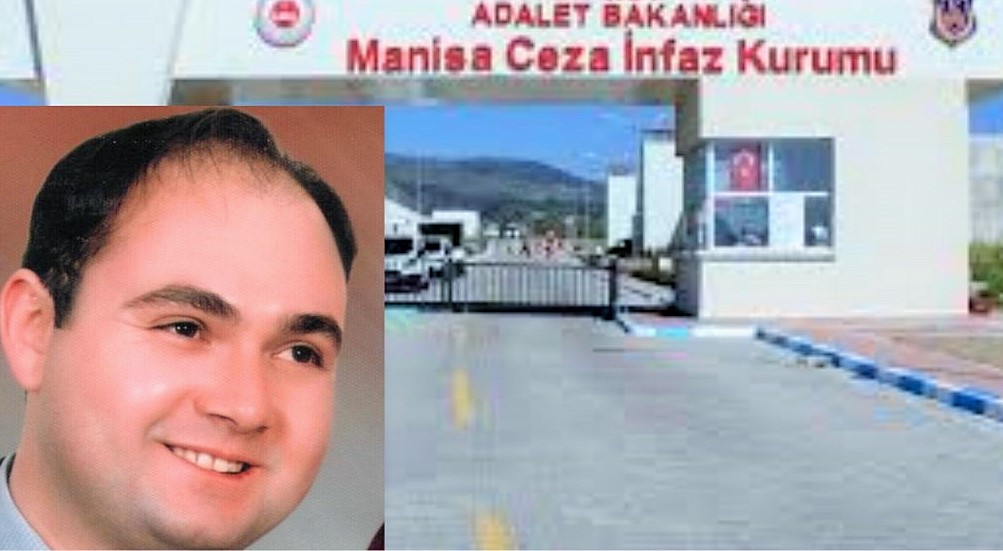
  • Kidnapped police officer, executed in northern Iraq, turns out to be purge victim

    One of 13 Turkish nationals held hostage by the outlawed Kurdistan Workers’ Party (PKK) and killed in a PKK camp in northern Iraq on Feb. 14 had been purged from his job as a police officer under a government decree in 2018, according to Turkish media reports.

    Turkey on Sunday accused PKK militants of executing 13 Turkish nationals, mainly members of the security forces, whom they had held captive in a cave in the Gara region of northern Iraq, where Ankara launched an operation against the PKK on Feb. 10.

    Police officer Vedat Kaya, who was among the victims, had been taken hostage by the PKK in July 2016. He was suspended from his job in 2017 and fired in 2018 by a government decree as part of a massive purge launched by the Turkish government following a coup attempt on July 15, 2016. Kaya was among the more than 130,000 civil servants who were dismissed from their jobs on the grounds that they had links to terrorist groups.

    An aide to President Recep Tayyip Erdoğan, Fahrettin Altun, tweeted about Kaya without referring to his expulsion from his job.

    “Vedat Kaya, a police officer from Mardin [province]. He was taken hostage by the PKK on July 24, 2016 while traveling with his family in the Lice district [of Diyarbakır province]. He was contemptuously martyred by the PKK on Feb. 14, 2021. May you rest in peace, my hero. We will take revenge for you,” Altun tweeted.

    Many social media users posted messages about the irony in Altun’s message, which refers to Kaya as a “martyr” although he was expelled from his job on terrorism links.

    “If you stay alive, you are a terrorist, if your are killed, you are a martyr,” tweeted journalist Said Sefa in reference to Kaya’s case, recalling that Kaya’s name along with his ID number was on the list of to-be-purged civil servants published by the pro-government Akşam daily in 2017.

    In addition to losing their jobs, purge victims have been denied passports and according to many reports have been struggling to find jobs as they were stigmatized by a broader smear campaign.

  • European rights court delivers verdict in Kurdish politicians’ case after 14 years

    According to the Mezopotamya News Agency (MA), the court said Turkey had violated the plaintiffs’ right to freedom of assembly and association (Article 11 of the European Convention on Human Rights) and ordered the Turkish government to pay each of them €1,500 in non-pecuniary damages.

    The 10 politicians were accused of violating the law on meetings and demonstrations for attempting to make a press statement about an alleged enforced disappearance case from 2001. After legal proceedings that lasted for six years, they were sentenced to one year, three months’ imprisonment. The case was taken to the ECtHR in 2007.

    The plaintiffs included Siirt provincial HADEP chair Ahmet Konuk, district chair Abdurrahman Taşçı and eight other politicians.

    Speaking to MA, their lawyer Reyhan Yalçındağ criticized the ECtHR, saying, “Justice delayed is justice denied.” She said not much had changed in Turkey in the 20 years since the incident in terms of how the Kurdish political movement is treated.

    “After 20 years, instead of improvements, we see continuing violations of the convention’s articles regarding freedom of association and freedom expression,” Yalçındağ said. “Elected mayors are removed and replaced with caretakers, and lawmakers, mayors and party executives are arrested for exercising their rights protected by those articles.”

    According to the Ministry of Interior, Ankara has ousted a total of 151 elected mayors from office on accusations of terrorism in the last six years, almost all from the Peoples’ Democratic Party (HDP), a left-wing party with majority Kurdish support, replacing them with government-appointed bureaucrats. According to Interior Minister Süleyman Soylu, during the last two mayoral terms — 2014-2019 and 2019 onwards — 73 of the 151 mayors removed from office were sentenced to a total of 778 years in prison.

  • US senators urge Biden administration to press Turkey on human rights record in bipartisan letter

    US Senators Ron Wyden, a Democrat from Oregon, and Florida Republican Marco Rubio, today urged the new Biden administration to press the Turkish government to improve its human rights record, which includes an increasingly authoritarian crackdown on dissent both domestically and abroad, according to a press release on Wyden’s official Senate website.

    The bipartisan letter signed by more than 50 other senators cited Turkish President Recep Tayyip Erdoğan for marginalizing domestic opposition, silencing or coopting critical media outlets, purging independent judges and replacing them with party loyalists, and jailing scores of journalists.

    “President Erdogan’s foreign policy has also grown more belligerent and combative over time.  In recent years, he brazenly attacked U.S.-backed Kurds fighting ISIS in Syria, he purchased Russian air defense systems despite warnings that they were incompatible with U.S. technology, and he encouraged Azerbaijan to use violence to settle a territorial dispute with Armenia,” the senators wrote. “President Erdogan has also attempted to pressure the U.S. and other countries into extraditing Turkish nationals, whom he blames for the failed coup in 2016.  The Erdogan government has sought to silence critics in the United States like Enes Kanter, an NBA player and human rights advocate, by going after his family in Turkey and placing an INTERPOL red notice on him.”

    The senators note that the United States has a significant opportunity to influence Turkey’s troubling human rights record because it’s an important ally in a key region of the world.

    “We believe that the United States must hold allies and partners to a higher standard and speak frankly with them about issues of human rights and democratic backsliding,” the senators wrote. “We urge you to emphasize to President Erdogan and his administration that they should immediately end their crackdown on dissent at home and abroad, release political prisoners and prisoners of conscience, and reverse their authoritarian course.”

  • 114 detained, 43 arrested in İstanbul-based operation over alleged Gülen links

    The police carried out simultaneous raids in 32 provinces after detention warrants were issued for 154 people accused of links to the faith-based Gülen movement, inspired by the teachings of US-based Turkish Muslim cleric Fethullah Gülen.

    Thirteen of those people were discovered to have left the country, while police efforts to find 27 individuals are still underway.According to Anka, 33 of the 114 people detained on Saturday were released on orders of a prosecutor after giving their statements. While 43 people were arrested over links to the Gülen movement, 38 others were released under judicial supervision.

    Following an attempted coup on July 15, 2016, Turkish President Recep Tayyip Erdoğan and his Justice and Development Party (AKP) government put the blame on the Gülen movement, labeling the group as a terrorist organization.

    Although both Gülen and the members of his movement strongly deny any involvement in the abortive putsch or any terrorist activities, Erdoğan’s AKP launched a massive purge targeting real and alleged members of the faith-based group under the pretext of an anti-coup fight.

    Turkish Interior Minister Süleyman Soylu announced in November that a total of 292,000 people have been detained while 96,000 others have been jailed due to alleged links to the Gülen movement since the failed coup, while scores of others had to flee the country to avoid the crackdown.