Blog

  • Court finds Interior Ministry culpable in killing of Kurdish girl in SE Turkey

    A Turkish court has found the country’s Interior Ministry culpable in the killing of a 12-year-old Kurdish girl in southeastern Diyarbakır province in 2009 by unexploded military ammunition and ordered that a fine of TL 283,000 ($37,000) be paid to the family by the ministry, the Mezopotamya news agency reported.

    The ruling was made by the Diyarbakır 2nd Administrative Court.

    Ceylan Önkol was killed in the Hambaz neighborhood of Lice while she was tending sheep on Sept. 28, 2009. No state official has stood trial in relation to the death of the Kurdish girl, and the family as well as human rights groups in the region said the incident was not thoroughly investigated.

    After the Önkol family filed a lawsuit against the state for the pecuniary and non-pecuniary damages they sustained over their daughter’s death, the court ruled in 2015 that TL 28,208 lira ($12,000 at the time) be paid to the family in pecuniary damages but did not give a decision for the non-pecuniary damages. The family then appealed the decision.

    Following a new proceeding, the court found the Interior Ministry 90 percent at fault for not taking the necessary measures to ensure the security of an area that was frequently used by villagers to tend to their animals and by children as a playground. The court said the existence of an unexploded ammunition in an area close to a residential neighborhood shows that the ministry was at fault and did not carry out its duties properly.

    Ceylan’s death at the time prompted national outrage, putting the impunity of the state under the spotlight, particularly in the country’s predominantly Kurdish southeastern regions. The young girl’s mother had said they had to endure giving over three hours of testimony with the body of her daughter beside them at a gendarmerie post near the scene of her death.

    Önkol’s body was left at the scene for six hours because a Lice prosecutor refused to go to the area out of security concerns. The prosecutor went to the area where Önkol was killed three days after the tragedy.

    The Turkish military refused to acknowledge any responsibility in the death of Önkol, and a brigadier general from the General Staff at the time pointed the finger at the outlawed Kurdistan Workers’ Party (PKK), which is also active in the region, as being responsible for the girl’s death.

    The brigadier general also described the efforts to link Önkol’s death with the Turkish military as part of “concerted, asymmetric, comprehensive propaganda warfare” against the Turkish Armed Forces (TSK).

  • Turkey marks Women’s Day amid increasing domestic violence, political imprisonment of women

    Thousands of women from all walks of life who were jailed on politically motivated charges in the aftermath of a failed coup in Turkey marked International Women’s Day in jail at a time when the country is shaken every day by news of the death of a woman at the hands of a man.

    According to a report from main opposition Republican People’s Party (CHP) lawmaker Sezgin Tanrıkulu, there are currently 17,000 women in Turkey’s jails, 11,000 of whom are believed to have been arrested in mass detentions following the failed coup. Some 3,000 children, 800 of them aged 3 or below, are accompanying their mothers in prison.

    Following the coup attempt, the Turkish government, which accuses the faith-based Gülen movement of masterminding the failed coup, launched a massive crackdown on the movement’s alleged followers under the pretext of an anti-coup fight. Thousands of women including pregnant women and women who had just given birth were sent to jail on trumped-up terrorism charges as part of the ongoing crackdown.

    Dozens of Kurdish female politicians such as former co-chairperson of the pro-Kurdish Peoples’ Democratic Party (HDP) Figen Yüksekdağ and former Diyarbakır co-mayor Gültan Kışanak also marked Women’s Day in jail as they were arrested as part of a crackdown on the Kurdish political movement.

    Tanrıkulu’s report showed an upward trend in cases of domestic violence in Turkey during the 18-year rule of the Justice and Development Party (AKP), which has witnessed the killing of 6,732 women by men so far.

    The latest example of domestic violence, which became public thanks to a video on social media, showing a man beating his ex-wife, led to outrage in Turkey over the weekend.

    The video, which went viral, shows the man violently punching and kicking his 24-year-old ex-wife in front of their 5-year-old child as neighbors called on him to stop.

    The assault — which came shortly before International Women’s Day — sparked condemnation on social media, with users calling on the authorities not to let him go unpunished. The man was subsequently detained.

    Angry over the rising number of women killed by men, women often take to the streets in İstanbul and other cities to demand that the government adhere to a landmark treaty on preventing domestic violence.

    The so-called İstanbul Convention is the world’s first binding instrument to prevent and combat violence against women, from marital rape to female genital mutilation.

    A ruling AKP official said last year that the convention was “wrong” and speculated about a possible withdrawal.

    Turkish President Recep Tayyip Erdoğan, who frequently attracts criticism from women’s rights groups due to controversial statements about gender roles and gender equality, said on Sunday he considered violence against women a “crime against humanity.”

    “I condemn once more in the strongest terms any kind of physical or mental violence against women as well as discrimination,” he said in a message for Women’s Day on Monday.

    However, Erdoğan and his statements targeting women are believed by many to be responsible for the increasing violence against women in the country.  During his 18 years in power, Erdoğan as well as some members of his AKP government has been criticized for using rhetoric considered discriminatory against women.

    CHP leader Kemal Kılıçdaroğlu said, “We grieve because of what we see instead of celebrating March 8,” in a video message on Twitter where he appeared alongside his wife.

    “You have my word. We will end the violence,” he promised.

    Women were expected to gather in İstanbul on Monday for the annual “Feminist Night March.”

    At last year’s event, police blocked all roads to the city’s central Taksim Square and fired tear gas at the protesters.

  • 70 detained across Turkey due to alleged Gülen links

    70 detained across Turkey due to alleged Gülen links

    Turkish police on Monday detained 70 people including former military officers in three separate operations targeting alleged members of the Gülen movement, the state-run Anadolu news agency reported.

    The faith-based movement is accused by the Turkish government and President Recep Tayyip Erdoğan of masterminding a coup attempt on July 15, 2016 and is labeled a “terrorist organization,” although the movement denies involvement in the coup attempt or any terrorist activity.

    The suspects, who were detained as part of operations in the western province of İzmir, central province of Konya and southeastern province of Şanlıurfa, are accused of continuing involvement in the movement’s activities, having contact with Gülen-linked military officers and using the ByLock messaging app. ByLock, once widely available online, has been considered by the Turkish government to be a tool of secret communication among supporters of the movement since the failed coup in 2016 despite the lack of any evidence that ByLock messages were related to the abortive putsch.

    Since the coup attempt, followers of the Gülen movement have been subjected to a massive crackdown, with the Turkish government and pro-government media outlets demonizing its members.

    According to a statement from Interior Minister Süleyman Soylu last month, a total of 622,646 people have been the subject of investigation and 301,932 have been detained, while 96,000 others have been jailed due to alleged links to the Gülen movement since the failed coup. The minister said there are currently 25,467 people in Turkey’s prisons who were jailed on alleged links to the Gülen movement.

  • Another former teacher imprisoned over Gülen links dies of COVID-19

    Önder Ateş, a former English teacher arrested for alleged links to the Gülen movement, died in prison on Wednesday of COVID-19, the Stockholm Center for Freedom reported citing Bold Medya.

    Ateş had been in intensive care for 17 days before he died. He was arrested after a July 2016 coup attempt in Turkey and had been held in Samsun Prison.

    Another former teacher, Ersoy Karamustafa, died of COVID-19 on February 13, less than two months before he was due to be released on parole.

    The rapidly spreading disease has presented greater concerns in Turkey’s prisons, which were already notorious for human rights abuses, overcrowding and unsanitary conditions before the pandemic. The death of those political prisoners revealed once more how the Turkish government puts their health in immediate danger.

    Turkish President Recep Tayyip Erdoğan has been targeting followers of the Gülen movement, a faith based group inspired by Muslim cleric Fethullah Gülen, since the corruption investigations of December 17-25, 2013, which implicated then-Prime Minister Erdoğan, his family members and his inner circle.

    Dismissing the investigations as a Gülenist coup and conspiracy against his government, Erdoğan designated the movement as a terrorist organization and began to target its members. Erdoğan intensified the crackdown on the movement following a coup attempt on July 15, 2016 that he accused Gülen of masterminding. Gülen and the movement strongly deny involvement in the abortive putsch or any terrorist activity.

    In a tweet, Ömer Faruk Gergerlioğlu, an opposition member of the Turkish parliament and a human rights activist, said he had previously raised the health of inmates in Samsun Prison with the Justice Ministry.

    The Turkish parliament passed an early parole law on April 14 aimed at reducing the inmate population of the country’s overcrowded prisons due to the coronavirus pandemic. Yet, the legislation excluded political prisoners, including opposition politicians, journalists, lawyers, academics and human rights defenders convicted under the country’s controversial counterterrorism laws. The law prompted calls from the UN, the EU and rights groups for the non-discriminatory reduction of prison populations.

    Following the abortive putsch, the Turkish government declared a state of emergency and carried out a massive purge of state institutions under the pretext of an anti-coup fight. More than 130,000 public servants, including 4,156 judges and prosecutors, as well as 20,610 members of the armed forces were summarily removed from their jobs for alleged membership in or relationships with “terrorist organizations” by emergency decree-laws subject to neither judicial nor parliamentary scrutiny.

    According to a statement from Interior Minister Süleyman Soylu on February 20, a total of 622,646 people have been the subject of investigation and 301,932 have been detained, while 96,000 others have been jailed due to alleged links to the Gülen movement since the failed coup. The minister said there are currently 25,467 people in Turkey’s prisons who were jailed on alleged links to the Gülen movement.

  • Times Square billboard reading “STOP ERDOGAN” draws ruling AKP’s ire

    A billboard in New York City’s Times Square that reads “STOP ERDOGAN,” referring to Turkish President Recep Tayyip Erdoğan, whose rule has seen the imprisonment of tens of thousands on politically motivated charges, has drawn the ire of officials from the ruling Justice and Development Party (AKP).

    Paid for by Turkish rights group Advocates of Silenced Turkey, a US-based nonprofit focused on addressing human rights violations in Turkey, the sign was branded by AKP spokesperson Ömer Çelik as the work of the Gülen movement, a faith-based group outlawed by Ankara.

    Following a coup attempt on July 15, 2016, the Turkish government and President Erdoğan pinned the blame on the Gülen movement, describing it as a terrorist organization.

    Fethullah Gülen, who inspired the movement, strongly denied having any role in the failed coup and called for an international investigation into it, but President Erdoğan — calling the coup attempt “a gift from God” — and the government initiated a widespread purge aimed at cleansing sympathizers of the movement from within state institutions, dehumanizing its popular figures and putting them in custody.

    “FETÖ [a derogatory acronym referring to the Gülen group as a terrorist organization] is an enemy of Turkey and hence our president. This treacherous network added to their betrayals by targeting our president with ads filled with lies. Their attacks on our president stem from their enmity towards our people,” Çelik tweeted.

    Following the reaction from the AKP, the Ankara Chief Public Prosecutor’s Office said it had launched an investigation into the people responsible for putting up the billboard in New York City.

    STOP ERDOGAN: Raise your voice for the grave human rights violations in Turkey. This is the heart of New York City. #Fight4WomenTurkey pic.twitter.com/zZDV1EeEON

    — Advocates of Silenced Turkey (AST) (@silencedturkey) March 2, 2021

  • Why Biden must stop Erdogan’s abuse of counterterrorism rhetoric

    Why Biden must stop Erdogan’s abuse of counterterrorism rhetoric

    Opinion by Irwin Cotler and Enes Kanter

    (CNN)After 13 Turkish hostages were found dead in Northern Iraq on Feb. 14, Turkey arrested hundreds of people, including prominent members of the pro-Kurdish opposition Peoples’ Democratic Party (HDP). The government even opened investigations into HDP members of parliament and human rights activists Hüda Kaya and Ömer Faruk Gergerlioğlu, who had actively fought alongside the victims’ families to bring the hostages home safely.

  • Four key takeaways from the aged care royal commission’s final report

    Four key takeaways from the aged care royal commission’s final report

    The Royal Commission into Aged Care Quality and Safety’s final report has laid out an extensive plan to overhaul Australia’s aged care system.

    Among the 148 recommendations, the report calls for a new system underpinned by a rights-based Act, funding based on need, and much stronger regulation and transparency.

    Over two years, through more than 10,500 submissions and 600 witnesses, the two commissioners heard extensive evidence of a system in crisis. Australians might have expected the commissioners to provide one streamlined blueprint for reform.

    But the commissioners diverged on a number of large and some smaller recommendations. This makes the already complex path to reform even more confusing.

    It reduces the power of the final report. More disappointingly, it gives the government room to pick and choose recommendations as the Cabinet likes.

    In its recommendations, the final report highlights Australia needs a new Aged Care Act to underpin reform. The new Act should set out the rights of older people, including their entitlement to care and support based on their needs and preferences.

    This would be a significant shift away from the current ration-based system, and would bring aged care more in line with the principles of Medicare.

    Practically, this would mean the number of people in the system would no longer be capped, and the long waiting lists for care would disappear over time.

    The current aged care programs, such as home-care packages and residential care, would be replaced by a single program.

    Under this new program, all older Australians in need of support would be independently assessed, and allocated care according to their personal needs and preferences, whether at home or in residential care.

    This is a huge step forward and, with the right support, would enable older Australians more choice and control over their care.

    Ineffective governance and weak regulation of aged care must end.

    The final report calls for much stronger governance, regulation of the quality of care, prudential regulation, and an independent mechanism to set prices.

    These changes would ensure the “quasi-market” aged care system, as commissioner Tony Pagone described it, was much better regulated, holding providers to a higher standard of care, and better able to address any service gaps in the system.

    We might see the introduction of home care in locations where those services were not previously available, for example.

    This change would require all aged care providers to be accredited against the new standards. We hope that process would weed out some of the poorest performers in the sector.

    The new system would have offices across the country, to provide on-the-ground support to older Australians and providers.

    Unfortunately, the commissioners diverged on the exact mechanisms for these changes. Mr Pagone wants an independent commission to be responsible for aged care, at arms-length from the health department. Meanwhile, Ms Briggs wants governance to remain with a reformed department, but with quality regulation managed by an independent commission.

    Given the department’s poor track record on managing aged care, we need to see a major change of culture. We urge the government to accept Mr Pagone’s recommendation.

    The final report makes numerous important recommendations to enhance the capability and work conditions of formal carers.

    It calls for better wages and a new national registration scheme for all personal care workers, who would be required to have a minimum Certificate III training.

    Residential care facilities would need to ensure minimum staff time with residents. By July 1, 2022, this would be at least 200 minutes per resident per day for the average resident, with at least 40 minutes of that time with a registered nurse.The facilities would be required to report staffing hours provided each day, specifying the breakdown of residents’ time with personal care workers versus nursing staff.

    While these measures are good, they are the bare minimum, and would only give facilities a minimum 2 or 3 star rating.

    However, coupled with recommendations for stronger transparency, including the publication of star ratings and quality indicators to compare provider performance, providers might be incentivised to go above this minimum standard.

    The final report makes a series of complex recommendations about fees and funding, with the commissioners diverging in view as to the specific arrangements. But essentially, the proposed new funding model would provide universal funding for care services, such as nursing.

    This means there would be no requirement for aged care recipients to pay a co-contribution, like public patients in public hospitals. Instead, the expectation is people pay for their ordinary costs of living, such as cleaning, subject to a means test and up to a maximum amount in residential care.

    These changes would coincide with the phase-out of the burdensome refundable accommodation deposits, which some residents currently pay as a lump sum to providers when they enter residential care. This approach is a shift away from the current muddled set of means-tested arrangements, and may help offset some of the additional spending needed to pay for a rights-based system.

    Unfortunately, the report does not touch on how much the recommended changes would cost. Australia should be prepared to pay the price of a better aged care system.

    The government has been underspending on aged care. Most Australians agree the government should provide more funding for aged care. Ms Briggs has the more persuasive proposal for funding the new system. She wants the government to introduce legislation by July 1, 2022 that establishes an aged care improvement levy of 1 per cent of taxable personal income.

    Mr Pagone is weaker on this point. He wants the Productivity Commission to investigate the establishment of an hypothecated aged-care levy (meaning the money raised by the levy can be spent on aged care).

    Either approach would be politically difficult, but Australians should demand their government lock in a secure funding supply. That will help produce an aged care system that protects the rights, upholds the dignity, and celebrates the contribution of all older Australians.

    Stephen Duckett Stephen Duckett is director of the health program at the Grattan Institute. Anika Stobart is an associate at the Grattan Institute. This article originally appeared on The Conversation. ABC
  • Kosovo to try individuals involved in illegal deportation of Turkish teachers

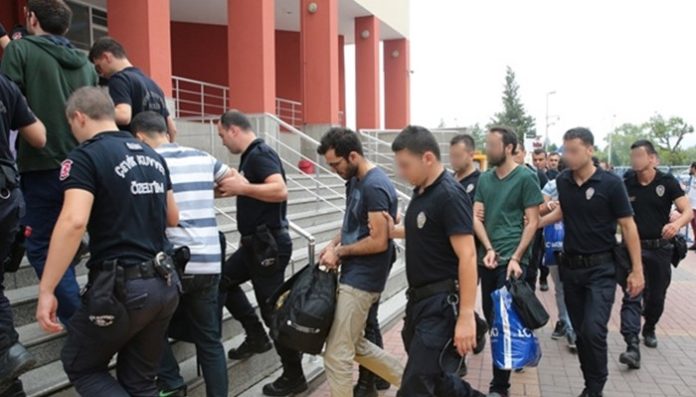
    Kosovar authorities have indicted three individuals involved in the illegal deportation of six Turkish teachers to Turkey on March 29, 2018, the Stockholm Center for Freedom reported citing Balkan Insight.

    The three individuals are Driton Gashi, former head of the Kosovo Intelligence Agency;  director of the Department of Citizenship and Migration at the Interior Ministry; and Rrahman Sylejmani, head of the Directorate of Migration and Foreigners in the Kosovo Border Police.

    Gashi and Krasniqi are both accused of “abuse of official position or authority,” while Sylejmani is accused of both “abuse of official position or authority” and “illegal deprivation of liberty.”

    The six teachers — Kahraman Demirez, Mustafa Erdem, Hasan Hüseyin Günakan, Yusuf Karabina, Osman Karakaya and Cihan Özkan — were arrested at Turkey’s request over alleged links to Gülen movement, a faith-based group inspired by Muslim cleric Fethullah Gülen, and forcibly transported to Turkey.

    Krasniqi told Balkan Insight he has been made aware of an indictment but has not officially received it. Sylejmani said he had not been informed about an indictment being filed against him, but was aware that he was being investigated.

    Sylejmani added that both he and the Kosovo Border Police had acted in accordance with the law during the deportation process, stating that the institution was the third link in the chain following the Intelligence Agency and the Ministry of the Interior. “We performed procedures in accordance with the law,” he told Balkan Insight. “We’ll face this in court, there is no problem.”

    Former head of the Intelligence Agency, Gashi was dismissed from his post following the illegal deportation of the Turkish nationals. The then-prime minister, Ramush Haradinaj, claimed the incident had happened without his knowledge.

    Turkish President Recep Tayyip Erdoğan has been targeting followers of the Gülen movement since the corruption investigations of December 17-25, 2013, which implicated then-Prime Minister Erdoğan, his family members and his inner circle.

    Dismissing the investigations as a Gülenist coup and conspiracy against his government, Erdoğan designated the movement as a terrorist organization and began to target its members. Erdoğan intensified the crackdown on the movement following a coup attempt on July 15, 2016 that he accused Gülen of masterminding. Gülen and the movement strongly deny involvement in the abortive putsch or any terrorist activity.

    The United Nations Working Group on Arbitrary Detention (WGAD) concluded in September that the arrest, detention and forced transfer to Turkey of the teachers by Kosovar and Turkish state agents was arbitrary and in violation of international human rights norms and standards.

    Similarly, a report published by a Kosovo parliamentary commission in February 2019 had found that 31 breaches of laws and procedures took place during the deportation. Members of the parliamentary commission authoring the report have accused former president Hashim Thaci of being behind the incident.

    According to a report by Freedom House on global transnational repression Turkey has become number one among countries that have conducted renditions from host states since 2014. The Turkish government has pursued its perceived enemies in at least 30 different host countries spread across the Americas, Europe, the Middle East, Africa and Asia since a coup attempt in July 2016.

    “Ankara’s campaign has primarily targeted people affiliated with the movement of religious leader Fethullah Gülen, which the government blames for the coup attempt,” said the report, adding that “[r]ecently, however, the effort [of the Turkish government] has expanded, applying the same tactics to Kurdish and leftist individuals.”

  • Unlinked coronavirus case prompts New Zealand to announce a week-long lockdown for Auckland

    The rest of the country will be put into so-called Level 2 restrictions that limit public gatherings, among other restrictions.

    Ms Ardern said the latest patient had experienced symptoms since earlier in the week and could have infected others.

    “Based on this, we are in the unfortunate but necessary position to protect Aucklanders again,” Ms Ardern said.

    The Ministry of Health said the case, a 21-year-old man who is being called Case M, is an older sibling of a student at Papatoetoe High School. Several cases have been linked to the high school.

    The student is a so-called “casual plus contact”, which means they may have been exposed to the virus.

    But the student has returned three recent negative tests and is asymptomatic.

    Public health officials are now interviewing the case to try and determine how they became infected.

    Case M developed symptoms on Tuesday this week, and, as a result, they are regarded as being potentially infectious from Sunday last week.

    The lockdown in Auckland, with Level 3 restrictions, will allow people to leave home only for essential shopping and essential work, Ms Ardern said.

    Got questions about the COVID-19 vaccines being used in Australia? We have answers.

    The restrictions will start at 6:00am on Sunday.

    The new restrictions also complicate the America’s Cup Event yacht race scheduled to start on March 6 in Auckland’s harbour.

    Organisers said they were working “through the implications” in a tweet.

    Almost two million people in Auckland were forced into a snap three-day lockdown in mid-February after a family of three were diagnosed with the more transmissible UK variant of COVID-19.

    Health authorities are trying to find out whether the new case was linked to the earlier February cluster, now at 12 infections.

    New Zealand has seen just over 2,000 cases of the coronavirus since the start of the pandemic.Reuters

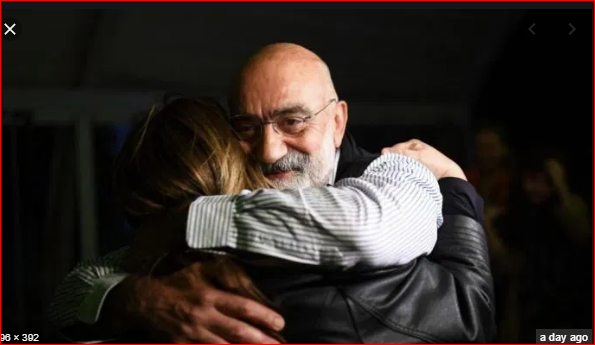
  • 71-year-old jailed author Altan fails to get access to COVID-19 vaccine

    Prominent Turkish writer and journalist Ahmet Altan, 71, who has been behind bars for some five years, has failed to get a response to his efforts to get vaccinated against the coronavirus despite the fact that he is among the priority groups set by the Health Ministry, Turkish Minute reported, citing his daughter.

    “Although he submitted a petition [to the prison administration] for the [coronavirus] vaccine, he failed to get a response. It appears there are no vaccines for Silivri. Does anyone have an answer for this?” Altan’s daughter Sanem tweeted on Thursday, referring to Silivri Prison in İstanbul where her father and most of Turkey’s political prisoners are jailed.

    As of Feb. 11 people aged 65 and over began to be vaccinated, meaning that Altan should also be given the opportunity to be inoculated as part of his age group.

    On Jan. 14 Turkey began coronavirus vaccination of its healthcare workers with CoronaVAC, developed by China’s Sinovac, against the coronavirus after the country’s health regulator, the Turkish Pharmaceuticals and Medical Devices Agency, issued an emergency use authorization for the vaccine.

    According to a priority list announced by Turkey’s Health Ministry in January, the vaccines were first administered to healthcare professionals and pharmacy staff and then to the elderly and disabled as well as nursing home personnel.

    Altan was arrested shortly after a July 2016 coup attempt in Turkey. He was initially sentenced to life imprisonment in February 2018 for alleged links to Gülen movement, a faith-based group that is accused by the Turkish government of masterminding the coup attempt.

    The movement strongly denies any involvement in the abortive putsch.

    Turkey’s Supreme Court of Appeals overturned the decision of the lower court that handed down life sentences to Altan and a group of other journalists who stood trial with him. Altan was a given prison sentence of 10 years, six months in a retrial on charges of aiding a terrorist organization, in early November 2019. He spent a total of 1,138 days in prison until his release on Nov. 4, 2019. He was re-arrested one week later and is still behind bars.