Blog

  • Turkish judge who called Intelligence head to testify in court, sentenced to 11 years in prison on Gulen charges

    Sadrettin Sarıkaya, a judge who called Turkey’s İntelligence chief to testify as part of corruption investigations of December 17-25, 2013, which implicated then-Prime Minister Erdoğan, has been sentenced to 11 years and 3 months in prison on membership of the Gulen group.

    The Gulen group is accused by the government of masterminding a coup attempt on July 15, 2016. It denies any involvement.

    Judge Sarıkaya was dismissed from his job with a decree issued by the government in the aftermath of the coup attempt.

    He has been held in İstanbul’s notorious Silivri prison since late 2016.

  • Twitter users call on Turkish authorities to postpone cancer patient’s prison sentence

    Turkish Twitter users conducted a hashtag campaign on Friday calling on authorities to postpone the execution of the prison sentence of Ayşe Özdoğan, 34, who suffers from a rare form of cancer, the Stockholm Center for Freedom reported.

    An appeals court on June 11 upheld a nine year, six month prison sentence for former teacher Özdoğan. She currently faces years in prison despite severe health problems.

    The hashtags #AyşeÖzdoğanTutuklanmasın (Don’t arrest Ayşe Özdoğan) and #AyşeÖzdoğanİçinSesOl (Be a voice for Ayşe Özdoğan) were shared widely by Turkish social media users to appeal the Turkish government.

    Özdoğan and her husband were detained on April 8, 2019 for alleged links to the Gülen movement. She was released due to her son’s heart condition, but her husband was sent to prison in southern Antalya province.

    Özdoğan developed cancer seven months later and underwent an operation on November 12, 2019. However, she was arrested shortly after, convicted and sentenced to nine years, six months in prison.

    Özdoğan’s arrest sparked outrage, and thanks to an online campaign started by Ömer Faruk Gergerlioğlu, a human rights activist and former deputy from the Peoples’ Democratic Party (HDP), she was released on appeal on December 27, 2019.

    It was already too late for her second surgery, however, as the cancer had spread. Özdoğan’s tooth, palate, zygomatic bone and lymph nodes were removed in an emergency operation. Özdoğan lost her ability to see and hear after the operation due to the trauma her facial bones suffered.

    Turkish President Recep Tayyip Erdoğan has been targeting followers of the Gülen movement since the corruption investigations of December 17-25, 2013, which implicated inmatethen-Prime Minister Erdoğan, his family members and his inner circle.

    Dismissing the investigations as a Gülenist coup and conspiracy against his government, Erdoğan designated the movement as a terrorist organization and began to target its members. Erdoğan intensified the crackdown on the movement following a coup attempt on July 15, 2016 that he accused Gülen of masterminding. Gülen and the movement strongly deny involvement in the abortive putsch or any terrorist activity.

    Critics have slammed Turkish authorities for refusing to release critically ill prisoners.

    Gergerlioğlu said critically ill political prisoners were not released from prison “until it reaches the point of no return.” He depicted the deaths of seriously ill prisoners in Turkey who are not released in time to receive proper medical treatment as acts of “murder” committed by the state.

    According to the Human Rights Association (İHD), there are more than 1,605 sick prisoners in Turkish prisons, approximately 604 of whom are critically ill. Although most of the seriously ill patients have forensic and medical reports deeming them unfit to remain in prison, they are not released. Authorities refuse to release them on the grounds that they pose a potential danger to society. In the first eight months of 2020, five critically ill prisoners passed away because they were not released in time to receive proper medical treatment.

  • Mob boss exposes gov’t figures involved in extortion of businessmen over Gülen links

    Mob boss exposes gov’t figures involved in extortion of businessmen over Gülen links

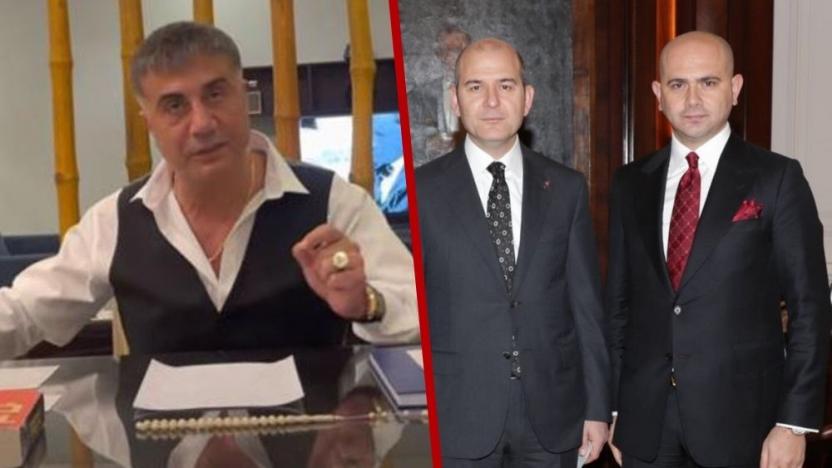
    Sedat Peker, a well-known Turkish mob boss, has exposed individuals affiliated with Turkey’s ruling Justice and Development Party (AKP) who are allegedly part of an extortion ring that has been taking over the assets of businessmen under pressure and threat, Turkish media reported on Monday.

    Once a staunch supporter of President Recep Tayyip Erdoğan, Peker has since early May been making shocking revelations about state-mafia relations, drug trafficking and murders implicating state officials and their family members.

    The mafia boss on Monday said Interior Minister Süleyman Soylu, his brother Mehmet Soylu and EKBA Holding CEO Cihan Ekşioğlu, who was alleged to be an intermediary between the AKP government and mafia groups in Turkey and abroad, were among those who extorted businessmen’s assets.

    According to Peker, an extortion ring including the Soylu brothers and Ekşioğlu had been filing terrorist accusations against wealthy businessmen through the Presidential Communications Center (CİMER), thereby causing the launch of bogus terrorism investigations into them.

    The ring would then threaten the businessmen, saying the charges against them wouldn’t be dropped until they handed over their money and valuable assets.

    “You seized the assets of many honorable people. If surveillance camera footage and Historical Traffic Search (HTS) recordings of the last six months from Akmerkez [a shopping mall in İstanbul] are analyzed, it will expose which businessmen’s assets you took over using the excuse of FETÖ,” Peker said.

    “FETÖ” is a derogatory term coined by the Turkish government to refer to Islamic preacher Fethullah Gülen’s faith-based Gülen movement as a terrorist organization.

    The government accuses the group of masterminding an abortive putsch in 2016 and has since jailed some 96,000 people while investigating 622,646 over alleged links to the movement as part of a massive purge launched under the pretext of an anti-coup fight, although both Gülen and the movement strongly deny the charges.

    Peker claimed that Ekşioğlu, whom he referred to as Soylu’s “secret safe,” took over Victoria Gardens shopping mall in Ukraine in collaboration with then-suspected FETÖ member Burak Başlılar, after pressuring its owner, Aytaç Ocaklı, by way of a report they forced the pro-government Sabah daily publish saying that Ocaklı had helped a Gülen follower flee abroad.

    “Ocaklı handed the mall over to Burak Başlılar since he was a friend. But you sold it and split the $66 million you [unlawfully] made. This was your first [illegal] gain from the FETÖ market,” Peker said, referring to the extortion ring that is alleged to have slandered people to take over their assets.

    The crime boss also claimed that Ekşioğlu paid a bribe of $3 million to a prosecutor named Mesut Erdinç Bayhan in İstanbul to drop terror-related charges against Başlılar.

    Peker further claimed that Ekşioğlu bought a device from the Israelis that analyzes social media platforms for $3 million and sold it to the Turkish government for $50 million.turkishminute

  • Dismissed first lieutenant heavily injured working on a construction site

    Recep Karaşal, a first lieutenant who was fired from his job following a coup attempt on July 15, 2016, has heavily been injured working on a construction site to make a living, his wife tweeted.

    “I’m proud of my husband. He hasn’t had any ill-gotten gains. This is better than being called a thief,” she tweeted.

    According to the media, Karaşal’s health condition is still critical. He is currently in the Intensive Care Unit (ICU) of a state hospital in Ankara.

    Karaşal had reportedly spent nine months in prison following the coup attempt until he was released on pending trial in mid 2017.

    More than 150,000 people have lost their jobs since the failed coup in 2016. Dismissed or suspended civil servants have been prohibited from securing jobs in other public institutions. Since most of the private sector is concerned about government retaliation, they prefer not to hire fired public workers.

    In order to survive, many purged civil servants and others have become unregistered market vendors or laborers on farms, for construction companies and such.

  • Protests continue in Kyrgyzstan 25 days into disappearance of Orhan İnandı

    Protests continue in Kyrgyzstan 25 days into disappearance of Orhan İnandı

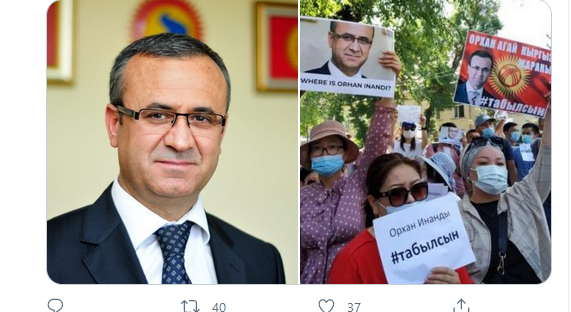
    Around 300 people gathered in front of government house in Bishkek on Friday calling on Kyrgyz authorities to find educator Orhan İnandı, who is feared to have been abducted by Turkish intelligence due to his alleged links to the Gülen movement, the Stockholm Center for Freedom reported.

    According to the 24.kg news agency, some 300 people, including students, alumni and parents of Sapat school network students attended the protests. İnandı is the founder and president of the Sapat schools. He went missing in Bishkek on the night of May 31 and is allegedly being held against his will in the Turkish Embassy in Bishkek, according to his lawyer and family.

    The press service of the Kyrgyz Internal Affairs Ministry told 24.kg that they would immediately inform the public as soon as they have information to share “without interfering with the work of the investigators.” The officials said they are investigating all possibilities.

    Over the past five years scores of men alleged by Turkish authorities to have links to the Gülen movement, living in countries around the world, have been arbitrarily detained and forcibly returned to Turkey. There they are incarcerated on bogus terrorism charges in violation of due process rights and protections.

    Turkish President Recep Tayyip Erdoğan has been targeting followers of the Gülen movement, a faith-based group inspired by Turkish cleric Fethullah Gülen, since the corruption investigations of December 17-25, 2013, which implicated then-Prime Minister Erdoğan, his family members and his inner circle.

    Dismissing the investigations as a Gülenist coup and conspiracy against his government, Erdoğan designated the movement as a terrorist organization and began to target its members. He intensified the crackdown on the movement following a coup attempt on July 15, 2016 that he accused Gülen of masterminding.

    In addition to Bishkek, since June 1 protests have been taking place in major capitals around the world including Washington, Berlin, London and Brussels in support of the Turkish educator, demanding his release. The United Nations Human Rights Committee has called on Turkey to promptly take all measures necessary to establish the whereabouts of İnandı and said the government should ensure that İnandı would not be subjected to torture and inhuman treatment, guarantee his physical and mental integrity and immediately place him under the protection of the law.

    On Thursday US Congressman Tom Suozzi, a Democrat from New York, raised the issue on Twitter and said the disappearance of İnandı “is gravely disturbing and represents a troubling pattern of forced disappearances employed by the Turkish government.”

    Taalaygül Toktakunova, the attorney for the İnandı family, on Tuesday posted pictures of a person suspected of involvement in the educator’s alleged abduction along with photos of Ekberov Ulan, a former official from the Kyrgyz Interior Ministry, publicly asking Ulan to confirm whether he was in fact the suspect in the photo.

    Noting that Ulan’s whereabouts are unknown and that he is said to have left Kyrgyzstan, Toktakunova called on the former official to contact the İnandı family and remove their doubts regarding his suspected role in the educator’s disappearance.

    Rights organizations have also asked Kyrgyz authorities to exert efforts for the release of İnandı. Human Rights Watch (HRW) called on Kyrgyz authorities to investigate the disappearance of İnandı and “ensure his safety and that he is not unlawfully removed to Turkey.” According to HRW, allowing İnandı’s rendition to Turkey would violate Kyrgyzstan’s obligations under the Convention against Torture and Other Cruel, Inhuman, or Degrading Treatment or Punishment, which it ratified in 1997.

  • [Opinion] Pro-Kurdish HDP at center of Erdoğan’s crackdown and world of hate

    Alin Ozinian-turkishminute

    A gunman stormed a local office of Turkey’s pro-Kurdish Peoples’ Democratic Party (HDP) in the western city of Izmir and shot dead a 38-year-old woman last week. The victim, Deniz Poyraz, was a party official covering a janitorial shift for her mother at the office.

    HDP co-leader Mithat Sancar said a planned meeting of 40 officials at the office had been called off for unrelated reasons moments before the attack. “The plan here was clear, what they wanted was a massacre,” Sancar told reporters.

    The HDP, the second-largest opposition party in the Turkish parliament, has faced a widespread government crackdown, with party members accused of supporting the outlawed Kurdistan Workers’ Party (PKK) militant group.

    It is important to add that President Recep Tayyip Erdoğan’s ruling Justice and Development Party (AKP) and its election partner, the ultranationalist Nationalist Movement Party (MHP), and their party members have frequently labeled HDP leaders, members and supporters as terrorists.

    Hundreds of HDP politicians, including the party’s former co-chairs, are behind bars on terrorism charges, while most of the 65 HDP mayors elected in the predominantly Kurdish Southeast in 2019 have been replaced by government-appointed trustees.

    Ali Duran Topuz, editor-in-chief of the Duvar daily, thinks what is happening in Turkey right now is a result of the hate speech directed at the HDP and its members.

    According to Topuz the hateful rhetoric employed by Turkey’s ruling AKP and its partner the MHP targeting the HDP laid the groundwork for the fatal attack.

    “Some people in Turkey see the PKK and HDP as one and the same, the main reason for which is this discourse constantly expressed at all levels of government. Ultranationalist MHP leader Devlet Bahçeli sings the same song day and night. This is why HDP buildings are frequently the subjects of physical attacks,” said Topuz, in an interview with Turkish Minute.

    HDP Istanbul MP Hüda Kaya thinks the government is the main party responsible for the murder of Poyraz.

    “The attack is an effort to cover up the AKP’s own disgrace and criminal relations with gangs and the mafia. If the opposition really wants to oppose, they must expose the state’s dirty relations. If they want to save the country from the AKP, all opposition parties, regardless of ideology, should stand with the HDP to learn the real facts behind Deniz’s murder,” Kaya told Turkish Minute.

    Topuz thinks HDP offices are under constant surveillance and that such an attack is not an easy job, so some people necessarily think this attack and murder are too complicated to solve.

    “In any attack against the HDP, the state routine includes stories about ‘the reaction to terrorism’ and ‘the individual has no relations with any group,’ but these approaches are never adequate for the reality. Those attacks were always carefully planned,” said Topuz.

    The ruling AKP’s official spokesman called the incident a provocation aimed at disrupting Turkey’s peace and security. “We condemn the attack and the murder that occurred at the HDP Izmir office,” AKP spokesman Ömer Çelik said.

    While the opposition parties and AKP condemned the attack, MHP leader Bahçeli claimed the murdered woman was responsible for recruiting militants for the PKK. “I’ll tell you who Poyraz was. She was a militia collaborator,” Bahçeli told MHP members during a parliamentary group meeting on June 22.

    The ultranationalist politician claimed that Poyraz was in the circle that sent those who wanted to join the PKK to militant camps. “A militia collaborator is a terrorist that aids the organization’s treacherous attacks,” Bahçeli said and also claimed that the murder was carried out to “make the HDP seem innocent” and blame the Turkish state.

    According to Kaya, HDP members do not know where and when the attacks will come, but they always assume they will know who the perpetrators are.

    “What happened was not a surprise. Interior Minister Süleyman Soylu has transformed the Interior Ministry into a center of organized crime. Haters, including him, are responsible for Deniz’s murder. Haters are the main shooters, the main perpetrators. It’s just that clear,” she said.

    “Don’t pay any attention to the fact that the police arrested the alleged shooter. They are shamelessly protecting him, and they will continue to do so. Tomorrow they will say the assailant was drunk, mad, insane or sick. Those who are backing the perpetrator today are the ones who encouraged him yesterday.”

    Turkish media reported that the suspect claimed to have been sent to Syria by the Turkish state, sharing pictures on social media of him posing with Kalashnikov rifles and Turkish flags. Meanwhile, the Izmir Governor’s Office said the alleged assailant had “resigned as a health worker” in Turkey.

    Kaya is warning the opposition parties that what happened to the HDP today could happen to other opposition parties in the future.

    “Something is very clear; the attack was aimed at suppressing all opposition parties through the HDP. If we all don’t say ‘stop’ to these attacks, they will continue,” said Kaya.

    Turkey’s Constitutional Court on June 21, soon after the attack, accepted an indictment filed by a senior prosecutor seeking the closure of the HDP for alleged ties to the PKK.

    Immediately after the decision was announced, HDP Co-Chairs Sancar and Pervin Buldan held a press conference and said, “The indictment filed against the HDP does not have any ‘legal value’.”

    Sancar reminded that the top court had the opportunity to reject the indictment, adding: “There were sufficient legal and ethical reasons to do so. The closure case was filed following a months-long political campaign.”

    “The government, and especially its partner the MHP, and pro-government groups as a whole have targeted the HDP for months. They made statements on various platforms, portraying the HDP as an enemy; they issued threats, and ultimately a senior prosecutor asked the Constitutional Court to close down the HDP,” said Sancar.

    According to Topuz, after the attack and murder at the HDP office in Izmir, the government immediately began signaling its strategy to absolve itself of any responsibility. Topuz thinks it’s obvious that they want people to think this was not an organized political act but a hate crime.

    “The attacker said he has no connection to anyone. He entered the building because he hated the PKK and fired at random. His ‘emotional motivation’ was made public by the pro-government media,” Topuz said, and added: “Pay attention – he did not say he hates the HDP or the Kurds, he said he hates the PKK. Before the prosecution begins, even before the investigation, these are clear indications of how the murder is going to be approached from a legal perspective.”

    Topuz thinks official statements and developments such as the leaking of the suspect’s statements during police interrogation remind him of a wave of violence that occurred after the June 7, 2015 elections, when the AKP lost its majority, including the Suruç and Ankara train station attacks, when dozens of people lost their lives.

    “Political leaders and opinion leaders are coming to a parting of the ways. They can choose to raise a collective voice against the government and its dirty policies and demand democracy and transparency, or accept it and go along with the hostile, cheap and bloody acts of the ‘murderous front.’ There’s no other way…”
  • Top court to review rights defender, former MP Gergerlioğlu’s application on July 1

    Turkey’s Constitutional Court will review an application submitted by rights defender and former MP from the pro-Kurdish Peoples’ Democratic Party (HDP) Ömer Faruk Gergerlioğlu, who has been behind bars in prison for 85 days, during its session on July 1.

    Gergerlioğlu demanded the annulment of a lower court decision stripping him of the parliamentary status.

    Gergerlioğlu was stripped of his status in parliament on March 17 after conviction of disseminating “terrorist propaganda” in a 2016 social media post, where he commented on a story that reported on outlawed Kurdish militants calling on the Turkish state to take a step towards peace.

    A two-and-a-half-year jail sentence handed down to him on Feb. 21, 2018 was upheld by the Supreme Court of Appeals on Feb. 19, 2021, and the 55-year-old politician, who has shone a light on controversial topics including torture and prison strip-searches in Turkey’s prisons and detention centers, was taken into custody at his home on April 2 and sent to prison.

    In his application, Gergerlioğlu referred to the top court’s recent ruling on the case of Enis Berberoğlu, an MP from the main opposition Republican People’s Party (CHP). The court decided unanimously in January that Berberoğlu’s right to stand for elections and engage in political activities had been violated by the lower courts.

    Berberoğlu was initially sentenced to 25 years in prison in 2017 on espionage charges for providing the Cumhuriyet newspaper with a video purporting to show Turkey’s National Intelligence Organization (MİT) trucking weapons into Syria.

    Speaking to the Ahval news website in May, Gergerlioğlu said he was arrested in an inhumane and humiliating manner, adding, “These things happened because I am so outspoken about human rights violations.”

    “My imprisonment is the result of authorities taking revenge for my standing up against human rights violations in Turkey,” said Gergerlioğlu.The Governing Council of the Inter-Parliamentary Union (IPU), a global organization of national parliaments, has said in a recent decision that Gergerlioğlu’s continued detention was arbitrary and should be immediately ended.

    The IPU argued that the former MP was “serving a harsh prison term as a result of the legitimate use of his right to freedom of expression,” noting that he simply sent a tweet in which he forwarded an existing news report and included an implicit call for peace negotiations to take place.

  • Lawyer posts photos of former Kyrgyz official suspected of role in İnandı’s disappearance

    A lawyer representing a Turkish-Kyrgyz educator in Kyrgyzstan who is allegedly being held against his will at the Turkish Embassy in Bishkek on Tuesday posted photos of a former Kyrgyz official suspected of involvement in the educator’s disappearance, local media reported on Wednesday.

    Orhan İnandı, the founder and president of the Turkish-Kyrgyz Sapat school network operating in Kyrgyzstan, went missing in Bishkek on the evening of May 31 and is feared to have been abducted by Turkey’s National Intelligence Organization due to his alleged links to the Gülen movement, a faith-based group inspired by Muslim cleric Fethullah Gülen.

    İnandı’s wife, Reyhan İnandı, said in a June 6 statement that an undisclosed source told her that her husband was being held against his will at the Turkish Embassy, and she claimed he was being tortured to renounce his Kyrgyz citizenship. This would simplify İnandı’s forcible transfer to Turkey, she said.

    Taalaygül Toktakunova, the attorney for the İnandı family, shared on Facebook photos of a person suspected of involvement in the educator’s alleged abduction along with photos of Ekberov Ulan, a former official from the Kyrgyz Interior Ministry, publicly asking Ulan to confirm whether he was in fact the suspect in the photo.

    Noting that Ulan’s whereabouts are unknown and that he is said to have left Kyrgyzstan, Toktakunova called on the former official to contact the İnandı family and remove their doubts regarding his suspected role in the educator’s disappearance.

    Turkey claims the founder of the Sapat school network is Turkish Islamic cleric Fethullah Gülen, whose movement is labeled as a terrorist organization by the Turkish government and accused of masterminding a failed coup in Turkey in July 2016. Both Gülen and his followers strongly deny any involvement in the abortive putsch or any terrorist activity.

    Over the past five years scores of men alleged by Turkish authorities to have links to the Gülen movement, living in countries around the world, have been arbitrarily detained and forcibly returned to Turkey. There they are incarcerated on bogus terrorism charges in violation of due process rights and protections.

    Protests have taken place in Berlin, London and Brussels as well as Bishkek in support of the Turkish educator, demanding his release. The United Nations Human Rights Committee has called on Turkey to promptly take all measures necessary to establish the whereabouts of İnandı and said the government should ensure that İnandı would not be subjected to torture and inhuman treatment, guarantee his physical and mental integrity and immediately place him under the protection of the law.

  • “My kids will never forget this day”

    “My kids will never forget this day”

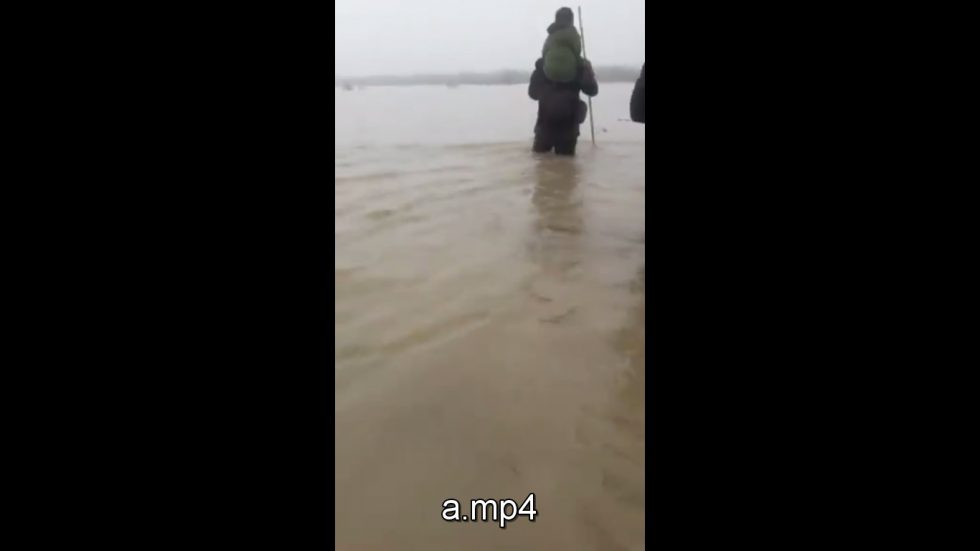
    A purge-victim Turkish woman tweeted a short video of her family walking into a river at the Greek-Turkish border in an attempt to flee Turkey via illegal means.

    The family is believed to have been prosecuted by the Turkish government due to alleged membership to the Gulen group, accused of masterminding a coup attempt in 2016. The group denies any involvement.

    “My kids will never forget this day,” she said in her tweet.

  • Pro-gov’t journalist claims he assisted in reinstatement of post-coup victims to jobs

    A journalist known for his close ties to the Justice and Development Party (AKP) government has claimed involvement in the reinstatement of thousands of people who were removed from their state jobs over alleged links to the Gülen movement following 2016 coup attempt, local media reported on Monday.

    Turkish President Recep Tayyip Erdoğan and his ruling AKP label the faith-based Gülen movement, inspired by Islamic preacher Fethullah Gülen, as a terrorist organization and accuse the group of orchestrating an abortive putsch that took the lives of 251 civilians on July 15, 2016.

    The Turkish government declared a state of emergency (OHAL) following the coup attempt and carried out a massive purge of state institutions, summarily dismissing more than 130,000 public servants including academics, teachers, military personnel, diplomats and police officers with emergency decree-laws subject to neither judicial nor parliamentary scrutiny.

    In a video recently released by the Turkish media, Süleyman Özışık says he took the files of thousands of people who were dismissed from their state jobs in the aftermath of the coup attempt to Interior Minister Süleyman Soylu and that they were reinstated afterward.

    “I told them they could hold me to account if those people didn’t turn out to be innocent. They did their research, and it turned out they were all victims of slander. They were all reinstated,” Özışık is heard saying in a video posted on June 18, 2020 on the YouTube channel of the Internethaber news website, which he owns together with his brother Hadi Özışık.

    According to the latest official data, the State of Emergency Procedures Investigation Commission (OHAL Commission), set up by the government to look into complaints from individuals who were adversely affected by government decrees during the state of emergency in Turkey has rejected 101,058 applications out of the 115,130 it has processed since its establishment in summer 2017.

    The commission, which was established as an appeals body under pressure from the Council of Europe in order to relieve the ECtHR of a huge workload emanating from tens of thousands of Turkish applicants who were unable to take their cases to Turkish courts, has reinstated only 14,072 people so far, including dozens reinstated after their death.

    Speaking to the OdaTV online news website, Mehmet Ruşen Gültekin, a former public prosecutor at the Supreme Court of Appeals, underlined that Özışık’s move amounted to an attempt to influence the judiciary since the OHAL Commission serves as a judicial body.

    “The Interior Ministry, a political body, works as a judicial organ. Is this a journalist’s job [to be involved in people’s trials]? Of course, it isn’t. These are unethical actions,” Gültekin added.

    As part of the four-year crackdown that continues to target real and alleged members of the Gülen movement, a total of 301,932 people have been detained while 96,000 others have been jailed, according to official data, while scores of others had to flee the country to avoid prosecution.