Blog

  • Premier announces new building commission to regulate NSW construction industry

    Premier announces new building commission to regulate NSW construction industry

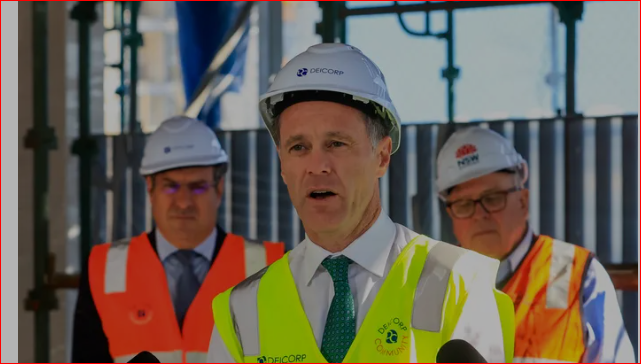
    Premier Chris Minns says he’s fulfilling an election campaign promise to set up a building commission to oversee and regulate the construction industry, by the end of the year.

    The state government on Tuesday announced the commission will ensure quality buildings as it moves to increase supply in the current housing crisis.

    “New South Wales will have greater density and more apartments,” Mr Minns said.

    “To do that properly there needs to be greater confidence in buildings in New South Wales.”

    The previous Coalition government appointed David Chandler as Building Commissioner two and half years ago, after the well-publicised cracks in the Opal and Mascot Towers apartment buildings.

    The defects in those two buildings lifted the lid on structural and safety defects plaguing some developments across the state.

    The premier says developing the commission will help scale up the work Mr Chandler has been undertaking.

    Mr Chandler, who as commissioner was tasked with cleaning up the construction industry, has welcomed the announcement.

    “We’ve got fantastic momentum to build on,” Mr Chandler said.

    “So this will bring the pieces, that are currently not as connected as they could be, together.”

    Mr Chandler says buyers have lost confidence in apartment buildings, and as a result only about 15,000 apartments are being built in New South Wales each year.

    The premier’s vision to address Sydney’s housing shortage is to stop urban sprawl in the west, and have more densely populated suburbs.

    He also wants the population growth and increase in housing supply to be “rebalanced”, so it also occurs east of Parramatta.

    Land audit ordered for new housing space 

    On Monday, the state government announced it had ordered an urgent audit of public land to find new sites for housing.

    They are likely to be along the city’s rail corridor and would be sold off to private developers.

    Each new block would have to include 30 per cent social, affordable or inclusive housing.

    Mr Minns says selling off the land for housing was a commitment he made in the lead up to the March election.

    “It’s not privatisation even by the loosest definition of it,” he said.

    “We were very consistent and clear about our plans in relation to Government land prior to the last election.” ABCNEWS
  • Jetstar announces changes to check-in and boarding times as it aims to improve operations

    Jetstar travellers will need to arrive at the airport earlier, after the carrier announced a series of changes it hopes to “boost punctuality and reliability”.

    Check-in, bag drop and boarding gate closure times will be changed from May 23.

    The new changes were first communicated to Jetstar customers yesterday morning, by email and text message.

    Let’s unpack what the changes are.

    International travellers will need to watch the clock even more closely.

    “We know our performance hasn’t been up to scratch, and we are working hard to boost punctuality and reliability,” Jetstar’s chief operating officer Matt Franzi says.He says the changes brings them into line with other budget airlines across the world.

    “To improve our performance, we’re also recruiting more airport staff, cabin crew and engineering team members and making changes to our check-in, bag drop and boarding times, to bring them in line with other low-cost carriers around the world.

    Everyone across the airline is committed to getting Jetstar to its best while delivering the lowest-possible fares so our customers can fly to more places, more often.”

  • Kılıçdaroğlu seeks support of Turkish youth in runoff, works to devise new strategy

    Kılıçdaroğlu seeks support of Turkish youth in runoff, works to devise new strategy


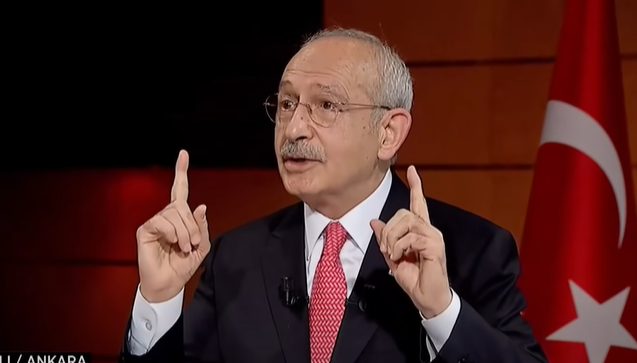
    Turkey held parliamentary and presidential elections on Sunday. Although most public surveys showed Kılıçdaroğlu running neck-and-neck with President Recep Tayyip Erdoğan or defeating him in the first round, Kılıçdaroğlu finished the race lagging behind Erdoğan.

    According to preliminary unofficial results, while Kılıçdaroğlu received 44.8 percent of the nationwide vote, the support for Erdoğan stood at 49.5 percent, which requires a runoff since neither of the candidates was able to exceed the 50 percent threshold.

    The CHP leader on Tuesday asked Turkish youth in a series of tweets to support him in the runoff scheduled for May 28 so that he can lead the people of Turkey out of “a dark tunnel.”

    “My dear young people. … The greatest truth is that … those who desire change in this country now outnumber those who don’t. … Are you aware that your youth will not come back? We have 12 days. We can get out of this dark tunnel [if we act now],” Kılıçdaroğlu said.


    Meanwhile, the T24 news website reported on Tuesday that İstanbul Mayor Ekrem İmamoğlu and Ankara Mayor Mansur Yavaş, both from the CHP, were heading to the party’s headquarters in Ankara for a strategy meeting with Kılıçdaroğlu later in the day.

    İmamoğlu’s team also reportedly told T24 that a rumor that the mayor would request to be given control of the new election campaign management meeting was not true.

    CHP vice chairmen and advisors are expected to participate in the meeting that will address the details of the election campaign to be conducted until May 28, with a particular focus on strategies to gain nationalist votes that went to Sinan Oğan, the presidential candidate who secured 5.2 percent and finished third in Sunday’s election.

    Oğan on Monday said he could only support Kılıçdaroğlu in the runoff if he agrees to offer no concessions to a pro-Kurdish party.

    Oğan, who was nominated by a group of ultranationalist parties, received nationwide support that was more than expected, which led to comments that his support for either Erdoğan or Kılıçdaroğlu will determine the outcome of the runoff.

    According to analysts, both Erdoğan and Kılıçdaroğlu will try to court Oğan, but the conservative Erdoğan has the upper hand.

  • Mafia boss endorses Erdoğan’s candidacy, says nation needs him for another term


    Turkey held presidential and parliamentary elections on Sunday. According to the unofficial results of the presidential election, Erdoğan received 49.51 percent of the vote, while his main rival, Kemal Kılıçdaroğlu, the leader of the main opposition party and the joint presidential candidate of an opposition alliance, garnered 44.88 percent.

    A presidential runoff will be held on May 28 since none of the candidates were able to secure 50 percent of the vote plus one additional vote, a constitutional requirement for election to the position of president.

    In a statement posted on Twitter on Tuesday, Çakıcı called on people to foil the plans of “evil powers” in Turkey and abroad by electing Erdoğan for another term.

    Çakıcı said he chose to remain silent during the campaign leading up to the May 14 elections to avoid possible criticism that could target Erdoğan and the far-right Nationalist Movement Party (MHP).

    Çakıcı is known for his ties to MHP leader Devlet Bahçeli, an election ally of Erdoğan, and has been convicted of establishing and leading a criminal organization, ordering a murder, instigating an assault and insulting Erdoğan.

    He said he voted for the first time in 21 years in this election and that as a person who has the right to vote, thinks he has a right to speak out about the political situation in the country.

    Çakıcı praised Erdoğan’s ruling Justice and Development Party’s (AKP) infrastructure projects, saying he was shocked to see freeways, tunnels, airports, bridges and municipals hospitals in every part of Turkey after he was released from prison.

    Following Bahçeli’s call for a general amnesty, specifically citing Çakıcı, the mob boss was released on April 16, 2020 after serving 16 years of his decades-long sentence, as part of a law allowing for the release of tens of thousands of prisoners to ease overcrowding in Turkish jails during the coronavirus pandemic while excluding political prisoners convicted on terrorism charges

    “… our country and nation need our head of state, Mr Recep Tayyip Erdoğan, for another five years. It is important for him to complete his projects,” said Çakıcı, calling on people who respect him to vote for Erdoğan on May 28.

  • Former confidant’s last exposé accuses Erdoğan and family of rampant corruption

    Former confidant’s last exposé accuses Erdoğan and family of rampant corruption


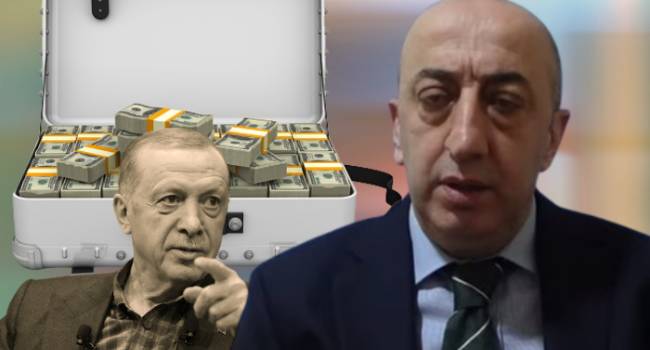
    In the video titled “Tayyip Abi ile Düello,” [Duel with Brother Tayyip] released by investigative journalist Cevheri Güven, Yeşildağ alleges that Erdoğan has orchestrated a widespread scheme of corruption that siphons off public funds for personal gain. Yeşildağ claims that Erdoğan and his son, Bilal Erdoğan, hold key stakes in businesses that receive lucrative government contracts.

    Yeşildağ further accuses Erdoğan of personal ownership of İstanbul Airport. Atatürk was the primary airport in İstanbul before the ruling Justice and Development Party (AKP) built a third airport in the city. Atatürk was closed to civilian flights on April 7, 2019, with the opening of the larger, $12 billion İstanbul Airport, though with much controversy. Later, the government decided to build a pandemic hospital at the old airport, destroying two runways in the process.

    In the video, Yeşildağ alleges that Erdoğan destroyed the Atatürk Airport runways due to pledges by opposition figures to close İstanbul Airport and reopen Atatürk. According to Yeşildağ, this is due to Erdoğan’s ownership of the facility, so he destroyed the alternative to make İstanbul Airport the only option for the public.

    Yeşildağ also criticizes the alleged misuse of public funds for projects such as the “nation’s garden” and various other building plans. He suggests that all public contracts are given to companies that can offer kickbacks to Erdoğan, alleging that the president, despite not being an economist, is very adept at exploiting the system for personal gain.

    These allegations represent the latest in a series of claims made by Yeşildağ, whose prior videos have implicated Erdoğan in corruption involving billions of dollars as well as shedding light on the president’s unconfirmed epilepsy.

    In the video Yeşildağ also takes aim at Erdoğan’s brother, Mustafa, accusing him of hypocrisy and scandalous behavior. He asserts that the Erdoğan family is out of touch with the struggles of ordinary Turkish people, contrasting their affluent lifestyle with the economic hardships faced by many in the country.

    The Yeşildağ family has a longstanding relationship with Erdoğan. The family’s Etiler Ulus Cafe is known as a popular meeting spot for the AKP government and state bureaucracy as well as the Erdoğan family.

    The video series has ignited public discourse, potentially destabilizing Erdoğan’s administration, which is already grappling with an economic crisis and high inflation. The exposés come ahead of the parliamentary and presidential elections, increasing the scrutiny on Erdoğan’s leadership.

    In the face of these damning allegations, the Turkish government has yet to issue a formal response.

    With the release of the final video, Yeşildağ’s exposé series draws to a dramatic close, leaving behind a trail of explosive allegations that have laid bare alleged corruption and misconduct in the highest echelons of Turkish politics.turkishminute

  • German TV documentary focuses on Erdoğan’s pursuit of dissident journalists in exile

    German TV documentary focuses on Erdoğan’s pursuit of dissident journalists in exile


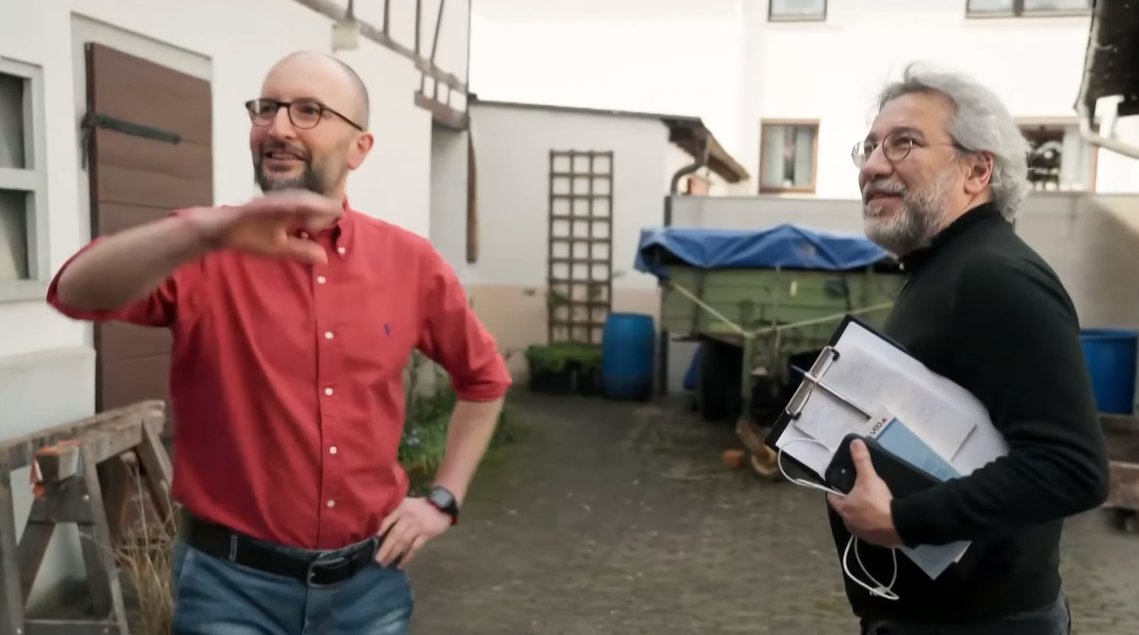
    A documentary aired on Germany’s state-run television station ZDF earlier this week tells the stories of journalists living in exile who have been added to Turkey’s “Terrorist Wanted List” by the government of President Recep Tayyip Erdoğan, mainly focusing on 61-year-old journalist and author Can Dündar.

    Prepared jointly by Dündar and Hauke Wendler, a documentary filmmaker, journalist and executive producer, the 43-minute documentary, titled “Erdoğan’s Terror List – How the Turkish Government Hunts Critics Worldwide,” was released on ZDF’s website and YouTube channel on May 9.

    According to the film, anyone who criticizes Erdoğan, like Dündar, is labeled a “terrorist” and put on the Turkish government’s wanted list.

    Dündar points out his name on Turkey’s “Terrorist Wanted List” and says, “Like in the Wild West, they put a bounty on my head.”

    The journalist stood trial in Turkey for reporting in May 2015 on National Intelligence Organization (MİT) trucks that were allegedly carrying weapons to jihadist groups in Syria and was sentenced to 27 years on various charges including espionage.

    Dündar had to leave Turkey following an attack in front of the Çağlayan Courthouse in İstanbul on May 6, 2016 and has lived in exile in Germany ever since.

    “Erdoğan instilled this hatred in people: Either you’re with me or you’re with the enemy. … Polarization in Turkey is directly mirrored in Germany,” Dündar says.

    Dündar met with Cevheri Güven, 46, a journalist and blogger also in exile in Germany whose videos on the Turkish government’s corruption and shady relations with mafia and crime groups have been watched by millions of people on YouTube in both Germany and Turkey, for an interview about his ordeal.

    It is said in the documentary that Dündar and Güven, who were in the same prison in Turkey, were “honest journalists, according to the opposition, and terrorists, according to the Erdoğan government.”

    Güven, a former editor of the now-defunct Nokta magazine, along with the magazine’s managing editor, Murat Çapan, was handed down a prison sentence of 22 years in 2017 on charges of “inciting people to armed revolt against the Turkish government.”

    The journalists were sentenced to prison due to two cover stories in Nokta that criticized Erdoğan for “capitalizing” on the death of soldiers in Turkey’s fight against terrorism.

    On Sept. 22 the pro-government Sabah daily published on its front page secretly taken photos of Güven while walking on the street and revealed his address in a German city. He was also added to the “Terrorist Wanted List” a few months ago.

    “Erdoğan has a few red lines. If anyone crosses these red lines, they get into trouble. … I have become a target for fanatics in the country. There is a great deal of pressure on us. Our lives and our children’s lives are in danger,” Güven says.

    Dündar also spoke to Ahmet Dönmez, a Turkish journalist known for his reports on mafia groups associated with Turkish government officials including Erdoğan who has been living in exile in Sweden.

    Dönmez was brutally attacked by two men in Stockholm in March 2022 in front of his 6-year-old daughter. Losing consciousness after the attack, the journalist was treated in intensive care due to an injury to his head.

    When asked why he was added to the terror list in early 2023, Dönmez said it was due to his articles critical of the ruling Justice and Development Party (AKP) and a book about corruption during the Erdoğan era.

    The documentary also mentioned the story of Nuri Gökhan Bozkır, a former military officer who was rendered from Ukraine by MİT in late January 2022 and arrested by a court the next month. He is accused by the Turkish government of the unsolved murder of academic Necip Hablemitoğlu, who was killed on Jan. 18, 2002, in front of his house in Ankara.

    It was said that more than 100 people like Bozkır have been “abducted by the Erdoğan government” from 21 countries since 2016.

  • Mother of two-and-a-half-month-old baby released from pre-trial detention

    Hilal Keser, the mother of a two-and-a-half-month-old infant, who was sent to prison earlier this week in violation of a law that requires the postponement of the execution of prison sentences for women who are pregnant or have given birth within the last year and a half, was released from detention on Thursday evening, the Kronos news website reported.

    Keser was arrested on Wednesday by a local court in the central province of Afyonkarahisar for providing financial support to inmates who were in prison due to alleged links to the Gülen movement, a faith-based group accused by the government of “terrorist” activities, or to their families.

    According to the Law on the Execution of Sentences and Security Measures, “execution of the prison sentence is delayed for women who are pregnant or have given birth within the last year and a half.”

    Journalist Sevinç Özarslan announced the woman’s release from detention on Thursday evening. She said Keser thanks everyone who raised their voices against her unlawful arrest.

    In another investigation, Keser had been sentenced to more than seven years in prison for working at a student dormitory in Afyonkarahisar that the government subsequently closed down because of alleged ties to the Gülen movement. She had been jailed for one year and released on appeal.

    Turkish President Recep Tayyip Erdoğan has been targeting followers of the Gülen movement, inspired by Turkish cleric Fethullah Gülen, since the corruption investigations of December 17-25, 2013, which implicated then-prime minister Erdoğan, his family members, and his inner circle.

    Dismissing the investigations as a Gülenist coup and conspiracy against his government, Erdoğan designated the movement as a terrorist organization and began to target its members. He intensified the crackdown on the movement following an abortive putsch on July 15, 2016 that he accused Gülen of masterminding. Gülen and the movement strongly deny involvement in the coup attempt or any terrorist activity.

    The detention and arrest of pregnant women and mothers with young children have dramatically increased in Turkey in the aftermath of the 2016 coup attempt.

    Human rights advocates have said children accompany their mothers in prison at very young ages, which are often critical periods in their mental and physical development. However, children are not provided basic needs such as crayons or toys. Some cells are not provided with a carpet for crawling babies, and inmates make makeshift rugs out of blankets. Many children do not have their own beds and share their mothers’ food.

  • Erdoğan’s rival accuses Russia of election ‘deep fakes’


    Kemal Kılıçdaroğlu’s allegations came hours after a third-party candidate dropped out of the race after being targeted by a online smear campaign.

    “Dear Russian friends,” Kılıçdaroğlu said on Twitter.

    “You are behind the montages, conspiracies, deep fakes and tapes that were exposed in this country yesterday,” he said without providing details.

    “If you want our friendship after May 15, get your hands off the Turkish state. We are still in favour of cooperation and friendship.”

    Polls show the secular opposition leader edging ahead of Erdogan in Sunday’s presidential ballot.

    The election will go to a May 28 runoff if no candidate picks up more than 50 percent of the vote.

    Kılıçdaroğlu’s comments came in the heat of an increasingly dirty campaign that saw third-party candidate Muharrem İnce pull out on Thursday.

    İnce announced his decision after being targeted by an online campaign that included doctored images of him meeting women and riding around in fancy cars.

    Polls show most of İnce’s support — measured at between two and four percent — likely going to Kılıçdaroğlu.

  • New South Wales rental crisis could worsen as building approvals slump to record lows, economist warns

    Latest data from the Australian Bureau of Statistics (ABS) for the first three months of this year, shows a decline across the country — just as demand for housing is intensifying due to faster- than-expected population growth post-pandemic.

    In NSW, total approvals fell by 34 per cent compared to the same quarter in 2022, but hardest hit were townhouses, units and high-rises which dropped to 50 per cent.

    Senior economist with the Housing Industry Association (HIA) Tom Devitt said the “really weak” figures for this sector had been a surprise.

    “We’ve been expecting that to strengthen this year and beyond because there’s a lot of demand for high-density living from overseas migrants and students who are coming back into Australia in really big numbers,” he said.

    “The first quarter of 2023 saw the lowest number of total building approvals since 2012 in NSW and nationally.

    “And Australia’s rental markets are really, really tight at the moment.”

    According to the Real Institute of New South Wales, vacancy rates in Sydney are hovering at 1.3 per cent, compared to the national average of about 1 per cent.

    Renters have also been feeling the squeeze after the median weekly rent increased by 13 per cent from last year to $711.

    Until more housing comes into the pipeline, it will mean more bad news for availability and affordability, according to Mr Devitt.

    “This imbalance will see the affordability and rental crisis deteriorate further.”

    Ongoing interest rates rises — last week the Reserve Bank of Australia (RBA) announced its 11th in 12 months — coupled with the increase in the cost of construction and labour supply are being blamed as the main drivers of the decline in approvals.

    “Over the course of the pandemic there’s been an incredible increase in construction costs,” Mr Devitt said,

    “Some of those constraints have eased recently, but now the number one constraint is labour, builders trying to get their hands on skilled tradespeople.”

    They’re concerns that resonate with the executive director for the Master Builders Association NSW, Brian Seidler.

    He says the ABS’s data is “most unfortunate” for the industry given its role, identified by governments around the world, in leading the country out of the pandemic.

    “The important issue for us, for the industry is to see a stabilisation of interest rates, but what do we do to attract more labour into our industry?

    “We must address for the future, the cost of labour and the cost of labour is significantly increasing and will continue to increase until we get more skilled people into the industry.

    “It’s the cost of labour that will really challenge the industry and those that invest in the industry.”

    In the coming year the organisation is committed to attracting skilled workers from overseas and more young people to become apprentices.

    Mr Seidler acknowledges how a further increase in migration could add to the current challenges.

    “If you don’t have a place to house people then where do they live?

  • OSCE ‘disappointed’ after Turkey bars 2 election observers

    OSCE ‘disappointed’ after Turkey bars 2 election observers

    The parliamentary assembly of the world’s largest security organization, the OSCE, voiced disappointment on Monday after Turkey barred two lawmakers from a 100-strong mission to monitor the country’s May 14 elections, Agence France-Presse reported.

    Turkish authorities have denied mission accreditation to Danish MP Soren Sondergaard and Swedish MP Kadir Kasırga, said the parliamentary assembly of the 57-member Organization for Security and Cooperation in Europe.

    “We are disappointed with this step taken by the Turkish authorities, which could impact negatively on the work of the international observer mission,” the assembly said.

    It said Turkey “should not –- directly or indirectly -– influence the composition of the mission,” adding that Sondergaard and Kasirga had been refused entry because of statements made “as independent members of parliament.”

    The monitoring team is made up of lawmakers from OSCE member countries.

    Another OSCE body is sending a separate team of almost 400 people to observe Turkey’s presidential and parliamentary vote, in which President Recep Tayyip Erdoğan faces the toughest challenge of his two-decade rule.

    Sondergaard, from Denmark’s Socialist-Green Alliance, said last week that Turkey had denied him access because he had previously visited the Kurdish-led Syrian Democratic Forces (SDF).

    He told Danish public television TV2 that Ankara had accused him of “promoting a terrorist organization.”

    The SDF spearheaded the fight against the Islamic State group in Syria. Turkey regards it as an offshoot of the Kurdistan Workers’ Party (PKK), which it classifies as “terrorist.”

    In 2018, Ankara barred a German and a Swedish lawmaker from an election observer mission sent by the OSCE’s parliamentary assembly.

    Founded in 1975, the OSCE comprises 57 participating states that span the globe, encompassing three continents — North America, Europe and Asia — and more than a billion people.