Category: World

  • Educator İnandı tortured and his arm broken in 3 places, wife says

    Educator İnandı tortured and his arm broken in 3 places, wife says

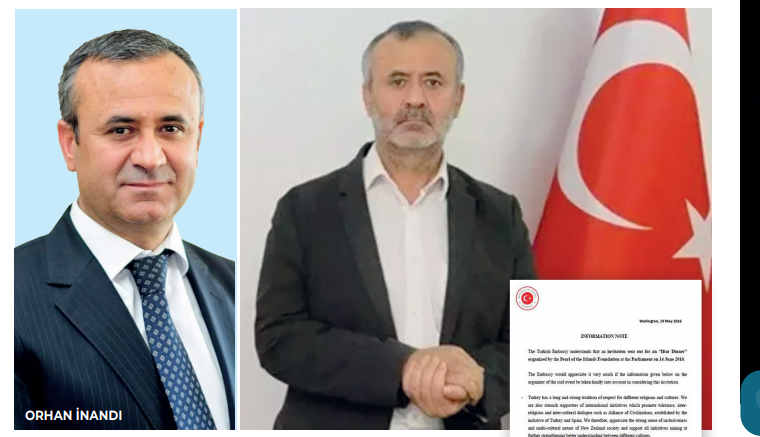
    Orhan İnandı, a Turkish-Kyrgyz educator rendered from Kyrgyzstan by Turkey’s National Intelligence Organization (MİT), was tortured and his right arm broken in three places by Turkish security officers, his wife Reyhan said in a tweet, the Stockholm Center for Freedom reported.

    According to his wife, Orhan İnandı has not received timely medical treatment and as a result can’t use his right arm.

    İnandı, who was the founder and director of the prestigious Sapat school network operating in Kyrgyzstan, went missing on May 31 and was feared to have been abducted by MİT due to his alleged links to the Gülen movement, a faith-based group inspired by Muslim cleric Fethullah Gülen. He is the latest victim in a series of cases in which Turkey’s intelligence service has been involved in unlawfully transferring people to Turkey from countries around the world.

    Turkish President Recep Tayyip Erdoğan had acknowledged in a statement following a Cabinet meeting on July 5 that İnandı was actually abducted by MİT, lauding the Turkish spies’ efforts in the rendition.

    Photos of İnandı in handcuffs with Turkish flags prompted allegations of torture due to İnandı’s visible weight loss and swollen right hand.

    An Ankara court on July 12 ruled to arrest İnandı on charges of serving as an executive of a terrorist organization.

    In his first public comments on İnandı’s disappearance on May 31, lawyer Halil İbrahim Yılmaz said his client told him that three men who spoke fluent Kyrgyz and were possibly officers of the Kyrgyz police, security services or another Kyrgyz state entity kidnapped him.

    President Erdoğan has been targeting followers of the Gülen movement since the corruption investigations of December 17-25, 2013, which implicated then-Prime Minister Erdoğan, his family members and his inner circle.

    Dismissing the investigations as a Gülenist coup and conspiracy against his government, Erdoğan designated the movement as a terrorist organization and began to target its members. He intensified the crackdown on the movement following a coup attempt on July 15, 2016 that he accused Gülen of masterminding. Gülen and the movement strongly deny involvement in the abortive putsch or any terrorist activity.

    According to Şebnem Korur Fincancı, a doctor of forensic medicine and head of the Human Rights Foundation of Turkey (TİHV), the photos of İnandı point to torture, either torture by hanging or direct blows to the arm.

    Human Rights Watch earlier said in a statement that the abduction, forcible disappearance and extrajudicial transfer of İnandı to Turkey by Turkish and Kyrgyz authorities amount to egregious violations of international and domestic law.

    “Over the past five years, scores of men alleged by the Turkish authorities to have links with the Gülen movement, living in countries around the world, have been arbitrarily detained and forcibly returned to Turkey,” the rights watchdog said. “There they are incarcerated on bogus terrorism charges in violation of due process rights and international law protecting basic rights including to liberty and security, a fair trial, and freedoms of opinion, expression, and association.”

    In several of these cases the UN Working Group on Arbitrary Detention (WGAD) concluded that the arrest, detention and forced transfer to Turkey of Turkish nationals were arbitrary and in violation of international human rights norms and standards.turkishminute
  • Turkish boxer critical of Erdoğan, AKP, victim of another attack in Germany

    Turkish boxer Ünsal Arık, known for his critical views of Turkish President Recep Tayyip Erdoğan and his ruling Justice and Development Party (AKP), announced in a video on Twitter on Monday that he has been attacked by several assailants in Germany.

    The winner of the European Boxing Championship, Arık lives in Berlin and had been the target of several attacks and threats from pro-Erdoğan individuals and groups in the past.

    “Shame on you!” Arık tweeted, adding a video in which he addressed to his attackers.

    “I don’t know if these people — who are only in office temporarily — are worth what you did, but it’s obvious you’ll never rest. The next time I’ll break not only your chins but all your bones,” he said.

    Arık also implied that his attackers called him a traitor, saying: “May God give you whatever you deserve. Shame on you. Which holy book approves calling a sportsperson who represents the Turkish flag a traitor and attacking him? I am really sad.”

    In the video Arık repeatedly put his hand to his face, which had slight bruises, and displayed his left hand, which was bleeding, apparently from his efforts to defend himself.

    Many Twitter users including prominent Turkish figures such as writer Ahmet Ümit, actor Bülent Emrah Parlak and and opposition politician Barış Atay replied to Arık’s posts, wishing him a speedy recovery.

    Back in August 2020, Arık announced he had received a death threat when someone left an envelope containing a single bullet on his windshield.

    Arık also received a death threat on the phone barely a week after he found the bullet. As to the perpetrators, Arık indicated on Twitter that although he didn’t suspect any single individual, he was “100 percent certain that they are supporters of Erdoğan” and the ruling AKP.

    He also tweeted in September 2020 that his tires were slashed. “Are you this bothered by me breathing, being alive? Don’t you fear God at all?” he asked.

    In December 2020, Arık was attacked again, this time with a knife.

    According to Arık’s further comments on social media, what prompted the threats and the attacks was his criticism of Turkey’s Religious Affairs Directorate (Diyanet) and President Erdoğan in interviews he had given to German media outlets.

    The boxer said what he told them was that mosques in Turkey had become places of politics rather than religion, that the AKP government interfered in these places and that the Diyanet wasn’t what it used to be.

  • Turkey shaken by suggestion of poisoning jailed Gülen followers

    Turkey shaken by suggestion of poisoning jailed Gülen followers

    Cevheri Güven-turkishminute

    A pro-government group in Turkey has come up with the idea for the collective death of people held in prison due to their links to the faith-based Gülen movement. Rights defenders said the ruling party rhetoric has reached a genocidal level, while pro-government journalists Hilal Kaplan and Emre Erciş expressed support for the idea.

    The Turkish government accuses the Gülen group of orchestrating a failed coup in July 2016, although the movement denies any involvement.

    In a Clubhouse chat room created by supporters of the ruling Justice and Development Party (AKP) last week, some speakers talked about a potential elimination of imprisoned Gülen followers by poisoning them.

    During the conversation about the situation of tens of thousands of political prisoners, particularly those held behind bars over their alleged affiliation with the Gülen movement, chat room creator Furkan Bölükbaşı suggested that they ought to be killed “by using a kind of cheap poison that would not be a burden on the state budget.”

    The suggestion was first put forward by Mustafa Aydın, another AKP supporter who has pictures of himself with President Recep Tayyip Erdoğan. “We should not feed them in prison,” Aydın said. “Why is the state feeding them in prison with my taxes? We should not give them meals. They should eat each other instead. We should destroy them altogether. It’s not a crime, anyway. We used to poison dogs in the past, we should do the same [with them].”

    Akif Şükür, one of the moderators, said: “It all depends on a bottle of poison being added to meals by a brave prison cook. If such a cook does this, I swear I’ll look after his family.”

    Bölükbaşı then took it a step further and said: “We should find a poison that is not too expensive so that it is cost-effective. We should not spend too much taxpayer money, that’s what I think.”

    Support from a pro-Erdoğan journalist

    The most significant support for the controversial remarks came from Hilal Kaplan, a journalist with close ties to Erdoğan who has recently been appointed to the board of the state-run TRT broadcaster. “If you pity, you will become pitiable,” Kaplan said in response to a tweet by Emre Efser, who said, “If you do not take offense at the fact that FETÖ scum is sitting comfortably in prisons, if you don’t think they should suffer an agonizing death, you should question your beliefs and your values.”

    FETÖ is a derogatory term coined by the government to refer to the movement.

    Journalist Emre Erciş, known for his ties to the National Intelligence Organization (MİT), said he finds the suggestions inadequate as he thinks the Gülen-linked individuals in question should rather be hanged.

    Bölükbaşı, the creator of the chat room, is a research fellow at the medical faculty of Marmara University in İstanbul. After the recording of the conversation was leaked and posted thousands of times on social media, some users asked the university administration whether they will keep on staff someone who has openly called for the extermination of a group.

    Veli Saçılık, a leftist activist who in the ’90s lost an arm due to torture in prison, warned: “Regime supporters have turned genocidal. Are you aware of the danger?”

  • Pro-gov’t daily admits ‘fake’ reports of attack on headscarved woman by Gezi protestors

    The radical Islamist, pro-government Yeni Akit newspaper has admitted in a report that claims of a physical attack on a headscarf-wearing woman on the docks at Kabataş by Gezi protestors during the anti-government demonstrations of summer 2013 were “lies,” Turkish media reported on Thursday.

    Many pro-government journalists and press outlets, in addition to then-Prime Minister and current President Recep Tayyip Erdoğan, had previously claimed that Zehra Develioğlu, daughter-in-law of then-mayor of İstanbul’s Bahçelievler district Osman Develioğlu from the ruling Justice and Development Party (AKP), was attacked by an anti-government mob during Gezi protests.

    They alleged that dozens of half-naked men had attacked and urinated on Develioğlu, who was waiting for her husband, along with her six-month-old baby, in Kabataş on June 1, 2013.

    Although the footage from security cameras at the scene, which emerged months later, showed no evidence of such an attack, the claims had been reawakened by Erdoğan multiple times and occasionally resurfaced in the pro-government media for some time afterward.

    Because she recently stopped wearing a headscarf, Yeni Akit on Thursday targeted Elif Çakır, a then-pro-government journalist for the Star daily who released an interview with Develioğlu that incited hatred among pro-AKP circles towards Gezi protestors, based on claims first made public by Erdoğan.

    Yeni Akit, one of the pro-government dailies that had covered the fabricated attack in Kabataş, on Thursday published the headline “She has evolved: After Kabataş, Elif Çakır’s headscarf also turned out to be a lie,” admitting after eight years that the journalist’s claims were lies “aimed at provocation.”

    The report was described by many as an attempt by the pro-government media to evade the responsibility of having published fake news regarding an incident that turned out to be a lie by pinning the blame on Çakır, currently a columnist for the Karar daily, which is critical of the AKP government.

    Journalist and media ombudsman Faruk Bildirici on Thursday reminded in a blog post that 15 columns in five different pro-government newspapers bore the same headline on March 5, 2015: “Your language is shameless, your conscience is as hard as a stone,” with wordplay in Turkish as the words “shameless” (kaba) and “stone” (taş) make up the word “Kabataş,” referring to the scene of the alleged attack.

    ”After Yeni Akit’s confession … it’s the turn of the [pro-government] Sabah, Yeni Şafak, Star and Türkiye dailies to do the same. If their language isn’t shameless and their consciences not as hard as a stone, they will apologize [for publishing the columns and reports on a fabricated incident],” Bildirici added.

    Although Erdoğan claimed he had footage showing the moments of the attack, the video has never surfaced, thus leading many to argue that the discredited claims were an attempt by Erdoğan to demonize Gezi protestors and get more support from the pious people in the society during the anti-government demonstrations.

    The protests in 2013 erupted over the AKP government’s plans to demolish Gezi Park in Taksim. They quickly turned into mass anti-government demonstrations that were violently suppressed by the government, leading to the death of 11 protestors due to the use of disproportionate force by the police.

  • Logistics companies seized over Gülen links sold in fast-track auction

    Turkey’s Savings Deposit Insurance Fund (TMSF) announced it has sold Sürat Kargo and Sürat Lojistik, private logistics companies that had been transferred to the TMSF due to their alleged affiliation with the Gülen movement, for TL 335 million ($40 million), the Kronos news website reported on Friday.

    Numerous private companies were transferred to TMSF due to their alleged links to the Gülen movement before and after a failed coup in 2016.

    The ruling Justice and Development Party (AKP) and its leader President Recep Tayyip Erdoğan accuse the movement of orchestrating the abortive putsch, although it strongly denies any involvement.

    Sürat Kargo and Sürat Lojistik were operating under Kaynak Holding, which was seized by the government in 2015.

    According to a statement posted on the TMSF website, three bids were submitted for the companies, with the highest TL 327.5 million, and during the auction phase, conducted based on the highest bid offered during the first phase, a bidder agreed to pay TL 355.5 million.

    The fast-track sale of the companies only TL 10 million over their estimated value as well as the short period allowed for submitting bids — 10 days including the Eid al-Adha holiday — has led some to question whether the bidding process was arranged.

    Journalist İbrahim Kahveci from the Karar daily asked why the TMSF acted so hastily in selling Sürat Kargo while choosing to act slowly in tenders with lower estimated values.

    “Was the buyer selected beforehand? Did they think they should sell it immediately after finding a potential buyer? The sale price was just TL 10.5 million over the estimated value of TL 325 million. Who were the bidders and who won the tender? Are all these trade secrets?” Kahveci asked.

  • Former colonel reveals photo of tortured soldiers in mosque during July 15 attempted coup

    A former colonel has tweeted a photo of soldiers in a mosque with apparent signs of maltreatment and torture taken shortly after a coup attempt in Turkey on July 15, 2016, the Bold Medya news website reported on Thursday.

    The photo, posted by former colonel Hüseyin Demirtaş, quickly went viral. Demirtaş is one of the thousands officers who were expelled from the Turkish Armed Forces (TSK) in the aftermath of the failed coup. He currently lives in exile.

    There have been widespread claims that soldiers who were taken to police centers, sports facilities and mosques after the coup was suppressed were subject to torture and ill-treatment. The photo shared by Demirtaş is apparent confirmation of the allegations.

    A soldier with swollen eyes, face covered in blood and handcuffed from behind is seen in the photo, which includes other handcuffed soldiers facing the wall.

    Demirtaş also tweeted questions to Ali Erbaş and Mehmet Görmez, the current and former heads of Religious Affairs Directorate (Diyanet), including “Was this soldier tortured inside or outside the mosque? Does your religion allow you to take photos of torture in your mosques and expose them? Does your religion condone torture?”

    Demirtaş and former major Hacer Çaylak spoke to journalist Ahmet Nesin about a conspiracy against the Turkish Armed Forces that had been set in motion on July 15, 2016.

    On the fifth anniversary of the failed coup, alternative narratives and revelations dominated the country’s agenda, further challenging the official rhetoric that the coup attempt was masterminded by the faith-based Gülen movement.

    Many in Turkey believe that President Recep Tayyip Erdoğan knew of the coup attempt or was part of the group that plotted it as he wanted a pretext to launch a crackdown on the Gülen movement, inspired by Muslim preacher Fethullah Gülen, as well as all his critics to consolidate his one-man rule.

    The Turkish government labels the movement as a terrorist organization and accuses Gülen and his followers of masterminding the attempted coup.

    Although both Gülen and the members of his group strongly deny any involvement in the abortive putsch or any terrorist activities, Turkish prosecutors have investigated 622,646 people and detained 301,932, while jailing 96,000 others due to alleged links to the Gülen movement since the failed coup, according to the latest official data, as part of a massive purge launched under the pretext of an anti-coup fight.

    Erdoğan has been targeting the movement since the corruption investigations of December 17-25, 2013, which implicated then-Prime Minister Erdoğan, his family members and his inner circle.

    In addition to the thousands who were jailed, scores of other Gülen movement followers had to flee Turkey to avoid the government crackdown.

  • Germany rejected Turkey’s request to hand over writer critical of Erdoğan government

    Abdullah Bozkurt/Stockholm

    Germany rejected Turkey’s request to hand over a writer critical of the government of President Recep Tayyip Erdoğan, according to an official communiqué obtained by Nordic Monitor.

    Abdullah Aymaz, a German national of Turkish origin and the author of multiple books, was the subject of an extradition request on fabricated criminal charges submitted by the Turkish government, notorious for jailing dissident journalists, authors and academics in Turkey.

    The document signed by Murat Karagöz on behalf of the justice minister on January 10, 2020 stated that the German Foreign Ministry had rejected the Turkish government’s request to extradite Aymaz to Turkey. The refusal was communicated to the Justice Ministry by the Turkish Foreign Ministry on August 26, 2020 in a letter which stated that Aymaz is a German citizen and that the extradition request would not be approved.

    The German Foreign Ministry’s notice was communicated to its Turkish counterpart on July 24, 2019.

    Turkish Justice Ministry document detailing Germany’s denial of an extradition request for Abdullah Aymaz: 

    Aymaz has been living in Germany for years and had been a regular contributor as a columnist to the now-defunct Zaman daily, at one time Turkey’s most highly circulated newspaper that was seized by the government in March 2016 and shut down in July 2016.

    He appears as a commentator on MC EU television, licensed in Germany’s Hesse state and available on satellite and the Internet. The station is run by journalists who were formerly affiliated with Samanyolu TV, one of the major networks in Turkey before it was shuttered by the government in 2016.

    Turkish prosecutors in Ankara and Konya provinces sought the extradition of Aymaz from Germany in February 2017 and asked the interior and foreign ministries to ensure that would happen.

    A secret document obtained by Nordic Monitor shows that Aymaz was also investigated in Denizli province where Turkish prosecutor Ugur Özbek asked for an examination of Aymaz’s social media accounts such as Twitter, Facebook and others. Aymaz, described as a journalist by the prosecutor, faced a separate criminal investigation.

    Nordic Monitor previously published an article which revealed how Germany notified Turkey that it would not even consider handing over exiled critics who face aggravated life sentences in Turkey and rejected an extradition request submitted by the Turkish Embassy in Berlin with no action.

    Referring to German Constitutional Court rulings in 2010 and 2011, the ministry underlined that “in such cases, the approval of the extradition request would not comply with the minimum standards of international law applicable in Germany and the basic principles of [German] constitutional law.”

    Aggravated life imprisonment, which replaced the death penalty in 2004, is the harshest sentence under Turkish criminal law. It means severe restrictions on inmates, solitary confinement and no early parole, which violates the European Convention on Human Rights, to which Turkey is a party. The Erdoğan government often sentences its critics to aggravated life in order to sustain its intimidation campaign against opponents, critics and dissidents.

    In addition to charges filed against Aymaz in Ankara and Konya, a Turkish prosecutor in Denizli also launched a secret investigation into the journalist:

    The German government’s response was delivered after Turkey had filed an extradition request for Suat Yıldırım, an 80-year-old Turkish professor who has authored numerous books on Islam and criticized Turkey’s Religious Affairs Directorate (Diyanet). The academic is also associated with President Erdoğan’s most outspoken critic, Fethullah Gülen, and his movement.

    Germany is one of the top destinations in Europe for members of the Gülen movement who have sought political asylum since 2014, when the group was the subject of a crackdown under the Erdoğan government. The movement’s leader, living in self-exile in the US since 1999, has been an outspoken critic of the Erdoğan government.

    Over half a million Gülenists faced legal action, most in the form of detention and imprisonment on dubious charges, in Turkey when the government blatantly abused the criminal justice system to stifle dissent and muzzle critical voices. Thousands of institutions including schools, universities, foundations, businesses and hospitals were summarily shut down by decrees issued by President Erdoğan in 2016, and their assets were seized by the government.

    Human rights groups documented systematic and nationwide torture and ill-treatment in detention centers and prisons in Turkey, while enforced disappearances by elements of the Turkish police and intelligence agency have been on the rise in recent years.

    Almost all European countries at one time or another have balked at Turkey’s politically motivated extradition requests for Gülenists, and INTERPOL repeatedly warned the Erdoğan government against abusing law enforcement cooperation mechanisms that were designed to combat real criminals after Turkey attempted to flood the INTERPOL system with fraudulent filings.

  • From judge to farmer: The story of purge victim judge is featured in new KHK TV documentary

    A purge-victim Turkish judge is trying to rebuild his life after he was fired from his job with a government decree issued under post-coup emergency rule in 2016.

    Eyüp Sarı’s extraordinary story is featured an online TV station on YouTube, known as KHK TV, established in a bid to raise awareness about their problems and get their jobs back.

    Sarı was fired from his job in the aftermath of a coup attempt on July 15, 2016 over alleged links to the Gulen group, which accused of the masterminding the attempt. The group denies any involvement. Following his dismissal, he had been held in a pre-trial detention for two years over similar accusations. Following his conditional release from the prison, he returned to his hometown of Mut. Source:turkeypurge

  • German police tell former MP he’s on hit list targeting gov’t critics in exile

    The German Federal Police have warned Hasip Kaplan, a former lawmaker from the pro-Kurdish Peoples’ Democratic Party (HDP), of a planned assassination targeting him based on a hit list that includes the names of 55 critics of the Turkish government living in exile.

    “The German police called me and said my name is on an assassination list. I told them that my name has been there for 40 years so it’s not anything new,” Kaplan tweeted on Sunday.

    Kaplan, also a lawyer, served in the Turkish Parliament from 2007 to 2018 under the banner of pro-Kurdish parties, the last being the HDP. Kaplan has been living in exile in Germany amid an ongoing crackdown on Kurdish politicians in Turkey.

    Earlier this month, a pro-government social media account named “Jitemkurt” published a list of Turkish journalists living in Europe and North America whom they plan to assassinate.

    The account published the names of 21 journalists resident in various countries and threatened to kill them. The name of the social media account refers to a group linked to the notorious gendarmerie intelligence unit JITEM.

    Later, another hit list emerged which included the names of 55 critics of the Turkish government who live in exile. Politicians and artists are included on the new list in addition to journalists.

    Last week Celal Başlangıç, the editor-in-chief of Artı TV and the Artı Gerçek news website, announced that he was also warned by the German police about his name being on an assassination list.

    Meanwhile, Erk Acarer, a Turkish journalist critical of President Recep Tayyip Erdoğan’s government who has been living in exile in Germany, also announced on Twitter last week that he had received a threat, a piece of paper with “You just wait” written on it, which he said was wrapped around a boiled egg and thrown into the garden of his house in Berlin.

    Acarer was the victim of an attack “with knives and fists” in the courtyard of his apartment building in Berlin on June 7, an incident that led to widespread concerns about the safety of government critics abroad.

    Turkish journalists are often targeted and jailed for their journalistic activities. Turkey is one of the world’s biggest jailers of professional journalists and ranked 153rd among 180 countries in terms of press freedom in 2021, according to Reporters Without Borders (RSF).

  • 95,000 people await acquittal based on ECtHR’s ByLock ruling

    Thousands of people arrested or convicted on terrorism charges due to their alleged use of the ByLock mobile phone application expect to be acquitted based on a recent ruling of the European Court of Human Rights (ECtHR), the Bold Medya news website reported on Monday.

    The ECtHR ruled last week in the case of a former police officer that use of the ByLock application is not an offense in itself and does not constitute sufficient evidence for arrest. The Strasbourg court’s ruling has come as a source of hope for thousands of people who were arrested or sentenced on terrorism charges based mainly on a National Intelligence Organization (MİT) report that detailed users of ByLock.

    ByLock, once widely available online, has been considered a secret tool of communication among supporters of the faith-based Gülen movement since a coup attempt on July 15, 2016 despite the lack of any evidence that ByLock messages were related to the abortive putsch.

    The Gülen movement is accused by the Turkish government and President Recep Tayyip Erdoğan of masterminding the failed coup and is labeled a “terrorist organization,” although the movement denies involvement in the coup attempt or any terrorist activity.

    The ECtHR ruling on the pre-trial detention of former police officer Tekin Akgün is expected to set a precedent for other applicants who filed similar cases with the court. Under Article 90 of the Turkish Constitution local courts and top appeals courts must comply with ECtHR decisions, releasing people under arrest pending trial and acquitting others convicted based on ByLock use.

    In Akgün’s case, the ECtHR ruled that Turkey violated Article 5 § 1 (right to liberty and security) of the European Convention on Human Rights as well as Article 5 § 3 (entitlement to trial within a reasonable time or to release pending trial) and Article 5 § 4 (right to a speedy decision on the lawfulness of detention) in the pre-trial detention of Akgün, who was put in pre-trial detention in October 2016 as part of a massive crackdown launched by Turkey’s Justice and Development Party (AKP) government on alleged and real followers of the Gülen movement.

    “In the absence of other evidence or information, the document in question, stating merely that the applicant was a user of ByLock, could not, in itself, indicate that there were reasonable suspicions that could satisfy an objective observer that he indeed used ByLock in a manner that could amount to the alleged offences,” said the court.

    The European court also ordered Turkey to pay Akgün 12,000 euros in non-pecuniary damages and an additional 1,000 euros for costs and expenses.

    According to a statement from the interior ministry in March 2019, 95,310 people were charged over alleged use of the ByLock application. In its technical report, which courts use as basis for their decision, MİT stated that 60,473 defendants had at least one message posted using ByLock while 34,837 defendants had not posted any message using the application.

    In 2017 Turkey’s Supreme Court of Appeals found the use of ByLock to be sufficient evidence for terrorist organization membership. Since then, the appeals court has upheld hundreds of sentences passed by local courts based mainly on ByLock use without checking to see if the user had any message content or if the messages had any criminal content.

    The Constitutional Court, too, found no violation of rights of the applicants who were sentenced merely based on ByLock use, which it had considered a strong indication for arrest.

    The ECtHR’s judgment invalidates the Supreme Court of Appeals and Constitutional Court’s decisions. The two top courts are supposed to change their rulings to comply with the ECtHR’s decision.

    The UN Human Rights Council’s Working Group on Arbitrary Detention stated in October 2018 that detention, arrest and conviction based on ByLock use in Turkey violated of Articles 19, 21 and 22 of the International Covenant on Civil and Political Rights.