Category: World

  • At least 106 people died in Turkish prisons since July 2016: report

    At least 106 people died in Turkish prisons since July 2016, the Bold news portal reported.

    41 of these reportedly died of complications related to cancer, while the rest died as a result of a wide range of causes, including but not limited to the following: Heart attack, Covid-19, diabetes and respiratory diseases.

    Since the beginning of the purge in Turkey in the aftermath of the failed July 15 coup attempt, at least half of million people have been investigated while 96,000 others have been jailed due to alleged links to the Gülen group. According to the Turkish Interior Ministry, there are currently 25,655 people in Turkey’s prisons who were jailed over alleged terror, coup links.

    The purge has resulted in a drastic increase of political prisoners in Turkish prisons, some of whom are severely ill.

    According to the Human Rights Association (İHD), there are more than 1,605 sick prisoners in Turkish prisons, approximately 604 of whom are critically ill. Although most of the seriously ill patients have forensic and medical reports deeming them unfit to remain in prison, they are not released. Authorities refuse to release them on the grounds that they pose a potential danger to society. In the first eight months of 2020, five critically ill prisoners passed away because they were not released in time to receive proper medical treatment.

    Since April 2020, four seriously ill prisoners over the age of 70 have died in penal institutions; five inmates suffering from cancer died shortly after they were released; and 16 died of chronic illnesses while imprisoned. TurkeyPurge

  • Armored vehicles should not be used in residential areas, says expert following death of young boy

    Security forces must stop using armored vehicles in cities and residential areas, an expert has said, following the demise of Mihraç Miroğlu, 7, who was crushed to death in southeastern Turkey last week, Deutsche Welle Turkish service (DW) reported.

    Speaking to DW, Mehmet Emin Tümür, co-chair of the Diyarbakır branch of the Mechanical Engineers Chamber, said armored vehicles are too heavy and too large for residential areas.

    “These vehicles have too many blind spots, and it’s very difficult to sense your surroundings,” he said. “If these vehicles are driven above the speed limit, it becomes very difficult to control them.”

    Tümür said the vehicles need to be fitted with better sensory devices if they are to be used in cities. He added that it was quite dangerous for them to be used in city traffic and pedestrian areas because they were developed to be used in fields and warzones.

    “These vehicles need to be fitted with alarm systems that will warn people of their approach,” he said. “Drivers also need to slow their speed by 40 to 50 percent in addition to extra sensory devices that warn of the presence of a person on the street.”

    The killing of civilians by military vehicles is common in Turkey’s Southeast, where there is a heavy military presence due to ongoing clashes between the Turkish military and the outlawed Kurdistan Workers’ Party (PKK).

    According to a report by the Human Rights Association (İHD) Diyarbakır branch, 36 people, including six women and 16 children, have been killed and 85 were injured in 63 accidents involving armored vehicles over the past 10 years.

    According to Nahit Eren, chair of the Diyarbakir Bar Association, soldiers involved in accidents with armored vehicles are seldom punished. “Drivers are rarely sentenced to prison time, while some only receive a fine,” he said. “This causes the soldiers driving these vehicles to behave recklessly.”

    Eren urged parliament’s Committee for Human Rights to conduct a thorough investigation into deaths caused by armored vehicles.

    The police officer who caused Miroğlu’s death was freed after testifying to a prosecutor. In his statement the police officer claimed he was not driving the vehicle very fast and that he regrets the tragedy.

    The İdil Public Prosecutor’s Office launched an investigation into the incident, which was classified as a fatal traffic accident. SCF

  • Turkish Twitter users demand authorities release father of young boy whose mother died in exile

    Turkish Twitter users demanded that authorities release the father of a 5-year-old boy after his mother, Gülsüm Coşar, 31, a former judge who fled Turkey and was living in exile, died in Germany last week, the Stockholm Center for Freedom reported.

    Hundreds of social media users shared the hashtag “#AykutCoşarTahliyeEdilmeli” (Aykut Coşar must be released), demanding the release of father Aykut Coşar, who has been behind bars since 2016 for alleged links to the Gülen movement.

    Ömer Faruk Gergerlioğlu, a deputy from the Peoples’ Democratic Party (HDP), said on Twitter that the young boy must be reunited with his father immediately.

    “There is a 5-year-old boy whose mother has died in exile,” he said. “What will become of him? Will he also be left without a father?”

    Gülsüm Coşar was summarily dismissed from her job by a government decree in the aftermath of a 2016 coup in Turkey. She fled to Germany with her son but fell seriously ill several days before her death.

    Coşar was sentenced to seven years, six months in prison on terrorism charges for alleged links to the Gülen movement. Her husband, a former prosecutor, was handed down nine years, two months on similar charges. He is currently in a prison in southeastern Gaziantep province.

    Turkish President Recep Tayyip Erdoğan has been targeting followers of the Gülen movement, inspired by Turkish Muslim cleric Fethullah Gülen, since the corruption investigations of December 17-25, 2013, which implicated then-Prime Minister Erdoğan, his family members and his inner circle.

    Dismissing the investigations as a Gülenist coup and conspiracy against his government, Erdoğan designated the movement as a terrorist organization and began to target its members. He intensified the crackdown on the movement following an abortive putsch on July 15, 2016 that he accused Gülen of masterminding.

    The purge has damaged the unity of many families. In some cases, children have lost a parent while the other one was imprisoned. These children have been left to the care of elderly grandparents or distant relatives.

    According to official data, 622,646 people have been the subject of investigation and 301,932 have been detained, while 96,000 others have been jailed due to alleged links to the Gülen movement since the failed coup.

    The government also removed more than 130,000 civil servants from their jobs on alleged Gülen links following the coup attempt.

  • 82-year-old philanthropist with Alzheimer’s remains behind bars in Turkey

    Eighty-two-year-old businessman and philanthropist Yusuf Bekmezci remains behind bars in Turkey despite serious health problems and advanced age.

    Bekmezci suffers from Alzheimer’s and is unable to take care of himself. He also has high blood pressure, sleep apnea, prostate cancer and partial deafness. Bekmezci was tried on charges of terrorism, with the prosecutor demanding a life sentence.

    The İzmir 2nd High Criminal Court handed down a sentence of 17 years, four months in April.

    Speaking to Bold Medya earlier, his daughter Şeyma Bekmezci said her ailing father had been condemned to die in prison.

    Turkish President Recep Tayyip Erdoğan has been targeting followers of the Gülen movement, a faith-based group inspired by Turkish cleric Fethullah Gülen, since the corruption investigations of December 17-25, 2013, which implicated then-Prime Minister Erdoğan, his family members and his inner circle.

    Dismissing the investigations as a Gülenist coup and conspiracy against his government, Erdoğan designated the movement as a terrorist organization and began to target its members. He intensified the crackdown on the movement following a coup attempt on July 15, 2016 that he accused Gülen of masterminding. Gülen and the movement strongly deny involvement in the abortive putsch or any terrorist activity.

    According to Şeyma Bekmezci, her father could barely understand the court proceedings due to his advanced Alzheimer’s and was unable to defend himself. The lack of proper health care in prison has caused his mental state to deteriorate. “He completely forgets himself in court and is in a vulnerable position,” she said.

    She said a hospital could easily issue a health report saying her father was not fit to be in prison, but the judge did not request one. “If the judge says there’s no need for a report, then he is not taken to the hospital,” she added.

    Human rights activists and opposition politicians have frequently criticized authorities for not releasing critically ill prisoners so they can seek proper treatment.

    According to a recent report by the Ankara-based Human Rights Association (İHD), there are at least 1,605 ailing inmates in the country’s prisons, 604 of whom are in critical condition. The İHD said it estimates the number of sick inmates to be higher and calls on the government to release them and delay their sentences as the coronavirus pandemic poses a further threat to their medical well-being.

    Human rights defender and Peoples’ Democratic Party (HDP) deputy Ömer Faruk Gergerlioğlu said critically ill political prisoners were not released from prison “until it reaches the point of no return.” He depicted the deaths of seriously ill prisoners in Turkey who are not released in time to receive proper medical treatment as acts of “murder” committed by the state.

    According to a statement from Turkish Interior Minister Süleyman Soylu on February 20, a total of 622,646 people have been the subject of investigation and 301,932 have been detained, while 96,000 others have been jailed due to alleged links to the Gülen movement since the failed coup. The minister said there are currently 25,467 people in Turkey’s prisons who were jailed on alleged links to the movement.

  • Turkish authorities destroy building housing now-closed Samanyolu TV

    Turkish authorities have destroyed a building housing the now-closed Gülen-linked Samanyolu TV Samanyolu Broadcasting Group, a media company that had operated radio and television broadcasting, publication and distribution of newspapers.

    The building was located in Istanbul’s Üsküdar district. According to the T24 news portal, a student dormitory will be built on the land.

    The Samanyolu Media Group is among the dozens of media organizations that were closed down by the Turkish government in the aftermath of a failed coup in 2016 due to their links to the Gülen group. Its chairman, Hidayet Karaca, has been behind bars since December 2014.

    Among the TV and radio channels housed by the building were: Samanyolu TV Europe, Mehtap TV, Samanyolu Haber, Yumurcak TV, MC TV, Dünya TV, Tuna Shopping TV, Irmak TV, Samanyolu TV Turkey, MC EU, Ebru TV, Samanyolu Africa, Samanyolu Haber Radio, Burç FM, Radyo Mehtap, Dünya Radyo, Radyo Berfin, Radyo Cihan.

  • I wish I would die, pregnant inmate mistreated in prison says in voice recording

    Arzu Nur Özkan, an eight-months-pregnant former teacher, said the mistreatment she has endured in prison made her wish she could die, Bold Medya reported.

    According to the recording of a phone call with a family member, Özkan said she was mocked by prison doctors and that her multiple health problems were not taken seriously. “I have been put through things I can only describe as torture,” she said in tears. “I want to die rather than continue suffering like this.”

    Özkan was two months pregnant when she was arrested. She already had a high-risk pregnancy and had been taking medication before going to prison. “Hospital visits are very trying,” said Özkan. “I don’t even know the results of medical tests as I’m not allowed to talk to the doctor after being tested,” she added.

    Every time she returned to prison from visiting the hospital, Özkan had to stay in a quarantine cell, notorious for their poor conditions, due to COVID19-related measures.

    Stressing that her problems were far more than what she made public, Özkan said she could not talk openly about even half the things she was made to endure in prison.

    Kemal Kılıçdaroğlu, chair of the main opposition Republican People’s Party (CHP), called Özkan’s father yesterday and said he would appoint a deputy to monitor Özkan’s situation.

    It was revealed by Özkan’s sister today on Twitter that there was a COVID-19 outbreak in her ward, placing the mother and her unborn child in further danger.

    Özkan was convicted of membership in a terrorist organization for her alleged links to the Gülen movement. Working at a pre-school affiliated with movement followers, witness testimony and an account in her name at the now-closed Bank Asya were used as evidence against her. She was sentenced to six years, 10 months in prison. Her case is pending appeal.

    Turkish President Recep Tayyip Erdoğan has been targeting followers of the Gülen movement, inspired by Turkish cleric Fethullah Gülen, since the corruption investigations of December 17-25, 2013, which implicated then-Prime Minister Erdoğan, his family members and his inner circle.

    Dismissing the investigations as a Gülenist coup and conspiracy against his government, Erdoğan designated the movement as a terrorist organization and began to target its members. He intensified the crackdown on the movement following a coup attempt on July 15, 2016 that he accused Gülen of masterminding. Gülen and the movement strongly deny involvement in the abortive putsch or any terrorist activity.

    After a month in Edirne Prison Özkan was transferred Bünyan Prison in Kayseri province, a distance of more than 1,000 kilometers, by car. She travelled in handcuffs for 16 hours.

    “I threw up frequently during the journey, and my handcuffs were not removed even when vomiting,” she said in a letter to Peoples’ Democratic Party (HDP) deputy Ömer Faruk Gergerlioğlu. “My already poor health deteriorated even further.”

    In her letter Özkan appealed to Turkish authorities for conditional release, saying she didn’t want to give birth while in prison.

    The Law on the Execution of Sentences and Security Measures stipulates that even if a pregnant woman is convicted, her sentence must be postponed. The law stipulates that “execution of the prison sentence is delayed for women who are pregnant or have given birth within the last year and a half.”

    Yet, according to a report by Solidarity with OTHERS, a nongovernmental organization comprising mainly political exiles from Turkey, a total of 219 pregnant women and women with children under 6 years of age were arbitrarily detained or arrested over their suspected links to the Gülen movement.
  • Pro-Kurdish party member abducted, tortured by men posing as police: report

    Celalettin Yalçın, a member of the pro-Kurdish Peoples’ Democratic Party (HDP), was abducted and subjected to torture by individuals who introduced themselves as “the police” in İstanbul, the Mezopotamya news agency reported.

    After he left the HDP’s Sancaktepe district office at around 8 p.m. on Wednesday, Yalçın was approached in the Levent metro station by a man who told him a detention warrant had been issued for him and that he had go to the police station.

    “They rear-handcuffed me before they put me in a car. I was blindfolded. … After an hour, they got me out of that car and I was put in another one. Following two more hours of driving, other people got in the car. But I couldn’t see them due to the blindfold. … I was then taken to a house where they laid me face down on the floor. They tied my opposite hands and legs together,” Yalçın said.

    According to the report, Yalçın, who was accused by his abductors of “engaging in illegal business,” explained that he was a party assembly member who conducts his affairs openly.

    Yalçın was initially deprived of water and was then stripped and beaten, Mezopotamya said.

    “They kicked me in the kidneys. They tried to get me to be an informant for them, but I refused. When their torture didn’t work, they threatened to sodomize me. They pulled down my pants and put a gloved [hand] near my anus. They took photos of me while I was naked,” the HDP member recounted.

    “When the torture didn’t work, they told me they were sparing my life this one time but that they wouldn’t do it again it if I didn’t leave İstanbul immediately,” Yalçın said, adding that he was then left on a roadside in İstanbul’s Tuzla district at around 6 a.m. on Thursday, wearing only his underwear.

    The pro-Kurdish party member, who went to a hospital and got a medical report after he was released by his abductors, said he would file a complaint about the incident.

    Underlining that many similar abductions, torture and killings took place in Turkey before, Yalçın said he was determined to fight against them in İstanbul, despite the pressure and threats facing him.

    Enforced disappearances, which were common in Turkey during the 1990s, made a reappearance following a failed coup in July 2016, according to a report in January drafted by Republican People’s Party (CHP) deputy Sezgin Tanrıkulu, who is also a prominent human rights activist and deputy chair of the Human Rights Committee in parliament.

    An annual report released by the Human Rights Foundation of Turkey (TİHV) also revealed in late June that a total of 404 people were tortured and 10 were abducted in Turkey last year.

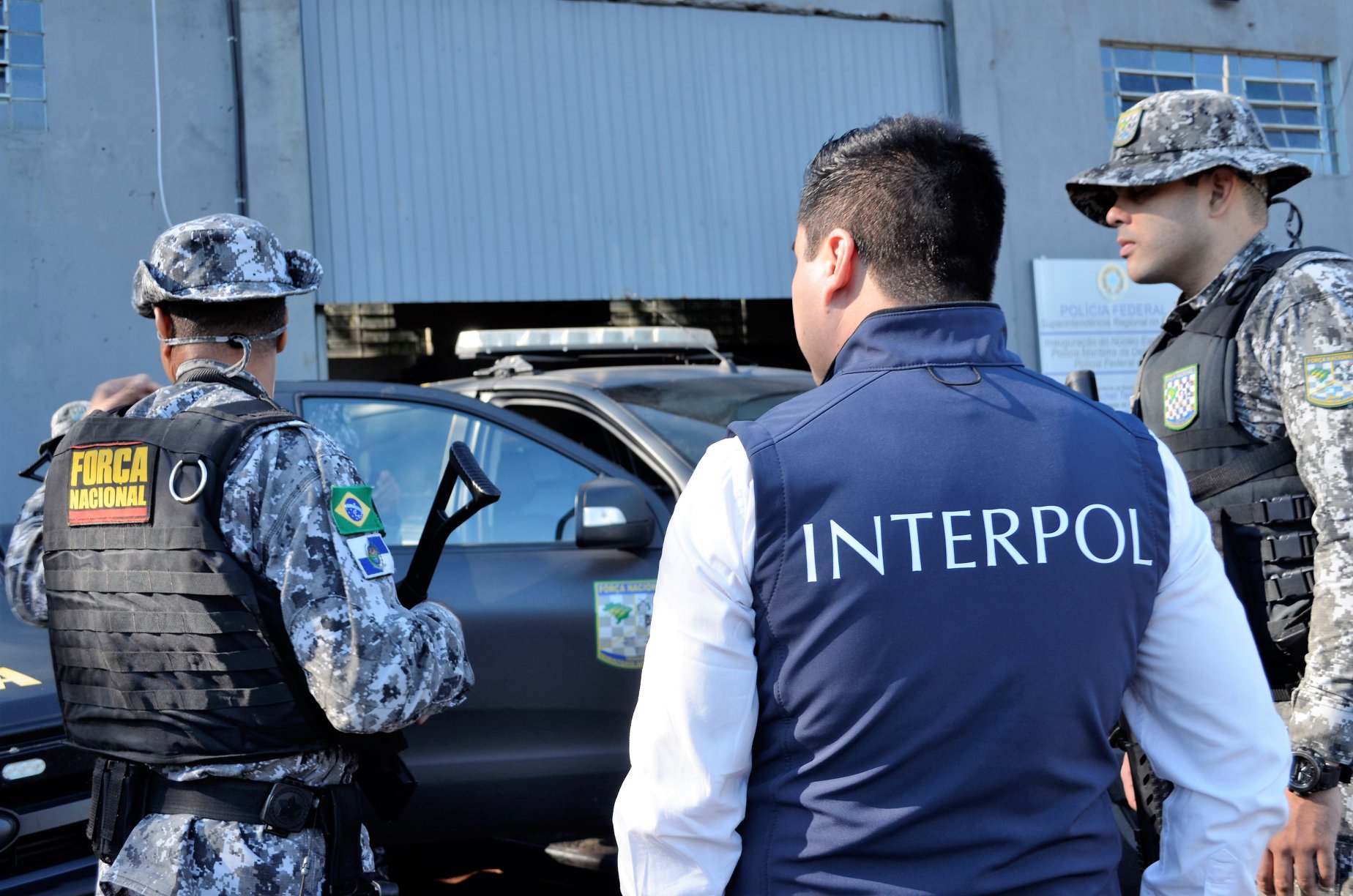
  • Turkey’s Abuse of INTERPOL: How Erdoğan Weaponized the International Criminal Police Organization for Transnational Repressio

    Turkey’s Abuse of INTERPOL: How Erdoğan Weaponized the International Criminal Police Organization for Transnational Repressio

    This report focuses on how the Turkish government, under President Recep Tayyip Erdoğan, has abused INTERPOL in a number of ways.

    The Erdoğan government has used the International Notice System, such as Red Notices and diffusions, to target political opponents who have done nothing more than criticize the government. Similarly, it has also abused INTERPOL’s Stolen and Lost Travel Documents Database (SLTD) by filing tens of thousands of notifications for critics and opponents who, in many instances, were not even aware that their passports had been invalidated. In several cases some of these people were stranded at international airports or put in detention before they were released or, in the worst cases, were handed over to Turkish operatives and ended up in Turkish prisons.

    “The Turkish government must be held responsible for abusing the INTERPOL system to commit human rights violations,” said Dr. Merve R. Kayıkcı, research director at the Stockholm Center for Freedom. “It is encouraging to see that the organization’s General Secretariat took considerable steps to safeguard the rights of innocent people and, in many cases, chose not to look the other way when the Turkish government went after critics without credible evidence.”

    The report sheds light on such abusive practices by providing information on how INTERPOL mechanisms work and the way Turkey misused them in various cases. It ends with policy proposals aimed at preventing future abuse of the system by autocratic regimes to target their opponents.

    In view of increasing attempts by repressive governments to abuse its mechanisms, INTERPOL needs to develop new ways to ensure that it operates strictly within the confines of its mandate and does not become an accomplice to transnational repression.

    “INTERPOL’s constitution explicitly forbids intervention or activities of a political, religious or racial nature and requires cooperation to be ‘in the spirit of the Universal Declaration of Human Rights’,” Dr. Kayıkcı said. “The governments of democratic countries might prevent abuse of INTERPOL mechanisms by verifying that a communication comports with the organization’s constitution before removing an individual from the country or denying visa, asylum or other immigration status and by not relying on INTERPOL notices as the sole basis for taking action.”

    About the Stockholm Center for Freedom

    SCF is a non-profit advocacy organization that promotes the rule of law, democracy and human rights with a special focus on Turkey.

    Committed to serving as a reference source by providing a broad perspective on rights violations in Turkey, SCF monitors daily developments, documents individual cases of the infringement of fundamental rights and publishes comprehensive reports on human rights issues.

    SCF is a member of the Alliance Against Genocide, an international coalition working to exert pressure on the UN, regional organizations and national governments to act on early warning signs and take action to prevent genocide.

  • Inmates subjected to insults, threats and battery in Turkish prisons: report

    A recent report jointly prepared by three human rights organizations in Turkey has revealed that inmates were subjected to insults, threats and battery in two prisons in Turkey’s southern Adana and Kahramanmaraş provinces, Turkish Minute reported, citing the Mezopotamya news agency.

    The report, prepared by the Çukurova Association for Assistance for Families of Prisoners and Convicts (Çukurova TUAYDER), the Lawyers Association for Freedom (ÖHD) and the Human Rights Association (İHD), is based on interviews with prisoners from the Kürkçüler T Type Closed Prison in Adana and the Türkoğlu L Type Prison No. 1 in Kahramanmaraş.

    Inmates Mehmet Emin Ado, Zafer Bahadır, Ömer Toluk and Mustafa Özer, who were on July 9 transferred from the Ceyhan M Type Closed Prison to the Kürkçüler T Type Closed Prison, both in Adana, were battered by the prison guards because they refused to undergo a strip-search while being admitted to the prison, Mezopotamya said.

    The inmates were insulted and attacked by the guards once again on Aug. 12, after they refused to form a line while they were waiting to be fingerprinted. Disciplinary proceedings were launched against them soon afterward.

    According to Mezopotamya, the four inmates’ request to be sent to the infirmary to get an assault report from the doctor after the attack on Aug. 12 was refused, and they were threatened by the head guard, who told them, “I’m the God of this place and you’ll do as I say.”

    Inmates Mehmet Erden, Sedat Karak and Veysi Altan in the Türkoğlu L Type Prison No. 1 were punished as a result of a disciplinary proceeding launched against them on the grounds that they went on a hunger strike in protest of the “isolation” of imprisoned leader of the outlawed Kurdistan Workers’ Party (PKK) Abdullah Öcalan, the report also said.

    The inmates were protesting Öcalan’s inability to speak with his lawyers, which is commonly referred to in Turkish media reports as his “isolation.”

    Despite the prisoners’ request to be in the same ward, the prison administration put them into separate wards far from each other in order to punish the inmates by preventing them from contacting one another, Mezopotamya said, adding that Karak wasn’t released on July 28, as was expected, due to the prison parole board’s negative evaluation of him.

    Although there have been widespread claims of torture in Turkey’s prisons and detention centers, especially since an attempted coup claimed the lives of more than 250 civilians in Turkey on July 15, 2016, they have so far not been investigated.  By SCF

  • Mother, father in pre-trial detention over Gulen links, 4-year-old looked after by grandmother

    Saliha Sayın and Rıza SAYIN, two Turkish citizens and the parents of a 4-year-old, have been held in pre-trial detention for over six months over alleged links to Turkey’s Gülen group, which is accused by the Turkish government of masterminding a coup attempt in July 2016.

    Their daughter, Elif, are looked after by her grandmother, according to an anonymous Twitter account.

    Saliha and Rıza are reportedly locked up in the Sungulu State prison for having “membership in an armed terrorist organization” and “attempting to destroy the unity of the state and nation.” The are scheduled to stand trial on August 19, 2021.

    Turkey survived a military coup attempt on July 15, 2016 that killed 249 people. Following the putsch, the Justice and Development Party (AKP) government along with President Recep Tayyip Erdoğan pinned the blame on the Gülen group, initiating a widespread purge aimed at cleansing members of the movement from within state institutions, dehumanizing its popular figures and putting them in custody.

    There are more than 17,000 women and over 500 kids in Turkish prisons.

    In several cases, women were detained in the hospital immediately after the delivery of her baby and before they had a chance to recover. Many women were jailed as they were visiting their imprisoned husbands, leaving the children stranded in the ensuing chaos.