Category: World

  • Photographs of former judge who died in prison cell shed light on poor conditions

    Photos of former judge Teoman Gökçe, 49, who died of a heart attack in a solitary prison cell on April 2, 2018, have been revealed by the Bold Medya news website, shedding light on the unsanitary conditions in which he was forced to live, the Stockholm Center for Freedom reported on Tuesday.

    Photographs show Gökçe’s belongings scattered all over the floor and his dinner left untouched on the radiator. The windows of his cell were boarded up so light could not enter the room. Gökçe had requested many times to be transferred from the solitary cell to a regular one with other inmates before his death.

    CCTV recordings at the prison show Gökçe in distress being taken to the ground floor by 10 guards. One starts to administer a heart massage while waiting for an ambulance. As the ambulance approaches three nurses get out and continue the heart massage, but Gökçe does not seem to respond. According to one of the guards, Gökçe’s face had turned purple and he was frothing at the mouth.

    Recordings show Gökçe was taken to the hospital 40 minutes after he was found unresponsive in his cell. His family demanded to know why it took so long for him to be hospitalized. They also wanted to know whether Gökçe had undergone a physical examination before his death and if the doctors had found a problem with his heart.

    Gökçe was arrested on July 21, 2016 for allegedly participating in a coup attempt on July 15, 2016. He was accused of membership in an armed terrorist group and attempting to overthrow the government. Gökçe was sent to Ankara’s Sincan T-Type Prison, where we was classified as a “dangerous prisoner” and was not allowed to interact with other inmates.

    Following the abortive putsch, the Turkish government declared a state of emergency and carried out a massive purge of state institutions under the pretext of an anti-coup fight. More than 130,000 public servants, including 4,156 judges and prosecutors as well as 29,444 members of the armed forces were summarily removed from their jobs for alleged membership in or relationships with “terrorist organizations” by emergency decree-laws subject to neither judicial nor parliamentary scrutiny.

    A total of 319,587 people have been detained and 99,962 arrested in operations against supporters of the Gülen movement, a worldwide civic initiative inspired by the ideas of Muslim cleric Fethullah Gülen, since the coup attempt, Turkey’s Interior Minister Süleyman Soylu said on November 22.

    Turkey’s Justice and Development Party (AKP) government launched a war against the Gülen movement after the corruption investigations of December 17-25, 2013 that implicated then-prime minister and current President Recep Tayyip Erdoğan’s family members and inner circle.

    Dismissing the investigations as a Gülenist coup and conspiracy, the AKP government designated the movement as a terrorist organization and began to target its members. The government locked up thousands, including many prosecutors, judges and police officers involved in the investigation, as well as journalists who reported on them.

    AKP government intensified the crackdown on the movement following the coup attempt on July 15, 2016 that they accused Gülen of masterminding. Gülen and the movement strongly deny involvement in the abortive putsch or any terrorist activity.

    Gökçe appealed several times to the Constitutional Court, saying his solitary confinement was unlawful. However, all his requests to be transferred to a regular cell were rejected.

    Gökçe was not the first inmate to be found dead in a solitary cell. Former teacher Muzaffer Özcengiz died in his cell on April 27, 2019. In a final letter Özcengiz had said the cell was unsanitary and that he was kept in inhumane conditions. “As my living conditions deteriorate, so is does my health,” he said. “My right to life is being violated, and for this reason I request to be transferred to a regular cell.”

    Özcengiz was also arrested on alleged Gülen links but was not given a reason as to why he was kept in a solitary cell.

    Former brigadier general Zaki Hasan committed suicide in his cell in Silivri Prison on April 30, 2019.

    Former deputy policy inspector Mustafa Kabakçıoğlu, 44, died in a solitary quarantine cell in August 2020. Post-mortem photographs revealed his cell was filthy and damp. He was left alone in the cell although he was struggling with multiple health problems.

    Speaking to Deutsche Welle Turkish service (DW), Peoples’ Democratic Party (HDP) deputy Ömer Faruk Gergerlioğlu said the Ministry of Justice had not disclosed the exact number of people in solitary cells.

    However, he said he believed the number had drastically increased after the government declared a state of emergency following the coup attempt. “The ministry is silent about the conditions in solitary cells,” he said. “Inmates in solitary cells are left to their fate. They do not have proper access to healthcare, they are not allowed to walk in the yard or participate in activities.”

    Gergerlioğlu added that according to the law an inmate can only be held in a solitary cell for a maximum of 20 days but that currently there were inmates in solitary cells who had been there for more than two years.

    Human rights activists have said the number of prisoners in solitary cells reaches into the thousands.
  • Working for Gülen-linked media, doubting gov’t coup story not grounds for terror charges: ECtHR

    The European Court of Human Rights (ECtHR) has ruled in the case of prominent journalist Nazlı Ilıcak that working for media outlets close to the Gülen movement and expressing doubts about the Turkish government’s narrative on an attempted coup are not plausible grounds for terrorism-related charges, Turkish Minute reported on Tuesday.

    The ECtHR has faulted Turkey for violating Ilıcak’s rights to liberty and security as well as freedom of expression, stating that the charges that led to her imprisonment for more than three years are not plausible.

    Ilıcak (77), was taken into custody on July 26, 2016, ten days after a failed coup, after which the Turkish government started a crackdown on civil society, purging state institutions and rounding up tens of thousands under the pretext of an anti-coup fight.

    Membership in a terrorist organization and participating in the attempted coup were the accusations lodged against Ilıcak, who was later arrested.

    The grounds of the charges were that she was working at that time in media outlets considered close to the Gülen movement, a faith-based group accused by Ankara of orchestrating the abortive putsch, and had posted tweets on July 15 and 16, 2016 in which she had questioned government’s coup narrative and expressed doubts that the Gülen movement was behind the attempt.

    Ilıcak was initially convicted and sentenced to life imprisonment, but the conviction was overturned by the Supreme Court of Appeals and, after a retrial, she was sentenced to eight years, nine months, this time “for voluntarily aiding and abetting a terrorist organization without holding membership in it.” She was released by the court under judicial supervision in November 2019, and in April 2021 the top appeals court again overturned Ilıcak’s conviction. The criminal proceedings are still ongoing.

    The ECtHR issued the ruling by six votes to one and said there had been no plausible reason to suspect Ilıcak of committing the offenses, noting that her writings on which the charges had been based concerned matters of public interest and fell within the scope of freedoms guaranteed by the European Convention on Human Rights.

    The ECtHR held that authorities’ accusations of terrorist activities could not be based on the applicant’s work as a journalist in certain media outlets and “on her tweets expressing doubts about the possible perpetrators of the attempted coup.”

    The Strasbourg court ordered Turkey to pay Ilıcak 16,000 euros in non-pecuniary damages.

    Following the coup attempt in July 2016 that claimed the lives of more than 250 civilians, Turkish President Recep Tayyip Erdoğan and his Justice and Development Party (AKP) government intensified its crackdown on media outlets and journalists critical of it under the pretext of an anti-coup fight.

    Turkey, which has dropped precipitously since it was ranked 100th among 139 countries when Reporters Without Borders (RSF) published its first worldwide index in 2002, the year the AKP came to power, was ranked 153rd out of 180 countries in the 2021 World Press Freedom Index.

    Crackdown on Gülen movement

    Turkey’s AKP government launched a war against the Gülen movement, a worldwide civic initiative inspired by the ideas of Muslim cleric Fethullah Gülen, following corruption investigations in late 2013 that implicated then-prime minister and current President Erdoğan’s close circle.

    The war against the movement culminated after the attempted coup because Erdoğan and his AKP government accused the movement of masterminding the abortive putsch and initiated a widespread purge aimed at cleansing sympathizers of the movement from state institutions, dehumanizing its popular figures and putting them in custody.

    Although both Gülen and the members of his group strongly deny any involvement in the coup attempt or any terrorist activities, Erdoğan’s AKP has detained a total of 319,587 people while jailing 99,962 over alleged links to the movement as part of a massive purge launched under the pretext of an anti-coup fight, according to the latest Interior Ministry data. SCF

  • 415 people tortured, 17 abducted in Turkey in 2021: report

    Four hundred fifteen people were tortured in prisons and detention centers in Turkey and 17 were abducted in the first 11 months of 2021, Turkish Minute reported, citing a report released by the Human Rights Foundation of Turkey (TİHV) and the Human Rights Association (İHD).

    According to TİHV data, 3,540 people, including 28 minors, were also subjected to ill-treatment as a result of security force intervention in peaceful protests and gatherings this year, while the İHD data showed the same figure to be 3,671.

    Among the 17 people who were abducted in 2021, 16 were released on the same day while one was released after five days, the report said, adding that 11 of them were subjected to torture or ill-treatment.

    The human rights report pointed out the disappearance of Yusuf Bilge Tunç in broad daylight on August 8, 2019, saying he has not been heard from since.

    Tunç’s family has consistently complained about the lack of cooperation from officials to find him after his wife unearthed details indicating that Tunç had been abducted.

    According to the report, at least 22 people died behind bars due to negligence, suicide, illness or violence, and 290 women died as a result of domestic violence in the first 11 months of 2021, while 1,853 workers were killed in workplace accidents in Turkey in the first 10 months of the year.

    A total of 119 people, including 36 security officers, 80 militants and three civilians, died in armed conflict in the country this year, and security forces killed nine people in raids and by firing arbitrarily into a crowd on the pretext that they did not obey an order to stop, the report also showed.

    Six people, including four children, were killed in accidents involving armored security vehicles in the country; nine people died as a result of racist or hate attacks; and 55.961 people, including 180 healthcare workers, died of COVID-19 in 2021, the organizations noted.

    The report further showed that investigations were launched into 36 members of the press, 45 journalists were detained and two were arrested this year, with 59 currently behind bars.

    Turkish courts blocked access to at least 945 online news articles and 53 websites belonging to seven media outlets, at least 41 social media posts and five social media accounts, the organizations further stated.

    Out of 14 people, including one minor, who were detained for insulting Turkish President Recep Tayyip Erdoğan in 2021, seven were arrested while one was placed under judicial supervision. SCF

  • Ex-soldier walks free as sentence suspended in rape case

    A Turkish court has handed down a suspended sentence to a former noncommissioned officer standing trial for raping İpek Er, an 18-year-old Kurdish woman who later committed suicide, Turkish Minute reported on Friday.

    In the sixth and final hearing of his trial on Friday, former soldier Musa Orhan was given a suspended sentence of 10 years by the Siirt 1st High Criminal Court on conviction of sexual assault.

    Since the sentence was suspended, Orhan wasn’t arrested but was rather placed under judicial supervision, Turkish media reports said.

    Human Rights Association (İHD) co-chair and lawyer Eren Keskin on Friday condemned Turkish judiciary for letting Orhan walk free.

    “İpek Er ended her life after the sexual assault she experienced. The attacker is free and most likely will flee in order to not ‘serve’ the sentence he was given. This is a place where a uniform and a wolf sign are held as ‘superior’ to both domestic and international law,” Keskin tweeted, referring to a photo of Orhan released by the Turkish media showing him making a hand sign of the Grey Wolves, representing a wolf’s head.

    The Grey Wolves are seen as the militant wing of the Nationalist Movement Party (MHP), an ally of President Recep Tayyip Erdoğan’s ruling Justice and Development Party (AKP), and their ideology is mainly based on Turkish nationalism. Therefore, Kurds and other minorities in Turkey have occasionally been their targets.

    The ordeal of Er, a Kurdish woman who died in a hospital on August 18, 2020, 33 days after she tried to take her own life, was discovered in a letter she wrote on July 16, 2020, before her suicide attempt. She said in the letter that she was abducted and raped by Orhan for 20 days in the southeastern city of Batman.

    Orhan was detained the following day after the rape allegation was confirmed by a report from the Council of Forensic Medicine but was later released under judicial supervision.

    Many women’s associations in Turkey criticized the decision, saying the judicial system was “protecting a rapist” by allowing him to walk free.

    In early October popular Turkish actress Ezgi Mola was convicted on insult charges and ordered to pay a fine of TL 5,200 ($377) for protesting Orhan’s release in a tweet in August 2020.

    “Drown in the conscience that let you release this rapist low-life,” Mola had tweeted, after the former soldier was released pending trial after six days behind bars, despite a forensics report confirming that he raped Er.

    Femicides and violence against women are serious problems in Turkey, where women are killed, raped or beaten every day. The Justice and Development Party (AKP) government’s policies that protect men by granting them impunity is the main cause of the situation, critics say.

    In late May Minister of Family and Social Services Derya Yanık attracted widespread criticism due to remarks suggesting that the country has experienced “tolerable levels” of domestic violence during the coronavirus pandemic while speaking to members of a committee investigating violence against women.

    Early in 2020 President Recep Tayyip Erdoğan sparked outrage in Turkey and the international community after he pulled the country out of the Council of Europe Convention on preventing and combating violence against women and domestic violence, better known as the Istanbul Convention, an international accord designed to protect women’s rights and prevent domestic violence in societies. SCF

  • UPDATE Greek police rescue 17 Turkish migrants in danger of freezing to death

    Cevheri Güven-Turkishminute

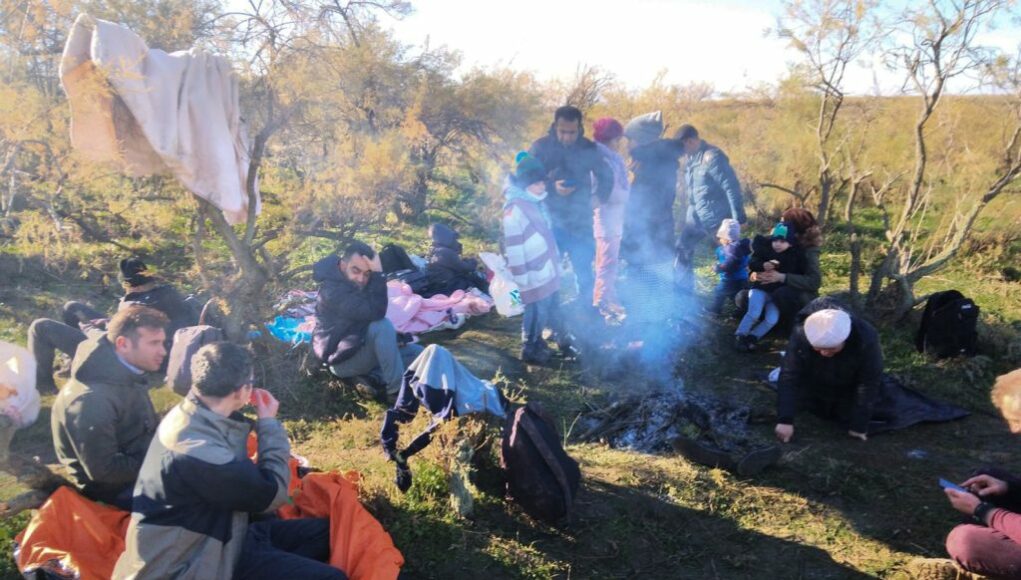
    The Greek police rescued 17 Turkish asylum seekers, including five children and four women, who crossed the Evros River from Turkey to Greece and were in danger of freezing to death, after the group made urgent calls for help.

    Following the pleas of the migrants, which circulated on social media and were amplified by Turkish journalists in exile, the stranded group shared a video showing a boat steered by Greek officers and said they were being rescued.

    Hasan Bal, one of the asylum seekers who fled to Greece due to the politically motivated cases against them, told Turkish Minute that the weather was freezing cold and that the condition of those in the group, especially the children, was terrible.

    Bal also said some migrants fell into the water and got drenched while crossing the river and therefore were more affected by the cold, and that they were about to run out of food.

    Stating that there were teachers, engineers and public servants in their group, Bal said all of them were facing politically motivated cases in Turkey, except for the children.

    “These cases were launched due to [our] links to the Gülen movement. For example, my sentences have been upheld [by higher courts]. We’re facing such penalties as seven years or 15 years [in prison]. We request political asylum in Greece. The children in our group may lose their lives if help doesn’t arrive at once,” he said.

    Indicating that they had all the evidence regarding the political cases against them, Bal also asked human rights organizations and rescue teams to come to their aid as soon as possible.


    Saying that he had heard about recent pushbacks from Greece, Bal said if they also faced a similar situation, they would be kept behind bars in Turkey for long years, and that they, therefore, would hope for courtesy from the Greek people and government.

    Yalçın Toker, the English teacher in the group, also explained their current situation in a video he recorded, calling on Greek authorities to provide them with urgent humanitarian help.

    “The weather is terribly cold. We need urgent humanitarian help. We don’t have enough food or water. Two of our group fell into the river, and they’re shivering now. We would be grateful if you could help us, please,” Toker said

  • 5 children among 17 migrants facing danger of freezing to death on Greek border

    5 children among 17 migrants facing danger of freezing to death on Greek border


    Seventeen Turkish asylum seekers who have crossed the Evros River from Turkey to Greece, including five children and four women, are in danger of freezing to death and calling on international community for help.

    One of the asylum seekers who had to flee to Greece due to politically-motivated cases against them, Hasan Bal, told Turkish Minute that the weather was freezing cold and the condition of those in the group, especially the children, was awful.

    Bal also said that some migrants fell into the water and got wet while crossing the river and therefore were more affected by the cold, and that they were about to run out of food.

    Stating that there were teachers, engineers and public servants in their group, Bal continued to say that all of them were facing politically-motivated cases launched against them in Turkey, except for the children.

    “These cases were launched due to [our] links to the Gülen movement. For example, my sentences have been upheld [by higher courts]. We’re facing such penalties as seven years or 15 years [in prison]. We request political asylum in Greece. Children in our group may lose their lives if help doesn’t arrive at once,” he said.

    Indicating that they had all the evidence regarding the political cases against them, Bal also asked human rights organizations and rescue teams to come to their help as soon as possible.

    Saying that he had heard about pushbacks from Greece recently, Bal expressed that if they also face a similar situation, they would be kept behind bars in Turkey for long years, and that they, therefore, expect courtesy from the Greek people and government.

    Yalçın Toker, the English teacher in the group, also explained their current situation in a video he recorded, calling on Greek authorities to provide them urgent humanitarian help.

    “The weather is terribly cold. We need urgent humanitarian help. We don’t have enough water, or sustenance. Two of our group members have fallen into the river, and they’re shaking now. We would be grateful if you could help us, please,” Toker said.

  • End-stage cancer patient released after spending 56 days in prison despite hospital reports

    Ayşe Özdoğan, who suffers from a rare form of cancer, was released on Friday after spending 56 days in prison despite hospital reports recommending her release, the Stockholm Center for Freedom reported.

    Özdoğan’s sister Emine Erdem shared the news on Twitter. “I would like to thank everyone who worked to achieve this,” she said. “I am too excited to list everybody.”

    Özdoğan, 34, a former teacher, was handed down a nine-year, four-month sentence for alleged links to the Gülen movement. An appeals court on June 11 upheld her sentence despite severe health problems.

    In a controversial decision, the İstanbul Council of Forensic Medicine stated on October 1 that Özdoğan was fit to remain in prison and that there was no sign of metastasis of the cancer in her body, despite a health report from Akdeniz University Hospital in Antalya saying she was not fit to stay in prison.

    Özdoğan was sent to prison on October 2 after authorities refused to postpone the execution of her sentence. The move drew criticism from human rights activists, doctors, opposition politicians, journalists and social media users.

    Özdoğan’s release came after a second report from the same hospital saying she was unfit to remain in prison.

    Özdoğan and her husband were detained on April 8, 2019 for alleged links to the movement, but she was released due to her son’s heart condition. Özdoğan developed cancer seven months later and underwent an operation on November 12, 2019. She was arrested shortly thereafter, convicted and sentenced.

    When she was released pending appeal on December 27, 2019, it was already too late for her second surgery, however, as the cancer had spread.

    Turkish President Recep Tayyip Erdoğan has been targeting followers of the Gülen movement since the corruption investigations of December 17-25, 2013, which implicated then-prime minister Erdoğan, his family members and his inner circle.

    Dismissing the investigations as a Gülenist coup and conspiracy against his government, Erdoğan designated the movement as a terrorist organization and began to target its members. Erdoğan intensified the crackdown on the movement following a coup attempt on July 15, 2016, that he accused Gülen of masterminding. Gülen and the movement strongly deny involvement in the abortive putsch or any terrorist activity.

  • Dismissed teacher reinstated 6 months after he died of cancer

    Atilla Yalçıntaş, 59, a primary school teacher who was fired from his job by a government decree without due process, was reinstated six months after his death, sparking outrage among human rights activists.

    According to the AydınHaberleri news website, the Yalçıntaş family received a call on Tuesday from local representatives of the Education Ministry informing them that Atilla Yalçıntaş had been reinstated to his job.

    Yalçıntaş was one of more than 130,000 civil servants who were removed from their jobs for alleged membership in or relationships with “terrorist organizations” by emergency decree-laws subject to neither judicial nor parliamentary scrutiny.

    According to his family, Yalçıntaş was a social person loved by his students and colleagues. After he lost his job, he was socially isolated and became introverted. They think this triggered his illness.

    Following a coup attempt on July 15, 2016, the Turkish government declared a state of emergency and carried out a massive purge of state institutions against its political opponents under the pretext of an anti-coup fight. In addition to firing more than 130,000 civil servants as well as 29,444 members of the armed forces, the government also shut down 164 media organizations, 1,058 educational institutions and 1,769 NGOs with emergency decree-laws without any due process.

    Atilla Yalçıntaş’s widow Munise said they would go to court about the people who filed the complaints against her husband that led to his dismissal. “Who are these people that … led to my husband’s death?” she asked. “They committed a crime, and they should pay for it.”

    Former public servants were not only fired from their jobs; they were also banned from working again in the public sector and getting a passport. The government made it difficult for them to work formally in the private sector, too. Notes were put on the social security database about dismissed public servants to deter potential employers.

    According to a joint report by the Justice for Victims Platform and Peoples’ Democratic Party (HDP) deputy Ömer Faruk Gergerlioğlu, the two-year-long state of emergency declared after the coup in Turkey caused immense suffering among public servants who were dismissed from their jobs by the government as well as their families.

    The dismissed public servants lost 70 percent of their average monthly income, a circumstance that reduced them to dire financial straits, according to a survey conducted for the report.

    According to the victims’ family members taking part in the survey, the biggest problem they have been facing is economic hardship (97.9 percent) followed by psychological problems (88.6 percent), loss of social prestige and social exclusion (83.7 percent), disintegration of social circles (83.1 percent), unemployment/lack of employment (80.4 percent) and lack of social security (73.2 percent).

    The survey indicates that 99.1 percent of the victims are college or university graduates or holders of master’s or doctoral degrees, which means an immense loss of human resources for Turkey’s public administration. SCF

  • We will use INTERPOL General Assembly to persuade the delegates to take a stance against Gülen movement: Turkish minister

    We will use the INTERPOL General Assembly, which began in İstanbul on Tuesday, to persuade officials and delegates to take a stance against the Gülen movement, Turkey’s Interior Minister Süleyman Soylu told Turkish media, the Stockholm Center for Freedom reported.

    Speaking to journalists about the International Criminal Police Organization’s general assembly, Soylu said INTERPOL has been rejecting Turkey’s Red Notice requests since an abortive coup on July 15, 2016 that his government blames on the Gülen movement.

    “It is not difficult to guess that this is an international position,” Soylu said. “We will take the INTERPOL meeting as an opportunity to … talk about our requests.”

    A Red Notice is a request to locate and provisionally arrest an individual pending extradition.

    In a video address to the meeting, Turkish President Recep Tayyip Erdoğan said his government expected the same level of cooperation that they have enjoyed in criminal cases from the INTERPOL Secretariat and member states in terrorism-related cases, too.

    “We expect strong solidarity especially in the case of FETÖ [a derogatory acronym used to refer to the Gülen movement as a terrorist organization] fugitives and the leaders of the separatist organization [referring to the outlawed Kurdistan Workers’ Party (PKK)], Erdoğan said.”

    Erdoğan has been targeting followers of the Gülen movement, a faith-based group inspired by Turkish cleric Fethullah Gülen, since the corruption investigations of December 17-25, 2013, which implicated then-Prime Minister Erdoğan, his family members and his inner circle.

    Dismissing the investigations as a Gülenist coup and conspiracy against his government, Erdoğan designated the movement as a terrorist organization and began to target its members. He locked up thousands including many prosecutors, judges and police officers involved in the investigations as well as journalists who reported on them.

    Erdoğan said Turkey is among the top countries in terms of the number of data/requests submitted to INTERPOL. “With over 2,000 Red Notices, Turkey is among the top 10,” he said.

    In an apparent reference to the rising criticism against the abuse of INTERPOL by authoritarian regimes to target their critics abroad, Erdoğan criticized what he called interference from some Western countries and international organizations in INTERPOL’s work. “It is important for INTERPOL to support the fight against terrorism unconditionally, without adjusting its approach based on the views of the member states,” he said.

    Erdoğan intensified the crackdown on the movement following the coup attempt in July 2016 that he accused Gülen of masterminding. Gülen and the movement strongly deny involvement in the abortive putsch or any terrorist activity.

    A total of 319,587 people were detained and 99,962 arrested in operations against supporters of the Gülen movement since the abortive putsch.

    In his address to the general assembly, Interior Minister Soylu said, “While in the 20 years between 1996 to 2016, 100 Red Notice requests that we filed were rejected, in the past five years since 2016, 982 Red Notice requests that we filed were denied.”

    According to Soylu, despite the fact that only 20 Red Notices issued in response to Turkey’s requests were cancelled from 1996 to 2016, the number of cancelled Red Notices had spiked to 374 since 2016.

    In the first day of the general assembly, Soylu met with INTERPOL President Kim Jong Yang as well as his counterparts from South Africa, Angola, Azerbaijan, Nigeria and Serbia.

  • Heating system doesn’t work in İstanbul’s Silivri Prison despite freezing temperatures

    Peoples’ Democratic Party (HDP) lawmaker Ömer Faruk Gergerlioğlu in a Monday tweet criticized the worsening conditions in İstanbul’s Silivri Prison, saying the heating system doesn’t work despite the extremely cold temperatures affecting the city.

    Sharing a letter from an inmate’s family member, Gergerlioğlu revealed that heating and warm water are currently not provided in Silivri Prison. “Is the prison administration trying to freeze inmates to death?” he asked.

    Prison conditions in Turkey have been the subject of much criticism. The European Court of Human Rights (ECtHR) posed a series of questions to the Turkish government about the abysmal conditions of Turkish prisons in April.

    The questions concerned complaints about overcrowding, unsanitary conditions and lack of access to open air areas as well as what social, cultural and sports activities the inmates are allowed to participate in.

    Inmates previously have complained about not being able to access proper healthcare.

    Since April 2020 four seriously ill prisoners over the age of 70 have died in penal institutions; five inmates suffering from cancer passed away shortly after they were released; and 16 died of chronic illnesses while imprisoned.

    The purge of thousands of dissidents in the aftermath of a coup attempt in July 2016 has filled Turkey’s prisons, which today are overcrowded with tens of thousands of political prisoners. As COVID-19 infections increased in the country, outbreaks in prisons became commonplace and disproportionately affected political prisoners.

    The Turkish parliament passed an early parole law on April 14 aimed at reducing the inmate population of the country’s overcrowded prisons due to the coronavirus pandemic. Yet, the legislation excluded political prisoners, including opposition politicians, journalists, lawyers, academics and human rights defenders convicted under the country’s controversial counterterrorism laws. The law prompted calls from the UN, the EU and rights groups for the non-discriminatory reduction of prison populations. SCF