Category: World

  • Far-right leader’s former advisor allegedly stole money from woman’s bag in restaurant

    Metin Özkan, a former media advisor to Turkey’s far-right Nationalist Movement Party (MHP) chairman Devlet Bahçeli, allegedly stole money from the handbag of a woman with whom he dined at an İstanbul restaurant, the Yeniçağ daily reported on Wednesday, posting a video recording of the incident on its website.

    Özkan dined at a restaurant in İstanbul with several people including a woman named Ufuk Enginler, who left her bag on a table near the entrance of the restaurant.

    In the video, recorded in December 2021, Özkan is seen extending his hand toward the bag, taking something from it and putting it in his pocket.

  • NBA’s Kanter named 2022 Courage Award winner for speaking out against China’s treatment of Uyghurs

    A cross-regional coalition of 25 human rights organizations has announced that its prestigious human rights award will go this year to Enes Kanter Freedom, an NBA athlete and outspoken critic of human rights violations in Turkey who is risking his career for speaking out against China’s persecution of ethnic Uyghurs, the Bold Medya news website reported on Wednesday.

    Kanter will accept the 2022 Courage Award on April 6, addressing a ceremony to be attended by UN ambassadors, human rights activists and journalists from around the world in town for the 14th annual Geneva Summit for Human Rights and Democracy, the coalition on Tuesday said in a statement.

    Hillel Neuer, the executive director of United Nations Watch, a co-organizer of the conference, together with Liberal International, the Human Rights Foundation and more than 20 other human rights groups, said that Freedom was chosen for his “heroic efforts to sound the alarm on China’s brutal human rights abuses.”

    “I want to say thank you to the Geneva Summit for Human Rights and Democracy for its support and for shining a global spotlight on human rights abuses in China,” Freedom said. “I hope this encourages other athletes to stand up for what is right.”

    “Despite China’s propaganda, the regime does not represent the Olympic values of respect and friendship, it’s a brutal dictatorship that oppresses its people,” said Freedom.

    The Geneva Summit has been a leading voice at the United Nations for the cause of the Uyghurs, hosting Uyghur dissidents such as Rebiya Kadeer in 2010, Bahtiyar Omer in 2011, Jewher Ilham in 2020, Nury Turkel in 2020, Rayhan Asat in 2021 and Rushan Abbas this year. It counts the World Uyghur Congress as one of its founding coalition partners.

    Previous laureates of the Courage Award include imprisoned Russian opposition leader Alexei Navalny, jailed Saudi blogger Raif Badawi and Mauritanian anti-slavery campaigner Biram Dah Abeid.

    Raised in Turkey, Kanter has been targeted for being an outspoken critic of Turkish President Recep Tayyip Erdoğan’s increasingly authoritarian policies and human rights record. Turkey canceled his passport and imprisoned his father in addition to an attempt to have him deported from Romania on May 20, 2017, during one of his international trips. His passport was briefly seized by the Romanian police upon a request from the Turkish government. The NBA said it had worked with the State Department to ensure Kanter’s release in Romania.

    When the basketball star condemned Chinese President Xi Jinping as a “brutal dictator” and labeled China’s Tibet policy “cultural genocide,” his games were pulled in China, with which the NBA enjoys a lucrative relationship.

    He has also called out the treatment of Uyghur Muslims in the Xinjiang region, putting special focus on products made in the region with forced labor.

    Kanter was recently traded from the Boston Celtics to the Houston Rockets, which then waived him, and no other team picked him up. Many suspect the NBA is punishing him for speaking out on China and trying to silence him.

    Earlier this month a number of Republicans in the US Senate expressed support for Kanter while criticizing the NBA for failing to also stand behind his cause.

  • Wife of jailed former officer says husband can barely see or move, requests his immediate release

    The wife of a former staff colonel who was convicted on coup charges said her husband’s heath had deteriorated to the point where he could barely see or move and requested his immediate release from prison, the Stockholm Center for Freedom reported.

    Speaking to the Bold Medya news website, Şebnem Çay said her husband Mustafa Özcan Çay, 46, suffered from multiple sclerosis (MS). “I’m praying that my husband won’t be the next prisoner to leave prison in a coffin,” she said.

    Çay was a decorated military officer who served in various national and NATO posts. In 2013, following complaints of a limp, he was diagnosed with MS. His treatments were going so well that he could even play some sports. Yet, that all changed with his arrest following an abortive coup in Turkey in July 2016.

    Çay was the duty officer on the night of the coup attempt at the İstanbul-based War Academies, graduate schools training staff officers. He was detained and later convicted on coup charges by an İstanbul court.

    According to Şebnem Çay, her husband did not receive proper treatment in prison and his health deteriorated. He was only taken to the hospital in 2019, three years after his arrest. Even after the hospital visit, Çay was only given medication and not physical therapy.

    Currently, Çay cannot take care of his daily needs, and two inmates volunteer to feed him, change his diaper and help with other daily necessities.

    Due to COVID-19 regulations, Çay is made to stay in a quarantine cell each time he goes to the hospital. However, quarantine cells are not equipped for a disabled person. Additionally, these cells are notorious for their poor conditions and overcrowding.

    Despite his severe health problems, the Constitutional Court denied Çay release from prison in December 2020 saying he had access to medical care and there was no evidence showing that his staying in prison posed a serious risk of bodily or mental harm.

    The failed coup killed 251 people and wounded more than a thousand others. The next morning, after announcing the coup had been suppressed, the Turkish government immediately started a wide-ranging purge of military officers, judges, police officers, teachers and other government officials that ultimately led to the dismissal of more than 130,000 civil servants from their jobs.

    A total of 24,253 military members were dismissed from the Turkish Armed Forces (TSK) in a post-coup purge, while investigations into 1,380 members of the military are currently underway.

    The purge of thousands of dissidents in the aftermath of the coup attempt in July 2016 has filled Turkey’s prisons, which today are overcrowded with tens of thousands of political prisoners.

    According to the Human Rights Association (İHD), as of June 2020 there were more than 1,605 sick inmates in Turkish prisons, approximately 600 of whom were critically ill. Although most of the seriously ill patients had forensic and medical reports deeming them unfit to remain in prison, they were not released. Authorities refuse to free them on the grounds that they pose a potential danger to society. In the first eight months of 2020, five critically ill prisoners passed away because they were not released in time to receive proper medical treatment.

  • Ailing philanthropist dies amid calls for his immediate release from prison

    Ailing philanthropist dies amid calls for his immediate release from prison


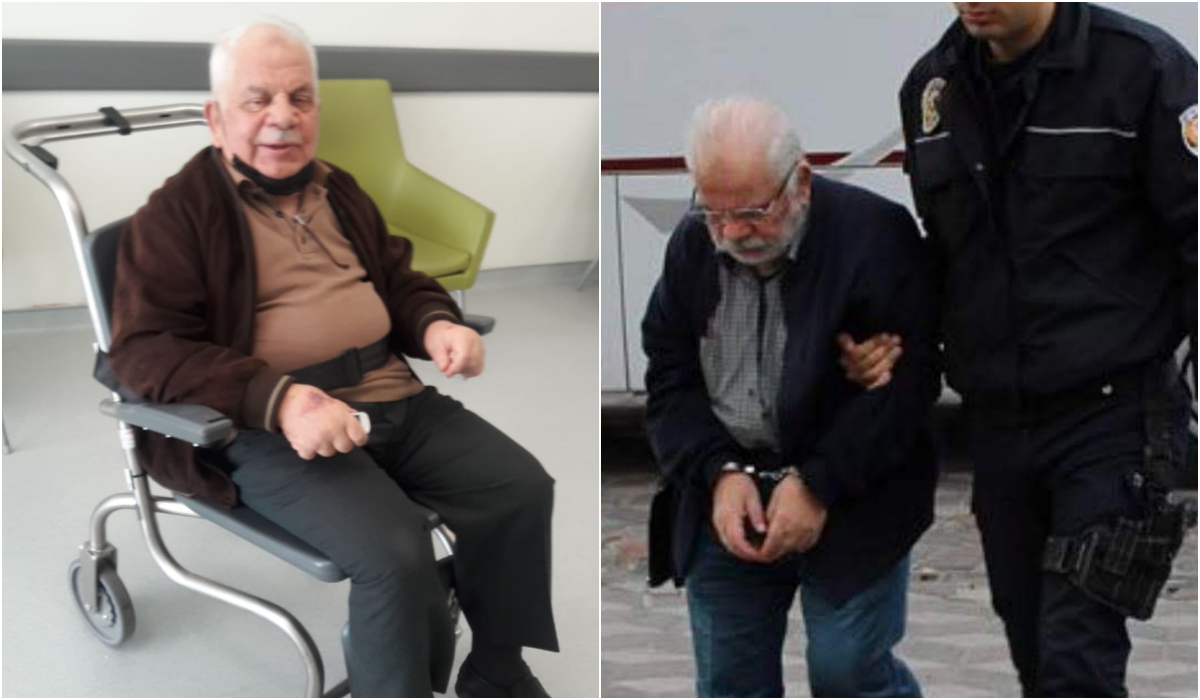
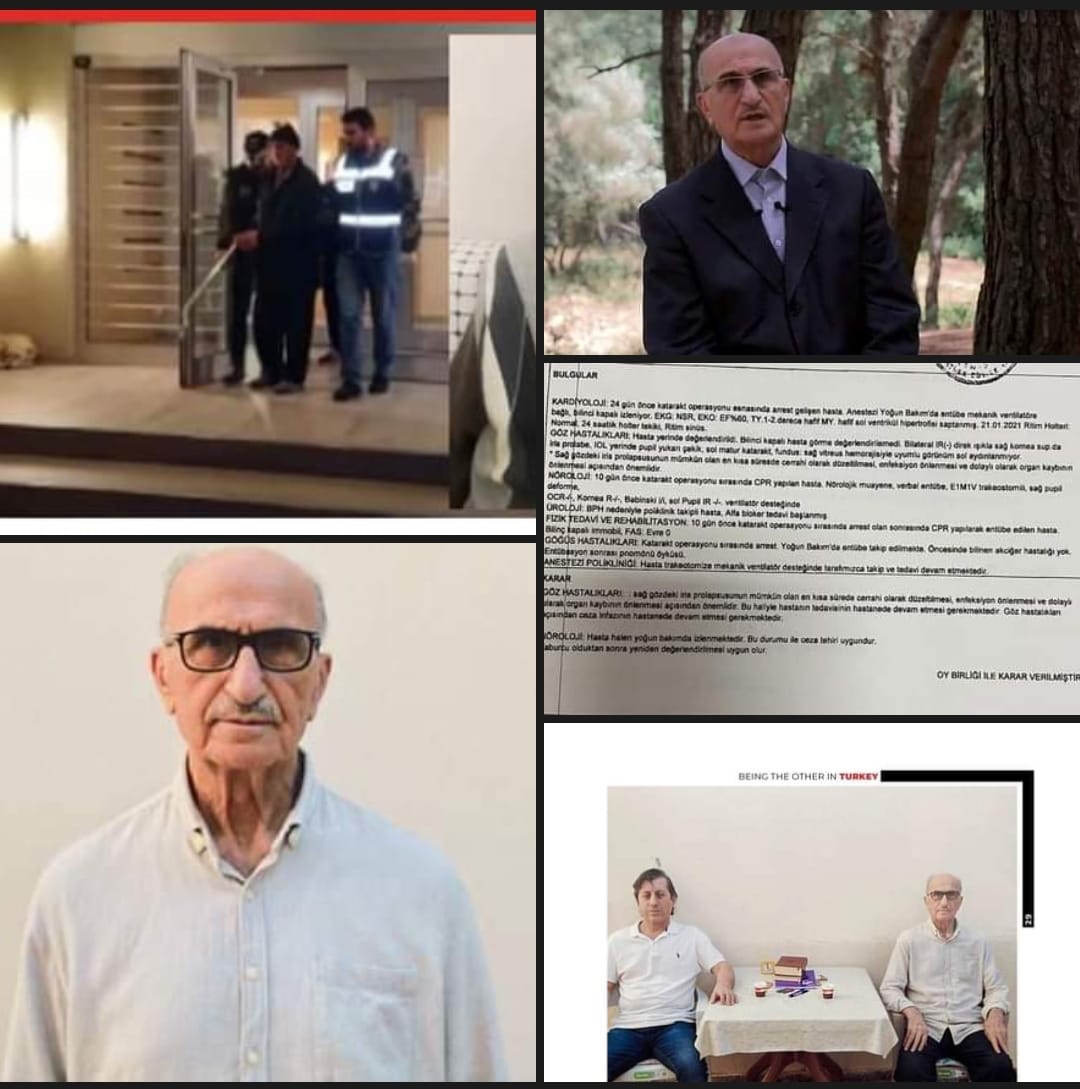
    Yusuf Bekmezci, a jailed 82-year-old businessman and philanthropist convicted of links to the Gülen movement, died on Saturday amid calls for his immediate release from prison, the Stockholm Center for Freedom reported.

    Bekmezci’s death was announced on Twitter by his daughter Şeyma Bekmezci. “The hospital informed us of my father’s death. We would like to thank everyone who had him in their thoughts,” she said.

    Bekmezci had been in a coma for the last 47 days and was in a hospital in western Izmir province. His family, human rights activists and opposition politicians repeatedly called on authorities to postpone Bekmezci’s sentence, who would otherwise have been sent back to prison if he had woken up from his coma.

    Peoples’ Democratic Party (HDP) Ömer Faruk Gergerlioğlu said on Twitter he had appealed to the Ministry of Justice for Bekmezci’s sentence to be postponed several times. “We did not want him to die in prison, but authorities have no conscience,” he said. “Even the Council of Forensic Medicine said he was not fit to remain in prison; however, the authorities insisted he was.”

    Bekmezci was arrested for alleged links to the Gülen movement and tried on charges of terrorism, with the prosecutor demanding a life sentence.

    The court handed down a sentence of 17 years, four months in April 2021.

    Earlier speaking to Bold Medya, his daughter Şeyma Bekmezci said her ailing father had been condemned to die in prison, adding that he could barely understand the court proceedings due to his advanced Alzheimer’s and was unable to defend himself. The lack of proper health care in prison had caused his mental state to deteriorate, she said. “He completely forgets himself in court and is in a vulnerable position.”

    Although Turkey’s Council of Forensic Medicine (ATK) issued a medical report saying Bekmezci was not fit to remain in prison, the İzmir 2nd High Criminal Court denied his release and said there was too much evidence against him.

    Bekmezci, underwent an operation on January 4 during which his heart stopped. Bekmezci was revived after 15 minutes of heart massage and electroshock and was taken to intensive care, where he remained unconscious until his death.

    Turkish President Recep Tayyip Erdoğan has been targeting followers of the Gülen movement, a faith-based group inspired by Turkish cleric Fethullah Gülen, since the corruption investigations of December 17-25, 2013, which implicated then-Prime Minister Erdoğan, his family members and his inner circle.

    Dismissing the investigations as a Gülenist coup and conspiracy against his government, Erdoğan designated the movement as a terrorist organization and began to target its members. He intensified the crackdown on the movement following a coup attempt on July 15, 2016 that he accused Gülen of masterminding. Gülen and the movement strongly deny involvement in the abortive putsch or any terrorist activity.

    Human rights activists and opposition politicians have frequently criticized authorities for not releasing critically ill prisoners so they can seek proper treatment.

    According to the Human Rights Association (İHD), as of June 2020 there were more than 1,605 sick inmates in Turkish prisons, approximately 600 of whom were critically ill. Although most of the seriously ill patients had forensic and medical reports deeming them unfit to remain in prison, they were not released. Authorities refuse to free them on the grounds that they pose a potential danger to society. In the first eight months of 2020, five critically ill prisoners passed away because they were not released in time to receive proper medical treatment.

  • Mega-star Tarkan’s subtly political new song goes viral in Turkey

    Mega-star Tarkan’s subtly political new song goes viral in Turkey

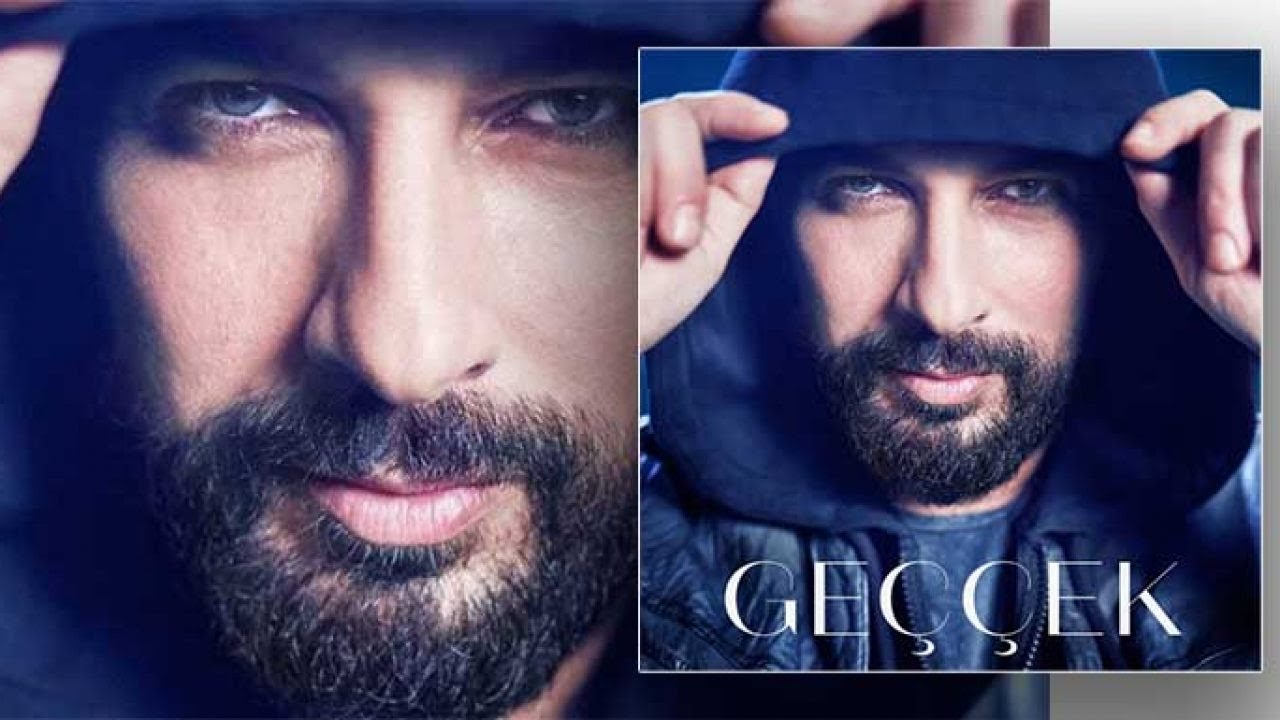
    A new song titled “It’ll pass” by world-famous pop singer Tarkan, which has political overtones and sends a message that the bad times in Turkey will pass and good days will soon come, has gone viral, local media reported on Thursday, with millions listening to the song in less than a day.

    The new video clip, which was released on YouTube at 9 p.m. on Thursday, has been viewed more than 4 million times in less than 24 hours, and the song’s lyrics became top trending topics on Twitter with academics, politicians and journalists among those who shared the song and commented on it.

    Some observers saw the song as a political message, even though the lyrics make no mention of President Recep Tayyip Erdoğan.

    Social media users described the song as an anthem to the opposition in the country, saying the lyrics “As it has come, so it will go. Everything has an end. This ordeal will end” and “Come on, that’s enough. We’re so bored. Get off our backs,” referred to Erdoğan and his ruling Justice and Development Party (AKP), which has been in power since 2002, while others thought it was a post-pandemic song promising better days ahead.

    In the last general election, held in June 2018, the AKP garnered a nationwide vote of 42.6 percent. However, public surveys have increasingly been showing the party’s public support to be slipping. According to the latest surveys, the party’s votes dropped to a historical low of below 24 percent.

    Erdoğan has been accused by his critics of creating one-man rule and destroying the separation of powers under the presidential system, which went into effect following a referendum in 2017, replacing the country’s parliamentary system and granting him vast powers while weakening parliament.

    Thousands of social media users commented on the song using the hashtags #Geççek (It’ll pass), #Gitçek (It’ll go away), and #TarkanYalnızDeğildir (Tarkan isn’t alone), which quickly became top trending topics on Twitter.

    “Turkey’s megastar Tarkan releases new song and it’s taking over waves, promising these bad days too will pass and to just hold on a little longer, since good days are to come. Hard not to connect it to Turkey’s dismal state of affairs and hope for change,” Louis Fishman, associate professor at Brooklyn College CUNY, tweeted on Thursday.

    Among the politicians who posted the video clip on Twitter were main opposition Republican People’s Party (CHP) spokesperson Faik Öztrak; İzmir Mayor Tunç Soyer from the same party; Meral Akşener, leader of the nationalist opposition Good (İYİ) Party, an ally of the CHP; and pro-Kurdish Peoples’ Democratic Party (HDP) lawmakers Garo Paylan and Hüda Kaya.

    “I listened to it. I bloomed. It’ll pass alright. Everything has an end. That day will come. … I’ll put on this tie that day,” journalist İrfan Değirmenci said, posting a photo of himself wearing a floral tie, in reference to the lyrics of the song.

    Tarkan said the state of the world over the past year had pushed him to despair, particularly environmental destruction and the COVID pandemic.

    “I wanted to write a song that would … maybe console us, lift our spirits or give us hope,” he said on YouTube.

    Tarkan, 49, who was born in Germany to Turkish parents, regularly comments on social and environmental issues.

    In 2009, he campaigned to stop the construction of a controversial dam in southeastern Turkey with a song titled “Wake up.”
     

  • Wife of critically ill prisoner urges authorities to release her husband before it’s too late

    The wife of Ahmet Zeki Özkan, a 65-year-old man who was arrested last week to serve a sentence for conviction of links to the Gülen movement despite suffering from end-stage cancer, urged authorities for the immediate release of her husband, the Stockholm Center for Freedom reported.

    Speaking to the Bold Medya news website, Yasemin Özkan said her husband suffers from lung cancer and that doctors only gave him a year to live. Özkan was sent to a prison in southern Antalya province and was confined to a quarantine cell.

    Inmates who have just arrived in prison are required to stay in a quarantine cell due to COVID-19 measures. However, these cells are notorious for their poor conditions and overcrowding.

    “My husband was not even provided with a bed,” said Yasemin Özkan. “He was just given a blanket and told to sleep on the floor. This is very detrimental to his health, as he can’t afford to be sick.”

    Özkan was diagnosed with lung cancer in October 2020. The Antalya Council of Forensic Medicine issued a report saying he was not fit to be incarcerated. However, the national Council of Forensic Medicine (ATK) issued a contradictory report, saying he could stay in a prison that had a doctor and an infirmary.

    The Antalya Chief Public Prosecutor’s Office ruled against the postponing of Özkan’s sentence based on the ATK report.

    As the number of sick prisoners dying in prison has increased, doubts about the credibility and independence of the council have grown, as the institution is affiliated with the Ministry of Justice.

    Yasemin Özkan added that the medication her husband took had serious side effects, which needed to be handled with the utmost of care. “He is susceptible to infections and skin irritation and lesions,” she said. “He needs constant care and can’t afford to lose weight.”

    Özkan was sentenced to six years, three months in prison. He was accused of donating to a charity affiliated with the Gülen movement and of sending his children to a private school that had links to the movement.

    Turkish President Recep Tayyip Erdoğan has been targeting followers of the Gülen movement since the corruption investigations of December 17-25, 2013, which implicated then-Prime Minister Erdoğan, his family members and his inner circle.

    Dismissing the investigations as a Gülenist coup and conspiracy against his government, Erdoğan designated the movement as a terrorist organization and began to target its members. He intensified the crackdown on the movement following a coup attempt on July 15, 2016 that he accused Fethullah Gülen, who inspired the movement, of masterminding.

    A total of 319,587 people were detained and 99,962 arrested in operations against supporters of the Gülen movement since the coup attempt, Turkey’s Interior Minister Süleyman Soylu said in November.

    According to the Human Rights Association (İHD), as of June 2020 there were more than 1,605 sick inmates in Turkish prisons, approximately 600 of whom were critically ill. Although most of the seriously ill patients had forensic and medical reports deeming them unfit to remain in prison, they were not released. Authorities refuse to free them on the grounds that they pose a potential danger to society. In the first eight months of 2020, five critically ill prisoners passed away because they were not released in time to receive proper medical treatment.

  • Turkey’s Council of Forensic Medicine says in controversial report ailing Kurdish politician fit to remain in prison

    Turkey’s Council of Forensic Medicine (ATK) on Tuesday presented to court its report on ailing Kurdish politician Aysel Tuğluk, saying she displayed symptoms of mild cognitive impairment and was fit to remain in prison, the Stockholm Center for Freedom reported, citing Turkish media.

    According to the report, which was sent to the Ankara 22nd Criminal Court, Tuğluk is in full command of her mental faculties. It added that Tuğluk could take care of herself and should continue treatment under a doctor’s supervision in prison.

    Tuğluk suffers from dementia and is currently kept in a maximum security prison in Kocaeli province. Earlier this year the court ordered that she be observed by the ATK for a maximum three-week period. However, the ATK sent her back to prison after three days.

    As the number of sick prisoners dying in prison has increased, doubts about the credibility and independence of the council have grown, as the institution is affiliated with the Ministry of Justice.

    Tuğluk was arrested on December 29, 2016, when she was deputy co-chair of the pro-Kurdish Peoples’ Democratic Party (HDP), along with seven other Kurdish opposition politicians. She was sentenced to 10 years in prison on charges of serving as an executive of a terrorist organization and taking orders from Abdullah Öcalan, the jailed leader of the outlawed Kurdistan Workers’ Party (PKK), an armed group listed as a terrorist organization by Turkey, the European Union and the US.

    Tuğluk has denied the accusations, saying she never called for violence and always sought democratic solutions to problems the Kurds faced.

    On September 5, 2021, her lawyers issued a written statement saying Tuğluk was sick and was denied access to proper healthcare in prison, without disclosing her illness. It was later revealed she was showing symptoms of dementia.

    Several human rights organizations have objected to the ATK report, saying she was sent back to prison to die. Exiled journalist Can Dündar said on social media the decision only aimed to inflict further suffering.

    Barış Yarkadaş, a former lawmaker from the Republican People’s Party, said he could not believe the ATK could make such a heartless decision.

    Social media group 1000 Women for Aysel Tuğluk said they would organize a demonstration against Tuğluk’s continued incarceration.

    “The ATK’s job is to make fair and ethically appropriate decisions. What they have done today is political and violates human rights. Therefore, we demand the immediate release of Aysel Tuğluk,” they said.

    In January several nongovernmental organizations in a letter urged the United Nations to take “urgent” action for the release of Tuğluk, saying her health had deteriorated considerably.

    The letter urged UN rapporteurs and the Working Group on Arbitrary Detention for urgent action to intervene against ongoing rights violations targeting Tuğluk, specifically asking them “to urge the Turkish Government to immediately release Aysel Tuğluk and other severely ill prisoners who are not fit to remain in prison in compliance with Turkey’s domestic and international law obligations” and “to communicate the concerns in relation to violation of prisoners’ rights to medical services and to investigate the circumstances behind the refusal to release severely ill prisoners.”

    The letter also urged UN rapporteurs and the working group “to invite the Turkish Government to ensure that all prisons in Turkey have an adequate number of medical staff, including doctors and that they work freely without any undue interference with their work” and “to ensure the Turkish Government allows greater accountability and transparency of prison living conditions by enabling visits and inspections from human rights groups and nongovernmental entities.”

    According to her lawyer, Tuğluk was issued a report by a medical board comprising nine physicians at Kocaeli University Hospital stating that she couldn’t survive on her own. Tuğluk was denied release after a brief examination, despite the medical board report.

    Human rights activists and opposition politicians have frequently criticized authorities for not releasing critically ill prisoners so they can seek proper treatment. Human rights defender and HDP deputy Ömer Faruk Gergerlioğlu said ill prisoners were not released until they were at the point of no return.

    HDP deputy Züleyha Gülüm said political prisoners were the most disadvantaged and were often the least likely to be released in the event of a serious health problem.

  • Republicans slam NBA failure to support Kanter’s stance on China’s treatment of Uyghurs

    A number of Republicans in the US Senate have expressed support for former Boston Celtics center Enes Kanter Freedom, an outspoken critic of human rights violations in Turkey and China’s treatment of Uyghurs, while criticizing the NBA for failing to also stand behind his cause, local media reported on Thursday.

    After the Celtics traded Freedom to the Houston Rockets on Feb. 10, the Rockets unceremoniously waived Kanter Freedom within minutes, and no other team picked him up.

    According to a report by The Hill on Wednesday, Kanter Freedom told PBS’s “Firing Line” last week that his professional basketball career would likely be cut short because of his criticism of China’s policies.

    Last year he slammed China’s leader Xi Jinping and labeled China’s Tibet policy “cultural genocide.”

    He has also called out the treatment of Uyghur Muslims in the Xinjiang region, putting special focus on products made in the region with forced labor.

    Kanter Freedom on Wednesday attended a Senate Republican closed-door lunch hosted by Utah Sen. Mike Lee, chairman of the Senate Republican Steering Committee.

    “[It’s] an honor to host Enes Freedom today. He has taken a noble stand against genocide in China. [I’m] proud he’s an American and taking a stand for freedom!” Lee tweeted on Wednesday.

  • Turkey jails reporters after failed appeal in state secrets trial

    Two journalists convicted of violating Turkey’s state secrets law said on Tuesday they were returning to prison after losing an appeal against their jail sentences, Agence France-Presse reported.

    The 2020 trial concerned a news report alleging that a Turkish intelligence officer was killed in Libya after Ankara provided support to the UN-recognized government in Tripoli.

    The İstanbul court in September 2020 sentenced Aydın Keser, Ferhat Çelik and Murat Ağırel, who works for the Yeniçağ daily, to four years and eight months in jail each on charges of violating the Turkish National Intelligence Organization (MİT) law.

    It sentenced then OdaTV editor-in-chief Barış Pehlivan and reporter Hülya Kılınç to three years and nine months each on the same charges.

    Ağırel and Pehlivan tweeted on Tuesday that they were returning to jail.

    “A third time… We’re here, we’re going… Goodbye for now,” Pehlivan tweeted, with a selfie in front of what appeared to be İstanbul’s main Çağlayan courthouse.

    “I am going to prison again because I called the sons who were martyred for the homeland martyrs,” Ağırel tweeted.

    “People who cannot deny anything I have written until now think they can silence me with injustice,” he added.

    Turkey comes under frequent criticism from rights defenders, who say Ankara undermines media freedom by jailing journalists and shutting down critical media outlets.

    Reporters Without Borders placed Turkey 153rd out of 180 nations on its Press Freedom Index for 2021.

  • 84-year-old Nusret Muğla dies after contracting COVID-19 in prison

    84-year-old Nusret Muğla dies after contracting COVID-19 in prison

    Nusret Muğla,  an 84-year-old ailing man who was serving a sentence on conviction of links to the Gülen movement, passed away on Sunday after contracting COVID-19 in prison, the Stockholm Center for Freedom reported, citing the Bold Medya news website.

    Muğla was admitted to the hospital on Saturday after displaying symptoms of the virus. In an earlier phone call to his son, Muğla had said a new inmate appeared to be sick and also did not feel well.

    Muğla was incarcerated in a prison in western Manisa province despite suffering from multiple health problems including heart and kidney disease and prostate cancer. Muğla needed frequent medical attention and was kept in a quarantine cell for long periods of time.

    Inmates who need to go to the hospital are required to stay in a quarantine cell when they return to prison due to COVID-19 measures. However, these cells are notorious for their poor conditions and overcrowding.

    Muğla’s death sparked outrage and sorrow among many human rights activists and opposition politicians.

    Peoples’ Democratic Party (HDP) deputy Ömer Faruk Gergerlioğlu tweeted that Muğla’s death could be considered murder because he should not have been in prison in his condition.