Category: Politics

  • 53 teachers died by suicide after dismissal from their jobs: labor union

    Fifty-three teachers died by suicide in Turkey after being dismissed from their jobs by emergency decree-laws in the aftermath of a coup attempt in July 2016, Deutsche Welle (DW) Turkish service reported, citing data from the left-wing Education and Science Workers’ Union (Eğitim-Sen).

    Many laborers took their own lives when they could no longer endure the difficulties they encountered during this period or due to social isolation and pressure, İkram Atabay, secretary-general of Eğitim-Sen, himself a dismissed teacher, told DW.

    According to Eğitim-Sen a total of 67,609 educators, including teachers and university professors, were dismissed from their jobs for alleged membership in or relationships with “terrorist organizations” since the abortive putsch. An additional 20,000 teachers lost their jobs after the private schools they worked in were shut down by emergency decree-laws due to similar allegations.

    In a 2017 report Eğitim-Sen said the number of dismissed educators was far higher than that of military personnel and police officers. “This clearly shows that the real coup was against the education sector and educators,” the report said.

    Following the failed coup, the Turkish government declared a state of emergency and carried out a massive purge of state institutions under the pretext of an anti-coup fight. More than 130,000 public servants, including 4,156 judges and prosecutors, as well as 29,444 members of the armed forces, were summarily removed from their jobs for alleged membership in or relationships with “terrorist organizations” by emergency decree-laws subject to neither judicial nor parliamentary scrutiny.

    Former public servants were not only fired from their jobs; they were also banned from working again in the public sector and getting a passport. The government also made it difficult for them to work formally in the private sector. Notes were put on the social security database about dismissed public servants to deter potential employers.

    “Dismissed teachers are not able to work in the private sector. If the police learn that a workplace employs them, they raid their offices and fine them,” human rights defender and Peoples’ Democratic Party (HDP) deputy Ömer Faruk Gergerlioğlu told DW.

    Police raided 45 educational institutions last Saturday in Aksaray province, joined by auditors from the Social Security Institution (SGK), the Education Ministry and the tax administration. According to the pro-government Sabah daily, the authorities acted on complaints that said the institutions were employing dismissed teachers.

    Gergerlioğlu said even if dismissed teachers want to learn new skills to work in another job, the Turkish Employment Agency (İŞKUR) does not allow them to attend free vocational courses.

    Last year Nebi Toylak, a former public school teacher, attended a greenhouse cultivation course to explore new career opportunities. Yet, after the first session he received a telephone call from the provincial directorate of agriculture, which was putting the course on together with İŞKUR, telling him he could no longer attend the program because he was a dismissed public servant.

    Gergerlioğlu said he met with the education minister about the restrictions on dismissed teachers working in private schools, but the minister said he couldn’t do anything about the situation. “Everyone looks to the [presidential] palace for decisions. One instruction from there determines everything,” Gergerlioğlu said.

    According to Atabay both the State of Emergency Procedures Investigation Commission (OHAL Commission) and courts take too much time to process cases filed by the teachers against their dismissal.

    “It has been five years, and the commission is unable to finish the cases they have,” Atabay said. “Likewise, it takes ages for courts to rule on cases brought before them by applicants whose cases were denied by the OHAL Commission.”

    According to Eğitim-Sen a total of 11,544 cases filed by teachers are pending at the OHAL Commission.

    The OHAL Commission was established as an appeals body under pressure from the Council of Europe in order to relieve the European Court of Human Rights (ECtHR) of a huge workload emanating from tens of thousands of Turkish applicants who couldn’t take their cases to Turkish courts.

    According to critics, the commission’s role is simply to delay or prevent possible ECtHR decisions against Turkey. The commission is also accused of bias as it is led by former Justice Ministry deputy undersecretary Selahaddin Menteş, who had been openly supportive of Turkish President Recep Tayyip Erdoğan. SCF
  • Former mayor of Diyarbakır from HDP acquitted of terrorist propaganda charges

    Adnan Selçuk Mızraklı, former mayor of southeastern Diyarbakır province from the Peoples’ Democratic Party (HDP), was acquitted from charges of disseminating terrorist propaganda, Turkish media reported.

    Mızraklı was accused of taking part in a three-day hunger strike, posting a Tweet in support of Kurdish activist Ramin Hossein Penahi who was executed in Iran, and taking part in a conference organized by the HDP in October 2018 where the situation of the Kurdish population was discussed.

    In his defense Mızraklı said democracy and human rights had taken a turn for the worse in Turkey, especially since the July 15, 2016 coup attempt. Mızraklı added that he did not accept the accusations as his only goal was to ensure the restoration of democracy in Turkey.

    “I reject accusations of terrorist propaganda,” he said. “Whatever I did, I did for peace and democracy.”

    Mızraklı pointed out the Turkish authorities had yet to release the Kurdish leader Selahattin Demirtaş despite a European Court of Human Rights (ECHR) ruling. “We want to believe that Turkey upholds the law, but that is not the case,” he said.

    He remined the Venice Commission’s call in 2020 to the Turkish government urging them to reinstate the HDP mayors who were removed from their posts in southeastern provinces, and said authorities had completely disregarded this call.

    The Ankara 28th Criminal Court ruled that Mızraklı had not carried out terrorist propaganda but exercised his freedom of expression.

    Mızraklı is currently imprisoned in Kayseri Bünyan Prison for alleged links to the outlawed Kurdistan Workers’ Party (PKK), which  is listed as a terrorist organization by Turkey, the European Union and the US.

    He was removed from his office as mayor by the Ministry of the Interior on August 19, 2019 and a trustee was appointed in his place. Mızraklı was arrested in October 2019 and sentenced to nine years and four months in prison. An appeals court upheld his sentence in March 2020.

    Mayors Keziban Yılmaz, Gülcan Özer and Rojda Nazlıer, were also removed from their post and later arrested for alleged links to the PKK.

    Human Rights Watch said the Turkish authorities’ removal and arrest of democratically elected Kurdish mayors across southeastern Turkey violated voters’ rights.

    “Removing, detaining, and putting on trial local Kurdish politicians as armed militants with no compelling evidence of criminal activity seems to be the Turkish government’s preferred way to wipe out political opposition,” said Hugh Williamson, Europe and Central Asia director at Human Rights Watch. “These cases are not linked to any legitimate counterterrorism effort but trample the rights of the mayors and the 1.8 million voters who elected them.” SCF

  • Advocacy group launches campaign for release of jailed journalist Ünal

    Jailed Journos, an advocacy organization that helps imprisoned press members in Turkey make their stories heard, on Tuesday launched a campaign on social media for the release of veteran journalist Mustafa Ünal, who has been jailed for over five years on politically motivated charges, Turkish Minute reported.

    In a tweet Jailed Journos asked Sözcü daily columnist Deniz Zeyrek, Hürriyet daily columnist Abdülkadir Selvi, Cumhuriyet columnist Mustafa Balbay, Yenişafak columnist Mehmet Acet and journalist Mustafa Kartoğlu, Ünal’s colleagues “who knew him well,”  to support their campaign for his release.

    The organization also called on former President Abdullah Gül, former Deputy Prime Minister and Parliament Speaker Bülent Arınç and Justice Minister Abdülhamit Gül, in addition to President Recep Tayyip Erdoğan, “who knew Ünal very well and invited him on his private plane several times,” to show their support  for the jailed journalist.

    Ünal, 53, a seasoned journalist and former Ankara bureau chief for the now-closed Zaman daily, was arrested after a military coup attempt in Turkey on July 15, 2016 and was handed down a jail sentence of 10 years, six months by an İstanbul court in July 2018 on charges of membership in a terrorist organization. He has been serving his sentence in Ankara’s Sincan Prison.

    The Zaman daily, which was Turkey’s best-selling newspaper, was closed down along with dozens of other media outlets due to their links to the Gülen movement, a faith-based group that focuses on science education, volunteerism, community involvement, social work and interfaith and intercultural dialogue and is inspired by the teachings of Muslim preacher Fethullah Gülen.

    Erdoğan has been waging a crackdown on followers of the movement since the corruption investigations of December 17-25, 2013, which implicated then-Prime Minister Erdoğan, his family members and his inner circle. Designating the group as a terrorist organization, Erdoğan intensified the crackdown on the movement following the coup attempt in July 2016, which he accused Gülen of masterminding. Gülen and the movement strongly deny involvement in the abortive putsch or any terrorist activity.

    A number of Ünal’s colleagues shared posts under the hashtag #FreeMustafaUnal as part of the online campaign started by Jailed Journos on Tuesday.

    “What did he do? He wrote columns! That’s it,” journalist Said Sefa said in a tweet, also using the hashtag #gazeteciliksuçdeğildir (Journalism is not a crime) and criticizing the terrorism charges against Ünal, which are based on nine of his columns.

    “There’s nothing in Mustafa Ünal’s indictment. They tried to make a few quotes from his writings into a crime. All media representatives in Ankara were familiar with his journalism, but none of them made a sound [about the politically motivated charges he faced]. … What a shame,” journalist Cevheri Güven tweeted on Tuesday.

    “Mustafa Ünal is a criminal because he did journalism. The cost of doing journalism under the [ruling Justice and Development Party] AKP regime is [being sent to] prison! We’ll continue shouting ‘Journalism is not a crime!’” journalist Hasan Cücük said.

    Turkey, which is among the top jailers of journalists in the world, was ranked 153rd out of 180 countries in the Reporters Without Borders (RSF) 2021 World Press Freedom Index published in April.

    According to the Stockholm Center for Freedom’s “Jailed and Wanted Journalists in Turkey” database, 174 journalists are behind bars in Turkey and 167 are wanted and either in exile or at large. The database was last updated on April 14, 2021. SCF

  • 43 people detained for aiding families of post-coup victims

    Forty-three people, 16 of whom are dismissed public officers, were detained in the northern province of Ordu for helping the families of individuals targeted by a post-coup crackdown in Turkey, Bold Medya reported.

    The suspects were taken into custody on Friday based on detention warrants issued by the Ordu Chief Public Prosecutor’s Office. They were accused of providing food and financial assistance to the families of people who were arrested in the post-coup crackdown or removed from their state jobs and hence deprived of the means to make a living.

    Turkish President Recep Tayyip Erdoğan has been targeting followers of the Gülen movement, inspired by Turkish Muslim cleric Fethullah Gülen, since the corruption investigations of December 17-25, 2013, which implicated then-Prime Minister Erdoğan, his family members and his inner circle.

    Dismissing the investigations as a Gülenist coup and conspiracy against his government, Erdoğan designated the movement as a terrorist organization and began to target its members. He intensified the crackdown on the movement following an abortive putsch on July 15, 2016 that he accused Gülen of masterminding. Gülen and the movement strongly deny involvement in the coup attempt or any terrorist activity.

    After the coup attempt, the Turkish government declared a state of emergency and carried out a massive purge of state institutions under the pretext of an anti-coup fight. More than 130,000 public servants, including 4,156 judges and prosecutors, as well as 29,444 members of the armed forces were summarily removed from their jobs for alleged membership in or relationships with “terrorist organizations” by emergency decree-laws subject to neither judicial nor parliamentary scrutiny.

    Former public servants were not only fired from their jobs; they were also prohibited from working again in the public sector and getting a passport. The government also made it difficult for them to work formally in the private sector. Notes were put on the social security database about dismissed public servants to deter potential employers.

    Turkish Interior Minister Süleyman Soylu said on February 20, that a total of 622,646 people have been the subject of investigation and 301,932 have been detained, while 96,000 others have been jailed due to alleged links to the Gülen movement since the failed coup. The minister said there are currently 25,467 people in Turkey’s prisons who were jailed on alleged links to the movement.

    In addition to the thousands who were jailed, scores of other Gülen movement followers had to flee Turkey to avoid the government crackdown. SCF

  • 200 lawyers express support for Şenyaşar family demanding justice in political murder case

    Two hundred lawyers have expressed support for Emine Şenyaşar and her son Ferit Şenyaşar, who have been protesting in front of the Şanlıurfa Courthouse in southeastern Turkey to seek justice for three members of their family who were killed by the relatives and bodyguards of İbrahim Halil Yıldız, a deputy from the ruling Justice and Development Party (AKP).

    Lawyers visiting the Şenyaşar family on Friday said they would continue providing legal assistance in their case.

    Emine Şenyaşar and her son began a sit-in in March and have continued their protest for 202 days in front of the courthouse, demanding a fair trial and effective investigation of the incident.

    Last week Emine Şenyaşar called on lawyers to support their demand, saying they were only two people and needed the support of lawyers.

    The mother and son were briefly detained in March, and their placards have repeatedly been seized by the police.

    Esvet Şenyaşar and two of his sons, Adil and Celal, were brutally murdered on June 14, 2018 in Şanlıurfa province.

    They were initially attacked in their store and taken to a hospital. However, they were followed by the family of AKP deputy Yıldız to the hospital, where they were ultimately killed. Eight more people were injured during clashes between the two groups. An older brother of Yıldız was also killed.

    According to Ferit Şenyaşar, bullets from 17 different guns were retrieved from the body of one of his brothers.

    Two brothers of the Şenyaşar family, Ferit and Fadıl, who were injured but survived, were later detained, and Fadıl Şenyaşar was arrested. However, none of Yıldız’s relatives or his bodyguards were detained despite the fact that three people had died.

    Only 15 months later, on September 18, 2020, was Yıldız’s older brother Enver Yıldız arrested.

    The Yıldız family claimed the Kurdish Şenyaşar family had links to the outlawed Kurdistan Workers’ Party (PKK) and that they had been victims of terrorism. SCF

  • Purge-victim military cadets demand justice in Toronto for jailed friends

    A group of protestors gathered at Toronto’s famed Nathan Phillips Square on Friday to demand the release of hundreds of military cadets, who were imprisoned by the Turkish government following a coup attempt in July 2016.

    The protestors consisted of several military cadets who managed flee Turkey in order to avoid persecution at the hands of the government following the failed attempt.

    A total of 259 military cadets were detained on coup charges on July 16, 2016 and were jailed pending trial four days later. On January 19, 2018, a total of 37 of them were given life sentences on charges of attempting to overturn the constitutional order and attempting to overthrow the Turkish government and parliament by use of force as well as membership in a terrorist organization. On May 18, 2018, 62 others were sentenced to life in prison over similar charges.

    On May 25, 2018, 116 cadets and on July 17, 2018, 44 more cadets were imprisoned for life on charges of attempting to destroy the constitutional order due to their alleged role in a coup attempt.

    The cadets say they had no information about a coup attempt unfolding and were acting on orders from their superiors, who told them there was a terrorist attack.

    The military coup attempt killed 251 people and wounded more than a thousand others. Immediately after the abortive putsch, the Justice and Development Party (AKP) government along with President Recep Tayyip Erdoğan pinned the blame on the Gülen group. The group denies any involvement in the attempt. by TurkeyPurge

  • Turkey orders detention of 100 people over alleged Gülen links in a week

    Turkey orders detention of 100 people over alleged Gülen links in a week

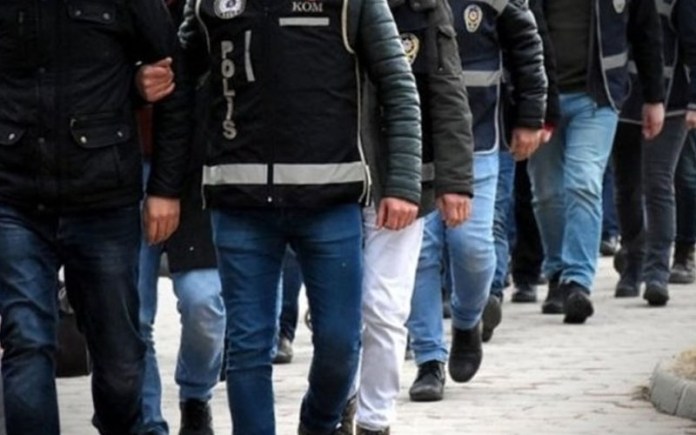
    Turkish authorities have over the past week ordered the detention of 100 people including employees of a private security company and active duty, retired and dismissed military officers as well as civilians due to alleged links to the Gülen movement.

    According to the state-run Anadolu news agency the Ankara Chief Public Prosecutor’s Office on Friday issued detention warrants for 51 civilians and active duty, retired and former military officers over alleged Gülen links.

    The Anadolu Chief Public Prosecutor’s Office in İstanbul on Tuesday ordered the detention of 16 employees and executives of the Hisar security company. According to the office, the security company was established by former executives of Kaynak Holding, which was seized by the Turkish government in November 2015 due to its links to the Gülen movement.

    Turkish President Recep Tayyip Erdoğan has been targeting followers of the Gülen movement, inspired by Turkish Muslim cleric Fethullah Gülen, since the corruption investigations of December 17-25, 2013, which implicated then-Prime Minister Erdoğan, his family members, and his inner circle.

    Dismissing the investigations as a Gülenist coup and conspiracy against his government, Erdoğan designated the movement as a terrorist organization and began to target its members. He intensified the crackdown on the movement following an abortive putsch on July 15, 2016 that he accused Gülen of masterminding. Gülen and the movement strongly deny involvement in the coup attempt or any terrorist activity.

    As part of the İstanbul-based operation, detention warrants were issued on Monday for 29 former and active duty officers as well as four civilians. Twenty-five of them have been detained in raids across eight provinces.

    The suspects are accused of receiving messages via payphone — a method that Turkish prosecutors believe is a secret means of communication among Gülen movement members.

    The so-called “payphone investigations” are based on call records. The prosecutors assume that a member of the Gülen movement used the same payphone to call all his contacts consecutively. Based on that assumption, when an alleged member of the movement is found in call records, it is assumed that other numbers called right before or after that call also belong to people with Gülen links. Receiving calls from a payphone periodically is also considered a red flag.

    Turkish Interior Minister Süleyman Soylu said on February 20, that a total of 622,646 people have been the subject of investigation and 301,932 have been detained, while 96,000 others have been jailed due to alleged links to the Gülen movement since the failed coup. The minister said there are currently 25,467 people in Turkey’s prisons who were jailed on alleged links to the movement.

    The government also removed more than 130,000 civil servants from their jobs on alleged Gülen links following the coup attempt.

    In addition to the thousands who were jailed, scores of other Gülen movement followers had to flee Turkey to avoid the government crackdown. SCF

  • Acts of torture, enforced disappearances in Turkey could amount to crimes against humanity, tribunal judges say

    The judges of the Turkey Tribunal, a civil society-led, symbolic international tribunal, on Friday announced their verdict on recent human rights violations in Turkey, saying that the torture and abductions perpetrated by Turkish state officials since July 2016 could amount to crimes against humanity in an application lodged with an appropriate international body, Turkish Minute reported.

    The tribunal, set up under the initiative of Belgian-based law firm Van Steenbrugge Advocaten (VSA), met in Geneva between Sept. 21 and 25.

    Presiding judge Françoise Barones Tulkens stated that the opinion was not legally binding but may serve as a source, with moral authority, for raising awareness.

    Tulkens said the tribunal received credible accounts of torture, adding that the abduction cases before the judges amounted to enforced disappearances.

    With regard to press freedom, Tulkens said the tribunal noted the plight of imprisoned journalists and recurring physical and mental violence inflicted on members of the press. The tribunal concluded that Turkey’s conduct does not meet its obligations under international law to ensure the public’s access to justice.

    Noting that the impunity of perpetrators of rights violations is a practice entrenched in the criminal justice system, the tribunal underlined that the victims of rights violations are left traumatized by the lack of access to justice.

    The tribunal’s panel of judges included notable figures such as Prof. Em. Dr. Françoise Barones Tulkens, former vice chairperson of the European Court of Human Rights (ECtHR); Justice Dr. Johann van der Westhuizen, a former judge of the Constitutional Court of South Africa; and Prof. Em. Dr. Giorgio Malinverni and Prof. Dr. Ledi Bianku, who served as ECtHR judges.

    The panel of judges heard the testimony of witnesses who have been victims of human rights violations.

    During the tribunal’s sessions this week, judges heard Mehmet Alp, a teacher who was repeatedly abducted and tortured by Turkish security forces; Erhan Doğan, another teacher who was tortured in police custody; Mustafa Özben, abducted by Turkish intelligence; Eren Keskin, a human rights activist who was arrested and imprisoned over her advocacy; and Mesut Kaçmaz, who was abducted by Turkish intelligence.

    The judges also heard Tülay Açıkkollu, the widow of Gökhan Açıkkollu, a 42-year-old history teacher who died after 13 days of torture and abuse in police custody in 2016; Ercan Kurkut, the brother of Kemal Kurkut, a 23-year-old Kurdish student who was killed by Turkish police officers in 2017; and Sezin Uçar, the lawyer for Gökhan Güneş, who was abducted by people identifying themselves as police officers in January of this year.

    Journalists living in exile Cevheri Güven and Meltem Oktay, outspoken fashion designer Barbaros Şansal, Kurdish politician Faysal Sarıyıldız, former prosecutor Hasan Dursun and former judge Süleyman Bozoğlu were also among the witnesses.

    Several prominent human rights experts and organizations provided the Turkey Tribunal with reports. The group comprises Eric Sottas (Switzerland), former secretary-general of the World Organization against Torture (in cooperation with Prof. Dr. Johan Vande Lanotte); Yves Haeck (Belgium), professor at the University of Ghent and Emre Turkut (Turkey); the Lawyers Collective (Turkey); the Ankara Bar Association (Turkey) and Johan Heymans, a human rights lawyer; and Philippe Leruth (Belgium), former president of the International Federation of Journalists.

    Among the observers of the tribunal were Marie Arena, a Belgian politician and the chairwoman of the European Parliament Subcommittee on Human Rights; Kathleen Van Brempt, another Belgian politician and a Member of the European Parliament (MEP); and Filipe Marques, president of European Judges for Democracy and Freedoms (MEDEL).

    The Turkish government did not use the opportunity provided to answer for itself.

    Speaking to Bünyamin Tekin of Turkish Minute, Johan Vande Lanotte, a professor of law at the University of Ghent who coordinated the initiative, said the inefficacy of the conventional methods of assessing rights violations in Turkey led them to come up with the idea of establishing a tribunal.

    Lanotte said decisions of the UN bodies, the institutions of the European Union and the rulings of the European Court of Human Rights did not result in positive change with regard to the conduct of Turkish authorities.

    “We have looked into the people’s tribunals that took place in the past,” Lanotte said. “Usually, judges in those tribunals were activists who were already invested in the matter they were to decide on. We wanted to establish a tribunal that had judges who had no relation to the subject matter so their decision would not be affected by their interests.”

    Lanotte, who himself presented a report before the judges, said the critical stance of the judges helped the initiative better understand the weaknesses of the rapporteurs’ work.

    “We will work harder to refine our work,” Lanotte said, adding that the tribunal was an important test for the VSA, which will strive to hold to account the perpetrators of crimes against humanity working for the Turkish state, using various means.

    “When it comes to crimes against humanity, national courts, the International Criminal Court and the various versions of the Magnitsky Act are the options,” Lanotte said.

    Turkey has been experiencing a deepening human rights crisis in recent years, and President Recep Tayyip Erdoğan, with the aim of consolidating his one-man rule, has been systematically undermining the fundamental pillars of Turkey’s already imperfect democracy.

    Ankara’s post-coup crackdown

    Some pundits view Turkey’s treatment of a faith-based group as a genocide in the making.

    The Gülen movement is accused by the Turkish government and President Erdoğan of masterminding a coup attempt on July 15, 2016 and is labeled a “terrorist organization,” although the movement denies involvement in the coup attempt or any terrorist activity.

    “The increasingly widespread witch-hunt, systematic and widespread hate speech, ongoing persecution and massacre of Gülen movement members have made conditions in Turkey ripe for a deliberate, planned and systematic genocide,” Bülent Keneş, a veteran Turkish journalist in exile, wrote in his 2020 book, which he says attempts to sound the alarm to the international community about developments in Turkey that are inching closer to a full-fledged genocide against the Gülen movement, a faith-based group targeted by the Turkish government.

    “More than 130,000 people have been dismissed from their civil service jobs and deprived of their and their families’ subsistence. More than 282,000 people of all ages, because of their daily activities, which are non-criminal acts according to law and part of their normal routine, have been taken into custody, and in excess of 600,000 have been the subject of investigations. At least 77,000 people have been incarcerated,” Keneş said in a December interview with Turkish Minute.

    Scores of Gülen movement followers were forced to flee Turkey to avoid a government crackdown following the coup attempt. Some of these people had to take illegal and risky journeys on dinghies to Greece because their passports had been revoked by the government.

    According to a statement from Interior Minister Süleyman Soylu on February 20, a total of 622,646 people have been the subject of investigation and 301,932 have been detained, while 96,000 others have been jailed due to alleged links to the Gülen movement since the failed coup. The minister said there are currently 25,467 people in Turkey’s prisons who were jailed on alleged links to the movement.

    Widespread or systematic imprisonment of individuals with alleged links to the Gülen movement may constitute crimes against humanity, the UN Human Rights Council’s Working Group on Arbitrary Detention said in an earlier opinion on the extradition of Arif Komiş, 44, Ülkü Komiş, 38, and their four children from Malaysia to Turkey in August 2019. SCF

  • Former bureaucrat missing for 9 months turns up in Ankara prison: daughter

    A former Turkish bureaucrat who had been missing since late 2020 and was suspected of being a victim of enforced disappearance has been found and is currently in a prison in Ankara, Turkish Minute reported, citing his daughter.

    “Yesterday I got a call [informing me] that my father was in prison. I waited for some time to confirm it, but I can share the news now. My father is alive,” announced Nursena Küçüközyiğit, the daughter of Hüseyin Galip Küçüközyiğit, on Twitter on Tuesday.

    Since the disappearance of her father on December 29, Nursena had been campaigning on social media, going from one courthouse to another and knocking on the doors of local and international human rights organizations in a bid to find her father and make sure that an effective investigation was carried out to locate him.

    “I only know that my father is alive. I am very happy. We had been waiting for this news for a long time. We got it today. My father is in a quarantine cell at Sincan L-type Prison,” Nursena said in remarks to the Kronos news website.

    The young woman said the news about the location of her father was first given to her grandmother by someone who introduced himself as a police officer in a phone call at around 1 a.m. on Tuesday. “Your son has been arrested. He is in Sincan Prison now. You can come and visit him,” the police officer told the grandmother, according to Nursena.

    Hüseyin Galip Küçüközyiğit was a successful lawyer who served as the chief legal counsel for the Turks Abroad and Related Communities Agency (YTB). He was fired from his job by a government decree in the aftermath of a coup attempt in July 2016. He was later sentenced to six years, three months in prison for “membership in a terrorist organization” due to his alleged ties to the Gülen movement, a faith-based group inspired by Turkish cleric Fethullah Gülen. Küçüközyiğit was released from pretrial detention pending appeal.

    In May Nursena filed an application with the European Court of Human Rights requesting an interim measure concerning her father’s case after Turkey’s Constitutional Court rejected a similar request.

    Nursena said since she has not yet visited her father in prison, she has no idea how he is doing and what kind of treatment he was subjected to.

    She said a regional appeals court as well as the country’s Supreme Court of Appeals upheld the prison sentence given to her father while he was missing and that she thinks his arrest is based on these court rulings.

    A medical student, she said she had to allocate most of her time to trying to find her father while he was missing and was unable to attend most of the classes at her university. “I will be able to spend more time on my courses now,” she added.

    The news about Küçüközyiğit prompted many to question what might have happened to the former bureaucrat during the time he was missing.

    Ömer Faruk Gergerlioğlu, a lawmaker from the pro-Kurdish Peoples’ Democratic Party (HDP) and a prominent human rights activist, tweeted: “I wonder how will the state answer the question of where he was for nine months. Camera footage showed he was being followed by three people.”

    President Recep Tayyip Erdoğan has been targeting followers of the Gülen movement since the corruption investigations of December 17-25, 2013, which implicated then-Prime Minister Erdoğan, his family members and his inner circle.

    Dismissing the investigations as a Gülenist coup and conspiracy against his government, Erdoğan designated the Gülen movement as a terrorist organization and began to target its members. He intensified the crackdown on the movement following the coup attempt, that he accused Gülen of masterminding. Gülen and the movement strongly deny involvement in the abortive putsch or any terrorist activity.

    Amnesty International issued an urgent call for action at the beginning of February for a thorough investigation of Küçüközyiğit’s disappearance.

    Nearly 30 people have reportedly been abducted by Turkish intelligence since 2016. Most of the abductions targeted members of the Gülen movement. Many of the abductees mysteriously reappeared in police custody in Ankara after six to nine-month absences.

    Apparently intimidated, most of them had kept their silence after their reappearance. Speaking at a court hearing in February 2020, one of the abductees, Gökhan Türkmen, revealed that he had been held incommunicado at a black site in Ankara run by Turkey’s intelligence agency and subjected to severe torture during his 271-day stay. Türkmen was the object of threats and was sexually harassed and abused during his enforced disappearance. He also alleged that he was visited in prison and threatened no less than six times by officials who introduced themselves as intelligence officers, pressuring him to retract his allegations of abduction and torture made at the February hearing. SCF

  • AKP lawmaker insults police officers in video posted by opposition MP

    A lawmaker from the ruling Justice and Development Party (AKP) insulted two police officers who stopped her car after receiving a complaint, calling them “idiots,” according to a video posted by a main opposition Republican People’s Party (CHP) MP, Turkish media reported on Monday.

    In the video CHP deputy Ali Mahir Başarı posted on Twitter, AKP lawmaker Zeynep Gül Yılmaz’s car is stopped by two police officers who explain the reason for stopping her car, but Yılmaz insults the police officers and calls them “idiots.”

    Yılmaz’s car was stopped at a police checkpoint near the Erdemli district of Mersin on July 18, and it turned out that Yılmaz had later gotten the two police officers suspended ahead of the Eid-al Adha holiday.

    In the video, Yılmaz tries to learn the names of the police officers who stopped her car.

    In his tweet, Başarır said: “Ahead of the last Eid al-Adha, AKP Mersin lawmaker Zeynep Gül Yılmaz had insulted two police officers who stopped her car upon a complaint and wanted to check her ID card at a police checkpoint near Erdemli, Mersin. I brought the incident to the agenda at that time, but Yılmaz denied it. In the video I am posting today, you will witness the disgraceful side of the AKP, the real face of the AKP.”

    The suspension of the police officers, as noted by Başarır, had become a trending topic on Twitter with the tags “SidingWithMyPoliceOfficers” and “Zeynep Gül Yılmaz.”

    Social media users urged Yılmaz to resign and that she be expelled from the party.

    Although Yılmaz initially denied the accusations, she made a statement on social media after Başarır posted the video.

    Yılmaz argued that she was subject to unlawful treatment by the police officers.

    “I am sorry… Although I stopped my car and presented my ID, I was kept there for half an hour unlawfully and deliberately by the police officers, who were not wearing masks. I’m sure the people will understand,” she tweeted.

    Meanwhile, the Mersin Governor’s Office issued a statement regarding the incident showing support for the AKP lawmaker. “The police officers exceeded their authority,” the statement said.

    Deputy Interior Minister Muhterem İnci posted the Mersin Governor’s Office’s statement on social media, accusing Başarır of provoking the police. “In response to Mersin deputy Ali Mahir Başarır, who frequently humiliates Turkish police and tries to provoke them: The Mersin Governor’s Office’s statement can be found below,” the message said.turkishminute