Category: Business

  • Inflation climbs on fuel and houses, pushing above the bottom of Reserve Bank target range

    A jump in fuel prices has contributed to a broader rise in inflation over the past few months, which could put upward pressure on interest rates.

    The official ABS measure of consumer prices rose 0.8 per cent over the September quarter, with prices 3 per cent higher than a year earlier.

    The quarterly rise was driven primarily by a jump in fuel (7.1 per cent) and new dwelling purchase (3.3 per cent) costs.

    Rising energy costs have caught the attention of Steve Cassidy, who runs a truck mechanic business in Sydney’s west.

    He runs a fleet of mobile mechanic vehicles that meet broken-down trucks and other machinery in and around Sydney.

    “I think 12 months ago it was $1.20 a litre, and now today I was driving to work and it was nearly $1.60 a litre,” he told The Business.

    This week the national average petrol price rose to a 13-year high and is at record levels in some cities.

  • Out of sight for 4 years, Iranian-Turkish gold trader Zarrab spotted in Florida

    Out of sight for 4 years, Iranian-Turkish gold trader Zarrab spotted in Florida

    Reza Zarrab, an Iranian-Turkish gold trader who back in 2017 struck a plea deal in a sanctions evasion case before a New York federal court, gave testimony incriminating Turkish President Recep Tayyip Erdoğan and his government and then vanished, is currently living in Davie, Florida, under the name of Aaron Goldsmith, according to a special report by the TR724 news website.

    and seven other people, including Turkey’s former economy minister and two additional Halkbank executives, were charged with engaging in transactions worth hundreds of millions of dollars for Iran’s government and Iranian entities from 2010 to 2015 in a scheme to evade US sanctions.

    Zarrab, who previously had avoided justice in Turkey despite being the prime suspect in a massive corruption investigation implicating Erdoğan’s cabinet and family, gave a detailed account of the scheme during his seven-day testimony and disappeared after his last appearance in court, on December 8, 2017, never to be seen again.

    That is until today, when Adem Yavuz Arslan, a Turkish journalist in exile working for the TR724 news website, published a report revealing the new identity of Erdoğan’s friend-turned-foe, including photos featuring him looking far thinner than in the past.

    In a YouTube video posted by TR724, Arslan said he was tipped off by an Uber driver who picked up Zarrab and recognized him, giving the addresses where he picked him up and dropped him off.

    Working on that information, Arslan found that Zarrab was running a company named Next Level Performance Center, Inc., a new equestrian training facility. After trying to no avail to see him at his home, located in a gated community, Arslan found Zarrab at his workplace.

    Arslan recorded his brief exchange with Zarrab on video. Zarrab is heard refusing to speak in Turkish and asking the journalist to leave the premises.

    Zarrab testified in December 2017 that he had bribed Turkey’s former economy minister, Mehmet Zafer Çağlayan, in a scheme to smuggle gold for oil in violation of US sanctions on Iran and that then-Prime Minister and current President Erdoğan personally authorized the involvement of Turkish banks in the scheme although he was not charged in the case.

    2013 graft probe

    The December 17-25 bribery and corruption investigations shook the country back in 2013. The probe implicated, among others, the family members of four cabinet ministers and Erdoğan’s children.

    Zarrab was one of the main suspects in the investigation. He was accused of paying large bribes to Turkish ministers and bureaucrats in return for their help in evading Iran sanctions.

    The graft scandal erupted with the arrest of the sons of three then-ministers from the ruling Justice and Development Party (AKP), Zarrab, the director of Halkbank, a district mayor and others on December 17, 2013.

    Zarrab’s close relationships with the Turkish ministers, whom he admitted bribing when he came forward as a witness after a plea bargain with US prosecutors in the federal case, were revealed via audio recordings of wiretapped phone conversations shared on the Internet by anonymous users.

    Despite the scandal resulting in the resignation of the cabinet members, the investigation was dropped after prosecutors and police chiefs were removed from the case. Erdoğan, officials of the ruling AKP and the pro-government media described the investigation as an attempt to overthrow the government.

    Dismissing the investigation as a conspiracy against his government by the Gülen movement, a group inspired by Muslim cleric Fethullah Gülen, Erdoğan designated the faith-based movement as a terrorist organization and began to target its members.

    He locked up thousands, including many prosecutors, judges and police officers involved in the investigation.

    In 2018, the 13th İstanbul High Criminal Court announced aggravated life sentences for former police chiefs Yakub Saygılı, Kazım Aksoy, Yasin Topçu and Mahir Çakallı along with Arif İbiş, Mustafa Demirhan, Mehmet Habib Kunt, İbrahim Şener, Mehmet Fatih Yiğit and Mehmet Akif Üner, who were behind the graft probe, on charges of attempting to overthrow the government.

    Hüseyin Korkmaz, one of the police chiefs working on the probe who was arrested by the Erdoğan government in 2014 and fled Turkey after being released in 2015, told the New York court in December 2017 that the investigation initially focused on the organization run by gold trader Zarrab but later grew to include dozens of others.

    He called Erdoğan the “No. 1” target in a group that also included Halkbank’s former general manager Süleyman Aslan and Mehmet Zafer Çağlayan, Turkey’s economy minister at the time.

    Following Korkmaz’s testimony, detention warrants were issued for his mother, father, wife, two sisters, brother and lawyer in Turkey.

    The closed Dec. 17 investigation had come into the spotlight once more back in August, when Erdoğan Bayraktar, the former Turkish minister of environment and urban planning and one of the four ministers implicated in the 2013 probes, confirmed the validity of charges against him in connection with the graft scandal. Turkish Minute

  • Price of groceries set to increase amid global container shortage

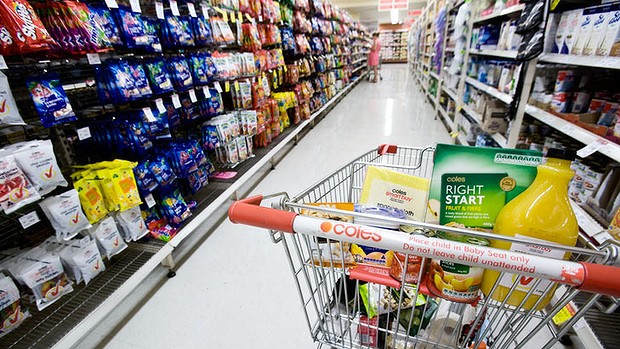
    Price of groceries set to increase amid global container shortage

    Every single thing you buy is at risk of becoming more expensive.

    From toilet paper to pet food, mayonnaise to butter, a blowout in global commodity prices along with a severe container shortage and dramatically rising freight costs are putting suppliers under unprecedented pressure.

    The cost of tin in Australian dollars per metric ton rose 93 per cent between September last year and August this year.

    That means every canned good from tuna to cat and dog food is costing suppliers a small fortune.
    NextGen partner Neil Rechlin says suppliers have been making efficiencies to absorb the added costs but the price pressures are now too much.

    “In the 30 years I’ve been in the grocery industry I’ve never seen these kinds of pressures coming through for suppliers,” he told 9News.

    “Suppliers have done a good job over the last 10 years of improving efficiency, of absorbing some of these cost movements… but when you’re seeing increases of 20 to 30 per cent of the ingredients to make these products, there’s no way suppliers can soak that up.

    “We’re certainly going to see those costs getting passed on through the retailers and ultimately unfortunately to shoppers’ baskets.”

    The cost of shipping a 40-foot container has skyrocketed by almost 400 per cent since last year, according to the Drewry World Container Index.

    At the same time, reliability has plunged.

    A global shortage of containers has driven up the cost along with higher landing fees, labour shortages and the increased volume of goods shipped this year amid the COVID-19 pandemic.

    Sorbent Paper Co, which produces Sorbent toiler paper, facial tissues, Handee paper towel and Deeko napkins and tableware locally, brings in its pulp from overseas.

    The cost of pulp, which is the base for paper, rose 40 per cent just in the first quarter this year and again spiked in July.

    Factors contributing to the costs include high demand for fibre-based packaging due to environmental concerns, high demand from the building industry and the consolidation of global pulp producers.
    But Angela Thorpe from Sorbent said increased pulp prices aren’t as worrying as the price of freight.

    “That’s the one that’s really hurting us right now,” she told 9News.
    “Ocean freight increases are around 500 to 600 per cent which is unprecedented.”

    Ms Thorpe said the lack of containers and the delays and congestion at ports amplified the issues for an industry like toiler paper which is so bulky.
    “To give you an example, over 30 million rolls of toilet paper are bought in supermarkets each week but to support that you need containers coming in at two an hour to support that kind of volume.”

    Ms Thorpe said the company had made significant efficiencies and had absorbed the rising costs but that was now unsustainable.
    “We’re really facing challenging times and with this addition of the freight cost, it’s not something we can continue to absorb. We’re working closely with retailers but those costs will have to be passed on.”

    Earlier this month, various size packs of toilet paper were increased by around 50 cents.

    But more increases are on the way.
    “I expect you’ll see a lot more to come in the next few months,” Ms Thorpe said.

    Mr Rechlin said commodity prices were rising across the board.
    The plastic to make the lid of a mayonnaise tub has gone up, as has the oil inside the mayo.

    Some prices began going up in September, there’s more movement now with additional pain to come next month.
    “By February, March, we’ll see some quite significant increases across your general grocery basket and that might be as high as 20 to 30 per cent more than what we were paying earlier this year,” Mr Rechlin said.
    “If it’s packaged in glass or plastic or paper, these costs are going up.
    “If it’s coming from overseas, the freight costs of these … is up.
    “Dairy prices are up. The humble tin can for your dog food, that’s going up significantly just in terms of the metal in the packaging.” 9News

  • Travel from New Zealand South Island to be allowed without COVID quarantine

    Travellers from the South Island of New Zealand will be able to arrive in Australia without spending two weeks in quarantine from Wednesday.

    Australian Chief Medical Officer Paul Kelly said New South Wales and Victoria had both agreed to accept arrivals from the southern part of the country.

    Dr Kelly said the South Island had not had any COVID-19 cases since last year.

    Quarantine-free travel from New Zealand’s South Island will resume from next week, the federal government revealed.

    The surprise announcement comes months after the travel bubble was temporarily paused in response to growing Covid-19 cases in Australia.

    On Sunday, chief medical officer Paul Kelly said the federal government had reopened travel from New Zealand’s South Island in response to no new locally-acquired cases since last year.

    But travel from the North Island will remain off limits until the end of the month.

    Flights from the South Island will recommence from midnight Tuesday, Professor Kelly said.

    “There is very good work being done to stop people from the North Island going to the South Island, so that is not a risk,” he said.

    “We hope to allow anyone who’s been in the South Island of New Zealand, whether they’re Australians, New Zealanders or other nationalities, to come in quarantine-free.”

    Mr Kelly said both NSW and Victoria had agreed to the quarantine-free travel plan.

    “There are some Australians who have been stuck in the South Island New Zealand for quite some time and we’d welcome them home,” Professor Kelly said.

    According to the Department of Health, people travelling from New Zealand will need to take a pre-departure PCR test within 72 hours of their flight and show evidence they are fully vaccinated.

    They are also required to declare they have not been to the North Island in the last 14 days.

    Health Minister Greg Hunt also announced Australia was in discussions with Singapore to open quarantine-free travel options in the future.

    “It’s under rapid development … they (Singapore) have a very good handle on the disease,” he said. ABC/Australian

  • House prices surge more than 20pc over the past year

    Home prices have continued their recent surge, rising more than 20 per cent over the past year in the biggest annual boom since 1989.

    Regional areas continued to lead cities, with prices up 1.7 per cent over the past month and 23.1 per cent over the last year, versus 1.5 and 19.5 per cent gains for the capitals over those respective periods.

    However, CoreLogic noted signs that a little heat is starting to come out of the property market.

    From a peak national monthly growth rate of 2.8 per cent in March, property prices rose 1.5 per cent last month.

    CoreLogic’s head of research Eliza Owen said this was typical of the latter stages of a housing upswing.

    “The growth rate has peaked, and it’s clear that now affordability constraints, or even just willingness to pay, is starting to slow those appreciation rates down,” she told the ABC’s Close of Business program.

    Ms Owen said that first home buyers had been particularly affected as prices soared.

    “First home buyer loans have actually fallen by over 20 per cent since the start of this year,” she observed.

    “When we get that rapid appreciation in housing markets, first home buyers tend to be more price sensitive – they’re not able to keep up with the growth because they don’t have that asset to trade in.”

    That has resulted in existing owners taking over as the main drivers of the property market.

    “At the moment, the dominant participant in the market are the owner-occupier changeover buyers – in other words, people who are upsizing, downsizing, moving somewhere else,” she added.

    CoreLogic’s research director Tim Lawless said the deposit hurdle has now become extremely high for first home buyers in the most expensive markets.

    “Sydney is a prime example where the median house value is now just over $1.3 million,” he noted.

    “In order to raise a 20 per cent deposit, the typical Sydney house buyer would need around $262,300.”

    First home buyers turning to ‘rent vesting’

    Mr Lawless said lending data appeared to show that some first home buyers were responding to the surging prices by turning to property investment as a way to get a foothold in the market.

    “The slowdown in first home buyers can be seen in the lending data, where the number of owner-occupier first home buyer loans has fallen by -20.5 per cent between January and July,” he noted.

    “Over the same period, the number of first home buyers taking out an investment housing loan has increased, albeit from a low base, by 45 per cent, suggesting more first home buyers are choosing to ‘rent vest’ as a way of getting their foot in the door.”

    However, overall, the number of investors in the market was not yet at boom levels.

    “”We have also seen a significant rise in investor participation over the past few months, but proportionally they’re still only sitting at about 29 per cent of mortgage finance, down from a decade average of about 35 per cent,” Ms Owen added.

    Regulators and the Treasurer have indicated that restrictions on large home loans may soon be on the way, potentially capping the number of loans that are more than six times the borrower’s income.

    However, it appears unlikely that any new rules will take effect for at least another couple of months.

    AMP Capital chief economist Shane Oliver said that was likely to be reflected in slower price gains for real estate during 2022.

    “After a 21 per cent gain in average prices this year, we expect home price growth to slow to around 7 per cent next year.” abc

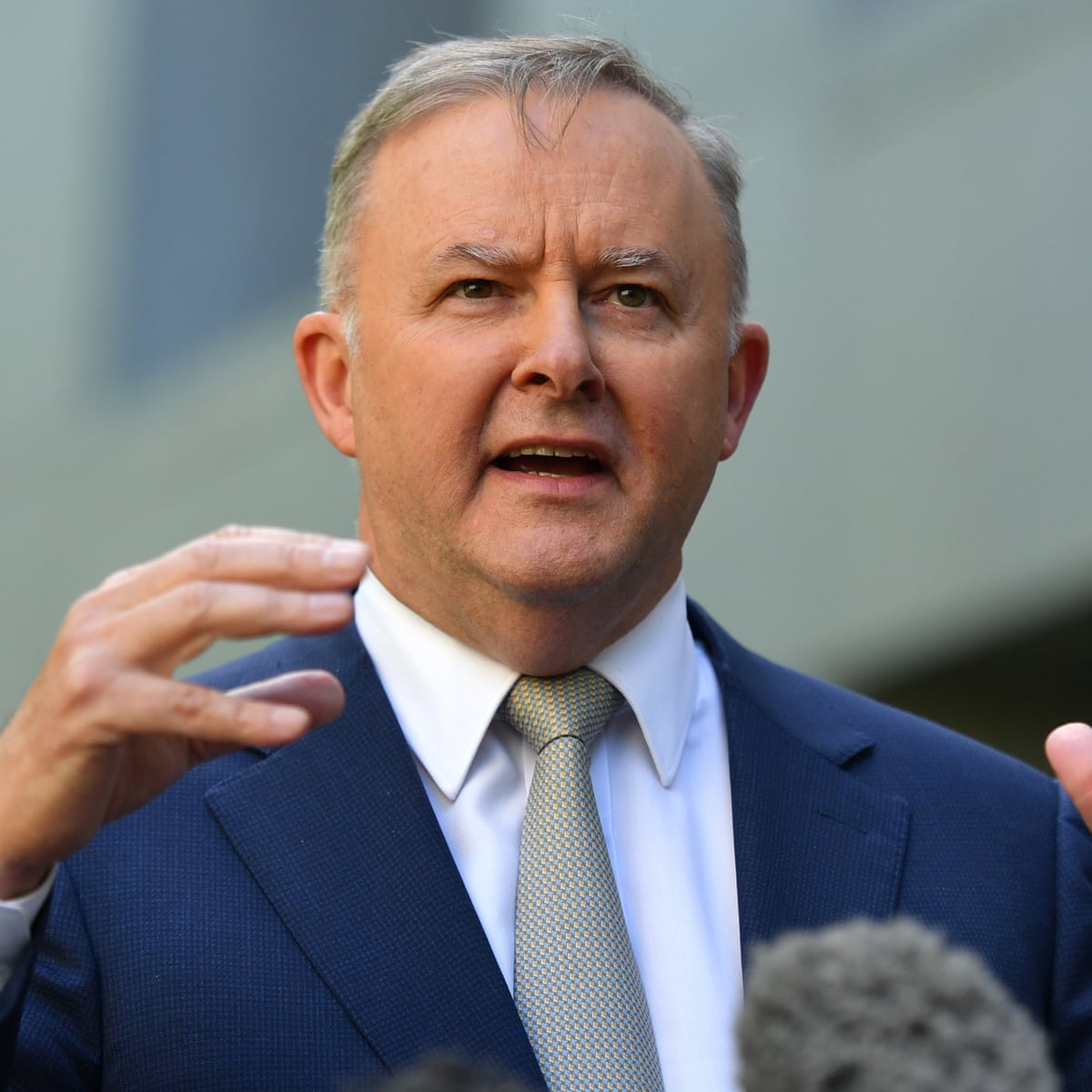
  • Anthony Albanese confirms a Labor government would continue AUKUS alliance

    Anthony Albanese confirms a Labor government would continue AUKUS alliance

    Labor leader Anthony Albanese has thrown his support behind the AUKUS security partnership signed by Prime Minister Scott Morrison, saying it would “certainly continue” if he wins the next election.

    Labor leader Anthony Albanese said a close relationship with the US is one of three foreign policy “pillars” of a Labor government with him at the helm.

    In an interview with SBS News, he said the AUKUS security alliance brokered with the US and UK would “certainly continue” into the future, if Labor was elected to government at the upcoming federal election slated for 2022.

    The AUKUS deal will see Australia equipped with nuclear-powered submarines, but it has also led to the cancellation of a $90 billion deal with France for conventional submarines.

    Prime Minister Scott Morrison was in Washington over the weekend to meet with the leaders of the US, Japan and India in the first face-to-face meeting of the Quad nations.

    Bilateral tensions between France and Australia have deteriorated since the cancellation of the submarine contract between the two countries.

    Australia’s Trade Minister, Dan Tehan, revealed his offer to hold a face-to-face meeting in France with his French counterpart has been rebuffed.

    Mr Morrison told to SBS News that he hopes relations with Paris will “normalise”.

    But the federal government has received criticism after it emerged that the prime minister notified French President Emmanuel Macron of the deal’s cancellation via a text message after a phone call the night before went unanswered.

    France’s ambassador to Australia Jean-Pierre Thébault told SBS French he himself had only learned about Australia’s decision to scrap the contract through the media.

    “I think there are better ways to deal with a $90 billion contract than to inform the leader of France by text message that that was occurring,” Mr Albanese said.

    “The fact is that France is an important player in the Indo-Pacific. They’ve also been an important partner for Australia, and they play a leadership role in the European Union. So Australia needs to exercise diplomacy when it comes to how we deal with our international partnerships. And quite clearly, there’s some repair work that needs to be done.” SBS

  • Melbourne construction industry shut down following violence at vaccine protest

    Melbourne’s construction industry will be shut down for two weeks following a violent protest outside the CFMEU’s Melbourne headquarters.

    The closure was announced on Monday night after the building was damaged and riot police deployed in chaotic scenes.

    Only critical infrastructure, including hospitals and ongoing level crossing removal works, will continue during the shutdown, giving time for the workforce to get vaccinated.

    Industrial Relations Minister Tim Pallas late on Monday confirmed the two-week shutdown from 11:59pm for metropolitan Melbourne, City of Ballarat, City of Greater Geelong, Surf Coast Shire and Mitchell Shire.

    “We’ve been clear: if you don’t follow the rules, we won’t hesitate to take action – we have seen widespread non-compliance across the industry and that’s why we’re taking necessary steps to protect every single Victorian,” he said in a statement.

    “We put the industry on notice just a week ago, we have seen appalling behaviour on-site and on our streets, and now we’re acting decisively and without hesitation.”

    The government said all sites will need to demonstrate compliance with the Chief Health Officer’s directions prior to reopening including the requirement for workers to show evidence of having had one dose of a COVID-19 vaccine before they return to work on 5 October.

    Shadow industry minister Bridget Vallence said the Andrews government must immediately reverse its “panicked decision” to shut down construction.

    “The Liberal Nationals condemn the violent protests, but the actions of a few should not be used as an excuse to shut down an entire industry, putting tens of thousands of people out of work,” she said in a statement.

    Union officials say Monday’s protesters were not actually CFMEU members, instead “neo-Nazi’s and right-wing extremists” who had hijacked the event.

    Rain and hail did not deter the protesters, many still rallying in the streets until dark, most displaced by police who used rubber bullets and pepper spray to control the angry mob.

    The protest escalated when two union officials, including Victorian construction branch secretary John Sekta, came outside the Elizabeth Street office to speak to protesters just before midday.

    Mr Setka was met with boos and insults from the crowd, while some protesters hurled bottles.

    “Please calm down. Can you at least give me the respect to talk? We’re not the enemy, I don’t know what you have heard,” he told protesters.

    “I have never, ever said I support mandatory vaccination.”

    Once Mr Setka went back inside, the protesters smashed a glass door to the building.

    Some said they would come to the CFMEU office every day until the union bows to their demands.

    Construction sites have been a place of high spread in the latest outbreak, forcing health officials to close tearooms last week. SBS

  • The federal government looking at ways to get more Pacific workers on Australian farms

    It comes as changes are announced to two schemes that bring workers to regional Australia from Pacific nations.

    Government says it is looking at ways to get more people from Pacific island nations into Australia to fill workforce shortages on farms.

    As plans for a new agriculture visa to bring in workers from overseas are finalised there is a critical shortfall of labour, forcing some farmers to lose their stock.

    The government says more than 27,000 Pacific islanders are ready to work in Australia, but a crucial barrier remains: quarantine arrangements and caps on international arrivals are preventing the majority from getting here.

    Minister for International Development and the Pacific Zed Seselja says he’s working with the states and territories on alternative solutions.

    “There’s been innovative approaches. We’ve seen farm quarantine. We’ve seen dedicated facilities. We’ve seen hotel quarantine. What we don’t want to see is those bumper crops going to waste,” he told SBS News.

    Senator Seselja is calling on the states to consider circumstances for Pacific nations with no COVID-19 cases.

    “We need to look afresh at places like Tonga and Samoa, who have zero community transmission. That means that we should be welcoming them with open arms,” he said.

    The government on Tuesday announced reforms to the Pacific Labour Scheme and Seasonal Worker Program, which bring workers to regional Australia from Pacific nations.

    Under the changes, businesses will be able to access these through a single online application.

    Labor market testing will be valid for 12 months instead of six, and workers will be allowed to complete training while in Australia.

    To meet immediate demand, workers already in Australia for three years can apply for an additional 12-month stay while COVID-19 travel restrictions remain.

    Some businesses will also be able to double their recruitment cap of SWP workers, while the age limit of 45 will be scrapped across both programs.

    Senator Seselja said arrivals under the agriculture visa are expected to still be months away.

    “It will take some time. There will need to be bilateral agreements with individual countries before workers can come,” he said.

    “In the short term, and in the medium term and beyond, the Pacific Labour Scheme and the Seasonal Worker Program are going to be the primary means of bringing workers. The ag-visa will complement that over time.”

    Labor’s foreign affairs spokeswoman Penny Wong said the overhaul failed to address Pacific workers’ vulnerability to mistreatment.

    “Instead of improving the schemes, [the government] has sold Pacific workers out to satisfy his National Party colleagues, while doing nothing to solve critical worker shortages for farmers who need workers now,” she said.

    The opposition is also calling for an urgent national quarantine system to give farmers more access to staff.

    Senator Seselja said strong protections under workplace laws won’t be compromised as recruitment programs for Pacific workers expand.

    “We’ve been listening to industry … they continue to make sure that we balance strong worker protections with usability and flexibility for employees so they can get the workers that they need,” he said. SBS

  • Melbourne Star will close after 15 years, due to COVID-19 travel restrictions

    The much-loved Melbourne Star will close after 15 years in operation due to COVID-19 travel and lockdown restrictions in Victoria.

    On Monday afternoon, a statement was issued by MB Star Properties Pty Ltd, saying they were announcing “with a heavy heart” the popular attraction in Docklands will be permanently closed and the company placed into liquidation.

    “The giant observation wheel has been a part of the city’s skyline for more than 15 years, during which time it has welcomed more than 300,000 visitors every year, with international and interstate tourists making up 45 per cent of the business,” a statement read.

    “Unfortunately, the global COVID-19 pandemic and subsequent travel restrictions and sustained shutdowns, adding to pre-existing challenges of operating amid increased high-rise development and changes in the Docklands area, has made it impossible to sustain the business.

    “The directors of the wheel are absolutely committed to doing the right thing by our dedicated team and have made arrangements to ensure all our employees will be paid their full entitlements,” the company said.

    When it first opened in 2008, the 120 metre tall wheel was called the Southern Star.

    It opened two years behind schedule, but then closed a month later due to structural defects including cracking and did not reopen again until 2013.

    A ride in the star took 30 minutes to do one rotation. 7News

  • Josh Frydenberg: Australia resists China trade action

    Josh Frydenberg says the Australian economy has proved to be remarkably resilient in the face of political tensions with China, the nation’s number one trading partner.

    In an online address on Monday, the treasurer likened China’s stance to last century’s Cold War, but with some key differences this time around.

    The global economy and trading is now highly integrated, and while the Soviet Union during the Cold War was largely cut off from the rest of the world, China has increased its dominance.

    And while flexing its power, Mr Frydenberg said China has made no secret of targeting Australia’s economy.

    The Asian giant has cited 14 grievances, covering everything from Australia’s foreign investment laws to its calling out of cyber attacks.

    “They have targeted our agricultural and resources sector, with measures affecting a range of products including wine, seafood, barley and coal,” Mr Frydenberg told the ANU Crawford Leadership Forum.

    But he said Australia has remained steadfast in defending its sovereignty and core values, and always will.

    “Our economy has also proven to be remarkably resilient,” Mr Frydenberg said.

    “I am not downplaying the impact of China’s actions. They have hurt specific industries and regions, significantly in some cases.”

    However, many of the firms and industries targeted by China’s trade restrictions have also been successful in redirecting goods to other export destinations, particularly for larger bulk commodities that trade on global markets.

    China’s trade actions have seen total exports to China fall by around $5.4 billion over the year to the June quarter.

    “But over the same period, exports of those goods to the rest of the world have increased by $4.4 billion,” the treasurer said.

    For example, over the past year Australia’s coal exports to China have fallen by around 30 million tonnes, but to the rest of the world its coal exports have risen by around 28 million tonnes.

    Australian barley has also been redirected, including to new markets such as Saudi Arabia.

    But he warned that China’s trade actions will carry a cost to both Australia and China.

    “They rob Chinese consumers of premium Australian wine, seafood and other goods,” he says.

    “And they rob Chinese industry of high quality and high value inputs, such as Australian coal. We would both be better off if markets were allowed to operate freely.”

    He said Australian firms have pivoted, by finding new buyers for their goods and global markets.

    “That is the benefit of a strong, dynamic, open, market-based economy,” Mr Frydenberg says.

    “A precondition for our prosperity and something we should always seek to protect, preserve and promote.”