Category: Business

  • Inflation falls from peak, but still more than twice the top of the Reserve Bank’s target for interest rates

    Inflation falls from peak, but still more than twice the top of the Reserve Bank’s target for interest rates

    Prices rose 1.4 per cent over the March quarter, which was marginally above average economist forecasts, but the smallest quarterly rise in more than a year, according to the Australian Bureau of Statistics (ABS).

    The ABS said prices had continued to rise for most goods and services, but the scale of those increases had slowed.

    Exceptions were seen in steep quarterly price jumps for medical services (+4.2 per cent), tertiary education (+9.7 per cent) plus gas and other household fuels (+14.3 per cent).

    “Prices for medical and hospital services typically rise in the March quarter as GPs and other health service providers review their consultation fees, and the Medicare Safety Net is reset at the start of the calendar year,” observed the bureau’s head of price statistics Michelle Marquardt.

    “Tertiary education fees are also indexed at the start of the year. This quarter additional strength was seen in tertiary education as changes in student contribution bands and fees introduced in 2021 as part of the Jobs-ready Graduates Package continued to flow through to the index.”

    Gas prices rose sharply across the capital cities, although Melbourne had the strongest March quarter rise of 22.7 per cent.

    “This quarter’s rise was notable as prices increased in all eight capital cities, whereas typically only Melbourne’s prices are reviewed in the March quarter,” Ms Marquardt added.

    Fruit and vegetables (+2.4 per cent) plus snacks and confectionary (+4.1 per cent) led overall food prices a further 1.6 per cent higher over the March quarter.

    Domestic holiday travel and accommodation costs continued to rise (+4.7 per cent) over the final months of summer and early autumn, despite a small decline in airfares after recent large increases.

    However, not everything went up in price over the past few months.

    If you were out in the shops, chances are you found discounts for furniture (-4.6 per cent), household appliances (-3.8 per cent) and clothing (-3.2 per cent).abcaustralia

  • Albanese government turns to super funds to help address social housing shortfall

    Albanese government turns to super funds to help address social housing shortfall

    Assistant Treasurer and Minister for Financial Services Stephen Jones held a round table with peak industry group Association of Superannuation Funds of Australia (ASFA) this week in a bid to secure their investment.

    The meeting followed the Prime Minister and Treasurer last week announcing the government would make up to $575 million from the National Housing Infrastructure Facility available to encourage private investment, particularly from superannuation.

    That move was aimed at improving the risk-reward ratio for super funds.

    The superannuation sector has not opposed the move but is yet to be convinced, citing high risk and low financial returns.

    The Assistant Treasurer told the round table there were many opportunities for joint cooperation between government and superannuation funds.

    “There are many areas where the government can partner with the super funds to advance the national interest,” Mr Jones said.

    “Super funds are already major investors in assets that earn great money for members and produce huge economic benefits for the community [and] we need to find new ways to do this.

    “Supercharging our economy with Australian workers’ own savings is smart.

    ‘Smart governments look for all available options to solve these [economic] problems. Engaging with our super funds is one way we can work together to do that.”

    Super funds wary of risk, returns
    In a communique released following the round table, ASFA said it was the start of the conversation.

    “Identifying models for investment which work economically, both for the government and for fund members, will be key,” it read.

    “Where the Commonwealth can create pathways to prove out investment methodologies, there will be greater scope for superannuation fund investment.

    “Orchestration of the policy settings will be crucial — requiring ongoing effort and collaboration by stakeholders.”

    The superannuation industry has suggested assisting with planning permissions, increasing compensation and ensuring better returns would boost the likelihood of the sector investing further.

    Housing shortage ‘endemic’ across Australia
    A report prepared for the Community Housing Industry Association estimated the shortfall of social and affordable housing will exceed 700,000 by 2036.

    A further paper from Swinburne University associate professor Christian Nygaard, released in March, found the shortage in affordable housing to be endemic across Australia.

    That study found the social and economic cost of that shortfall to be in the order of $676 million per annum, a figure projected to rise to $1,286,000,000 by 2036.

    A fifth consecutive interest rate hike on Tuesday dealt another blow to housing affordability, a message echoed by federal Housing Minister Julie Collins.

    “It will make it more difficult for more Australians to find a safe and affordable place to call home,” she told Question Time.

    Minister Collins said the decision to unlock up to $575 million to encourage super funds to invest in social and affordable housing was one part of the government’s plan to improve access.

    “This facility has been under-utilised and we want to work with the other tiers of government, social housing providers, but also to try and unlock private capital such as superannuation investment into more social and affordable housing across the country,” she said.

    “[Federal, state and territory ministers] are having another meeting at the end of this week to talk about the national plan and get things happening.

    “We want to get as many houses on the ground as quickly as possible.”

    A report by think tank Per Capita in May estimated less than 55 per cent of Australian residents born after 1990 will own their own home by the time they turn 40, compared to a historical high of nearly 72 per cent.

  • AKP deputy chairman sues opposition leader for $42K over claims of corruption

    Ruling Justice and Development Party (AKP) Deputy Chairman Nurettin Canikli, a former minister, has filed a lawsuit against main opposition Republican People’s Party (CHP) leader Kemal Kılıçdaroğlu over recent claims that the former squandered the funds of companies seized by the government after a 2016 coup attempt, local media reported on Tuesday.

    Canikli accuses Kılıçdaroğlu of “insulting” and “slandering” him in recent remarks during a CHP group meeting on June 28 and an interview he gave to the Birgün daily on June 30, seeking TL 750,000 ($42,650) in damages.

    In the same criminal complaint Canikli filed against the CHP leader with the Ankara Chief Public Prosecutor’s Office, he also requested that an investigation and a public case be launched into Kılıçdaroğlu.

    Referring to the immunity from prosecution granted to trustees who were appointed to replace the boards of directors of 682 companies that were seized by the AKP over their alleged links to the Gülen movement following a coup attempt on July 15, 2016, Kılıçdaroğlu had previously said that Canikli was “at the center” of the development.

    “[This immunity decision says] ‘Steal, engage in injustice and you’ll have no responsibility.’ … If a person becomes rich after getting into politics, it means that person is scoring something. … Canikli isn’t an innocent person, it appears.” Kılıçdaroğlu said.

    The CHP leader’s remarks came after journalist Metin Cihan had revealed on social media how Canikli squandered the funds of companies transferred to Turkey’s Savings Deposit Insurance Fund (TMSF) after the coup attempt by appointing his driver, one of his advisors and a friend of his nephew to them, using documents to support his claims.

    Turkey, which in 2016 had already granted officials immunity from prosecution for their actions taken to suppress the coup, extended that immunity to the trustees appointed to the 682 companies seized during the state of emergency with a decree issued in late May.

    The law came after CHP lawmaker Çetin Arık revealed that Ertunç Laçinel, a trustee who was appointed to run Erciyes Anadolu Holding — previously called Boydak Holding — disappeared with 20 million euros.

    The ruling AKP and its ally, the far-right Nationalist Movement Party (MHP), previously rejected a motion to investigate allegations against the companies seized after the 2016 coup attempt and are currently being run by trustees.

    With the law, board members and executives appointed to the seized companies, mostly members of the ruling party, former lawmakers or bureaucrats close to the government, will be exempt from liability for corruption and misconduct even if cases are concluded in favor of former owners who claim that their companies suffered losses while they were managed by the TMSF.

    Ankara deems the faith-based movement inspired by Muslim preacher Fethullah Gülen a terrorist organization and accuses Gülen as well as members of his movement of masterminding the coup attempt. Gülen and the movement strongly deny involvement in the abortive putsch or any terrorist activity.

    Turkish President Recep Tayyip Erdoğan declared a state of emergency on July 20, 2016, days after a coup attempt against his government. More than 130,000 civil servants, including academics, teachers, diplomats and police officers were dismissed from their jobs for alleged membership in or relationships with “terrorist organizations” by emergency decree-laws issued by the AKP government during the two-year state of emergency, which ended on July 17, 2018.

    Most dismissed civil servants are accused of links to the Gülen movement, but there were many others who belonged to other opposition groups.

    The government also seized schools, universities, media outlets, companies and buildings and the assets of individuals, corporations and organizations that were believed to have ties to the Gülen movement.

  • Mayor faces probe for employing post-coup victim at municipal company

    An opposition party mayor in western Turkey is facing an investigation for employing a former judge who was fired in the aftermath of a failed coup in Turkey at a company owned by the municipality, Turkish Minute reported.

    Journalist İsmail Saymaz from the anti-government Halk Tv wrote in a column on Monday that the Interior Ministry in October 2020 allowed prosecutors to launch an investigation into Ünal Çetin from the İYİ (Good) Party. Çetin is the mayor of Gökçeada, an island in Çanakkale province in western Turkey.

    Çetin is under investigation for the September 2019 hiring of former judge N.G., who was one of the more than 130,000 civil servants who were fired from public service under a state of emergency declared following the coup attempt on July 15, 2016 on the pretext of an anti-coup fight. N.G.’s job at the municipality’s GÖK-AŞ company was to deal with the files of the municipality’s judicial cases.

    Arrested two days after the coup attempt, N.G. was dismissed from her job in August 2016 and was put in pre-trial detention for nine months. She stood trial on charges of terrorist organization membership due to her alleged links to the Gülen movement but was acquitted of the charges in February 2019. A court has even ruled that the government pay her pecuniary and non-pecuniary damages as she was unjustly charged and subjected to judicial supervision.

    The Turkish government accuses the Gülen movement of masterminding the coup attempt and labels it a “terrorist organization,” although the movement strongly denies involvement in the coup attempt or any terrorist activity.

    Mayor Çetin said despite the judicial proceedings proving the former judge’s innocence, he was told to fire her from the municipality.

    Çetin said he is accused of employing N.G. based solely on her criminal record and not after a thorough security check, which would have revealed that she was a purged judge. He said he refuses to fire the woman despite pressure from the government.

    “I was told to fire her even though she was acquitted in court. I am supposed to fire this woman to save my position. This would be an act of total dishonesty. What I care about most is that this country be a state of law. Who are we supposed to trust if not the judiciary?” the mayor told Saymaz.

    The Turkish government launched a massive crackdown on the Gülen movement’s alleged and real followers following the coup attempt.

    A total of 319,587 people have been detained and 99,962 arrested in operations against supporters of the Gülen movement since the coup attempt, Turkey’s Interior Minister Süleyman Soylu announced in November.

    Former public servants were not only fired from their jobs, they were also prohibited from working again in the public sector and getting a passport. The government also made it difficult for them to work formally in the private sector. Notes were put on the social security database about dismissed public servants to deter potential employers.

    In addition to the thousands who lost their jobs and were jailed, scores of other Gülen movement followers had to flee Turkey to avoid the government crackdown. SCF

  • 2021 was Australia’s coolest year since 2012 and the wettest since 2016.

    2021 was Australia’s coolest year since 2012 and the wettest since 2016.

    November rainfall reached record levels in Australia before 2021 officially became the country’s coolest year in almost a decade, the Bureau of Meteorology said.

    BOM’s annual climate statement on Thursday has revealed 2021 was the wettest since 2016, with states receiving rainfall up to 30 per cent above average thanks to unprecedented showers late last year.

    Overall rainfall in Australia was nine per cent above average in 2021, with the wettest November registered since national records began in 1910.

    BOM senior climatologist Dr Simon Grainger said the precipitation had ensured the majority of the country was not experiencing rainfall deficits or drought for the first time in five years.

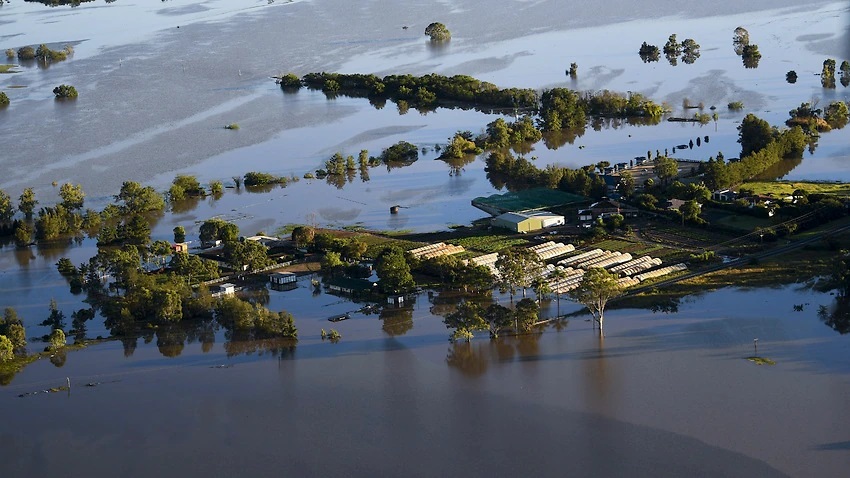
    “After three years of drought from 2017 to 2019, above average rainfall last year resulted in a welcome recharge of our water storages but also some significant flooding to eastern Australia,” he said.

    Overall above average rainfall was observed for NSW (30 per cent above average), Western Australia (nine per cent), Queensland (eight per cent), Victoria (five per cent), Northern Territory (three per cent) and Tasmania (one per cent).

    Only South Australia missed out, with rainfall two per cent below average in 2021.

    Dr Grainger said the rainfall was influenced by the impacts of a negative Indian Ocean Dipole – a period of warmer than usual temperatures in the western Indian ocean – and La Nina, cooling of the central and eastern tropical Pacific Ocean.

    Dr Grainger said they also had an impact on Australia’s mean temperature for 2021, which was 0.56C above average (1961-90 climate reference period) but still the coolest year since 2012.

    “It turns out 2021 was almost 0.4 degrees cooler than the average temperature over the last decade (since 2012),” he said.

    Temperatures were above average for most of northern Australia, Tasmania and WA’s west coast but below average for parts of inland NSW and around the southern border of the Northern Territory and WA.

    “The cooler and wetter conditions because of that meant we continued our recovery from the really extreme drought we had over 2017-19 period,” Dr Grainger said.

  • Turkish gov’t sells company seized over alleged Gülen links at far below market value

    Turkey’s Savings Deposit Insurance Fund (TMSF) has sold at well below its market value Naksan Holding, once one of Turkey’s largest corporations before it was seized by President Recep Tayyip Erdoğan’s Justice and Development Party (AKP) government following a coup attempt in 2016, Turkish Minute reported.

    Yapıen Construction, an Ankara-based company founded in 2003 with paid-in capital of TL 100 billion  ($7.2 billion), according to the Turkish Trade Registry Gazette, won a tender held by the TMSF for the purchase of Naksan Holding, with an offer of $92 million, Turkish media reports said.

    According to local media, the amount bid by Yapıen is equal to the five-year average profit of Naksan Holding, which earned TL 197 million ($14.3 million) in 2019 even after it had been transferred to the TMSF.

    The Turkish government seized Naksan Holding, which comprises more than 50 companies operating in various sectors including industry, energy, construction and transportation, appointing trustees to replace its board of directors due to their alleged links to the Gülen movement, days after an abortive putsch on July 15, 2016.

    Ankara deems the faith-based movement inspired by Muslim preacher Fethullah Gülen a terrorist organization and accuses Gülen as well as members of his movement of masterminding the coup attempt. Gülen and the movement strongly deny involvement in the abortive putsch or any terrorist activity.

    Following the fail coup, the AKP government launched a massive purge targeting the Gülen movement under the pretext of an anti-coup fight and has removed more than 130,000 people from civil service jobs.

    The government also seized schools, universities, media outlets, companies and buildings and the assets of individuals, corporations and organizations that were believed to have ties to the movement.

    In addition to Naksan Holding, Turkey’s TMSF has taken over major conglomerates including Dumankaya, Boydak Holding, the Koza Ipek Group and Kaynak Holding among 880 other private companies, according to Turkish media reports.

    No figures are available verifying how much personal wealth and how many assets have been seized by Erdoğan’s government during the massive post-coup purge that still ongoing in Turkey. SCF

  • Christmas Eve chaos as Jetstar and Virgin suddenly cancel dozens of flights in and out of Sydney with just a few hours’

    Jetstar and Virgin airlines have caused Christmas Eve travel chaos by cancelling dozens of flights as families around Australia prepare to reunite with loved ones.

    Hundreds of passengers suddenly found their plans in dire straits as they were notified late on Thursday night of the mass cancellations.

    Australia’s busiest route between Sydney and Melbourne is by far the worst affected with 23 flights between the two capitals cancelled on Friday.

  • Australia’s migration rate is heading back to normal, but what does that mean for wages growth?

    Australia’s migration rate is heading back to normal, but what does that mean for wages growth?

    Unions are questioning whether a quick return to pre-pandemic levels of migration may suppress forecast wages growth, particularly as the cost of living climbs.

    While inflation is expected to outpace wages growth until mid-next year, real wages are predicted to steadily rise after June 2022.

    It is one of the federal government’s key selling points from Thursday’s mid-year budget update, telling voters to look forward to fatter pay packets in years ahead.

    As wages are forecast to rise, so is migration — steadily climbing back to roughly pre-pandemic levels.

    Treasurer Josh Frydenberg argues migration can climb alongside wages.

    “I don’t see it as a binary choice between having a sensible, measured immigration program … as well as getting a tighter labour market and putting the policies in place that drive real wages up,” he said.

    Labor has agreed migration is an important source of economic growth but says it should not be a substitute for training Australians to fill workforce shortages.

    Unions have called for a migration rethink and suggested rushing back to pre-pandemic levels will “clearly” push wages lower than they otherwise would be.

    Where is migration headed?

    Australia is currently in the very unusual position of actually losing people overseas, rather than gaining them.

    In 2020-21, roughly 100,000 more people left Australia than moved here due to strict border policies.

    That trend is expected to continue this financial year, even as borders slowly open — with 41,000 more people to depart than arrive.

    But in 2022-23, things will start to quickly turn around.

    That year is expected to see 180,000 more people arrive than depart, followed by 213,000 the following year, and 235,000 in 2024-25.

    To put that number in context, during the last “normal” year (2018-19), that number was 241,000.

    And it has been much higher than that in the past — in 2008-09, it fell just short of 300,000.

    Unions worry it is too much, too soon
    Some union leaders have expressed concern about the rapid return of significant migration, just as wages growth is forecast to rise.

    Acting Secretary of the ACTU Liam O’Brien said he was worried about temporary migration in particular.

    “We’re deeply concerned about the fact that the Morison government looks to be restarting and really ramping up temporary migration in this country,” he said.

    “This clearly puts downward pressure on wages just when we need to see them going up.”

    Mr O’Brien said after years of stagnant wages, the government should be doing everything it can to drive them up as fast as possible.

    He said rising wages will drive economic growth more effectively than migration, or anything else.

    “Sixty per cent of our economy is workers spending money,” he said.

    “And if we don’t have serious efforts to increase wages, then economic growth is going to slow over the long term.”

    Are migration and wages really linked?

    Some economists pour doubt over suggestions increased migration might affect wages, and others claim it is unequivocally good news.

    Chris Richardson from Deloitte Access Economics suggests migrants coming to Australia tend to be younger and more skilled than the general population.

    “Over time, migrants don’t affect wages for everybody else,” he said.

    “If a migrant arrives and puts up their hand to take a job, they get a job and spend that money and it creates the next job.

    “It doesn’t affect job numbers, it doesn’t affect wages over time.”

    But he does warn a very steep climb in migration could have unintended consequences.

    “If the return to migration is rapid, it may take some time for those people to get jobs — that may be something that slows wage growth, temporarily,” he said.

    Danielle Wood from the Grattan Institute said seeing borders open faster than expected is a very good thing.

    “What that does is lifts the overall growth rate — if you have more people, the economy grows stronger overall,” she said.

    “Given some of the pressure points in labour markets and shortages in various parts of the economy, that will very welcome news for a lot of businesses.”

    ‘We have to be more ambitious’: Business groups argue forecasts aren’t enough

    Business groups are pushing back strongly against suggestions of any slowdown in migration and some are arguing what is being forecasted will fall short of what is needed.

    Many industry groups have for months been complaining of significant skills shortages due to the effective suspension in migration, particularly in sectors like IT and hospitality.

    Andrew McKellar from the Australian Chamber of Commerce and Industry argues any question over Australia’s migration levels has been long settled.

    “The economics of this is well established — migration has been a positive for the Australian economy over a long period of time,” he said.

    “We know that it will add to demand, we know it will add to our skills base.”

    Mr McKellar said there is a strong argument for larger numbers in the next few years, to make up for lost time.

    “We have to get back to much stronger levels of migration,” he said.

    “Even the numbers that are factored into the budget at the moment, I’m not sure that’s enough.

    “I think we have to be more ambitious and we shouldn’t run away from it, we shouldn’t be afraid of it — we need leadership on both sides on this issue.”

  • International students to return to NSW quarantine free

    International students to return to NSW quarantine free

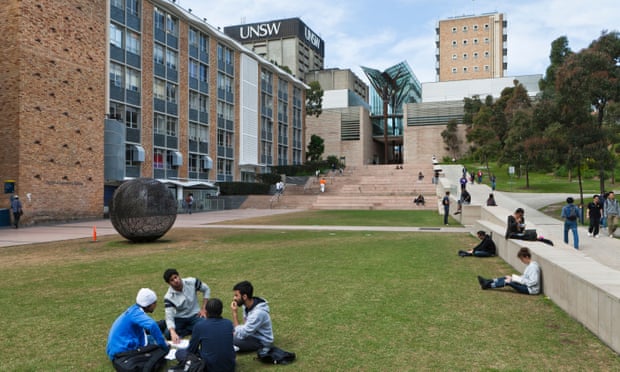
    Fully vaccinated international students will be able to return to NSW without quarantining, the NSW Government has announced.
    The first chartered flight carrying 250 students from 15 countries will arrive in Sydney on December 6. The state government has brought the rules for international students in line with returning Australians.

    NSW Premier Dominic Perrottet said international education plays a “vital role in connecting NSW to the rest of the world.”
    “This is a significant milestone in our roadmap to recovery and I can’t wait to welcome back such an important part of our community,” Mr Perrottet said.

    Deputy Premier Stuart Ayres added students will require Commonwealth Government approval to travel to Australia.
    “I welcome continued collaboration with the Commonwealth Government in supporting international students as they return to NSW,” Mr Ayres said.
    Students will return on flights to NSW from December under the NSW International Student Arrivals Pilot Plan.

    Return of skilled migrants

    The federal government’s post-COVID economic recovery plan includes the return of skilled migrants.
    “We are going to have a business led recovery here in Australia,” Prime Minister Scott Morrison said.
    The plan would also offer incentives to get workers back into the office to rejuvenate struggling CBD businesses.
    Since Australia shut its borders, businesses and industries have been struggling with a shortage of workers. 9NEWS

  • Ugg boot maker says federal government support could help take case to US Supreme Court

    Ugg boot maker says federal government support could help take case to US Supreme Court

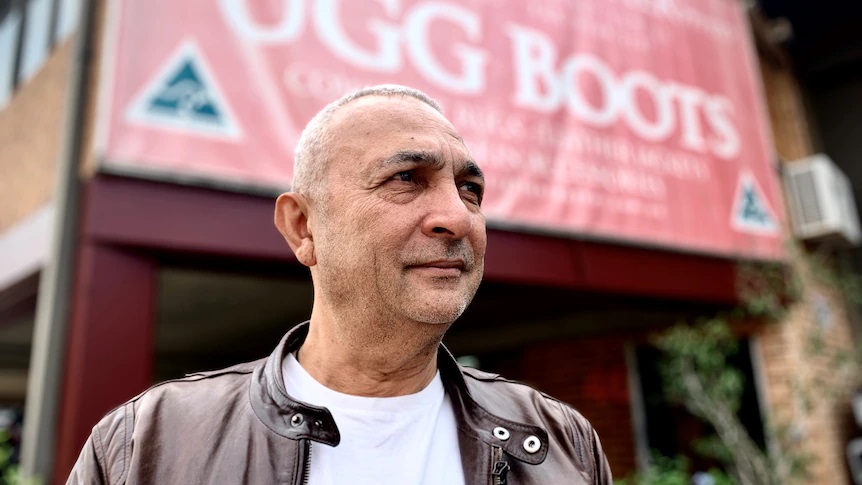
    An Australian ugg boot manufacturer says his legal battle with a US company has received a major boost thanks to federal government support.

    Footwear giant Deckers holds the UGG trademark in more than 130 countries and, in 2019, successfully sued Western Sydney boot maker Eddie Oygur over the sale of about a dozen products into the US.

    After losing a US court appeal against Deckers in April, Mr Oygur said he was facing the collapse of his business, owing $US450,000 ($572,629) in damages and millions in legal fees.

    South Australian former senator and lawyer Nick Xenophon is part of his legal team and has been lobbying for federal government support.

    Mr Xenophon said the government had briefed a senior American appeals lawyer to file a “friend of the court” brief that would provide “critical support” to help take the case to the US Supreme Court.

    “We’ve now filed an appeal in the US Supreme Court to say this trademark ‘ugg’ can’t belong to the US or to any country or any private company because ‘ugg’ is a generic Australian term,” he said.

    “The Australian government has coughed up $US150,000 for the American lawyers.

    “It’s a defibrillator … that should make a huge difference in actually getting before those nine justices of the US Supreme Court.”

    Mr Oygur said he was elated by the news, saying he had “no other choice” than to continue his fight.

    “I’m really grateful … I really need all the Australian support I can to bring ugg back home,” he said.

    “We’re still on our feet, thank God. We’re still fighting them and we’re going to bring ugg back home.

    “It did put a tear in my eye, I must say, because it made me proud to be an Australian. I put all my life savings into this. But I knew I was fighting and I’m still fighting for what’s right for Australia and for my business.”

    Mr Xenophon said preliminary arguments would be heard as early as next month, and is hoping the US Supreme Court will then hear the case in May or June.

    The term “ugg” is widely used in Australia to refer to sheepskin boots, but in major markets, including the US and the UK, Deckers owns the UGG trademark. ABC