Category: Australia

  • The NT has asked the government to urgently fund new homes on traditional Aboriginal homelands

    The Northern Territory has asked the Australian government to urgently fund new homes and upgrades on traditional Aboriginal homelands, where people are living in “dilapidated houses for shelter, in severely overcrowded conditions”.

    Chansey Paech, the Territory’s Remote Housing Minister, said the current model for 500 NT homelands was “not sustainable” and some communities have not received new housing or upgrades for decades.

    In a letter to federal Aboriginal Affairs Minister Ken Wyatt, Mr Paech said he recently visited Emu Point homelands, 200 kilometres south-west of Darwin, where “most houses are derelict and residents are living in tents”.

    “One house I visited was accommodating 23 residents, with only three bedrooms,” he said.

    “This is sadly a common story for housing across many homelands in the Northern Territory.”

    Mr Paech said he had asked for a meeting with Mr Wyatt to discuss the “dire need” for housing in homelands, where about 10,000 people are living.

    Minister says previous homelands agreement short-changed residents

    Under an agreement with the federal government in 2015, the NT government took responsibility for providing municipal and essential services to the NT’s homelands in exchange for a one-off payment of $155 million.

    But the NT government claims the agreement did not cover housing, leaving requests for new homes or upgrades in limbo for years.

    In the September sittings in NT parliament, Mr Paech said the agreement “short-changed remote homelands residents” and “we need to right that wrong”.

    He said homelands were “places of deep spiritual and cultural connection” and “have an amazing opportunity to be economic generators for Aboriginal people and to keep culture and identity strong”.

    Mr Paech said there was a misconception that the NT government was responsible for building new houses on homelands.

    “The responsibility for new houses on homelands still sits with the Australian government,” he said.

    But a spokesperson in Mr Wyatt’s office told the ABC the “NT government remains responsible for housing, including on homelands”.

    The spokesperson said no decision had been made about future funding for homelands but that Mr Wyatt would respond to Mr Paech’s request “shortly”.

    NT government re-negotiating building timeline on housing agreement

    Meanwhile, the NT government is negotiating with Canberra over its existing remote housing funding agreement as it scrambles to meet the proposed building schedule.

    It has previously faced criticism over its delayed rollout of its remote community housing program.

    In 2019, the Australian government agreed to provide the NT with more than half a billion dollars over five years to construct almost 2,000 new bedrooms in remote communities, as part of a program called the National Partnership for Remote Housing NT.

    The funding was in addition to the NT government’s promise to spend $1.1 billion over 10 years to reduce high rates of overcrowding in remote communities.

    The agreement set out a so-called “milestone” schedule under which Commonwealth payments would be linked to the number of bedrooms built, but the NT has not been able to keep up with the schedule relating to new builds.

    It has been hitting other targets related to tenancy management and Aboriginal employment.

    Mr Paech attributed the delays to a lack of serviced lots on which to build houses and delays in signing the original agreement because of a bureaucratic stoush over its terms.

    “That has obviously caused the program to not deliver the amount that people were expecting in the first years, but this program was always designed to scale up,” he said.

    The NT government said at the end of August it had built 1,144 bedrooms, which includes both Australian government and NT funding.

    Under the agreement, the NT government is able to claim the cost of up to 1,950 bedrooms from the federal government if they are able to complete them before the agreement expires in June 2023.

    A spokesperson for the Housing department indicated at the end of June this year, only 299 bedrooms had been allocated to the Australian government funding stream so far.

    Mr Paech promised the program was speeding up and information provided by the housing department suggested the NT government projects it will complete 3,700 bedrooms — including all 1,950 of the federally funded rooms — by June 2023.

    “Acknowledge that we are working with the Commonwealth on those milestones and I have asked as well, that while we’re looking at those milestones, we could look at expanding that agreement to take in homelands,” Mr Paech said.

    Mr Wyatt, who last year described the NT’s rollout of the program as “slow” and “unacceptable”, was not available for an interview.

    His spokesperson said: “The Commonwealth is engaging closely with the NT government to accelerate its construction program to meet the commitments already in place under the National Partnership for Remote Housing NT.”

    Separately, the Australian National Audit Office is auditing the administration of the agreement. ABC

  • Canberra is to be the first place in Australia to have an electric fire truck

    There are only thought to be a handful of the revolutionary vehicles operating anywhere on the planet – two in Europe and one in Los Angeles.

    The ACT’s Emergency Services Agency has been working on the design with the Rosenbauer company which started making fire-fighting equipment in Austria 150 years ago.

    The resulting vehicle is set to hit the streets of Canberra (because it’s battery powered, very quietly).

    The vehicle is hybrid. It can run on diesel to extend its range if necessary but the main propulsion will be electric, with the truck plugged in whenever it’s not on duty. It will also have solar panels to recharge the batteries.

    The combination of systems would give it about eight to ten hours of driving time with a recharge doable in 30 minutes.

    On top of that, it will be fitted with a drone which can assess damage to a roof on fire, for example.

    It will have a small diesel engine to power pumps during operations rather than using the batteries.

    The ACT Emergency Services Agency studied how Canberra’s busiest fire truck, at Ainslie, was deployed and concluded that the new electric vehicle would only have needed to switch to the diesel back-up at six incidents in a year.

    Fire and Rescue Chief Officer Matthew Mavity said the truck would deliver “massive efficiencies” and make an “incredible difference”.

    It will be entered from the side, like a bus, and that would cut down knee and back injuries to fire-fighters who currently have to clamber and scramble with heavy equipment in difficult circumstances.

    The ACT’s Emergency Services minister Mick Gentleman said it would make a big contribution saving fuel, for the good of the economy and the good of the environment.

    “Transitioning just one of our existing trucks to an electric fire truck is forecast to reduce diesel fuel consumption by about 185,000 litres over a ten year period,” he said.

    Electric vehicles have fewer moving parts so they are easier on oil. The truck is expected to use 400 litres less engine oil a year. canberratimes

  • The Victorian Health Department is facing nearly $100 million in fines

    The Victorian Health Department is facing nearly $100 million in fines

    The Victorian health department is facing 58 charges and almost $100 million in fines over its failed hotel quarantine system set up to fight Covid.

    Victoria’s Health Department has been hit with 58 charges over alleged safety failings in the state’s hotel quarantine program, as the state again recorded more Covid cases than NSW.

    The Health Department faces a total fine of $95.1m if found guilty of all charges.

    WorkSafe Victoria issued the charges following a 15-month investigation into hotel quarantine bungles that led to Melbourne’s second wave.

    The regulator alleges the department failed to provide a safe working environment for employees and put others not employed by the department at risk.

    The news came as Victoria marked a grim new record, recording 950 new cases and seven deaths. The results came from 61,322 tests.

    But as case numbers continue to climb in Victoria, the NSW outbreak appears to be on the decline.

    NSW reported 863 new cases on Wednesday, but in the state’s deadliest day yet, 15 deaths were reported.

    Deakin University epidemiologist Catherine Bennett is hopeful the speed at which case numbers are increasing in Victoria will continue to slow.

    Victorian infections have surpassed NSW case numbers for three days running.

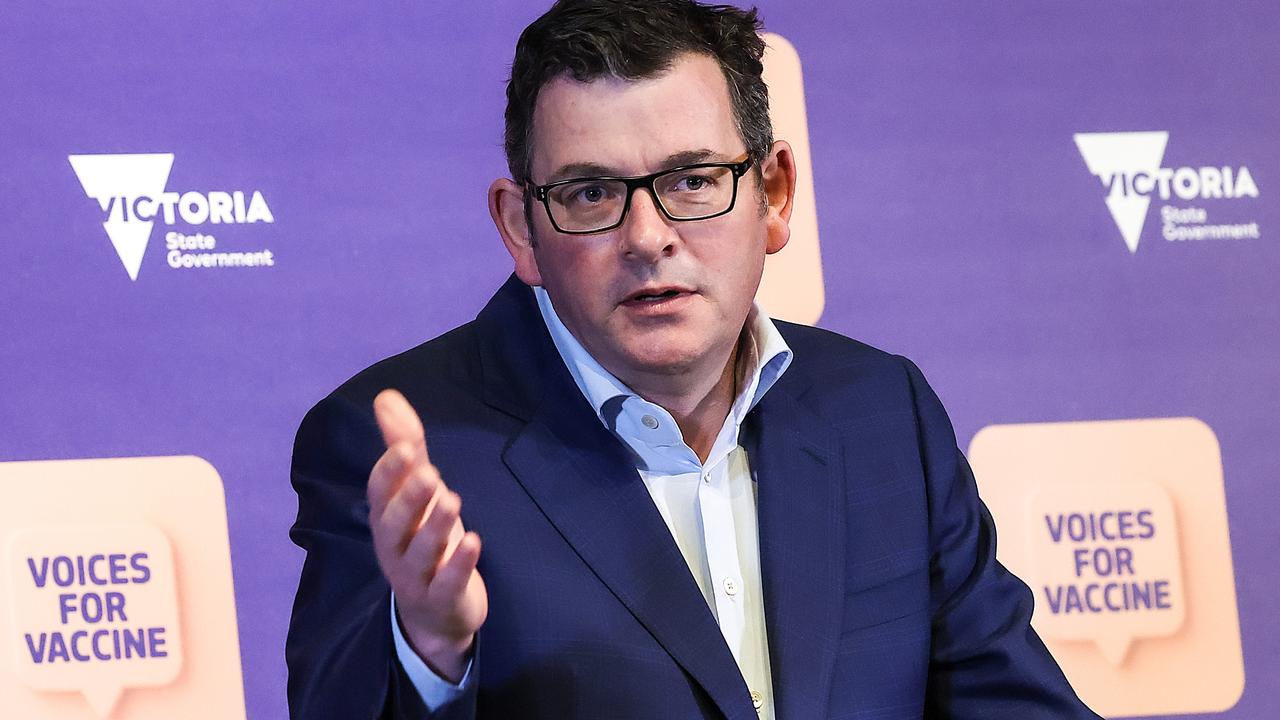
    Despite Victorian Premier Daniel Andrews imposing some of the harshest lockdown measures in the country, the state is on track to hit a rolling seven-day average of 1960 cases a day by October 25, according to Burnet Institute modelling. It shows ­infections then beginning to decline.

    Professor Bennett said the “rapid growth” in the early stages of the outbreak suggested ­“restrictions in place in Victoria weren’t working as well (as in NSW)”.

    But she said the concentration of cases in western and southwestern Sydney benefited NSW, compared to Victoria where cases are more spread out.

    “It’s harder to have good compliance at a whole city or state level,” she said.

    Burnet Institute modelling, prepared for the NSW government, predicted cases in local government areas of concern would peak at a seven-day average of about 1500 new infections a day in mid-September.

    Premier Gladys Berejiklian has been hesitant to declare that NSW has reached the peak of infections, but analysts have projected cases will continue to fall.

    University of Melbourne Research fellow Chris Billington has estimated that NSW’s “R-effective” – the rate at which Covid spreads – is now at 0.85. The same researcher has estimated Victoria’s R-effective at 1.31, meaning cases will continue to increase.

    The percentage of positive swabs in Victoria is significantly higher than in NSW. The 950 cases reported by Victoria on Wednesday came from 61,300 tests – with 1.55 per cent of tests positive.

    Significantly more tests are being done each day in NSW. On Wednesday, just 0.72 per cent of tests came back positive.

    Professor Bennett said that the speed at which case numbers were increasing was slowing down, but the growth appeared more dramatic due to high infection numbers. DTelegraph

  • Australia’s football leagues rebranded as A-League Men and A-League Women

    Australia’s football leagues rebranded as A-League Men and A-League Women

    Australia’s top-tier men’s and women’s football leagues, the A-League and W-League, have been collectively rebranded as the A-Leagues ahead of the upcoming seasons.

    The former A-League has been renamed A-League Men while the W-League is now known as A-League Women, with the Y-League rebadged as A-League Youth.

    The Australian Professional Leagues (APL), who officially took full control of the leagues in December 2020, said they had consulted players, coaches and fans in deciding to align the leagues under a “unified banner”.

    “The APL is all about football. It’s not men’s football or women’s football, it’s just football,” APL managing director Danny Townsend said.

    “Bringing the female game up onto a level playing field with the men was something we felt really strongly about.

    “We thought it’s about time football took a leadership role in this space.

    “We’ve got an amazing couple of years ahead of us with the Women’s World Cup coming to Australia, so this is just another step in our commitment to the women’s game.”

    Sydney FC and former Young Matildas defender Ally Green hailed the decision as the “biggest” change to hit the women’s competition since its inception in 2008.

    “It’s a really important message to get across to Australians and worldwide as well,” Green said.

    “It’s a world-leading announcement and we’re part of something really special here in Australia and in football.

    “It’s just Australian football now and it’s a really important message to send to the other sports in Australia.

    “I think they’re only going to follow and want to be on the same pedestal as us.

    “It’s exciting that we’re one of the first in Australia and it will only progress and develop each league moving forward in the future.”

    Socceroos and Melbourne City striker Jamie Maclaren welcomed the change.

    “For all of us to say we’re under one umbrella is a proud moment,” Maclaren said.

    “Not only for me as a footballer but for everyone involved in football in Australia.”

    The men’s competition kicks off on November 19 with the women’s league starting on December 3. ABC

  • The merino sheep Luna, now lives at Tasmania’s Brightside Animal Sanctuary after her ordeal

    When Luna the sheep was found on a rural property in Tasmania’s south-east, her fleece was so overgrown she was blinded by wool and couldn’t move.

    The new property owner, who had recently bought the land near Richmond, came across the distressing sight on Monday.

    The man used his tractor to move Luna into his ute, then drove her the three-hour return trip south to Brightside Animal Sanctuary at Cygnet.

    “She’d been wandering in the bush, blind and pretty hungry with this hugely heavy weight on her little frail body and she just collapsed, ” sanctuary founder Emma Haswell said.

    “It was like she’d given up hope. She had no energy and no will to live left.”

    Luna gets her first haircut

    The shearer who clipped Luna believed the ewe had never been shorn before.

    “As soon as that wool came off it was amazing, within 20 minutes Luna was walking in a straight line,” Ms Haswell said.

    “She’s bright and hanging out now with the bottle-fed lambs.”

    Luna is still acclimatising to being shorn, and on extra chilly days wears two jumpers, including a polar fleece designed for greyhounds who also live at the animal sanctuary.

    Ms Haswell said she had been overwhelmed by the compassion shown by the farmer who had asked for updates on Luna and was now following her progress on Facebook.

    “It’s the most amazing thing, to have someone care that much about a sheep, and what’s even more amazing is the incredible following Luna now has on Facebook, so many people have become lovers of Luna,” Ms Haswell said.

    “Years ago when you put up a post about sheep no-one cared, but that has changed and farmed animals aren’t just thought of as food anymore.

    “She’s this little angel of a sheep. She’s got this dainty merino face and these great big eyes.”

    Luna just one of a flock that’s missing

    Ms Haswell said another six stray sheep were believed to be on the property where Luna was found, and she believed the previous owner would try to retrieve them.

    “Otherwise, we will go up there on horses and ride the property and get them. We will find them,” Ms Haswell said.

    RSPCA Tasmania chief executive officer Jan Davis said cases where sheep went “rogue” weren’t very common.

    “If they are in hill country they disappear and aren’t readily spottable,” said Ms Davis.

    “It was lucky someone found her [Luna] because once sheep are down, they don’t generally get up again.”

    “And to be out in the weather, a wet fleece of that weight would kill a sheep.” ABC

  • Victorians bracing for more aftershocks in the coming ‘days’ after ‘rare’ earthquake

    Victorians bracing for more aftershocks in the coming ‘days’ after ‘rare’ earthquake

    Victorians are being warned to prepare for more aftershocks in the coming “days, if not weeks” after a 5.9 magnitude earthquake struck.

    The force of the event was felt across the state and into South Australia and New South Wales.

    It is the largest recorded earthquake in Victoria since such events were measured.

    Few injuries were reported but at least one man, in his 70s, was hospitalised after suffering upper-body injuries when the parts of a weather shield fell down and hit him. The Mount Eliza man was taken to Frankston Hospital in a stable condition, but experts say it could have been much worse.

    Speaking from Washington DC this morning Prime Minister Scott Morrison thanked those involved in the emergency response.

    “Obviously, we need to remain cautious because of the threat of aftershocks and wish those well who are going through inspecting and shoring up those properties that are affected and any damage that was there,” Mr Morrison said.

    “I’m pleased that … those events have ended up being less serious than first thought and we welcome that. But of course, it was an earthquake and that’s a serious thing.”

    While the worst is expected to be over, Seismologist Tanja Pejic from Geoscience Australia said more aftershocks were extremely likely.

    “Unfortunately, there will be aftershocks,” Dr Pejic told Today.
    “We have already recorded about seven of them. They were all smaller than the main shock. The largest aftershock we recorded was a magnitude of 4.1. I would expect that people in Victoria, closer to that epicentre, would have felt it.

    “And there will certainly be more aftershocks to come for days, if not weeks. They will generally decrease in size and frequency as the time progresses.”
    The earthquake was recorded at around 9.15am at Licola North, near Woods Point, yesterday, 180km north-east of Melbourne.

    It was followed by several aftershocks – the first a magnitude 5.5 tremor at 9.40am, followed by a 4.0 tremor at 9.55am and a 3.1 tremor at 10.15am.

    While experts know aftershocks are a given, they can’t predict when an initial earthquake will hit.

    “There is no technology in this world that can tell when, where and with what magnitude an earthquake will strike,” Dr Pejic said.

    “We can’t predict them. We can forecast from here on and say, yes, there will be aftershocks, this is normal, this is expected after an earthquake of this size, but we can’t predict how large they will be or when they will happen.”

    While large earthquakes are uncommon in Australia, because the continent lies centrally on a tectonic plate, yesterday’s event took place in an area of “heightened” risk after being identified via a 2018 “national hazard assessment map”.
    “This map shows that the south-eastern highlands is an area of heightened seismic risk.
    “For seismologists, it wasn’t unexpected but it was rare for Australia.”
    The quake struck at a shallow depth of 10km and while it was large, it didn’t cause major widespread damage.

    But one of the worst affected areas was Chapel Street in Windsor, including Betty’s Burgers which suffered significant structural damage.

    Managing director Troy McDonagh said it could be “a number of months” before his business is back up and running.

    “It was not the ideal scenario yesterday morning but we’ve got an amazing business and, as you well know, mate, hospitality, we’re a resilient bunch,” Mr McDonagh told Today.

    “We regrouped yesterday and obviously once we know what’s happening here and know the timeframes we’ll start the rebuild process.”

    Stay-at-home orders due to the coronavirus pandemic are believed to have prevented any serious injuries due to the small number of people out and about. 9news

  • A magnitude 6.0 earthquake has occurred with an epicentre near Mansfield in Victoria

    The 5.8 magnitude quake hit near Mansfield, east of Melbourne, about 9.15am today, according to Geoscience Australia.

    Victorian residents have reported feeling strong tremors for about 30 seconds.

    Tremors were also felt across Canberra, South Australia, Tasmania and NSW, including in Sydney, Bathurst and Dubbo.

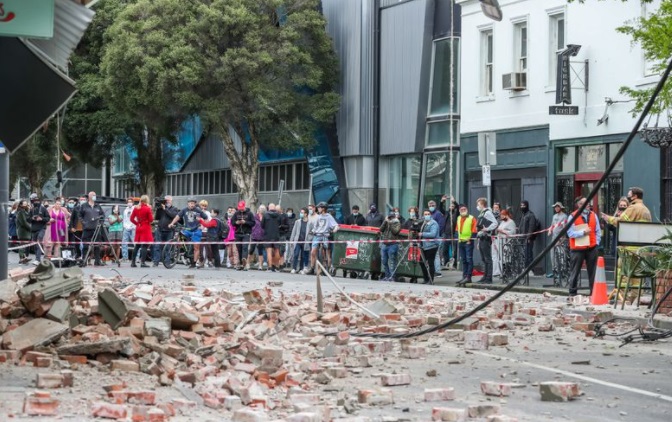
    Images of minor damage to buildings has flooded social media, with Chapel Street in South Yarra appearing badly hit with damage.
    Video shows rubble scattered across the ground, with locals standing around in shock over the quake.

    The earthquake struck at a depth of 10km, which is understood to be relatively shallow for an earthquake.

    However, the 5.8 magnitude quake could be the largest Australia has felt for some time.

    A number of buildings were forced to evacuate this morning as a precaution, including the Channel 9 headquarters in Docklands.
    Firefighters are en route to assess a number of buildings in the CBD after the earthquake triggered fire alarms.

    Prime Minister Scott Morrison, speaking from the United States, said the earthquake was “very disturbing” and distressing, but there were, so far, no reports of fatalities.

    He said the federal government stood ready to support Victorians as required in the response.

    The initial quake was felt 190 kilometres away in Melbourne as well as in regional Victoria, Sydney, regional New South Wales, the ACT, Adelaide and Launceston in Tasmania.

    There are reports emerging of significant damage in some parts of Victoria.

    Apartment buildings are being evacuated in inner Melbourne, where damage to streets and roads is being posted to social media.

    Premier Daniel Andrews posted on Twitter soon after the quake hit, advising Victorians to stay alert and monitor the Emergency Victoria website.

    “Yes, that was an earthquake,” he said.
    “Keep an eye on the Emergency Victoria website for the latest information.”

    SES Victoria said anyone who needs assistance or has suffered building damage should phone 132 500. ABC-9news

  • Scott Morrison heads to Washington for talks with Biden

    Scott Morrison is on his way to Washington with a jam-packed agenda of critical talks but isn’t expected to budge on one key policy.

    The peace and freedom of the Indo-Pacific region will be at the top of Scott Morrison’s agenda as he jets off to Washington for four days of talks set to be dominated by regional security.

    Speaking ahead of his departure on Monday, the prime minister said the talks were about keeping Australia safe in an “increasingly uncertain world”.

    “This is all about keeping Australians safe. This is all about, always about ensuring that Australia’s sovereign interests will be put first to ensure that Australians here can live peacefully with the many others in our region, because that’s what we desire as a peaceful and free nation,” he told reporters.

    “The peace and freedom of all of those who live across the Indo-Pacific. So I look forward to having these engagements.

    “They’re very important, as we follow on from the significant announcement we made last week with our American and British friends.”

    The whirlwind trip will see the Mr Morrison meet with US President Joe Biden and UK Prime Minister Boris Johnson.

    The week will culminate with the first in-person meeting of the Quad leaders on Friday.

    The regional grouping of Australia, the US, India and Japan, who met virtually in March, are expected to announce partnerships in vaccine production and supply.

    Quad leaders are also expected to agree on further areas of co-operation to be worked on over the coming year.

    Climate change, trade deals, vaccines and China’s rise in the Indo-Pacific region are expected to be the driving forces behind the week of meetings.

    Mr Morrison is set to meet with Mr Biden early on Wednesday morning Australian time. It’s understood the prime minister will float the prospect of the US rejoining the Trans Pacific Partnership during the meeting. A meeting with Mr Johnson is expected to follow.

    It comes days after Australia signed a landmark security pact between the US and UK to build eight nuclear-powered submarines.

    While climate change will be on the agenda, it’s not expected Mr Morrison will make any announcements on climate policy despite repeated efforts by the US and UK to pressure Australia to adopt more robust targets.

    Mr Morrison will also address the United Nations General Assembly via a prerecorded virtual speech.

  • France Recalls Ambassador from Australia

    France Recalls Ambassador from Australia

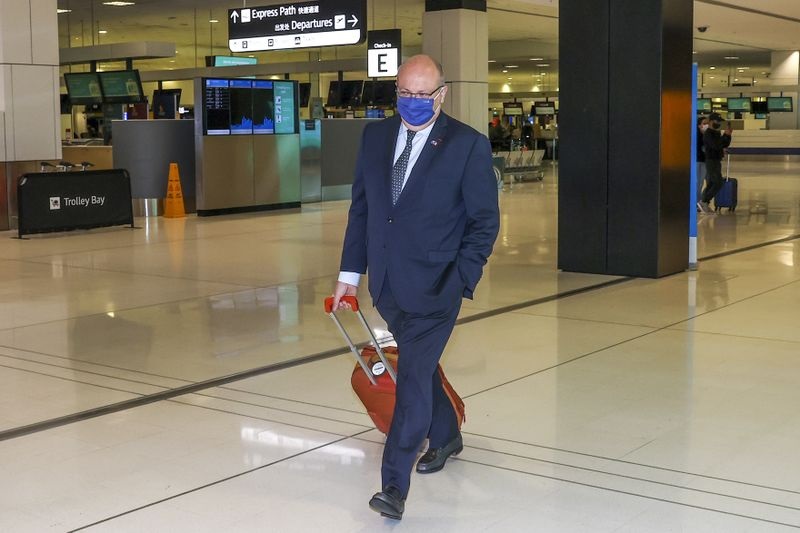
    France’s ambassador to Australia described Saturday as a “huge mistake” Australia’s surprise cancellation of a major submarine contract in favour of a US deal, delivering a final protest as the envoy was recalled from the country in an unprecedented show of anger among the allies.

    Jean-Pierre Thebault delivered his comments as he left his residence in the pandemic locked down capital of Canberra.

    “This has been a huge mistake, a very, very bad handling of the partnership,” Thebault said, explaining that the arms agreement between Paris and Canberra was supposed to be based “on trust, mutual understanding and sincerity.”

    Paris recalled its ambassadors to Australia and the United States on Friday to protest a deal among the United States, Australia and Britain to supply Australia with a fleet of at least eight nuclear-power submarines.

    Thebault flew out of Australia on a flight to Doha, Qatar, around 17 hours after the announcement from Paris.

    The US deal scraps a $90 billion-dollar contract with French majority state-owned Naval Group, signed in 2016, to build 12 conventional diesel-electric submarines.

    “I would like to be able to run into a time machine and be in a situation where we don’t end up in such an incredible, clumsy, inadequate, un-Australian situation,” the French ambassador added.

    Australian Foreign Minister Marise Payne’s office earlier had issued a statement responding to the diplomat’s recall and noting Canberra’s “regret” over its ally’s withdrawal of its representative.
    “Australia understands France’s deep disappointment with our decision, which was taken in accordance with our clear and communicated national security interests,” the statement said. It added that Australia values its relationship with France and looked forward to future engagements together.
    Payne and Defence Minister Peter Dutton are currently in the United States for annual talks with their US counterparts and their first with President Joe Biden’s administration.
    Before he was recalled, French envoy Thebault said on Friday he found out about the US submarine deal: “Like everybody, thanks to the Australian press.”

    “We never were informed about any substantial changes,” Thebault said. “There were many opportunities and many channels. Never was such a change mentioned.”

    After the US deal was made public this week, Prime Minister Scott Morrison said he told French President Emanuel Macron in June that there were “very real issues about whether a conventional submarine capability” would address Australia’s strategic security needs in the Indo-Pacific.
    Morrison has not specifically referred to China’s massive military buildup which had gained pace in recent years.
    Morrison was in Paris on his way home from a Group of Seven nations summit in Britain where he had talks with soon-to-be-alliance partners Biden and British Prime Minister Boris Johnson. Thebault said he had also been at the meeting with Macron and Morrison.

    Morrison mentioned “there were changes in the regional situation,” but gave no indication that Australia was considering changing to nuclear propulsion, Thebault said.
    “Everything was supposed to be done in full transparency between the two partners,” he added.
    Thebault said difficulties the project had encountered were normal for its scale and large transfers of technologies.
    French Foreign Minister Jean-Yves Le Drian said in a statement on Friday that recalling the two ambassadors, on request from Macron, “is justified by the exceptional seriousness of the announcements” made by Australia and the United States.
    Le Drian said Australia’s decision to scrap the submarine purchase in favour of nuclear subs built with US technology is “unacceptable behaviour between allies and partners.”

    Senior opposition lawmaker Mark Dreyfus called on the Australian government to fix its relationship with France.
    “The impact on our relationship with France is a concern, particularly as a country with important interests in our region,” Dreyfus said.
    “The French were blindsided by this decision and Mr. Morrison should have done much more to protect the relationship,” he added. 9news

  • Darko Desic hands himself in 30 years after escaping from Grafton Correctional Centre

    A NSW man who has been on the run since escaping from prison almost 30 years ago has handed himself into police

    Darko Desic broke out of the Grafton Correctional Centre on the night of August 1, 1992, 13 months into a three-and-a-half-year sentence for cannabis cultivation.

    On Sunday, September 12, he handed himself in to police.

    For the last 29 years, the 64-year-old has been living and working as a labourer doing cash-in-hand jobs on Sydney’s Northern Beaches, the Daily Telegraph reports.

    But the coronavirus pandemic hit him hard and he was made homeless.

    “He said he’s been living in Avalon, just doing labouring and odd jobs for cash for almost three decades,” a police source told the newspaper.

    “He’s been completely law abiding, never come under attention, never been spoken to.

    “He told us he never caused anyone any trouble so no one ever looked at him twice.

    “But COVID stopped all the cash work, he’s become homeless over the past couple of weeks and he slept on the beach on Saturday night and said ‘stuff it, I’ll go back to prison where there’s a roof over my head’.”

    Police said Yugoslavian-born Desic used a hacksaw blade and bolt cutters to escape the prison back in 1992.

    The 64-year-old claimed he escaped because he feared he would be deported to Yugoslavia, where he expected to be punished for fleeing without completing compulsory military service, once he served his sentence, police added.

    Desic was charged with escape prisoner from lawful custody and faced court on Tuesday where he was formally refused bail.

    He is set to face court again later this month.

    Desic was mentioned on the once popular TV series Australia’s Most Wanted when someone thought they saw him in Nowra, south of Sydney. ABC, 7News