Category: Australia

  • NSW Police investigating if car was ‘deliberately’ left on train tracks before derailment near Wollongong

    NSW Police are investigating if a stolen car was ‘deliberately’ left on a level crossing before a major train derailment near Wollongong early on Wednesday morning.

    The smash around 4.15am caused significant damage to the four-car passenger train at Kembla Grange station.

    The front carriage ended up on its side and metres away from the rest of the train. Other carriages were leaning sideways against the station platform.

    It also caused substantial damage to overhead wiring.

    Four people suffered minor injuries in the crash, including two passengers and the train’s driver and guard.

    The passengers suffered “abrasions” and the driver had back and abdominal pain.

    Nine passengers were on board along with the train driver and guard when the accident happened. Emergency crews had to rescue the train driver who was trapped in the cabin.

    “It was a chaotic scene when emergency services first arrived with the front carriage completely off the tracks and on its side and the second tilting,” NSW Ambulance Chief Inspector Norm Rees said in a statement.

    “The train had brought down power lines which were draped over the carriages and when you see all that, it’s lucky there weren’t more serious injuries to those on board.”

    A man called Nick who was on the train on his way to Sydney told radio station 2GB he was lucky not to have been injured.

    “It was like being on a trampoline. (We were) just bouncing up and down,” he said.

    Sydney Trains Chief Executive Matt Longland told Sunrise it was a “significant derailment” and it was “too early to speculate” why the car was left on the tracks.

    “The site is under the control of the NSW Police and emergency services so we will await their investigation to continue,” Longland said.

    Kembla Grange station serves NSW TrainLink trains on the South Coast line.

    NSW TrainLink said buses were replacing trains between Wollongong and Albion Park on Wednesday morning, while trains continue to operate between Wollongong and Waterfall.

    Customers are warned to “allow plenty of additional travel time”.

    The accident comes on an already chaotic day for train services in NSW.

    Commuters are being told to make other arrangements as rail workers strike over the lack of progress on a new enterprise bargaining agreement.

    Sydney Trains and the NSW TrainLink Intercity network will have fewer services on Wednesday, with some running to a reduced timetable and others replaced with buses.

    Transport for NSW chief operating officer Howard Collins said travellers should “expect your trip to be impacted and longer than usual”, with disruption all day and only about 30 per cent of services running.

    People should use trip planning apps and the Transport for NSW website to find the latest information and alternative travel options.

    Crews are refusing to drive privately built trains, which include Waratah and Millennium trains.

    Sydney Trains chief executive Matt Longland said those comprise “about two-thirds of our available trains”. 7News

  • Malaysia, Indonesia ‘worried and concerned’ AUKUS could lead to Asia regional arms race

    Malaysia and Indonesia have said they share strong reservations over Australia’s decision to acquire nuclear-powered submarines, even though nuclear weapons were not part of the plan.

    Referring to AUKUS, a trilateral security pact agreed last month between Australia, the United States and Britain, Malaysia’s Foreign Minister, Saifuddin Abdullah, said the two South-East Asian nations were similarly concerned about its ramifications.

    “We agree on the latest issue in the region regarding a country near our territory that is purchasing new nuclear-powered submarines,” Mr Saifuddin told a joint news conference after a meeting counterpart Retno Marsudi.

    “Even though that country doesn’t have the capacity for nuclear weapons, we are worried and concerned.”

    Indonesia last month said it was concerned AUKUS could lead to a regional arms race.

    The deal comes amid increasing tensions in the East and South China Seas, conduits for trillions of dollars of shipments amounting to about a third of global trade.

    The Philippines, a US defence treaty ally, has backed AUKUS, saying it offers a necessary counterbalance to an increasingly assertive China.

    Malaysia previously said it would seek views on the issue with China and the Association of South-East Asian Nations (ASEAN).

    The Indonesian and Malaysian ministers also expressed disappointment with the Myanmar junta’s lack of progress in implementing an agreed peace plan with ASEAN.

    ASEAN on Friday decided to exclude junta chief Min Aung Hlaing, who led a February 1 coup, from an upcoming regional meeting, in an unprecedented snub by the bloc.

    ASEAN would continue to offer humanitarian assistance to Myanmar, Indonesia’s Foreign Minister Retno Marsudi said.

    The foreign ministers also said they were in discussions about starting a travel corridor between Indonesia and Malaysia, and had agreed to finalise maritime sea borders in southern Malacca and the Sulawesi Sea.

    Reuters

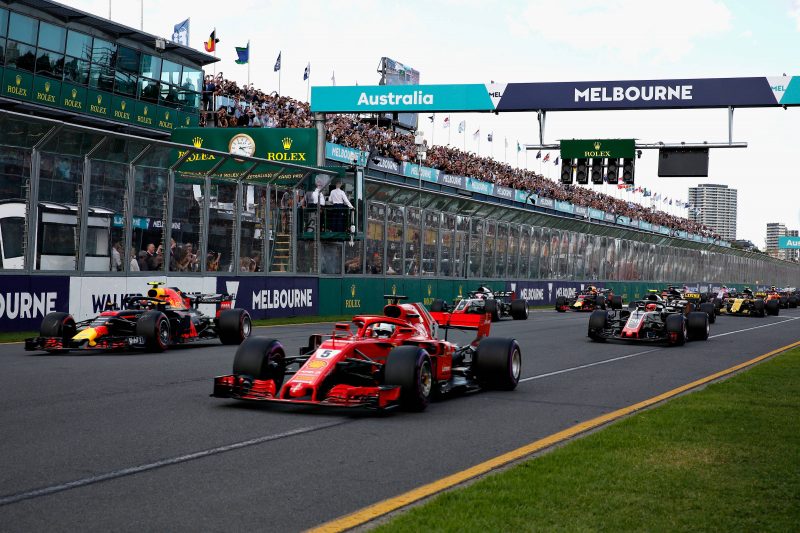
  • Formula 1 releases calendar for 2022 season, with Australia among the 23-race schedule

    Formula 1 releases calendar for 2022 season, with Australia among the 23-race schedule

    Formula 1 will have a record 23 races next season but the Chinese Grand Prix has been dropped for the third year in a row due to the COVID-19 pandemic.

    Races in Australia, Singapore, Canada and Japan — all cancelled for the past two seasons — were included on the new calendar.

    “Due to ongoing pandemic conditions, China will not be included on the 2022 calendar. China will be restored to the calendar as soon as conditions allow,” Formula 1 said.

    The 2022 season marks the start of a new era, with major rule changes, and opens at Bahrain’s Sakhir circuit on March 20.

    It ends some 35 weeks later at Abu Dhabi’s Yas Marina on November 20, the championship’s earliest finish since 2010.

    Formula 1 is keen to avoid any regional clash with the FIFA World Cup, which kicks off in Qatar in late November.

    Australia’s race in Melbourne, the season-opener in recent years, has been scheduled for April 10 as the third round to allow more time for an easing of the country’s travel restrictions.

    “Now more than ever we need major international events, like the Australian Grand Prix, to not only help our economy recover but to put a spring back in our step,” said Australian Grand Prix Corporation chief executive Andrew Westacott.

    The Miami Grand Prix on May 8 is new for 2022, providing a second round in the United States. It remains subject to approval of the circuit, which runs around the city’s Joe Robbie Stadium — the home of the Dolphins NFL team.

    The US Grand Prix in Austin, Texas, is on October 23 subject to a new contract being agreed upon.

    Singapore’s night race on October 2 was also subject to contract, along with Italy’s Imola and Spain’s Circuit de Catalunya outside Barcelona.

    This year was supposed to have 23 races as well but has ended up with 22, using Turkey’s Istanbul Park and Portugal’s Portimao circuits as stand-ins to fill gaps left by cancellations, while Saudi Arabia and Qatar will debut later in the year.

    The 2020 season had only 17 races.

    Around a third of the races next year are expected to be under a new sprint format trialled this year at Silverstone and Monza, with a third to come at Interlagos in Brazil next month.

    “We are excited to announce the 2022 calendar as we prepare to enter a new era for the sport with brand new regulations and cars for next year that are designed to create closer racing,” said Formula 1 chief executive Stefano Domenicali.

    “We look forward to welcoming more fans back next season and hope 2022 feels more normal than the life we have all experienced in the past two years.”

    The 2022 calendar will feature seven back-to-back pairs of races and two triple-headers.

    Britain’s Lewis Hamilton could be a record eight-times world champion by then, with the Mercedes driver battling Red Bull’s Max Verstappen for this year’s title.

    Dutch youngster Verstappen is six points clear with six races remaining this season.

  • Australia urged to extend AstraZeneca vaccine production to support Pacific nations

    CSL Chair Brian McNamee told the company’s Annual General Meeting this week: “We are pleased to say that the Australian Government and AstraZeneca trusted us as their partners to help the country respond to the emerging crisis through the most effective solution available: vaccination.”

    In a statement, CSL and Seqirus said they were “proud of the role they have played in providing Australia with onshore vaccine manufacturing capability throughout the pandemic”. SBS

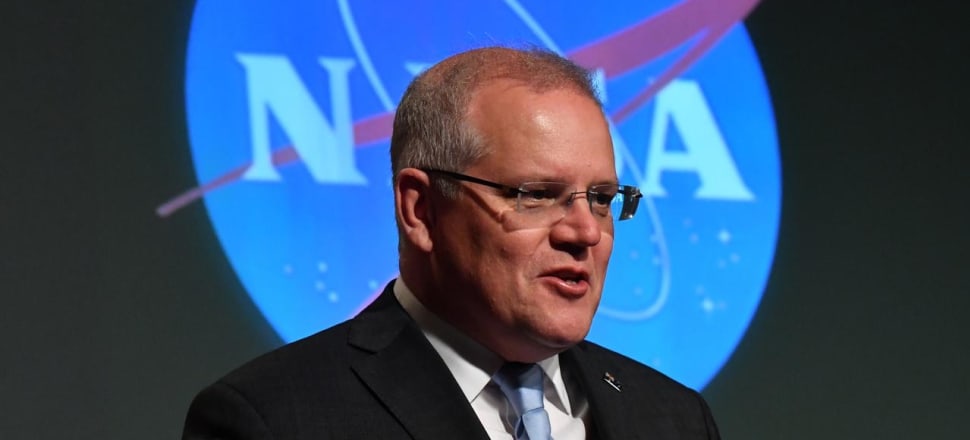
  • Australia is launching its first moon mission under a deal with NASA

    Australia is launching its first moon mission under a deal with NASA

    Australia is launching its first moon mission under a deal with NASA to build a lunar rover that could blast off within five years.

    Leading Australian businesses and researchers will help develop the vehicle to be used in a future mission to the moon.

    The semi-autonomous rover will collect lunar soil containing oxygen, which NASA will aim to extract.

    Finding a source of oxygen on the moon is considered crucial to establishing a sustainable human presence and supporting future missions to mars.

    Australian Space Agency boss Enrico Palermo said the mission would showcase the nation’s skills in remote operations drawing on mining sector expertise.

    “Australia is at the cutting edge of robotics technology and systems for remote operations, which are going to be central to setting up a sustainable presence on the moon and eventually supporting human exploration of Mars,” he said.

    Mr Palermo said it would grow Australia’s space sector and help its resources industry.

    Under the agreement, NASA could fly the rover to the moon as early as 2026, provided it meets a range of conditions during development.

    NASA administrator Bill Nelson said the deal built on more than half a century of Australian-American co-operation on space exploration.

    “By working together with the Australian Space Agency and our partners around the world, NASA will uncover more discoveries and accomplish more research through the Artemis program,” he said.

    Artemis is NASA’s push to return humans to the moon and set up a base on its surface for new space exploration.

    The Morrison government will spend $50 million from its moon to Mars initiative to help get the rover off the ground.

    Prime Minister Scott Morrison said it was an incredible opportunity for Australia to succeed in the global space sector.

    “This mission to the moon is just one exciting way that we can create opportunity and jobs for the future, and our government will ensure Australians reap the benefits,” he said.

    The government is aiming to triple the size of the space sector by 2030 to add $12 billion to the economy and create up to 20,000 high-skilled jobs.

    Science Minister Melissa Price said the milestone agreement would herald a new era for the space sector.

    “With our expertise in robotics technology, NASA wants to partner with us on this project to the moon, creating our own lunar history,” she said.

  • Afghan army deserter Hekmatullah, who murdered three Australian soldiers, freed from custody in Qatar

    A rogue Afghan soldier who murdered three Australians almost a decade ago has been released from custody in Qatar, and his precise whereabouts remain unknown.

    Relatives of Lance Corporal Stjepan Milosevic, Private Robert Poate and Sapper James Martin were told about the release by Defence.

    Known as Hekmatullah, the Afghan army deserter ambushed Australian soldiers in a so-called “green on blue” attack while they were playing cards at a forward operating base near Tarin Kowt in Uruzgan province in 2012.

    After being captured, he spent seven years in an Afghan jail, but was transported to a facility in Qatar last year as the United States held peace talks with the Taliban.

    At the time, the families of the slain Australian soldiers expressed dismay and even called on the Australian government to rethink its alliance with the United States.

    Hekmatullah was released shortly after the Taliban recaptured Kabul in August, but it is not known whether he has returned to Afghanistan.

    In a statement, an Australian government spokesperson expressed the government’s disappointment and confirmed it did not know the former soldier’s whereabouts.

    “The Australian government is aware that Afghan Army deserter Hekmatullah, who murdered three off-duty Australians, has been released from custody. His whereabouts cannot be verified,” the statement said.

    “The government’s position has always been that Hekmatullah should serve a just and proportionate sentence, appropriate to his crimes, and not be granted early release or pardon.”

    The spokesperson added that Australia made “repeated representations over a long period advocating this position to relevant governments”.

    “We share the sorrow of Australians at this outcome and again offer our condolences to the families and the loved ones of our three fallen soldiers.”

    Last year, Robert Poate’s father, Hugh Poate, said the fact his son’s killer was allowed to leave Afghanistan was a “damning indictment on the Australian-American alliance”.

    “America negotiated this deal with the Taliban and did not include Australia or any of the other 50 nations that went to war with the US,” he said. ABC

  • Victorian Premier Daniel Andrews has been hit with two fines for breaching COVID-19 restrictions.

    Mr Andrews was filmed walking through the state parliament’s car park without a mask on Thursday.

    He also did not wear a mask as he approached the media on Wednesday.

    On both days, Mr Andrews wore a mask as he was driven to parliament but took it off before he walked through the car park.

    Victoria Police confirmed on Friday the Premier had been issued two $200 infringement notices over the incidents.

    Currently, Melburnians aged over 12 must wear a fitted face mask whenever they leave their home, indoors or outdoors, unless a lawful exception applies, including for broadcasting purposes.

    In a statement earlier on Friday, Mr Andrews apologised and said he would pay a fine if police issued one.

    “If they do not issue a fine I will donate the same value to a charity working to support people in this pandemic because whilst this was an oversight, oversights matter – everyone needs to follow the rules and I am sorry it occurred,” he said.

    Treasurer Tim Pallas defended the premier, who he said has been “pretty diligent in terms of his behaviour” throughout the pandemic.

    “I had a brief look at the footage and it looks like he is approaching a camera for the purpose of doing a piece to camera. You are allowed to not wear a mask for that and we will leave it at that,” he told reporters at the daily COVID-19 briefing on Friday.

    Opposition Leader Matthew Guy said most Victorians had “momentarily forgotten a mask” but noted Mr Andrews walked “some distance” without wearing his.

    “He’s done it in front of media, which is probably a bit silly but I will leave that to police,” he said. SBS

  • Australian far-right terrorism investigations have increased by 750 per cent in 18 months

    The threat of nationalist and racist violent extremism is escalating rapidly, according to Australia’s domestic security and investigative services.

    In the past 18 months, the Australian Federal Police’s Joint Counter Terrorism Team’s (JCCT) caseload covering the area has risen by 750 per cent.

    AFP Assistant Commissioner Scott Lee from the Counter Terrorism and Special Investigations Command said he only expected the threat to continue to climb.

    “There was certainly an increase in the JCCT’s nationalist and racist violent extremism caseload from 2019 and into early 2020 … We expect it to increase further than what we are seeing at the moment, but how much further it will increase is difficult to ascertain at the moment.”

    The rise means it now accounts for 15 per cent of the unit’s total investigative effort.

    “Islamist or religiously motivated violent extremism remains the predominant threat at about 85 per cent of our workload,” Mr Lee said.

    The interview comes as an SBS News investigation uncovered an underground network of Australian men who share far-right views that has never been reported on before in the media, with one member revealing the group’s efforts to acquire firearms.

    The AFP is monitoring groups like the one uncovered by SBS News and the investigation sparked grave concern, Mr Lee said.

    “It’s very concerning to us and where we see individuals … where they have a violent extremist ideology and have expressed a view to act on that violent intent, and either have or are attempting to obtain firearms, we take that very seriously and we take action.”

    Pandemic increasing extremism

    The JCCT is responsible for investigating extremism that involves an immediate threat of violence.

    Earlier this year, the Australian Security Intelligence Organization (ASIO) confirmed 50 per cent of its domestic caseload was looking at far-right groups, up from about 10 per cent before 2019.

    Unlike ASIO though, the JCCT’s bar for prosecuting investigations involves an imminent threat of violence.

    “The key here is the violence, that is the threshold for us to take action. Where we see individuals where there is a threat or move to violence, that’s where the JCCT will take action,” Mr Lee said.

    For several years prior to 2020, far-right extremism accounted for about two per cent of the JCCT’s workload, which doesn’t take into account investigations by state and territory police.

    Mr Lee said the impact of the COVID-19 pandemic had ramped up racist narratives within extremist circles.

    “We continue to see the impact of the online environment particularly as we see the impact of COVID lockdowns, we are seeing that is having an impact and it is being exploited including by ideologically motivated extremist groups to magnify those ideologies within the community.”

    “We are seeing the impact of COVID more broadly on some of the ideological drivers as well, so we are expecting it will increase particularly in terms of racist views, where people are anti-Semitic, anti-Muslim or anti-Indigenous. We are seeing this affect people, particularly young people who are vulnerable to these ideologies.”

    ‘De-radicalization is key’

    Dvir Abramovich is the chairman of the Anti-Defamation Commission (ADC), Australia’s leading Jewish civil rights organization.

    He said his organization had witnessed discussions around the “ethnic cleansing” of Australia and the purchasing of firearms by groups additional to the one uncovered by SBS News.

    “The ADC, throughout its investigation of these hardcore bigots, has seen discussions and has seen those individuals talking about acquiring weapons, talking about a racial war, talking about eliminating anybody they perceive to be as a threat to white people.”

    “I think this is a problem from hell that we can’t run and hide away from and I think the worst thing we could do is ignore the threat materializing before our very eyes.”

    Mr Abramovich called on the Australian Government to look at putting additional funding into far-right de-radicalization programs.

    “We need a whole of society approach … we don’t need a Christchurch massacre in our cities to take this problem seriously. These people are ticking time bombs.”

    A Department of Home Affairs spokesperson told SBS News the federal government had invested $69 million in countering violent extremism programs since 2013.

    “Our intervention programs are designed to address all forms of violent extremism, including religiously and ideologically motivated violent extremism,” they said in a statement.

    The department did not respond directly to questions about what proportion of that funding went to far-right de-radicalization programs.

    ‘Inflaming divisions’

    Criminologist Dr Clarke Jones is a senior research fellow at The Australian National University, and a counter-terrorism expert who specializes in de-radicalization.

    He said while Australian authorities were highly resourced and efficient at investigating and prosecuting terrorism matters, de-radicalization programs and initiatives were comparatively under-resourced in the country’s counter-terrorism efforts.

    “Australian authorities have taken a militaristic approach to counter-terrorism, but have failed when it comes to dialogue, trust-building, and rhetoric that has, at times, inflamed divisions in our society.”

    “We don’t see the government asking white people to condemn white supremacy,” he said.

    “Narratives have created that sense of otherness. Why has it been on Muslim leaders to condemn terrorism, for views they don’t support in the first place?”

    “I can see how these growing divisions could give some groups a sense of ‘we need to take matters into our own hands’, and that is very dangerous, especially when those groups are engaging in training and looking at buying weapons.”

    Assistant Commissioner Mr Lee rejected the assertion that requests by Australian authorities for Muslim leaders to condemn Islamic extremist violence had added to a sense of alienation.

    “I don’t think the calls [for the] condemnation of Islamic extremism is an unfortunate legacy,” he said.

    “We can assure people we target criminality and not ideologies,” he said, adding that’s why they were taking on more cases involving far-right extremism.

    “From our perspective, that’s why we want to reassure the community where we see these matters, we act appropriately and that’s why we are seeing an increase in these.” SBS
  • French ambassador to return to Australia to ‘redefine’ relations after submarine dispute

    France is sending its ambassador back to Australia, saying it is looking to redefine future relations after a row over a submarine contract.

    France will send its ambassador back to Australia after withdrawing the envoy in a row over a submarine supply deal, French Foreign Minister Jean-Yves Le Drian says.

    “I have now asked our ambassador to return to Canberra with two missions: to help redefine the terms of our relationship with Australia in the future …and to defend our interests in the concrete implementation of the Australian decision to end the programme for future submarines,” Mr Le Drian told French MPs on Wednesday.

    Paris had pulled the ambassador out of Canberra in protest at a defence pact negotiated between the United States, Australia and Britain. Known as AUKUS, the pact is intended to counter Chinese military power.

    Under the pact, Australia committed to buy US-designed submarines, and pulled out of an existing supply deal with a French manufacturer.

    Paris was incensed, saying the deal had been done behind its back.

    But while France has sought to mend fences with Washington, it had frozen its contacts with Australia.

    France had considered the partnership with Australia dating back to 2016 as the cornerstone of its Indo-Pacific policy and French officials say they feel particularly betrayed by Canberra. They say Canberra gave them no indications despite launching its plan to switch deals 18 months earlier.

    Mr Le Drian said Paris had completely reviewed its bilateral relationship with Australia given that the submarine deal had been part of that broader strategy.

    “Starting afresh in our bilateral relations will not have any impact in our determination to remain engaged in the Pacific,” he said.

    Australia has said it regretted the ambassador’s recall, and that it values the relationship with France and wants to keep engaging with Paris on issues including the Indo-Pacific.

    Diplomats have said the crisis in confidence will need some strong acts from Canberra that would benefit French interests in the region. SBS

  • Australia to end PNG offshore processing

    The federal government is ending offshore processing in Papua New Guinea for asylum seekers detained after trying to reach Australia by boat.

    The arrangement was set up in 2013 under the then-Labor government and authorised regional processing in PNG.

    Under a timeline announced on Wednesday, processing in PNG will permanently end on December 31.

    As of July this year, there were 124 asylum seekers in PNG.

    From January, PNG will have responsibility for those who remain, the Australian and PNG governments said in a joint statement.

    This means any asylum seekers still in PNG will be offered a pathway to permanent migration, including citizenship.

    PNG will also provide support to those temporarily in the country awaiting transfer to a third country.

    Prior to the December deadline, Australia will offer asylum seekers in PNG “voluntary transfer” to its offshore processing centre on the Pacific island of Nauru.

    “This government’s strong border protection policies – including a commitment to regional processing – have not changed,” Home Affairs Minister Karen Andrews said.

    “Anyone who attempts to enter Australia illegally by boat will be returned, or sent to Nauru.”

    “I thank them for their close cooperation and support,” she said.

    The federal government in September signed a new agreement with Nauru, which began offshore processing in 2012, to continue that arrangement.

    There are about 107 detainees in Nauru.

    Between 2008 and 2013, more than 50,000 people arrived in Australia on more than 820 boats and at least 1,200 died at sea, the government said. aap