Category: Australia

  • Abdulhamit Bilici: Erdogan enjoys abusing July 15 coup but prevents true investigation

    It has been five years since an attempted coup in Turkey changed the course of the country’s democracy. On the evening of July 15th, 2016, a faction within the Turkish military attempted a takeover but ultimately failed. This report attempts is to unveil the real facts about the July 15 Coup, which was ‘planned’ and scripted five years ago by the AKP and the Tayyip Erdoğan regime. Mafia Organization Leader Sedat Peker’s statement that some AKP members were distributing weapons before July 15 appeared in the international media. This report continues to shed light on the 15 July Planned Coup. ABC News Australia News Channel conducted an interview with Zaman Newspaper editor Abdülhamit Bilici. Bilici was usurped by the AKP regime and had to leave the country and go to America. Here are Bilici’s answers to the questions put to him by Beverley O’Connor from ABC News Australia.

    Good to talk to you. What struck you when you look back to that moment five years ago as this coup played out?

    It was terrible for me as a Turkish citizen and journalist to see such an especially horrible attempt to destroy democracy. I condemned it, and I still condemn it. But I have been a journalist for over 25 years, and I know in recent Turkish history there have been five successful quote unquote, military interventions in one way or another. However, this was not like those coup attempts that were successful. This was like a caricature, a cartoon of a real coup because the timing was unbelievable. The coordination was non-existent. It failed within a couple of hours. And it was clear that it would fail because coups usually, in Turkey and in the world, generally happen in the early morning. This is a time when people are in their beds, but this coup was in primetime. The media was live and as you know, the first thing that the coup generals do is to silence the media. But this was not the case.  The media was live, but the orchestrators of the coup, were trying to close down the traffic on one side of an important bridge in Istanbul, which has no relevance for a successful coup. So, there are still, many, if not 1000s of question marks about the authenticity of the coup. Many people think that this was an orchestrated or staged coup, which benefitted only Erdogan and his party.

    But of course, Erdogan blamed it on supporters of Gulen’s Hizmet Movement, a movement you’ve been linked to, so what do you say to those accusations?

    Whoever participated in such a coup -in this horrible act, I condemn. But I mean, the conditions were so bad, that we, as the citizens of the country are not able to see the real picture of what happened on July 15. Because on that night, 5000 judges and prosecutors were purged and that had nothing to do with the coup. As a result, 200 critical media outlets were silenced and shut down. More than 200 journalists were imprisoned. So, under those conditions, how you can see what is the real motive and what happened on July 15? Today, after five years, we still do not have a clear picture of what happened. Looking retrospectively, I see Erdogan’s description of the coup as a gift from God. From my perspective looking back I see that it helped only Erdogan. So now the opposition is destroyed, and the biggest opposition party’s chairman is in jail. You know, how this chairman defined the coup attempt? He said, this is the biggest conspiracy of our century. And the main opposition party leader defined the coup as a controlled coup, which Erdogan knew was coming, but did not do anything to stop it from happening.

    And to your point, this really started the collapse of democracy in Turkey, and this is what we are looking at today.

    The destruction of democracy did not start with the coup and of course Turkey was never a perfect democracy. It was struggling to be a better democracy. But my newspaper, for instance, was silenced five months before the coup, and several other newspapers and TV stations were shut down before the coup, even one year before the coup. Erdogan was doing good in terms of democracy until 2011 – 2012. But then, he switched from a democratic path into an autocratic path. The coup attempt, the July 15, was the last nail in the coffin of the Turkish democracy. So that I mean if we miss that point, we will not understand it correctly. And now I see 7000 academics have been purged. As I said, 5000 judges were purged from their positions and there is no independent media or no independent judiciary. There are opposition parties still.  They are asking and they are proposing to investigate what happened on July 15. But those proposals are rejected by the members of the ruling party- Erdogan’s party. This is very strange. Some of those journalists are attempting to investigate what really happened. But some of them were jailed just because of those questions and for questioning the official narrative.

    Your newspaper before it was shut down had been quite supportive of some of the policies of Erdogan. And then you said, the mood shifted. What do you think was driving the fear that you saw in order one? What was the reason that Erdogan felt he needed to pursue this crackdown?

    I think 2013 was a critical year for this change by Erdogan. In the summer of 2013, there was a protest, called ‘Gezi protests’ in the downtown Istanbul., In these protests there were young people protesting against  Erdogan’s proposal to destroy a green park in order to construct a shopping mall in that area.  Turkey was a rising star of democracy at that time in the world. So it was a shock to us who were supporting Erdogan and to all the world to see how Erdogan reacted. Erdogan destroyed those protests and arrested protesters and unfortunately the police killed some of these young people. This was the one, the very important time that Erdogan switched from the path of democracy to an authoritarian path. The second important event was the exposition of the corruption at the end of the that same year. Erdogan’s ministers and his relatives (his family members) were involved in a very dark a bribery scheme, which involved violating international sanctions against Iran and in return receiving bribes from a businessman. So, in that position, Erdogan had two options. Either he could destroy democracy and judiciary and free media to survive, or to go to the court to respond to the allegation, Erdogan picked this first option. So since then, he has moved against all who oppose him.

     I was going to say in terms of the current situation  what hope do you have that any journalist  or writer will be allowed to write their opinions?  Is there any hope for this situation to come to an end somehow while Erdogan controls the country with an iron fist?

    You know, when the fundamentals of democracy are destroyed, it is not easy to get them back or to fix them. The problem is even if most of the Turkish people are against Erdogan and with a fragmented opposition and lack of a free media Erdogan will remain in control. Today 95% of the media is under Erdogan’s control. The judiciary is under his control. Parliament lost its significance after July 15. So, under those conditions, Erdogan’s popularity is not rising, but the mechanisms for change are already destroyed. So, it is very difficult. But of course, there is still some hope. In 2019, there was an election, and Erdogan lost some local municipalities mainly in Istanbul and in Ankara. This is an important sign that Turkish people still aspire for democracy if they can. But as I said the conditions, since 2013, have become worse and worse. And unfortunately, now even the member and the leader of the third biggest party is in jail.  You can imagine the situation and how it is hard to go back to democracy,

    indeed, how much I appreciate you bringing talking to us and just trying to give us some analysis of where Turkey is placed today. Thank you so much. 
  • Erdogan’s hostility towards Gülen goes back to December 17/25, 2013

    During an interview on ABC’s Lateline, Tony Jones asked Greg Barton some key questions about the post-coup purge in Turkey.

    TONY JONES: Greg Barton is a counterterrorism expert at Deakin University. He was also once an advisor to the former Indonesian President Wahid, sometimes known as “the laughing Sufi”. Professor Barton has also studied the religious underpinnings of the Gulenist movement.
    Thanks for being here.

    GREG BARTON: Thanks, Tony. Good to be with you.

    T.J: Erdogan’s purge, as we’ve heard, is incredibly extensive of soldiers, police, judges, teachers, civil servants, sacked, suspended or detained. Is he trying to tear out the Gulenist Movement from the society by its roots?

    G.B: That’s what he says, Tony, but actually what he’s doing goes way beyond anything that makes sense on those grounds. He’s using that as a pretext to cover what he does, but I think he surely knows that his problem is not with the Gulen movement, it’s anyone who dares speak up and dissent, whether they’re Kemalist or they do have links to the Gulen movement. So, this is really a smokescreen for a much bigger operation. He’s made no secret of his desire for executive presidential power. He didn’t have that yesterday. He has it today with emergency rule, and when that expires, if it does, in three months’ time, it’ll probably be permanent as a result of constitutional change.

    T. J: Yeah. I mean, we know, however, the Gulenist movement is rooted in the schools, it’s global, as we’ve seen with the schools set up in Australia. Erdogan has now turned the education system on its head. He’s closed down 600 schools, tens of thousands of teachers, Education minister, bureaucrats, university deans, all sacked. Is it possible that he’s just getting rid of every element of the Gulenist movement in the education system along with everything else?

    G. B: Well he certainly seems to be trying to do that. In fact, he’s been working on that for three years now. Relations with the Gulen movement went sour three years ago, first with the Gezi Park protest, a very harsh reaction, and then December, 2013 with really serious corruption allegations aired through Gulen-linked media outlets. It’s kind of remarkable he’s got anyone left to purge, but he’s certainly made them his public enemy, but there must be many, many more who have no links. I mean, one-third of the general staff of the senior military officers are now arrested or detained, and most of them, given their seniority, would have had no connection with any religious movement because the Turkish military never allowed religious connections. So, common sense suggests there’s something much more than this going on.

    T. J: Is there any doubt though how pervasive the movement was for example in the police force? Promotion in the police force was part of being a member of this movement, according to many. I mean, there’s no doubt, is there, that the movement was infiltrating, effectively, some parts of the society?

    G. B: Well Tony, it was a very powerful still is a very powerful civil society movement in Turkey and around the world. One of the world’s most significant moderate Islamic movements and it had enormous cultural sway in Turkey. It’s always hard with Turkey to figure out fact from fiction when it comes to conspiracy theory, but they were the most powerful movement outside of Government control. But cultural civil society’s fear, whether that amounts to infiltration or whether it just is a natural consequence of having an effective education program, you know, is a matter of debate. But they never were a political movement and never aspired to political power, so they’re being painted as being something beyond what they ever were.

    T. J: Do they pose a philosophical and religious threat to Erdogan’s version of Islam? Is that, part of the problem here and are they in fact Sufis in their nature?

    G. B: Look, they certainly are Sufi and the irony is that, for a decade, as Erdogan was a successful democratic prime minister and the economy grew and democracy was consolidated, there was a confluence between the same demographic base that voted for AKP, Erdogan’s party, and the democratic base that basically supported the Gulen movement – small-town conservative, socially conservative, but Sufistic moderate Turkish Muslims. That split that emerged in 2013 was entirely for personal reasons and you get the sense that Erdogan is so afraid not just of corruption allegations, but of the sense that his religious legitimacy is being challenged by the most revered religious leader in Turkey that he finds it necessary to demonize that religious leader so that he can maintain his claim to be acting not just for the people of Turkey, but for true religion. He’s very much a religious figure, Erdogan, and he doesn’t want any challenge to his religious authority, although it’s put in political terms.

    T. J: So, in what way are Sufis actually different in their philosophy, if you like, their religious philosophy to the kind of Islam which Erdogan would espouse and too Islamism or Islamists generally?

    G. B: Well Islamism is very much a here-and-now focus on political power. I mean, commonly the formulation is application of Sharia, if not an Islamic state, so top-down enforcement of religious morality and observance. Erdogan is representing people and has the popular support of people who are basically Sufistically-inclined, but his own inclinations has borrowed a lot from the surrounding Islamism of countries like Egypt, where in many respects he’s always had a sympathy for the Muslim Brotherhood. That doesn’t have a presence in Turkey, but his inclinations ran that way ever since he was Mayor of Istanbul in the 1990s and then became this transformational prime minister of a new party. So, there’s an odd tension there. I mean, in theory, the people supporting him actually have the same religious outlook as people in the Gulen network, but this is about personal authority.

    T. J: It is interesting to note, though, when it comes to the Gulenist movement, the Catholic Church, even some leading Zionists in the United States, have described the principles and teachings of Gulen as the antidote to fundamentalism. Is that an accurate assessment?

    G. B: Yeah, I mean, you mentioned Indonesia earlier, Tony. I mean, Gus Dur Abdurrahman Wahid was very different in his personal style than Fethullah Gulen, but I’ve met Gulen a couple of times and he strikes me as a similar sort of moderate, modern Sufistic Muslim. He’s more socially conservative than Abdurrahman Wahid was, but in many ways, very similar ideas and I’ve looked at the ideas of both men very closely. So, yeah, I think that idea that people often say Islam needs reformation. That’s too simplistic, but all religions need a way of coming to terms with the modern world and with plural society, and in Indonesia and in Turkey, we’ve seen these leaders offer a way forward and it’s basically been a good news story, so it’s a pity it’s mired in political controversy at the moment. The TRuth

  • Snake Slithers Out of Toilet, Bites Man on His Genitals

    An Austrian man got an unpleasant and unusual surprise on Monday morning when a snake bit his genitals as he was using the toilet.

    The 65-year-old victim felt “a ‘tweak’ in the area of genitals” around 6 a.m. shortly after sitting on the toilet in his Graz home, according to a press release from local Austrian police. When the man looked in the toilet bowl to investigate, he saw an albino python measuring over 5-feet long looking back at him. The snake belonged to his 24-year-old neighbor, a reptile enthusiast whose nearby apartment also contained 10 other snakes and a gecko. Police said that it was not clear how the snake had escaped from its terrarium, but that it “possibly entered the toilet via the sewer system.”

    The unnamed victim was transported to a nearby hospital where he was treated for what were described as “minor injuries.” Pythons are not venomous snakes, killing their prey with constriction instead. However, bites from the snakes can be extremely painful and carry additional risks because some of the animals may be disease carriers.

    The snake belonged to his 24-year-old neighbor, a reptile enthusiast whose nearby apartment also contained 10 other snakes and a gecko. Police said that it was not clear how the snake had escaped from its terrarium, but that it “possibly entered the toilet via the sewer system.”

    The unnamed victim was transported to a nearby hospital where he was treated for what were described as “minor injuries.” Pythons are not venomous snakes, killing their prey with constriction instead. However, bites from the snakes can be extremely painful and carry additional risks because some of the animals may be disease carriers.

    Police called on reptile expert Werner Stangl to remove the snake after the biting incident took place. Stangl told Austrian paper Kronen Zeitung that rescuing the snake from the toilet was a difficult task, especially while taking care to avoid injuring the python.

    Emergency workers were asked to leave the bathroom before the toilet rescue operation took place over fears that vibrations could scare the snake. The reptile attempted to resist Stangl by tensing its muscles and pressing itself against the toilet. It was eventually removed before being cleaned off and returned home.

    Authorities are investigating the python’s owner, who was reportedly “shocked” by the incident, for potential negligent assault charges. Although the decision was made to return the snake to its owner, local veterinary authorities could eventually reach a different decision.Newsweek reached out to the Austrian embassy in Washington, D.C. for comment and additional information. By:newsweek

  • Lawyer posts photos of former Kyrgyz official suspected of role in İnandı’s disappearance

    A lawyer representing a Turkish-Kyrgyz educator in Kyrgyzstan who is allegedly being held against his will at the Turkish Embassy in Bishkek on Tuesday posted photos of a former Kyrgyz official suspected of involvement in the educator’s disappearance, local media reported on Wednesday.

    Orhan İnandı, the founder and president of the Turkish-Kyrgyz Sapat school network operating in Kyrgyzstan, went missing in Bishkek on the evening of May 31 and is feared to have been abducted by Turkey’s National Intelligence Organization due to his alleged links to the Gülen movement, a faith-based group inspired by Muslim cleric Fethullah Gülen.

    İnandı’s wife, Reyhan İnandı, said in a June 6 statement that an undisclosed source told her that her husband was being held against his will at the Turkish Embassy, and she claimed he was being tortured to renounce his Kyrgyz citizenship. This would simplify İnandı’s forcible transfer to Turkey, she said.

    Taalaygül Toktakunova, the attorney for the İnandı family, shared on Facebook photos of a person suspected of involvement in the educator’s alleged abduction along with photos of Ekberov Ulan, a former official from the Kyrgyz Interior Ministry, publicly asking Ulan to confirm whether he was in fact the suspect in the photo.

    Noting that Ulan’s whereabouts are unknown and that he is said to have left Kyrgyzstan, Toktakunova called on the former official to contact the İnandı family and remove their doubts regarding his suspected role in the educator’s disappearance.

    Turkey claims the founder of the Sapat school network is Turkish Islamic cleric Fethullah Gülen, whose movement is labeled as a terrorist organization by the Turkish government and accused of masterminding a failed coup in Turkey in July 2016. Both Gülen and his followers strongly deny any involvement in the abortive putsch or any terrorist activity.

    Over the past five years scores of men alleged by Turkish authorities to have links to the Gülen movement, living in countries around the world, have been arbitrarily detained and forcibly returned to Turkey. There they are incarcerated on bogus terrorism charges in violation of due process rights and protections.

    Protests have taken place in Berlin, London and Brussels as well as Bishkek in support of the Turkish educator, demanding his release. The United Nations Human Rights Committee has called on Turkey to promptly take all measures necessary to establish the whereabouts of İnandı and said the government should ensure that İnandı would not be subjected to torture and inhuman treatment, guarantee his physical and mental integrity and immediately place him under the protection of the law.

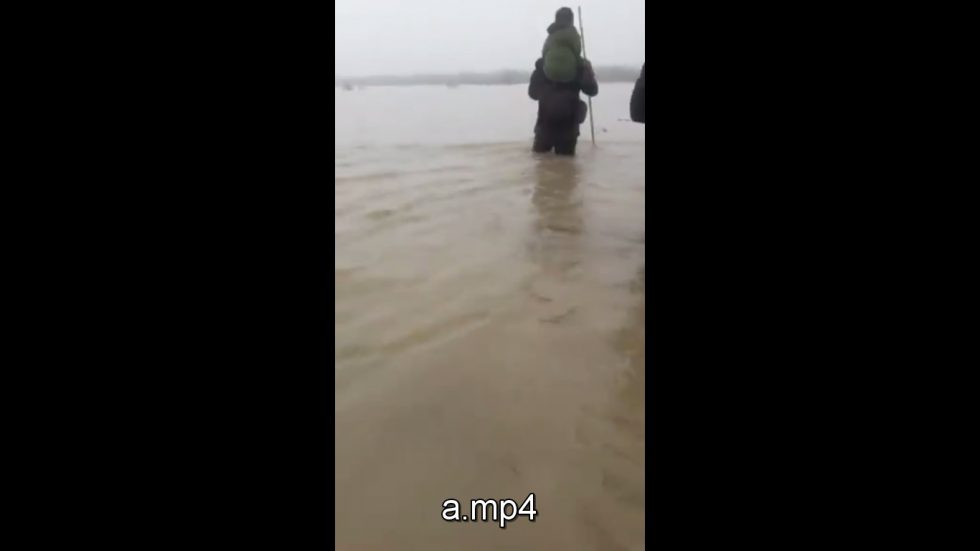
  • “My kids will never forget this day”

    “My kids will never forget this day”

    A purge-victim Turkish woman tweeted a short video of her family walking into a river at the Greek-Turkish border in an attempt to flee Turkey via illegal means.

    The family is believed to have been prosecuted by the Turkish government due to alleged membership to the Gulen group, accused of masterminding a coup attempt in 2016. The group denies any involvement.

    “My kids will never forget this day,” she said in her tweet.

  • Bondi COVID-19 cluster rises to 21 cases after NSW Health records 10 new infections

    The increasing number of cases has led NSW Premier Gladys Berejiklian to extend the state’s mask mandate for all indoor public venues to 12:01am on Thursday, July 1.

    “We will extend it to all of Greater Sydney … excluding the Central Coast and the Hunter,” she said.

    The Premier said the local government areas of Wollongong and Shellharbour, which had compulsory masks for public transport, would be subjected to the same mask rules as Sydneysiders. The Blue Mountains are also included

    Out of the 10 new cases, seven came in after NSW Health’s 8:00pm reporting deadline and will be officially included in tomorrow’s numbers.

    Of three cases confirmed before the reporting cut-off, one was a woman in her 60s from Illawarra and the other a woman in her 40s from Sydney’s northern suburbs.

    Both were close contacts of previously reported cases and have been in isolation.

    The third is a woman in her 20s from Sydney’s eastern suburbs.

    NSW Health said she was linked to the Bondi cluster but further investigations were underway into the source of the infection.

    Of the seven cases after 8:00pm yesterday, six were household contacts of previous cases who have been in isolation.

    The last case is a student at St Charles’ Catholic Primary School in Waverley, in Sydney’s eastern suburbs.

    A statement from the school confirmed a year 3 student had tested positive and that it was “working closely” with the Ministry of Health.

    The school will implement remote learning for the final three days of term and “it is anticipated the school will reopen with face to face learning at the beginning of Term 3”.

    NSW Health Minister Brad Hazzard said the government would be pushing for QR codes to be made mandatory in all NSW retail outlets.

    “There are categories that need to have QR codes including nail and beauty salons but we are in the process of extending it to all retail outlets,” he said.

    “We may knock on your door asking who has been in your shop … NSW Health tracers need that information.”

    Ms Berejiklian ruled out any further restrictions for the time being.

    “At this stage, we feel the response we are having as proportionate,” Ms Berejiklian said.

    “We did predict and assume that all household contacts, in fact, one [entire] family — parents and four children — managed to contract the disease.”

    “We anticipate in coming days at those in isolation with a household contact are likely to develop the disease given how contagious it is.”

    Chief health officer Kerry Chant said the number of household contacts being detected was “somewhat pleasing”.

    “If we had not identified those cases, they would have been in the community with generating further exposure venues,” Dr Chant said.

    The Westfield Bondi Junction shopping centre continues to be the main area of concern to health authorities.

    Previously, anyone who was in the complex, including the car park, on June 12 or 13 was told to get tested, but now anyone who was there from June 14 to 18 must also be swabbed.

    People who do not have symptoms, and have not been to specific venues of concern at certain times, do not need to isolate after their test.

    “However, these people are strongly urged not to attend gatherings and minimise their movements,” Natalie Klees, from NSW Health, said.

    A total of 28,645 tests were completed in the 24 hours to 8.00pm yesterday.

  • ‘Spider apocalypse’ hits Gippsland after heavy rains, floods

    The photographs were posted to Reddit with the caption “if the floods weren’t enough, I give you, spider apocalypse”.

    The East Gippsland region was hard hit in last week’s floods, which resulted in thousands of Victorians being evacuated from their homes.

    Like humans, it appears the spiders have sought higher, dryer ground.

    What’s occurring is known as ballooning, where cooler weather conditions have resulted in spiders covering stretches of land in cloudlike cobwebs in an attempt to shelter themselves from wet conditions on the ground.

    It’s a temporary survival tactic that allows the creatures to continue to hunt while the ground dries out.

    With more rain forecast for the end of this week, there’s a chance the arachnids will continue to make their presence known.

    Another 50mm of rain could fall in East Gippsland this week

  • The UK and Australia have struck a free trade deal

    The UK and Australia have struck a free trade deal, which has been hailed as a “new dawn” by Boris Johnson.

    But, as always, the devil is in the detail.

    We don’t know everything that is in the deal – the final agreement in principle is set to be published this week.

    This is a summary of what has been revealed so far.

    • Britons under the age of 35 will be able to travel and work in Australia more freely, with working holiday visa holders enjoying expanded rights and the ability to stay in Australia for three years

    • Downing Street said the deal will help distillers by scrapping tariffs of up to 5% on Scotch whisky, while car manufacturers in the Midlands and the north of England will see tariffs of up to 5% cut

    • Number 10 said more than 450 businesses in Wales exported to Australia last year and stand to benefit, while “life science companies and chemicals manufacturers are set to benefit in particular”

    • It said that in Northern Ireland, 90% of all exports to Australia are “machinery and manufacturing goods used extensively in Australia’s mining, quarrying and recycling sectors”, and under the deal tariffs will be removed and customs procedures “simplified”

    • Australia’s trade minister, Dan Tehan, said the deal will see “professionals will benefit from provisions to support mutual recognition of qualifications and greater certainty for skilled professionals entering the UK labour market”

    Fears have been expressed about the impact the deal could have on British farmers, who fear they may end up being unable to compete with Australian imports.

    Downing Street has insisted that the government is “absolutely not compromising our high animal welfare and food safety standards”, but there have been calls for more details.

    On farming, we so far know that the deal says:

    • British farmers will be protected by a cap on tariff-free imports for 15 years, with other “safeguards” to protect them

    • Hormone-fed beef will not be allowed to be sold in British supermarkets

    • Australia says that beef tariffs will be eliminated after 10 years, sheep meat tariffs after 10 years, sugar tariffs after eight years and dairy tariffs over five years, with quotas in place during the transition to tariff-free access

    • With beef and sheep meat, safeguards will then apply for five years

    The signing of UK’s first major post-Brexit trade deal is big news. Hard to know impact for sure. Docs expected in “coming days”.In meantime Australia just published this, which provides more detail on the agri side of things than anything coming from UK https://t.co/2BmTYYOzVw pic.twitter.com/OAfkOBz6H8

    — Ed Conway (@EdConwaySky) June 15, 2021

  • Scott Morrison and Joe Biden focus on Indo-Pacific in first face-to-face meeting

    Scott Morrison has met with Joe Biden on the sidelines of the G7 summit and agreed to work closely on challenges in the increasingly contested Indo-Pacific region including China.

    Regional issues dominated the Australian prime minister’s first face-to-face meeting with the US president late on Saturday – but the British prime minister, Boris Jhonson, also attended in what became a trilateral engagement.

    Morrison has been seeking support in Cornwall, England, from other leaders amid increasing tensions with China, which has rolled out a series of trade actions against Australian export sectors over the past year in a move Canberra has described as “economic coercion”.

    The references to the Indo-Pacific region point to concerns among western countries about China’s increasingly assertive actions and what they see as challenges to the rules-based order.

    But it remains unclear whether Australia and the UK will reach their own free trade agreement within the next 48 hours, with the Australian trade minister, Dan Tehan, declaring on Sunday that “the clock’s ticking and time’s running out” and “if we need more time then we’ll take more time”.

    After the G7 wraps up on Sunday, Morrison is due to travel to London for two days of further meetings with Johnson where they hope to announce an in-principle trade deal – but the Australian government has signalled it will only sign up to a “comprehensive and ambitious” agreement that opens up access to the British market for Australian agricultural exporters.

    Biden, Morrison and Johnson said in a joint statement after their meeting that they had “discussed a number of issues of mutual concern, including the Indo-Pacific region”.

    “They agreed that the strategic context in the Indo-Pacific was changing and that there was a strong rationale for deepening cooperation between the three governments,” the statement said.

    The leaders also “welcomed the forthcoming visits and exercises in the Indo-Pacific” by the British carrier strike group led by HMS Queen Elizabeth.

    At a later doorstop interview, Morrison characterised it as “a meeting of great friends and allies who share a view on the world”.

    Morrison said the meeting became a trilateral because it “was an opportunity that presented because we’re all here and so it was mutual”.

    “It was a great opportunity for my first meeting, of course, with the president. I mean I’ve known Boris for many years,” the prime minister told reporters.

    “And there was a very easy understanding amongst the three of us and as liberal democracies with a great history of friendship and partnership and a shared view on the world and its challenges and strategic challenges at that.”

    Morrison did not say how many times China came up in the trilateral meeting – but said Australia “has no greater friends than the United States and the United Kingdom”.

    “And we’ve been working together on our respective security issues for a very long time, and so we had a good opportunity to talk about those today and look to see how we can further cooperate in the future,” Morrison told reporters.

    In a Sky News interview on Sunday, Tehan described the trilateral meeting as “very historic”.

    “They were able to talk about the challenges in the Indo-Pacific and how the three countries can work together and that is something which I think all Australians should take reassurance from,” Tehan said.

    “The US under President Biden have come out very clearly and said that they’ve got our back, they won’t leave us on the field by ourselves – and I think that is also incredibly reassuring. It’s a very complex geostrategic environment now in the Indo-Pacific.”

    Before travelling to the G7, Morrison met with the Singaporean prime minister, Lee Hsien Loong, who advised him to work with China in “a long and mutually constructive process”.

    Lee said on Thursday: “There will be rough spots, and not few, and you have to deal with them, but deal with them as issues in a partnership which you want to keep going and not issues which add up to adversity, which you are trying to suppress.”

    Tehan argued on Sunday that this was the approach the Australian government had been “trying to” take.

    Tehan said constructive relations were in the interests of both Australia and China, even though there were things with which they would have to “agree to disagree”.

    Late last week a Chinese foreign ministry spokesperson responded to news of a US naval vessel and an Australian naval vessel sailing together through the South China Sea by saying: “We hope relevant countries can do more to promote regional peace and stability, rather than flex muscles.”

    The G7 also agreed on plans to set up an alternative to China’s belt and road initiative as part of a broad pushback against Beijing covering human rights, supply chains, support for Taiwan and demands to reveal more about the origins of the Covid-19 pandemic.

    Morrison, attending the G7 as one of the invited observer nations, noted Australia had previously led calls for investigations into the origin and handling of the pandemic, but these exercises were “not yet done”. China had objected to Australia’s public calls for those investigations, arguing it was being singled out.

    “The purpose of these inquiries is to understand – it’s got nothing to do with politics or frankly blame or anything else – it is about understanding it,” Morrison said.

  • Australian-led crime sting leads to 800 arrests worldwide

    The ANOM app was passed on to alleged criminals by Australian drug kingpin Hakan Ayik.