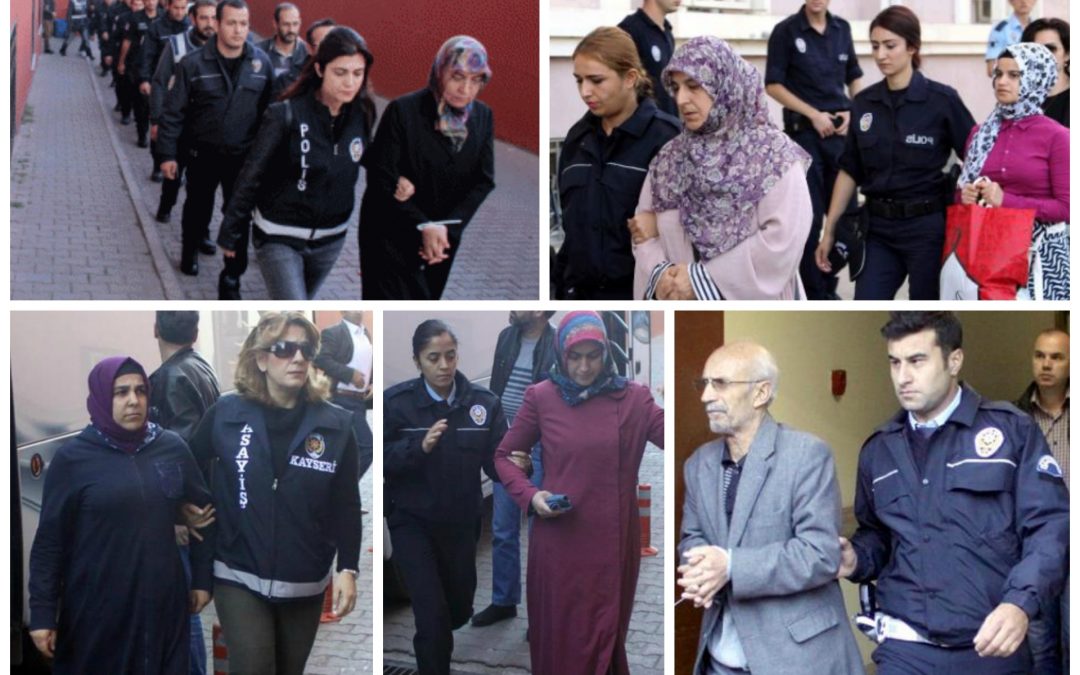
A Luxembourg court has overturned the rejection of an asylum application filed by a Turkish man linked to the Gülen movement, ruling that his father’s conviction and his own activities with the movement put him at risk of persecution if returned to Turkey.
The Luxembourg Administrative Court found that the Interior Ministry had wrongly rejected the man’s application and granted him refugee status and canceled an order requiring him to leave the country.
The ministry had rejected his application in November 2024, saying his father’s prosecution in Turkey did not establish a risk to him and that he had not shown that he was personally targeted by Turkish authorities. It also cited his legal departure from Turkey and his stay in Poland without seeking asylum.
The court rejected the ministry’s argument that the risk was diminished because the man had not faced persecution before leaving Turkey and did not appear on a 2023 Turkish government list of alleged Gülen movement affiliates abroad. It said his absence from the list did not rule out his being added later and that the list itself showed that Turkish authorities identify and target alleged movement members living abroad.
Turkish President Recep Tayyip Erdoğan has targeted the faith-based Gülen movement, inspired by Muslim cleric Fethullah Gülen, who died in 2024, since corruption investigations in December 2013 implicated him as well as some members of his family and inner circle. He dismissed the probes as a Gülenist conspiracy and designated the movement as a terrorist organization in May 2016, intensifying a sweeping crackdown after a coup attempt in July of the same year that he accused Gülen of orchestrating. The movement denies involvement in the coup attempt or any terrorist activity.
The man said he had ties to the Gülen movement from a young age. After leaving Turkey for Poland in 2021, he became involved with Gülen-affiliated organizations there and continued similar activities with a local organization after moving to Luxembourg in 2023.
The man’s father was convicted in Turkey of membership in a terrorist organization over his links to the Gülen movement and sentenced to prison. Turkey’s Supreme Court of Appeals upheld the conviction in June 2025. The man said his father was imprisoned despite serious health problems and that the family faced social exclusion as a result of the case.
The court found that his father’s conviction and imprisonment, his own longstanding links to the movement and his public activities with affiliated organizations in Europe established a real risk that he could face similar prosecution and imprisonment by Turkish authorities if returned.
The court concluded that the combined circumstances showed that his fear of persecution was well-founded, current and sufficiently serious to qualify for refugee status.
The ruling follows similar decisions in Germany and the Netherlands, where courts overturned asylum rejections involving Turkish nationals with alleged Gülen links, finding that the absence of ongoing criminal proceedings or the completion of a prison sentence did not necessarily rule out a risk of persecution upon return.
According to the latest figures from the Turkish justice ministry, more than 127,000 people have been convicted of alleged links to the movement since 2016, with 10,485 still in prison and legal proceedings ongoing against 83,404 individuals.This article is republished from the Stockholm Center for Freedom. turkishminute
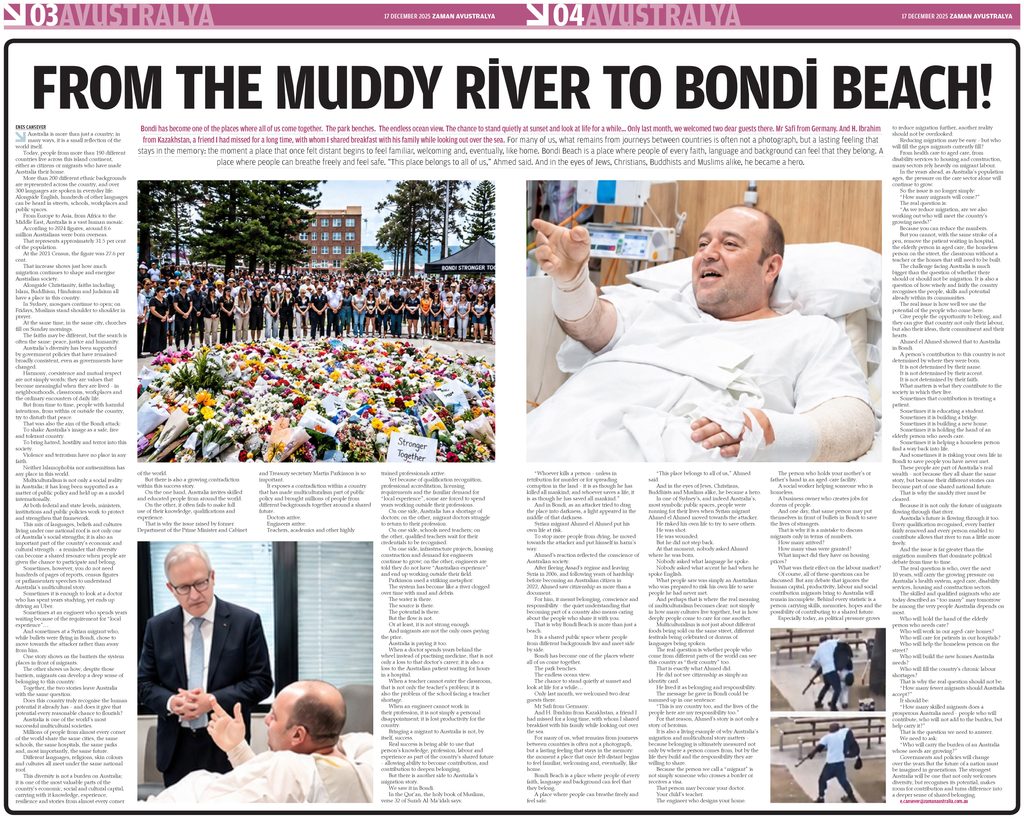
Australia is more than just a country; in many ways, it is a small reflection of the world itself.
Today, people from more than 190 different countries live across this island continent, either as citizens or migrants who have made Australia their home.
More than 200 different ethnic backgrounds are represented across the country, and over 300 languages are spoken in everyday life. Alongside English, hundreds of other languages can be heard in streets, schools, workplaces and public spaces.
From Europe to Asia, from Africa to the Middle East, Australia is a vast human mosaic.
According to 2024 figures, around 8.6 million Australians were born overseas.
That represents approximately 31.5 per cent of the population.
At the 2021 Census, the figure was 27.6 per cent.
That increase shows just how much migration continues to shape and energise Australian society.
Alongside Christianity, faiths including Islam, Buddhism, Hinduism and Judaism all have a place in this country.
In Sydney, mosques continue to open; on Fridays, Muslims stand shoulder to shoulder in prayer.
At the same time, in the same city, churches fill on Sunday mornings.
The faiths may be different, but the search is often the same: peace, justice and humanity.
Australia’s diversity has been supported by government policies that have remained broadly consistent, even as governments have changed.
Harmony, coexistence and mutual respect are not simply words; they are values that become meaningful when they are lived — in neighbourhoods, classrooms, workplaces and the ordinary encounters of daily life.
But from time to time, people with harmful intentions, from within or outside the country, try to disturb that peace.
That was also the aim of the Bondi attack:
To shake Australia’s image as a safe, free and tolerant country.
To bring hatred, hostility and terror into this society.
Violence and terrorism have no place in any faith.
Neither Islamophobia nor antisemitism has any place in this world.
Multiculturalism is not only a social reality in Australia; it has long been supported as a matter of public policy and held up as a model internationally.
At both federal and state levels, ministers, institutions and public policies work to protect and strengthen that framework.
This mix of languages, beliefs and cultures living under one national roof is not only one of Australia’s social strengths; it is also an important part of the country’s economic and cultural strength — a reminder that diversity can become a shared resource when people are given the chance to participate and belong.
Sometimes, however, you do not need hundreds of pages of reports, census figures or parliamentary speeches to understand Australia’s multicultural story.
Sometimes it is enough to look at a doctor who has spent years studying, yet ends up driving an Uber.
Sometimes at an engineer who spends years waiting because of the requirement for “local experience”…
And sometimes at a Syrian migrant who, while bullets were flying in Bondi, chose to move towards the attacker rather than away from him.
One story shows us the barriers the system places in front of migrants.
The other shows us how, despite those barriers, migrants can develop a deep sense of belonging to this country.
Together, the two stories leave Australia with the same question:
Does this country truly recognise the human potential it already has — and does it give that potential every reasonable chance to flourish?
Australia is one of the world’s most successful multicultural societies.
Millions of people from almost every corner of the world share the same cities, the same schools, the same hospitals, the same parks and, most importantly, the same future.
Different languages, religions, skin colours and cultures all meet under the same national roof.
This diversity is not a burden on Australia; it is one of the most valuable parts of the country’s economic, social and cultural capital, carrying with it knowledge, experience, resilience and stories from almost every corner of the world.
But there is also a growing contradiction within this success story.
On the one hand, Australia invites skilled and educated people from around the world.
On the other, it often fails to make full use of their knowledge, qualifications and experience.
That is why the issue raised by former Department of the Prime Minister and Cabinet and Treasury secretary Martin Parkinson is so important.
It exposes a contradiction within a country that has made multiculturalism part of public policy and brought millions of people from different backgrounds together around a shared future.
Doctors arrive.
Engineers arrive.
Teachers, academics and other highly trained professionals arrive.
Yet because of qualification recognition, professional accreditation, licensing requirements and the familiar demand for “local experience”, some are forced to spend years working outside their professions.
On one side, Australia has a shortage of doctors; on the other, migrant doctors struggle to return to their profession.
On one side, schools need teachers; on the other, qualified teachers wait for their credentials to be recognised.
On one side, infrastructure projects, housing construction and demand for engineers continue to grow; on the other, engineers are told they do not have “Australian experience” and end up working outside their field.
Parkinson used a striking metaphor:
The system has become like a river clogged over time with mud and debris.
The water is there.
The source is there.
The potential is there.
But the flow is not.
Or at least, it is not strong enough.
And migrants are not the only ones paying the price.
Australia is paying it too.
When a doctor spends years behind the wheel instead of practising medicine, that is not only a loss to that doctor’s career; it is also a loss to the Australian patient waiting for hours in a hospital.
When a teacher cannot enter the classroom, that is not only the teacher’s problem; it is also the problem of the school facing a teacher shortage.
When an engineer cannot work in their profession, it is not simply a personal disappointment; it is lost productivity for the country.
Bringing a migrant to Australia is not, by itself, success.
Real success is being able to use that person’s knowledge, profession, labour and experience as part of the country’s shared future — allowing ability to become contribution, and contribution to deepen belonging.
But there is another side to Australia’s migration story.
We saw it in Bondi.
In the Qur’an, the holy book of Muslims, verse 32 of Surah Al-Ma’idah says:
“Whoever kills a person — unless in retribution for murder or for spreading corruption in the land — it is as though he has killed all mankind; and whoever saves a life, it is as though he has saved all mankind.”
And in Bondi, as an attacker tried to drag the place into darkness, a light appeared in the middle of that darkness.
Syrian migrant Ahmed el Ahmed put his own life at risk.
To stop more people from dying, he moved towards the attacker and put himself in harm’s way.
Ahmed’s reaction reflected the conscience of Australian society.
After fleeing Assad’s regime and leaving Syria in 2006, and following years of hardship before becoming an Australian citizen in 2022, Ahmed saw citizenship as more than a document.
For him, it meant belonging, conscience and responsibility — the quiet understanding that becoming part of a country also means caring about the people who share it with you.
That is why Bondi Beach is more than just a beach.
It is a shared public space where people from different backgrounds live and meet side by side.
Bondi has become one of the places where all of us come together.
The park benches.
The endless ocean view.
The chance to stand quietly at sunset and look at life for a while…
Only last month, we welcomed two dear guests there.
Mr Safi from Germany.
And H. Ibrahim from Kazakhstan, a friend I had missed for a long time, with whom I shared breakfast with his family while looking out over the sea.
For many of us, what remains from journeys between countries is often not a photograph, but a lasting feeling that stays in the memory: the moment a place that once felt distant begins to feel familiar, welcoming and, eventually, like home.
Bondi Beach is a place where people of every faith, language and background can feel that they belong.
A place where people can breathe freely and feel safe.
“This place belongs to all of us,” Ahmed said.
And in the eyes of Jews, Christians, Buddhists and Muslims alike, he became a hero.
In one of Sydney’s, and indeed Australia’s, most symbolic public spaces, people were running for their lives when Syrian migrant Ahmed el Ahmed moved towards the attacker.
He risked his own life to try to save others.
He was shot.
He was wounded.
But he did not step back.
At that moment, nobody asked Ahmed where he was born.
Nobody asked what language he spoke.
Nobody asked what accent he had when he spoke English.
What people saw was simply an Australian who was prepared to risk his own life to save people he had never met.
And perhaps that is where the real meaning of multiculturalism becomes clear: not simply in how many cultures live together, but in how deeply people come to care for one another.
Multiculturalism is not just about different foods being sold on the same street, different festivals being celebrated or dozens of languages being spoken.
The real question is whether people who come from different parts of the world can see this country as “their country” too.
That is exactly what Ahmed did.
He did not see citizenship as simply an identity card.
He lived it as belonging and responsibility.
The message he gave in Bondi could be summed up in one sentence:
“This is my country too, and the lives of the people here are my responsibility too.”
For that reason, Ahmed’s story is not only a story of heroism.
It is also a living example of why Australia’s migration and multicultural story matters — because belonging is ultimately measured not only by where a person comes from, but by the life they build and the responsibility they are willing to share.
Because the person we call a “migrant” is not simply someone who crosses a border or receives a visa.
That person may become your doctor.
Your child’s teacher.
The engineer who designs your home.
The person who holds your mother’s or father’s hand in an aged-care facility.
A social worker helping someone who is homeless.
A business owner who creates jobs for dozens of people.
And one day, that same person may put themselves in front of bullets in Bondi to save the lives of strangers.
That is why it is a mistake to discuss migrants only in terms of numbers.
How many arrived?
How many visas were granted?
What impact did they have on housing prices?
What was their effect on the labour market?
Of course, all of these questions can be discussed.
But any debate that ignores the human capital, productivity, labour and social contribution migrants bring to Australia will remain incomplete. Behind every statistic is a person carrying skills, memories, hopes and the possibility of contributing to a shared future.
Especially today, as political pressure grows to reduce migration further, another reality should not be overlooked:
Reducing migration may be easy — but who will fill the gaps migrants currently fill?
From health care to aged care, from disability services to housing and construction, many sectors rely heavily on migrant labour.
In the years ahead, as Australia’s population ages, the pressure on the care sector alone will continue to grow.
So the issue is no longer simply:
“How many migrants will come?”
The real question is:
“As we reduce migration, are we also working out who will meet the country’s growing needs?”
Because you can reduce the numbers.
But you cannot, with the same stroke of a pen, remove the patient waiting in hospital, the elderly person in aged care, the homeless person on the street, the classroom without a teacher or the homes that still need to be built.
The challenge facing Australia is much bigger than the question of whether there should or should not be migration. It is also a question of how wisely and fairly the country recognises the people, skills and potential already within its communities.
The real issue is how well we use the potential of the people who come here.
Give people the opportunity to belong, and they can give that country not only their labour, but also their ideas, their commitment and their hearts.
Ahmed el Ahmed showed that to Australia in Bondi.
A person’s contribution to this country is not determined by where they were born.
It is not determined by their name.
It is not determined by their accent.
It is not determined by their faith.
What matters is what they contribute to the society in which they live.
Sometimes that contribution is treating a patient.
Sometimes it is educating a student.
Sometimes it is building a bridge.
Sometimes it is building a new home.
Sometimes it is holding the hand of an elderly person who needs care.
Sometimes it is helping a homeless person find a way back into life.
And sometimes it is risking your own life in Bondi to save people you have never met.
These people are part of Australia’s real wealth — not because they all share the same story, but because their different stories can become part of one shared national future.
That is why the muddy river must be cleared.
Because it is not only the future of migrants flowing through that river.
Australia’s future is flowing through it too. Every qualification recognised, every barrier fairly removed and every person enabled to contribute allows that river to run a little more freely.
And the issue is far greater than the migration numbers that dominate political debate from time to time.
The real question is who, over the next 10 years, will carry the growing pressure on Australia’s health system, aged care, disability services, housing and construction sectors.
The skilled and qualified migrants who are today described as “too many” may tomorrow be among the very people Australia depends on most.
Who will hold the hand of the elderly person who needs care?
Who will work in our aged-care homes?
Who will care for patients in our hospitals?
Who will help the homeless person on the street?
Who will build the new homes Australia needs?
Who will fill the country’s chronic labour shortages?
That is why the real question should not be:
“How many fewer migrants should Australia accept?”
It should be:
“How many skilled migrants does a prosperous Australia need — people who will contribute, who will not add to the burden, but help carry it?”
That is the question we need to answer.
We need to ask:
“Who will carry the burden of an Australia whose needs are growing?”
Governments and policies will change over the years.
But the future of a nation must be imagined in generations. The strongest Australia will be one that not only welcomes diversity, but recognises its potential, makes room for contribution and turns difference into a deeper sense of shared belonging.
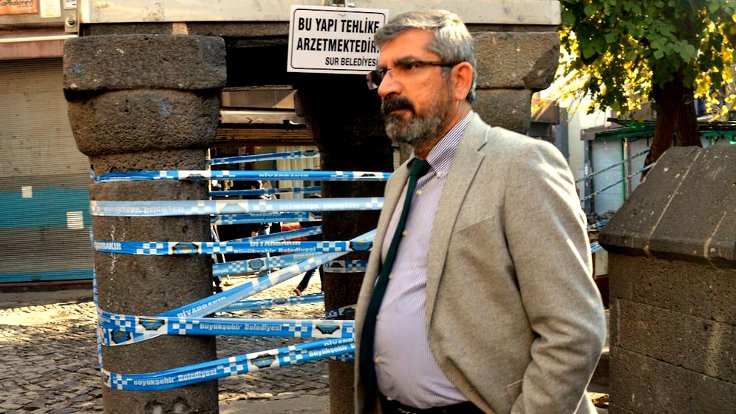
Tahir Elçi, the former president of the Diyarbakır Bar Association, was shot in the head during a press conference on November 28, 2015 while calling for peace, in front of the historic Four-Legged Minaret in Diyarbakır’s Sur district. A clash between Turkish police and members of the outlawed Kurdistan Workers’ Party (PKK) had erupted at the scene, and Elçi was caught in the crossfire.
On June 12 the Diyarbakır 10th High Criminal Court acquitted police officers Sinan Tabur, Fuat Tan and Mesut Sevgi, who were on trial for “causing death by gross negligence,” sparking protests from lawyers and human rights activists who argued that justice had not been served.
The court issued its reasoned decision on Wednesday, explaining that it ruled to acquit the police officers due to a lack of sufficient evidence proving their guilt since there was uncertainty about who fired the shot that killed Elçi.
The court said there was no concrete evidence such as camera footage or witness statements regarding the moment of Elçi’s death, adding that a conviction cannot be accomplished by interpreting suspicious events and allegations against the suspects.
Lawyer Masum Batı, president of the Tahir Elçi Foundation, found the court’s emphasis on uncertainty regarding the person who fired the fatal shot in the reasoned decision insincere, saying it was the court itself that failed to shed light on the suspicious aspects of the murder.
“The 27-page judgment by the court has simply listed the actions taken without explanation. It has not discussed the evidence or explained how it arrived at its conclusion. An unjustified decision,” Batı said.
Lawyers for the Elçi family had previously criticized the handling of the case, saying their requests to uncover the truth were dismissed and alleging that evidence was mishandled or destroyed. Türkan Elçi, the widow of Tahir Elçi, said the bullet that killed her husband was never found and that “key pieces of evidence, including 40 bullet casings, were lost or destroyed.”
A 2019 report by Forensic Architecture concluded that Elçi was most likely killed by one of three police officers present at the scene. It was only after their investigation that an indictment in which three police officers faced charges of causing death by culpable negligence was accepted in March 2020.
However, this evidence was reportedly not given due consideration during the trial.
The court’s decision to acquit the police officers has deepened concerns about impunity and the rule of law in Turkey, especially in cases involving state officials and Kurdish activists.
Maarif, which was established prior to a coup attempt on July 15, 2016 through legislation in the Turkish parliament, has targeted the closure of educational institutions established by followers of the faith-based Gülen movement since the abortive putsch as part of the foreign policy of Turkey’s ruling Justice and Development Party (AKP), which labels the movement as a terrorist organization and accuses it of orchestrating the failed coup.
The Gülen movement, a worldwide civic initiative inspired by the ideas of Muslim cleric Fethullah Gülen, strongly denies involvement in the failed putsch and any terrorist activity.
The Maarif Foundation has so far taken over hundreds of schools worldwide that had been established by followers of the Gülen movement as part of the government-led crackdown on the group.
It is now the only organization that has the right to open schools in a foreign country on behalf of the Republic of Turkey. It runs schools for all age groups, from pre-school to university.
Journalist Nuray Babacan wrote for the Gazete Pencere news website that the Turkish Ministry of Education’s inspections of French schools in Ankara and İstanbul have reached a level that disrupts the students’ education. These actions are seen as retaliation for the failed attempt by the Maarif Foundation to establish schools in France.
Babacan said in her article that the Turkish government, under the AKP administration, has targeted French institutions, including Charles de Gaulle School in Ankara and Pierre Loti High School in İstanbul. The schools have faced fines and interference in their curriculums under the guise of inspections.
“This has gone beyond regular inspections; the government is now meddling with the curriculum,” Babacan wrote. “This issue began when Turkey’s attempts to open schools in France were blocked. Now, pressure is being exerted on French schools here, demanding they include religious and ethics courses, follow the Turkish curriculum and employ Turkish teachers.”
This development follows a broader trend of deteriorating relations between Turkey and France, which have experienced fluctuating diplomatic ties. The situation has led to anxiety among students and parents. Both French and Turkish parents have appealed to Turkish Foreign Minister Hakan Fidan to intervene and seek a diplomatic resolution.
Fidan is expected to address this issue during his upcoming visit to France, where discussions are anticipated to focus on resolving the issue before the new academic year begins in September.
In recent years, the Maarif Foundation has received substantial financial support from the Turkish government. Since its inception, the foundation has assumed control of 216 schools in 44 countries and plans to take over more.
Despite the significant funds allocated to Maarif, critics argue that these resources should be directed toward addressing domestic educational challenges, such as overcrowded classrooms and insufficient teacher appointments.
The French government’s resistance to the Maarif Foundation’s expansion is partly due to concerns over the imposition of religious education, which contradicts France’s strict secular education system. In response, Turkey’s increased pressure on French schools within its borders has drawn criticism for potentially politicizing education and affecting the well-being of students and their families.
The ECtHR issued its ruling in the case titled “Kurkut and others v. Türkiye” on Tuesday. The court had decided to merge the applications filed by seven people into a single case due to similarities in the content of the applications.
The Strasbourg-based court said the Turkish courts had failed to communicate the information about the background checks to the applicants and did not seek their comments on the allegations against them. The court concluded that there were “inadequate safeguards” to compensate for the non-disclosure of evidence, resulting in an insufficient review of the administrative decisions.
The court awarded each applicant €2,000 in non-pecuniary damages and additional amounts for costs and expenses, emphasizing the need for transparency and fairness in judicial proceedings.
One of the applicants, Bahar Dolgun Kılıç, had been working temporarily at Manisa Celal Bayar University and applied for a permanent position in 2018. Despite passing the necessary examinations, her appointment was blocked due to a negative background check, with no explanation provided.
When Kılıç contested the decision, the Turkish court referenced alleged ties to the faith-based Gülen movement, inspired by Muslim cleric Fethullah Gülen, whom Turkish President Recep Tayyip Erdoğan blames for a failed coup in 2016. Gülen and the movement deny any involvement.
However, Kılıç was not allowed to see or challenge these allegations. Turkish courts ultimately upheld the university’s decision without conducting a thorough review.
Following the abortive putsch, the Turkish government declared a state of emergency and carried out a massive purge of state institutions under the pretext of an anti-coup fight. More than 130,000 public servants, including 4,156 judges and prosecutors, as well as 29,444 members of the armed forces, were summarily removed from their jobs for alleged membership in or relationships with “terrorist organizations” by emergency decree-laws subject to neither judicial nor parliamentary scrutiny.
ByLock, once widely available online, has been considered a secret tool of communication among supporters of the Gülen movement, a faith-based group outlawed by Ankara, since a coup attempt on July 15, 2016, despite the lack of any evidence that ByLock messages were related to the abortive putsch.
The Gülen movement, inspired by Turkish cleric Fethullah Gülen, is accused by the Turkish government and President Recep Tayyip Erdoğan of masterminding the failed coup and is labeled a “terrorist organization,” although the movement denies involvement in the coup attempt or any terrorist activity.
In a landmark ruling in September, the European Court of Human Rights (ECtHR) concluded that Turkey’s ByLock-related rights violations were systemic in nature.
During a live interview on Turkish broadcaster Habertürk on Monday, Fidan admitted that in early 2016 the National Intelligence Organization (MİT) acquired ByLock data without a court order, employing covert intelligence operations.
“We worked with a special unit we established in the Ankara Police Organized Crime Division to analyze the data,” Fidan said. According to Turkish law, evidence obtained in violation of the Code of Criminal Procedure (CMK) cannot be used in criminal trials. The first court order regarding ByLock data was issued on Dec. 9, 2016.
Fidan revealed that after approximately one year of analysis, the ByLock data was handed over to the Ankara Chief Public Prosecutor’s Office, indicating that the data had been processed and utilized for investigative purposes well before any judicial authorization was obtained. Fidan’s statements also suggest that MİT shared the analyzed data with the Ministry of Interior and the Ministry of Justice.
The former intelligence chief’s admission raises significant legal issues, as evidence obtained without judicial oversight is inadmissible in Turkish courts. The ECtHR has previously criticized Turkey for systemic rights violations in ByLock-related prosecutions. The ECtHR’s September 2023 ruling in the Yalçınkaya case emphasized that using ByLock alone as evidence did not constitute a reliable basis for criminal charges, urging Turkey to take remedial measures.
Fidan’s revelations further fuel the ongoing debate about the integrity of ByLock evidence. Reports have highlighted numerous discrepancies in the ByLock data, including inconsistencies in message logs and unauthorized data recovery methods, casting doubt on the reliability of this evidence in criminal proceedings.
Human rights organizations have called for a thorough review of ByLock-related convictions. They argue that the systemic flaws in how ByLock data was collected and processed undermined the right to a fair trial.
In December Kerem Gülay, an academic at Koç University, warned that judges and prosecutors involved in ByLock prosecutions could face charges of crimes against humanity under universal jurisdiction laws if they travel abroad. “There is no statute of limitations for crimes against humanity,” Gülay said, underscoring the potential international legal ramifications for Turkish officials.
The Turkish government has been notified by the ECtHR of 1,000 applications challenging ByLock-based convictions. These cases, involving multiple plaintiffs, allege violations of ECHR principles, including the right to a fair trial and the prohibition of retroactive criminal laws.
Despite international criticism and legal challenges, Turkish authorities have continued to arrest and prosecute individuals based on ByLock usage.
The ECtHR issued its ruling in the case of Duymaz and others v. Türkiye on Tuesday. The court had decided to merge the applications filed by 314 people under a single judgment due to the similar subject matter of the applications.
The applicants had been arrested as part of a mass crackdown on the faith-based Gülen movement, inspired by Turkish cleric Fethullah Gülen, whom the president blames for the failed coup. Gülen and the movement deny any involvement.
The Strasbourg-based court said the grounds for their detention were “not of a nature” to constitute “reasonable suspicion” and ordered Ankara to pay 5,000 euros in non-pecuniary damages and for costs and expenses to 299 of the applicants. The remaining 15 applicants did not request compensation.
Among the 314 applicants was Ali Ahmet Böken, a veteran Turkish journalist and prominent anchor who used to work for public broadcaster Turkish Radio and Television (TRT) and who has been in prison over alleged links to the Gülen movement since August 2016.
In April 2018 Böken was convicted on terrorism charges due to his alleged affiliation with the Gülen movement and sentenced to almost 10 years’ imprisonment. His conviction was based on such evidences as using the ByLock messaging app, a charge denied by Böken; having an account at the now-closed Bank Asya, one of Turkey’s largest commercial banks at the time; and sending his children to Gülen movement-affiliated schools.
Tuesday’s ruling is the latest by the ECtHR against Turkey, a member since 1950 of the Council of Europe, of which the court is a part. It said the detentions had violated Article 5 of the European Convention on Human Rights, which the court enforces, “on account of the lack of reasonable suspicion, at the time of the applicants’ initial pre-trial detention, that they had committed an offence.”
Following the abortive putsch, the Turkish government declared a state of emergency and carried out a massive purge of state institutions under the pretext of an anti-coup fight. More than 130,000 public servants, including 4,156 judges and prosecutors, as well as 29,444 members of the armed forces, were summarily removed from their jobs for alleged membership in or relationships with “terrorist organizations” by emergency decree-laws subject to neither judicial nor parliamentary scrutiny.
The ECtHR said, based on the court documents, that a majority of the applicants were identified as users of the ByLock messaging app. Some were suspected of being affiliated with the Gülen movement based on witness statements or having accounts at the Gülen-linked Bank Asya and some due to possession of Gülen-affiliated publications and/or United States one-dollar bills with an “F” serial number (denoting the initial of the first name “Fetullah”), while others were suspected due to their employment by and/or membership in Gülen-linked institutions and organizations.
Following the coup attempt, the Turkish government accepted such activities as having an account at the Bank Asya; using the ByLock messaging application, which was available on Apple’s App Store and Google Play; and subscribing to the Zaman daily or other publications affiliated with members of the movement as benchmarks for identifying and arresting alleged followers of the Gülen movement on charges of membership in a terrorist organization.
However, the ECtHR has on many occasions made clear that such activities are insufficient to prove that someone has committed a crime.
For instance, in a landmark ruling, the Grand Chamber of the ECtHR last September found the use of ByLock not to constitute a criminal offense. The Grand Chamber ruled in the case of former teacher Yüksel Yalçınkaya that the use of the ByLock application is not an offense in itself and does not constitute sufficient evidence for an arrest.
ByLock, once widely available online, has been considered a secret tool of communication among supporters of the faith-based Gülen movement since the coup attempt on July 15, 2016 despite the lack of any evidence that ByLock messages were related to the abortive putsch.
The Strasbourg court also ruled in other cases that the use of ByLock or having an account at Bank Asya do not constitute criminal offenses.
Turkish authorities continue their crackdown on followers of the Gülen movement and continue to deem the above-mentioned activities as evidence of a crime.
Interior Minister Ali Yerlikaya announced at a press briefing earlier this month that since June 2023, Turkish police have carried out 5,543 operations and that 1,595 people have been arrested as part of the government’s ongoing crackdown on the Gülen movement.
Head Coach Vincenzo Montella’s choices, including benching young talents Kenan Yıldız and Arda Güler, drew ire from fans and commentators alike.
Portugal’s Bernardo Silva opened the scoring in the 21st minute with a precise finish, followed by a bizarre own goal by Turkey’s Samet Akaydın seven minutes later. Cristiano Ronaldo assisted Bruno Fernandes for Portugal’s third goal, securing their spot in the Round of 16 at EURO 2024.
Montella made several changes to the lineup from Turkey’s victorious opener against Georgia, citing fitness concerns. The decision sparked controversy, especially given the exclusion of Juventus’s Kenan Yıldız and Real Madrid’s Arda Güler, who were both left on the bench.
The second goal of the match raised eyebrows as Akaydın’s back-pass found the net after a miscommunication with goalkeeper Altay Bayındır. Portugal’s final goal came from a play by Ronaldo that allowed Fernandes to tap into an empty net.
Following the match, Montella defended his choices, saying, “Kenan and Arda are excellent players, but Arda was not fit to play more than 30 minutes. We decided to bring him on in the final stages to avoid risking his health.”
However, Montella’s explanation did little to quell the dissatisfaction. Fans at the Dortmund stadium vocally supported Arda Güler, chanting his name from the 35th minute. Social media exploded with criticism, using the hashtag #EvladınaSahipÇıkTürkiye (Protect Your Child, Turkey), leading to over 80,000 posts.
The Turkish Football Federation (TFF) released a statement attempting to clarify the situation, claiming Arda’s exclusion was due to a mutual decision to manage his groin pain. The TFF urged the public not to draw conclusions from the viral video of Montella removing Arda’s training vest and giving it to Yusuf Yazıcı.
In the aftermath former Turkish star Hakan Şükur released a video criticizing the national team’s management and hinting at deeper issues within Turkish football.
Investigative journalist Cevheri Güven previously exposed such practices in a YouTube video, revealing how underperforming players receive caps to boost their transfer values.
In association football, a cap is awarded to a player making an official appearance for their national team.
He suggested that favoritism and corruption are at play, potentially inflating the market value of players by giving them unwarranted international appearances.
Güven pointed to examples like Erol Erdal Alkan, a player who, despite limited performance in the Dutch second division, was called up to the national team due to his agent’s influence.
According to Güven, Turkish football is plagued by corruption, and many clubs are on the verge of bankruptcy because managers have fraudulently signed contracts with underperforming players for large sums of money to be shared out among those involved.
Turkish law does not allow private ownership of football clubs, which observers say leads to what can be described as a “tragedy of the commons” as executives seek to line their pockets through fraudulent means rather than making a genuine contribution to the club.
As Turkey braces for its crucial match against Czechia on Wednesday, the debate over Montella’s strategies and the integrity of Turkish football management continues to rage. The team must secure at least a draw to advance to the knockout stages as one of the best third-placed teams. With tensions high and scrutiny intense, the pressure is on Montella and his squad to deliver a decisive performance.
Deputy Prime Minister Richard Marles says WA Labor senator Fatima Payman will not be expelled from the Labor Party for crossing the floor in parliament yesterday.
Senator Payman crossed the floor to back a motion from the Greens calling for Palestinian statehood, breaking protocol against voting against party lines.
Labor senator Fatima Payman has become the party’s first member to cross the floor in decades after she voted with the Greens to recognise Palestinian statehood in a vote on Tuesday.
The federal government moved quickly to quell expectations the WA senator would be expelled from Labor, despite the fact MPs have previously been thrown out for not toeing the party line. Payman, a first-term senator, said she was proud she had upheld her convictions, although she was bitterly disappointed her Labor colleagues had not joined her.
The indictment, accepted by the Ankara 22nd High Criminal Court on May 28, demands 38 aggravated life sentences in addition to 19,680 years in prison for each of former pro-Kurdish Peoples’ Democratic Party (HDP) lawmakers Hüda Kaya, Serpil Kemalbay Pekgözegü, Garo Paylan, Fatma Kurtulan and Pero Dundar.
This indictment, drafted for the five Kurdish politicians due to their alleged role in the Kobani protests, came shortly after an Ankara court sentenced 24 other HDP politicians for their alleged roles in the deadly protests in 2014 to prison terms ranging from nine to 42 years, while acquitting 12 others who had stood trial with them.
The trial, which lasted nearly three years, centered on the events of October 6-8, 2014, when ISIL laid siege to Kobani. Protests erupted across Turkey, particularly in the predominantly Kurdish southeastern provinces, resulting in 37 deaths. There were 108 defendants in the trial including former HDP co-chairs Selahattin Demirtaş and Figen Yüksekdağ.
The Turkish government accused the HDP leaders of inciting the violence, while the defendants maintained that their calls for solidarity with Kobani were within the bounds of freedom of expression.
According to the second indictment, the five politicians should also be tried on the same charges faced by the politicians in the first Kobani trial on the grounds that they joined the HDP executives and politicians in calling on the people to take to the streets.
The five politicians are standing trial on 29 different charges, ranging from attempting to “destroy the unity and integrity of the state” and “membership in a terrorist organization” to “murder.”
While Kaya is in pre-trial detention, other former lawmakers are abroad and considered fugitives.
The pro-Kurdish Kurdish Peoples’ Equality and Democracy Party (DEM Party) Co-chairperson Tülay Hatimoğulları spoke to the press before the hearing, saying that the ruling Justice and Development Party (AKP) staged the second Kobani trial as a “conspiracy case” because they “failed to cripple the HDP politically.”
“The Kobani conspiracy trial is the result of [the actions of] a judiciary that has turned into a crutch of the AKP and the palace [President Recep Tayyip Erdoğan] and is guided by indictments written in the palace. … The sentences being handed down [to Kurdish MPs] … are pro-ISIL decisions. We will never accept them,” she added.
The HDP is the predecessor of the DEM Party.
Pro-Kurdish parties in Turkey are frequently accused of links to the outlawed Kurdistan Workers’ Party (PKK), and dozens of their politicians and members are in jail on terrorism charges. In the past, many such parties were closed down by the Constitutional Court due to their alleged links to the PKK, listed as a terrorist organization by Turkey and its Western allies. Every time a party was closed, another one was established in short order.
The Kobani trial has significant political implications, especially for Kurdish politicians, who have been under intense pressure from Erdoğan’s government. The government’s stance hardened following the failure of peace talks with the PKK in 2015, leading to a more nationalist and anti-Kurdish policy.
The ongoing detentions of Kurdish politicians have drawn significant attention and criticism from both local and international observers who argue that the charges against them are politically motivated and part of an ongoing government crackdown on Kurds.