Author: Zaman Australia

  • WikiLeaks founder Julian Assange pleads guilty to espionage charge at US court in Saipan

    The resolution brings to a close a more than decade-long legal battle, sparked by Mr Assange’s released a cache of classified US defence documents alleging war crimes in Afghanistan and Syria.

    When asked if he was prepared to enter a plea, Mr Assange said “yes”.

    When asked for his plea in relation to the specific charge, Mr Assange simply said “guilty”.

    The plea will resolve the question of Mr Assange’s future, with the court likely to approve a sentence of time served given the five years he has spent in the UK’s Belmarsh Prison, leading to his release.

    However, it has sparked renewed concerns about the case’s potential chilling effect on press freedom, with free speech advocates highlighting the need for Mr Assange’s style of no-holds-barred, activist investigative journalism to keep governments honest.

    Mr Assange, who is wearing a black suit, was earlier sworn in for the highly anticipated hearing, telling the court his full name and swearing to tell the truth.

    Australia’s ambassador to the United States, Kevin Rudd, Australia’s ambassador to the United Kingdom, Stephen Smith, and human rights lawyer Jennifer Robinson took seats behind him.

    All stood up as Justice Manglona, an Obama appointee, entered the court room.

    She opened the hearing by explaining Saipan had been chosen for the hearing after years of negotiations between Mr Assange and the US government, and it had been agreed by all parties that the location was convenient for him to then travel home to his “dear Australia”.

    “Not many people recognise we are part of the United States, but that is true,” she said.

    The resolution to Mr Assange’s case follows years of diplomacy from the Australian government, with the case reportedly becoming an issue in the US-Australia relationship.

    He had previously spent seven years in the Ecuadorian embassy in London fighting moves to extradite him to Sweden on a charge of rape, saying he was concerned he would be extradited to the United States if he went to Sweden in person to fight the charge.

    The UK government maintained a 24-hour guard outside the embassy for the majority of his stay there, preventing his escape to Ecuador, where he had been granted asylum.

    The charge in question was eventually dropped in 2019, with prosecutors citing insufficient evidence to proceed.

    Mr Assange is due to fly to Canberra later today, according to WikiLeaks.

  • Julian Assange released from prison and has left UK, Julian Assange says

    WikiLeaks announced Mr Assange’s whereabouts shortly after court documents showed he was due to plead guilty this week to violating US espionage law, in a deal that would allow him to return home to Australia.

    Mr Assange is due to be sentenced to 62 months of time already served at a hearing on the island of Saipan.

    He is expected to return home after that hearing.

    A lawyer for Mr Assange did not immediately respond to a request for comment.

    WikiLeaks posted a statement on social media platform X saying Mr Assange was free and had left the UK on Monday morning local time.

    Part of the statement read: “This is the result of a global campaign that spanned grassroots organisers, press freedom campaigners, legislators and leaders from across the political spectrum, all the way to the United Nations.

    “This created the space for a long period of negotiations with the US Department of Justice, leading to a deal that has not yet been formally finalised.”

    Christine Assange, Mr Assange’s mother, said she was grateful her son’s ordeal had finally come to an end.

    “I am grateful that my son’s ordeal is finally coming to an end. This shows the importance and power of quiet diplomacy.

    “Many have used my son’s situation to push their own agendas, so I am grateful to those unseen, hard-working people who put Julian’s welfare first.

    “The past 14 years have obviously taken a toll on me as a mother, so I wish to thank you in advance for respecting my privacy.”

    Mr Assange’s father, John Shipton, told ABC Victorian Mornings his son had spent 15 of his most productive years “in some form of incarceration or another”.

    “The appearances are that Julian will be able to enjoy ordinary life with his family and his wife, Stella, that’s my understanding,” he said of the reported deal.

    “It looks as though Julian will be free to come back to Australia and my thanks and congratulations to all his supporters in Australia that have made that possible, and of course, Prime Minister Anthony Albanese.”

    In a video message, prerecorded on Wednesday June 19, Stella Assange said she was confident this period of their lives had come to an end.

    “By this time next week, I’m confident he will be free,” she said.

    “Things are moving very quickly and it is very difficult for us to plan or even play out the next few hours and days.

    “If everything goes well, Julian will be on a plane on the way to freedom.”

    She added: “We still need your help, what starts now with Julian’s freedom is a new chapter.

    “This new chapter in Julian and our lives, we ask for your support. In the coming hours we intend to start an emergency fund for Julian’s health and recovery.”

    In the footage, editor-in-chief of WikiLeaks Kristinn Hrafnsson also recorded a message.

    “I can say in earnest that without your support this would have never materialised, this important day of joy, the day of Julain’s freedom,” he said.

    “Thank you so much.”

    A government spokesperson said they were aware legal proceedings had been scheduled.

    “We are aware Australian citizen Mr Julian Assange has legal proceedings scheduled in the United States,” a spokesperson said.

    “Given those proceedings are ongoing, it is not appropriate to provide further comment.

    “The Australian government continues to provide consular assistance to Mr Assange.

    “Prime Minister Albanese has been clear — Mr Assange’s case has dragged on for too long and there is nothing to be gained by his continued incarceration.”

    Filings in the US District Court for the Northern Mariana Islands show that US prosecutors have filed criminal paperwork against Mr Assange that is typically a preliminary step before a plea deal.

    The paperwork outlines a single criminal count of conspiring to obtain and disclose classified US national defence documents.

    In 2010, WikiLeaks released hundreds of thousands of classified US military documents relating to the wars in Afghanistan and Iraq, along with thousands of diplomatic cables.

    The release was the largest security breach of its kind in US military history.

    Mr Assange was indicted over the release of the information during former president Donald Trump’s administration.

    The secret documents were leaked by Chelsea Manning, a former US military intelligence analyst who was also prosecuted under the Espionage Act.

    The trove of more than 700,000 documents included diplomatic cables and battlefield accounts, such as a 2007 video of a US Apache helicopter firing at suspected insurgents in Iraq, killing a dozen people including two Reuters news staff.

    That video was released in 2010.

    The charges against Mr Assange sparked outrage among his many global supporters, who have long argued that he, as the publisher of WikiLeaks, should not face charges typically used against federal government employees who steal or leak information.

    Many press freedom advocates have argued that criminally charging Mr Assange represents a threat to free speech.
  • Turkey’s wildfire toll hits 15 as experts flag faulty wires

    Turkey’s wildfire toll hits 15 as experts flag faulty wires

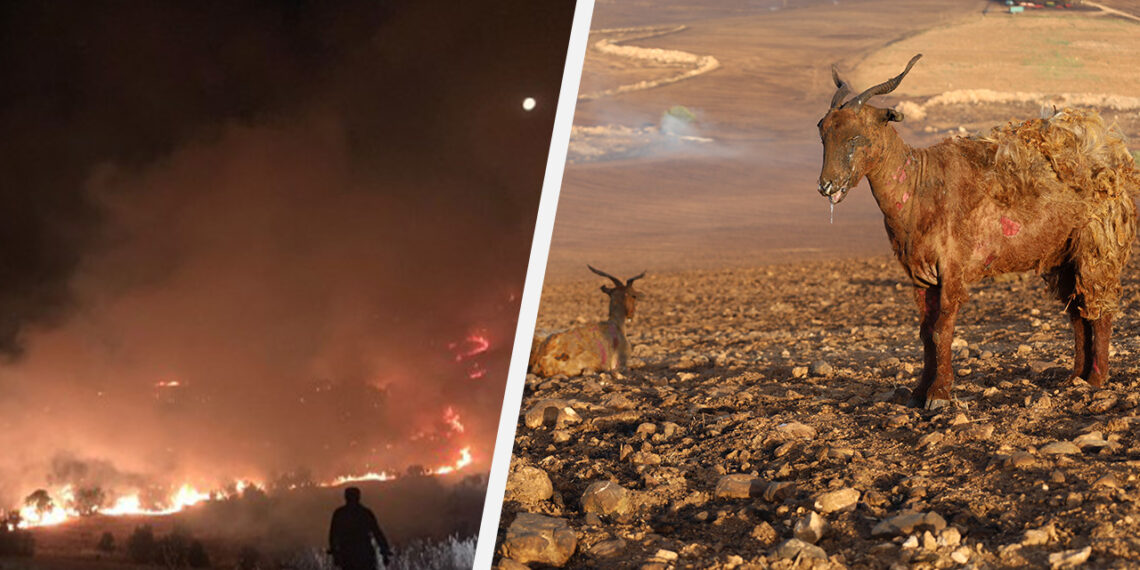
    The blaze, which broke out on Thursday between the cities of Diyarbakır and Mardin, killed 12 people outright and left five fighting for their lives.

    Three succumbed to their injuries on Sunday, the Anadolu state news agency said.

    Hospital sources confirmed the toll on Monday, saying two people remained in intensive care.

    Hundreds of animals also perished in the blaze that roared across the dry landscape.

    The government said “stubble burning” was the cause but the Diyarbakır branch of Chambers of Turkish Architects and Engineers (TMMOB) ruled that out and pointed to faulty electric cables as the likely trigger.

    “The fire could have been caused by the power cables,” it said in a report released late on Sunday, indicating there was “no stubble” in the area and saying the electric wires in the area were in a state of disrepair.

    “The cause of the fire was not stubble. The electricity cables and poles were unmaintained and dangerous,” it said, pointing to the absence of “fire prevention measures around the poles.” The findings came two days after an expert report sent to the local public prosecutor’s office said conductive wire “broke and ignited the grass on the ground and it spread to a wide area due to the effect of strong wind.”

    The faulty wiring was on a pole in Köksalan village, in an area where the fields had not yet been harvested, the experts said.

    They calculated the blaze had ravaged between 1,650 and 2,000 hectares (4,080 and 4,940 acres) of farmland, forest and residential areas.

    A preliminary report by the Diyarbakır Chief Public Prosecutor’s Office also included the determination that the fire was caused by faulty electrical wiring that spread quickly due to strong winds and not by a stubble burn.

    Interior Minister Ali Yerlikaya had on Friday blamed the fire on a “stubble burn,” and the justice ministry said it had opened a probe.

    The chamber’s findings came after officials from Dicle Electricity Distribution (DEDAŞ) in southwestern Turkey had filed criminal complaints against eyewitnesses who claimed that the fire was caused by electrical wires.

    Meanwhile, Sinan Ateş, who works for digital media platform Onedio, was widely criticized for his graphic post about the fire, which was found by many to be sarcastic and racist.

    The post includes a Smurf drawing of a villager in Diyarbakır among the flames with a text reading: “The Olympic[-size] stubble fire, which was started by village Smurfs, is heading towards Mardin.”

    “The Onedio website made fun of the fires in Diyarbakır and Mardin, where so many lives were lost. It called it an Olympic fire! … The prosecutor’s office determined that it was not a stubble fire. Isn’t this a provocation, then?” journalist Bahadır Özgür said in a tweet.

    The Mardin Labor and Democracy Platform also said on X that they do not accept Onedio’s “racist post.”

  • 781 people reported torture in Turkey in 2023: rights foundation

    781 people reported torture in Turkey in 2023: rights foundation

    The report states that 739 individuals personally claimed to have been subjected to torture, while 42 reported it on behalf of a relative, bringing the total number of applications to the TİHV over the last decade to 7,548, and since its establishment in 1990, to 21,894.

    The report also notes that six people died in custody under torture.

    Torture in custody and prisons is a systematic problem in Turkey about which local rights groups, parliamentarians and state authorities receive hundreds of complaints every year. Earlier this year, the Parliamentary Assembly of the Council of Europe (PACE) adopted a resolution that expressed concern about an increase in alleged incidents reported from Turkey in past years.

    The report indicates that 81.8 percent of the torture victims (598 individuals) underwent formal detention processes, while 18.8 percent (133 individuals) said they experienced unofficial detentions without formal records. This high rate of unofficial detentions is reportedly linked to police interventions during public demonstrations.

    Rights groups also complain about a climate of impunity, with most complaints against alleged incidents leading to no substantial investigation, in some cases despite available CCTV footage.

    Among the victims, 240 identified as women (32.8 percent), 428 as men (58.5 percent), and 63 as non-binary. The age range of victims spanned from seven to 77, with nearly half (49.2 percent) aged between 19 and 35. June and July saw a spike in applications due to police interventions during Pride Week events.

    The highest number of torture reports came from Istanbul, with 251 applications, followed by İzmir (172), Van (161), Diyarbakır (125), Cizre (40) and Ankara (32). İstanbul’s police department topped the list for locations where detainees reported experiencing torture.

    The distribution of torture reports shows a significant concentration in the southeastern and eastern Anatolia regions, home to a large Kurdish population. Kurdish speakers accounted for 67 percent of the reports, a stark contrast to the 23.5 percent of the Turkish population from these regions, highlighting a disproportionate impact on Kurdish individuals.

    Eight of the reported torture cases occurred outside Turkey. Since a coup attempt in July 2016 the government of President Recep Tayyip Erdoğan has employed extra-legal methods to secure the return of its critics after its official extradition requests have been denied. The government’s campaign has mostly relied on renditions, in which the government and its intelligence agency, MİT, persuade the relevant states to hand over individuals without due process. The victims have been the subjects of a number of human rights violations including arbitrary arrests, house raids, torture and ill-treatment during these operations.

  • Turkey wins thriller with spirited Euro 2024 debutant Georgia

    Turkey wins thriller with spirited Euro 2024 debutant Georgia

    Real Madrid midfielder Arda Güler crashed in a brilliant goal in the 65th minute to put Turkey ahead at a Westfalenstadion dominated by tens of thousands of Turkish fans, before Kerem Aktürkoğlu rolled home the third with the last kick of the game as Georgia pushed for a late leveller.

    Güler, 19, had a difficult time with injuries in his first season in Madrid but stepped up for Turkey in a fiercely contested match with Georgia, who did not look out of place in their first-ever match at a major international tournament.

    “I’m really happy with the win, I hope I can score more goals to help my team,” said Güler.

    “I don’t care about personal achievements, I’m only concerned about helping the team win and that we go as far as possible.”

    Georgia was dangerous after Georges Mikautadze levelled Mert Müldür’s 25th-minute opener for Turkey just after the half-hour mark, and was denied a second equalizer by the woodwork and a series of saves and blocks.

    But Aktürkoğlu made sure Turkey would top the group ahead of Portugal’s opening match with the Czech Republic later on Tuesday.

    “It’s a bit early to talk about what was missing, but I will say a bit of talent, a bit of experience,” said Georgia coach Willy Sagnol.

    “I’m sure that in the future, this kind of game in the next months and the next years, I’m sure Georgia won’t lose, because Georgia will learn. … I have absolutely nothing bad to say about them.”

    Turkey took the cue from their fervent support and went at Georgia from the off, pressuring their inexperienced opposition high up the pitch as a huge din came rolling down from the stands.

    Kaan Ayhan and Abdülkerim Bardakçı both went close with headers from corners inside the first 10 minutes before Ayhan crashed a low drive off the inside of the post.

    In a breathless opening period, Anzor Mekvabishvili almost gave Georgia a shock lead in the 11th minute when his wildly deflected shot was well saved by Mert Günok.

    But Müldür sparked wild celebrations in the stands in the 25th minute with a stunning volley after Ferdi Kadioglu’s cross was cleared to him on the edge of the area.

    The roars from Müldür’s goal had barely subsided when Kenan Yıldız poked home what he thought was Turkey’s second, only for the goal to be ruled out for the Juventus attacker’s toes straying offside before he tapped home.

    And Mikautadze then stunned what was effectively the home crowd in the 32nd minute by sweeping home Giorgi Kochorashvili’s low cross after brilliant play down the right.

    The small but loud Georgian contingent had their heads in their hands shortly afterwards when Mikautadze look certain to put their team ahead but dragged a great opportunity wide.

    Turkey again started on the front foot after the break, but Georgia held their own and Mikautadze was in the thick of it again in the 52nd minute when Bardakci blocked his effort after Khvicha Kvaratskhelia’s burst down the left.

    Kvaratskhelia, who was below-par throughout, then poked a good chance wide in the 62nd minute and only moments later Güler took aim from distance and arrowed in an unstoppable shot past the despairing Giorgi Mamardashvili.

    Güler’s goal made him the first teenager since Cristiano Ronaldo in 2004 to score on his Euros debut, with the pair possibly facing off on Saturday.

    Georgia pushed for another equalizer and came desperately close five minutes after Guler’s strike when Kochorashvili skipped past a couple of weak challenges only to see his shot rattle the crossbar.

    Kochorashvili and Zuriko Davitashvili were both unfortunate not to level in added time as goalkeeper Mamardashvili pushed forward for one last effort and Aktürkoğlu charged home on the break to seal a hugely entertaining win.

  • Turkey arrested 1,595 people in a year over Gülen links: minister

    Speaking to reporters at the “Ankara 365 Media Meetings,” Yerlikaya emphasized the scale of the operations against the movement.

    The Gülen movement, inspired by Turkish cleric Fethullah Gülen, is accused by the Turkish government and President Recep Tayyip Erdoğan of masterminding a failed coup in 2016 and is labeled as a “terrorist organization,” although the movement denies involvement in the coup attempt or any terrorist activity.

    This week’s arrests and detentions underscored the ongoing crackdown.

    On Tuesday arrest warrants were issued by the İzmir Chief Public Prosecutor’s Office for eight people allegedly linked to the movement. Five of these suspects have been detained, with police actively pursuing the remaining individuals. The suspects are accused of operating in significant roles within the organization, including “regional student coordinators” and “military personnel handlers.”

    Additional operations on the same day in Malatya resulted in the detention of four women allegedly active within the movement, with law enforcement seizing a trove of documents and digital materials.

    Detention warrants for eight people were issued on Thursday by the İzmir Chief Public Prosecutor’s Office. The police detained six of the suspects, who were accused of being affiliated with the movement and allegedly using the ByLock messaging app.

    ByLock, once widely available online, has been considered a secret tool of communication among supporters of the Gülen movement since the coup attempt on July 15, 2016, despite the lack of any evidence that ByLock messages were related to the abortive putsch.

    Erdoğan has been targeting followers of the Gülen movement since the corruption investigations in 2013, which implicated then-prime minister Erdoğan, his family members and his inner circle.

    Dismissing the investigations as a Gülenist coup and conspiracy against his government, Erdoğan designated the movement as a terrorist organization and began to target its members. He intensified the crackdown on the movement following the abortive putsch in 2016 that he accused Gülen of masterminding. Gülen and the movement strongly deny involvement in the coup attempt or any terrorist activity.

    In addition to the thousands who were jailed, scores of other Gülen movement followers had to flee Turkey to avoid the government crackdown.

  • Erdoğan rebukes Spanish journalist over question on jailed dissidents Demirtaş, Kavala

    Erdoğan’s response came during the eighth Turkey-Spain Intergovernmental Summit held in Madrid on Thursday. The Turkish president’s remarks were directed at a journalist from the Spanish El Pais daily, who raised concerns about the continued imprisonment of Demirtaş and Kavala despite ECtHR decisions calling for their release.

    “Turkey is a state of law,” Erdoğan said. “Regarding the individuals you mentioned, our judiciary has made its decision within our legal framework.” He claimed that one of these individuals, referring to Demirtaş, “was responsible for the death of over 100 young people” and “caused deaths in the southeast through terrorism.”

    Erdoğan scolded the journalist, saying, “It deeply saddens us that a journalist would defend these terrorists in such a way.”

    “You probably don’t live in Turkey. We live in Turkey. These steps were taken to ensure peace in the region and will continue in this manner,” Erdoğan added, telling the journalist “not to shake your head” during his remarks.

    Demirtaş, former co-chairperson of the pro-Kurdish Peoples’ Democratic Party (HDP) and also a human rights lawyer, has been behind bars since November 2016 on politically motivated charges.

    Kavala, 66, faced charges that have ranged from espionage and financing protests in 2013 to taking part in a failed coup against Erdoğan in 2016. He was arrested in October 2017 and sentenced to life in 2022 for allegedly trying to topple Erdoğan’s government.

    In its 2020 ruling on Demirtaş, the ECtHR said his “unjustified” detention pursued the ulterior motive of stifling pluralism and limiting freedom of political debate in Turkey.

    In the same year the court said in another ruling that Kavala’s “unjustified and extended” detention had the ultimate purpose of reducing him to silence.

    The Council of Europe’s Committee of Ministers launched an infringement proceeding against Turkey over its treatment of Kavala on February 2, 2022. This could potentially see Ankara expelled from the continent’s leading human rights organization.

    Turkey’s continued detention of Kavala and Demirtaş has drawn widespread criticism from human rights organizations and international observers. Critics argue that the Turkish judiciary is being used to suppress dissent and silence political opposition. Erdoğan’s government maintains that it is “combating terrorism.”

    Instances of Erdoğan publicly scolding journalists are not uncommon. In September Erdoğan rebuked American journalist Amna Nawaz from PBS during an interview in New York, where he attended the UN General Assembly. Nawaz questioned Erdoğan about the politically motivated arrests of Kavala and Demirtaş. Erdoğan denied responsibility by invoking the independence of the judiciary and rebuked Nawaz for interrupting him.

    Similar incidents have occurred at domestic and international events, reinforcing Erdoğan’s reputation for being intolerant of critical media scrutiny.

    Rights groups routinely accuse Turkey of undermining media freedom by arresting journalists and shutting down critical media outlets, especially since President Erdoğan survived a failed coup in July 2016.

    Turkey, which has been suffering from a poor record of freedom of the press for years, ranks 158th among 180 countries in RSF’s World Press Freedom Index published on May 3 on the occasion of World Press Freedom Day.

  • Prosecutor demands charges be dropped against Dink’s killer in new trial

    Prosecutor demands charges be dropped against Dink’s killer in new trial

    The prosecutor demanded that the charges against Ogün Samast and six other defendants be dropped due to the statute of limitations.

    The 52-year-old Dink, editor-in-chief of the Turkish-Armenian bilingual Agos weekly, was shot dead with two bullets to the head outside the newspaper’s headquarters in central İstanbul on January 19, 2007 by Samast, then a 17-year-old jobless high school dropout.

    Samast was arrested the following day.

    After serving 16 years, 10 months, Samast was released from prison in western Bolu province on November 15, which led to outrage among opposition politicians, journalists, human rights activists and social media users.

    Days after Samast’s release, the İstanbul 2nd Juvenile Court accepted an indictment seeking a prison sentence ranging from seven to 12 years for Samast on charges that he “committed crimes on behalf of an armed terrorist organization.”

    The juvenile court merged Samast’s case with another ongoing trial at the İstanbul 14th High Criminal Court, involving 11 suspects, including Yasin Hayal and Erhan Tuncel, for their alleged involvement in the crime Samast is accused of committing.

    Samast attended the latest hearing of the trial at the İstanbul 14th High Criminal Court on Wednesday via the IT Voice and Image System (SEGBİS) from a courthouse in his hometown of Trabzon.

    Samast told the court that he agrees with the prosecutor’s opinion and does not want additional time for his defense statement.

    The other defendants in the merged trial wanted additional time to counter the opinion of the prosecutor, who sought prison sentences for them on charges of terrorist organization membership and attempting to destroy the constitutional order.

    The court adjourned the trial until October 16.

    Dink’s family and lawyers say justice will not have been served as long as the masterminds behind the murder and the state officials who allegedly did not prevent the murder, facilitated it or tried to cover it up are not brought before a court.

    Samast had confessed to the murder and was sentenced to almost 23 years in prison in 2011.

    The İstanbul 14th High Criminal Court in 2021 separated the files of 13 fugitive suspects, including Fethullah Gülen, on the grounds that their defense statements were not delivered, also ruling that Dink’s murder was committed “in line with the objectives of F.TÖ” – a derogatory term used by the Turkish government to refer to the faith-based movement inspired by Gülen as a terrorist organization.

    For years, prosecutors have looked into alleged links between the suspects and Gülen, who is accused of masterminding a failed coup against President Recep Tayyip Erdoğan in 2016, although he strongly denies the charges.

    The Turkish government’s ongoing crackdown on the Gülen movement was launched following corruption investigations in late 2013 that implicated then-prime minister and now president Recep Tayyip Erdoğan’s close circle and intensified in the aftermath of the failed coup on July 15, 2016.

  • Turkish court acquits police officers on trial for Kurdish lawyer’s death

    Turkish court acquits police officers on trial for Kurdish lawyer’s death

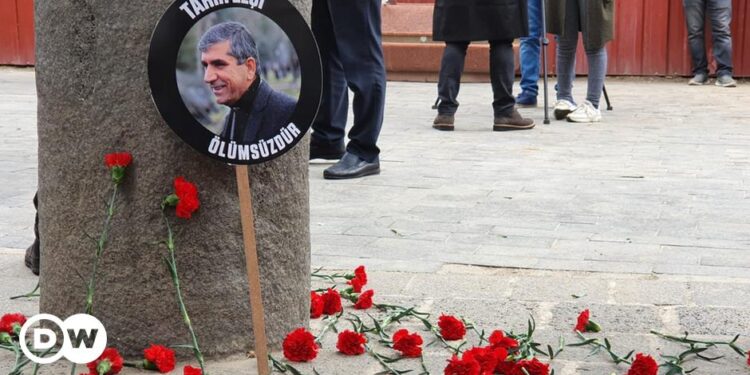
    Elçi, the former head of the Diyarbakır Bar Association, was shot in the head during a press conference on November 28, 2015 while calling for peace in front of the historic Four-Legged Minaret. A clash between Turkish police and members of the outlawed Kurdistan Workers’ Party (PKK) erupted at the scene, and Elçi was caught in the crossfire.

    The Diyarbakır court acquitted police officers Sinan Tabur, Fuat Tan and Mesut Sevgi, who were on trial for “causing death by gross negligence.” The officers attended the trial via video link and pleaded not guilty. The court’s decision followed a 30-minute recess during which tensions in the courtroom rose.

    Before the verdict was announced, Diyarbakır Bar Association President Nahit Eren and Tahir Elçi Foundation President Masum Batı left the courtroom in protest, stating they did not expect a fair decision. They were joined by other lawyers who then marched to the scene of Elçi’s death, the Four-Legged Minaret, to continue their protest.

    In the lead-up to the trial, the prosecutor’s office had presented an opinion on April 25, stating that “Elçi was killed by a bullet whose origin could not be definitively determined.” They recommended the acquittal of the three police officers and the conviction of fugitive PKK member Uğur Yakışır for “killing two police officers” and “undermining the unity of the state.”

    Lawyers for the Elçi family criticized the handling of the case, stating that their requests to uncover the truth were dismissed. They alleged that evidence was mishandled and destroyed. Türkan Elçi, the widow of Tahir Elçi, noted that the bullet that killed her husband was never found and that “key pieces of evidence, including 40 bullet casings, were lost or destroyed.”

    Erinç Sağkan, president of the Union of Turkish Bar Associations, condemned the trial for violating legal principles. “You claim to uphold universal legal principles, but where do we place the principle of direct confrontation?” Sağkan asked. “We were denied the right to cross-examine the suspects, and many fundamental rights of a fair trial were violated.”

    Berfin Elçi, another lawyer for the Elçi family, echoed these sentiments, stating that the conduct of the trial amounted to a denial of justice. “The trial failed to bring the perpetrators to justice and violated the right to a fair trial,” she said.

    The trial has garnered significant attention overseas, with 33 international legal organizations, including bar associations from Germany, France, Belgium and the Netherlands, issuing a joint statement. They called for a thorough investigation and a fair trial, noting several procedural flaws, such as a 110-day delay in the crime scene investigation and the initial failure to treat the police officers as suspects.

    A forensic report by the London-based Forensic Architecture played a crucial role in the case, concluding that Elçi was likely killed by a bullet fired from one of the police officers’ guns. However, this evidence was reportedly not given due consideration during the trial.

    Ali Yıldız, director of the Arrested Lawyers Initiative, criticized the investigation’s design, saying, “With the entire investigation designed to ensure impunity, it is not surprising at all that no one is held accountable for the killing of the president of a prominent bar. The destruction of key evidence in the Council of Forensic Medicine, as reported by journalist Cevheri Güven back in 2019, was to ensure today’s outcome.”

    The court’s decision to acquit the police officers has deepened concerns about impunity and the rule of law in Turkey, especially in cases involving state officials and Kurdish activists. The next steps for the Elçi family and their legal team remain uncertain, but they have vowed to continue their fight for justice.

  • Turkish police detain 5 Kurdish politicians

    The detentions occurred during early morning raids across Diyarbakır and its districts. The detainees include Ahmet Kaya, a former co-mayor of Ergani, along with former co-mayor Ramazan Kartalmış and deputy mayors Gülistan Polat, Esveri Malkoç and Cavidan Yaman.

    The detentions are part of an investigation dating back to 2023, Mezopotamya said, without giving further details.

    Authorities have imposed a 24-hour restriction on the detainees’ communications, preventing them from consulting with their legal representatives during this period.

    This comes after the interior ministry announced on Monday the removal of former Hakkari co-mayor Mehmet Sıddık Akiş of the pro-Kurdish Peoples’ Equality and Democracy Party (DEM Party) from office due to an ongoing investigation and a separate trial on terrorism-linked charges.

    He was replaced by Hakkari Governor Ali Çelik. The ministry’s move attracted widespread criticism and protests for being “anti-democratic” and “hijacking” the will of the Kurdish people.

    DEM Party Co-chairperson Tülay Hatimoğulları, who has been in Hakkari for several days to participate in demonstrations protesting Akiş’s removal, and the party’s other co-chairperson, Tuncay Bakırhan, met with representatives from civil society organizations in Hakkari on Thursday.

    Hatimoğulları said at the meeting that Turkey should immediately hold early elections because the ruling Justice and Development Party (AKP) and its far-right ally, the Nationalist Movement Party (MHP), have lost their legitimacy, resorting to illegitimate measures to stay in power.

    She said the results of the March 31 local elections in which the AKP sustained its worst election defeat since its establishment in 2002 and the MHP lost significant public support made clear that they no longer have legitimacy.

    The March 31 elections produced surprising results for the AKP, with the main opposition Republican People’s Party (CHP) emerging as the country’s leading party for the first time in decades, receiving 37.7 percent of the vote. The AKP’s nationwide support, however, stood at 35.4 percent, while the MHP garnered 4.9 percent.

    Hatimoğulları accused the AKP and the MHP of taking political revenge for their election loss on the DEM Party by removing its democratically elected mayor.

    Akiş, the first mayor ousted from office since the March 31 local elections when the DEM Party won a dozen provincial municipalities in the predominantly Kurdish southeast, was also handed down a prison sentence of 19 years, six months at the 61st hearing of his trial on Wednesday.

    The last time Turkey held presidential and parliamentary elections was May 2023. The next elections are scheduled for 2028.

    Turkey became acquainted with the removal of democratically elected Kurdish mayors from office on terrorism accusations after the local elections in 2016 and 2019.

    There were hopes that the government would not resort to such a step this time, given the significant public support afforded DEM Party mayors in the country’s southeast in the local elections.

    As a result, the removal of Akiş came as a disappointment to many, leading to protests and calls on the government from various segments of society to end the controversial practice and respect the will of the Kurdish people.