Author: Zaman Australia

  • The Victorian Health Department is facing nearly $100 million in fines

    The Victorian Health Department is facing nearly $100 million in fines

    The Victorian health department is facing 58 charges and almost $100 million in fines over its failed hotel quarantine system set up to fight Covid.

    Victoria’s Health Department has been hit with 58 charges over alleged safety failings in the state’s hotel quarantine program, as the state again recorded more Covid cases than NSW.

    The Health Department faces a total fine of $95.1m if found guilty of all charges.

    WorkSafe Victoria issued the charges following a 15-month investigation into hotel quarantine bungles that led to Melbourne’s second wave.

    The regulator alleges the department failed to provide a safe working environment for employees and put others not employed by the department at risk.

    The news came as Victoria marked a grim new record, recording 950 new cases and seven deaths. The results came from 61,322 tests.

    But as case numbers continue to climb in Victoria, the NSW outbreak appears to be on the decline.

    NSW reported 863 new cases on Wednesday, but in the state’s deadliest day yet, 15 deaths were reported.

    Deakin University epidemiologist Catherine Bennett is hopeful the speed at which case numbers are increasing in Victoria will continue to slow.

    Victorian infections have surpassed NSW case numbers for three days running.

    Despite Victorian Premier Daniel Andrews imposing some of the harshest lockdown measures in the country, the state is on track to hit a rolling seven-day average of 1960 cases a day by October 25, according to Burnet Institute modelling. It shows ­infections then beginning to decline.

    Professor Bennett said the “rapid growth” in the early stages of the outbreak suggested ­“restrictions in place in Victoria weren’t working as well (as in NSW)”.

    But she said the concentration of cases in western and southwestern Sydney benefited NSW, compared to Victoria where cases are more spread out.

    “It’s harder to have good compliance at a whole city or state level,” she said.

    Burnet Institute modelling, prepared for the NSW government, predicted cases in local government areas of concern would peak at a seven-day average of about 1500 new infections a day in mid-September.

    Premier Gladys Berejiklian has been hesitant to declare that NSW has reached the peak of infections, but analysts have projected cases will continue to fall.

    University of Melbourne Research fellow Chris Billington has estimated that NSW’s “R-effective” – the rate at which Covid spreads – is now at 0.85. The same researcher has estimated Victoria’s R-effective at 1.31, meaning cases will continue to increase.

    The percentage of positive swabs in Victoria is significantly higher than in NSW. The 950 cases reported by Victoria on Wednesday came from 61,300 tests – with 1.55 per cent of tests positive.

    Significantly more tests are being done each day in NSW. On Wednesday, just 0.72 per cent of tests came back positive.

    Professor Bennett said that the speed at which case numbers were increasing was slowing down, but the growth appeared more dramatic due to high infection numbers. DTelegraph

  • Turkey is a mafia state, now more than ever, report funded by US and EU says

    “Turkey has become known as a mafia state and the evidence suggests that this is the case, now more than ever,” according to the Global Organized Crime Index 2021, which was published on Tuesday by a global initiative with funding from the US and the EU.

    Countries were given a score on a scale of one to 10 in the index, with one the least activity and 10 the highest. With a criminality score of 6.89, Turkey was ranked the 12th worst country of 193 UN member states, worse than Syria, Lebanon and Venezuela.

    “The Turkish government often leverages certain criminal markets, such as the gold and oil trade, human smuggling and arms trafficking, for its own benefit and political purpose,” the study said.

    The index, published by the Global Initiative Against Transnational Organized Crime (GI-TOC), provides the first ever assessment of illicit economies in all 193 UN member states.

    According to the study, depending on political circumstances and geopolitical relations with other countries, the Turkish government chooses to “either tighten or ease its control over organized criminal activity.”

    “State-embedded individuals are thought to be involved in illegally transferring weapons to Salafi-Jihadist groups fighting in Syria and Libya, as well as providing weapons to paramilitary groups in Turkey,” the report said. “Organized crime and state-embedded individuals have extremely strong and complex links, dating back many decades and continuing to today.”

    According to the report Turkish organized criminal gangs control the wholesale importation of heroin into Europe. Based on an increase in acetic anhydride seizures, a key precursor for processing morphine into heroin, the report suggested that heroin production is on the rise in Turkey, with laboratories scattered across Istanbul and in eastern provinces at the border.

    The report underlined that cooperation between Turkey and the US Drug Enforcement Agency has weakened considerably since 2016, which has damaged the Turkish National Police’s ability to deal with drug trafficking.

    The illegal arms trade is also pervasive in Turkey, the study said, with firearm use and arms trafficking on the rise in recent years. Overall, Turkey plays a role as simultaneously a source, transit and destination country to greater or lesser degrees

    In terms of human trafficking and smuggling, Turkey is a key player in the transnational markets, according to the report. “Human trafficking, a prominent criminal market in Turkey, is characterized predominantly by trafficking for sexual exploitation and forced labour,” it said. “Human trafficking is concentrated largely in the country’s tourist areas, in metropolitan cities and in cities at the country’s borders.”

    The report also highlighted what it considered to be severe concerns regarding the use of extradition processes and requests by the Turkish government as a political tool. “[Turkish government] also engages in illegal renditioning of suspected coup plotters,” the report said. “Concerns have been raised about the Turkish government’s prolific abuse of INTERPOL’s red-notice system to unfairly target journalists, activists and political opponents living abroad.”

    In a report published in August 2021, the Stockholm Center for Freedom detailed how the Turkish government, under President Recep Tayyip Erdoğan, has abused INTERPOL in various ways. SCF

  • Advocacy group launches campaign for release of jailed journalist Ünal

    Jailed Journos, an advocacy organization that helps imprisoned press members in Turkey make their stories heard, on Tuesday launched a campaign on social media for the release of veteran journalist Mustafa Ünal, who has been jailed for over five years on politically motivated charges, Turkish Minute reported.

    In a tweet Jailed Journos asked Sözcü daily columnist Deniz Zeyrek, Hürriyet daily columnist Abdülkadir Selvi, Cumhuriyet columnist Mustafa Balbay, Yenişafak columnist Mehmet Acet and journalist Mustafa Kartoğlu, Ünal’s colleagues “who knew him well,”  to support their campaign for his release.

    The organization also called on former President Abdullah Gül, former Deputy Prime Minister and Parliament Speaker Bülent Arınç and Justice Minister Abdülhamit Gül, in addition to President Recep Tayyip Erdoğan, “who knew Ünal very well and invited him on his private plane several times,” to show their support  for the jailed journalist.

    Ünal, 53, a seasoned journalist and former Ankara bureau chief for the now-closed Zaman daily, was arrested after a military coup attempt in Turkey on July 15, 2016 and was handed down a jail sentence of 10 years, six months by an İstanbul court in July 2018 on charges of membership in a terrorist organization. He has been serving his sentence in Ankara’s Sincan Prison.

    The Zaman daily, which was Turkey’s best-selling newspaper, was closed down along with dozens of other media outlets due to their links to the Gülen movement, a faith-based group that focuses on science education, volunteerism, community involvement, social work and interfaith and intercultural dialogue and is inspired by the teachings of Muslim preacher Fethullah Gülen.

    Erdoğan has been waging a crackdown on followers of the movement since the corruption investigations of December 17-25, 2013, which implicated then-Prime Minister Erdoğan, his family members and his inner circle. Designating the group as a terrorist organization, Erdoğan intensified the crackdown on the movement following the coup attempt in July 2016, which he accused Gülen of masterminding. Gülen and the movement strongly deny involvement in the abortive putsch or any terrorist activity.

    A number of Ünal’s colleagues shared posts under the hashtag #FreeMustafaUnal as part of the online campaign started by Jailed Journos on Tuesday.

    “What did he do? He wrote columns! That’s it,” journalist Said Sefa said in a tweet, also using the hashtag #gazeteciliksuçdeğildir (Journalism is not a crime) and criticizing the terrorism charges against Ünal, which are based on nine of his columns.

    “There’s nothing in Mustafa Ünal’s indictment. They tried to make a few quotes from his writings into a crime. All media representatives in Ankara were familiar with his journalism, but none of them made a sound [about the politically motivated charges he faced]. … What a shame,” journalist Cevheri Güven tweeted on Tuesday.

    “Mustafa Ünal is a criminal because he did journalism. The cost of doing journalism under the [ruling Justice and Development Party] AKP regime is [being sent to] prison! We’ll continue shouting ‘Journalism is not a crime!’” journalist Hasan Cücük said.

    Turkey, which is among the top jailers of journalists in the world, was ranked 153rd out of 180 countries in the Reporters Without Borders (RSF) 2021 World Press Freedom Index published in April.

    According to the Stockholm Center for Freedom’s “Jailed and Wanted Journalists in Turkey” database, 174 journalists are behind bars in Turkey and 167 are wanted and either in exile or at large. The database was last updated on April 14, 2021. SCF

  • Australia’s football leagues rebranded as A-League Men and A-League Women

    Australia’s football leagues rebranded as A-League Men and A-League Women

    Australia’s top-tier men’s and women’s football leagues, the A-League and W-League, have been collectively rebranded as the A-Leagues ahead of the upcoming seasons.

    The former A-League has been renamed A-League Men while the W-League is now known as A-League Women, with the Y-League rebadged as A-League Youth.

    The Australian Professional Leagues (APL), who officially took full control of the leagues in December 2020, said they had consulted players, coaches and fans in deciding to align the leagues under a “unified banner”.

    “The APL is all about football. It’s not men’s football or women’s football, it’s just football,” APL managing director Danny Townsend said.

    “Bringing the female game up onto a level playing field with the men was something we felt really strongly about.

    “We thought it’s about time football took a leadership role in this space.

    “We’ve got an amazing couple of years ahead of us with the Women’s World Cup coming to Australia, so this is just another step in our commitment to the women’s game.”

    Sydney FC and former Young Matildas defender Ally Green hailed the decision as the “biggest” change to hit the women’s competition since its inception in 2008.

    “It’s a really important message to get across to Australians and worldwide as well,” Green said.

    “It’s a world-leading announcement and we’re part of something really special here in Australia and in football.

    “It’s just Australian football now and it’s a really important message to send to the other sports in Australia.

    “I think they’re only going to follow and want to be on the same pedestal as us.

    “It’s exciting that we’re one of the first in Australia and it will only progress and develop each league moving forward in the future.”

    Socceroos and Melbourne City striker Jamie Maclaren welcomed the change.

    “For all of us to say we’re under one umbrella is a proud moment,” Maclaren said.

    “Not only for me as a footballer but for everyone involved in football in Australia.”

    The men’s competition kicks off on November 19 with the women’s league starting on December 3. ABC

  • Opposition MP questions whereabouts of man who went missing 25 months ago

    In a parliamentary question to Interior Minister Süleyman Soylu, opposition MP Mustafa Yeneroğlu sought information on the whereabouts of Yusuf Bilge Tunç, who went missing 25 months ago and is feared to have been abducted by Turkish intelligence.

    Democracy and Progress (DEVA) lawmaker Yeneroğlu asked if the disappearance of Tunç is being investigated properly by security authorities.

    Tunç disappeared in Ankara on August 6, 2019 in broad daylight, leaving no trace behind.

    Hüseyin Galip Küçüközyiğit, who had been missing since late 2020 and was suspected of being a victim of enforced disappearance, has been recently found and is currently in a prison in Ankara.

    Yusuf Bilge Tunç’s father, Mustafa, said he was happy that Küçüközyiğit was finally found but was pained that his son was still missing. “I have been waiting for some news of his whereabouts for 25 months. Will I also be able to hear from him soon?” he asked.

    Tunç’s car was found in a remote area 45 days after he vanished in Ankara’s GİMAT shopping mall. His family immediately called the police; yet the police showed no real interest in his disappearance. “The police only conducted a crime scene investigation six months after we found the car and contacted them,” said Mustafa Tunç. “We had already removed the car from where we found it so the investigation was really a formality.”

    Although the family was afraid he had been abducted, the police dismissed their fears, saying: “He might have fled and left his car behind. Take a look at the CCTV footage. He will return.”

    Tunç worked at Turkey’s Undersecretariat for the Defense Industries, the government agency responsible for defense procurement, and he was summarily fired by an executive decree after a July 15, 2016 coup attempt.

    According to rights organizations, enforced disappearances have become worryingly common in Turkey, and most disappearances were not effectively investigated by prosecutors.

    Nearly 30 people have reportedly been abducted by Turkish intelligence since 2016. Most of the abductions targeted members of the Gülen movement, a faith-based group inspired by Muslim cleric Fethullah Gülen.

    Turkish President Recep Tayyip Erdoğan has been targeting followers of the Gülen movement since the corruption investigations of December 17-25, 2013, which implicated then-Prime Minister Erdoğan, his family members and his inner circle.

    Dismissing the investigations as a Gülenist coup and conspiracy against his government, Erdoğan designated the Gülen movement as a terrorist organization and began to target its members. Erdoğan intensified the crackdown on the movement following a coup attempt on July 15, 2016, that he accused Gülen of masterminding. Gülen and the movement strongly deny involvement in the abortive putsch or any terrorist activity.

    Many of the abductees mysteriously reappeared in police custody in Ankara after six to nine-month absences. Apparently intimidated, most of them had kept their silence after their reappearance.

    Speaking at a court hearing in February 2020, one of the abductees, Gökhan Türkmen, revealed that he had been held incommunicado at a black site in Ankara run by Turkey’s intelligence agency and subjected to severe torture during his 271-day stay. Türkmen was the object of threats and was sexually harassed and abused during his enforced disappearance. He also alleged that he was visited in prison and threatened no less than six times by officials who introduced themselves as intelligence officers, pressuring him to retract his allegations of abduction and torture made at the February hearing. SCF

  • Turkish authorities seize bank account of Yüksel Street protestor Nazan Bozkurt

    Turkish authorities seized the bank account of Nazan Bozkurt, a former public servant summarily fired from her job by an executive decree in 2017, after a TL 281,000 ($32,000) administrative fine was imposed on her for participating in a protest, Turkish media reported.

    According to notifications issued by the tax office, Bozkurt was hit with the fine for violating the law on misdemeanors. Speaking to the Bianet news website, Bozkurt said the seizure of her bank account was a surprise as her fines had been cancelled by administrative courts.

    “I had 700 different fines cancelled by various courts, however, the tax office still seized my bank account,” she said.

    Bozkurt said she would object the seizure with court documents proving the fines had been canceled.

    Bozkurt was one of a number of former public servants protesting summary dismissals on Ankara’s Yüksel Street. The protestors demanded reinstatement to their jobs and were detained on August 13, 2020. Bozkurt, along with Acun Karadağ, Alev Şahin, Mehmet Dersulu, Mahmut Konuk and Armağan Özbaş, was arrested 10 days later.

    Although Bozkurt was subsequently released and acquitted, she was still not reinstated to her job. Speaking to the Euronews Turkish service, Bozkurt said she had “been subjected to a lot of mistreatment” during and after the protests.

    Bozkurt and other purge victims had been protesting human rights violations in Turkey and the purge of public servants since November 2016. They mainly gathered on Ankara’s Yüksel Street, in front of a human rights monument. The protests first started with two dismissed academics, Nuriye Gülmen and Semih Özakça, demanding their jobs back. Both academics later went on a hunger strike and were arrested on the 76th day of their protest. After months of imprisonment, Gülmen and Özakça were finally released.

    The monument became a symbol of resistance and demand for justice after other purge victims and activists joined them. Turkish police have notoriously used excessive force against the protestors on Yüksel Street.

    A total of 622,646 people have been the subject of investigation and 301,932 have been detained as part of a purge after the coup attempt on July 15, 2016. The government also removed more than 130,000 civil servants from their jobs.

    Former public servants were not only fired from their jobs; they were also banned from working again in the public sector and getting a passport. The government also made it difficult for them to work formally in the private sector. Notes were put on the social security database about dismissed public servants to deter potential employers. SCF

  • Regional GP fights to fit car with lights and sirens to attend emergencies

    Regional GP fights to fit car with lights and sirens to attend emergencies

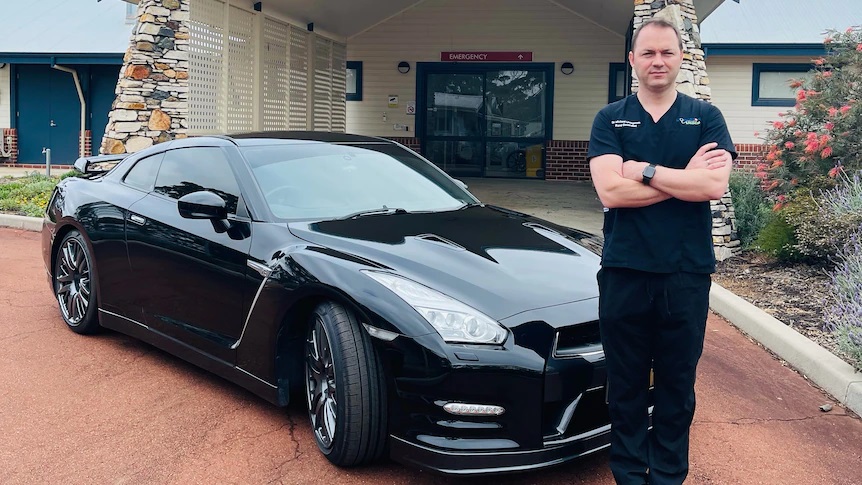
    Earlier this year, Dr Michael Livingston drove “at speed” in his own car to reach the toddler who was turning blue at a medical clinic about 30 minutes away.

    Dr Livingston oversees GP clinics in the isolated south coast towns of Hopetoun and Ravensthorpe, about two hours west of Esperance.

    He also responds to emergency call outs at Ravensthorpe Health Service which serves the small town of about 1,700 people.

    After reflecting on the experience, he believes warning lights on his vehicle would help him to work safely.

    Wait feels like hours

    In mid-March Ravensthorpe mum Sharon Atkins was caring for her then one-year-old daughter Ava who had contracted bronchiolitis, a respiratory infection common in young children.

    Two weeks after contracting the virus, Ava’s symptoms worsened.

    “She was having trouble breathing,” Ms Atkins said.  “She was on Ventolin every 20 minutes.”

    While she was at the Ravensthorpe Health Service seeking medical attention, Ava’s changed colour.

    “She started to turn blue and stopped breathing.”

    While the service is staffed with nurses, it lacks a full-time doctor who can administer emergency treatments such as adrenaline.

    Dr Livingston, who was in Hopetoun at the time, was urgently called upon to treat Ava’s escalating condition.

    “I was inconsolable at the time,” Ms Atkins said.

    “It felt like it was hours at the time.”

    Dr Livingston recalled being told there was a child at the health service who had stopped breathing.

    “As I’m driving there I’m thinking, ‘Will I just arrive at the end … as in, [will the child be] dead?”

    Dr Livingston worked on Ava for about 30 minutes before she was flown by the Royal Flying Doctors Service (RFDS) to Perth Children’s Hospital.

    Ms Atkins said watching Ava’s treatment was difficult.

    “It definitely was distressing seeing your little girl lifeless and needing to be resuscitated and given all these needles,” Ms Atkins said.

    Ava recovered and was discharged three days later.

    Ms Atkins says without Dr Livington’s quick response and immediate treatment the outcome may have been different.

    “If we didn’t have Michael, I probably wouldn’t have my daughter today.”

    It’s a perennial problem with very few answers — how to get doctors and other healthcare workers to regional and rural parts of the country.

    The ordeal has also caused Dr Livingston to reflect on the response time required for Ava’s life-saving treatment.

    “I had to put myself at risk, drive at speed,” he said.

    “Why can’t I be afforded the same protection as any other emergency service?

    “Why am I forced into emotionally loaded situations and expected to lay it all on the line?”

    He decided to apply for an Emergency Vehicle Status (EVS) from the Department of Transport — a license authorising any vehicle to be fitted with lights and sirens while responding to emergencies.

    Approved drivers are also exempt from complying with specified road rules and must be trained in driving in operational conditions.

    In April, Dr Livingston submitted his application after completing the necessary driver training for his Nissan GT-R, but has since been refused.

    In an email sent to Dr Livingston, a Department of Transport representative cited a range of reasons for refusal including that “male drivers are more likely to be involved in high-speed driving and have high-risk taking behaviours”.

    Furthermore, the email raised concerns over Dr Livingston’s car and the likelihood of the vehicle’s “low nose” to direct an animal into the windscreen or cabin in the event of an animal strike.

    “A dead or severely injured doctor is of no benefit to the current emergency, your community or any future patients,” it stated.

    A Department of Transport spokesperson said applications were generally only approved if vehicles were part of the state’s emergency service network and assessed by numerous bodies including WA Police, Department of Health, St John Ambulance and DFES.

    Despite Dr Livingston’s car being an unusual “ambulance”, he wanted to use it to highlight “the real disparity of rural care”.

    While he continues negotiations with the department, he says emergency care needs continual investment.

    “Rural health is in a mess and has always been handballed from government to government.

    “If somebody doesn’t try at least in these regions it’s just going to be a failure … the same media cycle.

    “Meanwhile people out there are suffering.” ABCNews

  • 43 people detained for aiding families of post-coup victims

    Forty-three people, 16 of whom are dismissed public officers, were detained in the northern province of Ordu for helping the families of individuals targeted by a post-coup crackdown in Turkey, Bold Medya reported.

    The suspects were taken into custody on Friday based on detention warrants issued by the Ordu Chief Public Prosecutor’s Office. They were accused of providing food and financial assistance to the families of people who were arrested in the post-coup crackdown or removed from their state jobs and hence deprived of the means to make a living.

    Turkish President Recep Tayyip Erdoğan has been targeting followers of the Gülen movement, inspired by Turkish Muslim cleric Fethullah Gülen, since the corruption investigations of December 17-25, 2013, which implicated then-Prime Minister Erdoğan, his family members and his inner circle.

    Dismissing the investigations as a Gülenist coup and conspiracy against his government, Erdoğan designated the movement as a terrorist organization and began to target its members. He intensified the crackdown on the movement following an abortive putsch on July 15, 2016 that he accused Gülen of masterminding. Gülen and the movement strongly deny involvement in the coup attempt or any terrorist activity.

    After the coup attempt, the Turkish government declared a state of emergency and carried out a massive purge of state institutions under the pretext of an anti-coup fight. More than 130,000 public servants, including 4,156 judges and prosecutors, as well as 29,444 members of the armed forces were summarily removed from their jobs for alleged membership in or relationships with “terrorist organizations” by emergency decree-laws subject to neither judicial nor parliamentary scrutiny.

    Former public servants were not only fired from their jobs; they were also prohibited from working again in the public sector and getting a passport. The government also made it difficult for them to work formally in the private sector. Notes were put on the social security database about dismissed public servants to deter potential employers.

    Turkish Interior Minister Süleyman Soylu said on February 20, that a total of 622,646 people have been the subject of investigation and 301,932 have been detained, while 96,000 others have been jailed due to alleged links to the Gülen movement since the failed coup. The minister said there are currently 25,467 people in Turkey’s prisons who were jailed on alleged links to the movement.

    In addition to the thousands who were jailed, scores of other Gülen movement followers had to flee Turkey to avoid the government crackdown. SCF

  • 200 lawyers express support for Şenyaşar family demanding justice in political murder case

    Two hundred lawyers have expressed support for Emine Şenyaşar and her son Ferit Şenyaşar, who have been protesting in front of the Şanlıurfa Courthouse in southeastern Turkey to seek justice for three members of their family who were killed by the relatives and bodyguards of İbrahim Halil Yıldız, a deputy from the ruling Justice and Development Party (AKP).

    Lawyers visiting the Şenyaşar family on Friday said they would continue providing legal assistance in their case.

    Emine Şenyaşar and her son began a sit-in in March and have continued their protest for 202 days in front of the courthouse, demanding a fair trial and effective investigation of the incident.

    Last week Emine Şenyaşar called on lawyers to support their demand, saying they were only two people and needed the support of lawyers.

    The mother and son were briefly detained in March, and their placards have repeatedly been seized by the police.

    Esvet Şenyaşar and two of his sons, Adil and Celal, were brutally murdered on June 14, 2018 in Şanlıurfa province.

    They were initially attacked in their store and taken to a hospital. However, they were followed by the family of AKP deputy Yıldız to the hospital, where they were ultimately killed. Eight more people were injured during clashes between the two groups. An older brother of Yıldız was also killed.

    According to Ferit Şenyaşar, bullets from 17 different guns were retrieved from the body of one of his brothers.

    Two brothers of the Şenyaşar family, Ferit and Fadıl, who were injured but survived, were later detained, and Fadıl Şenyaşar was arrested. However, none of Yıldız’s relatives or his bodyguards were detained despite the fact that three people had died.

    Only 15 months later, on September 18, 2020, was Yıldız’s older brother Enver Yıldız arrested.

    The Yıldız family claimed the Kurdish Şenyaşar family had links to the outlawed Kurdistan Workers’ Party (PKK) and that they had been victims of terrorism. SCF

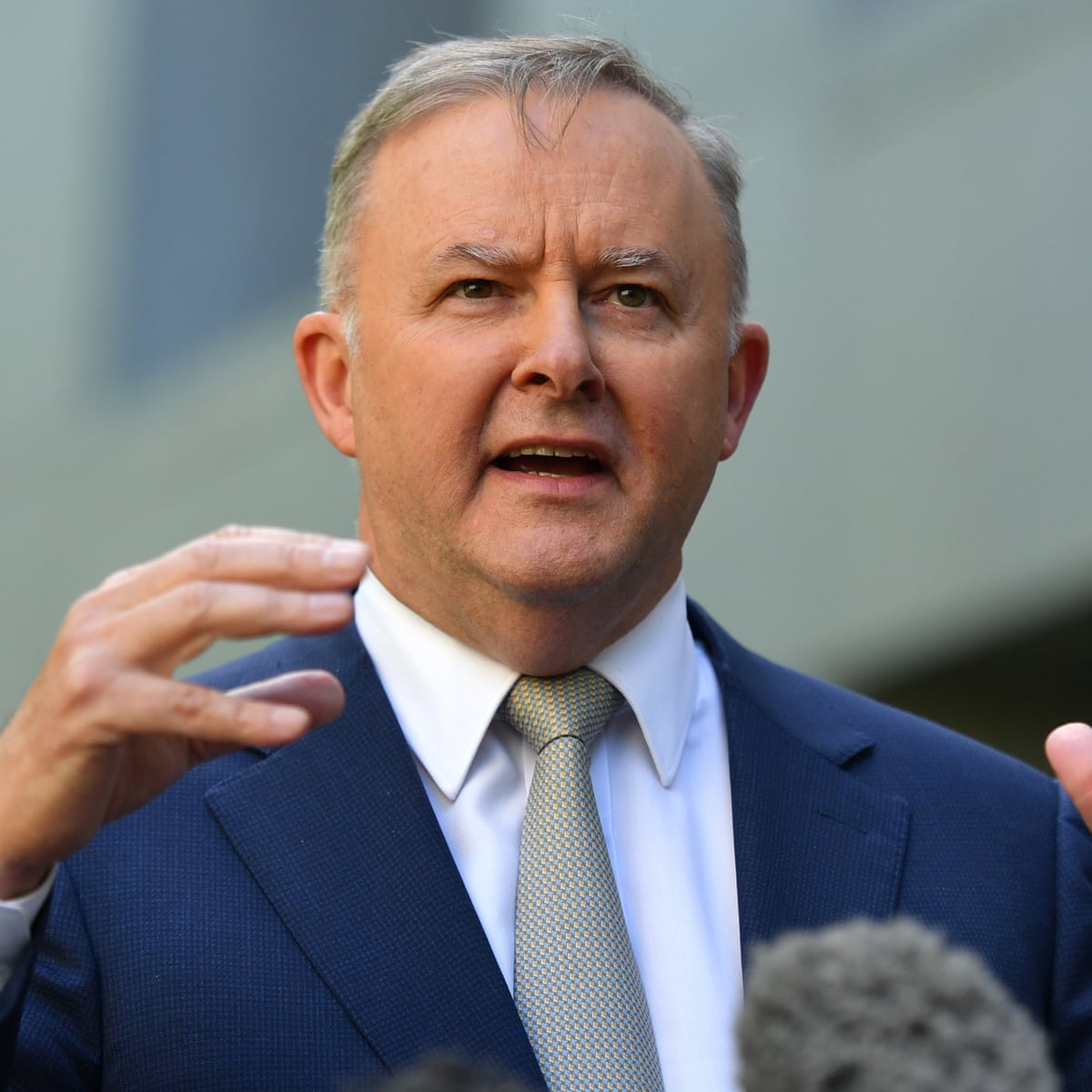
  • Anthony Albanese confirms a Labor government would continue AUKUS alliance

    Anthony Albanese confirms a Labor government would continue AUKUS alliance

    Labor leader Anthony Albanese has thrown his support behind the AUKUS security partnership signed by Prime Minister Scott Morrison, saying it would “certainly continue” if he wins the next election.

    Labor leader Anthony Albanese said a close relationship with the US is one of three foreign policy “pillars” of a Labor government with him at the helm.

    In an interview with SBS News, he said the AUKUS security alliance brokered with the US and UK would “certainly continue” into the future, if Labor was elected to government at the upcoming federal election slated for 2022.

    The AUKUS deal will see Australia equipped with nuclear-powered submarines, but it has also led to the cancellation of a $90 billion deal with France for conventional submarines.

    Prime Minister Scott Morrison was in Washington over the weekend to meet with the leaders of the US, Japan and India in the first face-to-face meeting of the Quad nations.

    Bilateral tensions between France and Australia have deteriorated since the cancellation of the submarine contract between the two countries.

    Australia’s Trade Minister, Dan Tehan, revealed his offer to hold a face-to-face meeting in France with his French counterpart has been rebuffed.

    Mr Morrison told to SBS News that he hopes relations with Paris will “normalise”.

    But the federal government has received criticism after it emerged that the prime minister notified French President Emmanuel Macron of the deal’s cancellation via a text message after a phone call the night before went unanswered.

    France’s ambassador to Australia Jean-Pierre Thébault told SBS French he himself had only learned about Australia’s decision to scrap the contract through the media.

    “I think there are better ways to deal with a $90 billion contract than to inform the leader of France by text message that that was occurring,” Mr Albanese said.

    “The fact is that France is an important player in the Indo-Pacific. They’ve also been an important partner for Australia, and they play a leadership role in the European Union. So Australia needs to exercise diplomacy when it comes to how we deal with our international partnerships. And quite clearly, there’s some repair work that needs to be done.” SBS