Author: Zaman Australia

  • Australian far-right terrorism investigations have increased by 750 per cent in 18 months

    The threat of nationalist and racist violent extremism is escalating rapidly, according to Australia’s domestic security and investigative services.

    In the past 18 months, the Australian Federal Police’s Joint Counter Terrorism Team’s (JCCT) caseload covering the area has risen by 750 per cent.

    AFP Assistant Commissioner Scott Lee from the Counter Terrorism and Special Investigations Command said he only expected the threat to continue to climb.

    “There was certainly an increase in the JCCT’s nationalist and racist violent extremism caseload from 2019 and into early 2020 … We expect it to increase further than what we are seeing at the moment, but how much further it will increase is difficult to ascertain at the moment.”

    The rise means it now accounts for 15 per cent of the unit’s total investigative effort.

    “Islamist or religiously motivated violent extremism remains the predominant threat at about 85 per cent of our workload,” Mr Lee said.

    The interview comes as an SBS News investigation uncovered an underground network of Australian men who share far-right views that has never been reported on before in the media, with one member revealing the group’s efforts to acquire firearms.

    The AFP is monitoring groups like the one uncovered by SBS News and the investigation sparked grave concern, Mr Lee said.

    “It’s very concerning to us and where we see individuals … where they have a violent extremist ideology and have expressed a view to act on that violent intent, and either have or are attempting to obtain firearms, we take that very seriously and we take action.”

    Pandemic increasing extremism

    The JCCT is responsible for investigating extremism that involves an immediate threat of violence.

    Earlier this year, the Australian Security Intelligence Organization (ASIO) confirmed 50 per cent of its domestic caseload was looking at far-right groups, up from about 10 per cent before 2019.

    Unlike ASIO though, the JCCT’s bar for prosecuting investigations involves an imminent threat of violence.

    “The key here is the violence, that is the threshold for us to take action. Where we see individuals where there is a threat or move to violence, that’s where the JCCT will take action,” Mr Lee said.

    For several years prior to 2020, far-right extremism accounted for about two per cent of the JCCT’s workload, which doesn’t take into account investigations by state and territory police.

    Mr Lee said the impact of the COVID-19 pandemic had ramped up racist narratives within extremist circles.

    “We continue to see the impact of the online environment particularly as we see the impact of COVID lockdowns, we are seeing that is having an impact and it is being exploited including by ideologically motivated extremist groups to magnify those ideologies within the community.”

    “We are seeing the impact of COVID more broadly on some of the ideological drivers as well, so we are expecting it will increase particularly in terms of racist views, where people are anti-Semitic, anti-Muslim or anti-Indigenous. We are seeing this affect people, particularly young people who are vulnerable to these ideologies.”

    ‘De-radicalization is key’

    Dvir Abramovich is the chairman of the Anti-Defamation Commission (ADC), Australia’s leading Jewish civil rights organization.

    He said his organization had witnessed discussions around the “ethnic cleansing” of Australia and the purchasing of firearms by groups additional to the one uncovered by SBS News.

    “The ADC, throughout its investigation of these hardcore bigots, has seen discussions and has seen those individuals talking about acquiring weapons, talking about a racial war, talking about eliminating anybody they perceive to be as a threat to white people.”

    “I think this is a problem from hell that we can’t run and hide away from and I think the worst thing we could do is ignore the threat materializing before our very eyes.”

    Mr Abramovich called on the Australian Government to look at putting additional funding into far-right de-radicalization programs.

    “We need a whole of society approach … we don’t need a Christchurch massacre in our cities to take this problem seriously. These people are ticking time bombs.”

    A Department of Home Affairs spokesperson told SBS News the federal government had invested $69 million in countering violent extremism programs since 2013.

    “Our intervention programs are designed to address all forms of violent extremism, including religiously and ideologically motivated violent extremism,” they said in a statement.

    The department did not respond directly to questions about what proportion of that funding went to far-right de-radicalization programs.

    ‘Inflaming divisions’

    Criminologist Dr Clarke Jones is a senior research fellow at The Australian National University, and a counter-terrorism expert who specializes in de-radicalization.

    He said while Australian authorities were highly resourced and efficient at investigating and prosecuting terrorism matters, de-radicalization programs and initiatives were comparatively under-resourced in the country’s counter-terrorism efforts.

    “Australian authorities have taken a militaristic approach to counter-terrorism, but have failed when it comes to dialogue, trust-building, and rhetoric that has, at times, inflamed divisions in our society.”

    “We don’t see the government asking white people to condemn white supremacy,” he said.

    “Narratives have created that sense of otherness. Why has it been on Muslim leaders to condemn terrorism, for views they don’t support in the first place?”

    “I can see how these growing divisions could give some groups a sense of ‘we need to take matters into our own hands’, and that is very dangerous, especially when those groups are engaging in training and looking at buying weapons.”

    Assistant Commissioner Mr Lee rejected the assertion that requests by Australian authorities for Muslim leaders to condemn Islamic extremist violence had added to a sense of alienation.

    “I don’t think the calls [for the] condemnation of Islamic extremism is an unfortunate legacy,” he said.

    “We can assure people we target criminality and not ideologies,” he said, adding that’s why they were taking on more cases involving far-right extremism.

    “From our perspective, that’s why we want to reassure the community where we see these matters, we act appropriately and that’s why we are seeing an increase in these.” SBS
  • ‘I am tired of waiting,’ says father of Yusuf Bilge Tunç, who disappeared 26 months ago

    “The authorities aren’t doing anything to find my son, and I’m tired of waiting,” said Mustafa Tunç, father of Yusuf Bilge Tunç, a former bureaucrat who disappeared in Ankara on August 6, 2019 in broad daylight, leaving no trace behind.

    In a tweet Tunç said it has been 26 months since his son disappeared. “I have been waiting to hear something [about my son]. I am tired of waiting and uncertainty,” he said. “Don’t they [government officials] have any faith, beliefs? Why don’t they do anything to find my son?”

    Yusuf Bilge Tunç’s car was found in a remote area 45 days after he vanished in Ankara’s GİMAT shopping mall. His family immediately called the police; yet the police showed no real interest in his disappearance. “The police only conducted a crime scene investigation six months after we found the car and contacted them,” said Mustafa Tunç. “We had already removed the car from where we found it so the investigation was really a formality.”

    Although the family was afraid he had been abducted, the police dismissed their fears, saying: “He might have fled and left his car behind. Take a look at the CCTV footage. He will return.”

    According to Tunç’s father the officials treated his son’s case as a domestic dispute. “They acted as if my son was someone who deserted his wife and child and ran away. We requested that his phone records be examined. After nearly a year, we still have no results from the phone records. My daughter-in-law and I requested that the prosecutor check the city surveillance cameras; however, they refused to look at them. The investigation file contains abundant correspondence among state institutions, revealing no serious effort for a thorough investigation.”

    Tunç worked in Turkey’s Undersecretariat for the Defense Industries, the government agency responsible for defense procurement, and he was summarily fired with an executive decree after a July 15, 2016 coup attempt.

    Nearly 30 people have reportedly been abducted by Turkish intelligence since 2016. Most of the abductions targeted members of the Gülen movement, a faith-based group inspired by Muslim cleric Fethullah Gülen.

    Turkish President Recep Tayyip Erdoğan has been targeting followers of the Gülen movement since the corruption investigations of December 17-25, 2013, which implicated then-Prime Minister Erdoğan, his family members and his inner circle.

    Dismissing the investigations as a Gülenist coup and conspiracy against his government, Erdoğan designated the Gülen movement as a terrorist organization and began to target its members. Erdoğan intensified the crackdown on the movement following a coup attempt on July 15, 2016, that he accused Gülen of masterminding. Gülen and the movement strongly deny involvement in the abortive putsch or any terrorist activity.

    Many of the abductees mysteriously reappeared in police custody in Ankara after six to nine-month absences. Apparently intimidated, most of them had kept their silence after their reappearance.

    Speaking at a court hearing in February 2020, one of the abductees, Gökhan Türkmen, revealed that he had been held incommunicado at a black site in Ankara run by Turkey’s intelligence agency and subjected to severe torture during his 271-day stay. Türkmen was the object of threats and was sexually harassed and abused during his enforced disappearance. He also alleged that he was visited in prison and threatened no less than six times by officials who introduced themselves as intelligence officers, pressuring him to retract his allegations of abduction and torture made at the February hearing. SCF

  • Boğaziçi University rector files complaint with police about students protesting his appointment

    Boğaziçi University Rector Naci İnci, appointed to his position by the Turkish president, has filed a complaint with the police about students who took part in protests against his appointment, Turkish media reported.

    İnci complained the students had threatened, insulted and prevented him from doing his job. They had also damaged property and violated the law on demonstrations and protests, he claimed. According to İnci the students insulted him by carrying banners that called him a government-appointed trustee and by stopping his car on the university campus.

    Seven of the students who were on İnci’s list were questioned on Thursday about taking part in the protests, while three of them appeared in court, where the prosecutor demanded their arrest.

    A prolonged series of protests broke out at the university after President Recep Tayyip Erdoğan appointed Melih Bulu a founding member of the ruling Justice and Development Party’s (AKP) Sarıyer district branch and former deputy chairman of the AKP’s İstanbul provincial chapter, as rector in early January.

    Bulu was dismissed in July, and İnci, a former deputy to Bulu, was appointed despite a 95 percent disapproval rating he received in polls held among the university community to determine possible rector candidates.

    Seventeen candidates emerged with high rates of approval; however, President Erdoğan appointed İnci, prompting outrage among academics and students.

    Political pressure on students of different age groups has been increasing. A high school student in Kocaeli was officially warned about handing out tea in the classroom. According to the school administration the student had insulted Erdoğan by impersonating him handing out tea to citizens during rallies.

    An official report was written up about the student that said he had “mocked the president” and would be subject to disciplinary action if it were repeated.

    Insulting the president is a crime in Turkey, according to the controversial Article 299 of the Turkish Penal Code (TCK). Whoever insults the president can face up to four years in prison, a sentence that can be increased if the crime was committed through the mass media.

    According to the Justice Ministry, a total of 160,169 investigations and 35,507 cases have been launched on charges of insulting the president over the past seven years, beginning with the election of Erdoğan to the presidency in 2014 to the end of 2020. SCF

  • Pro-opposition media draw criticism for using gov’t discourse about arrest of end-stage cancer patient

    Pro-opposition media outlets Halk TV and the Sözcü daily faced harsh criticism for using government’s discourse about the arrest of Ayşe Özdoğan, 34, an end-stage cancer patient who was arrested on Saturday to serve a prison sentence on a terrorism conviction, the Stockholm Center for Freedom reported on Tuesday.

    Sözcü used the pro-government İhlas News Agency’s (İHA) report on Özdoğan’s arrest, which falsely claimed that Özdoğan was found after “diligent police work.” Özdoğan has not been in hiding and has frequently posted on Twitter about her illness.

    Halk TV, on the other hand, initially used the same story on its website with the headline “Big sister [in charge of women] of FETÖ [a derogatory term used by the Turkish government to refer to the Gülen movement] in charge of a province has been arrested.”

    Halk TV later changed its headline to “Ayşe Özdoğan arrested” and used a more fact-based story, saying Özdoğan was detained at home and arrested by a court.

    Özdoğan, a former teacher, was handed down a nine-year, four-month prison sentence for alleged links to the Gülen movement. An appeals court on June 11 upheld her sentence despite severe health problems and a hospital report saying she was not fit to stay in prison.

    Her arrest caused an outcry on social media, with people from different backgrounds rallying around the hashtag #AyşeÖzdoğanTutuklanmasın (Don’t arrest Ayşe Özdoğan), which was among the top trending topics on Twitter in Turkey throughout the weekend.

    Özdoğan and her husband were detained on April 8, 2019 for alleged links to the Gülen movement, but she was released due to her son’s heart condition. Her husband was sent to prison in southern Antalya province.

    Özdoğan developed cancer seven months later and underwent an operation on November 12, 2019. However, she was arrested shortly thereafter, convicted and sentenced to nine years, six months in prison.

    Turkish President Recep Tayyip Erdoğan has been targeting followers of the Gülen movement since the corruption investigations of December 17-25, 2013, which implicated then-prime minister Erdoğan, his family members and his inner circle.

    Dismissing the investigations as a Gülenist coup and conspiracy against his government, Erdoğan designated the movement as a terrorist organization and began to target its members. Erdoğan intensified the crackdown on the movement following a coup attempt on July 15, 2016 that he accused Gülen of masterminding. Gülen and the movement strongly deny involvement in the abortive putsch or any terrorist activity.

    Özdoğan’s arrest sparked outrage, and thanks to an online campaign started by human rights defender and People’s Democratic Party (HDP) deputy Ömer Faruk Gergerlioğlu, she was released pending appeal on December 27, 2019.

    It was already too late for her second surgery, however, as the cancer had spread. Özdoğan’s teeth, palate, zygomatic bone and lymph nodes were removed in an emergency operation. Özdoğan lost her ability to see and hear after the operation due to the trauma her facial bones suffered.

    In a previous tweet Özdoğan said she could no longer eat solid foods and suffered from a chronic infection in her sinuses, where a tumor was removed. She added that she could not chew or swallow because of the cancer.

  • French ambassador to return to Australia to ‘redefine’ relations after submarine dispute

    France is sending its ambassador back to Australia, saying it is looking to redefine future relations after a row over a submarine contract.

    France will send its ambassador back to Australia after withdrawing the envoy in a row over a submarine supply deal, French Foreign Minister Jean-Yves Le Drian says.

    “I have now asked our ambassador to return to Canberra with two missions: to help redefine the terms of our relationship with Australia in the future …and to defend our interests in the concrete implementation of the Australian decision to end the programme for future submarines,” Mr Le Drian told French MPs on Wednesday.

    Paris had pulled the ambassador out of Canberra in protest at a defence pact negotiated between the United States, Australia and Britain. Known as AUKUS, the pact is intended to counter Chinese military power.

    Under the pact, Australia committed to buy US-designed submarines, and pulled out of an existing supply deal with a French manufacturer.

    Paris was incensed, saying the deal had been done behind its back.

    But while France has sought to mend fences with Washington, it had frozen its contacts with Australia.

    France had considered the partnership with Australia dating back to 2016 as the cornerstone of its Indo-Pacific policy and French officials say they feel particularly betrayed by Canberra. They say Canberra gave them no indications despite launching its plan to switch deals 18 months earlier.

    Mr Le Drian said Paris had completely reviewed its bilateral relationship with Australia given that the submarine deal had been part of that broader strategy.

    “Starting afresh in our bilateral relations will not have any impact in our determination to remain engaged in the Pacific,” he said.

    Australia has said it regretted the ambassador’s recall, and that it values the relationship with France and wants to keep engaging with Paris on issues including the Indo-Pacific.

    Diplomats have said the crisis in confidence will need some strong acts from Canberra that would benefit French interests in the region. SBS

  • Turkish far-right party drafts bill to keep media outlets with foreign funding in check

    Turkey’s far-right Nationalist Movement Party (MHP), an ally of the ruling Justice and Development Party (AKP), has introduced a bill designed to restrict the functioning of media outlets and reporters receiving direct or indirect funding from abroad, Turkish Minute reported on Wednesday, citing the Gerçek Gündem news website.

    The bill makes it compulsory for media institutions and reporters receiving direct or indirect funds from abroad and earning income based on such funds to register a “foreign center representative” with the Interior Ministry.

    According to the bill, the representative will submit all documents required by the ministry, and all activities of media outlets and reporters will be recorded and monitored.

    All written or digital records of media outlets must be kept ready for inspection by the ministry, the bill says.

    Media outlets and reporters will have to provide details about activities conducted using the foreign funds, according to the bill.

    The bill also stipulates penalties for failure to comply with its provisions, and media outlets or reporters receiving foreign funds may be sentenced to between two and five years in prison or fined from TL 100,000 ($11,210) to TL 1 million ($112,100) if they fail to register their foreign center representative with the Interior Ministry.

    Failure to share information with the ministry can result in a prison sentence of one to three years.

    The bill will be debated by a parliamentary committee before submission to the General Assembly for a vote.

    Director of Communications Fahrettin Altun had hinted in July that a new regulation would be enacted for media outlets that receive financial support from overseas.

    “The government is closely following claims that a foundation headquartered in the United States is funding some media outlets in Turkey,” Altun told the state-run Anadolu news agency. “Obviously there is need for a regulation for the media organizations operating in our country with funds provided by foreign governments or organizations.”

    Altun was referring to the US-headquartered Chrest Foundation, which, based on publicly available information, provided funds to Medyascope, Serbestiyet, 140 Journos and the Platform for Independent Journalism (P24).

    Medyascope has received the most funding with $476,720 to date, followed by P24 with $124,015. The outlets publicly declare their sponsors, including the Chrest Foundation, on their websites.

    Independent news outlets have increased in popularity in Turkey since the government muzzled the press by imprisoning journalists, shutting down media outlets, overseeing the purchase of media brands by pro-government conglomerates and using regulatory authorities to exert financial pressure.

    The popularity of the Turkish versions of news outlets owned by foreign governments, such as Deutsche Welle, BBC and Voice of America, has also grown.

    Turkey is one of the world’s biggest jailers of professional journalists and ranked 153rd among 180 countries in terms of press freedom, according to Reporters Without Borders (RSF).

    According to the Stockholm Center for Freedom’s “Jailed and Wanted Journalists in Turkey” database, 174 journalists are behind bars in Turkey and 167 are wanted and either in exile or at large. SCF

  • Australia to end PNG offshore processing

    The federal government is ending offshore processing in Papua New Guinea for asylum seekers detained after trying to reach Australia by boat.

    The arrangement was set up in 2013 under the then-Labor government and authorised regional processing in PNG.

    Under a timeline announced on Wednesday, processing in PNG will permanently end on December 31.

    As of July this year, there were 124 asylum seekers in PNG.

    From January, PNG will have responsibility for those who remain, the Australian and PNG governments said in a joint statement.

    This means any asylum seekers still in PNG will be offered a pathway to permanent migration, including citizenship.

    PNG will also provide support to those temporarily in the country awaiting transfer to a third country.

    Prior to the December deadline, Australia will offer asylum seekers in PNG “voluntary transfer” to its offshore processing centre on the Pacific island of Nauru.

    “This government’s strong border protection policies – including a commitment to regional processing – have not changed,” Home Affairs Minister Karen Andrews said.

    “Anyone who attempts to enter Australia illegally by boat will be returned, or sent to Nauru.”

    “I thank them for their close cooperation and support,” she said.

    The federal government in September signed a new agreement with Nauru, which began offshore processing in 2012, to continue that arrangement.

    There are about 107 detainees in Nauru.

    Between 2008 and 2013, more than 50,000 people arrived in Australia on more than 820 boats and at least 1,200 died at sea, the government said. aap

  • Turkey’s top judicial body disbars 13 judges, prosecutors over Gülen links

    Turkey’s top judicial body disbars 13 judges, prosecutors over Gülen links

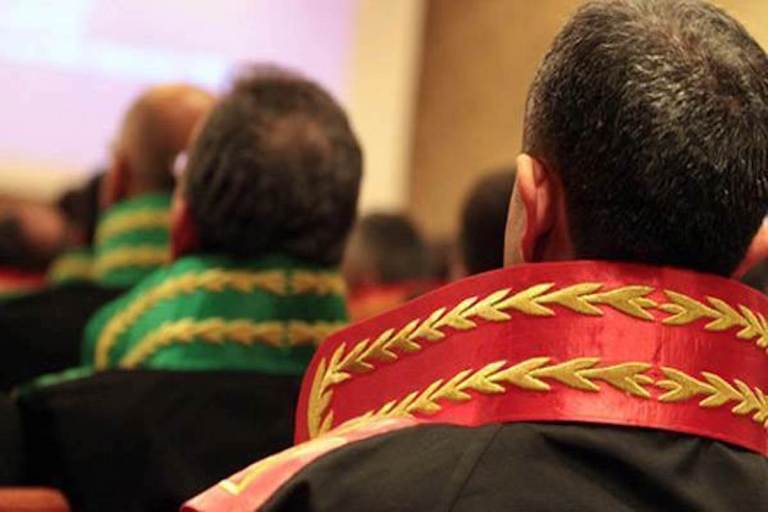
    Turkey’s Board of Judges and Prosecutors (HSK) has disbarred 10 prosecutors and three judges due to their alleged links to the Gülen movement, Turkish Minute reported, citing Turkey’s Official Gazette.

    “Now that they have been found to be linked to, or affiliated with, the FETÖ/PDY Armed Terrorist Organization, it has been unanimously decided that the persons in question are not fit to remain in the profession and therefore, should be disbarred under Article 26 of Law no. 7145 and Provisional Article 35(A) of Law-Decree no. 375,” the state-run Anadolu news agency quoted the HSK’s decision as saying.

    FETÖ is a derogatory term used by the Turkish government to refer to the Gülen movement.

    The Turkish government accuses the Gülen movement of masterminding a failed coup on July 15, 2016 and labels it a “terrorist organization,” although the movement strongly denies involvement in the coup attempt or any terrorist activity.

    More than 4,500 judges and prosecutors have been disbarred since the failed coup on the grounds of ties to the Gülen movement.

    Since the coup attempt, followers of the Gülen movement have been subjected to a massive crackdown, with the Turkish government and pro-government media outlets demonizing its members.

    Following the coup attempt the Turkish government also removed more than 130,000 civil servants from their jobs due to alleged Gülen links.

    According to a statement from Turkish Interior Minister Süleyman Soylu in February 2021, a total of 622,646 people have been the subject of investigation and 301,932 have been detained, while 96,000 others have been jailed due to alleged links to the Gülen movement since the failed coup. The minister said there are currently 25,467 people in Turkey’s prisons who were jailed on alleged links to the movement.

    In addition to the thousands who were jailed, scores of other Gülen movement followers had to flee Turkey to avoid the government crackdown.

    The HSK, Turkey’s top judicial administrative body, was set up to ensure an independent judiciary, but over time it has become a political instrument for putting the judiciary under government control.

    The Stockholm Center for Freedom’s comprehensive report about the HSK, “Turkey’s Judicial Council: Guarantor or Annihilator of Judicial Independence,” can be reached here. SCF

  • Documents show Turkish diplomats spied on Erdoğan critics in the United Kingdom: report

    The Turkish Embassy in London spied on Turkish citizens in the UK and forwarded the illegal profiling list to Ankara, which led to the launch of groundless judicial procedures against them, Nordic Monitor reported, citing official documents.

    According to a December 11, 2018 decision by prosecutor Birol Tufan, the Ankara Chief Public Prosecutor’s Office launched a separate investigation (file no.2018/27284 ) into 70 Turkish nationals who were listed by Turkish diplomats in London without any concrete evidence of wrongdoing. They were charged with “membership in a terrorist group” by Tufan.

    Nordic Monitor previously reported that even death from COVID-19 does not prevent Turkish nationals from being profiled by Turkish diplomats in London, with a deceased Turkish national and his family members listed in parallel with an ongoing witch-hunt in Turkey. According to a Turkish Foreign Ministry document obtained by Nordic Monitor, a Turkish national informed Turkey’s consulate general in London about the death from COVID-19 of his father, a prominent businessman believed to be affiliated with the Gülen movement, and submitted a medical certificate to Vice Consul Hakan Etkin. However, Etkin asked for not only the address and contact details of the deceased businessman’s son, who was applying for a death certificate, but also for information about the Turkish businessman’s spouse and daughter. The consulate general then dispatched a file including their address in the United Kingdom and contact details including phone numbers and email addresses to the foreign ministry in Ankara.

    Critics of the Erdoğan government abroad, especially members of the Gülen movement, have been facing surveillance, harassment, death threats and abduction since President Recep Tayyip Erdoğan decided to scapegoat the group for his own legal troubles. They have often been denied consular services such as power of attorney and birth registry, as well as having their passports revoked. Their assets in Turkey are seized and their family members at home risk criminal charges.

    Most recently educator Orhan İnandı, who was included in documents previously published by Nordic Monitor, was kidnapped in Kyrgyzstan on May 31 and illegally brought to Turkey by Turkish intelligence agency MIT. İnandı, who had lived in Kyrgyzstan for nearly 30 years, was arrested July 12 on charges of membership in a terrorist organization.

    Turkish embassies are also spying on citizens who have registered for consular services. In June Nordic Monitor published a Turkish foreign ministry communiqué, stamped secret, showing that the Turkish Embassy in Kosovo profiled 78 people who had listed their professions as teachers when they made applications with the consulate for various citizen services. Similar work has apparently been done in other Turkish diplomatic missions at the request of the Turkish National Police, which was politicized with a mass purge of some 30,000 officers from the police force.

    As previously disclosed by Nordic Monitor, the foreign ministry sent lists of profiled Turkish nationals in two CDs to the Ankara Chief Public Prosecutor’s Office, the national police and Turkey’s intelligence agency MIT on February 19, 2018 via an official document for further administrative or legal action, the punishment of their relatives back in Turkey and the seizure of their assets. Public prosecutor Adem Akıncı, who received the foreign ministry document on February 23, 2018, forwarded the classified CDs including information on 4,386 Erdoğan critics to the Organized Crimes Unit of the Ankara Police Department for further action. The police conveyed the results of its investigations to the public prosecutor.

    According to judicial documents released by the Ankara 4th High Criminal Court on January 16, 2019, the foreign ministry compiled a long list of foreign entities that were owned and/or operated by people who were seen as close to the movement.

    Moreover, Nordic Monitor revealed how MIT infiltrated refugee camps in Greece in order to spy on opponents who were forced to flee to Greece to escape an unprecedented crackdown in neighboring Turkey.

     Foreign Minister Mevlüt Çavuşoğlu confirmed systematic spying on Turkish government critics on foreign soil as by Turkish diplomatic missions in February, 2020. Çavuşoğlu said Turkish diplomats assigned to embassies and consulates have officially been instructed by the government to conduct such activities abroad. “If you look at the definition of a diplomat, it is clear. … Intelligence gathering is the duty of diplomats,” Çavuşoğlu told Turkish journalists on February 16, 2020 following the Munich Security Conference, adding, “Intelligence gathering and information collection are a fact.” SCF

  • Australia purchases 300,000 doses of ‘promising’ COVID-19 pill

    The Australian government has ordered 300,000 doses of a new antiviral pill that has shown signs of slashing COVID-19 deaths and hospitalisations by around 50 per cent.

    Molnupiravir, developed and produced by American Pharmaceutical giant Merck Sharp & Dohme, is currently in late-stage clinical trials.

    “Vaccines and new treatments like this will boost our National Plan to safely reopen Australia and keep Australia safely open,” Prime Minister Scott Morrison said.

    “While our vaccination rate continues to climb, we’ve been investing in and closely monitoring research into COVID-19 treatments and we are securing supply of promising treatments.”

    Molnupiravir has been developed as a first-line treatment for adult coronavirus patients with mild to moderate symptoms.

    The drug company earlier announced trial results showing the treatment reduced hospitalisations and deaths by around 50 per cent.

    Should it be approved by the TGA for use in Australia, its expected the drug will be made available from early 2022.

    Other COVID-19 treatments like Sotrovimab and Remdesivir are already being used by medical professionals to COVID-19 patients.

    A treatment of Molnupiravir consists of capsules taken twice a day for five days by adult patients.

    The drug does not require refrigeration, allowing it to be used by individuals or in high risk locations.

    “An oral pill is obviously a much easier means of helping people,” Mr Hunt told reporters on Monday.

    “These would be made available on the basis of need right across the country.”

    Meanwhile, Australia has received 15,000 additional doses of the antibody treatment sotrovimab, which is used to stop the virus replicating.

    The national stockpile of the drug, administered by intravenous infusion within five days of patients developing symptoms, is expected to exceed 30,000 doses this year.

    It has been shown to reduce hospitalisation or death in patients with mild or moderate infections and who are at high risk of severe illness.

    “It helps activate the body and its immune system to fight against COVID,” the health minister said.

    “In many cases, it will mean the difference between hospitalisation or no hospitalisation, ICU or no ICU, and in some cases it will prevent the loss of life.”

    While vaccines remain the first port of call for beating coronavirus, University of South Australia epidemiologist Adrian Esterman has emphasised the importance of finding new treatments.

    “There has been not much emphasis placed on research into treatment since the start of this pandemic,” he said.

    “Even with 100 per cent of the population fully vaccinated, there will still be virus circulating because none of the vaccines is 100 per cent effective against transmission.”

    At the same time, ensuring the world is vaccinated will drastically reduce the severity of the disease and the need for treatment.

    “It’s early days yet for the treatments and we’re still waiting for many of the trials to complete to see what other treatments are potentially helpful against coronavirus,” Professor Esterman said.

    “Over the next few years, we can see ongoing improvements in vaccine technology, in particular to handle these different variants, and this could be a constant battle between new variants of vaccines.” SBS