Author: Zaman Australia

  • Scott Morrison issues threat to premiers to open borders by Christmas

    Scott Morrison has lashed premiers for casting doubt over border reopenings, insisting Aussie families will be reunited at Christmas.

    Prime Minister Scott Morrison has thrown down the gauntlet to state premiers over ongoing border closures, insisting political leaders owe it to Australians to allow families to reunite at Christmas.

    Mr Morrison said he couldn’t see any reason why people should be kept apart by state borders after the 80 per cent national vaccination target was reached.

    “It’s important that we do move forward. We can’t stay in second gear. We’ve got to get to top gear in living with the virus … that’s where we need to be,” he told Weekend Sunrise on Sunday.

    “My message is to Australians that what I‘d like them to have for Christmas is their lives back.”

    Mr Morrison slammed Queensland premier Annastacia Palaszczuk and WA’s Mark McGowan for their unwillingness to commit to granting Australians that same wish.

    “There comes a time when you’ve got to honour the arrangement you’ve made with the Australian people, and that is when you get to 80 per cent vaccination, it’s very clear that you can start opening up,” the PM said.

    “I think that puts the big challenge on the premiers. I mean, they’ve had the power to do what they’ve been doing. They’re not new powers. They’ve always had them.

    “But, you know, there comes a time when you just got to move on and get on with it.”

    But the Queensland and WA premiers have held firm in their resistance of the national plan.

    Ms Palaszczuk has demanded more research into the effects of Covid-19 on children before she says her state will embrace the reopening targets agreed on at national cabinet.

    Mr McGowan has shown similar defiance, insisting WA is unlikely to reopen its borders until 2022.

    But Mr Morrison slapped down both premiers’ claims, insisting the entire country should reopen at the 80 per cent vaccination target, which is expected to be reached before the end of the year.

    “Once you get to 80 per cent of your population that’s vaccinated, it’s very clear. I can’t see any reason why Australians should be kept from each other,” he said.

    “(Reopening by Christmas) is within the gift of governments. And that’s a gift I’d like to see us give them.”

    The PM also made it clear that the country would not wait for vaccine-hesitant Aussies to make up their minds, insisting the national plan will go ahead as planned whether people decide to get their jab or not.

    “Once we get to 80 per cent – the fact is that everybody has had the chance to get vaccinated by that point,” he said.

    “If you’ve chosen not to get vaccinated, that’s your choice … but we must go into the next chapter.” News

  • Will Erdogan be tried at the Hague?

    Turkey Tribunal held in Geneva concluded on Friday, 24 September 2021. The Tribunal which consisted of panel of five judges, three of them former judges at the European Court of Human Rights, listened to the testimonies of academics, lawyers, judges, teachers, journalists who were victims of human rights abuses in Turkey. The judges also heard the testimonies of the rapporteurs like Johan Vande Lanotte, Luca Perilli, Philippe Leruth, Yves Haeck, Emre Turkut, Johan Heymans and Eric Sottas who reported a number of crimes against humanity committed by the Erdogan regime, focusing specifically on the period since the failed coup attempt on 15 July 2016.

    The Tribunal, although not a legally binding body, was organised to raise awareness in the international community and perhaps to take the matter to the Hague where the Erdogan regime can be tried for crimes against humanity. After listening to the testimonies of witnesses for four consecutive days, the judges delivered their verdict with a long statement confirming a series of human rights abuses which included abduction, torture, unlawful detention, prevention of basic rights such as legal representation, food, water, medicine, and sleep. The verdict also included that the current judicial system of Turkey was not independent and there was no freedom of media. The presiding judges were in the view that there is systematic torture, abduction, unlawful detention, and human rights abuses in Turkey, mostly against the members of the Gulen Movement and the Kurdish people.

    Some of the testimonies included stories of horrific tortures. Mustafa Özben, a lawyer and an academic testified that in May 2017, after dropping his little girl off to her school, he was abducted by four men who pushed him into a black van, possibly a transporter, then placed a bag over his head and drove to an unknown location in Ankara. He was detained for 92 days in a facility where he was subjected to systematic torture which included electroshock, continuous beating, threatened with a sex object. Özben explained that his abductors were either the antiterror unit (TEM) or the intelligence service (MIT) who forced him to sign some documents and accept that he belonged to a terrorist organisation.

    Another witness, Tülay Açıkkollu testified that her husband Gökhan Açıkkollu was taken from their home, severely beaten as he was place into to the police vehicle and denied legal representation. Gökhan Açıkkollu, a teacher at the time, died in custody when he was given access to essential medicines for his critical health condition.

    Mehmet Alp, a teacher in a government school was abducted by the MIT (intellegence service), threatened with a gun and forced to sign documents incriminating him of encouraging his students to join the PKK (a terrorist organisation). When he refused to sign, his house was raided and his wife was also arrested while his one year-old son was left unattended in the house.

    Erhan Doğan, another teacher, was arrested by TEM (antiterror unit) nine days after the fail coup and systematically tortured. He testified that he was hanged on what he describes as Palestine Hanger (Strappado) for 2 hours. Doğan almost burst into tears when he explained that he saw three women taken into the next room to be torured. They were screaming and begging their captors not to rape them, he said. He continued by stating that he thought of committing suicide when they threatened him with his wife, claiming that they would bring his wife and do the same thing to her in front of their children.

    During the tribunal there were other testimonies by judges, lawyers, human rights activists and a Kurdish politician who testified about the atrocities committed on Kurdish citizens in Cizre.

    The Tribunal however, mainly focused on the postcoup purge which saw the investigation of 600,000 people and arrests of more than 100,000 people who had no connection to the coup. Over four thousand judges and prosecutors were expelled straight after the failed coup attempt and 2,286 were arrested. Süleyman Bozoğlu, who served as a judge for fifteen years, was arrested six days after the coup. During the Turkey Tribunal, he testified that the list of thousands of judges who would be expelled or arrested was in the hands of the authorities a day before coup attempt.

    Eren Keskin, a layer and human rights activist, also testified to women being sexually abused or raped during custody and explained that she was also given a prison term for being a member of a terrorist organisation. She added that she had appealed the verdict and was waiting for the higher court’s decision.

    Unfortunately, the stories of many other victims of torture, abduction, and unlawful detention, could not be heard during the four-day tribunal.Historical evidence indicates that the human rights record of Turkey has never been perfect. There were periods in which significant improvement was achieved and other times, like to 1980 military coup when crimes against humanity had intensified. During the early days of Erdoğan administration which endeavoured to establish social justice, improve democracy, and make the necessary adjustments to join the EU, Turkey showed signs of significant improvement in its justice system, democracy, economy, education, and other areas. Unfortunately, following the 17/25 December 2013 corruption investigation which produced evidence that suggested the involvement of AKP Ministers, Erdoğan’s son Bilal and other senior government officials, everything took a drastic turn where the laws of the Constitutional Court of Turkey were violated by the AKP government. Members of the police force and the prosecutors who initiated the investigation were expelled and later arrested. Pro-government prosecutors and judges were assigned to the case and the investigated was gradually abandoned and all suspects were released.

    Erdoğan was quick to announce that the investigation was an attempt to overthrow his government and blamed the Gülen movement arguing that the allegations were fabricated, and the audio recordings of bribery and corruption were fake. He then commenced a campaign targeting the members of the Gülen movement. The campaign continued through the mainstream media, largely controlled by the government until the July 15 failed coup

    when situations worsened, and the members of the Gulen Movement were systematically dehumanised via the media. Erdoğan pointed to the Gülen movement on the night of the coup, quickly blaming them for the attempt when no one had any idea of who was behind the coup. He dubbed the coup attempt as “a gift from God” as it gave him the opportunity to commence a major purge of people whose names were already listed long before July 15.

    A state of emergency was announced and a power to pass legislations that allowed the government to commit crimes against humanity were given to Erdoğan. New laws (KHK) also alllowed the persecution of more than 600,000 people. Over 100,000 were arrested and 41.326 were sent to prisons. Arrests, detentions, abductions, tortures and unlawful imprisonments contiue today.

    The judges of the Turkey Tribunal confirmed that crimes against humanity have been committed by the Erdoğan regime and continues to do so today. Experts in Turkish politics also assert that human rights violations have never been committed this openly before. In the past, officials would try their best to conceal crimes against humanity such as abduction, torture, and unlawful detention, but today they are advertising it with an objective to put fear into people. Almost, anyone who opposes the Erdoğan regime is accused of terrorism, and this gives the officials to do as they wish with them.

    As mentioned above, human rights violations against minorities such as the Kurds, Alawies, Armenians, Greeks, faith groups, socialists and nationalists have been committed in various periods of Turkish history but never to the extent they were done so openly by the Erdoğan regime.

    The Turkey Tribunal was a significant step towards taking further legal action. Perhaps the next step is an application to the Hague, where Erdoğan can be tried for crimes against humanity.

  • Purge-victim military cadets demand justice in Toronto for jailed friends

    A group of protestors gathered at Toronto’s famed Nathan Phillips Square on Friday to demand the release of hundreds of military cadets, who were imprisoned by the Turkish government following a coup attempt in July 2016.

    The protestors consisted of several military cadets who managed flee Turkey in order to avoid persecution at the hands of the government following the failed attempt.

    A total of 259 military cadets were detained on coup charges on July 16, 2016 and were jailed pending trial four days later. On January 19, 2018, a total of 37 of them were given life sentences on charges of attempting to overturn the constitutional order and attempting to overthrow the Turkish government and parliament by use of force as well as membership in a terrorist organization. On May 18, 2018, 62 others were sentenced to life in prison over similar charges.

    On May 25, 2018, 116 cadets and on July 17, 2018, 44 more cadets were imprisoned for life on charges of attempting to destroy the constitutional order due to their alleged role in a coup attempt.

    The cadets say they had no information about a coup attempt unfolding and were acting on orders from their superiors, who told them there was a terrorist attack.

    The military coup attempt killed 251 people and wounded more than a thousand others. Immediately after the abortive putsch, the Justice and Development Party (AKP) government along with President Recep Tayyip Erdoğan pinned the blame on the Gülen group. The group denies any involvement in the attempt. by TurkeyPurge

  • Turkey orders detention of 100 people over alleged Gülen links in a week

    Turkey orders detention of 100 people over alleged Gülen links in a week

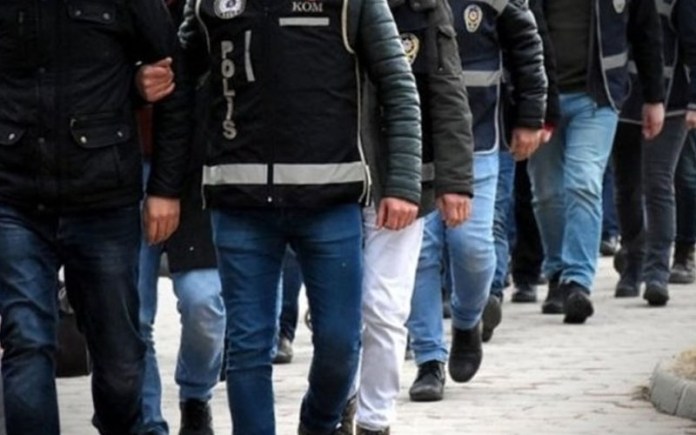
    Turkish authorities have over the past week ordered the detention of 100 people including employees of a private security company and active duty, retired and dismissed military officers as well as civilians due to alleged links to the Gülen movement.

    According to the state-run Anadolu news agency the Ankara Chief Public Prosecutor’s Office on Friday issued detention warrants for 51 civilians and active duty, retired and former military officers over alleged Gülen links.

    The Anadolu Chief Public Prosecutor’s Office in İstanbul on Tuesday ordered the detention of 16 employees and executives of the Hisar security company. According to the office, the security company was established by former executives of Kaynak Holding, which was seized by the Turkish government in November 2015 due to its links to the Gülen movement.

    Turkish President Recep Tayyip Erdoğan has been targeting followers of the Gülen movement, inspired by Turkish Muslim cleric Fethullah Gülen, since the corruption investigations of December 17-25, 2013, which implicated then-Prime Minister Erdoğan, his family members, and his inner circle.

    Dismissing the investigations as a Gülenist coup and conspiracy against his government, Erdoğan designated the movement as a terrorist organization and began to target its members. He intensified the crackdown on the movement following an abortive putsch on July 15, 2016 that he accused Gülen of masterminding. Gülen and the movement strongly deny involvement in the coup attempt or any terrorist activity.

    As part of the İstanbul-based operation, detention warrants were issued on Monday for 29 former and active duty officers as well as four civilians. Twenty-five of them have been detained in raids across eight provinces.

    The suspects are accused of receiving messages via payphone — a method that Turkish prosecutors believe is a secret means of communication among Gülen movement members.

    The so-called “payphone investigations” are based on call records. The prosecutors assume that a member of the Gülen movement used the same payphone to call all his contacts consecutively. Based on that assumption, when an alleged member of the movement is found in call records, it is assumed that other numbers called right before or after that call also belong to people with Gülen links. Receiving calls from a payphone periodically is also considered a red flag.

    Turkish Interior Minister Süleyman Soylu said on February 20, that a total of 622,646 people have been the subject of investigation and 301,932 have been detained, while 96,000 others have been jailed due to alleged links to the Gülen movement since the failed coup. The minister said there are currently 25,467 people in Turkey’s prisons who were jailed on alleged links to the movement.

    The government also removed more than 130,000 civil servants from their jobs on alleged Gülen links following the coup attempt.

    In addition to the thousands who were jailed, scores of other Gülen movement followers had to flee Turkey to avoid the government crackdown. SCF

  • The merino sheep Luna, now lives at Tasmania’s Brightside Animal Sanctuary after her ordeal

    When Luna the sheep was found on a rural property in Tasmania’s south-east, her fleece was so overgrown she was blinded by wool and couldn’t move.

    The new property owner, who had recently bought the land near Richmond, came across the distressing sight on Monday.

    The man used his tractor to move Luna into his ute, then drove her the three-hour return trip south to Brightside Animal Sanctuary at Cygnet.

    “She’d been wandering in the bush, blind and pretty hungry with this hugely heavy weight on her little frail body and she just collapsed, ” sanctuary founder Emma Haswell said.

    “It was like she’d given up hope. She had no energy and no will to live left.”

    Luna gets her first haircut

    The shearer who clipped Luna believed the ewe had never been shorn before.

    “As soon as that wool came off it was amazing, within 20 minutes Luna was walking in a straight line,” Ms Haswell said.

    “She’s bright and hanging out now with the bottle-fed lambs.”

    Luna is still acclimatising to being shorn, and on extra chilly days wears two jumpers, including a polar fleece designed for greyhounds who also live at the animal sanctuary.

    Ms Haswell said she had been overwhelmed by the compassion shown by the farmer who had asked for updates on Luna and was now following her progress on Facebook.

    “It’s the most amazing thing, to have someone care that much about a sheep, and what’s even more amazing is the incredible following Luna now has on Facebook, so many people have become lovers of Luna,” Ms Haswell said.

    “Years ago when you put up a post about sheep no-one cared, but that has changed and farmed animals aren’t just thought of as food anymore.

    “She’s this little angel of a sheep. She’s got this dainty merino face and these great big eyes.”

    Luna just one of a flock that’s missing

    Ms Haswell said another six stray sheep were believed to be on the property where Luna was found, and she believed the previous owner would try to retrieve them.

    “Otherwise, we will go up there on horses and ride the property and get them. We will find them,” Ms Haswell said.

    RSPCA Tasmania chief executive officer Jan Davis said cases where sheep went “rogue” weren’t very common.

    “If they are in hill country they disappear and aren’t readily spottable,” said Ms Davis.

    “It was lucky someone found her [Luna] because once sheep are down, they don’t generally get up again.”

    “And to be out in the weather, a wet fleece of that weight would kill a sheep.” ABC

  • Turkish court sentences former rector, vice rector to prison over Gülen links

    A  Turkish court on Thursday handed down prison sentences to a former university rector and a former vice rector on charges of membership in a terrorist organization due to their alleged links to the faith-based Gülen movement, Turkish Minute reported.

    Former rector of the Diyarbakır-based Dicle University, Prof. Dr. Ayşegül Jale Saraç, and former vice rector Prof. Dr. Aytekin Sır were sentenced to six years, three months in prison each by the Diyarbakır 4th High Criminal Court for their alleged links to the Gülen movement.

    Former vice rectors Prof. Dr. Sabri Eyigün and Prof. Dr. Aslan Bilici, who attended the hearing via IT Voice and Image System (SEGBİS), were acquitted of the same charges.

    In her defense Saraç argued that there was no concrete evidence against her proving her membership in a terrorist organization.

    “Those who testified against me are the people who ran against me in the rectorship election or who supported my rivals. Therefore, they may have testified due to a grudge against me,” she said.

    The court, however, did not take her defense into consideration in its ruling.

    Turkish President Recep Tayyip Erdoğan has been targeting followers of the Gülen movement, a faith-based group inspired by Turkish cleric Fethullah Gülen, since the corruption investigations of December 17-25, 2013, which implicated then-Prime Minister Erdoğan, his family members and his inner circle.

    Dismissing the investigations as a Gülenist coup and conspiracy against his government, Erdoğan designated the movement as a terrorist organization and began to target its members. He locked up thousands including many prosecutors, judges and police officers involved in the investigation as well as journalists who reported on them.

    Erdoğan intensified the crackdown on the movement following a coup attempt in July 2016 that he accused Gülen of masterminding. Gülen and the movement strongly deny involvement in the abortive putsch or any terrorist activity.

  • German police detain suspected hitman with list of Gülen followers: Der Spiegel

    German police on Sept. 17 raided a hotel in Düsseldorf and detained a 40-year-old Turkish man with a gas pistol and a large amount of ammunition in addition to a list of followers of the Gülen movement, the Der Spiegel news website reported on Friday.

    German law enforcement searched the niu Tab Hotel in Oberbilk for hours. The surrounding streets were cordoned off, and 550 guests had to vacate the hotel due to the operation.

    The list of names of Gülen movement followers seized also included additional information on each person. The people on the list were possibly warned last weekend by the German police, according to Der Spiegel.

    The Turkish government accuses the Gülen movement of masterminding a failed coup attempt on July 15, 2016 and labels it a “terrorist organization,” although the movement strongly denies involvement in the coup attempt or any terrorist activity.

    The investigators are now looking into the question of whether this was a target list for planned attacks or for spying operations. Investigators are also concerned about the ammunition because it couldn’t be used in the weapon found on the suspect.

    The investigators hope to learn more from chat messages that were seized from the suspect. In addition, a financial investigation will also be launched.

    The Düsseldorf public prosecutor announced on Thursday that his office was now investigating the man on suspicion of criminal activity and violating the weapons law.

    In July a pro-government social media account named “Jitemkurt” published a list of Turkish journalists living in Europe and North America whom they plan to assassinate.

    The account published the names of 21 journalists resident in various countries and threatened to kill them. The name of the social media account refers to a group linked to the notorious gendarmerie intelligence unit JITEM.

    Later, another hit list emerged that included the names of 55 critics of the Turkish government who live in exile. Politicians and artists are included on the new list in addition to journalists.

    Turkish President Recep Tayyip Erdoğan has been targeting followers of the Gülen movement, a faith-based group inspired by Turkish cleric Fethullah Gülen, since the corruption investigations of December 17-25, 2013, which implicated then-Prime Minister Erdoğan, his family members and his inner circle.

    Dismissing the investigations as a Gülenist coup and conspiracy against his government, Erdoğan designated the movement as a terrorist organization and began to target its members. He locked up thousands including many prosecutors, judges and police officers involved in the investigation as well as journalists who reported on them.

    Erdoğan intensified the crackdown on the movement following a coup attempt in 2016.

    In order to avoid the government-led crackdown, thousands of Gülen followers have fled Turkey and taken refuge in European countries and others.

    For years, Turkey has repeatedly urged the German authorities to take action against Gülen supporters who sought asylum in the country.

  • Acts of torture, enforced disappearances in Turkey could amount to crimes against humanity, tribunal judges say

    The judges of the Turkey Tribunal, a civil society-led, symbolic international tribunal, on Friday announced their verdict on recent human rights violations in Turkey, saying that the torture and abductions perpetrated by Turkish state officials since July 2016 could amount to crimes against humanity in an application lodged with an appropriate international body, Turkish Minute reported.

    The tribunal, set up under the initiative of Belgian-based law firm Van Steenbrugge Advocaten (VSA), met in Geneva between Sept. 21 and 25.

    Presiding judge Françoise Barones Tulkens stated that the opinion was not legally binding but may serve as a source, with moral authority, for raising awareness.

    Tulkens said the tribunal received credible accounts of torture, adding that the abduction cases before the judges amounted to enforced disappearances.

    With regard to press freedom, Tulkens said the tribunal noted the plight of imprisoned journalists and recurring physical and mental violence inflicted on members of the press. The tribunal concluded that Turkey’s conduct does not meet its obligations under international law to ensure the public’s access to justice.

    Noting that the impunity of perpetrators of rights violations is a practice entrenched in the criminal justice system, the tribunal underlined that the victims of rights violations are left traumatized by the lack of access to justice.

    The tribunal’s panel of judges included notable figures such as Prof. Em. Dr. Françoise Barones Tulkens, former vice chairperson of the European Court of Human Rights (ECtHR); Justice Dr. Johann van der Westhuizen, a former judge of the Constitutional Court of South Africa; and Prof. Em. Dr. Giorgio Malinverni and Prof. Dr. Ledi Bianku, who served as ECtHR judges.

    The panel of judges heard the testimony of witnesses who have been victims of human rights violations.

    During the tribunal’s sessions this week, judges heard Mehmet Alp, a teacher who was repeatedly abducted and tortured by Turkish security forces; Erhan Doğan, another teacher who was tortured in police custody; Mustafa Özben, abducted by Turkish intelligence; Eren Keskin, a human rights activist who was arrested and imprisoned over her advocacy; and Mesut Kaçmaz, who was abducted by Turkish intelligence.

    The judges also heard Tülay Açıkkollu, the widow of Gökhan Açıkkollu, a 42-year-old history teacher who died after 13 days of torture and abuse in police custody in 2016; Ercan Kurkut, the brother of Kemal Kurkut, a 23-year-old Kurdish student who was killed by Turkish police officers in 2017; and Sezin Uçar, the lawyer for Gökhan Güneş, who was abducted by people identifying themselves as police officers in January of this year.

    Journalists living in exile Cevheri Güven and Meltem Oktay, outspoken fashion designer Barbaros Şansal, Kurdish politician Faysal Sarıyıldız, former prosecutor Hasan Dursun and former judge Süleyman Bozoğlu were also among the witnesses.

    Several prominent human rights experts and organizations provided the Turkey Tribunal with reports. The group comprises Eric Sottas (Switzerland), former secretary-general of the World Organization against Torture (in cooperation with Prof. Dr. Johan Vande Lanotte); Yves Haeck (Belgium), professor at the University of Ghent and Emre Turkut (Turkey); the Lawyers Collective (Turkey); the Ankara Bar Association (Turkey) and Johan Heymans, a human rights lawyer; and Philippe Leruth (Belgium), former president of the International Federation of Journalists.

    Among the observers of the tribunal were Marie Arena, a Belgian politician and the chairwoman of the European Parliament Subcommittee on Human Rights; Kathleen Van Brempt, another Belgian politician and a Member of the European Parliament (MEP); and Filipe Marques, president of European Judges for Democracy and Freedoms (MEDEL).

    The Turkish government did not use the opportunity provided to answer for itself.

    Speaking to Bünyamin Tekin of Turkish Minute, Johan Vande Lanotte, a professor of law at the University of Ghent who coordinated the initiative, said the inefficacy of the conventional methods of assessing rights violations in Turkey led them to come up with the idea of establishing a tribunal.

    Lanotte said decisions of the UN bodies, the institutions of the European Union and the rulings of the European Court of Human Rights did not result in positive change with regard to the conduct of Turkish authorities.

    “We have looked into the people’s tribunals that took place in the past,” Lanotte said. “Usually, judges in those tribunals were activists who were already invested in the matter they were to decide on. We wanted to establish a tribunal that had judges who had no relation to the subject matter so their decision would not be affected by their interests.”

    Lanotte, who himself presented a report before the judges, said the critical stance of the judges helped the initiative better understand the weaknesses of the rapporteurs’ work.

    “We will work harder to refine our work,” Lanotte said, adding that the tribunal was an important test for the VSA, which will strive to hold to account the perpetrators of crimes against humanity working for the Turkish state, using various means.

    “When it comes to crimes against humanity, national courts, the International Criminal Court and the various versions of the Magnitsky Act are the options,” Lanotte said.

    Turkey has been experiencing a deepening human rights crisis in recent years, and President Recep Tayyip Erdoğan, with the aim of consolidating his one-man rule, has been systematically undermining the fundamental pillars of Turkey’s already imperfect democracy.

    Ankara’s post-coup crackdown

    Some pundits view Turkey’s treatment of a faith-based group as a genocide in the making.

    The Gülen movement is accused by the Turkish government and President Erdoğan of masterminding a coup attempt on July 15, 2016 and is labeled a “terrorist organization,” although the movement denies involvement in the coup attempt or any terrorist activity.

    “The increasingly widespread witch-hunt, systematic and widespread hate speech, ongoing persecution and massacre of Gülen movement members have made conditions in Turkey ripe for a deliberate, planned and systematic genocide,” Bülent Keneş, a veteran Turkish journalist in exile, wrote in his 2020 book, which he says attempts to sound the alarm to the international community about developments in Turkey that are inching closer to a full-fledged genocide against the Gülen movement, a faith-based group targeted by the Turkish government.

    “More than 130,000 people have been dismissed from their civil service jobs and deprived of their and their families’ subsistence. More than 282,000 people of all ages, because of their daily activities, which are non-criminal acts according to law and part of their normal routine, have been taken into custody, and in excess of 600,000 have been the subject of investigations. At least 77,000 people have been incarcerated,” Keneş said in a December interview with Turkish Minute.

    Scores of Gülen movement followers were forced to flee Turkey to avoid a government crackdown following the coup attempt. Some of these people had to take illegal and risky journeys on dinghies to Greece because their passports had been revoked by the government.

    According to a statement from Interior Minister Süleyman Soylu on February 20, a total of 622,646 people have been the subject of investigation and 301,932 have been detained, while 96,000 others have been jailed due to alleged links to the Gülen movement since the failed coup. The minister said there are currently 25,467 people in Turkey’s prisons who were jailed on alleged links to the movement.

    Widespread or systematic imprisonment of individuals with alleged links to the Gülen movement may constitute crimes against humanity, the UN Human Rights Council’s Working Group on Arbitrary Detention said in an earlier opinion on the extradition of Arif Komiş, 44, Ülkü Komiş, 38, and their four children from Malaysia to Turkey in August 2019. SCF
  • Three members of Tamil family from Biloela granted 12-month bridging visas

    Three members of the asylum-seeking Tamil family from the Queensland town of Biloela have been granted 12-month bridging visas, allowing them to remain in the country.

  • Victorians bracing for more aftershocks in the coming ‘days’ after ‘rare’ earthquake

    Victorians bracing for more aftershocks in the coming ‘days’ after ‘rare’ earthquake

    Victorians are being warned to prepare for more aftershocks in the coming “days, if not weeks” after a 5.9 magnitude earthquake struck.

    The force of the event was felt across the state and into South Australia and New South Wales.

    It is the largest recorded earthquake in Victoria since such events were measured.

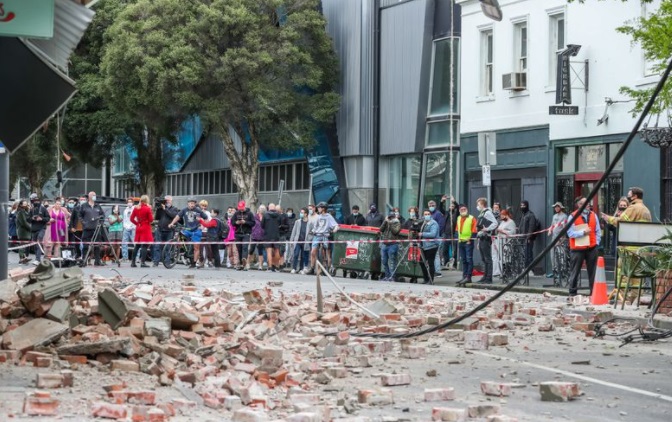
    Few injuries were reported but at least one man, in his 70s, was hospitalised after suffering upper-body injuries when the parts of a weather shield fell down and hit him. The Mount Eliza man was taken to Frankston Hospital in a stable condition, but experts say it could have been much worse.

    Speaking from Washington DC this morning Prime Minister Scott Morrison thanked those involved in the emergency response.

    “Obviously, we need to remain cautious because of the threat of aftershocks and wish those well who are going through inspecting and shoring up those properties that are affected and any damage that was there,” Mr Morrison said.

    “I’m pleased that … those events have ended up being less serious than first thought and we welcome that. But of course, it was an earthquake and that’s a serious thing.”

    While the worst is expected to be over, Seismologist Tanja Pejic from Geoscience Australia said more aftershocks were extremely likely.

    “Unfortunately, there will be aftershocks,” Dr Pejic told Today.
    “We have already recorded about seven of them. They were all smaller than the main shock. The largest aftershock we recorded was a magnitude of 4.1. I would expect that people in Victoria, closer to that epicentre, would have felt it.

    “And there will certainly be more aftershocks to come for days, if not weeks. They will generally decrease in size and frequency as the time progresses.”
    The earthquake was recorded at around 9.15am at Licola North, near Woods Point, yesterday, 180km north-east of Melbourne.

    It was followed by several aftershocks – the first a magnitude 5.5 tremor at 9.40am, followed by a 4.0 tremor at 9.55am and a 3.1 tremor at 10.15am.

    While experts know aftershocks are a given, they can’t predict when an initial earthquake will hit.

    “There is no technology in this world that can tell when, where and with what magnitude an earthquake will strike,” Dr Pejic said.

    “We can’t predict them. We can forecast from here on and say, yes, there will be aftershocks, this is normal, this is expected after an earthquake of this size, but we can’t predict how large they will be or when they will happen.”

    While large earthquakes are uncommon in Australia, because the continent lies centrally on a tectonic plate, yesterday’s event took place in an area of “heightened” risk after being identified via a 2018 “national hazard assessment map”.
    “This map shows that the south-eastern highlands is an area of heightened seismic risk.
    “For seismologists, it wasn’t unexpected but it was rare for Australia.”
    The quake struck at a shallow depth of 10km and while it was large, it didn’t cause major widespread damage.

    But one of the worst affected areas was Chapel Street in Windsor, including Betty’s Burgers which suffered significant structural damage.

    Managing director Troy McDonagh said it could be “a number of months” before his business is back up and running.

    “It was not the ideal scenario yesterday morning but we’ve got an amazing business and, as you well know, mate, hospitality, we’re a resilient bunch,” Mr McDonagh told Today.

    “We regrouped yesterday and obviously once we know what’s happening here and know the timeframes we’ll start the rebuild process.”

    Stay-at-home orders due to the coronavirus pandemic are believed to have prevented any serious injuries due to the small number of people out and about. 9news