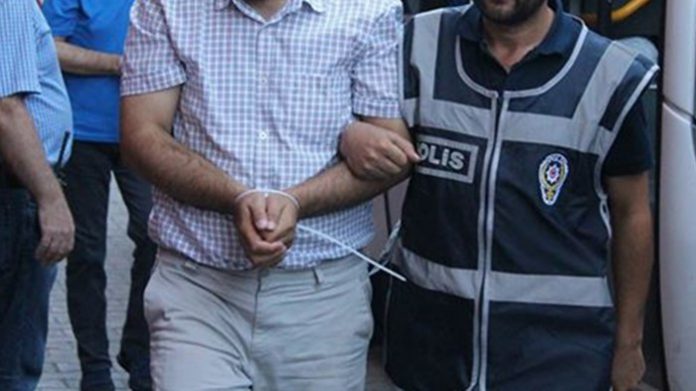
Author: Zaman Australia

  • Turkey’s Council of Forensic Medicine says in controversial report ailing Kurdish politician fit to remain in prison

    Turkey’s Council of Forensic Medicine (ATK) on Tuesday presented to court its report on ailing Kurdish politician Aysel Tuğluk, saying she displayed symptoms of mild cognitive impairment and was fit to remain in prison, the Stockholm Center for Freedom reported, citing Turkish media.

    According to the report, which was sent to the Ankara 22nd Criminal Court, Tuğluk is in full command of her mental faculties. It added that Tuğluk could take care of herself and should continue treatment under a doctor’s supervision in prison.

    Tuğluk suffers from dementia and is currently kept in a maximum security prison in Kocaeli province. Earlier this year the court ordered that she be observed by the ATK for a maximum three-week period. However, the ATK sent her back to prison after three days.

    As the number of sick prisoners dying in prison has increased, doubts about the credibility and independence of the council have grown, as the institution is affiliated with the Ministry of Justice.

    Tuğluk was arrested on December 29, 2016, when she was deputy co-chair of the pro-Kurdish Peoples’ Democratic Party (HDP), along with seven other Kurdish opposition politicians. She was sentenced to 10 years in prison on charges of serving as an executive of a terrorist organization and taking orders from Abdullah Öcalan, the jailed leader of the outlawed Kurdistan Workers’ Party (PKK), an armed group listed as a terrorist organization by Turkey, the European Union and the US.

    Tuğluk has denied the accusations, saying she never called for violence and always sought democratic solutions to problems the Kurds faced.

    On September 5, 2021, her lawyers issued a written statement saying Tuğluk was sick and was denied access to proper healthcare in prison, without disclosing her illness. It was later revealed she was showing symptoms of dementia.

    Several human rights organizations have objected to the ATK report, saying she was sent back to prison to die. Exiled journalist Can Dündar said on social media the decision only aimed to inflict further suffering.

    Barış Yarkadaş, a former lawmaker from the Republican People’s Party, said he could not believe the ATK could make such a heartless decision.

    Social media group 1000 Women for Aysel Tuğluk said they would organize a demonstration against Tuğluk’s continued incarceration.

    “The ATK’s job is to make fair and ethically appropriate decisions. What they have done today is political and violates human rights. Therefore, we demand the immediate release of Aysel Tuğluk,” they said.

    In January several nongovernmental organizations in a letter urged the United Nations to take “urgent” action for the release of Tuğluk, saying her health had deteriorated considerably.

    The letter urged UN rapporteurs and the Working Group on Arbitrary Detention for urgent action to intervene against ongoing rights violations targeting Tuğluk, specifically asking them “to urge the Turkish Government to immediately release Aysel Tuğluk and other severely ill prisoners who are not fit to remain in prison in compliance with Turkey’s domestic and international law obligations” and “to communicate the concerns in relation to violation of prisoners’ rights to medical services and to investigate the circumstances behind the refusal to release severely ill prisoners.”

    The letter also urged UN rapporteurs and the working group “to invite the Turkish Government to ensure that all prisons in Turkey have an adequate number of medical staff, including doctors and that they work freely without any undue interference with their work” and “to ensure the Turkish Government allows greater accountability and transparency of prison living conditions by enabling visits and inspections from human rights groups and nongovernmental entities.”

    According to her lawyer, Tuğluk was issued a report by a medical board comprising nine physicians at Kocaeli University Hospital stating that she couldn’t survive on her own. Tuğluk was denied release after a brief examination, despite the medical board report.

    Human rights activists and opposition politicians have frequently criticized authorities for not releasing critically ill prisoners so they can seek proper treatment. Human rights defender and HDP deputy Ömer Faruk Gergerlioğlu said ill prisoners were not released until they were at the point of no return.

    HDP deputy Züleyha Gülüm said political prisoners were the most disadvantaged and were often the least likely to be released in the event of a serious health problem.
  • [OPINION] Not the top court but Erdoğan will seal the fate of the pro-Kurdish HDP

    [OPINION] Not the top court but Erdoğan will seal the fate of the pro-Kurdish HDP


    Ali Yıldız*-turkishminute.

    The Turkish Supreme Court of Appeals’ Chief Public Prosecutor Bekir Şahin on March 17, 2021 lodged a case for the closure of the pro-Kurdish Peoples’ Democratic Party (HDP) with the Turkish Constitutional Court. Şahin also asked the court to ban more than 450 Kurdish politicians from politics for five years. The indictment charges the pro-Kurdish party and its members with “aiming to disrupt and destroy the … unity of the state with their statements and actions.” The prosecutor claims “[The HDP] has never sided with Turkey in any national issue, and to the contrary has chosen to side with those against Turkey.”

    Şahin was appointed as the Supreme Court of Appeals’ chief public prosecutor by President Recep Tayyip Erdoğan. It would not be unfair to call him hand-picked because Erdoğan appointed him despite his finishing fourth in the election for the post, ignoring the democratic choice of electors who were his fellow judges and prosecutors.

    After the HDP presented its preliminary defense to the court, the prosecutor’s office submitted its opinion, urging that the objections and arguments raised by the HDP be dismissed and the HDP be permanently closed. The prosecution argued that the HDP “has become a focal point of acts against the indivisible integrity of the state.” The request for a political ban was also reiterated.

    Why has the HDP been targeted?

    The Constitutional Court has shut down pro-Kurdish parties several times in the past. A total of seven Kurdish parties have been either closed by the court or dissolved themselves to avoid closure. Similarly, two Islamist parties that are regarded as the predecessors of the ruling Justice and Development Party (AKP) were also closed by the Constitutional Court. And Erdoğan’s AKP itself avoided closure in 2008, prompting Erdoğan to take the Constitutional Court under his control.

    Erdoğan constantly said in the past that he was against the closure of political parties. “Individuals, not an entire party, should be punished for their mistakes. … It is unjust to penalize an entire party because of its leader or one member,” said Erdoğan. Yet he has refrained from expressing his opinion on the closure case against the HDP.

    Erdoğan’s grudge against the HDP and its former co-chair Selahattin Demirtaş culminated in 2015 when Demirtaş launched a political campaign prior to the June elections, telling Erdoğan, “We won’t let you become president.” The campaign was a success as the AKP lost its majority in parliament for the first time since it came to power in 2002, triggering a new election. After this political campaign, the HDP and its members became the target of the AKP, leading to the imprisonment of Demirtaş and scores of deputies and mayors from the Kurdish party, and eventually to the closure case.

    With the HDP closure case underway, the AKP strengthened its influence at Turkey’s top court, which has exclusive jurisdiction over cases for closure/dissolution of political parties. On Jan. 20, 2022 the AKP-controlled parliament elected lawyer Kenan Yaşar to the Constitutional Court for a 12-year term. Yaşar, who was chair of the Çorum Bar Association, was also an executive at the AKP provincial branch in the same city and a former candidate for parliament from the AKP.

    AKP’s longstanding court packing strategy

    The AKP and its chairperson President Erdoğan have never ignored the importance of controlling the judiciary to remain in power. To this end, they carried out so-called constitutional reforms in 2010 and 2017 to change the structure and judges of the Constitutional Court. The court currently consists of 15 judges, 12 of whom are either selected or appointed by the president, while three are elected by parliament. As Erdoğan’s AKP has been controlling the parliament since 2002 and holding the presidency of the republic since 2007, 12 of the incumbent judges were appointed either by former president Abdullah Gül (5/15) or by the incumbent president, Erdoğan (7/15) — both founders of the AKP — while the remaining three were elected by a parliament controlled by the AKP.

    Without doubt, the political affiliation and personal loyalty of the candidates have been the main factors in these appointments and elections. As the AKP no longer hides its desire to gain absolute control over the judiciary, the partisanship of the recently appointed judges is more significant. For instance Yıldız Seferinoğlu, who was appointed to the court in 2019, had been a member of parliament from the AKP between 2015 and 2018. Selahaddin Menteş and Basri Bağcı were deputy ministers of justice in the AKP government before their appointment to the Constitutional Court.Former İstanbul chief public prosecutor İrfan Fidan, who was appointed to the top court by Erdoğan last year, was responsible for several politically motivated prosecutions and sham trials to suppress critics of the government. One of those cases was that of businessman and philanthropist Osman Kavala, which triggered an infringement procedure against Turkey at the Council of Europe as Turkey did not comply with a ruling from the European Court of Human Rights (ECtHR) for his release. The infringement procedure bears the risk of Turkey’s expulsion from Europe’s most important human rights body.

    As a result of these political appointments, the Constitutional Court has been packed with pro-AKP figures, and it eventually has aligned its judgments with those of the executive body, namely the will of President Erdoğan. The AKP’s hand-picked judges at the top court will decide on the fate of the party’s rival, the HDP.

    It is hard to predict the outcome of the ongoing case as a decision from the court will not be based on law, facts or evidence. On the contrary, many domestic and international factors including the AKP’s political strategies will determine the outcome. From its initiation to the end, the closure case against the HDP has been designed to serve the political interests of the AKP and its leader Erdoğan and has nothing to do with the rule of law or the right to a fair trial. In a nutshell the AKP has put its rival on trial, and it will make a decision in line with its own political interests.

    * Ali Yıldız is a Brussels-based lawyer and founder of The Arrested Lawyers Initiative.

  • Republicans slam NBA failure to support Kanter’s stance on China’s treatment of Uyghurs

    A number of Republicans in the US Senate have expressed support for former Boston Celtics center Enes Kanter Freedom, an outspoken critic of human rights violations in Turkey and China’s treatment of Uyghurs, while criticizing the NBA for failing to also stand behind his cause, local media reported on Thursday.

    After the Celtics traded Freedom to the Houston Rockets on Feb. 10, the Rockets unceremoniously waived Kanter Freedom within minutes, and no other team picked him up.

    According to a report by The Hill on Wednesday, Kanter Freedom told PBS’s “Firing Line” last week that his professional basketball career would likely be cut short because of his criticism of China’s policies.

    Last year he slammed China’s leader Xi Jinping and labeled China’s Tibet policy “cultural genocide.”

    He has also called out the treatment of Uyghur Muslims in the Xinjiang region, putting special focus on products made in the region with forced labor.

    Kanter Freedom on Wednesday attended a Senate Republican closed-door lunch hosted by Utah Sen. Mike Lee, chairman of the Senate Republican Steering Committee.

    “[It’s] an honor to host Enes Freedom today. He has taken a noble stand against genocide in China. [I’m] proud he’s an American and taking a stand for freedom!” Lee tweeted on Wednesday.

  • Turkey jails reporters after failed appeal in state secrets trial

    Two journalists convicted of violating Turkey’s state secrets law said on Tuesday they were returning to prison after losing an appeal against their jail sentences, Agence France-Presse reported.

    The 2020 trial concerned a news report alleging that a Turkish intelligence officer was killed in Libya after Ankara provided support to the UN-recognized government in Tripoli.

    The İstanbul court in September 2020 sentenced Aydın Keser, Ferhat Çelik and Murat Ağırel, who works for the Yeniçağ daily, to four years and eight months in jail each on charges of violating the Turkish National Intelligence Organization (MİT) law.

    It sentenced then OdaTV editor-in-chief Barış Pehlivan and reporter Hülya Kılınç to three years and nine months each on the same charges.

    Ağırel and Pehlivan tweeted on Tuesday that they were returning to jail.

    “A third time… We’re here, we’re going… Goodbye for now,” Pehlivan tweeted, with a selfie in front of what appeared to be İstanbul’s main Çağlayan courthouse.

    “I am going to prison again because I called the sons who were martyred for the homeland martyrs,” Ağırel tweeted.

    “People who cannot deny anything I have written until now think they can silence me with injustice,” he added.

    Turkey comes under frequent criticism from rights defenders, who say Ankara undermines media freedom by jailing journalists and shutting down critical media outlets.

    Reporters Without Borders placed Turkey 153rd out of 180 nations on its Press Freedom Index for 2021.

  • 84-year-old Nusret Muğla dies after contracting COVID-19 in prison

    84-year-old Nusret Muğla dies after contracting COVID-19 in prison

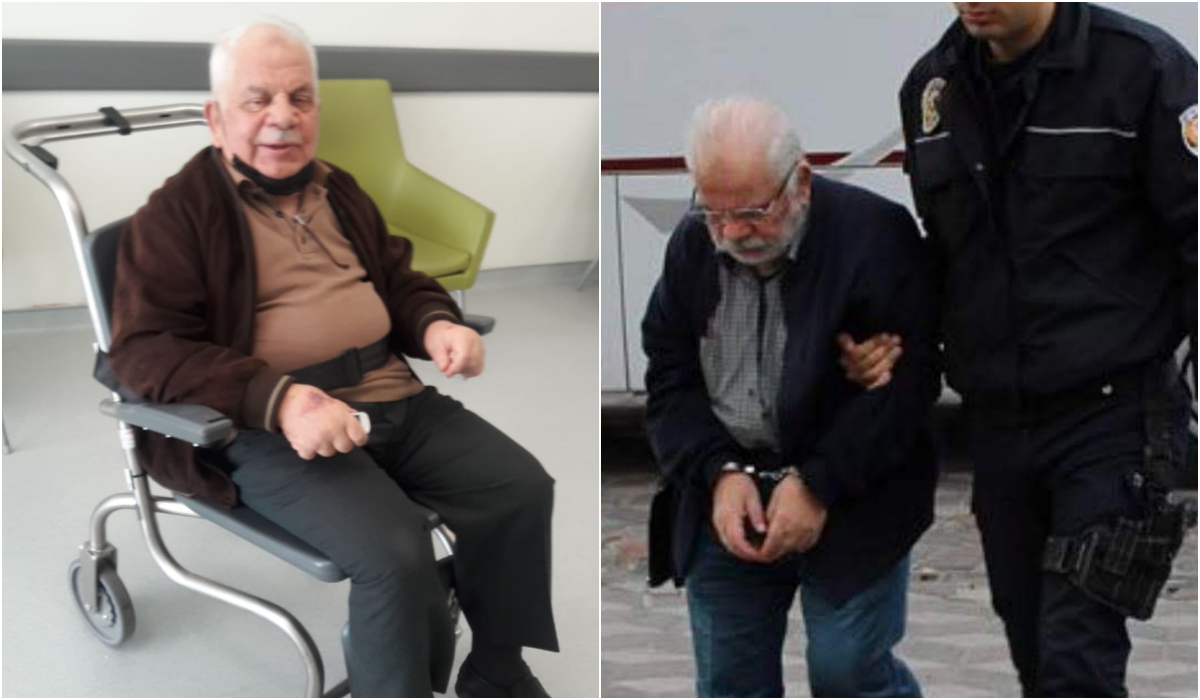
    Nusret Muğla,  an 84-year-old ailing man who was serving a sentence on conviction of links to the Gülen movement, passed away on Sunday after contracting COVID-19 in prison, the Stockholm Center for Freedom reported, citing the Bold Medya news website.

    Muğla was admitted to the hospital on Saturday after displaying symptoms of the virus. In an earlier phone call to his son, Muğla had said a new inmate appeared to be sick and also did not feel well.

    Muğla was incarcerated in a prison in western Manisa province despite suffering from multiple health problems including heart and kidney disease and prostate cancer. Muğla needed frequent medical attention and was kept in a quarantine cell for long periods of time.

    Inmates who need to go to the hospital are required to stay in a quarantine cell when they return to prison due to COVID-19 measures. However, these cells are notorious for their poor conditions and overcrowding.

    Muğla’s death sparked outrage and sorrow among many human rights activists and opposition politicians.

    Peoples’ Democratic Party (HDP) deputy Ömer Faruk Gergerlioğlu tweeted that Muğla’s death could be considered murder because he should not have been in prison in his condition.


  • Turkey’s vice president calls purge victims ‘terrorists’

    Turkish Vice President Fuat Oktay has called the victims of a massive purge of state institutions “terrorists,” accusing opposition parties of having plans for the reinstatement of former civil servants who were removed from their jobs following a coup attempt in Turkey on July 15, 2016, the Stockholm Center for Freedom reported.

    “May I ask who these people are? They are terrorists. Opposition parties should tell people that they will reinstate these terrorists to state institutions,” Oktay said in an interview with the private TV channel A Haber.

    Following the abortive putsch, the Turkish government declared a state of emergency and carried out a massive purge of state institutions under the pretext of an anti-coup fight. More than 130,000 public servants were summarily removed from their jobs for alleged membership in or relationships with “terrorist organizations” by emergency decree-laws subject to neither judicial nor parliamentary scrutiny.

    The government also shut down 164 media organizations, 1,058 educational institutions and 1,769 NGOs.

    Former public servants were not only fired from their jobs; they were also prohibited from working again in the public sector and getting a passport. The government also made it difficult for them to work formally in the private sector. Notes were put on the social security database about dismissed public servants to deter potential employers.

    According to a joint report by the Justice for Victims Platform and Ömer Faruk Gergerlioğlu, a human rights advocate and lawmaker from the Peoples’ Democratic Party (HDP), the biggest problem the purge victims and their families have been facing is economic hardship (97.9 percent) followed by psychological problems (88.6 percent), loss of social prestige and social exclusion (83.7 percent), the disintegration of social circles (83.1 percent), unemployment/lack of employment (80.4 percent) and a lack of social security benefits (73.2 percent).

    The most recent report on the issue published by Veli Ağbaba from the main opposition Republican People’s Party (CHP) states that at least 46 former public servants have died by suicide in Turkey, with the figure increasing to as many as 100 cases of suicide among dismissed civil servants in other sources.

    CHP leader Kemal Kılıçdaroğlu said in August that he would reinstate all former officials removed from their jobs by emergency decree-laws known as KHKs if they win the next general election in June 2023, “unless they were involved in terrorism.”

    “An official apology should be made to the purge victims, and pecuniary and non-pecuniary damages should be paid for the ordeal they were subjected to,” lawmaker Muazzez Orhan Işık from HDP said in late September.

  • Former member of top court gets 12 years, 9 months for Gülen movement ‘membership’

    The Supreme Court of Appeals on Wednesday issued a final verdict for a former member and sentenced him to 12 years, nine months’ imprisonment for alleged membership in the Gülen movement, Turkey’s state-run Anadolu news agency reported.

    The Turkish government accuses the faith-based Gülen movement of masterminding a coup attempt on July 15, 2016 and labels it a “terrorist organization,” although the movement strongly denies involvement in the coup attempt or any terrorist activity.

    One of the pieces of evidence against former judge Dursun Murat Cevher was his alleged use of the ByLock smart phone application.

    Turkey considers ByLock, once widely available online, a secret tool of communication among supporters of the Gülen movement since the July 2016 failed coup, despite the lack of any evidence that ByLock messages were related to the abortive putsch, leading to the arrest of thousands who were using it.

    The European Court of Human Rights (ECtHR) ruled in June in the case of a former police officer that use of the ByLock application is not an offense in itself and does not constitute sufficient evidence for an arrest.

    The UN Human Rights Council’s Working Group on Arbitrary Detention also stated in October 2018 that detention, arrest and conviction based on ByLock use in Turkey violated of Articles 19, 21 and 22 of the International Covenant on Civil and Political Rights.

    According to a statement from the interior ministry in March 2019, 95,310 people were charged over alleged use of the ByLock application. In its technical report, which courts use as basis for their decisions, Turkey’s National Intelligence Organization (MİT) stated that 60,473 defendants had at least one message posted using ByLock while 34,837 defendants had not posted any message using the application.

  • Former ECtHR judge resigns from Ankara bar over ‘censored’ report on torture

    Rıza Türmen, a former judge at the European Court of Human Rights (ECtHR) and head of the Ankara Bar Association’s human rights committee, has resigned from the bar due to its refusal to publish a report on allegations of torture made by detainees held at a police detention center, local media reported.

    According to a report by the TR724 news website last week, people who were detained due to alleged links to the Gülen movement, a faith-based group inspired by Turkish Muslim cleric Fethullah Gülen, were subjected to torture at a police detention center in Ankara.

    TR724 said 300 people have been detained in the last month in police raids across Turkey as part of investigations overseen by the Ankara Chief Public Prosecutor’s Office.

    Some of the detainees were beaten and forced to sign false confessions while in police custody, TR724 reported, citing their families and lawyers.

    After receiving complaints of torture and mistreatment, lawyers from the Ankara Bar Association’s human rights committee interviewed the detainees and compiled their findings in a report.

    According to the report citing the lawyers’ findings, detainees said they were subjected to beatings, forced nudity, torture involving the use of water and threats of rape.

    The report was presented to the management of the Ankara Bar Association; however, they decided not to publish the report, opting to instead file a criminal complaint with the public prosecutor’s office.

    The bar association’s decision sparked indignation among the lawyers who had drafted it, and six lawyers on the human rights committee resigned in protest.

    Committee chair Türmen joined his colleagues and submitted his resignation from the bar on Wednesday.

    Türmen represented Turkey at the ECtHR between 1998 and 2008.

    The bar’s president, Kemal Koranel, denies allegations of censorship.

    After an abortive putsch in 2016, ill-treatment and torture became widespread and systematic in Turkish detention centers. Lack of condemnation from higher officials and a readiness to cover up allegations rather than investigate them have resulted in widespread impunity for the security forces.

  • 3 AKP politicians who studied abroad on scholarships from İstanbul Municipality face complaints

    The İstanbul Municipality has filed criminal complaints against three politicians from the ruling Justice and Development Party (AKP) who went overseas on scholarships from the municipality while it was run by the AKP, the Sözcü daily reported on Wednesday.

    The three AKP politicians in question are İstanbul women’s branch president Rabia İlhan Kalender and lawmakers Fatma Betül Sayan Kaya and Ravza Kavakçı Kan.

    A report drafted by a municipal commission has found that the three women were hired by the municipality in the 2000s and went abroad to study after working for a short period at the municipality or not working at all. The report said a municipal guideline on scholarships was violated and that the municipality suffered a financial loss. The municipality paid around 130,000 euros for Kalender and $70,000 for Kaya, who is also a former minister, and more than $160,000 to Kan.

    Ekrem İmamoğlu from the main opposition Republican People’s Party ended the years-long rule of the AKP in İstanbul by twice defeating the party’s candidate for mayor in the 2019 local elections and has been revealing documents detailing illegal spending and irregularities in the municipality during the AKP’s time running the city.

    The municipality filed the complaints against the three politicians at the Bakırköy Courthouse in İstanbul and demanded that they pay back the scholarships they were given.

    The Cumhuriyet daily was the first to bring the case of Kan to public attention in 2019, reporting that on the day she was recruited by the İstanbul Municipality in 2008, she went to the US to work on a Ph.D. on a scholarship from the municipality.

    According to the report, Kan was recruited as a human resources specialist at Metro A.Ş., a subsidiary of the municipality, on Dec. 16, 2008. On the day, she was employed, Kan travelled to the US to study for a Ph.D. in political science on a scholarship from the municipality.

    İstanbul Mayor İmamoğlu said he finds it difficult to understand why Metro A.Ş., which works on transportation, provided a five-year scholarship to one of its employees so that she could get a Ph.D. in political science in the US.

    İmamoğlu also said Kan did not perform the compulsory work at the municipality, required for four years, 11 months in return for using the municipality’s resources.

    Kan returned from the US in September 2013 and was elected to parliament in 2015 and 2018. During her five years of doctoral work in the US, Kan was paid a monthly stipend of one-and-a-half times the minimum wage in Turkey. turkishminute

  • Former officer arrested over Gülen links while attempting to flee Turkey

    Former officer arrested over Gülen links while attempting to flee Turkey

    A former lieutenant colonel in the Turkish military has been arrested over alleged links to the Gülen movement after trying to flee the country by crossing the Evros River, which forms the land border between the northwestern Turkish province of Edirne and Greece, the Demirören news agency reported on Tuesday.

    The Turkish government accuses the faith-based Gülen movement of masterminding a coup attempt on July 15, 2016 and labels it a “terrorist organization,” although the movement strongly denies involvement in the coup attempt or any terrorist activity.

    The former officer, identified only by the initials N.Ç., was detained by Turkish security forces in a forbidden zone in the İpsala district of Edirne.

    N.Ç. who was referred to court and arrested.

    The former officer was one of the more than 29,000 members of the Turkish Armed Forces (TSK) in addition to more than 130,000 civil servants who were summarily removed from their jobs for alleged membership in or relationships with “terrorist organizations” by emergency decree-laws subject to neither judicial nor parliamentary scrutiny during a state of emergency imposed by Turkey’s Justice and Development Party (AKP) government following the coup attempt.

    The AKP government launched a war against the Gülen movement, a worldwide civic initiative inspired by the ideas of Muslim cleric Fethullah Gülen, after the corruption investigations of Dec. 17-25, 2013 that implicated then-prime minister and current President Recep Tayyip Erdoğan’s family members and inner circle.

    Dismissing the investigations as a Gülenist coup and conspiracy, the AKP government designated the movement as a terrorist organization and began to target its members. The government intensified the crackdown following the coup attempt in July 2016.

    A total of 319,587 people have been detained and 99,962 arrested in operations against supporters of the Gülen movement since the coup attempt, Turkey’s Interior Minister Süleyman Soylu announced in November.

    In addition to the thousands who were jailed, scores of other Gülen movement followers had to flee Turkey to avoid the government crackdown.

    Purge victims who wanted to flee the country to avoid the post-coup crackdown took dangerous journeys across the Evros River or the Aegean Sea. Some were arrested by Turkish security forces, some were pushed back to Turkey by Greek security forces and others perished on their way to Greece.

    The purge victims had to leave the country illegally because the government had revoked their passports.