Author: Zaman Australia

  • Turkish-owned ship hit by bomb off coast of Odessa, no casualties

    A Turkish-owned ship was hit by a bomb off the coast of Ukraine’s port city of Odessa on Thursday, Reuters reported, citing Turkey’s Maritime General Directorate, adding that there were no casualties and that the ship was safely en route to Romanian waters.

    Russia on Thursday launched a ground and air offensive into Ukraine.

    “Upon information that the Marshall Islands-flagged Turkish-owned Yasa Jupiter ship was struck by a bomb off the coast of Odessa, it was learned that the ship has no request for help, is en route to Romanian waters, has no casualties and is safe,” the authority said on Twitter.

    Turkish President Recep Tayyip Erdoğan earlier on Thursday denounced Russia’s invasion of Ukraine as a “heavy blow” to regional peace.

    “We reject Russia’s military operation,” Erdoğan said in a televised speech, calling it a “heavy blow to regional peace and stability”.

    Erdoğan, whose government has friendly ties with both Russia and Ukraine, had positioned Turkey, a member of NATO, as a neutral mediator for a resolution to the crisis.

    He expressed “sincere sadness” over the fact that the two countries “with which we have close political, economic and social ties” were confronting each other.

    Erdoğan, who stepped up diplomacy with phone calls to the Russian and Ukrainian leaders this week, said Turkey had no desire to abandon ties with either of the countries.

    “We want this issue to be resolved without us having to choose between the two,” he said in comments published in local media on Wednesday. turkishminute.com

  • Local Ukrainian community fears of ‘bloodshed’ heighten as Russia escalates military action

    Ukrainian community members in Australia have told SBS News they are desperately trying to respond to calls from those seeking visas to come here as concerns for their safety escalate.

    Australian-Ukrainian community members have expressed deep concern over Russia’s escalation of military action against Ukraine as fears mount over the human cost of the act of aggression.


    Leaders of Australia’s Ukraine community met with Immigration Minister Alex Hawke on Thursday to discuss the federal government’s response to the unfolding crisis.

    The emergency meeting was held just before Russian President Vladimir Putin confirmed a “military operation” in eastern Ukraine’s Donbas region.

    Ukrainian-Australian Mar’yana Sywak is among those fearing for loved ones, with her parents Evgen and Valentina located in southeast Ukraine around 200 kilometres from Donbas.

    She’s desperately trying to secure them a visitor visa but, with the situation in Ukraine rapidly getting worse, is worried time is running out to get them to safety.

    “We’re all afraid that even if the visa will be granted it will be too late to escape,” she told SBS News.

    “I really want them to be safe, to be here with me.”

    Australian Federation of Ukrainian Organisations co-chairman Stefan Romaniw said the community members had conveyed the need for decisive action to support Ukrainians abroad.

    “There was a sense of urgency [in the meeting with Mr Hawke] that emergency visas had to be issued,” he said.

    “We’ve already had numerous calls from people in Ukraine asking how they can get out and get a visa here.”

    Shelling and explosions have intensified since Mr Putin recognised the two separatist regions of Donetsk and Luhansk as independent and ordered troops into these areas.

    Mr Romaniw expressed deep concern over the deteriorating situation, with fears rapidly escalating for those abroad in the danger area.

    “Human lives are going to be lost – blood is going to be shed. The way [Vladimir Putin’s] talking there could be rivers of blood and corpses,” he told SBS News.

    “It’s time to step up.”

    Amid this uncertainty, the Australian government has promised visa applications from Ukrainian nationals are being fast-tracked for processing.

    Mr Hawke told community members on Thursday during their meeting the Australian government stood ready to work “urgently” to address concerns over the safety of Ukrainians.

    “It is a very dark time (for) people in Ukraine with the threat of invasion looming over them,” he said during the meeting.

    “We are working as fast as we can to process visas, to enable people to come here as quickly as possible.”

    Prime Minister Scott Morrison has said Australia will work closely with European partners to deal with the “likelihood of displaced persons” arising from the conflict in Ukraine.

    The government has promised to expedite 430 outstanding applications from Ukrainian citizens to come to Australia as a matter of urgency, across a range of visa classes.

    It has also committed to extending visas for Ukraine nationals in Australia by up to six months, to ensure they are not forced to return to danger.

    But it remains unclear whether the response would include allocating specialist humanitarian visas for Ukrainian nationals at this time.

    The current crisis comes after Australia recently pledged 15,000 visas through the humanitarian and family visa pathways for Afghan nationals over four years within the existing cap.

    The response has placed pressure on the Department of Home Affairs’ processing capabilities as officials work through applications on behalf of some 145,000 people seeking protection.

    Mr Morrison instead indicated it could be more likely Australia’s response would be through supporting the efforts of European partners to offer protection to those abroad.

    As tension ramps up in eastern Europe, the federal government has also appealed for Australians to urgently get out of Ukraine.

    So far, 184 nationals have registered with the embassy but as many as 1,400 are thought to still be in the danger zone.

    There are also some 1,027 Ukrainians outside Australia who have visas to enter Australia, who the government has also said would be welcomed into the country. SBS News
  • Family of Gülistan Doku battered by police and detained in front of Justice Ministry

    The family of Gülistan Doku, a young Kurdish woman who went missing on January 5, 2020, was battered by the police yesterday and detained in front of Turkey’s Ministry of Justice, Turkish media reported.

    The family was staging a sit-in at the ministry since their request for a meeting with Justice Minister Bekir Bozdağ was rejected. The family was released from detention a few hours later.

    The family has been staging protests in front of a courthouse in Tunceli since July 2021, saying the police covered up the fate of their daughter and failed to do its job. Their protests have attracted police intervention.

    The ruling Justice and Development Party (AKP) and its ally the Nationalist Movement Party (MHP) rejected a request from the Peoples’ Democratic Party (HDP) on Thursday to establish a parliamentary commission to investigate the fate and whereabouts of the missing young woman.

    The request was supported by other opposition parties such as the Republican People’s Party (CHP) and the İYİ (Good) Party.

    Speaking about the inquiry, HDP deputy Şevin Coşkun said investigations into Doku’s whereabouts had not been effectively carried out.

    “It is the responsibility of all of us to bring the fate and whereabouts of Gülistan Doku to light; an investigation commission should be established as soon as possible so that the perpetrators are identified and brought to justice,” she said.

    Minister Soylu said on Twitter that the authorities had done everything in their power to find Doku.

    However opposition deputies such as Sezgin Tanrikulu from the CHP have pointed out that the authorities were deliberately blocking investigations into the circumstances of Doku’s disappearance.

    Doku, 21, went missing in Tunceli, where she was attending university. She was last seen arguing with her boyfriend, Zaynal Abarakov, in front of a bakery. Later, images of her sitting on a bridge over a reservoir emerged, prompting authorities to believe she had died by suicide and police searching the reservoir.

    However, there was no sign of Doku’s body, and the family filed a complaint against Abarakov. According to the Tunceli Public Prosecutor’s Office there was no indication that someone had jumped into the reservoir at the time Doku was said to have been seen at the bridge. Doku’s family argued that this was a clear indication that their daughter had not died by suicide and that Abarakov could be responsible for her disappearance.

    The Justice for Gülistan Committee, a civil society organization that is monitoring her case, claimed the police had failed to carry out its responsibilities. According to the committee, the testimonies of Doku’s friends were not taken for hours after they reported her missing.

    One woman identified as Dilek said that after she spoke to law enforcement, the phrase “Gülistan said she would throw herself into the lake” was added to her statement without her knowledge. Police records also indicate conflicting accounts about the day Doku disappeared.

    The committee believes Abarakov’s stepfather Engin Y., who is also a policeman, is involved in a coverup. Engin Y. was part of the investigation and was the first police officer to report that “an object had dropped into the lake” at the time Doku went missing. Engin Y.’s report informed the course of the investigation and the search of the lake.

    Engin Y. is also currently under investigation for sharing confidential information and documents in the case with the press.

    According to Doku’s sister, Aygül Doku, her sister and Abarakov had a disagreement the day before she disappeared. Abarakov tried to force Doku into a car, but she managed to get away. Doku’s family is demanding that the authorities conduct a thorough investigation and determine what happened to the young woman. Stockholm Center for Freedom

  • Ukrainian president confirms Russian missile attacks on infrastructure and border guards


    The Kyiv Independent is reporting that the State Border Guard Service says it has been attacked in five oblasts.

    Ukraine’s president Volodymyr Zelenskyy says Russia has carried out missile strikes within his country’s borders, and one of his ministers says a “full-scale invasion” is unfolding.

    Follow our live blog for all the updates.

    They say the Luhansk (that’s in the east, in the Donbas region), Sumy (north-east), Kharkiv (north-east), Zhytomyr (north, to the west of Kyiv) and Chernihiv (north, east of Kyiv) oblasts have all been attacked.

    The State Border Guard says attacks are also coming from Russian-occupied Crimea in the south.

  • Far-right leader’s former advisor allegedly stole money from woman’s bag in restaurant

    Metin Özkan, a former media advisor to Turkey’s far-right Nationalist Movement Party (MHP) chairman Devlet Bahçeli, allegedly stole money from the handbag of a woman with whom he dined at an İstanbul restaurant, the Yeniçağ daily reported on Wednesday, posting a video recording of the incident on its website.

    Özkan dined at a restaurant in İstanbul with several people including a woman named Ufuk Enginler, who left her bag on a table near the entrance of the restaurant.

    In the video, recorded in December 2021, Özkan is seen extending his hand toward the bag, taking something from it and putting it in his pocket.

  • NBA’s Kanter named 2022 Courage Award winner for speaking out against China’s treatment of Uyghurs

    A cross-regional coalition of 25 human rights organizations has announced that its prestigious human rights award will go this year to Enes Kanter Freedom, an NBA athlete and outspoken critic of human rights violations in Turkey who is risking his career for speaking out against China’s persecution of ethnic Uyghurs, the Bold Medya news website reported on Wednesday.

    Kanter will accept the 2022 Courage Award on April 6, addressing a ceremony to be attended by UN ambassadors, human rights activists and journalists from around the world in town for the 14th annual Geneva Summit for Human Rights and Democracy, the coalition on Tuesday said in a statement.

    Hillel Neuer, the executive director of United Nations Watch, a co-organizer of the conference, together with Liberal International, the Human Rights Foundation and more than 20 other human rights groups, said that Freedom was chosen for his “heroic efforts to sound the alarm on China’s brutal human rights abuses.”

    “I want to say thank you to the Geneva Summit for Human Rights and Democracy for its support and for shining a global spotlight on human rights abuses in China,” Freedom said. “I hope this encourages other athletes to stand up for what is right.”

    “Despite China’s propaganda, the regime does not represent the Olympic values of respect and friendship, it’s a brutal dictatorship that oppresses its people,” said Freedom.

    The Geneva Summit has been a leading voice at the United Nations for the cause of the Uyghurs, hosting Uyghur dissidents such as Rebiya Kadeer in 2010, Bahtiyar Omer in 2011, Jewher Ilham in 2020, Nury Turkel in 2020, Rayhan Asat in 2021 and Rushan Abbas this year. It counts the World Uyghur Congress as one of its founding coalition partners.

    Previous laureates of the Courage Award include imprisoned Russian opposition leader Alexei Navalny, jailed Saudi blogger Raif Badawi and Mauritanian anti-slavery campaigner Biram Dah Abeid.

    Raised in Turkey, Kanter has been targeted for being an outspoken critic of Turkish President Recep Tayyip Erdoğan’s increasingly authoritarian policies and human rights record. Turkey canceled his passport and imprisoned his father in addition to an attempt to have him deported from Romania on May 20, 2017, during one of his international trips. His passport was briefly seized by the Romanian police upon a request from the Turkish government. The NBA said it had worked with the State Department to ensure Kanter’s release in Romania.

    When the basketball star condemned Chinese President Xi Jinping as a “brutal dictator” and labeled China’s Tibet policy “cultural genocide,” his games were pulled in China, with which the NBA enjoys a lucrative relationship.

    He has also called out the treatment of Uyghur Muslims in the Xinjiang region, putting special focus on products made in the region with forced labor.

    Kanter was recently traded from the Boston Celtics to the Houston Rockets, which then waived him, and no other team picked him up. Many suspect the NBA is punishing him for speaking out on China and trying to silence him.

    Earlier this month a number of Republicans in the US Senate expressed support for Kanter while criticizing the NBA for failing to also stand behind his cause.

  • Wife of jailed former officer says husband can barely see or move, requests his immediate release

    The wife of a former staff colonel who was convicted on coup charges said her husband’s heath had deteriorated to the point where he could barely see or move and requested his immediate release from prison, the Stockholm Center for Freedom reported.

    Speaking to the Bold Medya news website, Şebnem Çay said her husband Mustafa Özcan Çay, 46, suffered from multiple sclerosis (MS). “I’m praying that my husband won’t be the next prisoner to leave prison in a coffin,” she said.

    Çay was a decorated military officer who served in various national and NATO posts. In 2013, following complaints of a limp, he was diagnosed with MS. His treatments were going so well that he could even play some sports. Yet, that all changed with his arrest following an abortive coup in Turkey in July 2016.

    Çay was the duty officer on the night of the coup attempt at the İstanbul-based War Academies, graduate schools training staff officers. He was detained and later convicted on coup charges by an İstanbul court.

    According to Şebnem Çay, her husband did not receive proper treatment in prison and his health deteriorated. He was only taken to the hospital in 2019, three years after his arrest. Even after the hospital visit, Çay was only given medication and not physical therapy.

    Currently, Çay cannot take care of his daily needs, and two inmates volunteer to feed him, change his diaper and help with other daily necessities.

    Due to COVID-19 regulations, Çay is made to stay in a quarantine cell each time he goes to the hospital. However, quarantine cells are not equipped for a disabled person. Additionally, these cells are notorious for their poor conditions and overcrowding.

    Despite his severe health problems, the Constitutional Court denied Çay release from prison in December 2020 saying he had access to medical care and there was no evidence showing that his staying in prison posed a serious risk of bodily or mental harm.

    The failed coup killed 251 people and wounded more than a thousand others. The next morning, after announcing the coup had been suppressed, the Turkish government immediately started a wide-ranging purge of military officers, judges, police officers, teachers and other government officials that ultimately led to the dismissal of more than 130,000 civil servants from their jobs.

    A total of 24,253 military members were dismissed from the Turkish Armed Forces (TSK) in a post-coup purge, while investigations into 1,380 members of the military are currently underway.

    The purge of thousands of dissidents in the aftermath of the coup attempt in July 2016 has filled Turkey’s prisons, which today are overcrowded with tens of thousands of political prisoners.

    According to the Human Rights Association (İHD), as of June 2020 there were more than 1,605 sick inmates in Turkish prisons, approximately 600 of whom were critically ill. Although most of the seriously ill patients had forensic and medical reports deeming them unfit to remain in prison, they were not released. Authorities refuse to free them on the grounds that they pose a potential danger to society. In the first eight months of 2020, five critically ill prisoners passed away because they were not released in time to receive proper medical treatment.

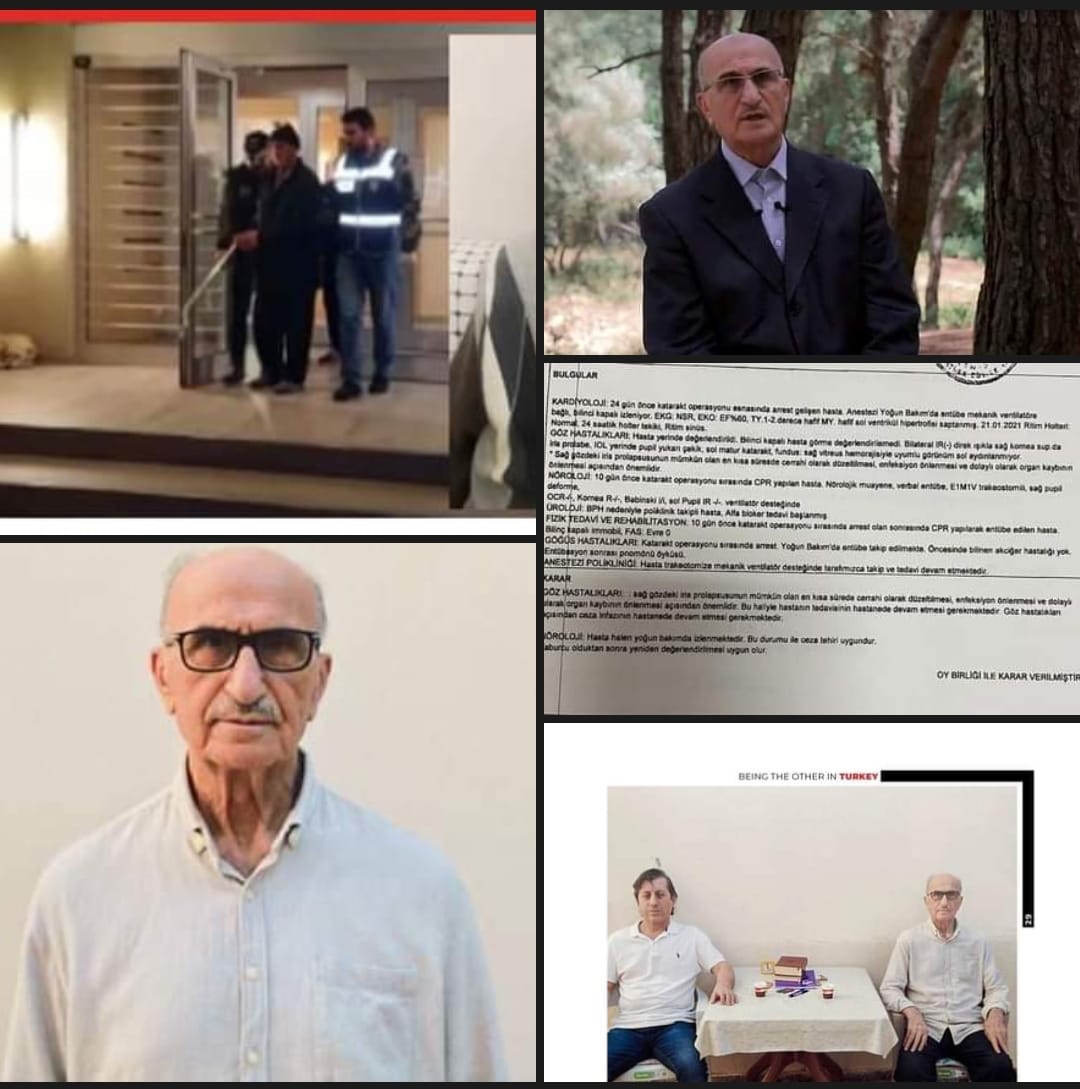
  • Ailing philanthropist dies amid calls for his immediate release from prison

    Ailing philanthropist dies amid calls for his immediate release from prison


    Yusuf Bekmezci, a jailed 82-year-old businessman and philanthropist convicted of links to the Gülen movement, died on Saturday amid calls for his immediate release from prison, the Stockholm Center for Freedom reported.

    Bekmezci’s death was announced on Twitter by his daughter Şeyma Bekmezci. “The hospital informed us of my father’s death. We would like to thank everyone who had him in their thoughts,” she said.

    Bekmezci had been in a coma for the last 47 days and was in a hospital in western Izmir province. His family, human rights activists and opposition politicians repeatedly called on authorities to postpone Bekmezci’s sentence, who would otherwise have been sent back to prison if he had woken up from his coma.

    Peoples’ Democratic Party (HDP) Ömer Faruk Gergerlioğlu said on Twitter he had appealed to the Ministry of Justice for Bekmezci’s sentence to be postponed several times. “We did not want him to die in prison, but authorities have no conscience,” he said. “Even the Council of Forensic Medicine said he was not fit to remain in prison; however, the authorities insisted he was.”

    Bekmezci was arrested for alleged links to the Gülen movement and tried on charges of terrorism, with the prosecutor demanding a life sentence.

    The court handed down a sentence of 17 years, four months in April 2021.

    Earlier speaking to Bold Medya, his daughter Şeyma Bekmezci said her ailing father had been condemned to die in prison, adding that he could barely understand the court proceedings due to his advanced Alzheimer’s and was unable to defend himself. The lack of proper health care in prison had caused his mental state to deteriorate, she said. “He completely forgets himself in court and is in a vulnerable position.”

    Although Turkey’s Council of Forensic Medicine (ATK) issued a medical report saying Bekmezci was not fit to remain in prison, the İzmir 2nd High Criminal Court denied his release and said there was too much evidence against him.

    Bekmezci, underwent an operation on January 4 during which his heart stopped. Bekmezci was revived after 15 minutes of heart massage and electroshock and was taken to intensive care, where he remained unconscious until his death.

    Turkish President Recep Tayyip Erdoğan has been targeting followers of the Gülen movement, a faith-based group inspired by Turkish cleric Fethullah Gülen, since the corruption investigations of December 17-25, 2013, which implicated then-Prime Minister Erdoğan, his family members and his inner circle.

    Dismissing the investigations as a Gülenist coup and conspiracy against his government, Erdoğan designated the movement as a terrorist organization and began to target its members. He intensified the crackdown on the movement following a coup attempt on July 15, 2016 that he accused Gülen of masterminding. Gülen and the movement strongly deny involvement in the abortive putsch or any terrorist activity.

    Human rights activists and opposition politicians have frequently criticized authorities for not releasing critically ill prisoners so they can seek proper treatment.

    According to the Human Rights Association (İHD), as of June 2020 there were more than 1,605 sick inmates in Turkish prisons, approximately 600 of whom were critically ill. Although most of the seriously ill patients had forensic and medical reports deeming them unfit to remain in prison, they were not released. Authorities refuse to free them on the grounds that they pose a potential danger to society. In the first eight months of 2020, five critically ill prisoners passed away because they were not released in time to receive proper medical treatment.

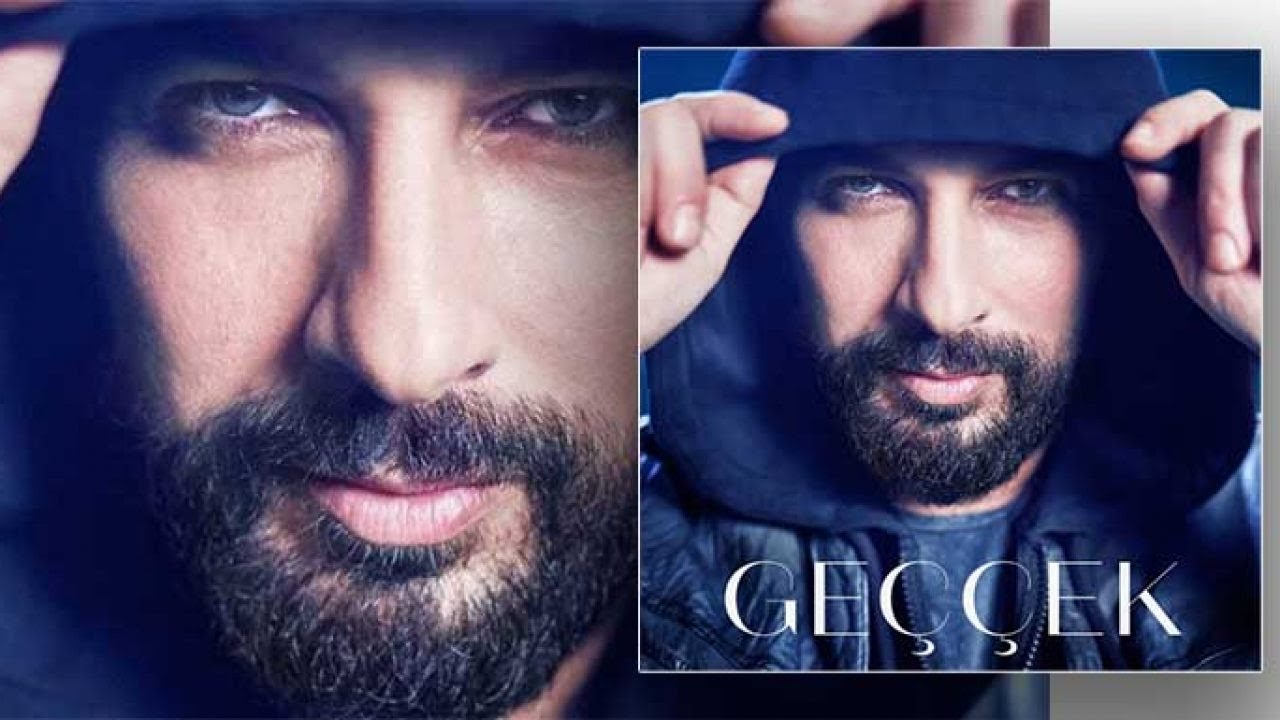
  • Mega-star Tarkan’s subtly political new song goes viral in Turkey

    Mega-star Tarkan’s subtly political new song goes viral in Turkey

    A new song titled “It’ll pass” by world-famous pop singer Tarkan, which has political overtones and sends a message that the bad times in Turkey will pass and good days will soon come, has gone viral, local media reported on Thursday, with millions listening to the song in less than a day.

    The new video clip, which was released on YouTube at 9 p.m. on Thursday, has been viewed more than 4 million times in less than 24 hours, and the song’s lyrics became top trending topics on Twitter with academics, politicians and journalists among those who shared the song and commented on it.

    Some observers saw the song as a political message, even though the lyrics make no mention of President Recep Tayyip Erdoğan.

    Social media users described the song as an anthem to the opposition in the country, saying the lyrics “As it has come, so it will go. Everything has an end. This ordeal will end” and “Come on, that’s enough. We’re so bored. Get off our backs,” referred to Erdoğan and his ruling Justice and Development Party (AKP), which has been in power since 2002, while others thought it was a post-pandemic song promising better days ahead.

    In the last general election, held in June 2018, the AKP garnered a nationwide vote of 42.6 percent. However, public surveys have increasingly been showing the party’s public support to be slipping. According to the latest surveys, the party’s votes dropped to a historical low of below 24 percent.

    Erdoğan has been accused by his critics of creating one-man rule and destroying the separation of powers under the presidential system, which went into effect following a referendum in 2017, replacing the country’s parliamentary system and granting him vast powers while weakening parliament.

    Thousands of social media users commented on the song using the hashtags #Geççek (It’ll pass), #Gitçek (It’ll go away), and #TarkanYalnızDeğildir (Tarkan isn’t alone), which quickly became top trending topics on Twitter.

    “Turkey’s megastar Tarkan releases new song and it’s taking over waves, promising these bad days too will pass and to just hold on a little longer, since good days are to come. Hard not to connect it to Turkey’s dismal state of affairs and hope for change,” Louis Fishman, associate professor at Brooklyn College CUNY, tweeted on Thursday.

    Among the politicians who posted the video clip on Twitter were main opposition Republican People’s Party (CHP) spokesperson Faik Öztrak; İzmir Mayor Tunç Soyer from the same party; Meral Akşener, leader of the nationalist opposition Good (İYİ) Party, an ally of the CHP; and pro-Kurdish Peoples’ Democratic Party (HDP) lawmakers Garo Paylan and Hüda Kaya.

    “I listened to it. I bloomed. It’ll pass alright. Everything has an end. That day will come. … I’ll put on this tie that day,” journalist İrfan Değirmenci said, posting a photo of himself wearing a floral tie, in reference to the lyrics of the song.

    Tarkan said the state of the world over the past year had pushed him to despair, particularly environmental destruction and the COVID pandemic.

    “I wanted to write a song that would … maybe console us, lift our spirits or give us hope,” he said on YouTube.

    Tarkan, 49, who was born in Germany to Turkish parents, regularly comments on social and environmental issues.

    In 2009, he campaigned to stop the construction of a controversial dam in southeastern Turkey with a song titled “Wake up.”


  • Wife of critically ill prisoner urges authorities to release her husband before it’s too late

    The wife of Ahmet Zeki Özkan, a 65-year-old man who was arrested last week to serve a sentence for conviction of links to the Gülen movement despite suffering from end-stage cancer, urged authorities for the immediate release of her husband, the Stockholm Center for Freedom reported.

    Speaking to the Bold Medya news website, Yasemin Özkan said her husband suffers from lung cancer and that doctors only gave him a year to live. Özkan was sent to a prison in southern Antalya province and was confined to a quarantine cell.

    Inmates who have just arrived in prison are required to stay in a quarantine cell due to COVID-19 measures. However, these cells are notorious for their poor conditions and overcrowding.

    “My husband was not even provided with a bed,” said Yasemin Özkan. “He was just given a blanket and told to sleep on the floor. This is very detrimental to his health, as he can’t afford to be sick.”

    Özkan was diagnosed with lung cancer in October 2020. The Antalya Council of Forensic Medicine issued a report saying he was not fit to be incarcerated. However, the national Council of Forensic Medicine (ATK) issued a contradictory report, saying he could stay in a prison that had a doctor and an infirmary.

    The Antalya Chief Public Prosecutor’s Office ruled against the postponing of Özkan’s sentence based on the ATK report.

    As the number of sick prisoners dying in prison has increased, doubts about the credibility and independence of the council have grown, as the institution is affiliated with the Ministry of Justice.

    Yasemin Özkan added that the medication her husband took had serious side effects, which needed to be handled with the utmost of care. “He is susceptible to infections and skin irritation and lesions,” she said. “He needs constant care and can’t afford to lose weight.”

    Özkan was sentenced to six years, three months in prison. He was accused of donating to a charity affiliated with the Gülen movement and of sending his children to a private school that had links to the movement.

    Turkish President Recep Tayyip Erdoğan has been targeting followers of the Gülen movement since the corruption investigations of December 17-25, 2013, which implicated then-Prime Minister Erdoğan, his family members and his inner circle.

    Dismissing the investigations as a Gülenist coup and conspiracy against his government, Erdoğan designated the movement as a terrorist organization and began to target its members. He intensified the crackdown on the movement following a coup attempt on July 15, 2016 that he accused Fethullah Gülen, who inspired the movement, of masterminding.

    A total of 319,587 people were detained and 99,962 arrested in operations against supporters of the Gülen movement since the coup attempt, Turkey’s Interior Minister Süleyman Soylu said in November.

    According to the Human Rights Association (İHD), as of June 2020 there were more than 1,605 sick inmates in Turkish prisons, approximately 600 of whom were critically ill. Although most of the seriously ill patients had forensic and medical reports deeming them unfit to remain in prison, they were not released. Authorities refuse to free them on the grounds that they pose a potential danger to society. In the first eight months of 2020, five critically ill prisoners passed away because they were not released in time to receive proper medical treatment.